
The French Revolution France was an Absolute Monarchy
The French Revolution
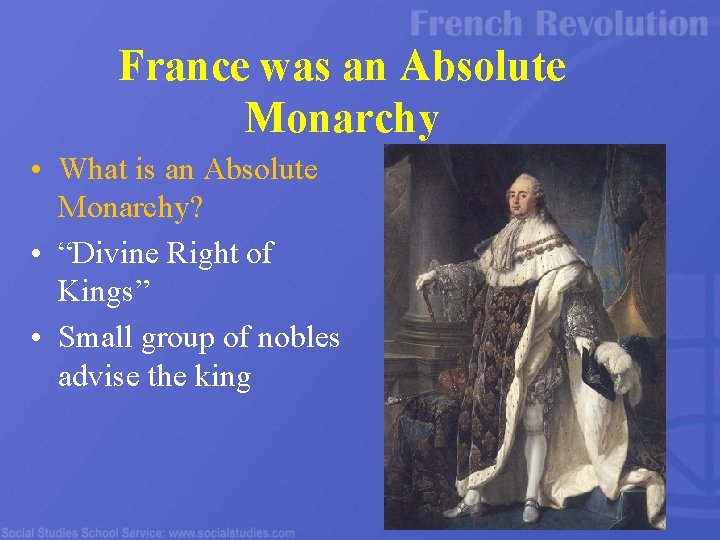
France was an Absolute Monarchy • What is an Absolute Monarchy? • “Divine Right of Kings” • Small group of nobles advise the king
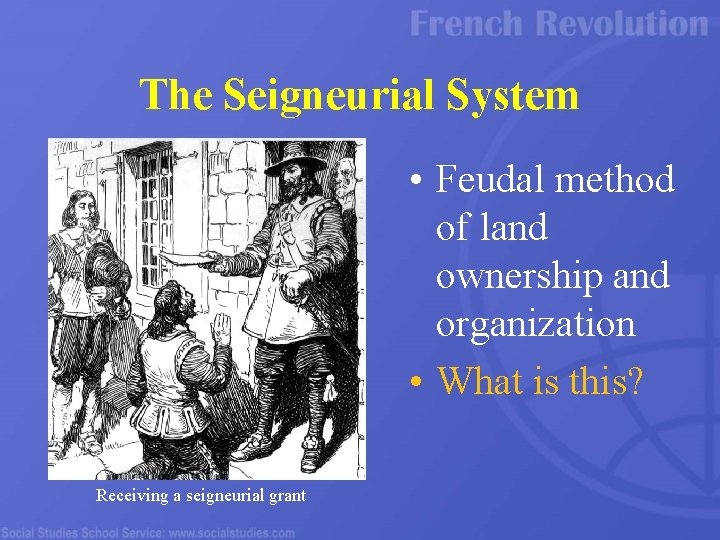
The Seigneurial System • Feudal method of land ownership and organization • What is this? Receiving a seigneurial grant
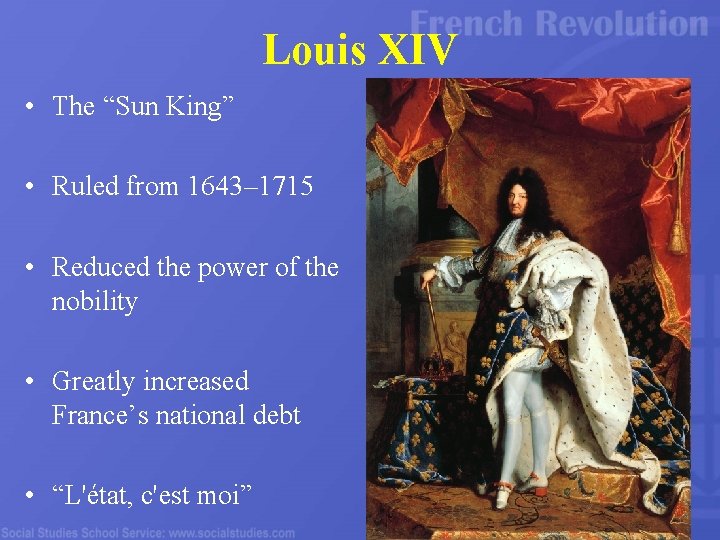
Louis XIV • The “Sun King” • Ruled from 1643– 1715 • Reduced the power of the nobility • Greatly increased France’s national debt • “L'état, c'est moi”
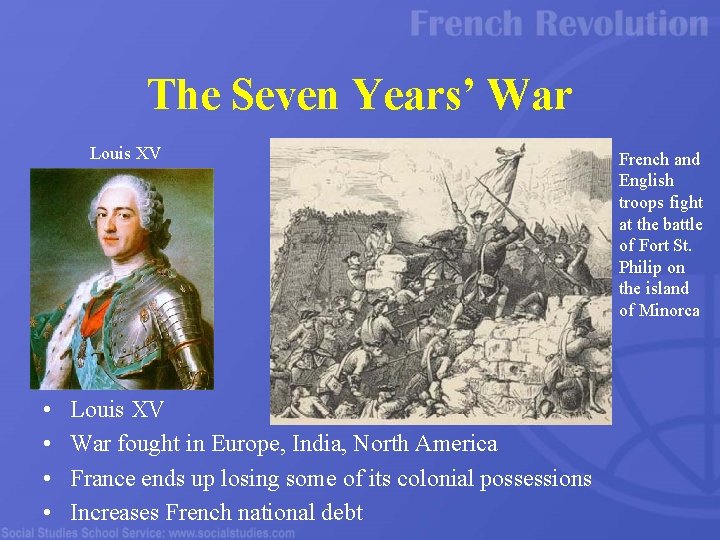
The Seven Years’ War Louis XV • • Louis XV War fought in Europe, India, North America France ends up losing some of its colonial possessions Increases French national debt French and English troops fight at the battle of Fort St. Philip on the island of Minorca
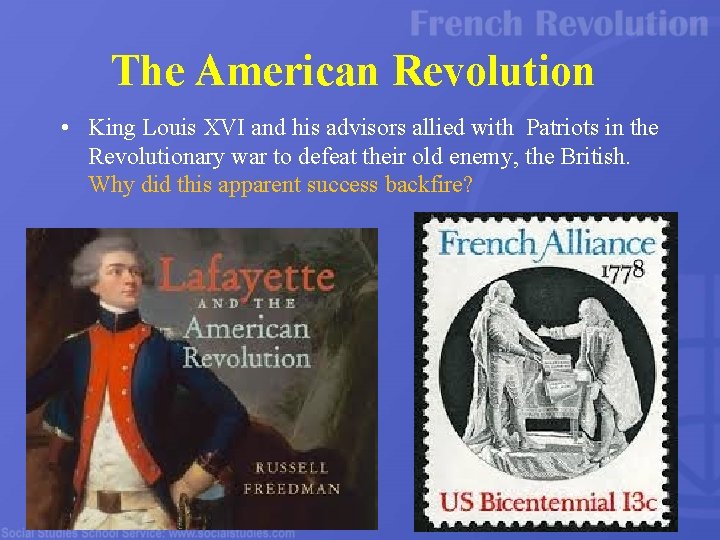
The American Revolution • King Louis XVI and his advisors allied with Patriots in the Revolutionary war to defeat their old enemy, the British. Why did this apparent success backfire?
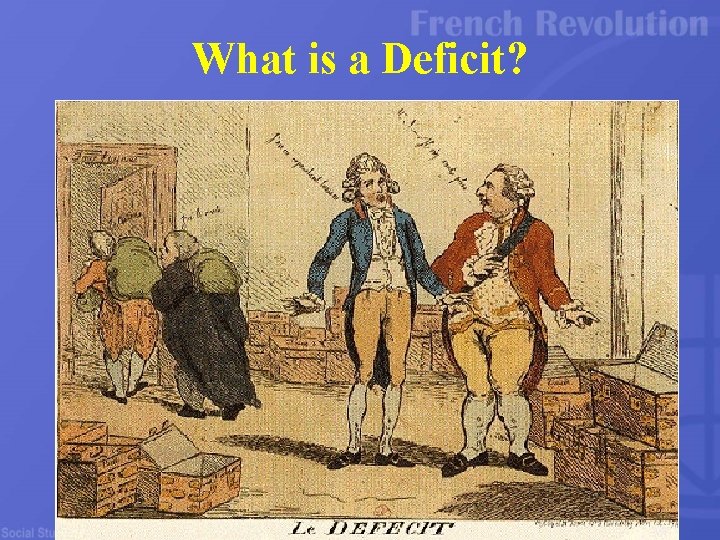
What is a Deficit?
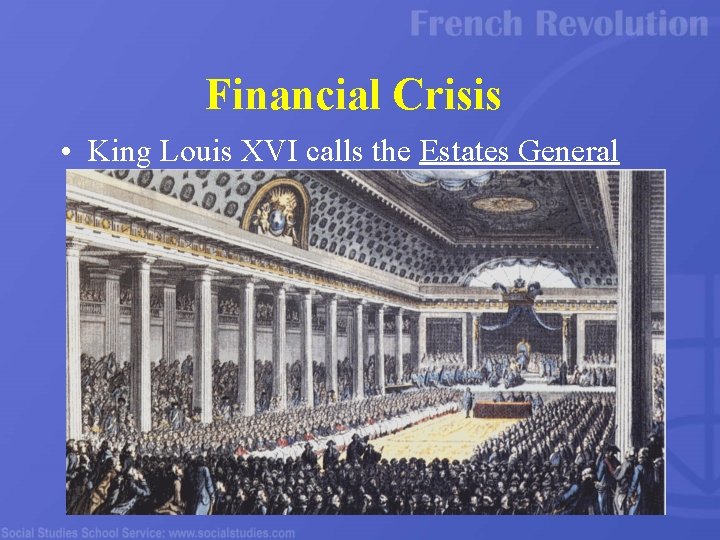
Financial Crisis • King Louis XVI calls the Estates General
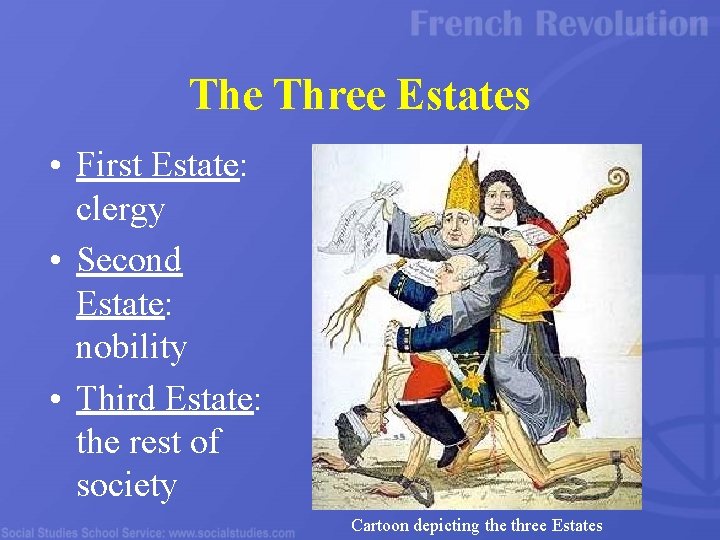
The Three Estates • First Estate: clergy • Second Estate: nobility • Third Estate: the rest of society Cartoon depicting the three Estates
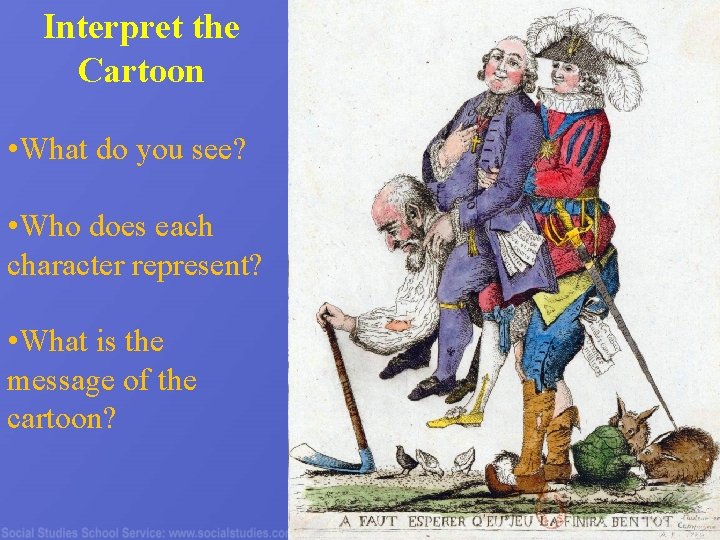
Interpret the Cartoon • What do you see? • Who does each character represent? • What is the message of the cartoon?
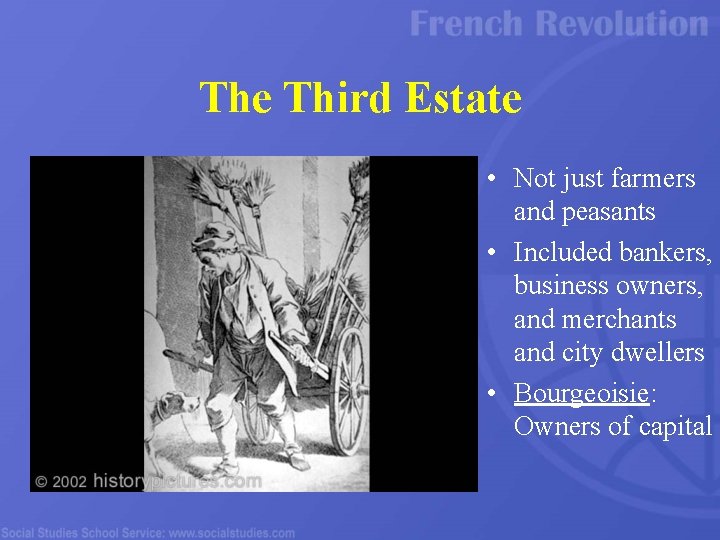
The Third Estate • Not just farmers and peasants • Included bankers, business owners, and merchants and city dwellers • Bourgeoisie: Owners of capital
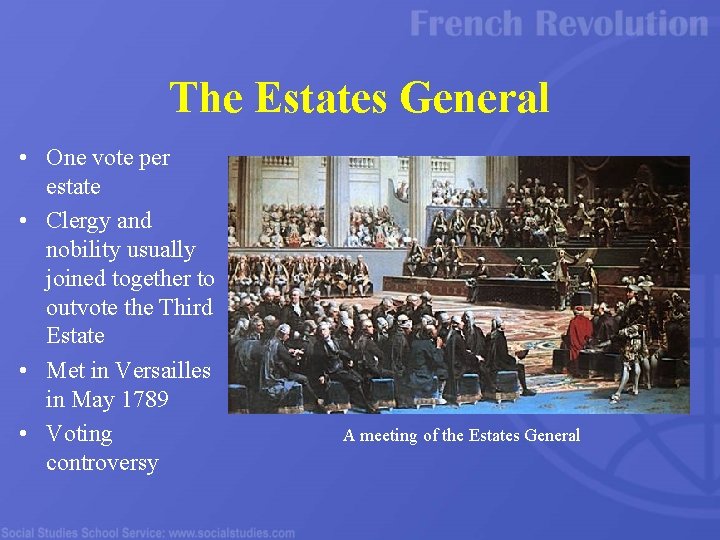
The Estates General • One vote per estate • Clergy and nobility usually joined together to outvote the Third Estate • Met in Versailles in May 1789 • Voting controversy A meeting of the Estates General
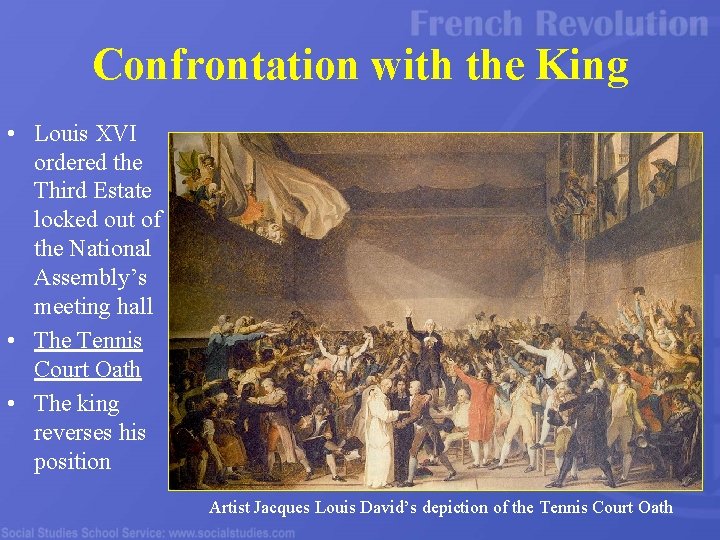
Confrontation with the King • Louis XVI ordered the Third Estate locked out of the National Assembly’s meeting hall • The Tennis Court Oath • The king reverses his position Artist Jacques Louis David’s depiction of the Tennis Court Oath
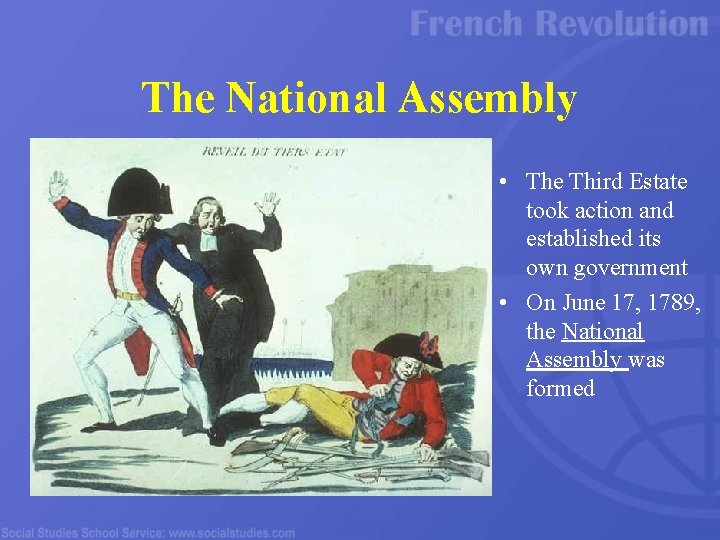
The National Assembly • The Third Estate took action and established its own government • On June 17, 1789, the National Assembly was formed
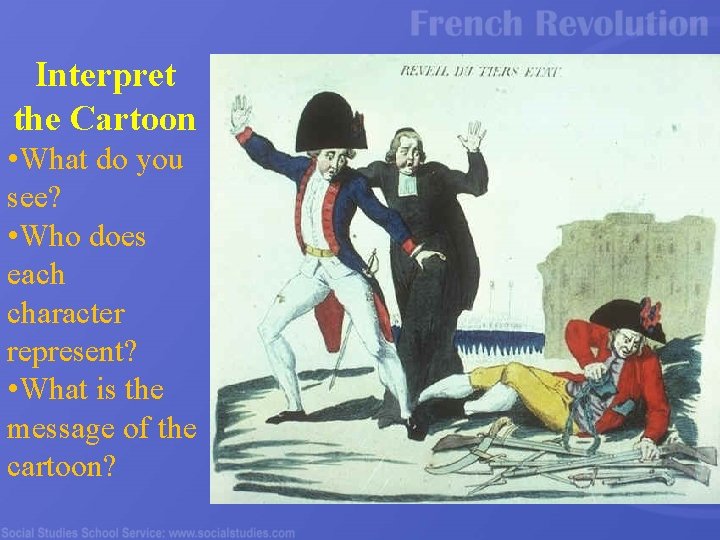
Interpret the Cartoon • What do you see? • Who does each character represent? • What is the message of the cartoon?
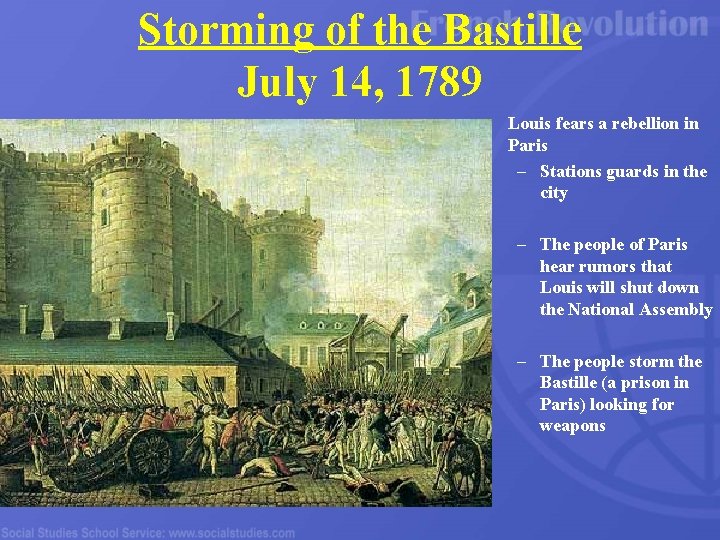
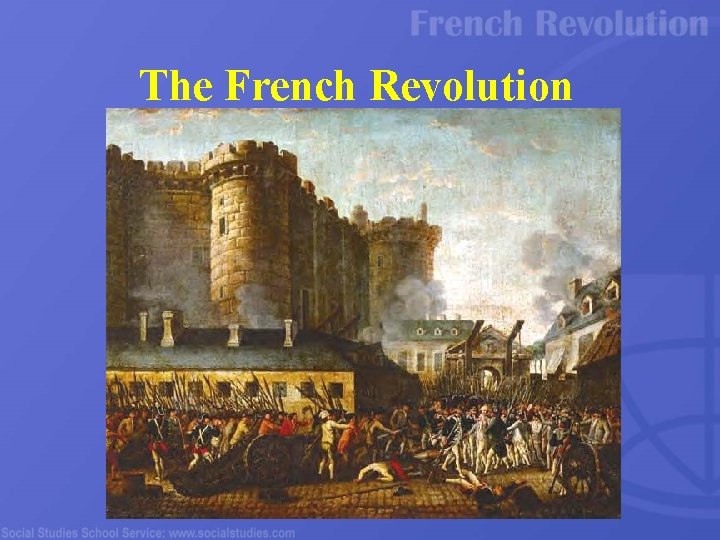
Storming of the Bastille July 14, 1789 Louis fears a rebellion in Paris – Stations guards in the city – The people of Paris hear rumors that Louis will shut down the National Assembly – The people storm the Bastille (a prison in Paris) looking for weapons
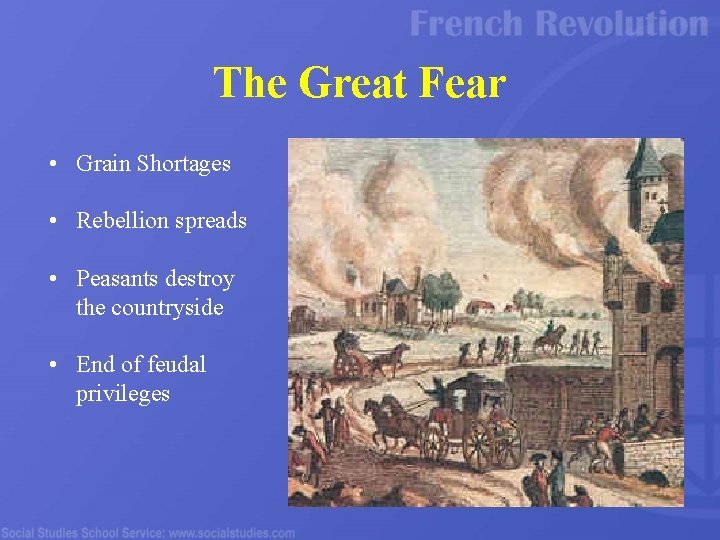
The Great Fear • Grain Shortages • Rebellion spreads • Peasants destroy the countryside • End of feudal privileges
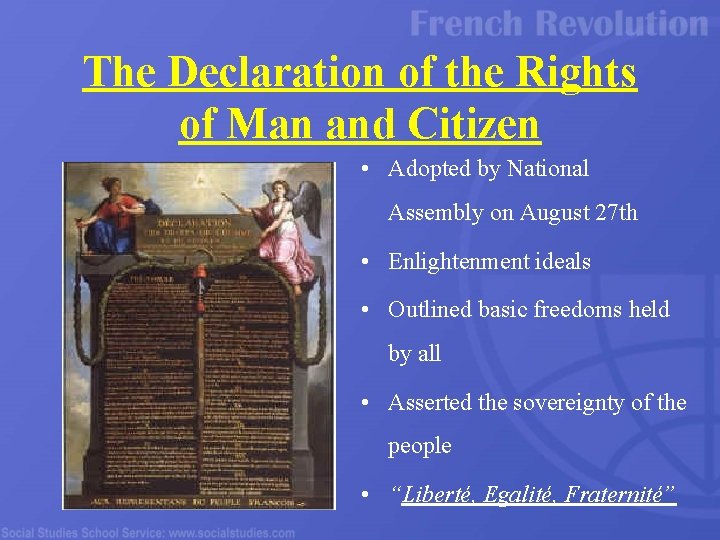
The Declaration of the Rights of Man and Citizen • Adopted by National Assembly on August 27 th • Enlightenment ideals • Outlined basic freedoms held by all • Asserted the sovereignty of the people • “Liberté, Egalité, Fraternité”
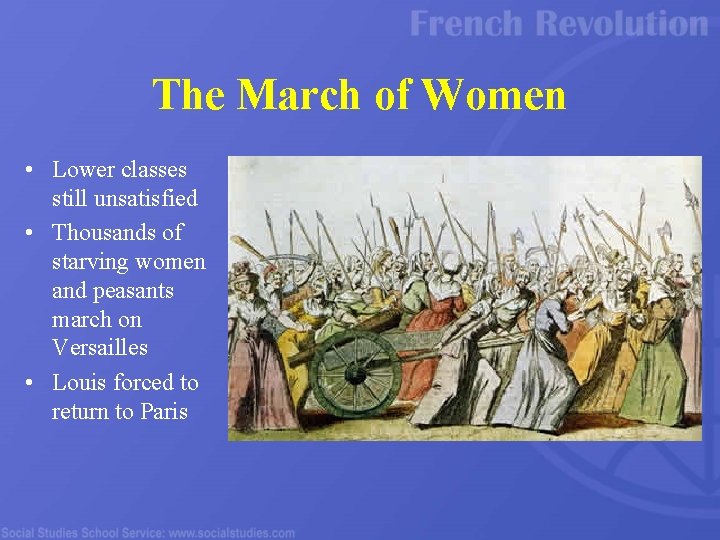
The March of Women • Lower classes still unsatisfied • Thousands of starving women and peasants march on Versailles • Louis forced to return to Paris
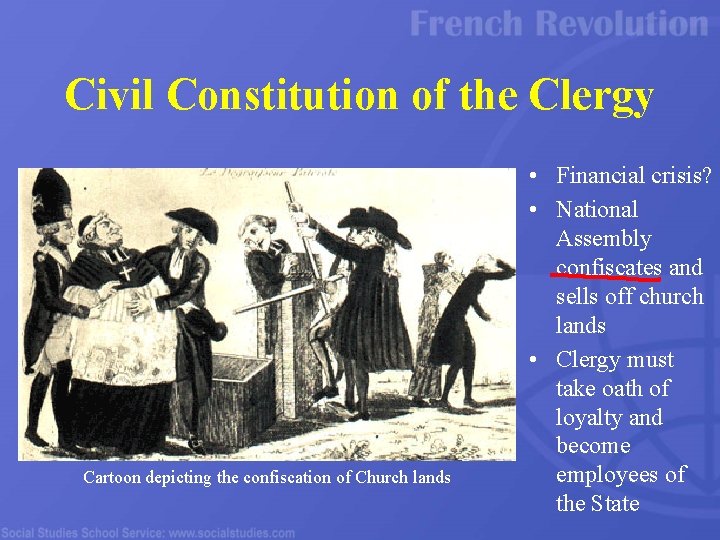
Civil Constitution of the Clergy Cartoon depicting the confiscation of Church lands • Financial crisis? • National Assembly confiscates and sells off church lands • Clergy must take oath of loyalty and become employees of the State
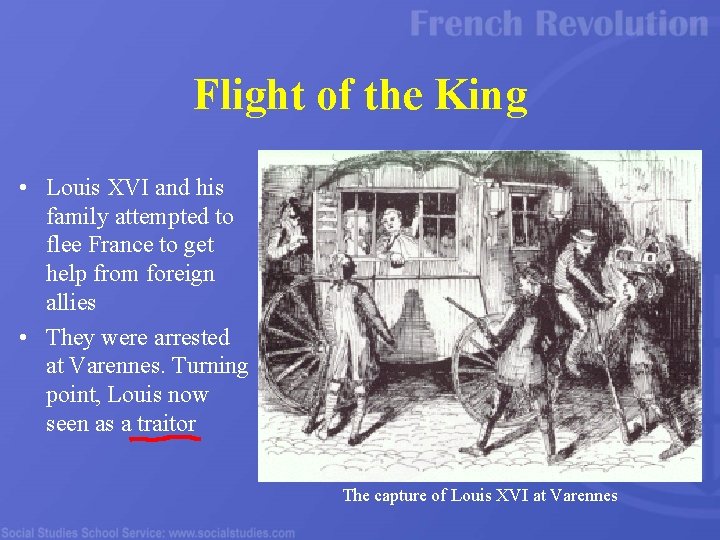
Flight of the King • Louis XVI and his family attempted to flee France to get help from foreign allies • They were arrested at Varennes. Turning point, Louis now seen as a traitor The capture of Louis XVI at Varennes
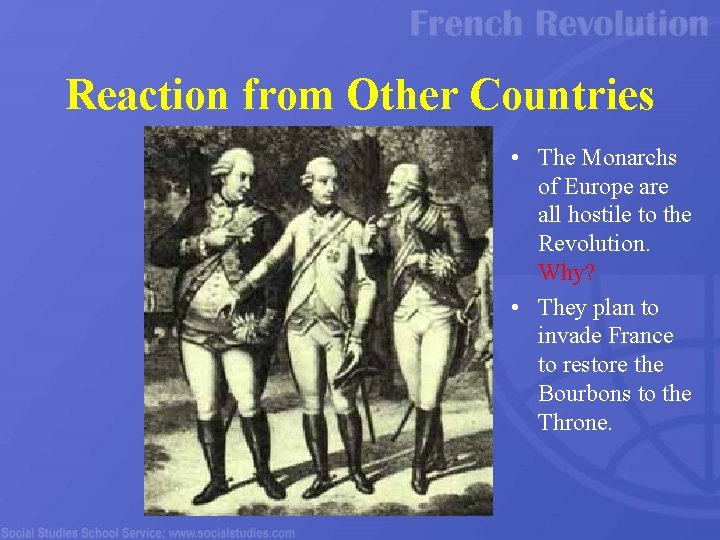
Reaction from Other Countries • The Monarchs of Europe are all hostile to the Revolution. Why? • They plan to invade France to restore the Bourbons to the Throne.
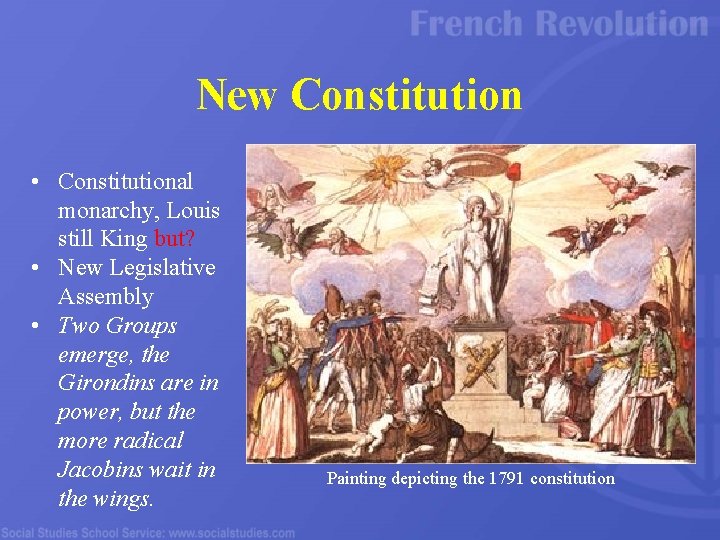
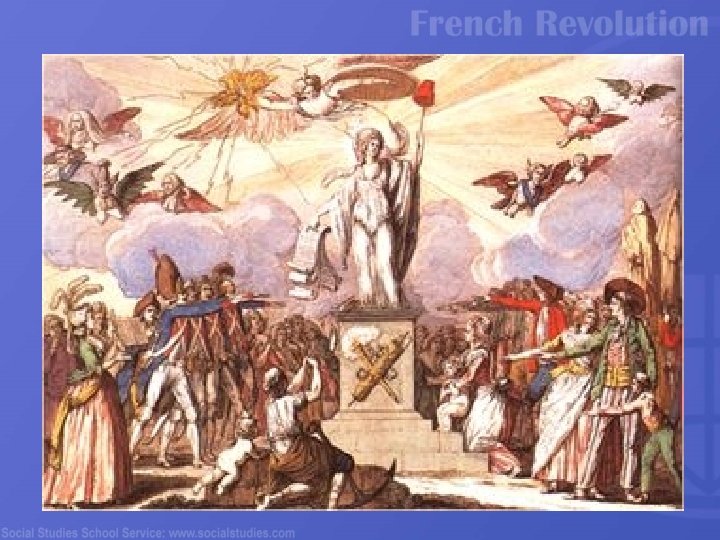
New Constitution • Constitutional monarchy, Louis still King but? • New Legislative Assembly • Two Groups emerge, the Girondins are in power, but the more radical Jacobins wait in the wings. Painting depicting the 1791 constitution
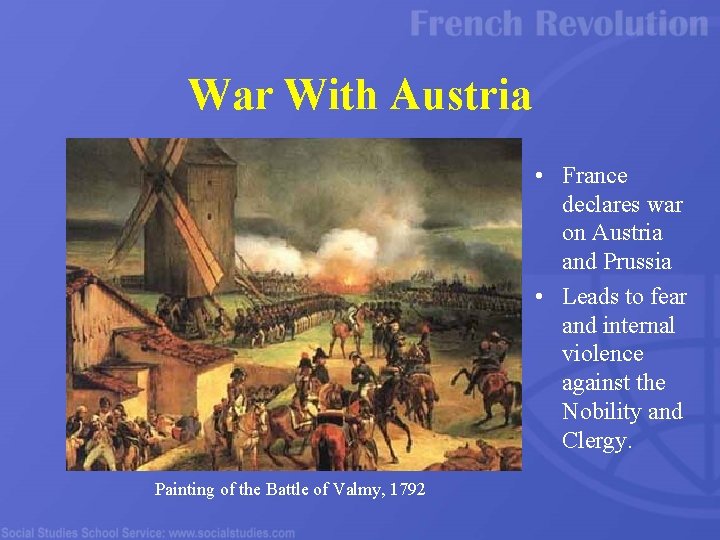
War With Austria • France declares war on Austria and Prussia • Leads to fear and internal violence against the Nobility and Clergy. Painting of the Battle of Valmy, 1792
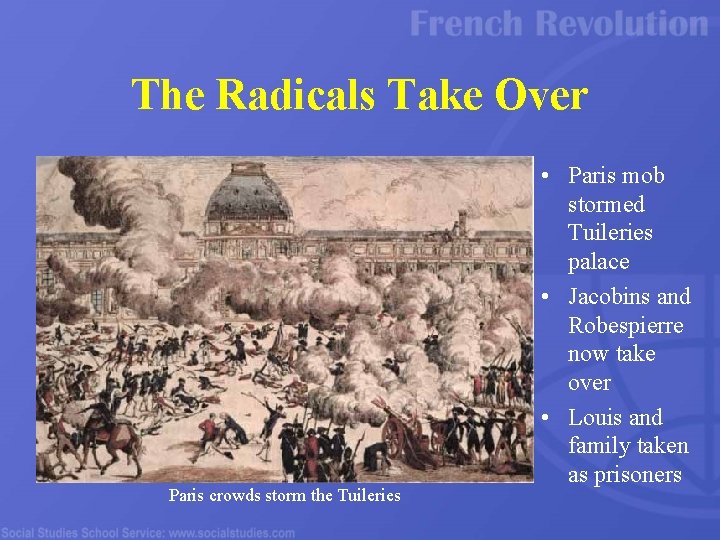
The Radicals Take Over Paris crowds storm the Tuileries • Paris mob stormed Tuileries palace • Jacobins and Robespierre now take over • Louis and family taken as prisoners
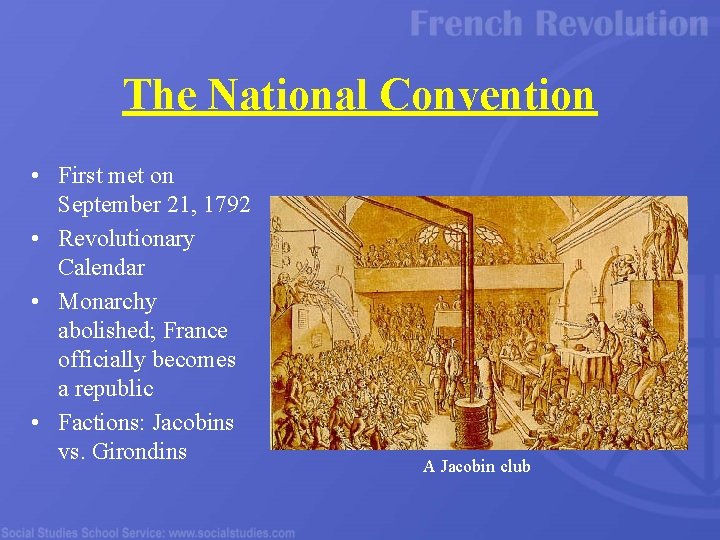
The National Convention • First met on September 21, 1792 • Revolutionary Calendar • Monarchy abolished; France officially becomes a republic • Factions: Jacobins vs. Girondins A Jacobin club
Debate: Should this National Assembly punish Louis Capet for the crime of Treason with the Death Penalty? • The class will be randomly divided into two groups for and against the motion. • Each group need to write four arguments on the board for their side. • Select two people to present these arguments. You should also note your opponents arguments and think of suitable responses(Two each). • Synergy points for active participation
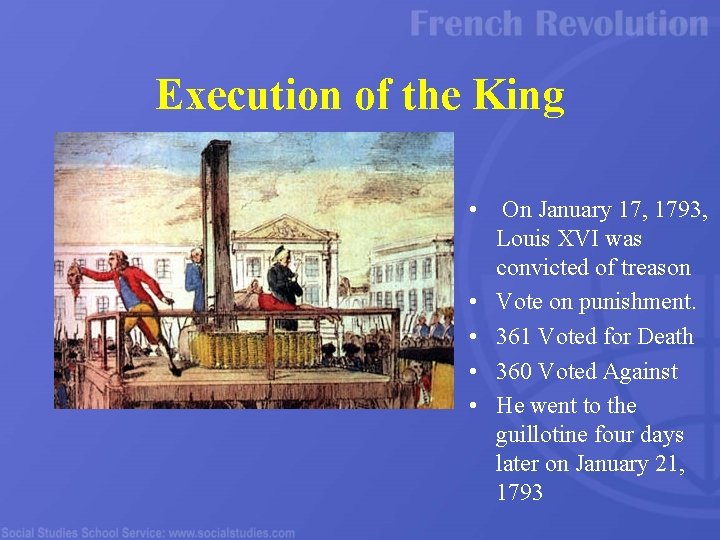
Execution of the King • On January 17, 1793, Louis XVI was convicted of treason • Vote on punishment. • 361 Voted for Death • 360 Voted Against • He went to the guillotine four days later on January 21, 1793
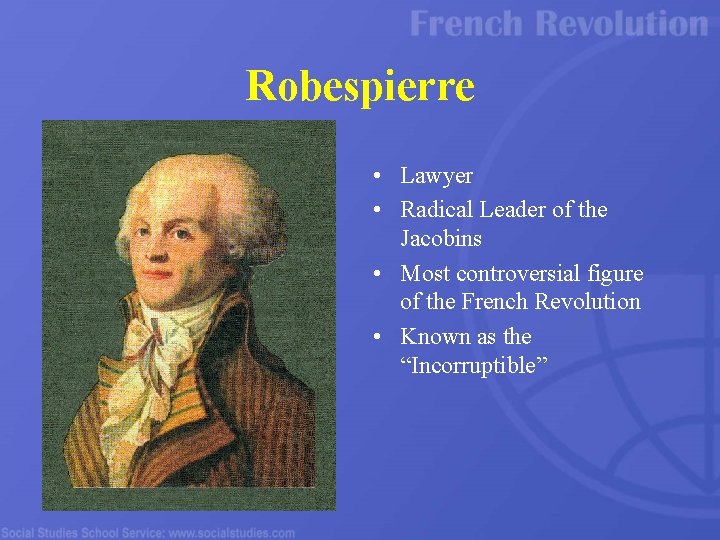
Robespierre • Lawyer • Radical Leader of the Jacobins • Most controversial figure of the French Revolution • Known as the “Incorruptible”
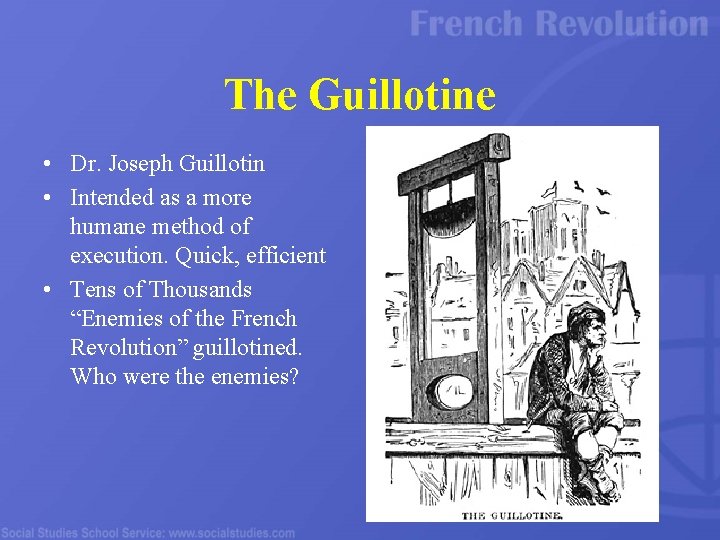
The Guillotine • Dr. Joseph Guillotin • Intended as a more humane method of execution. Quick, efficient • Tens of Thousands “Enemies of the French Revolution” guillotined. Who were the enemies?
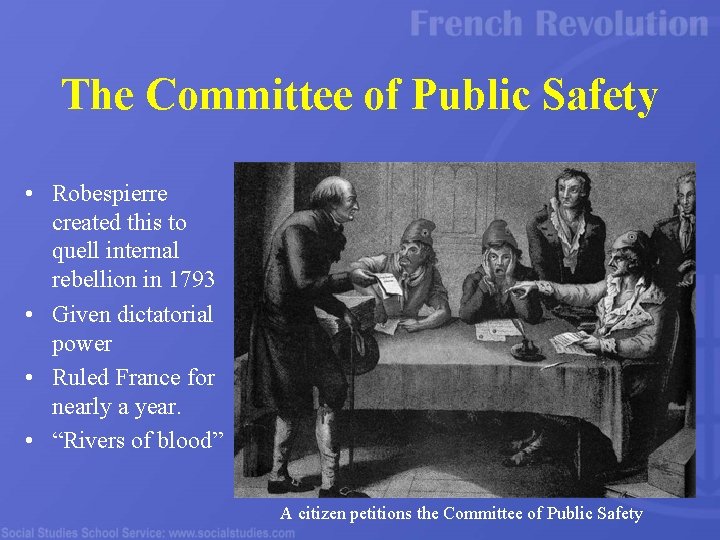
The Committee of Public Safety • Robespierre created this to quell internal rebellion in 1793 • Given dictatorial power • Ruled France for nearly a year. • “Rivers of blood” A citizen petitions the Committee of Public Safety
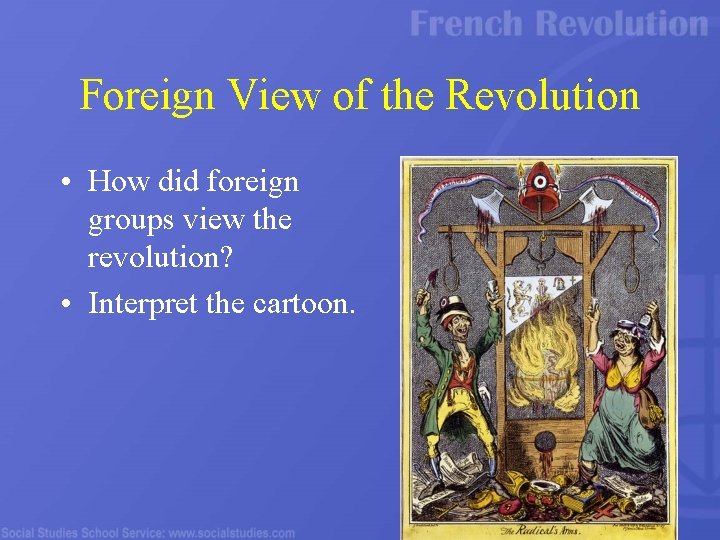
Foreign View of the Revolution • How did foreign groups view the revolution? • Interpret the cartoon.
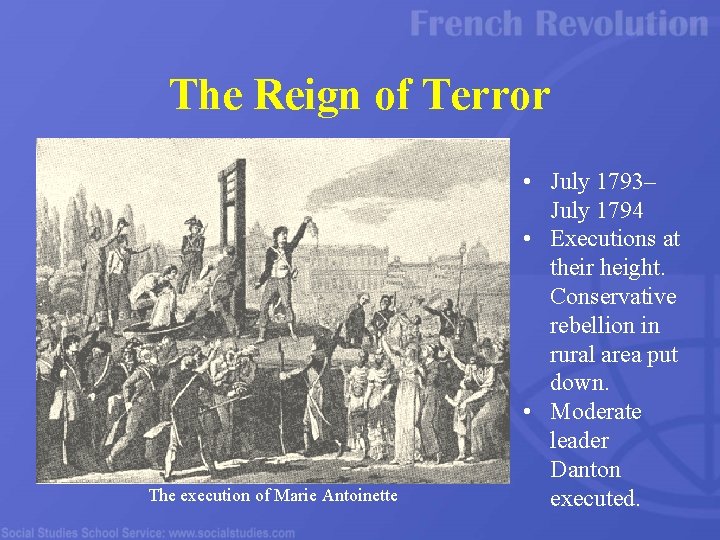
The Reign of Terror The execution of Marie Antoinette • July 1793– July 1794 • Executions at their height. Conservative rebellion in rural area put down. • Moderate leader Danton executed.
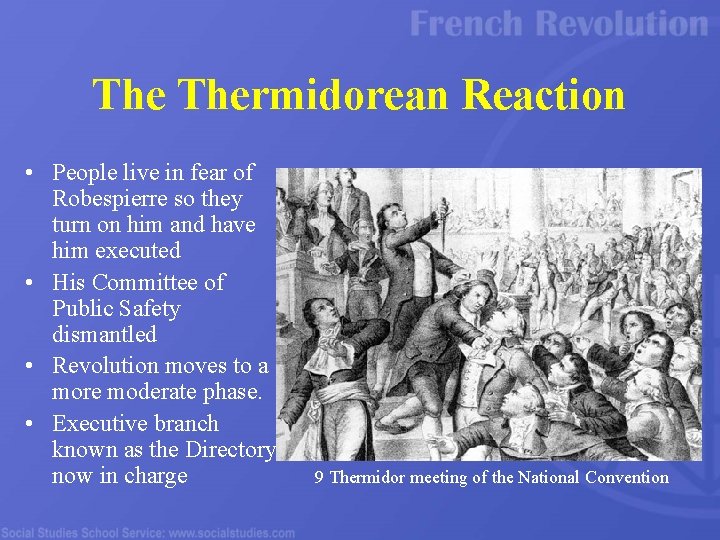
The Thermidorean Reaction • People live in fear of Robespierre so they turn on him and have him executed • His Committee of Public Safety dismantled • Revolution moves to a more moderate phase. • Executive branch known as the Directory now in charge 9 Thermidor meeting of the National Convention
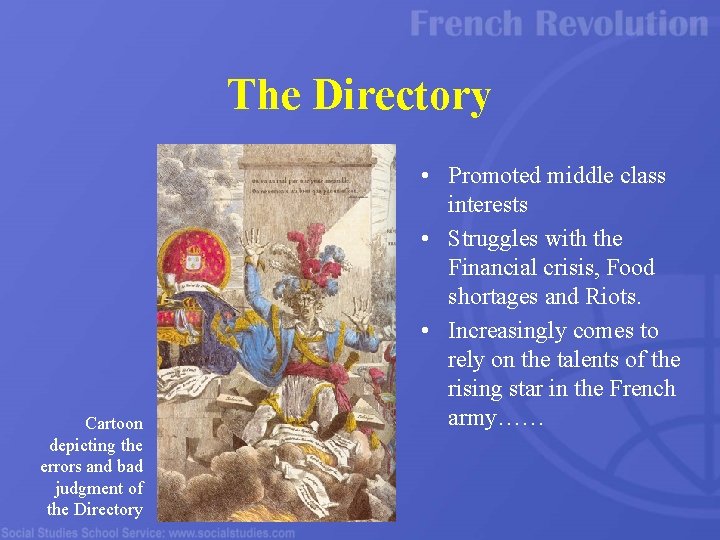
The Directory Cartoon depicting the errors and bad judgment of the Directory • Promoted middle class interests • Struggles with the Financial crisis, Food shortages and Riots. • Increasingly comes to rely on the talents of the rising star in the French army……
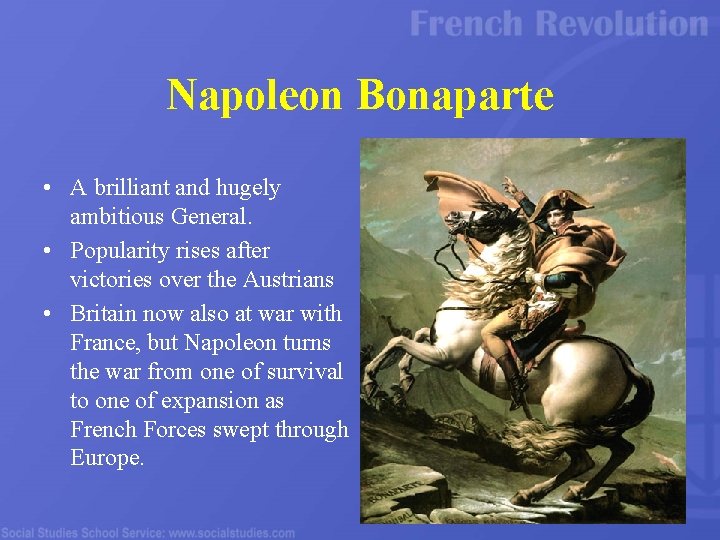
Napoleon Bonaparte • A brilliant and hugely ambitious General. • Popularity rises after victories over the Austrians • Britain now also at war with France, but Napoleon turns the war from one of survival to one of expansion as French Forces swept through Europe.
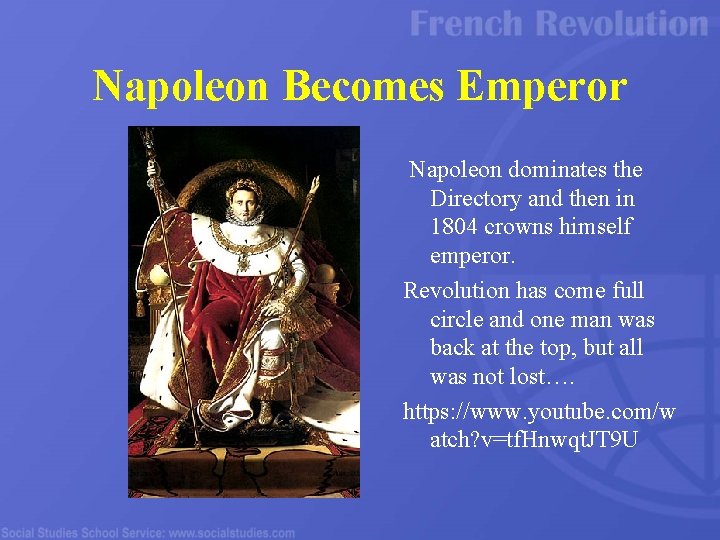
Napoleon Becomes Emperor Napoleon dominates the Directory and then in 1804 crowns himself emperor. Revolution has come full circle and one man was back at the top, but all was not lost…. https: //www. youtube. com/w atch? v=tf. Hnwqt. JT 9 U
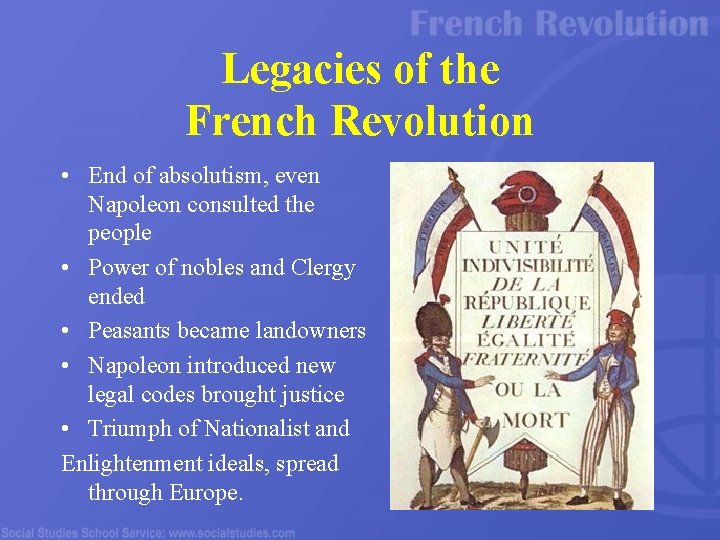
Legacies of the French Revolution • End of absolutism, even Napoleon consulted the people • Power of nobles and Clergy ended • Peasants became landowners • Napoleon introduced new legal codes brought justice • Triumph of Nationalist and Enlightenment ideals, spread through Europe.
Postscript • Napoleon wins a series of battles and introduces reforms into countries like Spain and Italy, but is hated as an invader. • He bites off too much in his failed invasion of Russia, and is finally defeated at the Battle of the Waterloo by a Grand Alliance. Who was in it? He is imprisoned on a tiny island in the Southern Atlantic.
- Slides: 40