
THE FRENCH REVOLUTION Fall of the Monarchy Reign
- Slides: 16
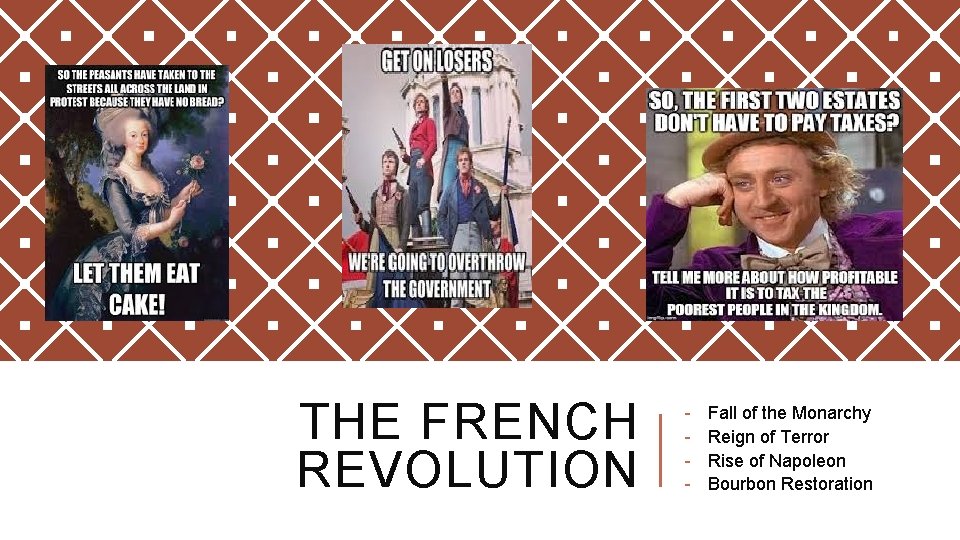
THE FRENCH REVOLUTION - Fall of the Monarchy Reign of Terror Rise of Napoleon Bourbon Restoration
CORNELL NOTE-TAKING METHOD Notes color-coded in RED go on this side of the line. Notes color-coded in BLUE go on this side of the line. These items will include: Supporting details Dates, Times, and Biographic details Vocabulary Definitions Main Ideas Big Concepts Vocabulary Words These items will include: Any items in BLACK text are optional. Remember: the more thorough your notes, the more prepared you will be for exams.
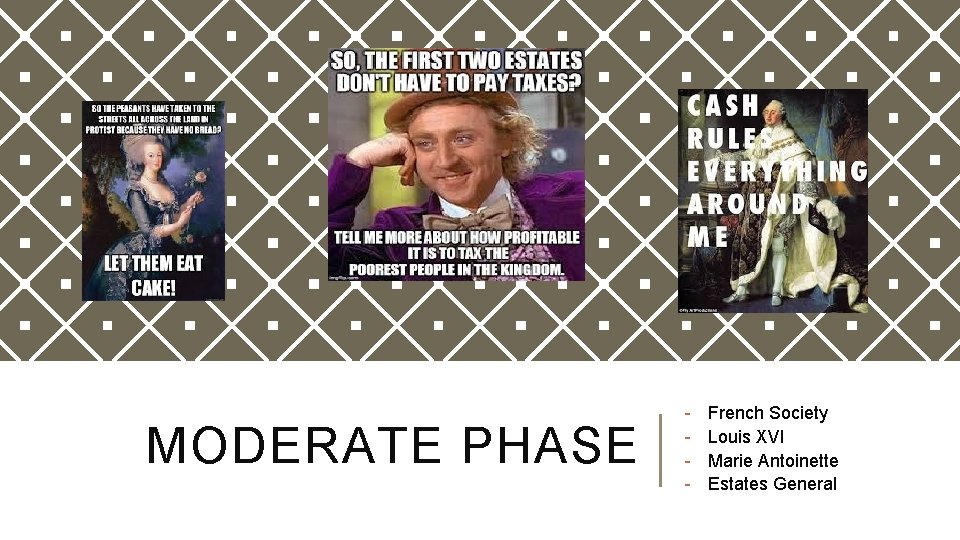
MODERATE PHASE - French Society Louis XVI Marie Antoinette Estates General
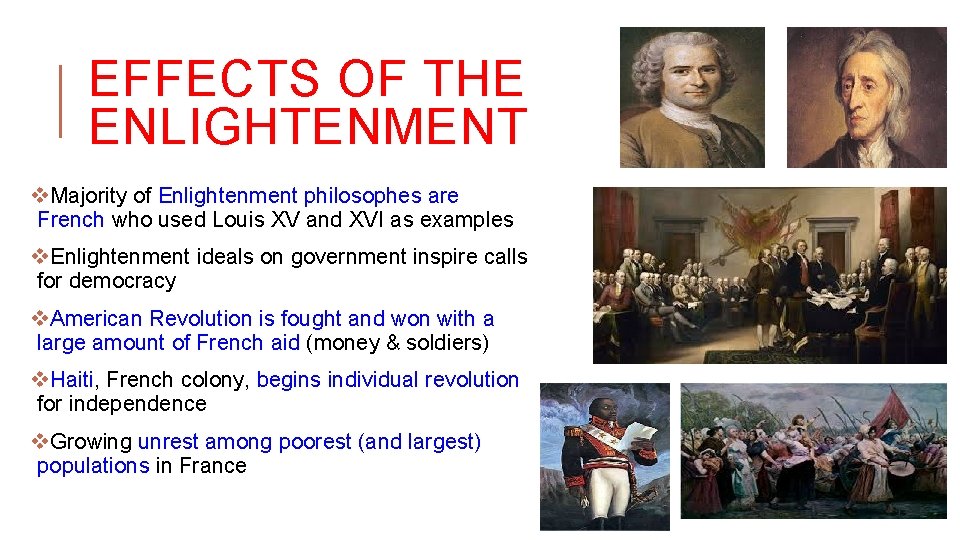
EFFECTS OF THE ENLIGHTENMENT v. Majority of Enlightenment philosophes are French who used Louis XV and XVI as examples v. Enlightenment ideals on government inspire calls for democracy v. American Revolution is fought and won with a large amount of French aid (money & soldiers) v. Haiti, French colony, begins individual revolution for independence v. Growing unrest among poorest (and largest) populations in France
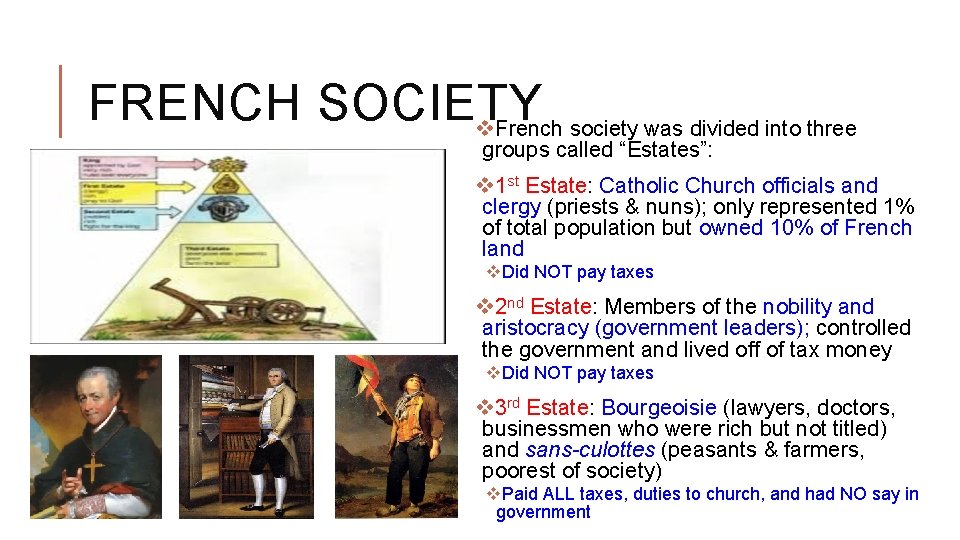
FRENCH SOCIETY v. French society was divided into three groups called “Estates”: v 1 st Estate: Catholic Church officials and clergy (priests & nuns); only represented 1% of total population but owned 10% of French land v. Did NOT pay taxes v 2 nd Estate: Members of the nobility and aristocracy (government leaders); controlled the government and lived off of tax money v. Did NOT pay taxes v 3 rd Estate: Bourgeoisie (lawyers, doctors, businessmen who were rich but not titled) and sans-culottes (peasants & farmers, poorest of society) v. Paid ALL taxes, duties to church, and had NO say in government
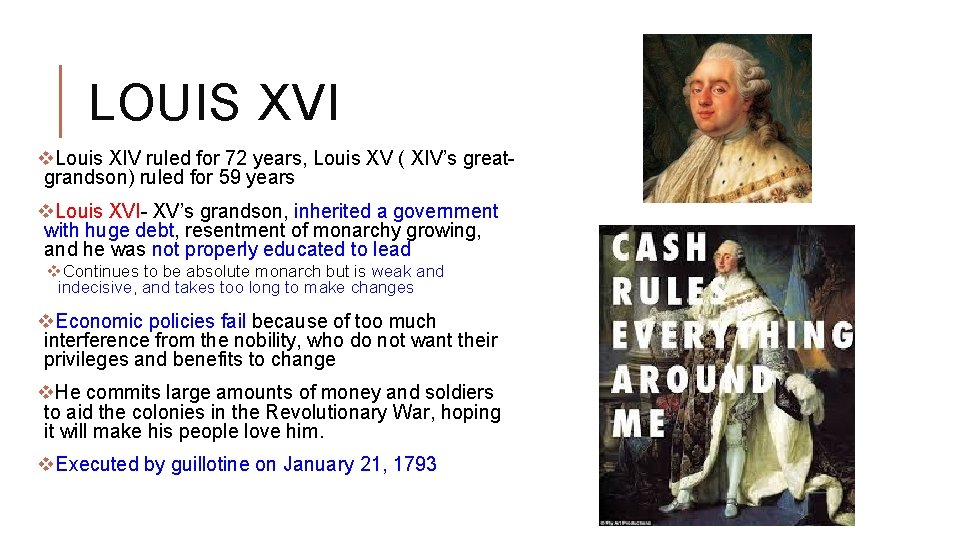
LOUIS XVI v. Louis XIV ruled for 72 years, Louis XV ( XIV’s greatgrandson) ruled for 59 years v. Louis XVI- XV’s grandson, inherited a government with huge debt, resentment of monarchy growing, and he was not properly educated to lead v. Continues to be absolute monarch but is weak and indecisive, and takes too long to make changes v. Economic policies fail because of too much interference from the nobility, who do not want their privileges and benefits to change v. He commits large amounts of money and soldiers to aid the colonies in the Revolutionary War, hoping it will make his people love him. v. Executed by guillotine on January 21, 1793
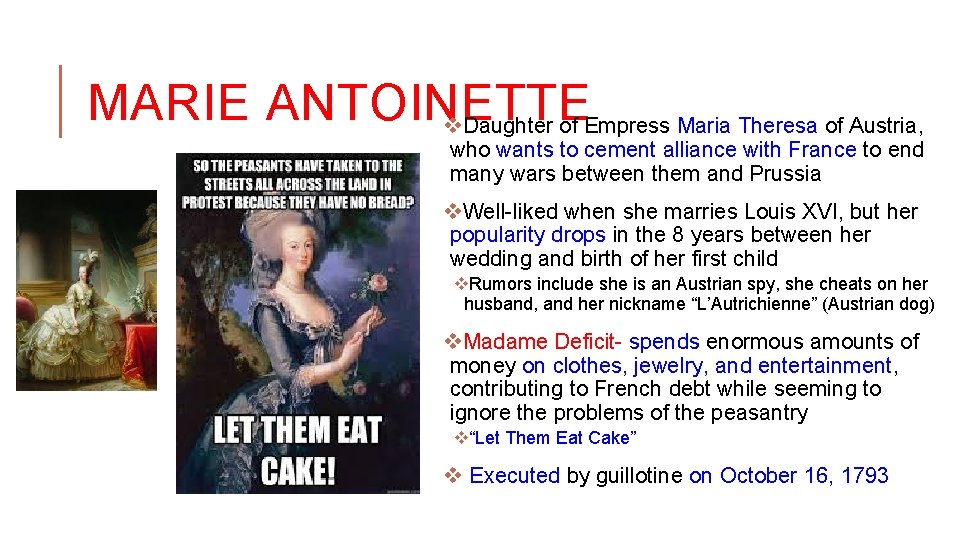
MARIE ANTOINETTE v. Daughter of Empress Maria Theresa of Austria, who wants to cement alliance with France to end many wars between them and Prussia v. Well-liked when she marries Louis XVI, but her popularity drops in the 8 years between her wedding and birth of her first child v. Rumors include she is an Austrian spy, she cheats on her husband, and her nickname “L’Autrichienne” (Austrian dog) v. Madame Deficit- spends enormous amounts of money on clothes, jewelry, and entertainment, contributing to French debt while seeming to ignore the problems of the peasantry v“Let Them Eat Cake” v Executed by guillotine on October 16, 1793
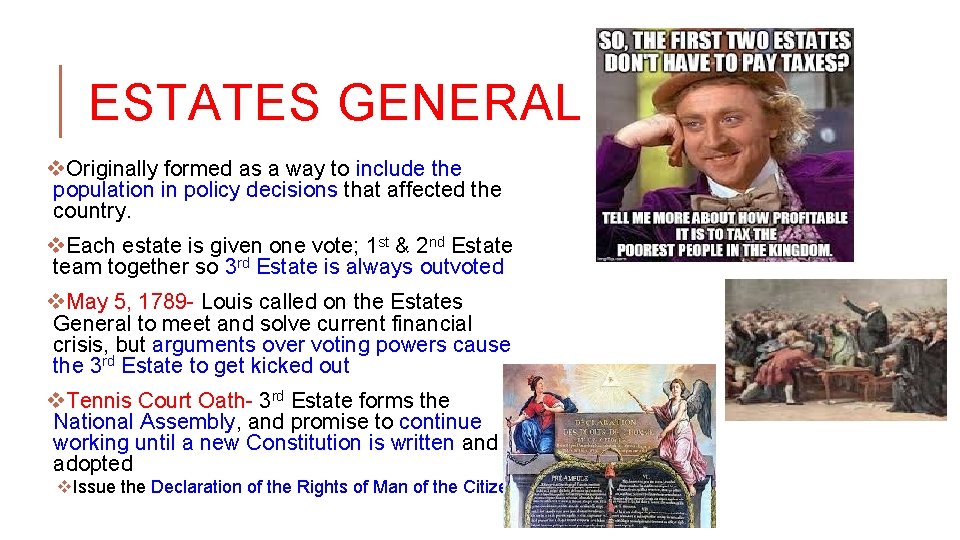
ESTATES GENERAL v. Originally formed as a way to include the population in policy decisions that affected the country. v. Each estate is given one vote; 1 st & 2 nd Estate team together so 3 rd Estate is always outvoted v. May 5, 1789 - Louis called on the Estates General to meet and solve current financial crisis, but arguments over voting powers cause the 3 rd Estate to get kicked out v. Tennis Court Oath- 3 rd Estate forms the National Assembly, and promise to continue working until a new Constitution is written and adopted v. Issue the Declaration of the Rights of Man of the Citizen
RADICAL PHASE
THE GREAT FEAR v. In 1789, people begin to panic throughout France, mainly due to (false) beliefs that Louis XVI and 1 st & 2 nd Estates were working to undermine the 3 rd Estate v. Great Fear- peasants looted, destroyed, and burned noble estates all over the French countryside; this causes panic to grow between nobles and peasants v. Storming the Bastille- July 14, 1789; tensions between government and peasants explode, and riots reach Bastille prison (where gunpowder, muskets, and ammunition are stored).
REIGN OF TERROR v. Maximilien Robespierre- leader of radicals in the government; oversaw executions of over 17, 000 people with the guillotine. v. Will be executed for abuse of power. v. Reign of Terror- French citizens were considered to be enemies of the government; they had to be careful with everything they did and said for fear of being arrested, tried, executed v. Committee of Public Safety- designed to suppress opposition inside and outside France; 200, 000 citizens arrested and 17, 000 executed for treason during the Reign of Terror
NAPOLEON
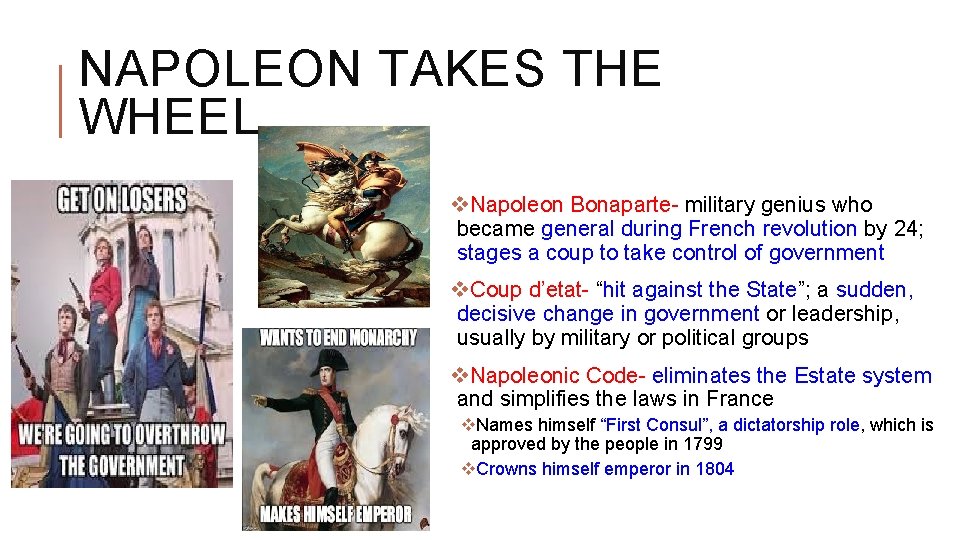
NAPOLEON TAKES THE WHEEL v. Napoleon Bonaparte- military genius who became general during French revolution by 24; stages a coup to take control of government v. Coup d’etat- “hit against the State”; a sudden, decisive change in government or leadership, usually by military or political groups v. Napoleonic Code- eliminates the Estate system and simplifies the laws in France v. Names himself “First Consul”, a dictatorship role, which is approved by the people in 1799 v. Crowns himself emperor in 1804
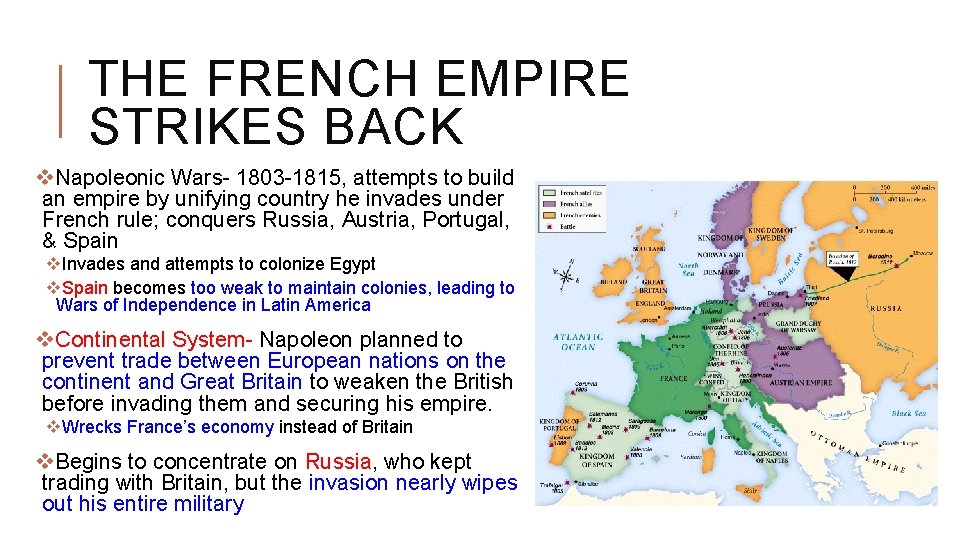
THE FRENCH EMPIRE STRIKES BACK v. Napoleonic Wars- 1803 -1815, attempts to build an empire by unifying country he invades under French rule; conquers Russia, Austria, Portugal, & Spain v. Invades and attempts to colonize Egypt v. Spain becomes too weak to maintain colonies, leading to Wars of Independence in Latin America v. Continental System- Napoleon planned to prevent trade between European nations on the continent and Great Britain to weaken the British before invading them and securing his empire. v. Wrecks France’s economy instead of Britain v. Begins to concentrate on Russia, who kept trading with Britain, but the invasion nearly wipes out his entire military
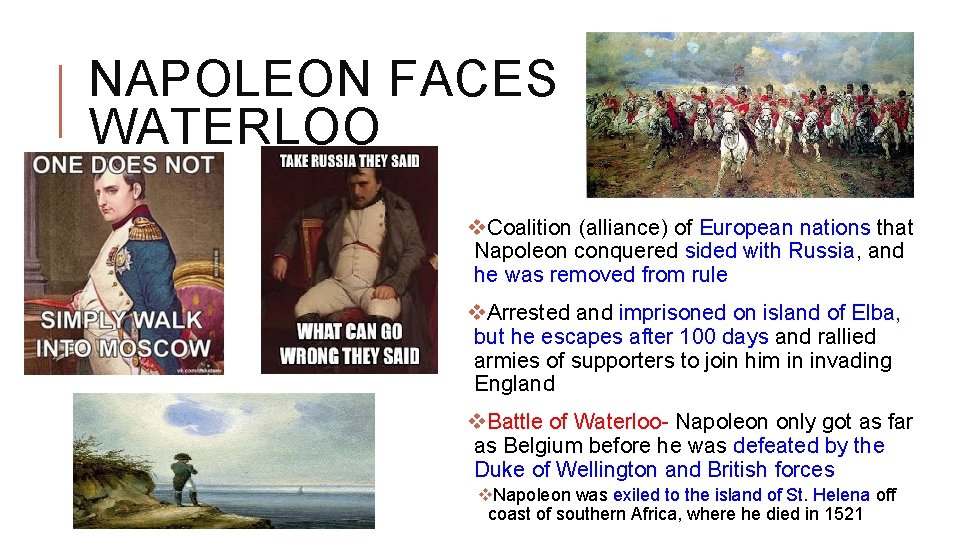
NAPOLEON FACES WATERLOO v. Coalition (alliance) of European nations that Napoleon conquered sided with Russia, and he was removed from rule v. Arrested and imprisoned on island of Elba, but he escapes after 100 days and rallied armies of supporters to join him in invading England v. Battle of Waterloo- Napoleon only got as far as Belgium before he was defeated by the Duke of Wellington and British forces v. Napoleon was exiled to the island of St. Helena off coast of southern Africa, where he died in 1521
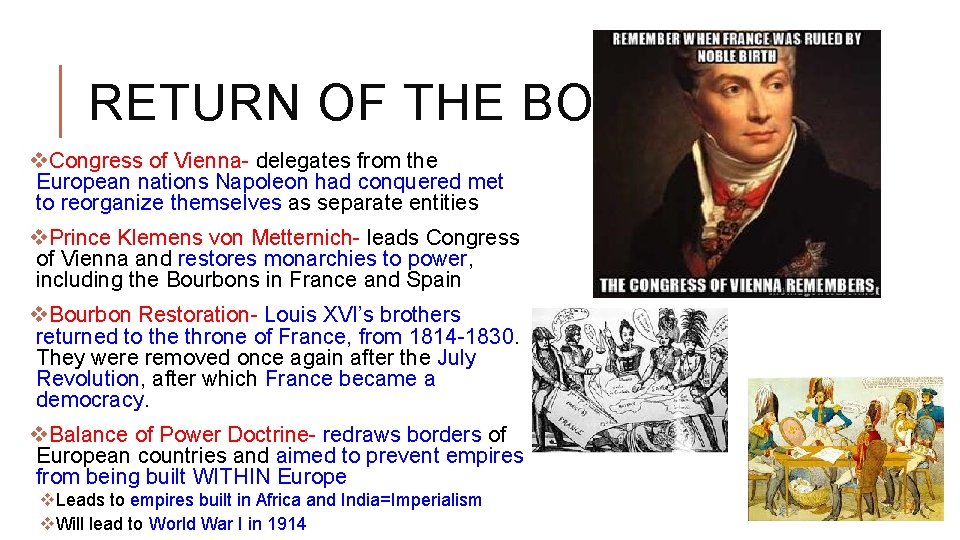
RETURN OF THE BOURBONS v. Congress of Vienna- delegates from the European nations Napoleon had conquered met to reorganize themselves as separate entities v. Prince Klemens von Metternich- leads Congress of Vienna and restores monarchies to power, including the Bourbons in France and Spain v. Bourbon Restoration- Louis XVI’s brothers returned to the throne of France, from 1814 -1830. They were removed once again after the July Revolution, after which France became a democracy. v. Balance of Power Doctrine- redraws borders of European countries and aimed to prevent empires from being built WITHIN Europe v. Leads to empires built in Africa and India=Imperialism v. Will lead to World War I in 1914