
THE FRENCH REVOLUTION CRASH COURSE IN THE FRENCH
- Slides: 55
THE FRENCH REVOLUTION
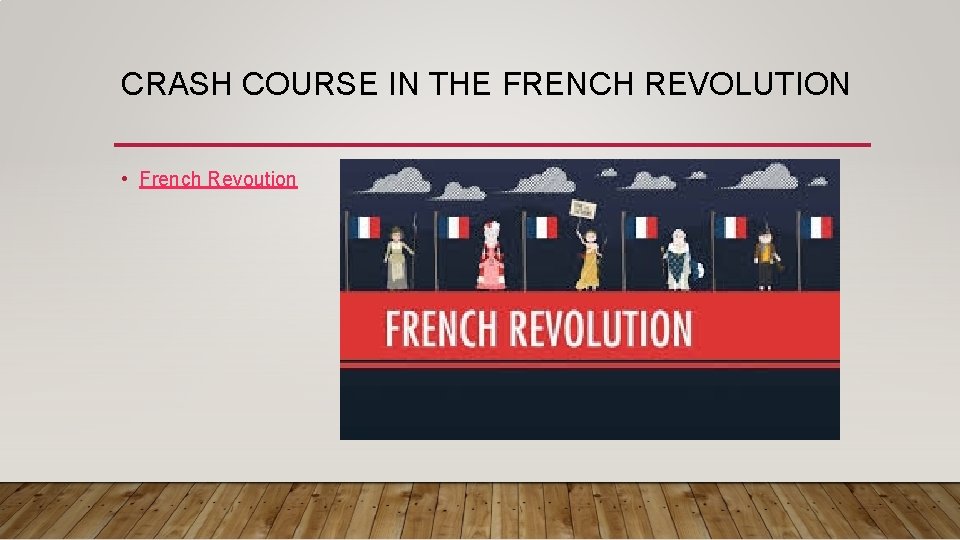
CRASH COURSE IN THE FRENCH REVOLUTION • French Revoution
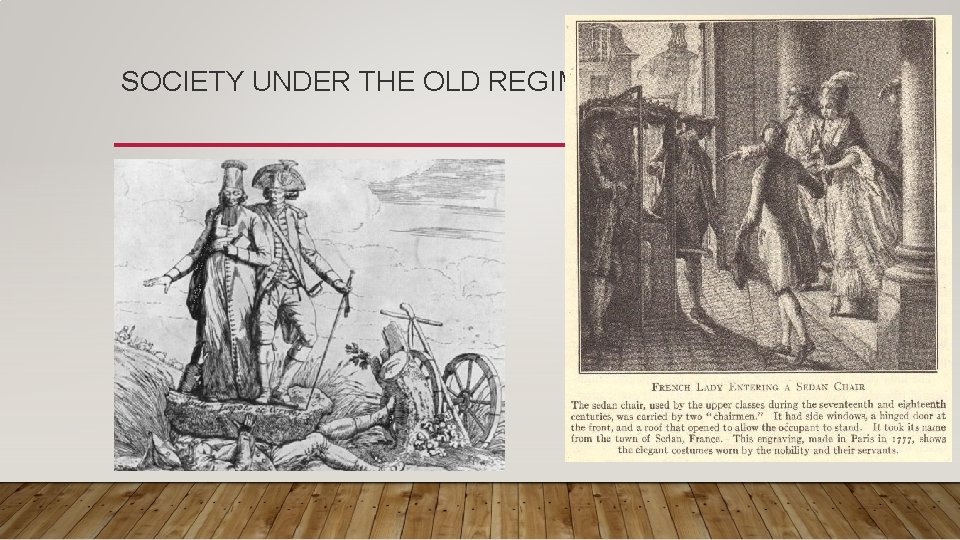
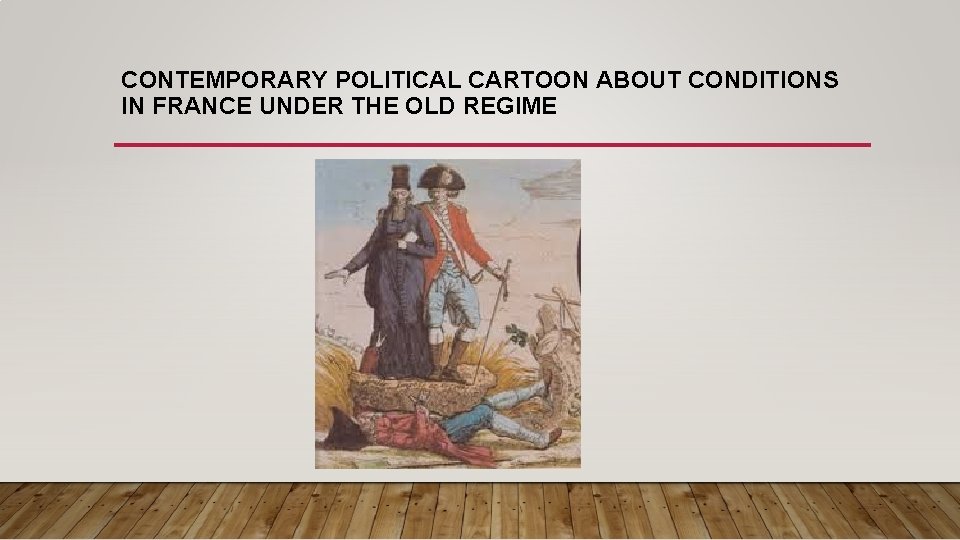
THE OLD REGIME • Old Regime- socio-political system that existed in most of Europe during the 18 th century. • Countries were ruled by Absolutism • Absolutism= the monarch had absolute control over the government. • Classes of people were the privileged and unprivileged. – Unprivileged people – paid taxes and treated badly – Privileged people – did not pay taxes and treated well.
SOCIETY UNDER THE OLD REGIME
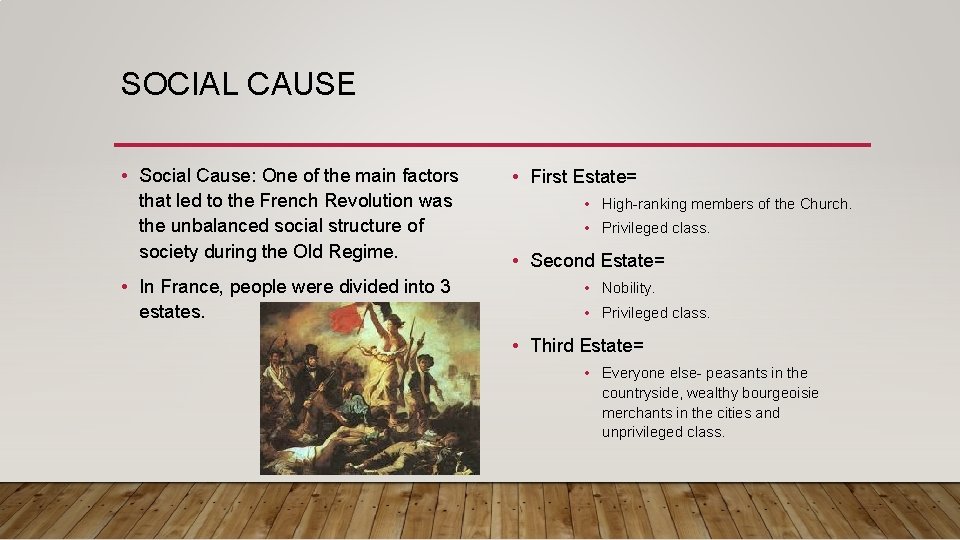
SOCIAL CAUSE • Social Cause: One of the main factors that led to the French Revolution was the unbalanced social structure of society during the Old Regime. • In France, people were divided into 3 estates. • First Estate= • High-ranking members of the Church. • Privileged class. • Second Estate= • Nobility. • Privileged class. • Third Estate= • Everyone else- peasants in the countryside, wealthy bourgeoisie merchants in the cities and unprivileged class.
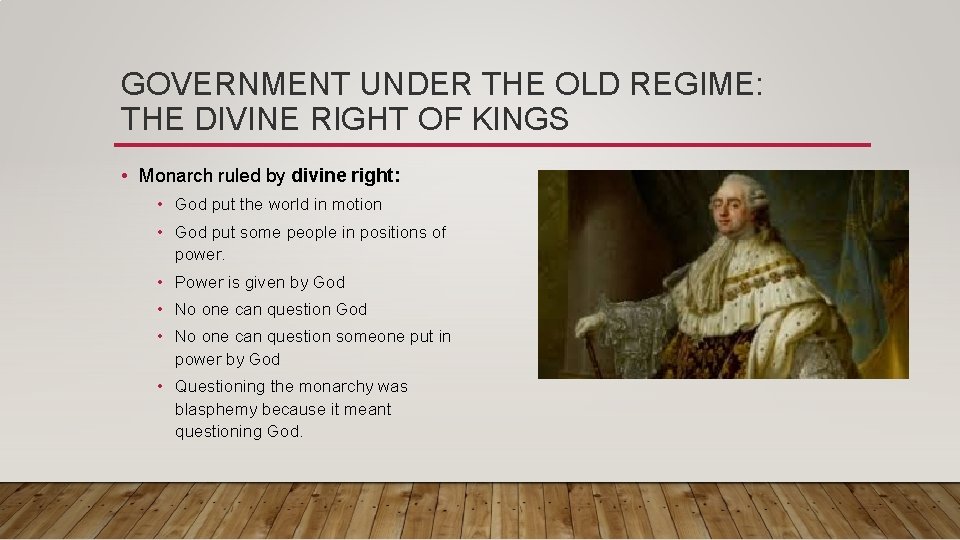
GOVERNMENT UNDER THE OLD REGIME: THE DIVINE RIGHT OF KINGS • Monarch ruled by divine right: • God put the world in motion • God put some people in positions of power. • Power is given by God • No one can question someone put in power by God • Questioning the monarchy was blasphemy because it meant questioning God.
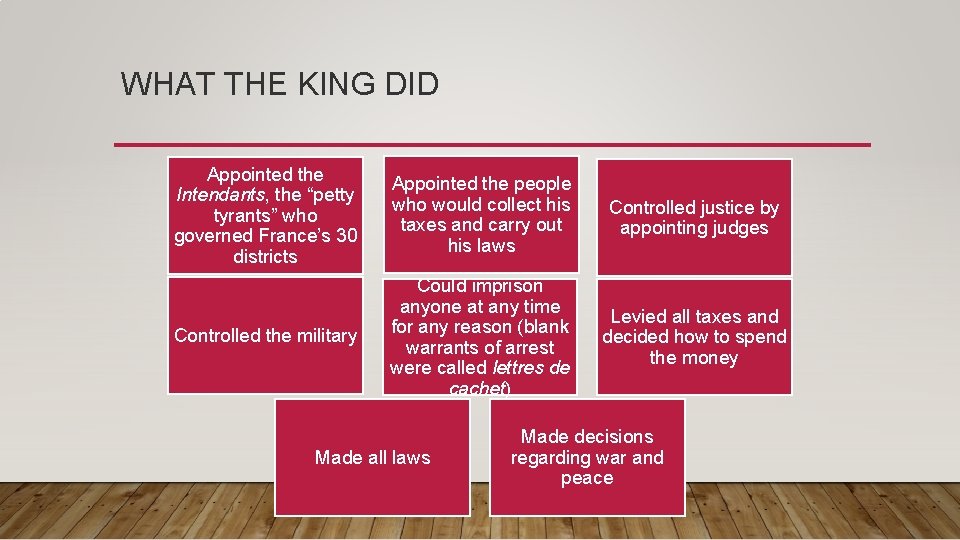
WHAT THE KING DID Appointed the Intendants, the “petty tyrants” who governed France’s 30 districts Appointed the people who would collect his taxes and carry out his laws Controlled justice by appointing judges Controlled the military Could imprison anyone at any time for any reason (blank warrants of arrest were called lettres de cachet) Levied all taxes and decided how to spend the money Made all laws Made decisions regarding war and peace
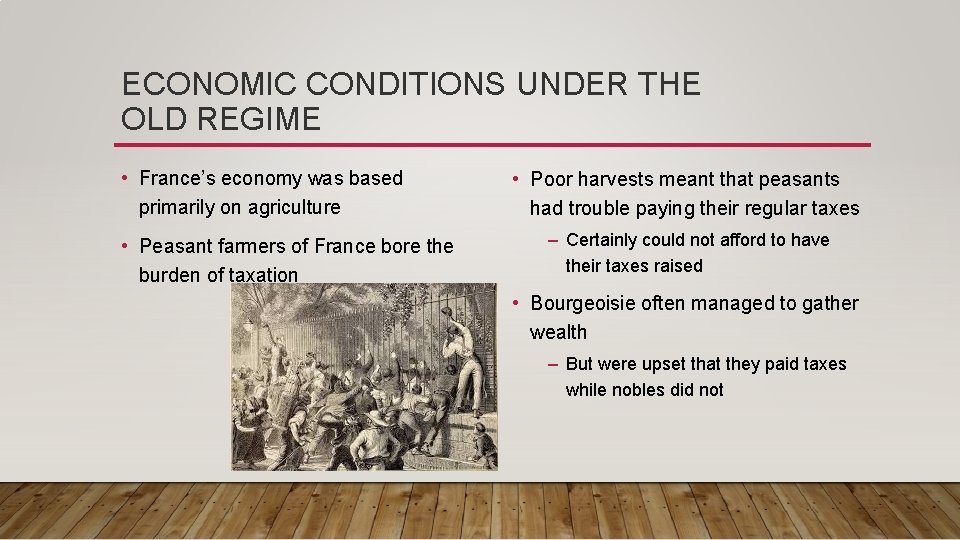
ECONOMIC CONDITIONS UNDER THE OLD REGIME • France’s economy was based primarily on agriculture • Peasant farmers of France bore the burden of taxation • Poor harvests meant that peasants had trouble paying their regular taxes – Certainly could not afford to have their taxes raised • Bourgeoisie often managed to gather wealth – But were upset that they paid taxes while nobles did not
CONTEMPORARY POLITICAL CARTOON ABOUT CONDITIONS IN FRANCE UNDER THE OLD REGIME
FRANCE IS BANKRUPT • The king (Louis XVI) lavished money on himself and residences like Versailles • Queen Marie Antoinette was seen as a wasteful spender • Government found its funds depleted as a result of wars • Including the funding of the American Revolution • Deficit spending – a government spending more money than it takes in from tax revenues • Privileged classes would not submit to being taxed
PHILOSOPHY OF THE FRENCH REVOLUTION: THE ENLIGHTENMENT (AGE OF REASON) • Scientists during the Renaissance had discovered laws that govern the natural world • Intellectuals – philosophes – began to ask if natural laws might also apply to human beings • Particularly to human institutions such as governments • Philosophes were secular in thinking – they used reason and logic, rather than faith, religion, and superstition, to answer important questions • Used reason and logic to determine how governments are formed • Tried to figure out what logical, rational principles work to tie people to their governments • Questioned the divine right of kings
LONG- AND SHORT-TERM CAUSES • Long-term causes • Also known as underlying causes • Causes which can stem back many years • Short-term causes • Also known as immediate causes • Causes which happen close to the moment the change or action happens • Example: A person is fired from his or her job. • Long-term cause(s): The person is often late to work and is generally unproductive on the job. • Short-term cause(s): The person fails to show up for work and does not call the employer. • Key: One typically does not happen without the other. Events which bring important change (or action) need both long-term and short-term causes.
LONG-TERM CAUSES OF THE FRENCH REVOLUTION Everything previously discussed • Absolutism • Unjust socio-political system (Old Regime) • Poor harvests which left peasant farmers with little money for taxes • Influence of Enlightenment philosophes Also • System of mercantilism which restricted trade • Influence of other successful revolutions • England’s Glorious Revolution (16881689) • American Revolution (1775 -1783)
SHORT-TERM CAUSES OF THE FRENCH REVOLUTION Bankruptcy • Caused by deficit spending • Financial ministers (Turgot, Necker, Calonne) proposed changes • But these were rejected • Assembly of Notables voted down taxation for the nobility in 1787 Great Fear • Worst famine in memory • Hungry, impoverished peasants feared that nobles at Estates. General were seeking greater privileges • Attacks on nobles occurred throughout the country in 1789 Estates-General • Louis XVI had no choice but to call for a meeting of the Estates -General to find a solution to the bankruptcy problem • All three estates • Had not met since 1614 • Set in motion a series of events which resulted in the abolition of the monarchy and a completely new sociopolitical system for
PREPARING FOR THE ESTATES-GENERAL • Winter of 1788 -1789 • Members of the estates elected representatives • Cahiers • Traditional lists of grievances written by the people • Nothing out of the ordinary • Asked for only moderate changes
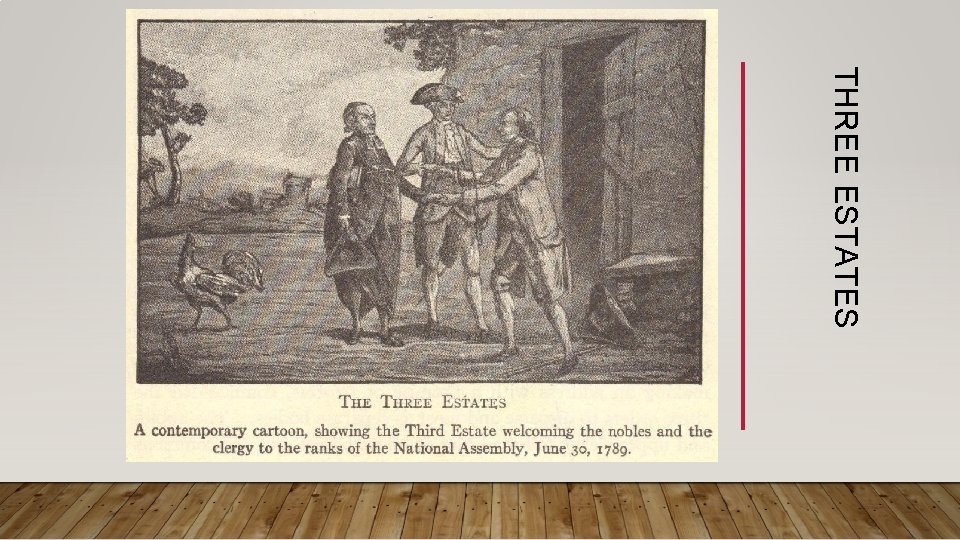
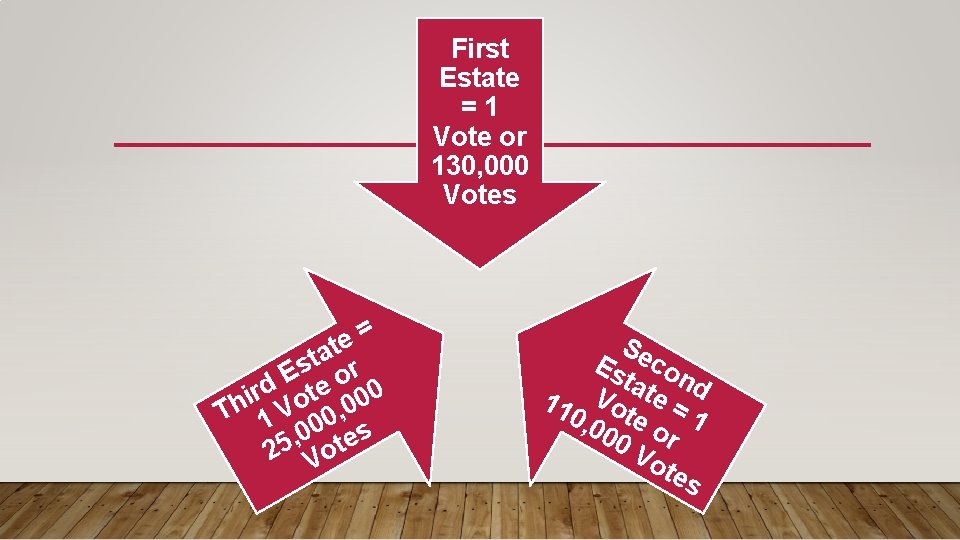
MEETING OF THE ESTATES-GENERAL: MAY 5, 1789 • Voting was conducted by estate • Each estate had one vote • First and Second Estates could operate as a bloc to stop the Third Estate from having its way ◊ First Estate + ◊ Second Estate - vs. - ◊ Third Estate • Representatives from the Third Estate demanded that voting be by population • This would give the Third Estate a great advantage • Deadlock resulted
THREE ESTATES
First Estate =1 Vote or 130, 000 Votes = e t ta r s E o d e 00 r t i o Th 1 V 00, 0 tes 5 2 Vo Se Es co tat nd 11 Vot e = 0, 0 e 1 o 00 r Vo tes
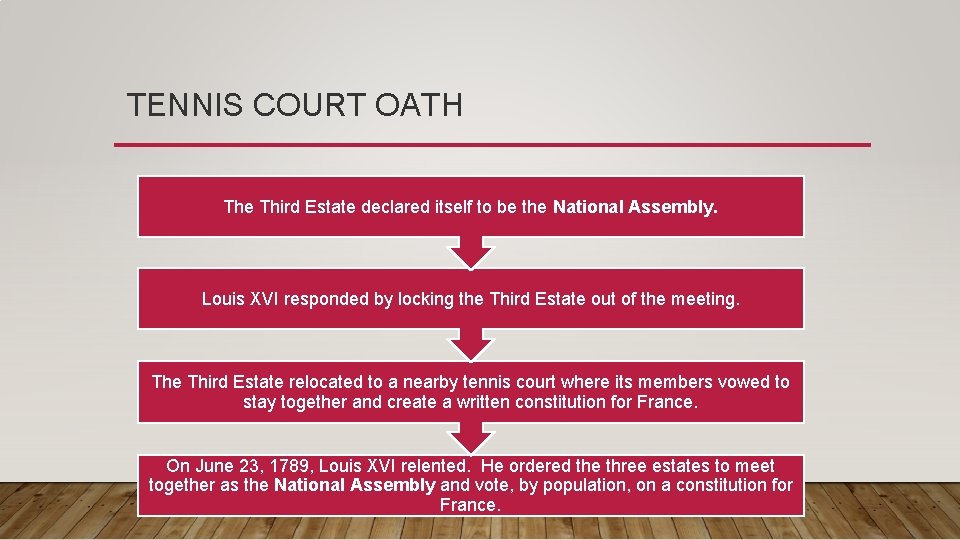
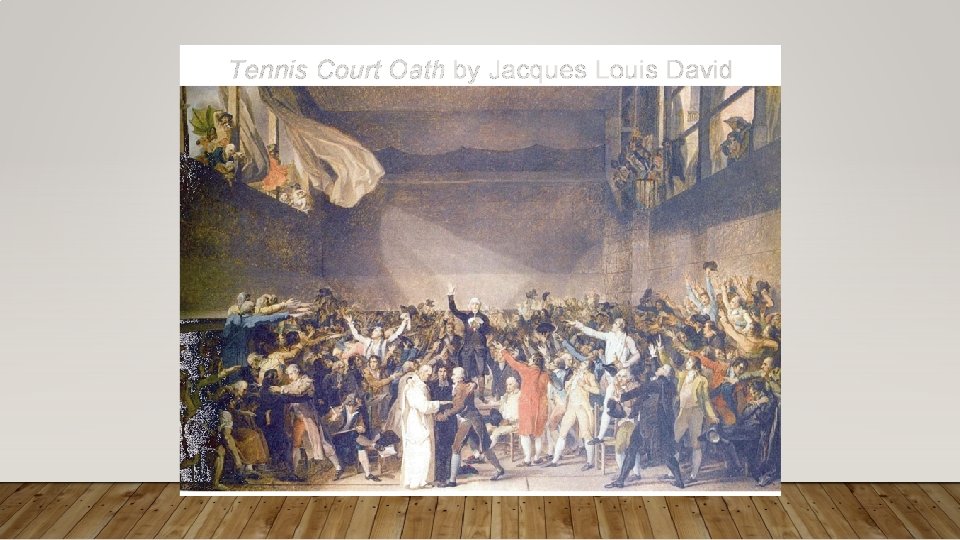
TENNIS COURT OATH The Third Estate declared itself to be the National Assembly. Louis XVI responded by locking the Third Estate out of the meeting. The Third Estate relocated to a nearby tennis court where its members vowed to stay together and create a written constitution for France. On June 23, 1789, Louis XVI relented. He ordered the three estates to meet together as the National Assembly and vote, by population, on a constitution for France.
THE TENNIS COURT OATH “The National Assembly, considering that it has been summoned to establish the constitution of the kingdom, to effect the regeneration of the public order, and to maintain the true principles of monarchy; that nothing can prevent it from continuing its deliberations in whatever place it may be forced to establish itself; and, finally, that wheresoever its members are assembled, there is the National Assembly; “Decrees that all members of this Assembly shall immediately take a solemn oath not to separate, and to reassemble wherever circumstances require, until the constitution of the kingdom is established and consolidated upon firm foundations; and that, the said oath taken, all members and each one of them individually shall ratify this steadfast resolution by signature. ”
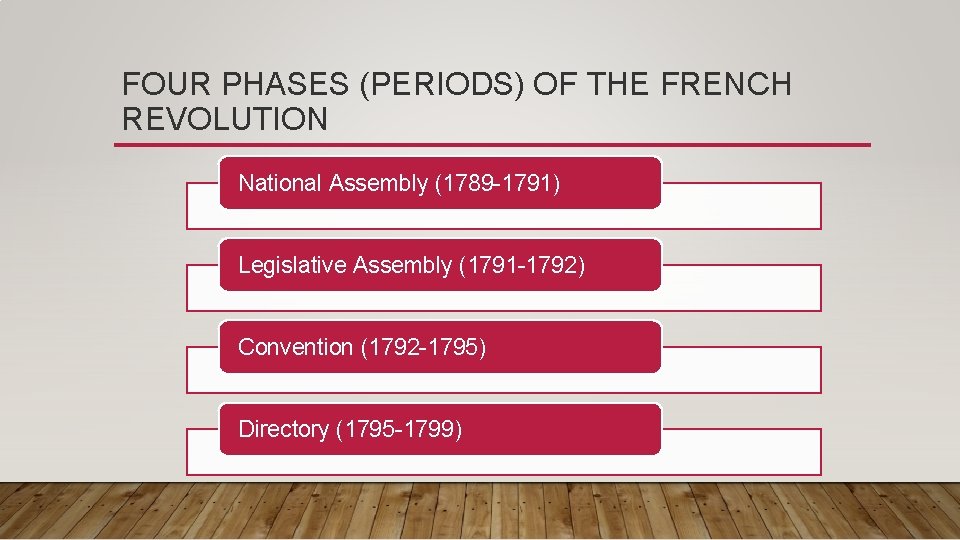
FOUR PHASES (PERIODS) OF THE FRENCH REVOLUTION National Assembly (1789 -1791) Legislative Assembly (1791 -1792) Convention (1792 -1795) Directory (1795 -1799)
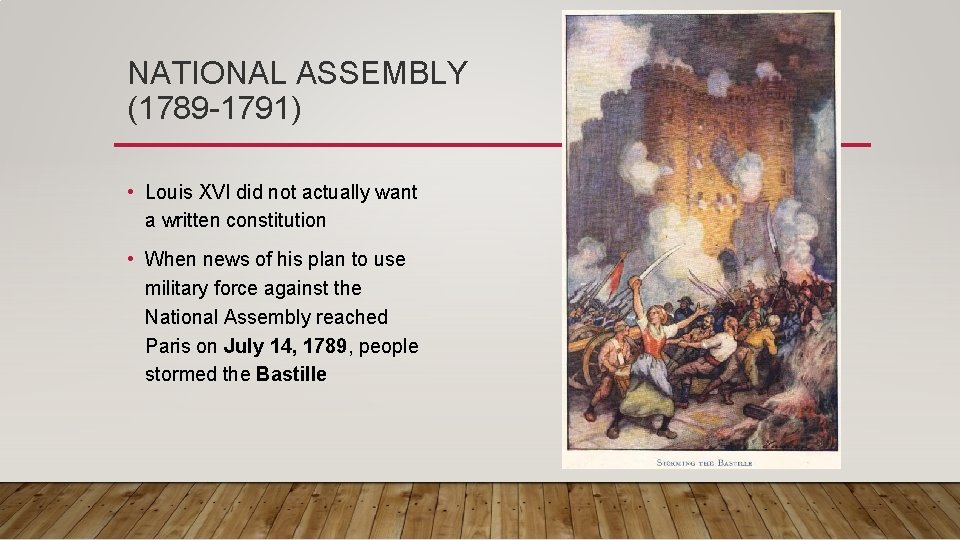
NATIONAL ASSEMBLY (1789 -1791) • Louis XVI did not actually want a written constitution • When news of his plan to use military force against the National Assembly reached Paris on July 14, 1789, people stormed the Bastille
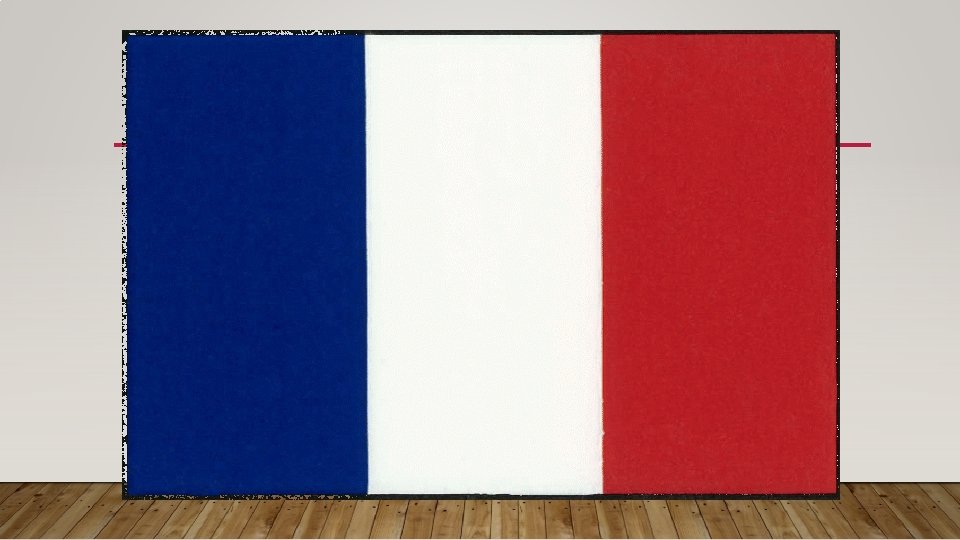
UPRISING IN PARIS People of Paris seized weapons from the Bastille Uprising spread throughout France • July 14, 1789 • Parisians organized their own government which they called the Commune • Small groups – factions – competed to control the city of Paris • Nobles were attacked • Records of feudal dues and owed taxes were destroyed • Many nobles fled the country – became known as émigrés • Louis XVI was forced to fly the new tricolor flag of France
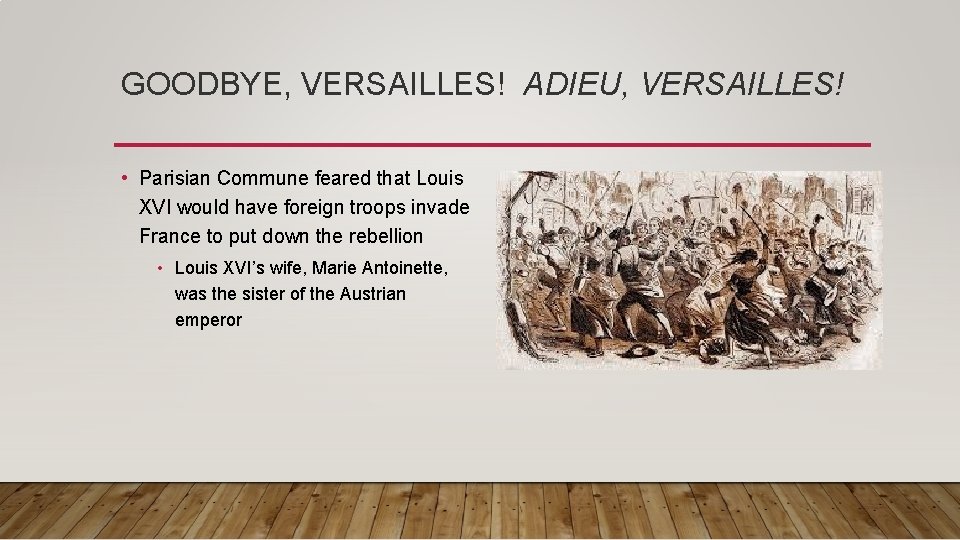
GOODBYE, VERSAILLES! ADIEU, VERSAILLES! • Parisian Commune feared that Louis XVI would have foreign troops invade France to put down the rebellion • Louis XVI’s wife, Marie Antoinette, was the sister of the Austrian emperor
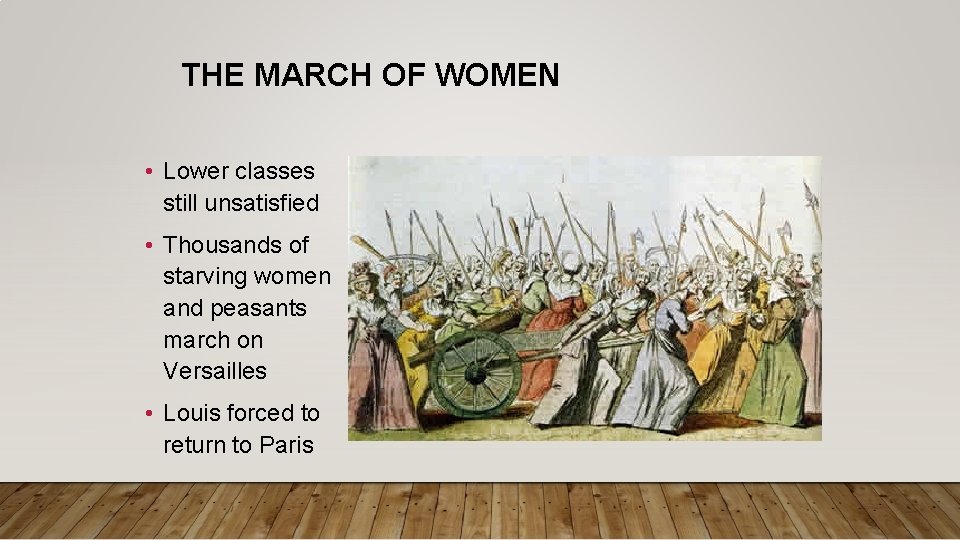
THE MARCH OF WOMEN • Lower classes still unsatisfied • Thousands of starving women and peasants march on Versailles • Louis forced to return to Paris
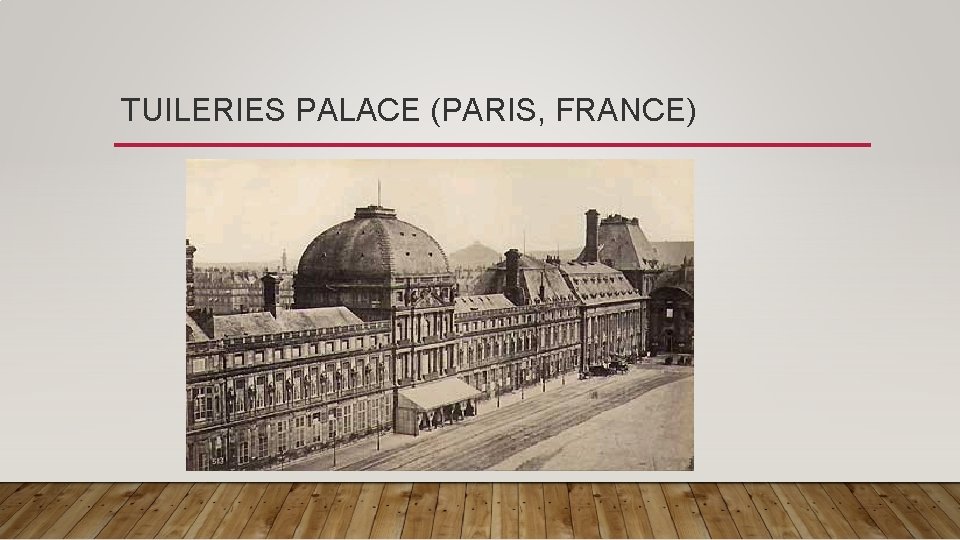
TUILERIES PALACE (PARIS, FRANCE)
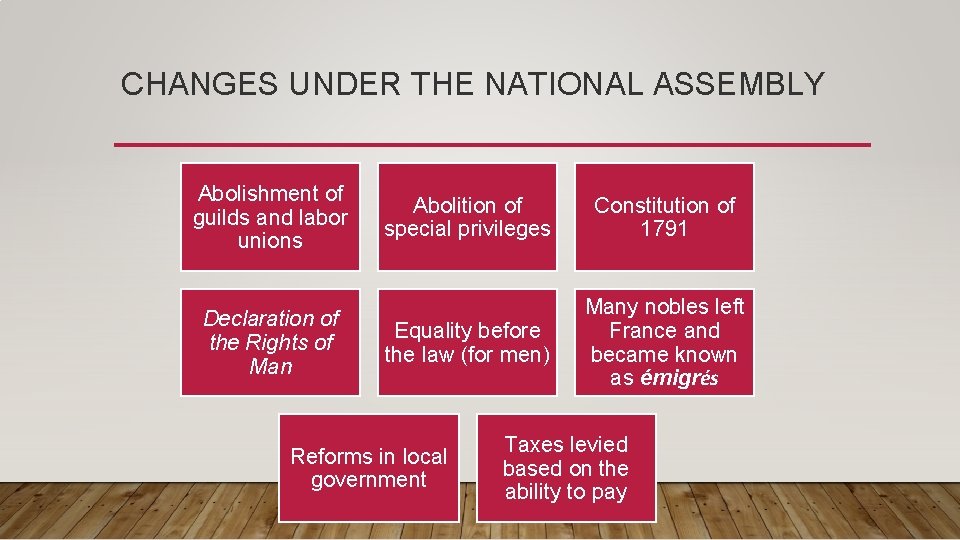
CHANGES UNDER THE NATIONAL ASSEMBLY Abolishment of guilds and labor unions Declaration of the Rights of Man Abolition of special privileges Constitution of 1791 Equality before the law (for men) Many nobles left France and became known as émigrés Reforms in local government Taxes levied based on the ability to pay
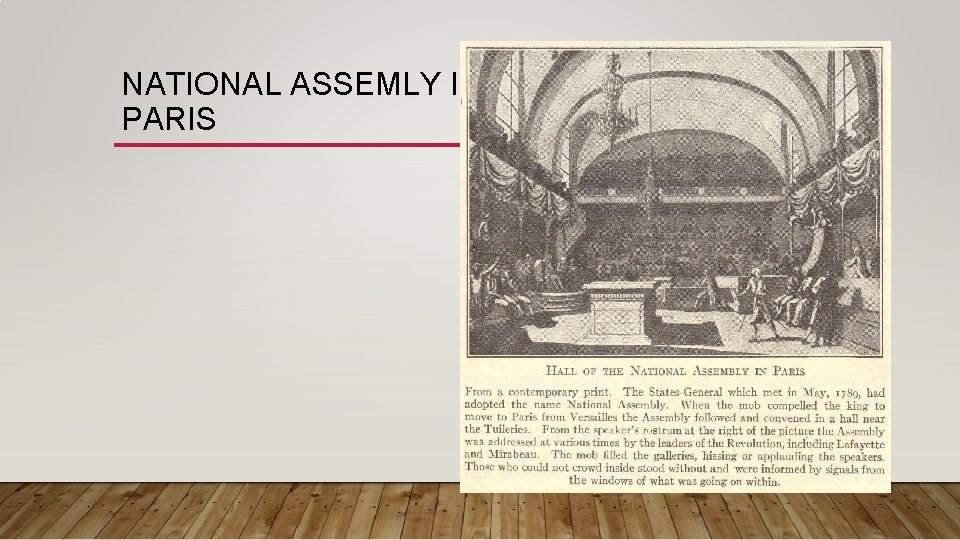
NATIONAL ASSEMLY IN PARIS
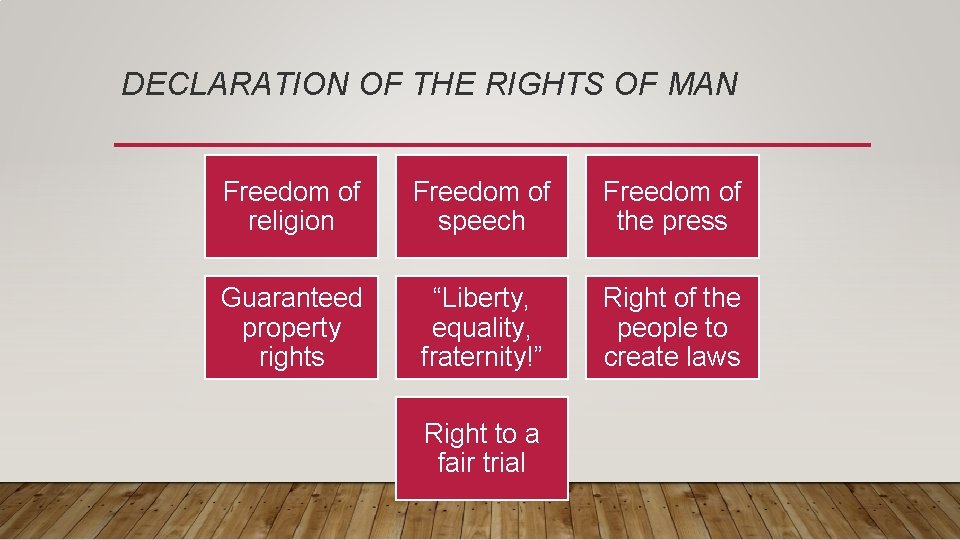
DECLARATION OF THE RIGHTS OF MAN Freedom of religion Freedom of speech Freedom of the press Guaranteed property rights “Liberty, equality, fraternity!” Right of the people to create laws Right to a fair trial
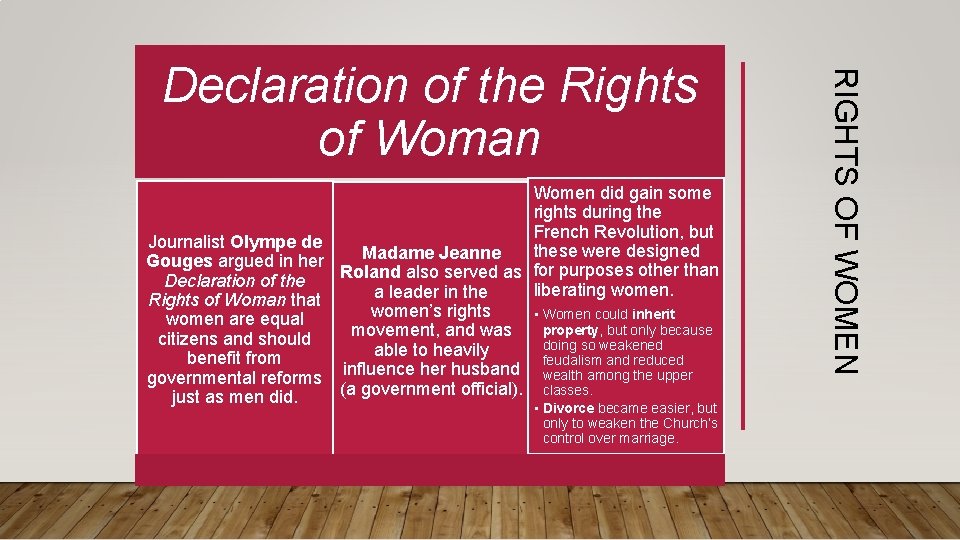
Women did gain some rights during the French Revolution, but Journalist Olympe de these were designed Madame Jeanne Gouges argued in her Roland also served as for purposes other than Declaration of the liberating women. a leader in the Rights of Woman that women’s rights • Women could inherit women are equal property, but only because movement, and was citizens and should doing so weakened able to heavily benefit from feudalism and reduced influence her husband wealth among the upper governmental reforms (a government official). classes. just as men did. • Divorce became easier, but only to weaken the Church’s control over marriage. RIGHTS OF WOMEN Declaration of the Rights of Woman
END OF SPECIAL PRIVILEGES • Church lands were seized, divided, and sold to peasants • Civil Constitution of the Clergy required that Church officials be elected by the people, with salaries paid by the government • 2/3 of Church officials fled the country rather than swear allegiance to this • All feudal dues and tithes were eradicated • All special privileges of the First and Second Estates were abolished
REFORMS IN LOCAL GOVERNMENT • The 30 provinces and their “petty tyrants” (Intendants) were replaced with 83 new departments • Ruled by elected governors • New courts, with judges elected by the people, were established
CONSTITUTION OF 1791 • Democratic features • France became a limited monarchy • King became merely the head of state • All laws were created by the Legislative Assembly • Feudalism was abolished • Undemocratic features • Voting was limited to taxpayers • Offices were reserved for property owners • This new government became known as the Legislative Assembly
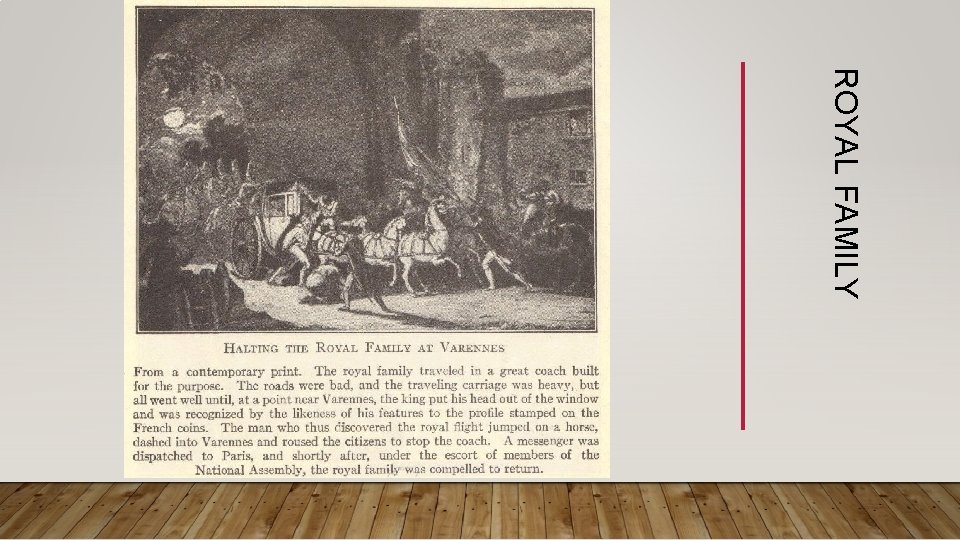
LEGISLATIVE ASSEMBLY (1791 -1792) • Royal family sought help from Austria • In June, 1791, they were caught trying to escape to Austria • Nobles who fled the revolution lived abroad as émigrés • They hoped that, with foreign help, the Old Regime could be restored in France • Church officials wanted Church lands, rights, and privileges restored • Some devout Catholic peasants also supported the Church • Political parties, representing different interests, emerged • Girondists • Jacobins
ROYAL FAMILY
OPPOSITION TO THE NEW GOVERNMENT • European monarchs feared that revolution would spread to their own countries • France was invaded by Austrian and Prussian troops • In the uproar, the Commune took control of Paris • Commune was led by Danton, a member of the Jacobin political party • Voters began electing representatives for a new convention which would write a republican constitution for France • A republic is a government in which the people elect representatives who will create laws and rule on their behalf • Meanwhile, thousands of nobles were executed under the suspicion that they were conspirators in the foreign invasion
CONVENTION (1792 -1795) • On September 22, 1792, the Convention met for the first time • Established the First French Republic • Faced domestic opposition and strife • Girondists were moderates who represented the rich middle class of the provinces • Jacobins (led by Marat, Danton, and Robespierre) represented workers • Faced opposition from abroad • Austria, England, Holland, Prussia, Sardinia, and Spain formed a Coalition invading France
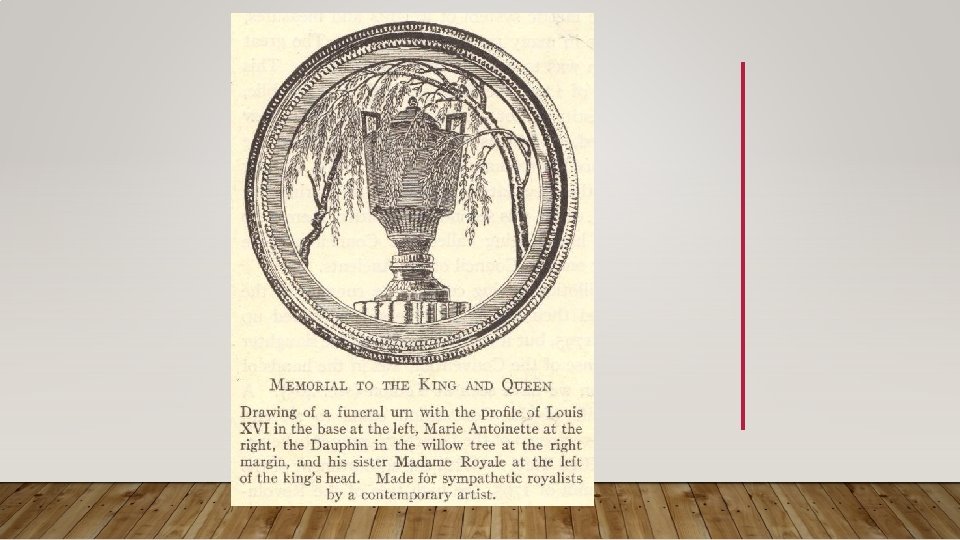
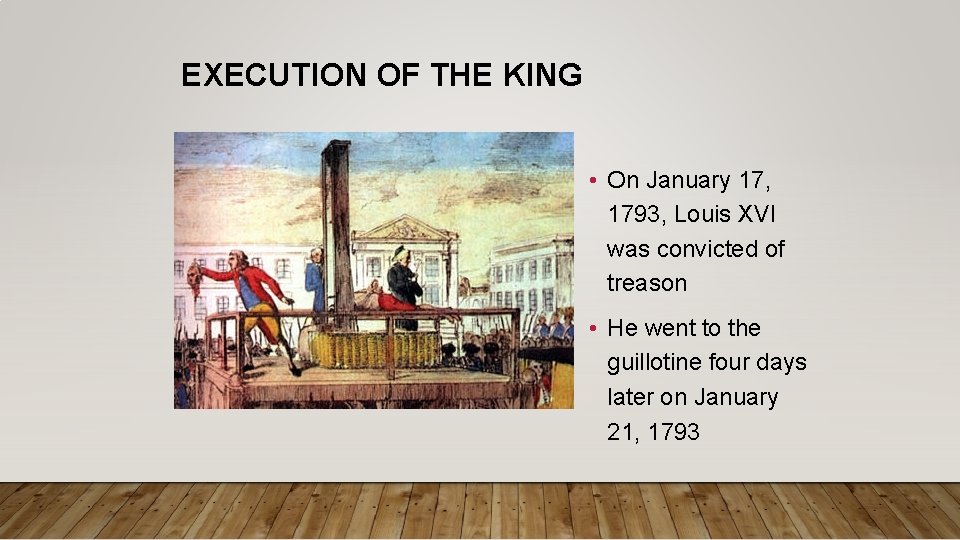
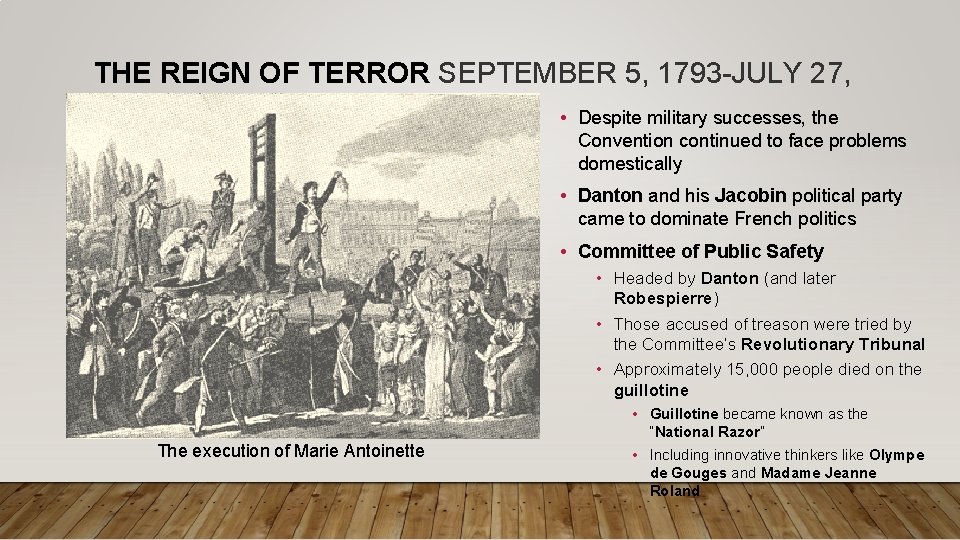
ABOLISHMENT OF THE MONARCHY • The Convention abolished the monarchy • As long as the royal family lived, the monarchy could be restored • Put the royal couple on trial for treason • Convictions were a foregone conclusion • Louis XVI was guillotined on January 21, 1793 • Marie Antoinette was guillotined on October 16, 1793 • Daughter Marie-Thérèse was allowed to go to Vienna in 1795 • She could not become queen because of Salic law, which did not allow females to succeed to the throne • Son Louis-Charles, a. k. a. Louis XVII (lived 1785 -1795) was beaten and mistreated until he died in prison
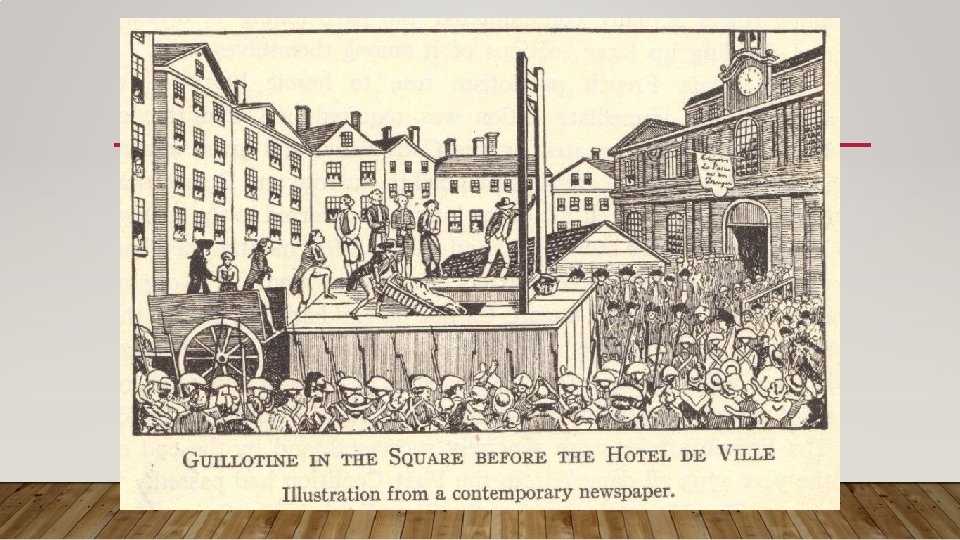
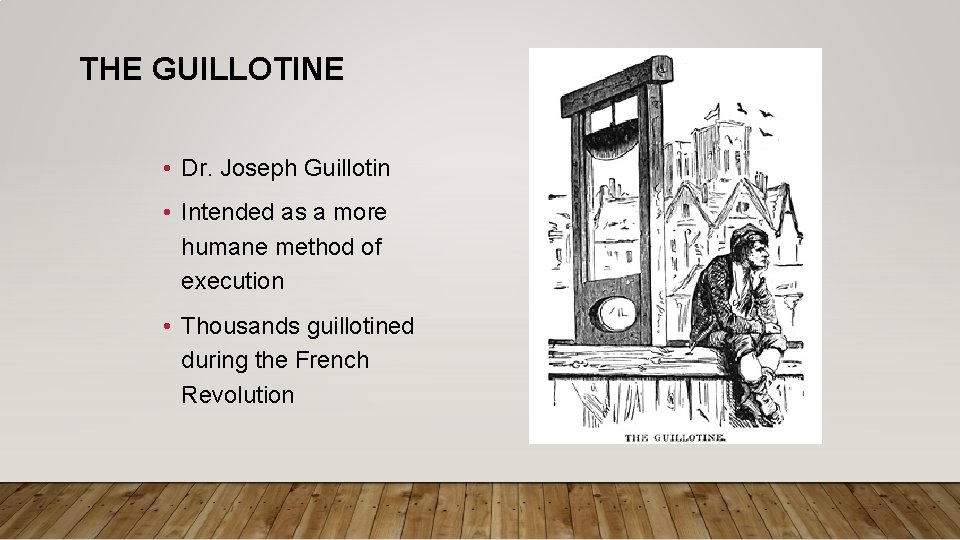
THE GUILLOTINE • Dr. Joseph Guillotin • Intended as a more humane method of execution • Thousands guillotined during the French Revolution
EXECUTION OF THE KING • On January 17, 1793, Louis XVI was convicted of treason • He went to the guillotine four days later on January 21, 1793
THE REIGN OF TERROR SEPTEMBER 5, 1793 -JULY 27, 1794 • Despite military successes, the Convention continued to face problems domestically • Danton and his Jacobin political party came to dominate French politics • Committee of Public Safety • Headed by Danton (and later Robespierre) • Those accused of treason were tried by the Committee’s Revolutionary Tribunal • Approximately 15, 000 people died on the guillotine The execution of Marie Antoinette • Guillotine became known as the “National Razor” • Including innovative thinkers like Olympe de Gouges and Madame Jeanne Roland
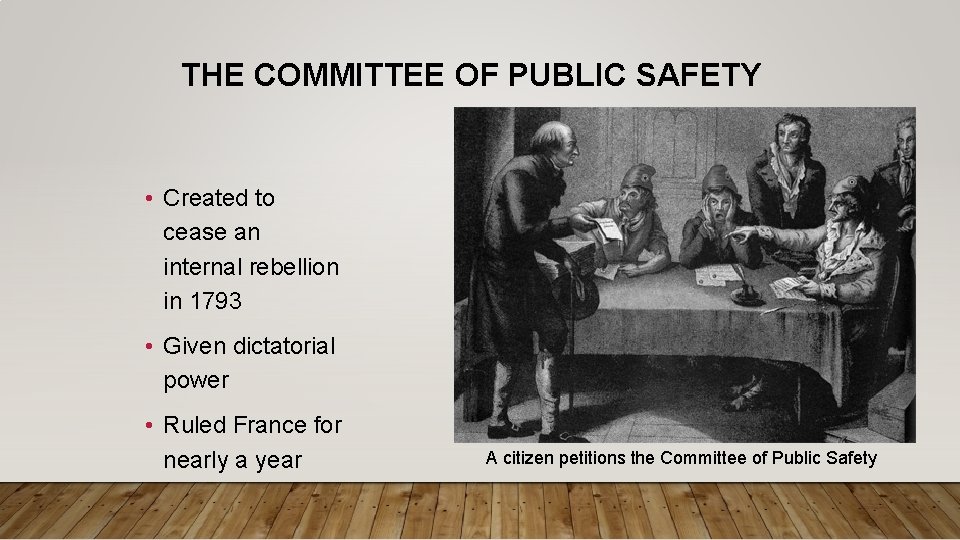
THE COMMITTEE OF PUBLIC SAFETY • Created to cease an internal rebellion in 1793 • Given dictatorial power • Ruled France for nearly a year A citizen petitions the Committee of Public Safety
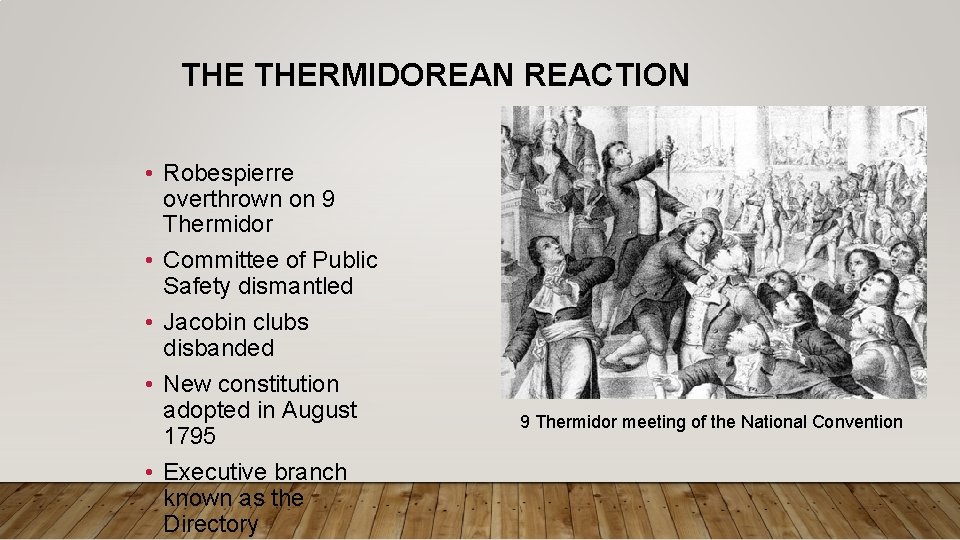
THE THERMIDOREAN REACTION • Robespierre overthrown on 9 Thermidor • Committee of Public Safety dismantled • Jacobin clubs disbanded • New constitution adopted in August 1795 • Executive branch known as the Directory 9 Thermidor meeting of the National Convention
CONSTITUTION OF THE YEAR III OF THE REPUBLIC (1795) • With the foreign invaders vanquished and the Reign of Terror at an end, the Convention was finally able to inaugurate its new constitution • Constitution of the Year III of the Republic (1795) created the Directory
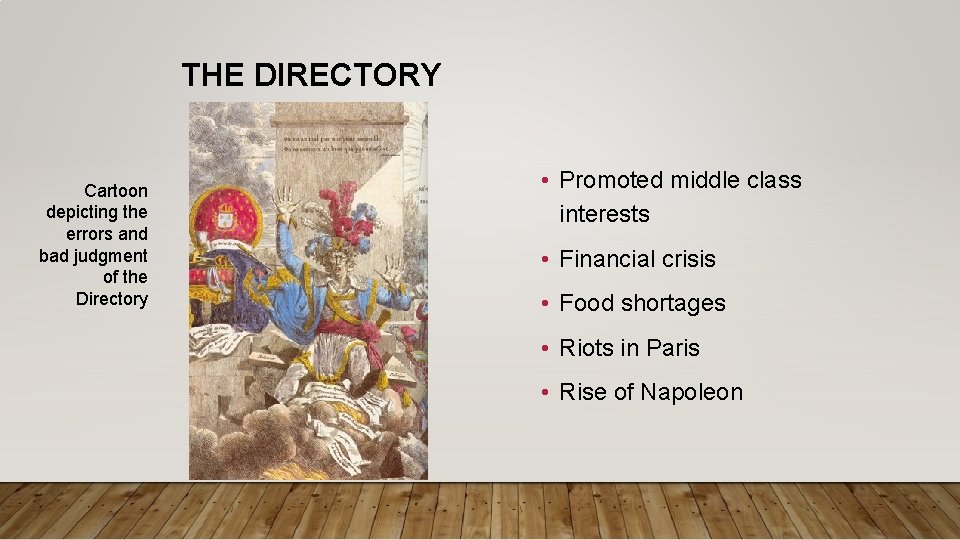
THE DIRECTORY Cartoon depicting the errors and bad judgment of the Directory • Promoted middle class interests • Financial crisis • Food shortages • Riots in Paris • Rise of Napoleon
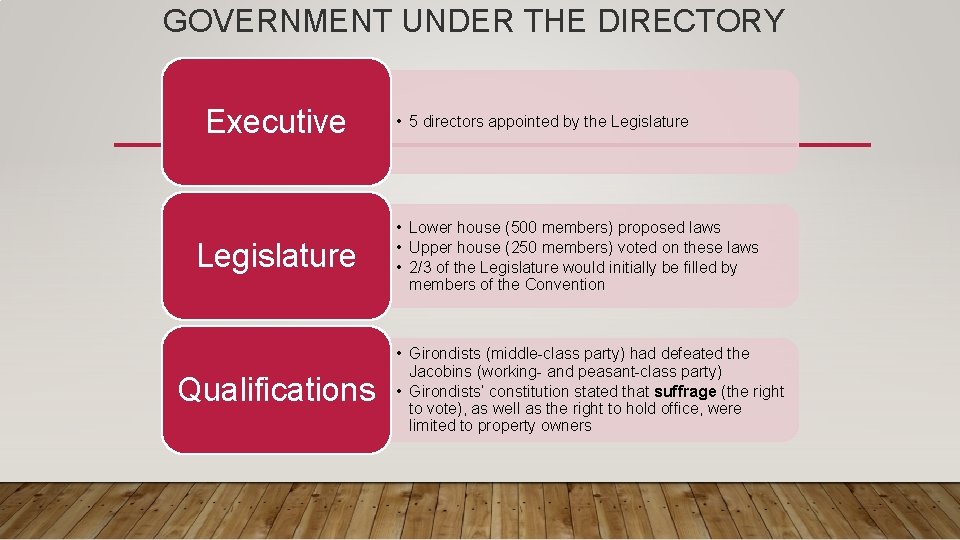
GOVERNMENT UNDER THE DIRECTORY Executive Legislature Qualifications • 5 directors appointed by the Legislature • Lower house (500 members) proposed laws • Upper house (250 members) voted on these laws • 2/3 of the Legislature would initially be filled by members of the Convention • Girondists (middle-class party) had defeated the Jacobins (working- and peasant-class party) • Girondists’ constitution stated that suffrage (the right to vote), as well as the right to hold office, were limited to property owners
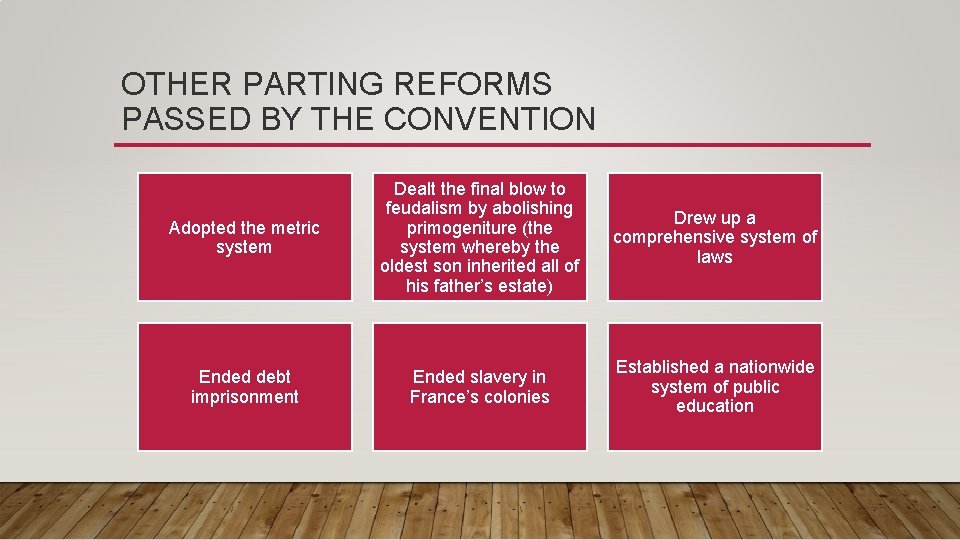
OTHER PARTING REFORMS PASSED BY THE CONVENTION Adopted the metric system Dealt the final blow to feudalism by abolishing primogeniture (the system whereby the oldest son inherited all of his father’s estate) Drew up a comprehensive system of laws Ended debt imprisonment Ended slavery in France’s colonies Established a nationwide system of public education
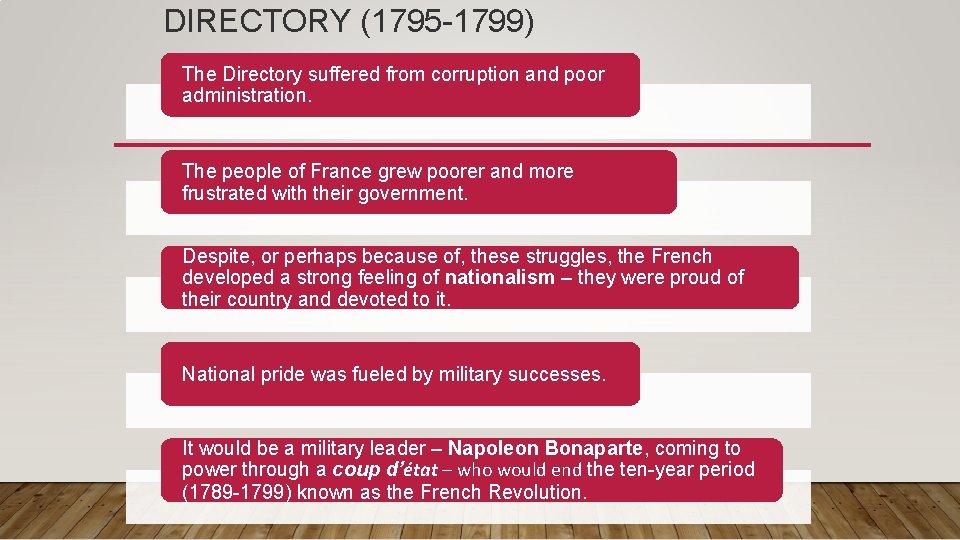
DIRECTORY (1795 -1799) The Directory suffered from corruption and poor administration. The people of France grew poorer and more frustrated with their government. Despite, or perhaps because of, these struggles, the French developed a strong feeling of nationalism – they were proud of their country and devoted to it. National pride was fueled by military successes. It would be a military leader – Napoleon Bonaparte, coming to power through a coup d’état – who would end the ten-year period (1789 -1799) known as the French Revolution.
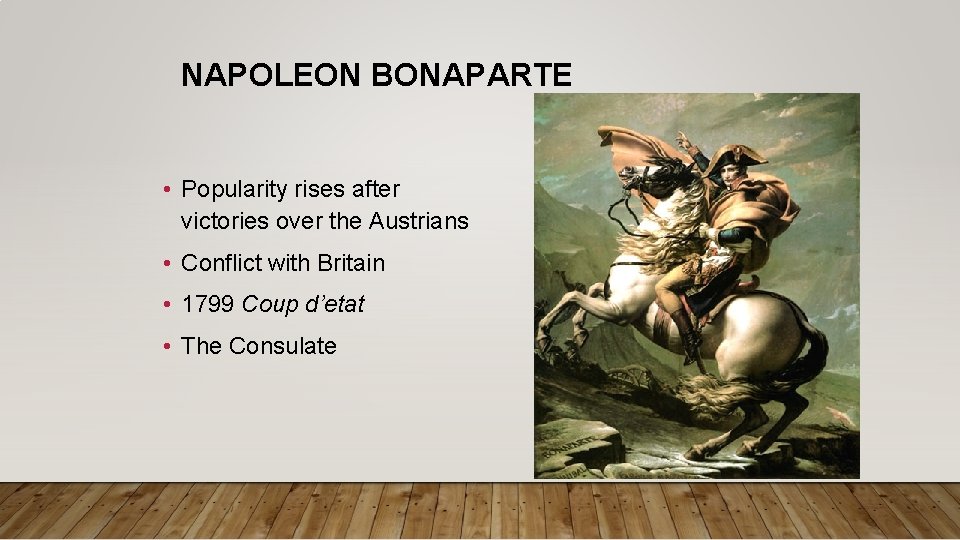
NAPOLEON BONAPARTE • Popularity rises after victories over the Austrians • Conflict with Britain • 1799 Coup d’etat • The Consulate
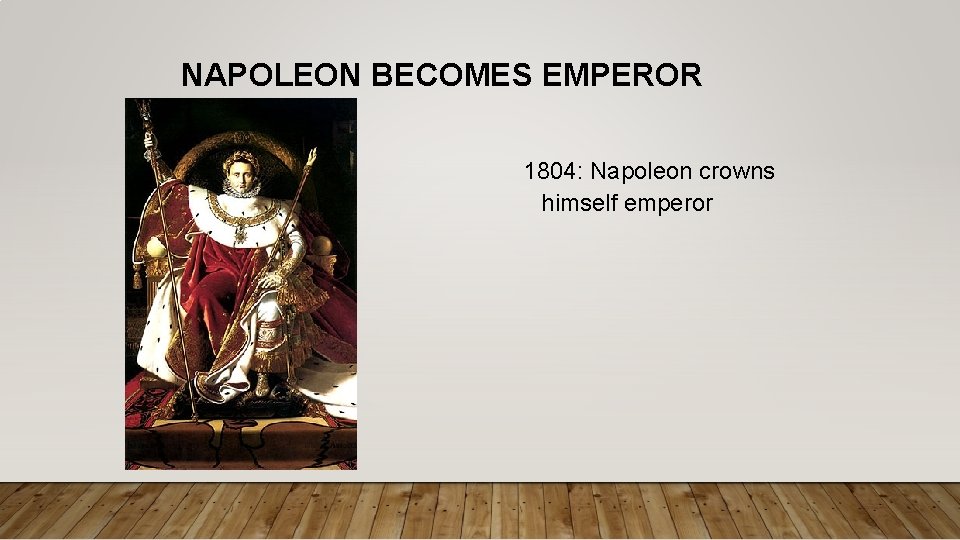
NAPOLEON BECOMES EMPEROR 1804: Napoleon crowns himself emperor
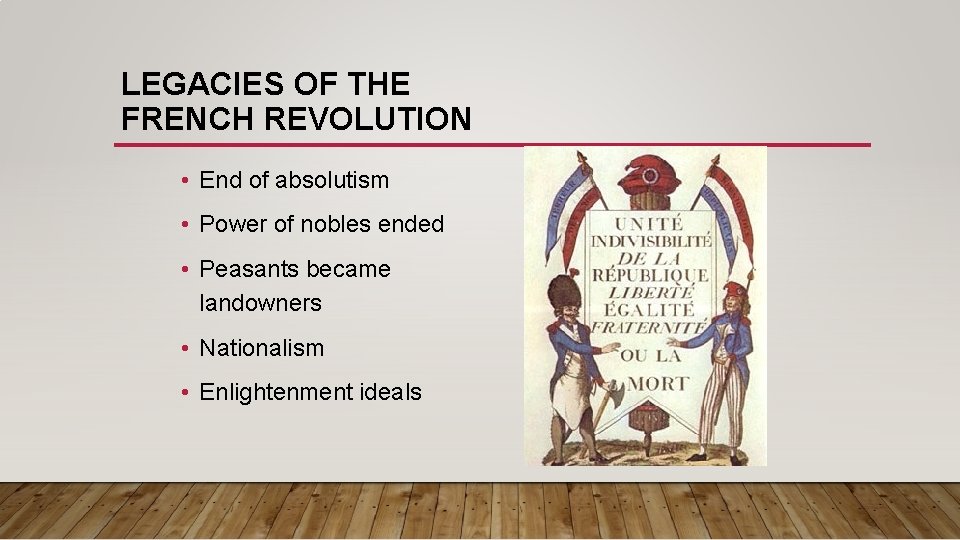
LEGACIES OF THE FRENCH REVOLUTION • End of absolutism • Power of nobles ended • Peasants became landowners • Nationalism • Enlightenment ideals