
The French Revolution Clergy Nobles Fren ch 1

The French Revolution
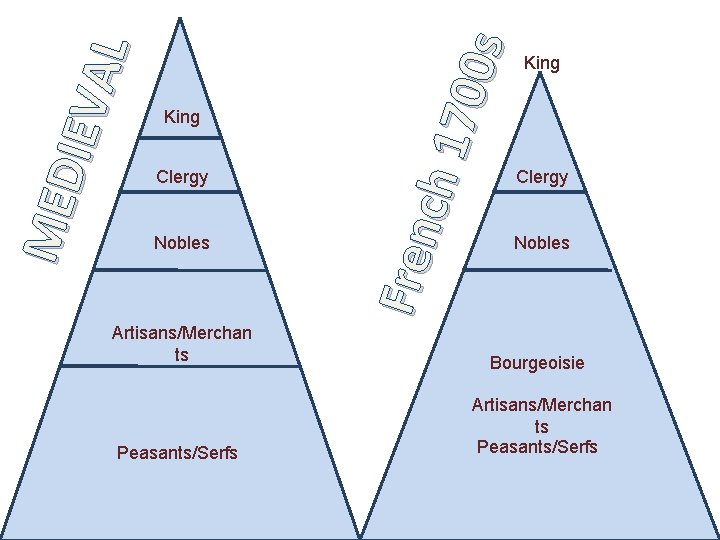
Clergy Nobles Fren ch 1 700 s MED IEV A L King Clergy Nobles Artisans/Merchan ts Bourgeoisie Peasants/Serfs Artisans/Merchan ts Peasants/Serfs
ESTATES One of the three classes into which French society was divided before the Revolution.

Fr e nc h 1 70 0 s King Clergy Nobles Bourgeoisie Artisans/Merchan ts Peasants/Serfs 1 st estate: Clergy – 130, 000 out of 27 million people =. 5% Land: Owned 10% Taxes: Paid 0% 2 nd estate: Nobility 350, 000 out of 27 million people = 1. 3% Land: Owned 25 -30% Taxes: Paid 0% Held Government, Military, religious, and legal positions 3 rd estate: “Commoners: EVERYONE ELSE – 98% Land: Varied among groups Taxes: Paid 100%
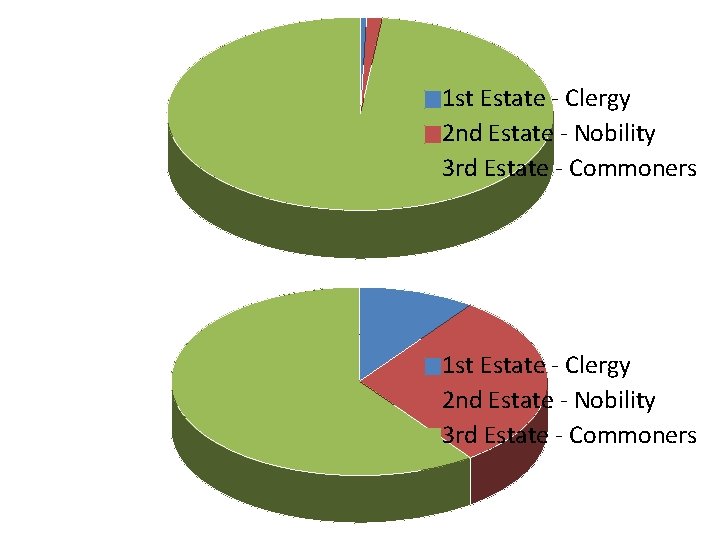
1 st Estate - Clergy 2 nd Estate - Nobility 3 rd Estate - Commoners

TAILLE An annual direct tax, usually on land or property, that provided a regular source of income for the French monarchy
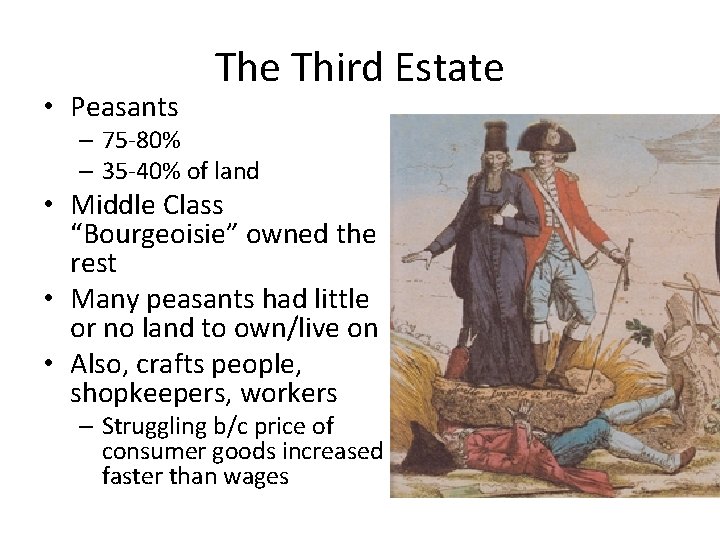
• Peasants The Third Estate – 75 -80% – 35 -40% of land • Middle Class “Bourgeoisie” owned the rest • Many peasants had little or no land to own/live on • Also, crafts people, shopkeepers, workers – Struggling b/c price of consumer goods increased faster than wages
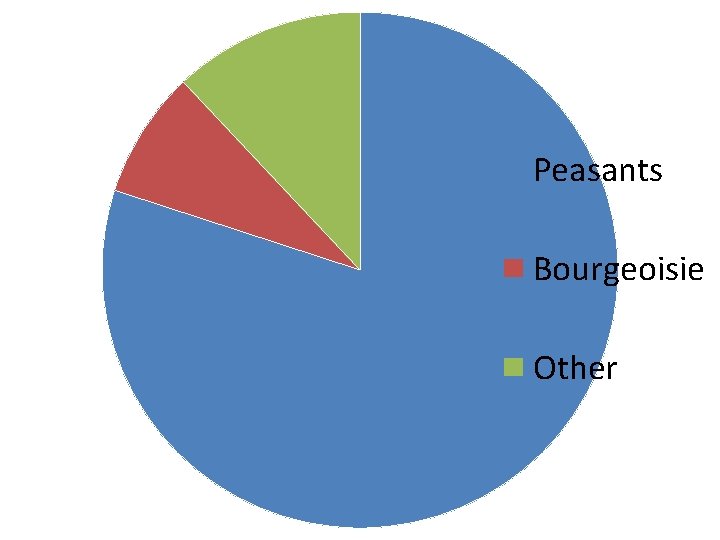
Peasants Bourgeoisie Other
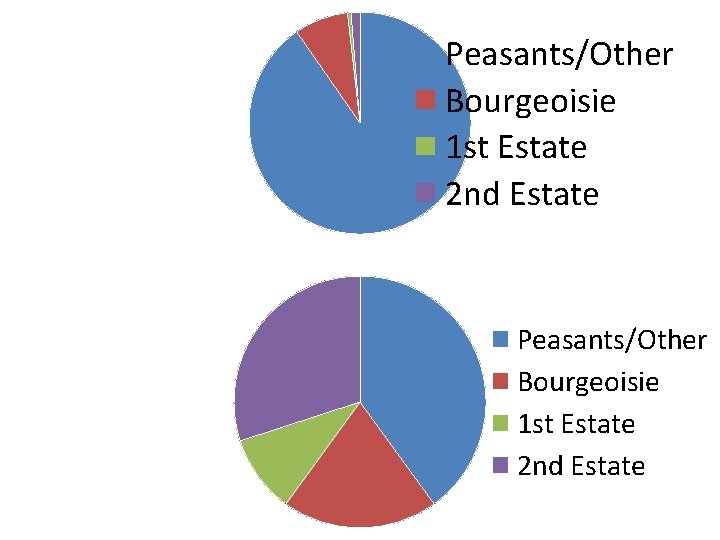
Peasants/Other Bourgeoisie 1 st Estate 2 nd Estate
Serfdom continues • Ex: Peasants have to pay fees to grind flour/press grapes because lord controlled flour mill/wine press • Harvest time: peasants had to work to harvest noble’s crops

Bourgeoisie The middle class, including merchants, industrialists, and professional people
Bourgeoisie • 8% of the 3 rd Estate population • Owned 20 -25% of the land – – Merchants Bankers Industrialists Lawyers, doctors, writers • Unhappy with noble’s privileges – Did not want to abolish nobility • About 6500 new nobles had been created by appointment throughout the 1700 s – Shared the goals of trying to employ Enlightenment ideas – Both groups increasingly upset with monarchical system
Louis XVI LOUIE 16 th King of France during the late 1700 s, king prior to/during the French Revolution
Financial Crisis • Issue #1: Long standing social imbalance • Issue #2: Near collapse of French Budget – Bad harvests – Slowdown in manufacturing • Led to food shortages • Rising prices for food • Unemployment • King and Advisers continued to spend the money! – Wars – Court Luxuries • Esp. Marie Antoinette
Estates-General • B/c of budget crisis – Louis XVI forced to call meeting of Estates-General • A meeting of representatives from all 3 estates – Had not met since 1614 • b/c French kings held ALL power • May 5, 1789 – 1 st and 2 nd estates had 300 reps each – 3 rd estate had 600! • Wanted to set up a constitutional government that would make clergy/nobility pay taxes too
Meeting with the E-G • Arguments about voting – Tradition • Each estate had 1 vote – SO… 1 st+2 nd estate could outvote 3 rd (even though combined they only represented 2% of the population) • 3 rd estate wanted each deputy have one vote – Would eventually give them the majority vote • King said he like things the way they were • 3 rd estate had ENOUGH – Declared themselves the “National Assembly” – Arrived at their meeting chambers to find the doors locked – Moved to an indoor tennis court • Tennis court oath
Tennis Court Oath The National Assembly met on an indoor tennis court and vowed to continue meeting until they had formed/adopted a new constitution.
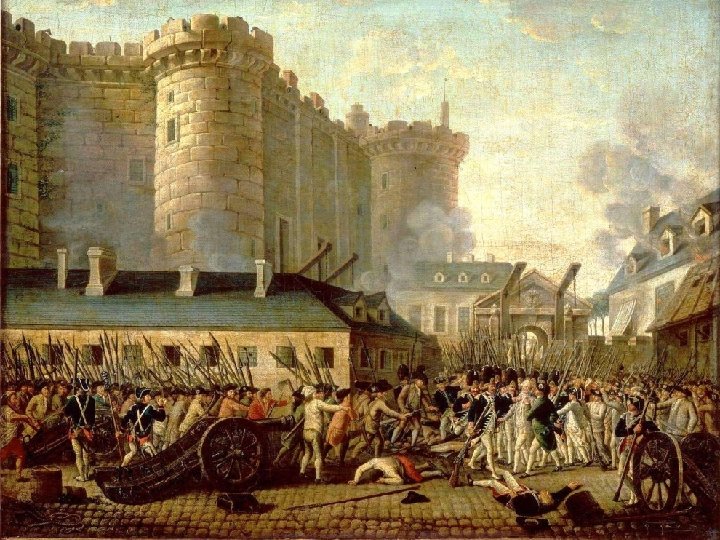
Prepping for War • Louis prepared to use force against 3 rd estate • July 14, 1789 – 900 Parisians (someone from Paris) gathered at Bastille (BASTEEL) • A prison/armory (Former fortress) – Price of bread record high • Crowd starving and agitated – Rumor said King’s troops were coming • There was supposed to be ammunition in the Bastille – The Parisians stormed the Bastille and after hours of fighting eventually took it • Released 7 prisoners (murderers… yay!) • Beheaded prison warden • Found no munitions – Tore down Bastille brick by brick
Revolt Revolution • Louis mistakenly thought the Bastille was just a “Revolt” – Revolution • Could no longer trust royal troops to shoot at mobs • King’s authority had collapsed in Paris • Revolts were breaking out all over France – Enough was enough! • “Great Fear” – Panic sparked by peasant rebellions – Peasants afraid the work of the National Assembly would be stopped by foreign armies – Rumors spread that foreign troops were on their way – Reaction: breaking into houses of lords to destroy records of their obligations
Out with the old, in with the new • Aug 4, 1789 – N. A. gets rid of legal privileges of clergy and nobility • Aug 26 – Declaration of the Rights of Man and the Citizen • Inspired by English Bill of Rights & American Declaration of Independence/Constitution • Charter of basic liberties • “liberty, property, security, and resistance to oppression” • All men are equal under the law • Appointment to public office based on talent • No group is exempt from taxes
Declaration of the Rights of Man and the Citizen The declaration of guaranteed equal rights drawn up by the National Assembly during the French Revolution.
Olympe de Gouges When made claims that women were not equal under the law because they “do not hope to exercise political rights and functions” she refused to accept their opinions and spoke out in favor of women’s rights.
King goes to Paris • Louis refused to accept the National Assembly’s decrees • October 5 – Women’s March – Thousands of Parisian women marched on Versailles – Met with the king • Told him their children were starving because there was no bread • Forced him to accept it • Forced to go to Paris with son and wife as prisoners
New Constitution • Limited monarchy – Only “active” citizens could vote • Men over 25 who paid a certain amount of taxes – Really, only wealthy reps. would be chosen • Change spread – Some still wanted more radical changes • Poor • Louis hated the regulation of the church & limited power of the monarchy – Tried to flee with family – Almost made it • Caught and brought back • Assembly met and made a law that allowed to try the king if he turned against the country
It gets worse • Other nations feared what the revolution would mean, talked of using force to restore Louis XVI – Assembly struck first – Declared war on Austria • 1792 – Protests – bread shortages • Defeats in the war • Paris radicals declared themselves a commune – Organized mob attack on royal palace and assembly
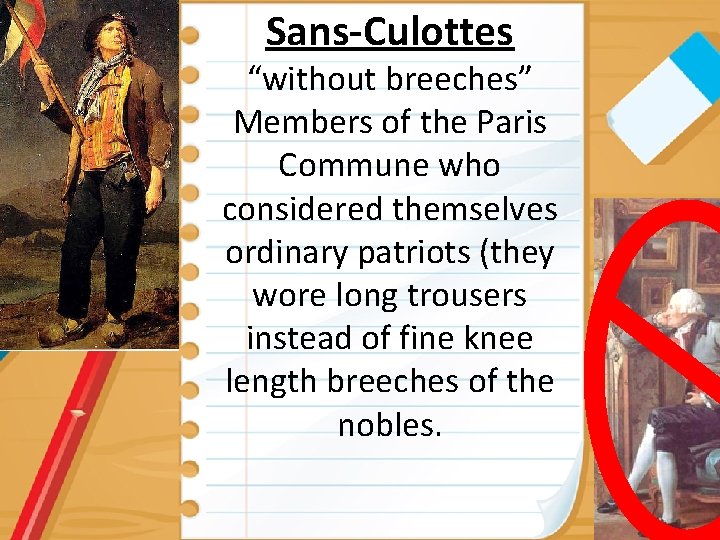
Sans-Culottes “without breeches” Members of the Paris Commune who considered themselves ordinary patriots (they wore long trousers instead of fine knee length breeches of the nobles.
Radicals • • More radical/violent stage Calling for universal male suffrage Birth of the sans-culottes REALLY starting from the ground up
- Slides: 28