
The French Revolution 1789 1815 Lecture Outline An
- Slides: 41
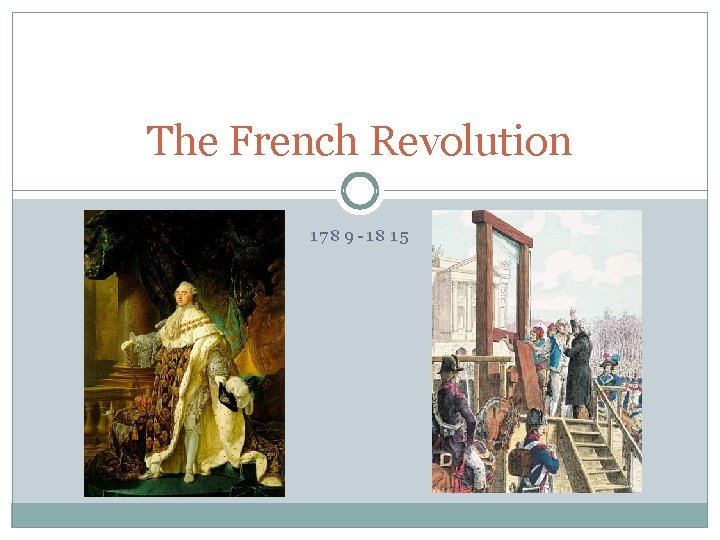
The French Revolution 1789 -1815
Lecture Outline An Age of Revolutions Crises of the Eighteenth Century American Model The French Revolution, 1789 - 1815 Social and Political Crises The Meeting of the Estates General Fall of the Bastille Declaration of Rights of Man and Citizen Constitutional Monarchy Defining citizens Distribution of power Reform of the clergy Increased Radicalization
An Age of Revolutions � Crises of the Eighteenth Century Colonial Wars and Fiscal Crises Enlightenment thought and the imaging of something different �Which texts illuminate the discontent of the eighteenth century? The “Atlantic Revolutions” � American Revolution, 1776 - 1783 � Dutch Republic, 1787 � Belgian Independence, 17881789 � Polish Patriots, 1788 -1792 � Haitian Revolution, 1791 -1802 � Latin American Revolutions
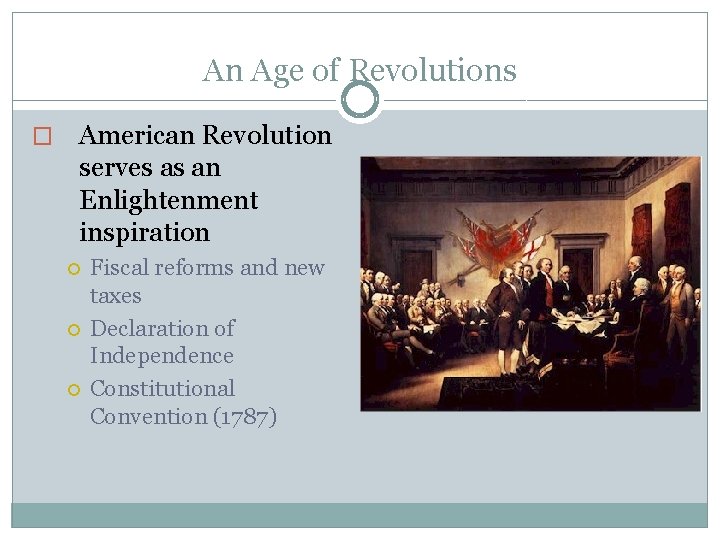
An Age of Revolutions � American Revolution serves as an Enlightenment inspiration Fiscal reforms and new taxes Declaration of Independence Constitutional Convention (1787)
The French Revolution, 1789 -1815 Social and Political Crises • The character of the court at Versailles • Louis XVI and Marie Antoinette Rampant poverty • • • poor harvests growing population 3 estates called to deal with tax grievances against the king Bankrupt kingdom • • • High-interest, short-term loans and a bad collection system.
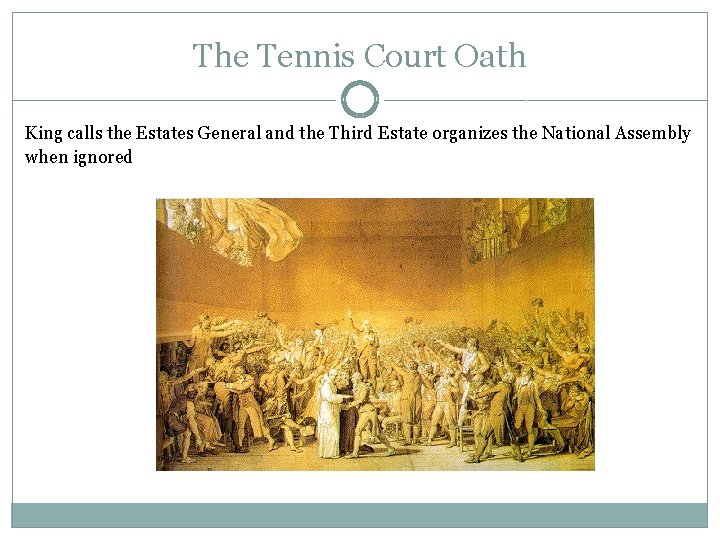
The Tennis Court Oath King calls the Estates General and the Third Estate organizes the National Assembly when ignored
The Meeting of the Estates General �First Estate: 100, 000 member of the Clergy �Second Estate: 400, 000 men of the nobility �Third Estate: 95% of the nation �Unequal distribution of political power leads to political break Third Estate insists on individual voting Stalemate leads to the formation of the National Assembly � Clergy eventually joins them Tennis Court Oath: no disbandment until Constitution
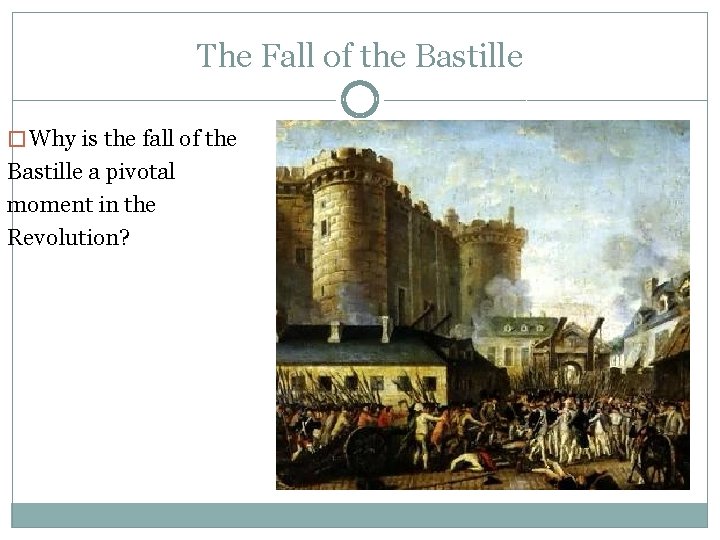
The Fall of the Bastille � Why is the fall of the Bastille a pivotal moment in the Revolution?
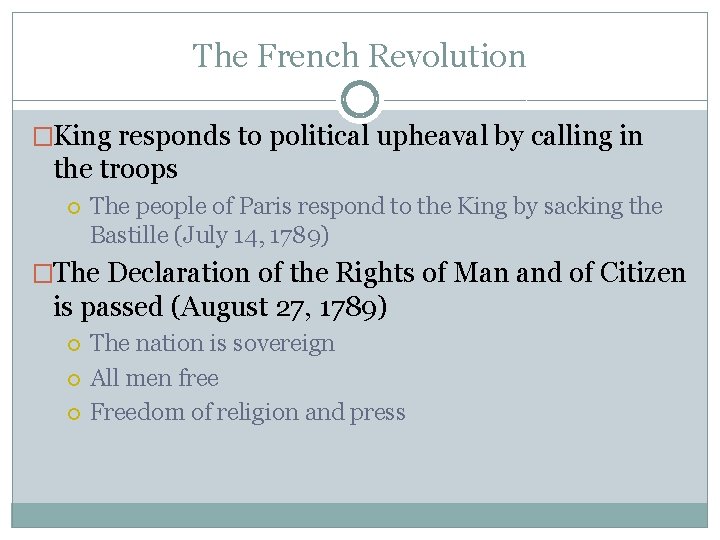
The French Revolution �King responds to political upheaval by calling in the troops The people of Paris respond to the King by sacking the Bastille (July 14, 1789) �The Declaration of the Rights of Man and of Citizen is passed (August 27, 1789) The nation is sovereign All men free Freedom of religion and press
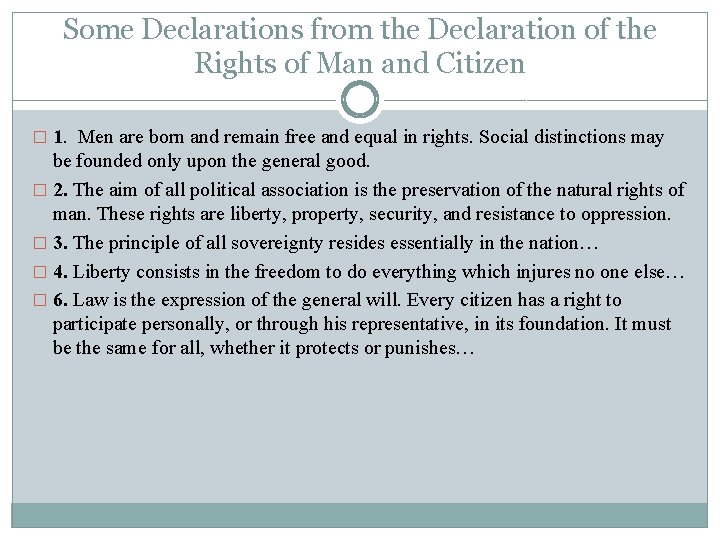
Some Declarations from the Declaration of the Rights of Man and Citizen � 1. Men are born and remain free and equal in rights. Social distinctions may be founded only upon the general good. � 2. The aim of all political association is the preservation of the natural rights of man. These rights are liberty, property, security, and resistance to oppression. � 3. The principle of all sovereignty resides essentially in the nation… � 4. Liberty consists in the freedom to do everything which injures no one else… � 6. Law is the expression of the general will. Every citizen has a right to participate personally, or through his representative, in its foundation. It must be the same for all, whether it protects or punishes…
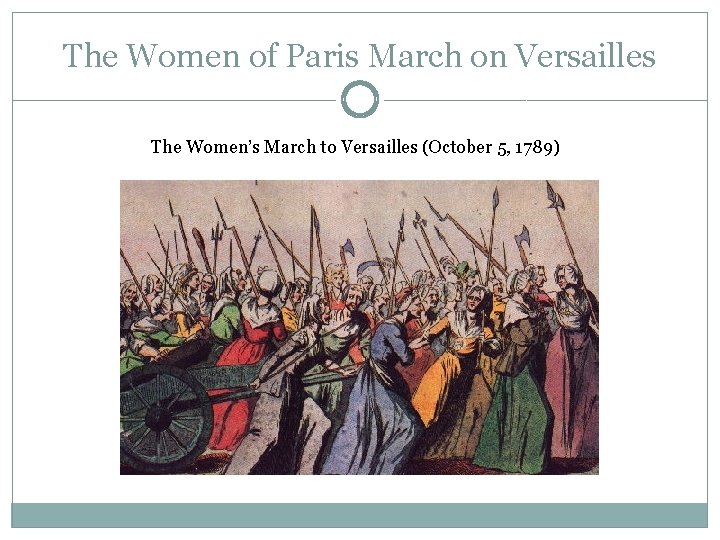
The Women of Paris March on Versailles The Women’s March to Versailles (October 5, 1789)
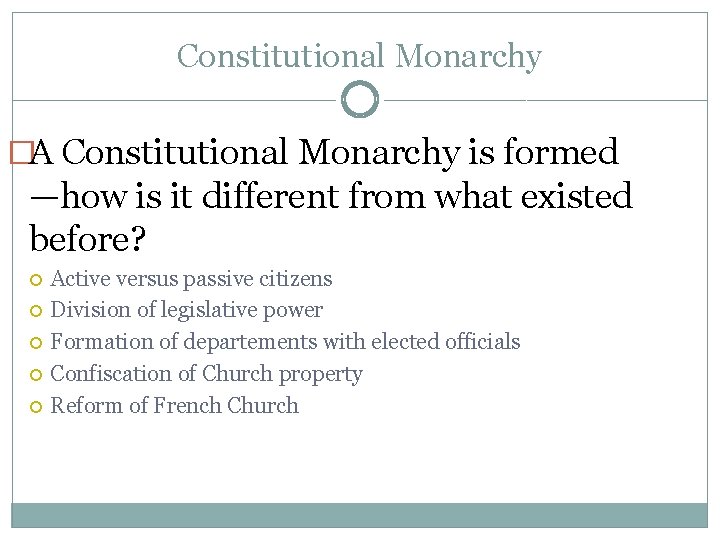
Constitutional Monarchy �A Constitutional Monarchy is formed —how is it different from what existed before? Active versus passive citizens Division of legislative power Formation of departements with elected officials Confiscation of Church property Reform of French Church
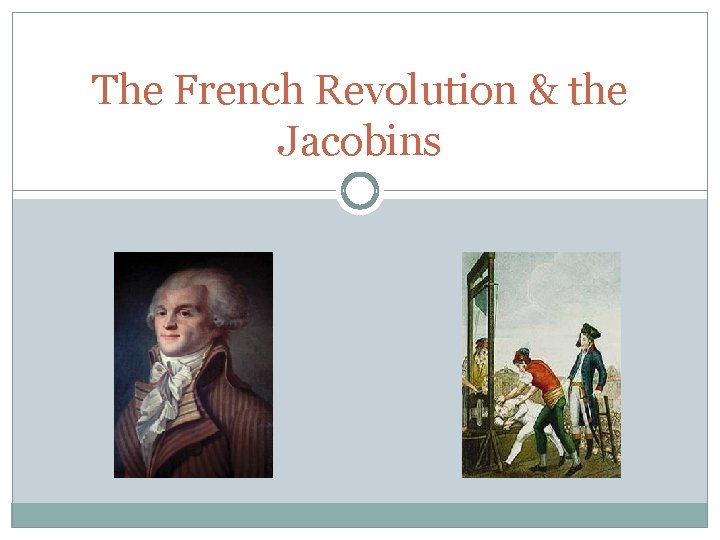
The French Revolution & the Jacobins
Increased Radicalization �Further radicalization leads to the establishment of a new constitution in September 1791 based on the Declaration of the Rights of Man and Citizen King as a constitutional monarch �By this time, France has declared war against several European monarchs due to military reaction against the revolution �Louis XVI and Marie Antoinette try to escape
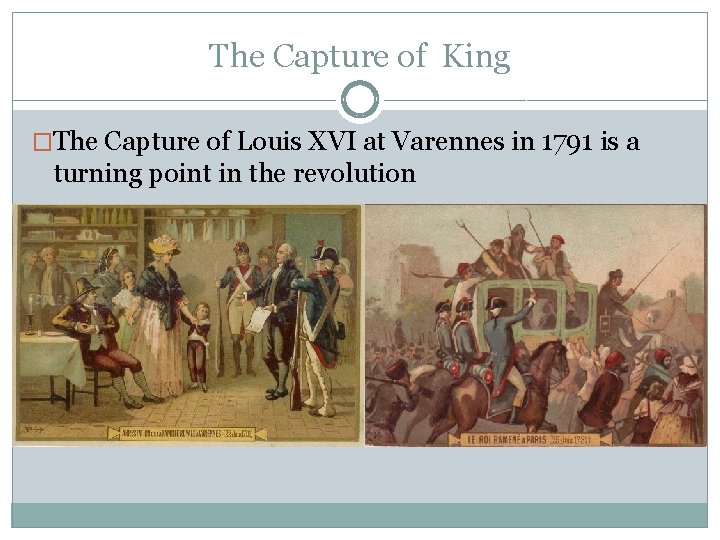
The Capture of King �The Capture of Louis XVI at Varennes in 1791 is a turning point in the revolution
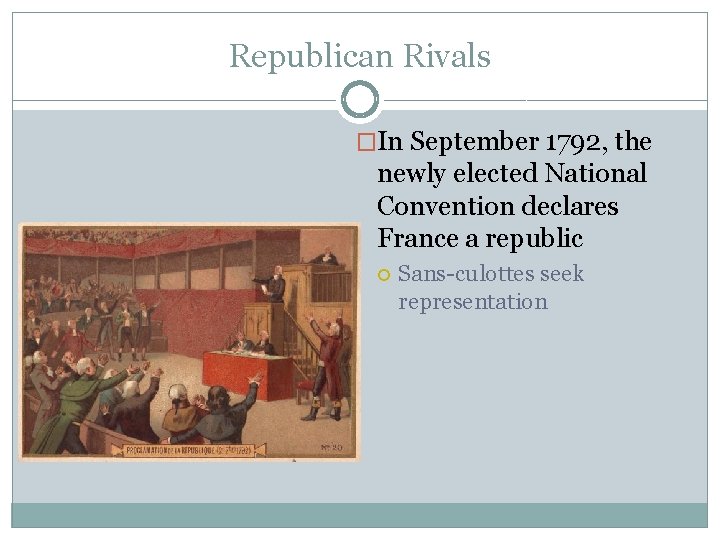
Republican Rivals �In September 1792, the newly elected National Convention declares France a republic Sans-culottes seek representation
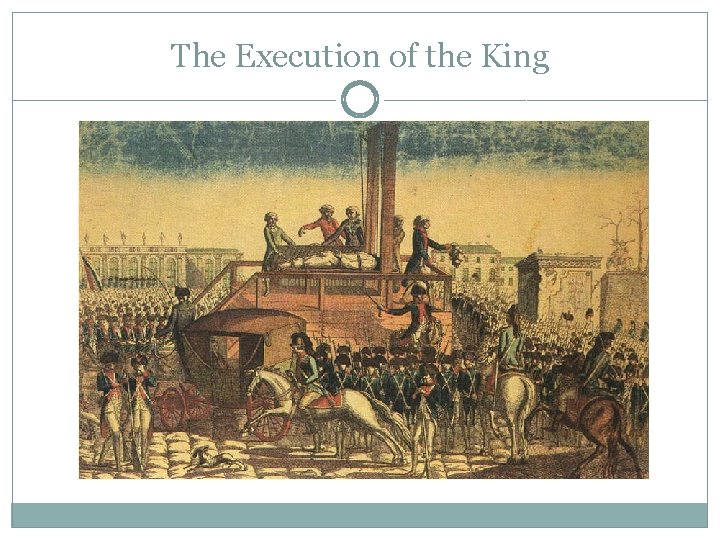
The Republican Rivals The Jacobins divide �King on trial for treason, December 1792 �The Mountain is victorious over the Girondins, and the King is executed in 1793
The Execution of the King
The Trajectory of the Revolution �May 1789, National Assembly is formed �July 1789, Bastille is stormed �October 1789, Women march to Versailles, Louis XVI returns to Paris �June 1791, King flees Paris �October 1791 – September 1792, Legislative Assembly �August 1792, Second Revolution and abolishment of monarchy; The Republic is formed
The Trajectory of the Revolution �September 1792, September Massacres after Prussians approach Paris �December 1792, The “Mountain” defeats the “Girondins” voting to execute the King.
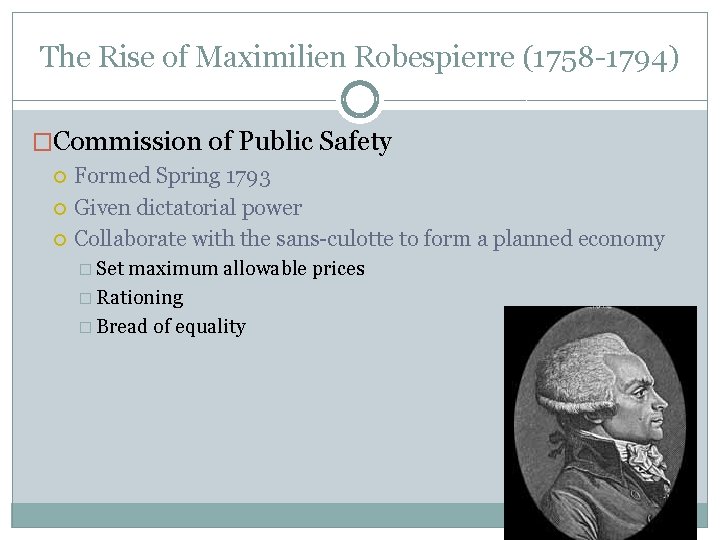
The Rise of Maximilien Robespierre (1758 -1794) �Commission of Public Safety Formed Spring 1793 Given dictatorial power Collaborate with the sans-culotte to form a planned economy � Set maximum allowable prices � Rationing � Bread of equality
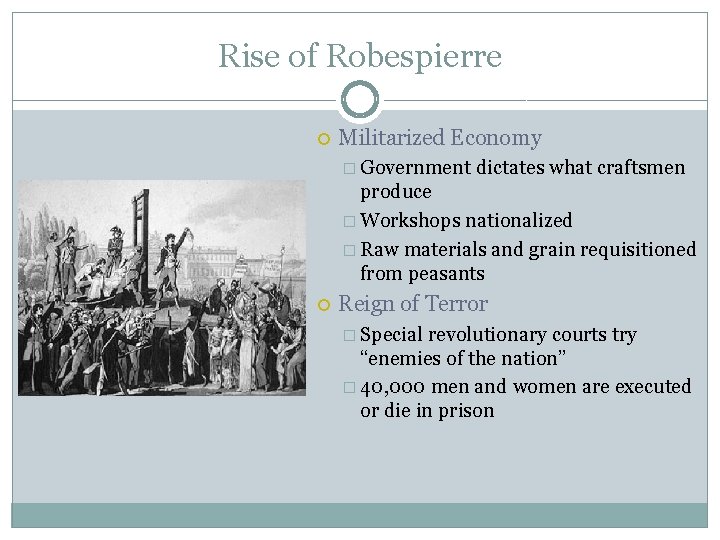
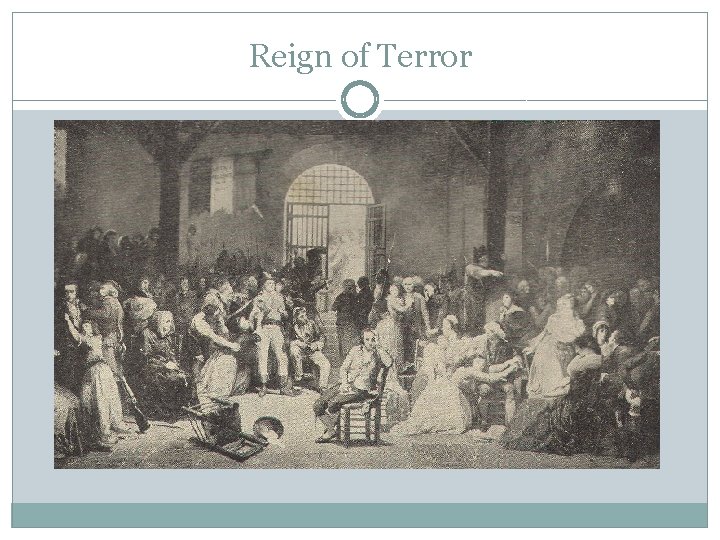
Rise of Robespierre Militarized Economy � Government dictates what craftsmen produce � Workshops nationalized � Raw materials and grain requisitioned from peasants Reign of Terror � Special revolutionary courts try “enemies of the nation” � 40, 000 men and women are executed or die in prison
Reign of Terror
The Fall of Robespierre �Intensification of the Reign of Terror March 1794 Robespierre has his critics executed 2 weeks later, several of Robespierre’s collaborators are executed 27 July 1794 (or 9 Thermidor [Month of Heat]) according to the Republic’s calendar), a conspiracy against Robespierre to quiet him in the National Convention 28 July 1794, Robespierre executed
Thermidorian Reaction �Middle-class lawyers and professionals reassert their authority Repeal of price controls Restricting of local political organizations and sans-culottes Cultural rebellion among the rich Military force against resistant laborers and radical leaders �Resurgence of religion, especially Catholicism Women seek to restored a pattern of life in which the rites of passage are respected and hallowed. A conservative reaction to radical change
The Directory in France �In 1795 the National Convention elects a five-man executive: The Directory Functions as a dictatorship Uses military to make ends meet domestically Election of 1797 indicates a return to conservatism and monarchism Directory responds with military action
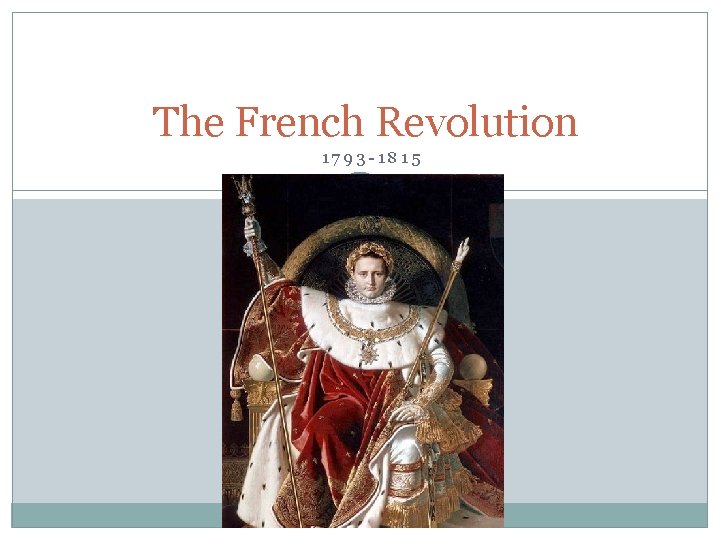
The French Revolution 1793 -1815
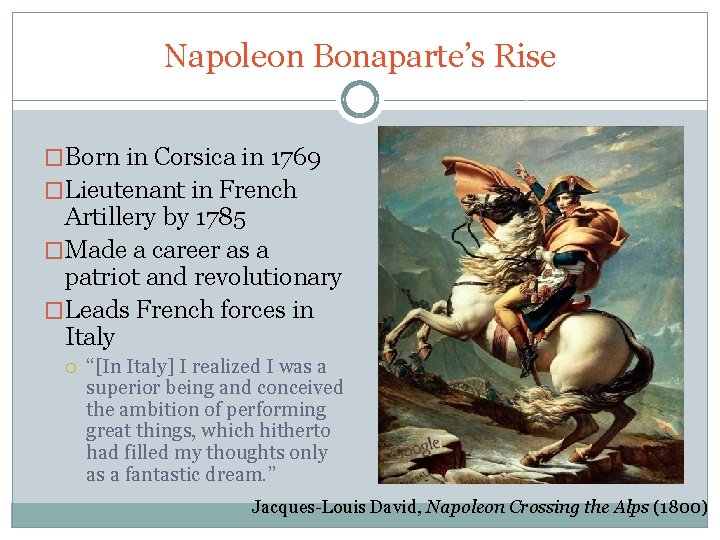
Napoleon Bonaparte’s Rise �Born in Corsica in 1769 �Lieutenant in French Artillery by 1785 �Made a career as a patriot and revolutionary �Leads French forces in Italy “[In Italy] I realized I was a superior being and conceived the ambition of performing great things, which hitherto had filled my thoughts only as a fantastic dream. ” Jacques-Louis David, Napoleon Crossing the Alps (1800)
Napoleon’s Coup d’État �A conspiracy formed to overthrow the Directory Plan for the creation of a strong executive Look to a strong military leader � 9 November 1799 (18 Brumaire Year VIII): Napoleon and the Conspirators overthrow the Directory � 10 November 1799: Legislature is disbanded at bayonet point
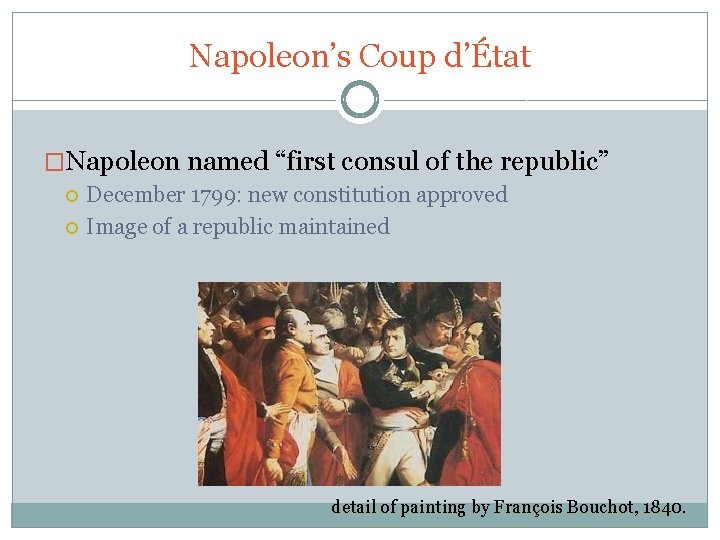
Napoleon’s Coup d’État �Napoleon named “first consul of the republic” December 1799: new constitution approved Image of a republic maintained detail of painting by François Bouchot, 1840.
Napoleon and France �Napoleon relies on his charisma and his personal powers to maintain order Strikes unwritten agreements with groups and rewards loyalty with favors Creation of the Bank of France serves state and financial oligarchy Gains of the peasantry reconfirmed
Napoleon and France �Creation of a centralized state Drawing in of disillusioned revolutionaries �Concordat of 1801 Pope Pius VII gains religious freedom for French Catholics Napoleon nominates Bishops, pays clergy and influenced the French Church. �Establishment of the family monarchy
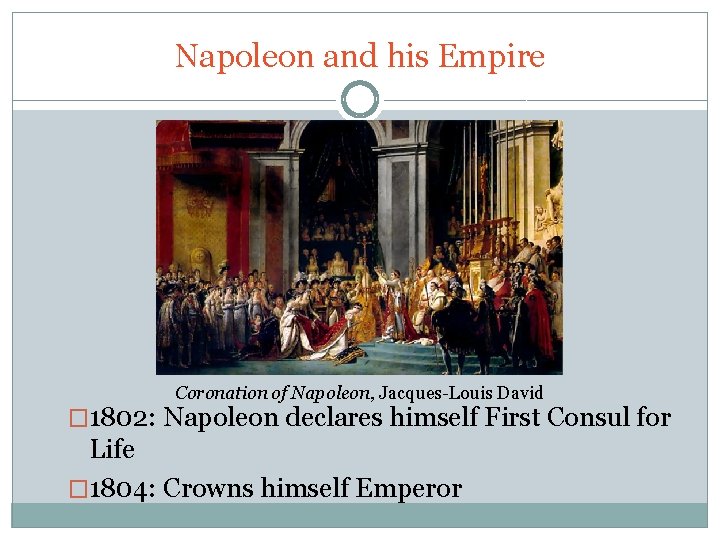
Napoleon and his Empire Coronation of Napoleon, Jacques-Louis David � 1802: Napoleon declares himself First Consul for Life � 1804: Crowns himself Emperor
Napoleonic Code, 1804 �The Civil Code assured: Property rights Religious freedom Uniform legal code �The Civil Code restricted: Women’s judicial access Women’s property rights
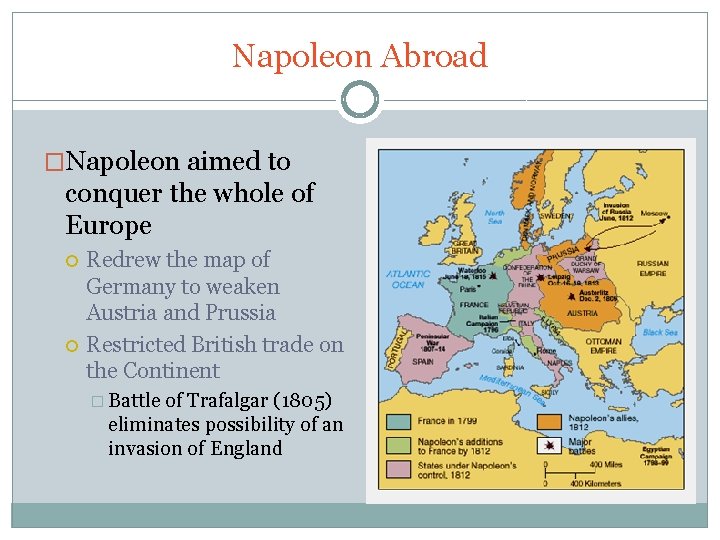
Napoleon Abroad �Napoleon aimed to conquer the whole of Europe Redrew the map of Germany to weaken Austria and Prussia Restricted British trade on the Continent � Battle of Trafalgar (1805) eliminates possibility of an invasion of England
Napoleon Abroad �Considerable impact on Europe Introduced French laws Abolished feudal dues and serfdom Heavy taxation �Napoleon’s Decline Spain 1808 � Replaces Charles IV with his brother Russia 1812
The Napoleonic Legacy �From 1799 to 1815 Napoleon’s grew from popular military hero to dictator �He won several major victories allowing Napoleon and France to conquer much of western Europe �He instituted the Napoleonic Code, which was enforced through a vast bureaucracy
The Napoleonic Legacy �Napoleon brings his conquered countries under the code, creating social and economic unity �The Alliance of Russia, Prussia, Austria and Great Britain against France led to the creation of the “Congress of Vienna” in 1815 �The Congress crushed revolutions throughout Europe over the next thirty years
The Meaning of the Revolution �Implemented the thought of philosophes Destroyed the hierarchy of the old regime � Nobles become ordinary citizens � Property determines status, not heredity Promoted the interests of the bourgeoisie (middle classes)
The Meaning of the Revolution �Creation of the modern state National Liberal Secular Rational � State belongs to the people, not just a territory � Individuals become citizens with rights and duties �Separation of Church and State No divine justification for power No privileges for members of the church
The Meaning of the Revolution �Economic growth Elimination of peasants’ manorial obligations Expansion of agriculture Abolishment of barriers to economic expansion Taxes based on income, and collection streamlined Creation of a competitive market economy �Demonstration that governments can be toppled �Creation of modern nationalism �Creation of a revolutionary mentality