
The French Revolution 1789 1815 A Power of
- Slides: 61
The French Revolution 1789 -1815
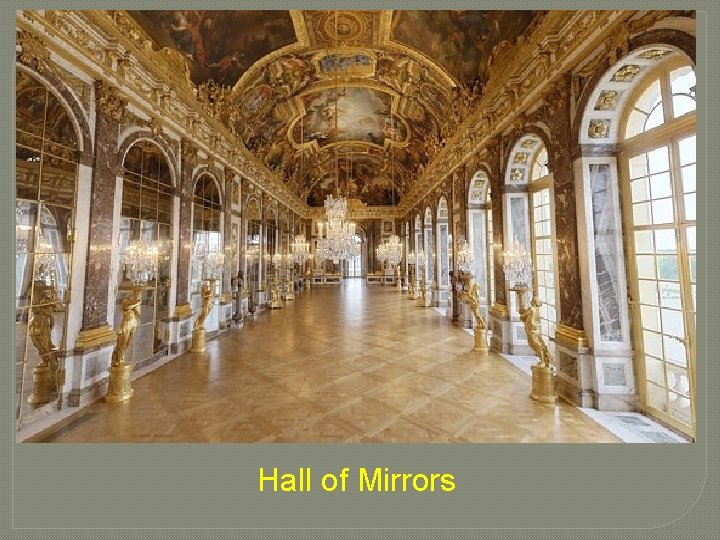
A. Power of French Kings In the 1600 s and 1700 s, French kings still ruled by “divine right” with absolute power. � And they lived more luxuriously than perhaps anyone, anywhere in the history of the world. �
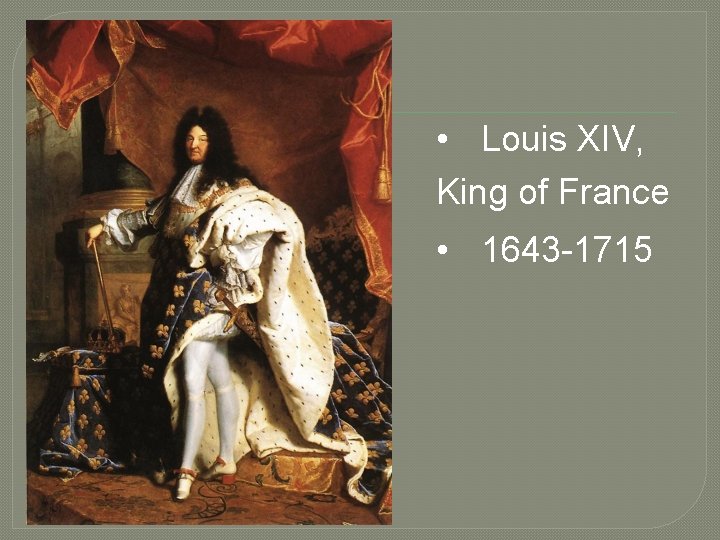
• Louis XIV, King of France • 1643 -1715
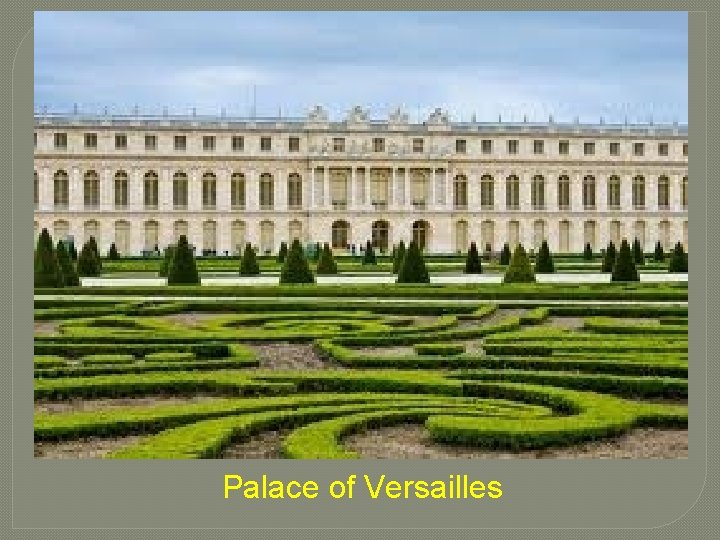
Palace of Versailles
Hall of Mirrors
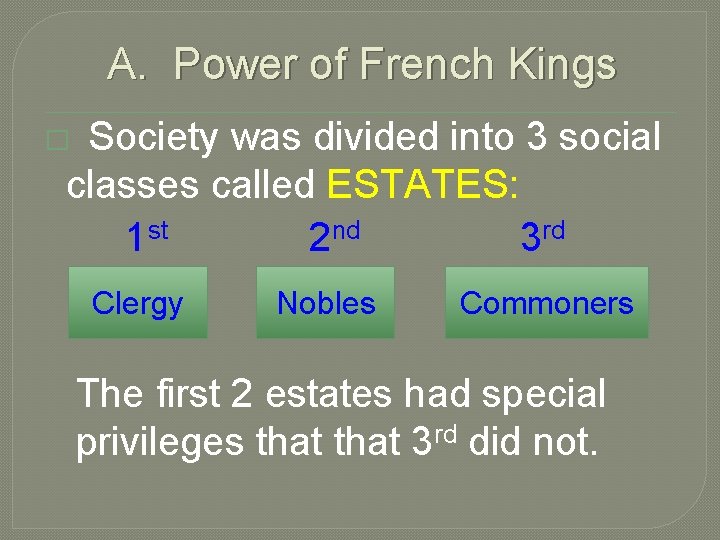
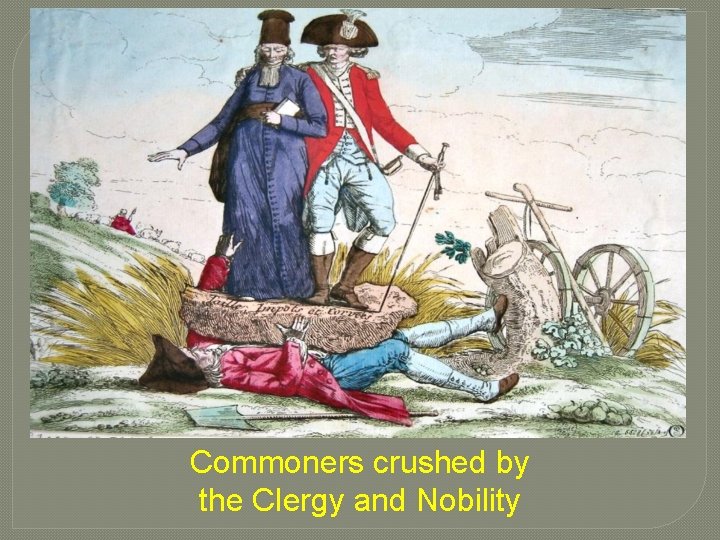
A. Power of French Kings Society was divided into 3 social classes called ESTATES: 1 st 2 nd 3 rd � Clergy Nobles Commoners The first 2 estates had special privileges that 3 rd did not.
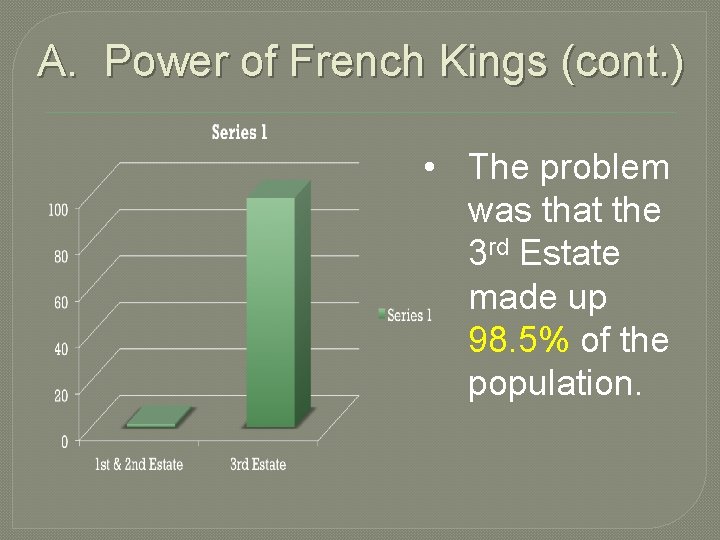
A. Power of French Kings (cont. ) • The problem was that the 3 rd Estate made up 98. 5% of the population.
Commoners crushed by the Clergy and Nobility
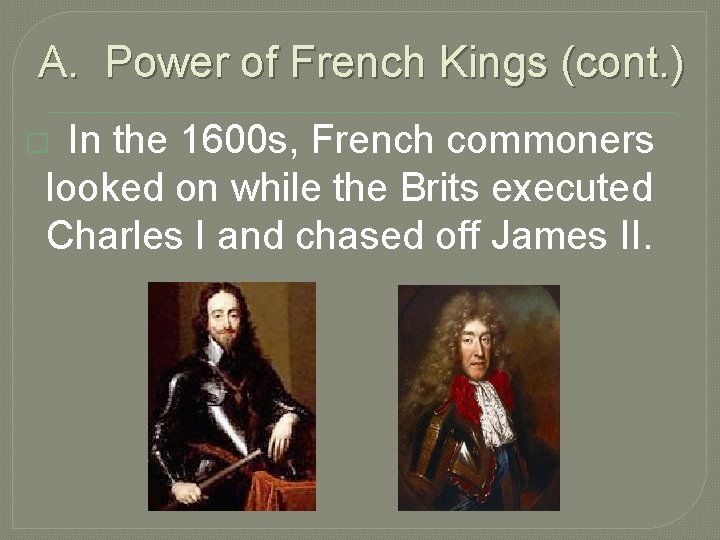
A. Power of French Kings (cont. ) In the 1600 s, French commoners looked on while the Brits executed Charles I and chased off James II. �
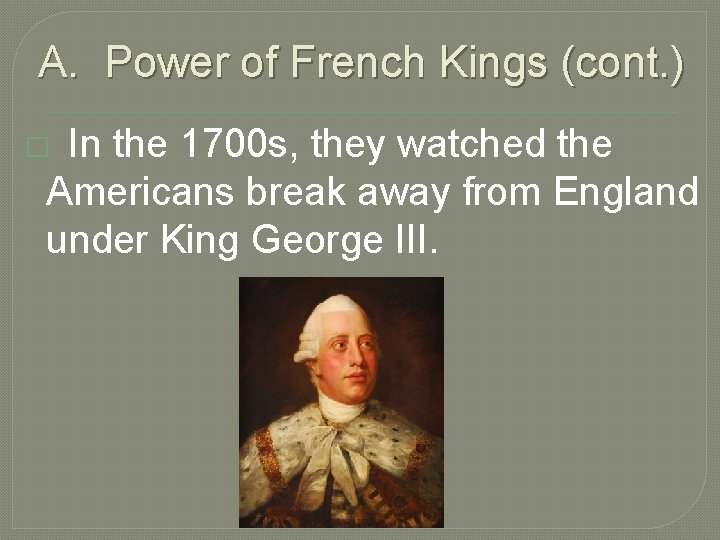
A. Power of French Kings (cont. ) In the 1700 s, they watched the Americans break away from England under King George III. �
B. The Estates-General By the late-1780 s, France was in deep financial trouble. � At the same time, a terrible harvest created bread shortages. � King Louis XVI was unsure about how to deal with the crisis. �
B. The Estates-General (cont. ) Louis XVI decided to call a meeting of the Estates-General. � Similar to Parliament, but with 3 houses, one for the reps of each estate. � Each estate got one vote, as a result, the king always won! �
B. The Estates-General (cont. ) � E-G met at Versailles in 1789. 3 rd Estate demanded some rule changes be made. � They wanted each rep to get one vote instead of each house. � Commoners would then have the advantage, 610 -589. �
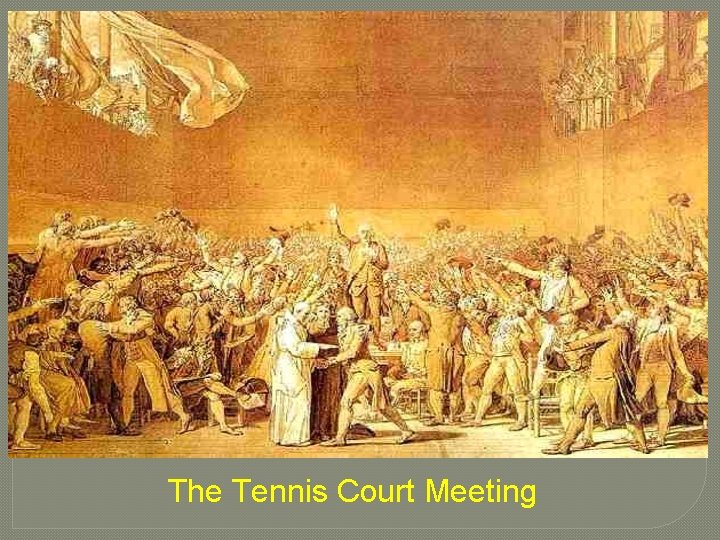
C. Stage 1: Rebellion of the 3 rd Estate Louis XVI locked the 3 rd Estate reps out of their meeting hall. � The Commoners took over one of his tennis courts and declared themselves “National Assembly. ” � They then took the “Tennis Court Oath. ” �
The Tennis Court Meeting
C. Rebellion of the 3 rd Estate (cont. ) Louis XVI paid lip service to the National Assembly. � In the meantime, he called for 30, 000 troops to surround Paris. � The people in Paris feared the king was planning to crush the revolution. �
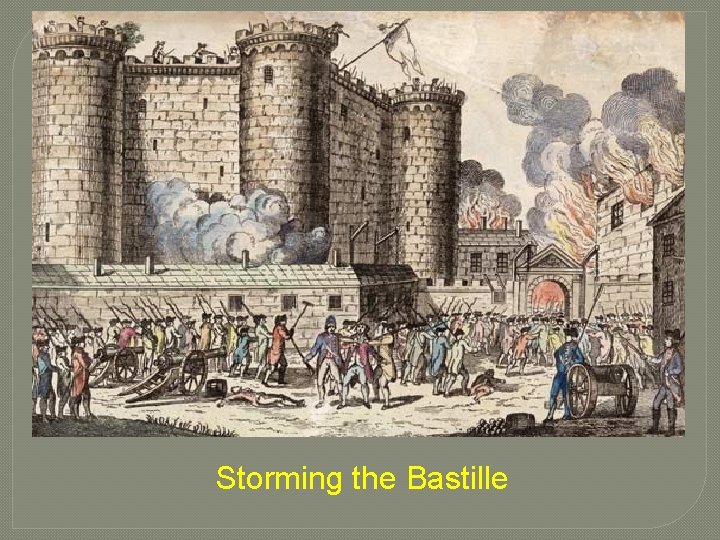
C. Rebellion of the 3 rd Estate (cont. ) The commoners decided to strike a blow against the “Old Regime. ” � On July 14, 1789, they stormed the Bastille. � This was their “declaration of independence” from absolute monarchy. �
Storming the Bastille
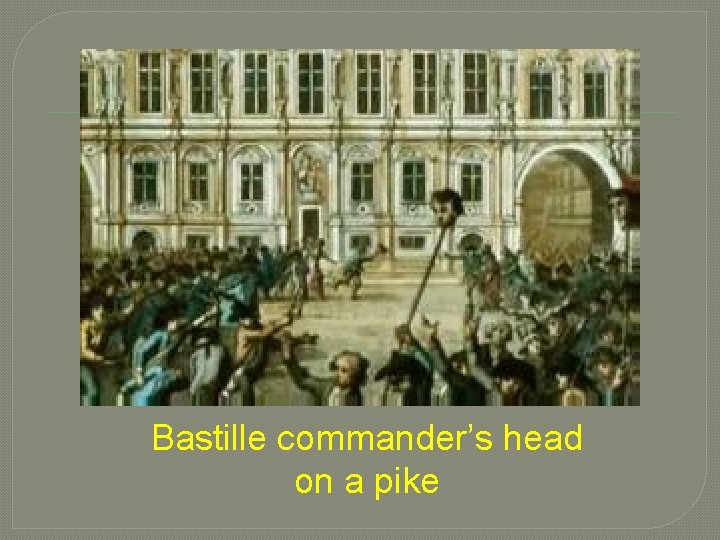
Bastille commander’s head on a pike
D. Important First Stage Events � Research on your own: 1) The Great Fear. 2) The Declaration of the Rights of Man. 3) The March on Versailles. 4) The Constitution of 1791.
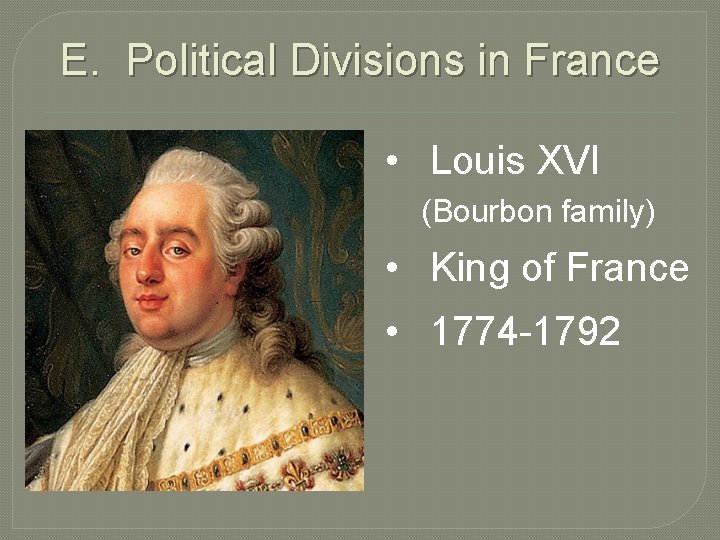
E. Political Divisions in France • Louis XVI (Bourbon family) • King of France • 1774 -1792
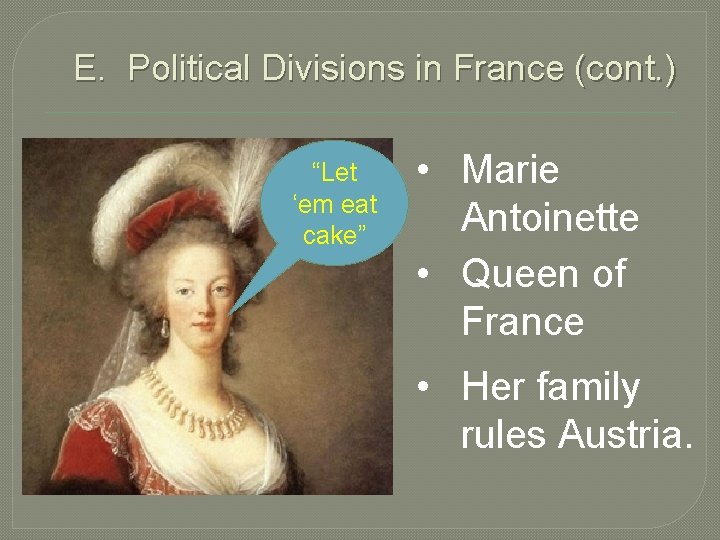
E. Political Divisions in France (cont. ) “Let ‘em eat cake” • Marie Antoinette • Queen of France • Her family rules Austria.
E. Political Divisions in France (cont. ) Louis & Marie were married when he was 15 and she was 14. � Marie’s brother, Joseph II was the Holy Roman Emperor. � Fans of the “Old Regime” hoped Joseph II would attack France. �
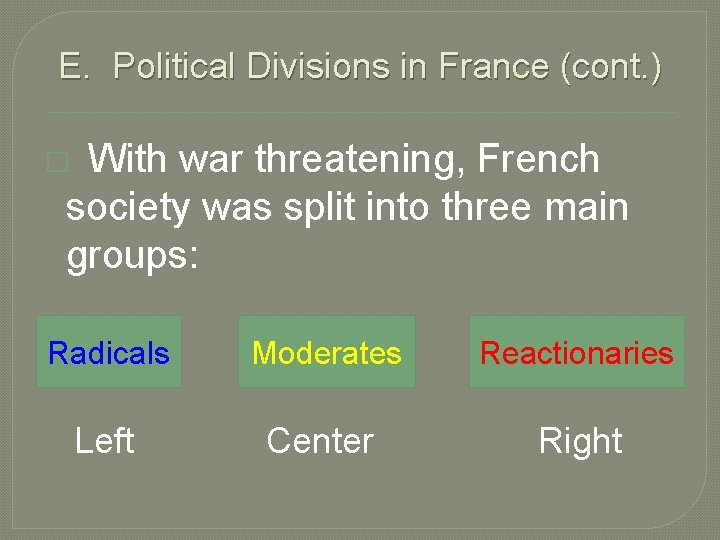
E. Political Divisions in France (cont. ) With war threatening, French society was split into three main groups: � Radicals Moderates Reactionaries Left Center Right
E. Political Divisions in France (cont. ) � Radicals: - Demand drastic, rapid change. - Want to completely tear down “Old Regime. ” - Favor a REPUBLIC.
E. Political Divisions in France (cont. ) � Moderates: - Want gradual change. - Want to fix the “Old Regime” not destroy it. - Favor a LIMITED MONARCHY.
E. Political Divisions in France (cont. ) � Reactionaries: - Dislike change. - Want to go back to the way things used to be. - Favor a return to ABSOLUTE MONARCHY.
E. Political Divisions in France (cont. ) 1 n 1791, the Legislative Assembly was dominated by radicals and moderates. � � The radicals wanted war. Louis XVI and the reactionaries wanted war, too. �
F. France Goes to War � In June 1791, Louis and Marie attempted to flee from Paris. They were stopped, brought back to Paris and imprisoned. � The radicals thought this meant Austria was going to attack. �
F. France Goes to War (cont. ) In April 1792, the radicals convinced the Legislative Assembly to declare war on Austria. � Prussia quickly jumped in on Austria’s side. �
F. France Goes to War (cont. ) � New elections in France brought more radicals into the Assembly. In Sept. 1792 the Assembly voted to abolish the monarchy. � This was the beginning of the French Republic. �
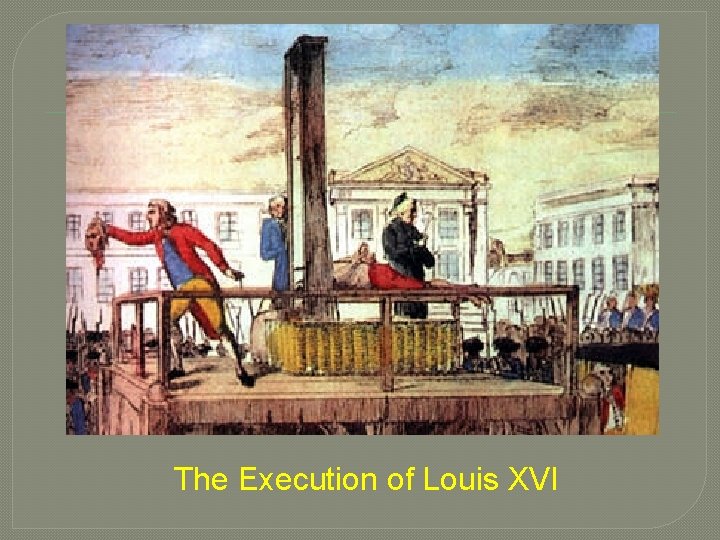
F. France Goes to War (cont. ) The radicals changed the name of the assembly to the National Convention. � In Jan. 1793, they tried Louis XVI as an enemy of the Revolution. � He was convicted and sentenced to death by guillotine. �
The Execution of Louis XVI
G. Stage 2: The Reign of Terror The execution of Louis XVI brought Great Britain, Spain & the Netherlands into the war. � War with 5 countries forced the National Convention to institute a draft. �
G. The Reign of Terror (cont. ) Opposition to the war and the draft threatened to bring down the republic. � The National Convention created the Committee of Public Safety to root out opponents of the revolution. �
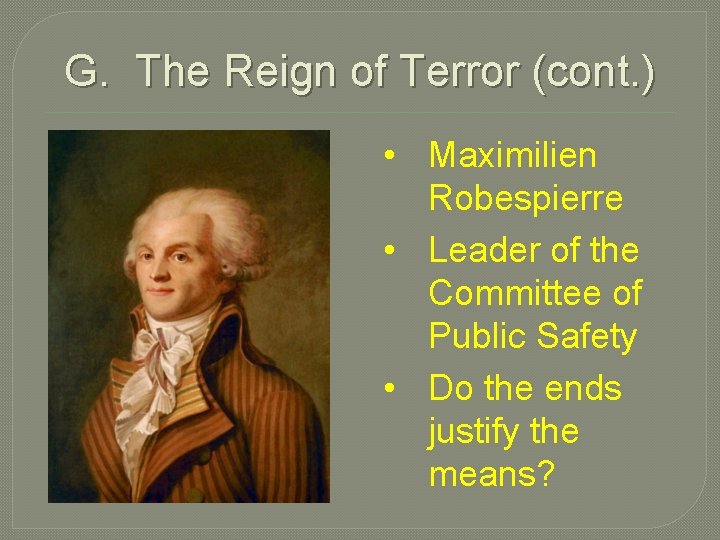
G. The Reign of Terror (cont. ) • Maximilien Robespierre • Leader of the Committee of Public Safety • Do the ends justify the means?
G. The Reign of Terror (cont. ) Robespierre felt that saving the Revolution was more important than protecting individual rights. � Opponents of the National Convention were quickly taken to the guillotine. �
G. The Reign of Terror (cont. ) From July 1793 -July 1794, ≈ 40, 000 people were executed. � 80% of those killed were members of the 3 rd Estate. � Finally the Committee of Public Safety turned on Robespierre and he, too, was guillotined. �
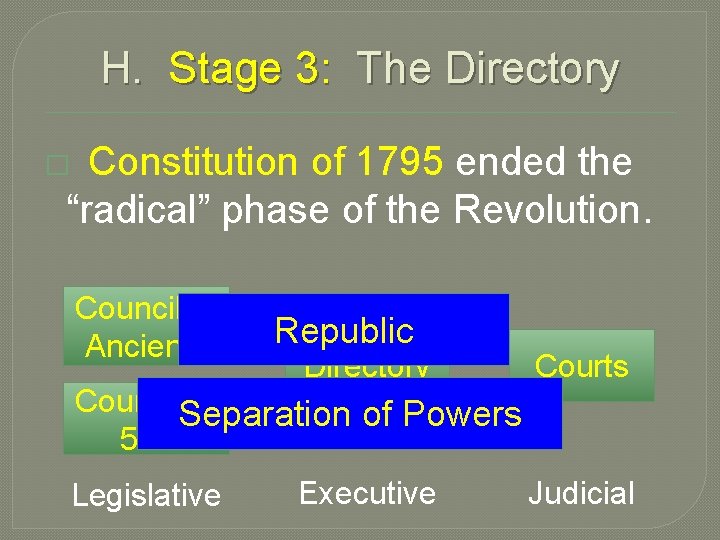
H. Stage 3: The Directory Constitution of 1795 ended the “radical” phase of the Revolution. � Council of Ancients Republic Directory Courts Executive Judicial Council. Separation of of Powers 500 Legislative
H. The Directory (cont. ) In Oct. 1795, a mob of Royalists threatened to overthrow the Directory in Paris. � The Directors called on a young general, Napoleon Bonaparte, to defend them. �
H. The Directory (cont. ) Napoleon used cannon fire to disperse the reactionary mob. � For this he was hailed as a “hero of the Revolution” and given command of an army in Italy. �
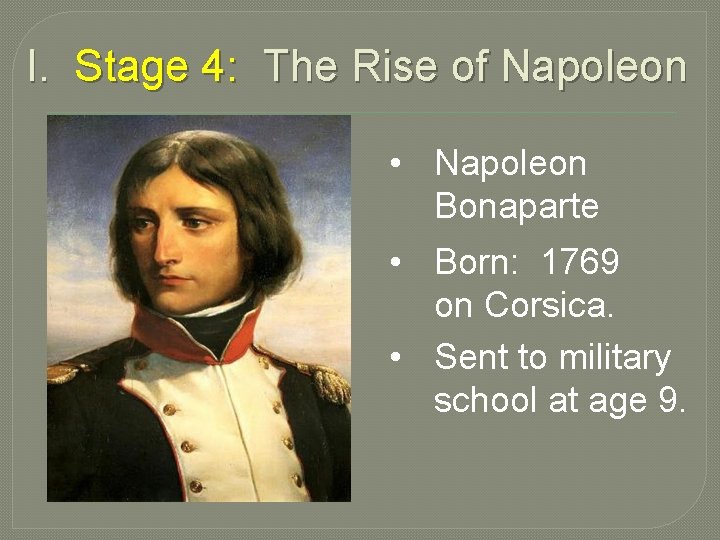
I. Stage 4: The Rise of Napoleon • Napoleon Bonaparte • Born: 1769 on Corsica. • Sent to military school at age 9.
I. The Rise of Napoleon (cont. ) In 1796 -97, Napoleon won great victories against Austria & Prussia and increased his fame. � In 1799, Napoleon decided it was time to take control of the government of France. �
I. The Rise of Napoleon (cont. ) Napoleon used his fame and the support of his army to pull off a coup d’etat. � He created a new 3 -man ruling body, The Consulate. � Napoleon named himself First Consul with a 10 -year term. �
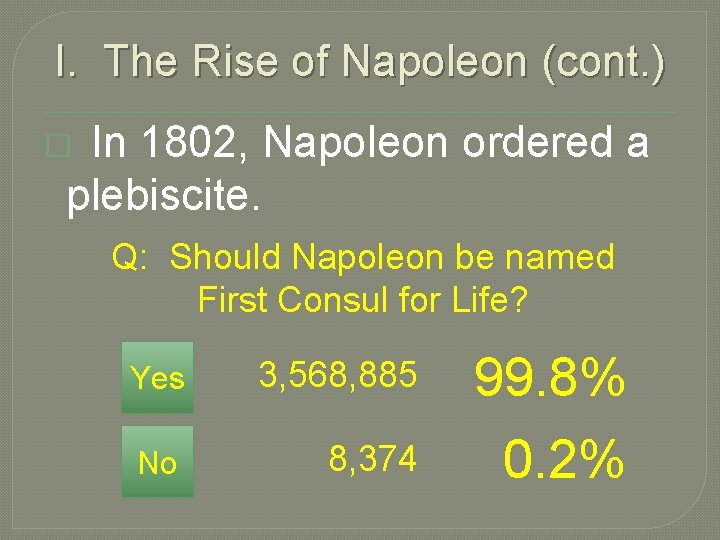
I. The Rise of Napoleon (cont. ) In 1802, Napoleon ordered a plebiscite. � Q: Should Napoleon be named First Consul for Life? Yes 3, 568, 885 99. 8% No 8, 374 0. 2%
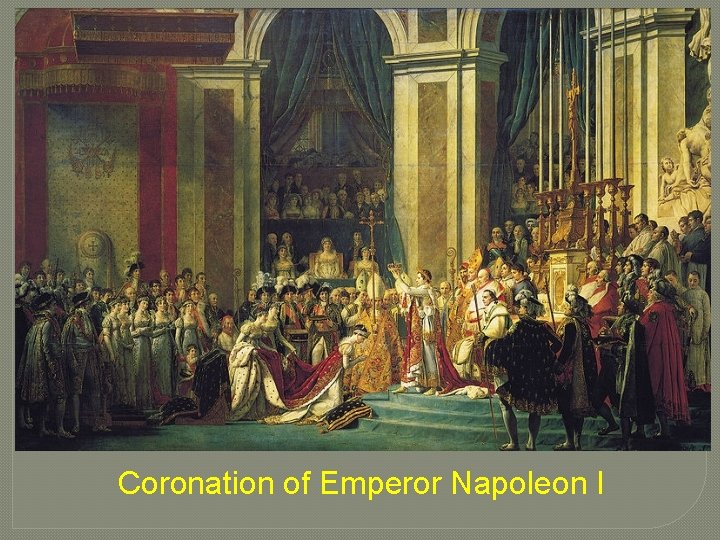
I. The Rise of Napoleon (cont. ) Assassination attempts and talk of returning to a monarchy led Napoleon to take a new title. � On Dec. 1, 1804 he crowned himself: Napoleon I, Emperor of the French �
Coronation of Emperor Napoleon I
J. Stage 5: Napoleon’s Downfall By 1804, Napoleon’s army had successfully conquered virtually all of Europe. � In 1805, Napoleon planned to invade his most hated enemy, Great Britain. �
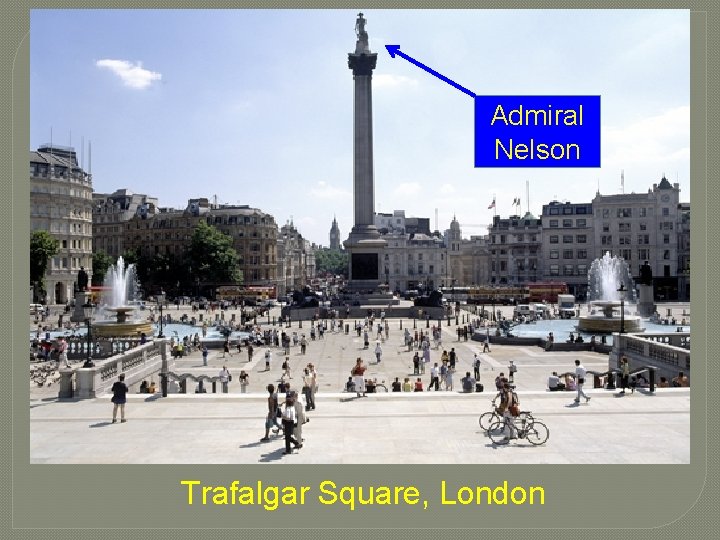
J. Napoleon’s Downfall (cont. ) But at the Battle of Trafalgar, British Admiral Horatio Nelson destroyed the French fleet. � Without a navy Napoleon could not invade Great Britain. �
Admiral Nelson Trafalgar Square, London
J. Napoleon’s Downfall (cont. ) After Trafalgar, Napoleon decided to hurt the British by cutting off their trade. � He set up the Continental System, which said that no country in Europe could trade with the British. �
J. Napoleon’s Downfall (cont. ) Czar Alexander I of Russia refused to obey Napoleon’s trade embargo of Great Britain. � Napoleon invaded Russia in June, 1812 with an army of over half a million troops. �
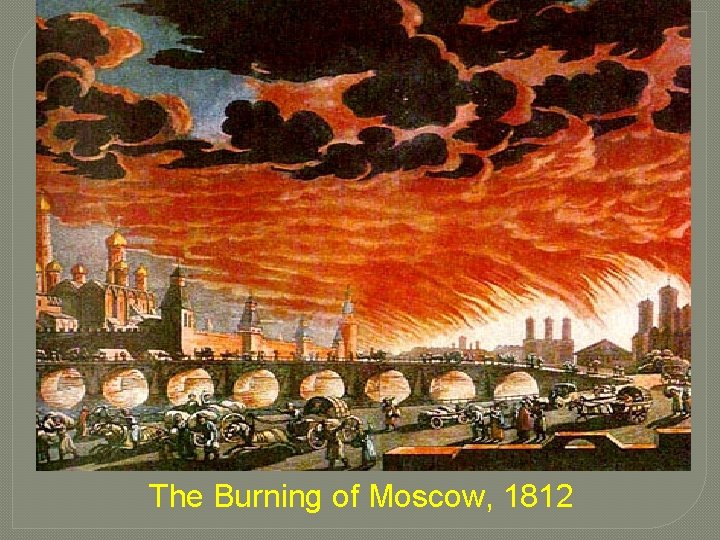
J. Napoleon’s Downfall (cont. ) Unable to stop the invasion, the Russians retreated and burned everything in their wake. � This “scorched earth” policy denied Napoleon’s troops food and shelter. �
The Burning of Moscow, 1812
J. Napoleon’s Downfall (cont. ) After finding Moscow in flames, Napoleon decided to retreat before winter set in. � The retreat was a disaster as French troops starved, froze and got mauled by attacking Russian cavalry called Cossacks. �
J. Napoleon’s Downfall (cont. ) Napoleon lost over 400, 000 troops in Russia. � With G. B. , Russia, Prussia and Austria now allied against him, Napoleon abdicated his throne. � In 1814, he went into exile on the small island of Elba. �
J. Napoleon’s Downfall (cont. ) Louis XVIII, the brother of Louis XVI, was installed as French king. � After less than a year on Elba, Napoleon made a comeback. � He returned to France, chased off Louis XVIII and gathered together a new army. �
J. Napoleon’s Downfall (cont. ) In June 1815, he was defeated by Great Britain and Prussia at Waterloo, in present day Belgium. � Following this final defeat, the British exiled Napoleon for good to St. Helena off the coast of Africa. �
J. Napoleon’s Downfall (cont. ) Napoleon lived out his days under British guard, dying in 1821 at age 51. � The French Revolution story ends with Louis XVIII back in charge of a limited monarchy. �
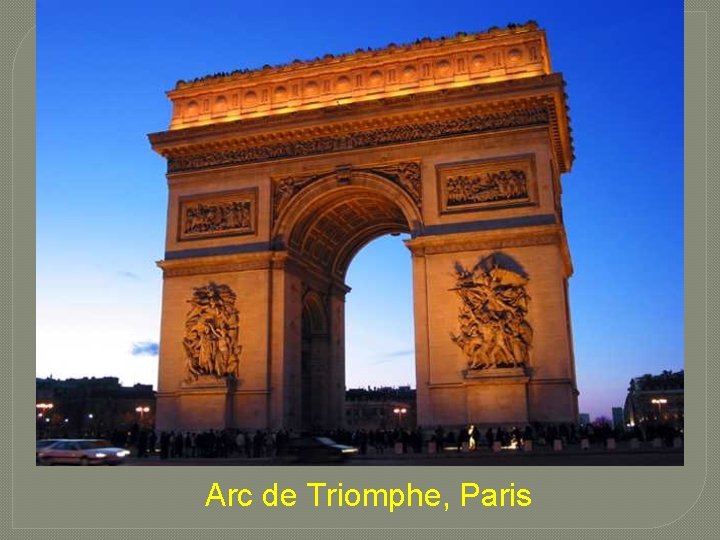
Arc de Triomphe, Paris