
The French Grading System Credential Evaluation Interpretation of



















- Slides: 48
The French Grading System: Credential Evaluation, Interpretation of Islamic Culture and the Lack of Perfection NAFSA Region V Conference, Grand Rapids, MI 2014 Quentin Law Phu Othman Zaimi Foreign Credits, Inc. University of Wisconsin at River Falls
Overview of Presentation I. Introductions II. Warm-up Quiz III. History of the French Grading System IV. Lack of “Perfection” in Islamic and French cultures V. Evaluating French-based credentials VI. Evaluation Practice in Small Groups VII. Resources VIII. Q & A Session
Pop Quiz Time! Surprise?
Do you know what is the top grade in the French grading system? 20/20! Yes you got it!
Warm-up Quiz Countries using the French Grading System: Sporcle Quiz
History of the French Grading System How is the French grading system structured and how has it evolved historically?
French Grading System: Past & Present • Oliver Maulini (1996) • 16 th century Jesuit Schools
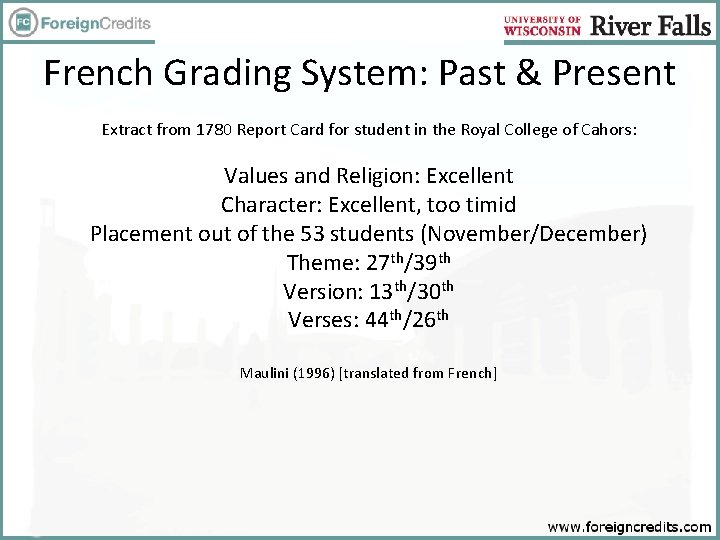
French Grading System: Past & Present Extract from 1780 Report Card for student in the Royal College of Cahors: Values and Religion: Excellent Character: Excellent, too timid Placement out of the 53 students (November/December) Theme: 27 th/39 th Version: 13 th/30 th Verses: 44 th/26 th Maulini (1996) [translated from French]
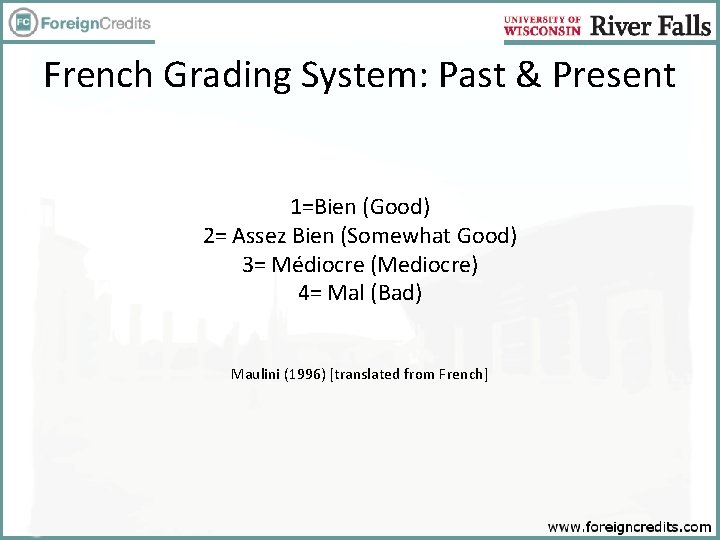
French Grading System: Past & Present 1=Bien (Good) 2= Assez Bien (Somewhat Good) 3= Médiocre (Mediocre) 4= Mal (Bad) Maulini (1996) [translated from French]
French Grading System: Past & Present • 1882 Schools in Geneva – Good Grades Coupons • Coupons will be calculated in the end for prizes – Knives and whistles for boys – Scissors and hairbrushes for girls • 1850, France adopted the 20/20 scale officially
Lack of “Perfection” in Islamic and French Cultures
19 out of 20 - Numberphile
“Grade 20 is for God, 19 is for the Professor, 18 is for the Pope and 17 is the maximum grade that the student will attain” – Paul Simon
Lack of Perfection – A cultural phenomenon It is extremely rare for a student to receive a grade of 20 under the French grading system!
Lack of Perfection – A cultural phenomenon • Michel Criton (2008) • 1968 Minister of Education “Edgar Faure” • Instructors added “+” and “-” to their grades • The grades became: – A++, A, A--……. E-, E--
How Islamic culture affects grades A personal experience in Morocco
Ozzy’s Personal Experience Many teachers in Morocco have told him: “ 20/20 is for god only, nobody is perfect but Allah”
Evaluating French-based credentials
French-Based Grading Basics I I. French-based grades are awarded on a scale of 1 -20 II. Traditionally, grades higher than 16 are seldom awarded III. It is extremely rare for a student to receive a grade of 20
French-Based Grading Basics II I. The passing grade for a single subject is usually 10/20 II. Grades of 8 and 9 are considered passable as long as the overall (combined weighted) average of grades remains at or above 10 in an academic year. Also referred to as “conceded passes” III. A student is considered to have passed the year when the combined weighted average of all grades for that year comes to at least 10
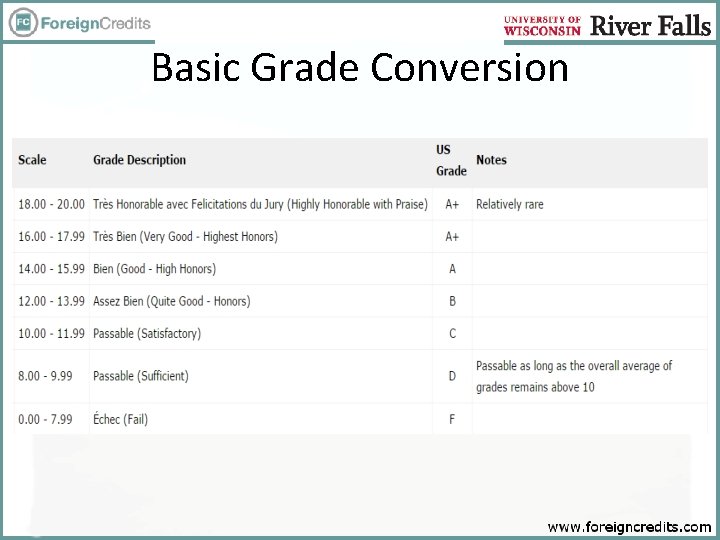
How to perform basic grade conversion on French-based credentials?
Basic Grade Conversion
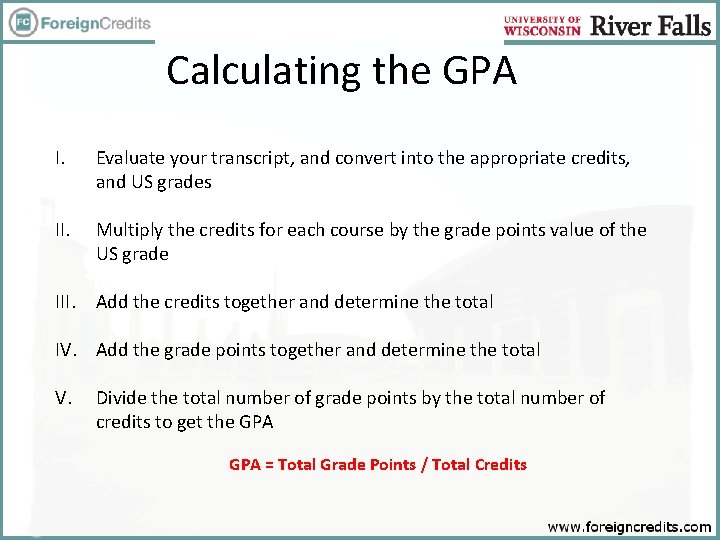
Calculating the GPA I. Evaluate your transcript, and convert into the appropriate credits, and US grades II. Multiply the credits for each course by the grade points value of the US grade III. Add the credits together and determine the total IV. Add the grade points together and determine the total V. Divide the total number of grade points by the total number of credits to get the GPA = Total Grade Points / Total Credits
Electronic GPA Calculator This international GPA calculator is intended to help you calculate the United States Grade Point Average (GPA) based on grades or points from almost any country in the world. Foreign Credits' GPA calculator analyses about 300 grading scales from over 150 countries and calculates an unweighted GPA on a 4. 0 point scale.
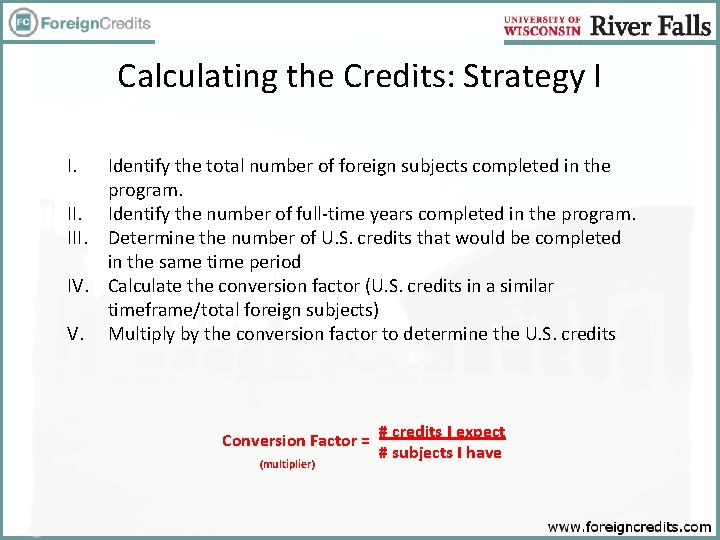
Calculating the Credits: Strategy I I. Identify the total number of foreign subjects completed in the program. II. Identify the number of full-time years completed in the program. III. Determine the number of U. S. credits that would be completed in the same time period IV. Calculate the conversion factor (U. S. credits in a similar timeframe/total foreign subjects) V. Multiply by the conversion factor to determine the U. S. credits Conversion Factor = (multiplier) # credits I expect # subjects I have
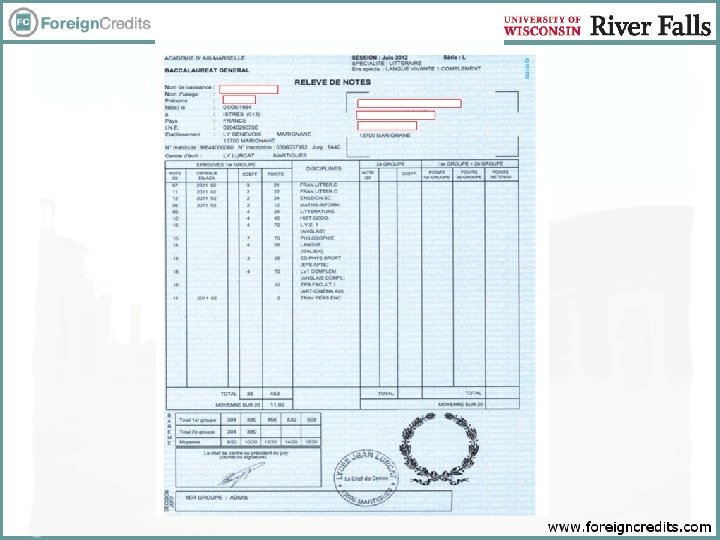
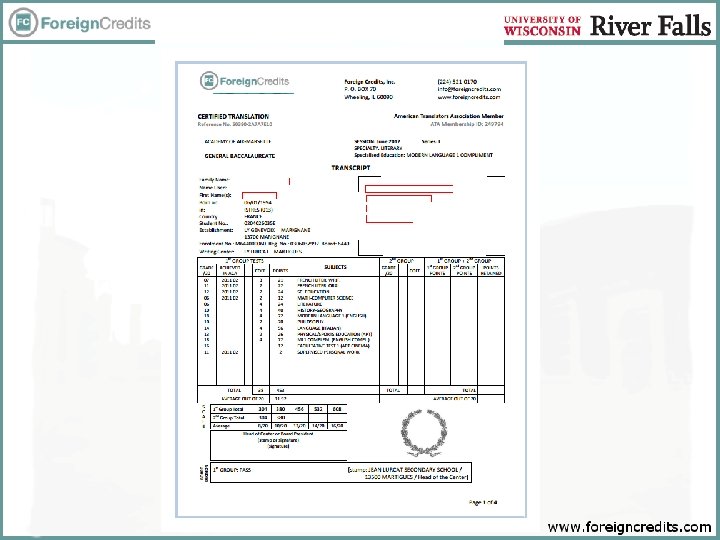
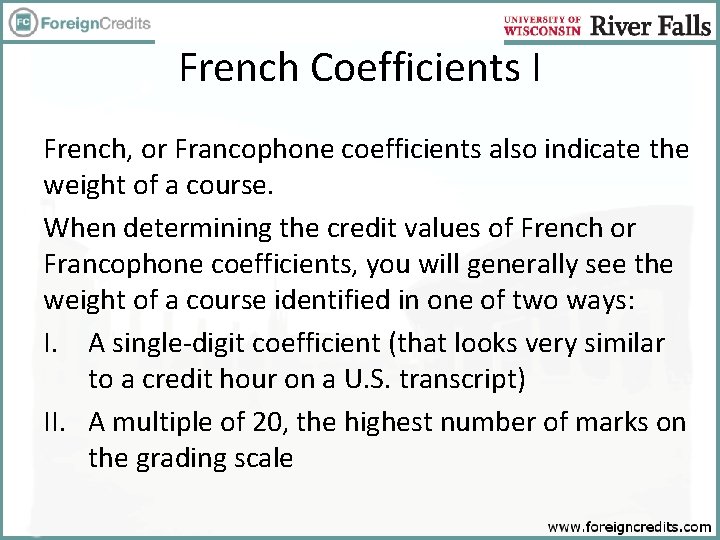
French Coefficients I French, or Francophone coefficients also indicate the weight of a course. When determining the credit values of French or Francophone coefficients, you will generally see the weight of a course identified in one of two ways: I. A single-digit coefficient (that looks very similar to a credit hour on a U. S. transcript) II. A multiple of 20, the highest number of marks on the grading scale
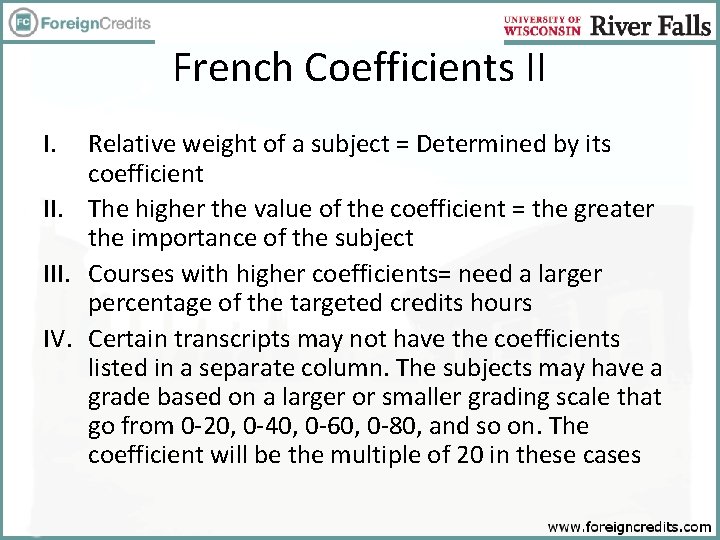
French Coefficients II I. Relative weight of a subject = Determined by its coefficient II. The higher the value of the coefficient = the greater the importance of the subject III. Courses with higher coefficients= need a larger percentage of the targeted credits hours IV. Certain transcripts may not have the coefficients listed in a separate column. The subjects may have a grade based on a larger or smaller grading scale that go from 0 -20, 0 -40, 0 -60, 0 -80, and so on. The coefficient will be the multiple of 20 in these cases
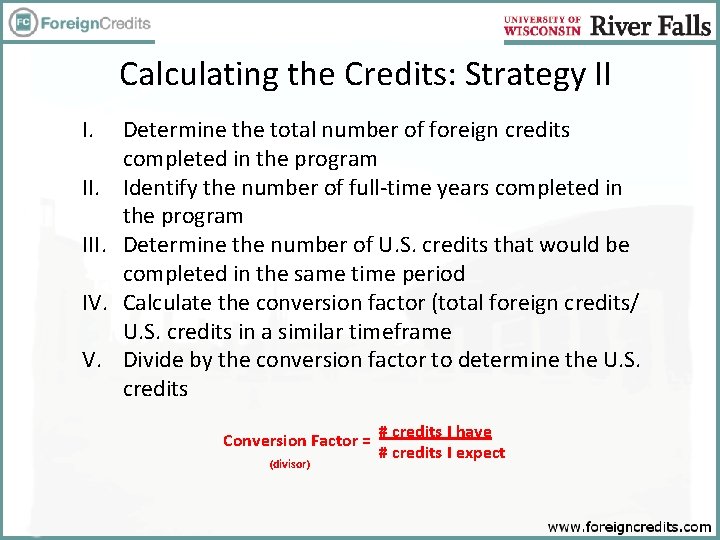
Calculating the Credits: Strategy II I. III. IV. V. Determine the total number of foreign credits completed in the program Identify the number of full-time years completed in the program Determine the number of U. S. credits that would be completed in the same time period Calculate the conversion factor (total foreign credits/ U. S. credits in a similar timeframe Divide by the conversion factor to determine the U. S. credits Conversion Factor = (divisor) # credits I have # credits I expect
Credential Evaluation Practice Now that you have learned how to perform basic grade conversion with French-based credential, let’s put your knowledge into practice!
Case Scenario Student A has passed the Baccalauréat de l'Enseignement Secondaire (Baccalaureate of Secondary Education) examination in Tunisia and was awarded a High School Diploma and given access to university/post-secondary studies locally and abroad. The student is applying for undergraduate admission to your university as an international student.
Admission Decision If you are the international admission officer, would you accept this student from Tunisia for admission to an undergraduate degree program at your university based on his grades and GPA? Please tell us your admission decision.
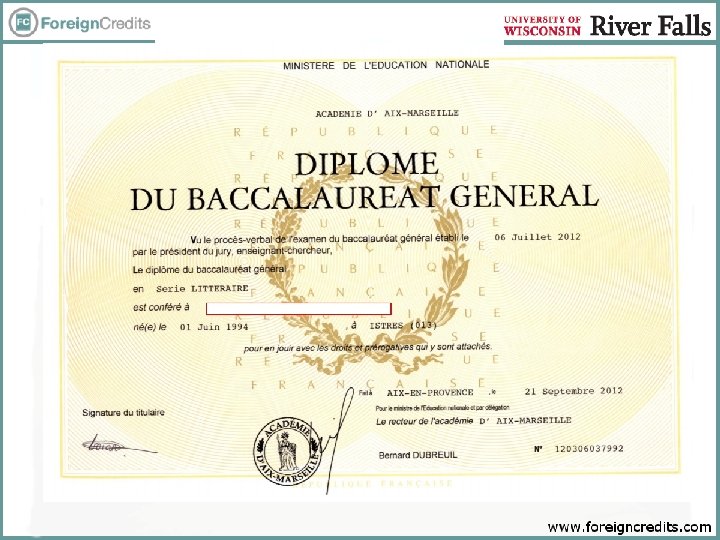
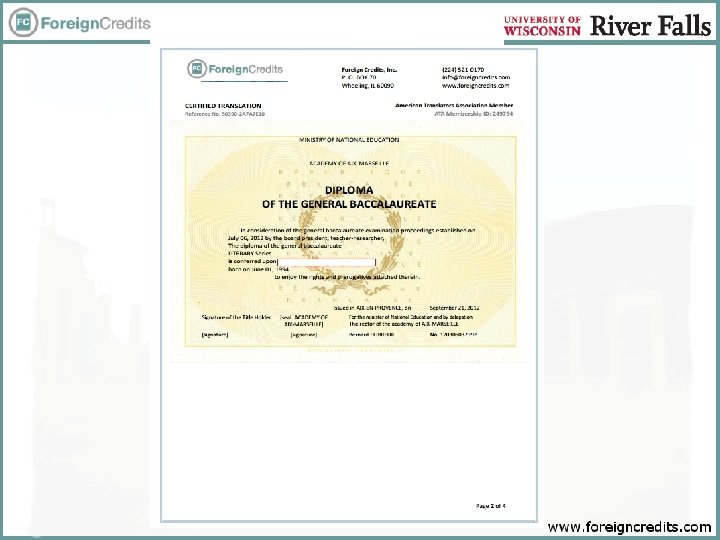
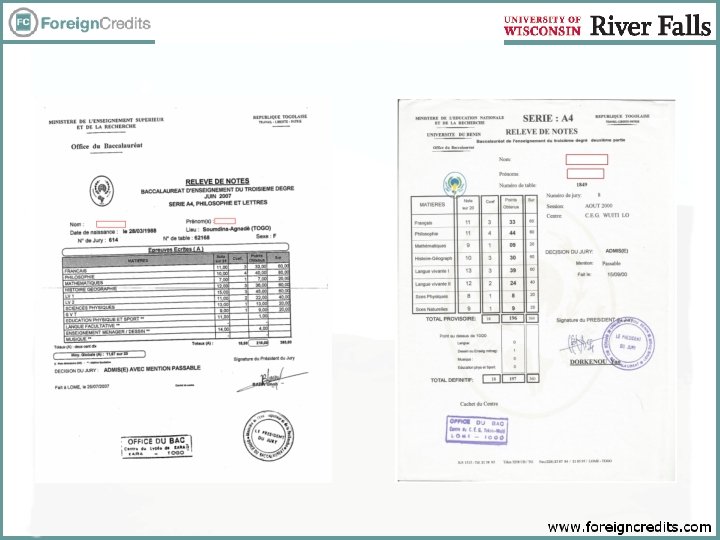
Sample Credential for Practice Please convert the grades listed on the sample transcript to the US grade equivalencies based on the Tunisia French-based grading scale.
Basic and Free Electronic Resources
Resources can be used for: I. Placement Recommendations II. Institutional Accreditation and Verification III. Program Information IV. Grading Scales V. Country Information and Research
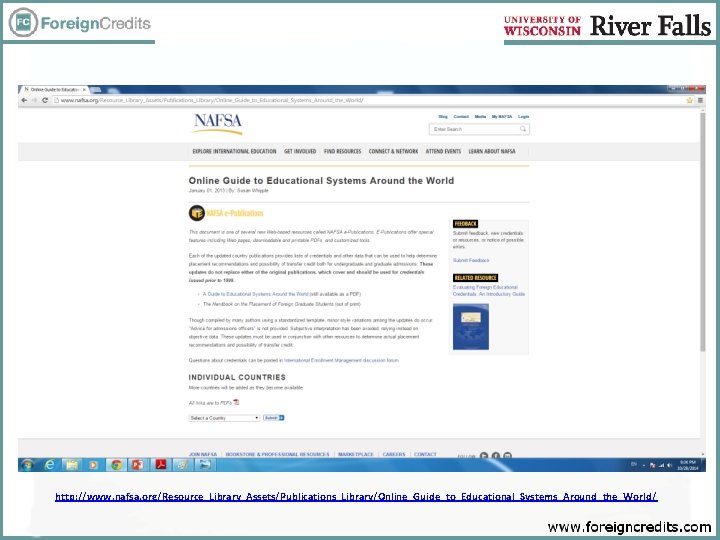
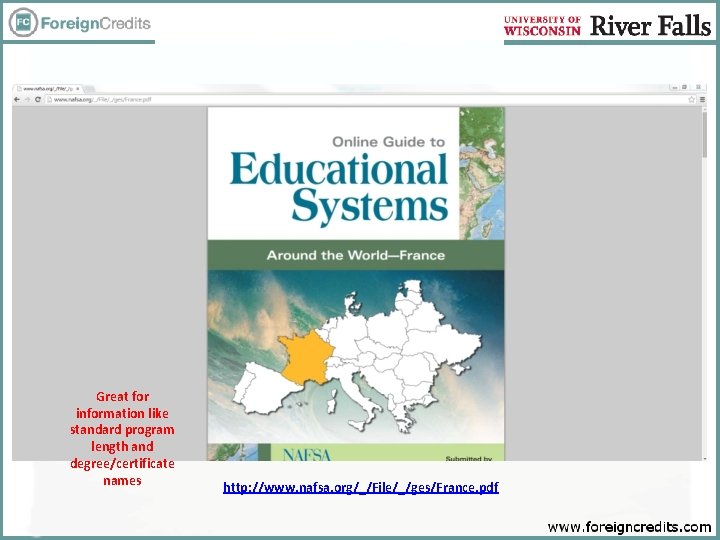
http: //www. nafsa. org/Resource_Library_Assets/Publications_Library/Online_Guide_to_Educational_Systems_Around_the_World/
Great for information like standard program length and degree/certificate names http: //www. nafsa. org/_/File/_/ges/France. pdf
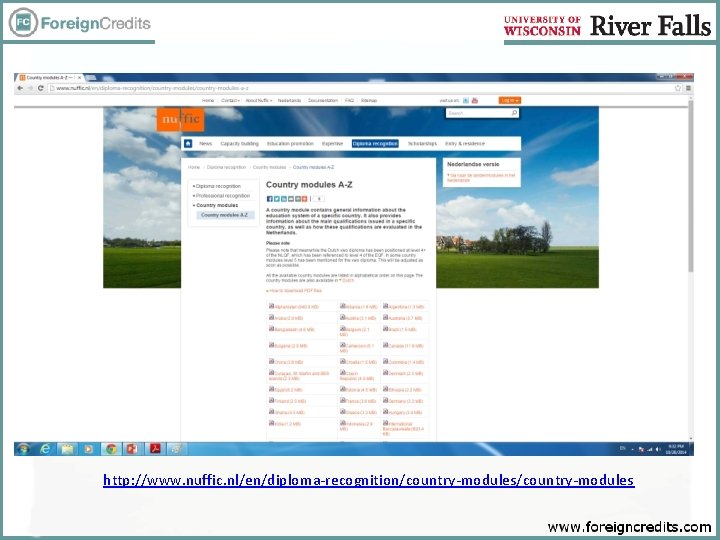
http: //www. nuffic. nl/en/diploma-recognition/country-modules
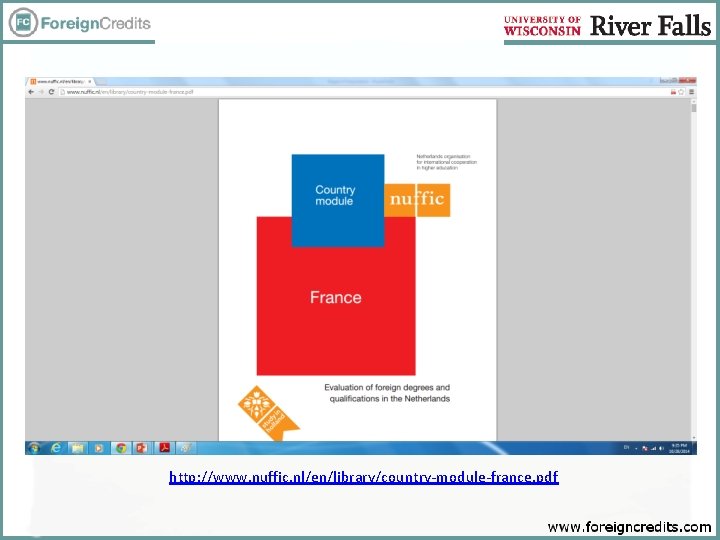
http: //www. nuffic. nl/en/library/country-module-france. pdf
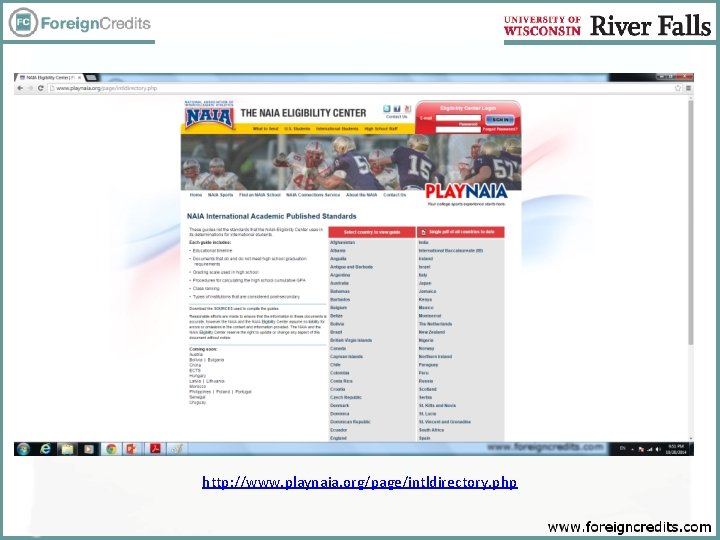
http: //www. playnaia. org/page/intldirectory. php
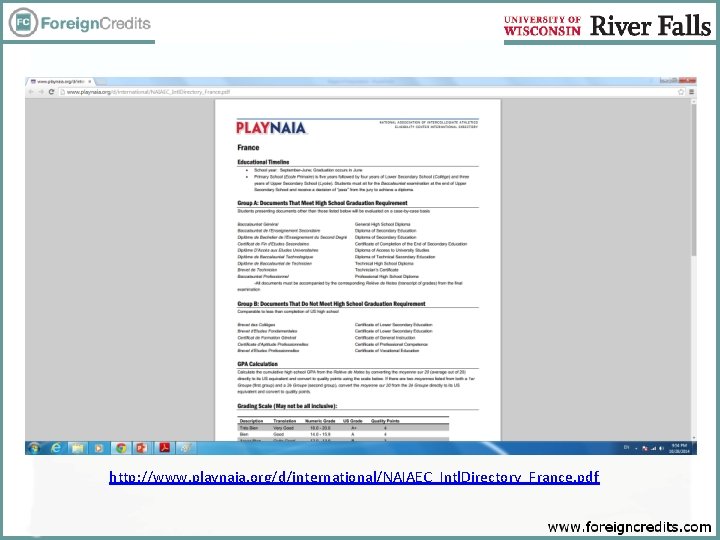
http: //www. playnaia. org/d/international/NAIAEC_Intl. Directory_France. pdf
Other Free, Electronic Resources Classbase: http: //www. classbase. com/ Alberta International Education Guides: http: //work. alberta. ca/Immigration/international-education-guides. html NORRIC Publications: http: //norric. org/publications#countries WES Country Profiles: http: //www. wes. org/wes_tools/profile. asp
Questions?
Contact Quentin Lawphu qphu@foreigncredits. com Othman Zaimi othman. zaimi@uwrf. edu