
The Fourth Macromolecule 1 Objectives Describe the structure
The Fourth Macromolecule!!! 1. Objectives: Describe the structure and function of DNA and RNA
There are two types of nucleic acid 1. DNA 2. RNA
1. DNA: deoxyribonucleic acid • The genetic information of a cell • Located in the nucleus • Works with RNA to regulate the order of amino acids in proteins
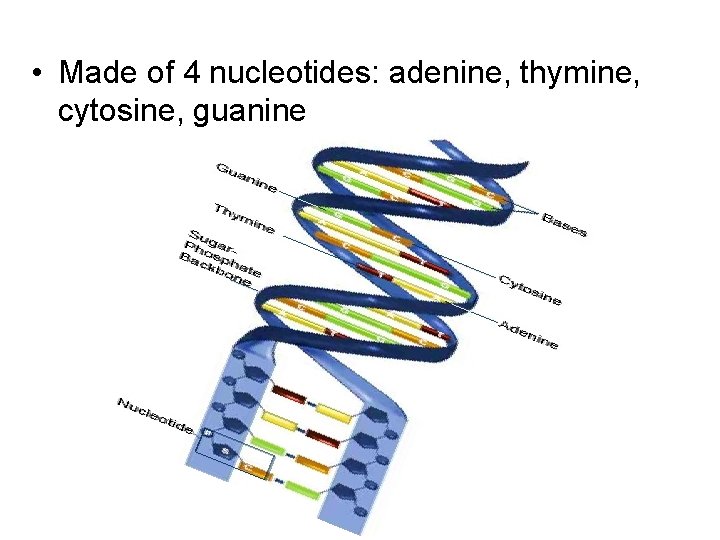
• Made of 4 nucleotides: adenine, thymine, cytosine, guanine
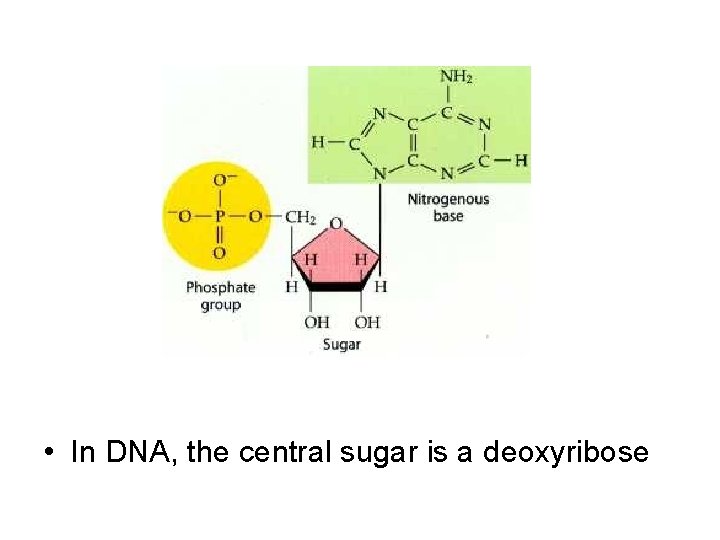
• In DNA, the central sugar is a deoxyribose

Nucleotides join together through covalent bonds …
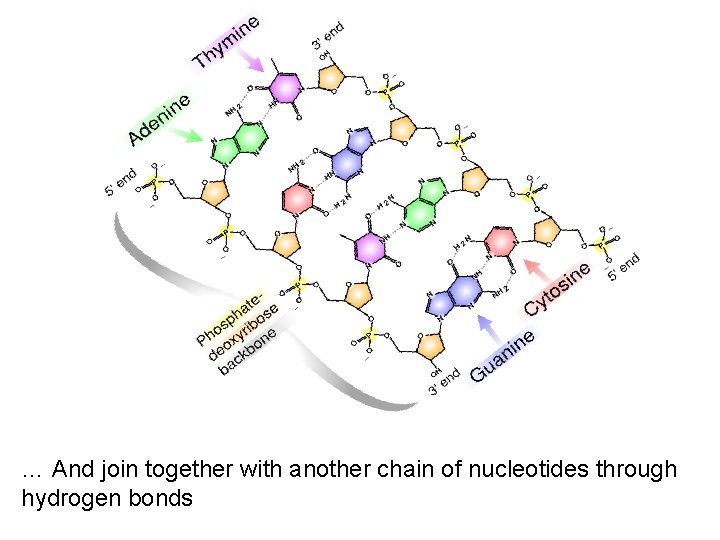
… And join together with another chain of nucleotides through hydrogen bonds
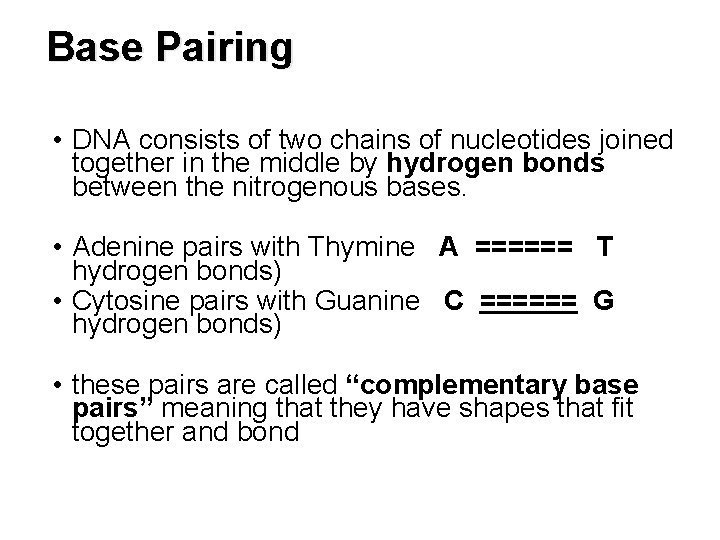
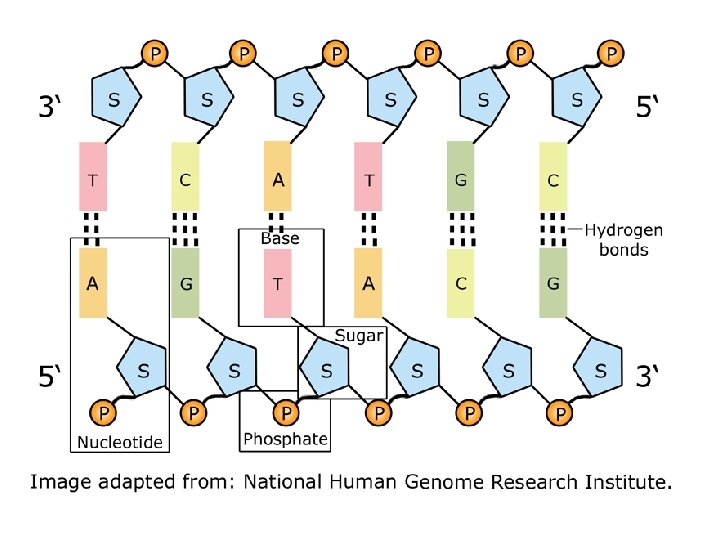
Base Pairing • DNA consists of two chains of nucleotides joined together in the middle by hydrogen bonds between the nitrogenous bases. • Adenine pairs with Thymine A ====== T hydrogen bonds) • Cytosine pairs with Guanine C ====== G hydrogen bonds) • these pairs are called “complementary base pairs” meaning that they have shapes that fit together and bond
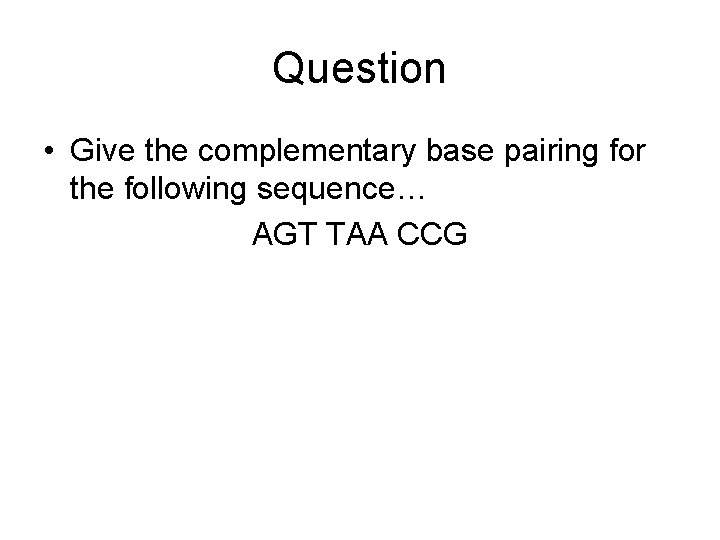
Question • Give the complementary base pairing for the following sequence… AGT TAA CCG
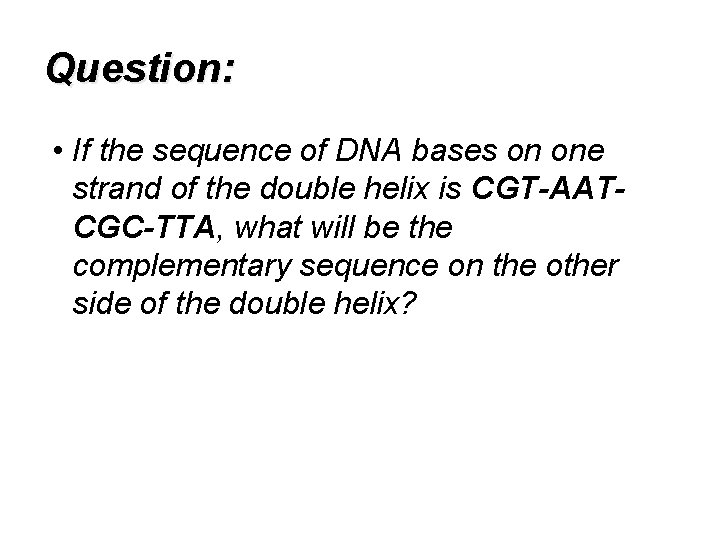
Question: • If the sequence of DNA bases on one strand of the double helix is CGT-AATCGC-TTA, what will be the complementary sequence on the other side of the double helix?
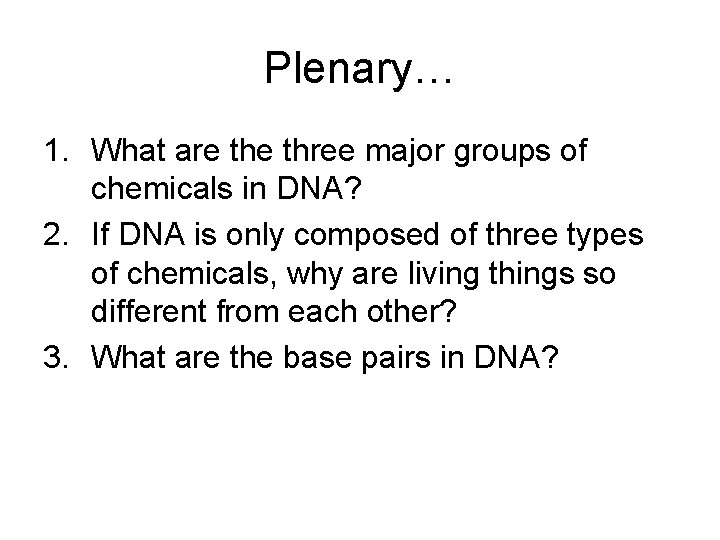
Plenary… 1. What are three major groups of chemicals in DNA? 2. If DNA is only composed of three types of chemicals, why are living things so different from each other? 3. What are the base pairs in DNA?
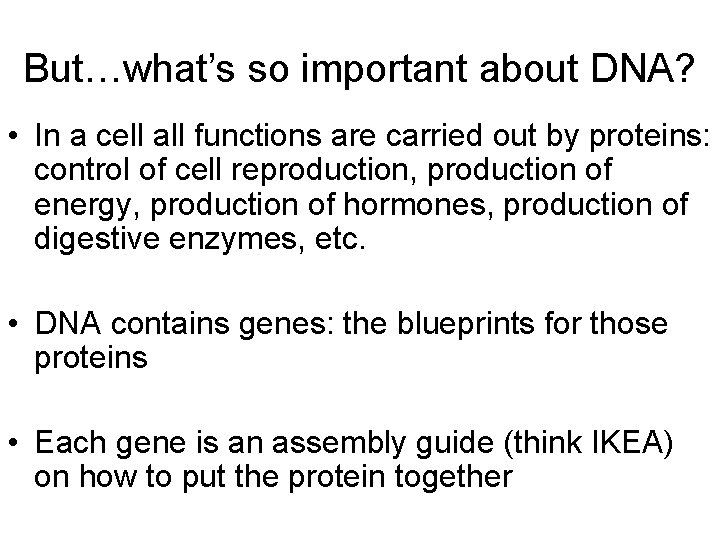
But…what’s so important about DNA? • In a cell all functions are carried out by proteins: control of cell reproduction, production of energy, production of hormones, production of digestive enzymes, etc. • DNA contains genes: the blueprints for those proteins • Each gene is an assembly guide (think IKEA) on how to put the protein together
Your Task • https: //www. youtube. com/watch? v=zwibg NGe 4 a. Y • Complete DNA Activity • Read pp. 33 -34 and answer questions 914 on pp. 35
- Slides: 14