
The Fourteenth Amendment and Education Gradually certain Supreme
- Slides: 4
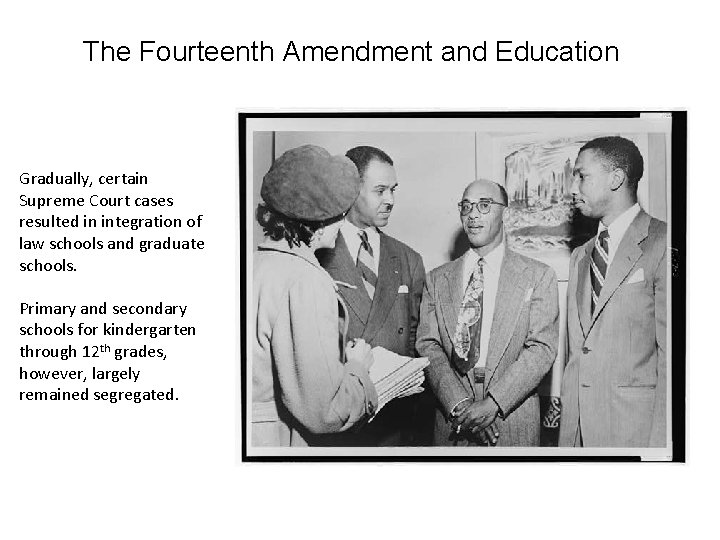
The Fourteenth Amendment and Education Gradually, certain Supreme Court cases resulted in integration of law schools and graduate schools. Primary and secondary schools for kindergarten through 12 th grades, however, largely remained segregated.
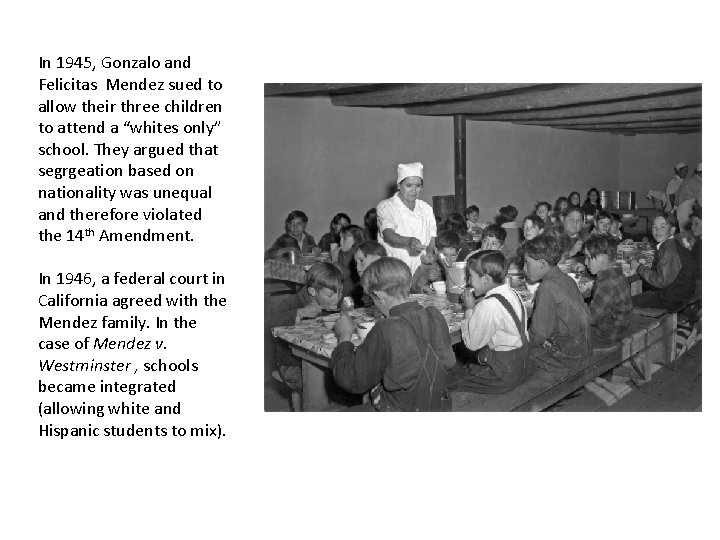
In 1945, Gonzalo and Felicitas Mendez sued to allow their three children to attend a “whites only” school. They argued that segrgeation based on nationality was unequal and therefore violated the 14 th Amendment. In 1946, a federal court in California agreed with the Mendez family. In the case of Mendez v. Westminster , schools became integrated (allowing white and Hispanic students to mix).
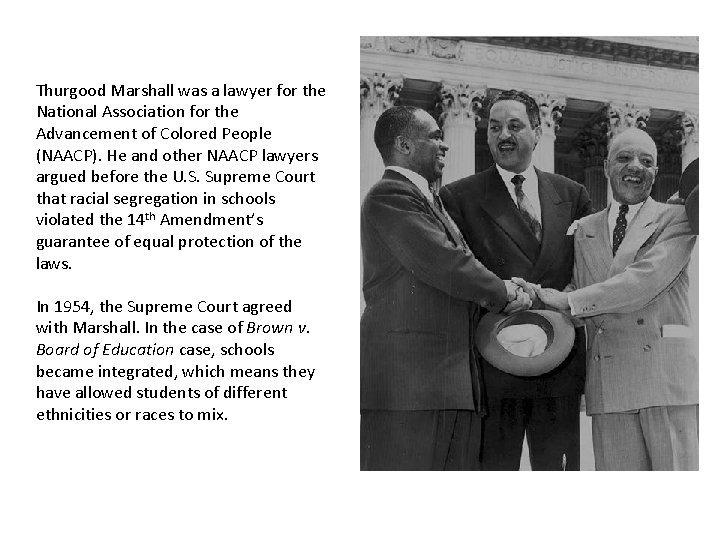
Thurgood Marshall was a lawyer for the National Association for the Advancement of Colored People (NAACP). He and other NAACP lawyers argued before the U. S. Supreme Court that racial segregation in schools violated the 14 th Amendment’s guarantee of equal protection of the laws. In 1954, the Supreme Court agreed with Marshall. In the case of Brown v. Board of Education case, schools became integrated, which means they have allowed students of different ethnicities or races to mix.
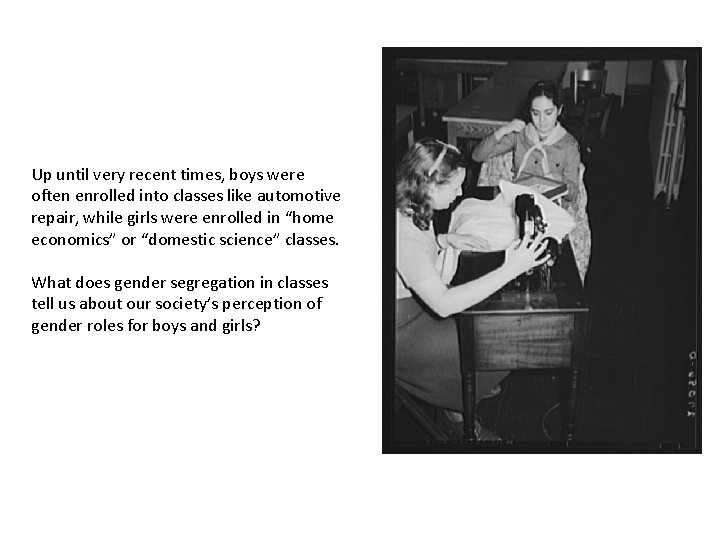
Up until very recent times, boys were often enrolled into classes like automotive repair, while girls were enrolled in “home economics” or “domestic science” classes. What does gender segregation in classes tell us about our society’s perception of gender roles for boys and girls?