
THE FOUR PRIMARY TYPES OF WRITING TYPES OF
- Slides: 6
THE FOUR PRIMARY TYPES OF WRITING
TYPES OF WRITING • There are four primary types of writing that are commonly used. • They are: Ø Ø Descriptive Expository or Informative Narrative Persuasive
DESCRIPTIVE • Descriptive writing provides a clear and vivid picture of a person, place, thing, or event. • Descriptive writing is often found in poetry, but can also be found in other types of writing. • Descriptive writing appeals to the senses. The audience can feel, hear, taste, smell, and see what the writer is describing. • Descriptive language often involves figurative language such as similes, metaphors, imagery, personification, and alliteration.
EXPOSITORY or INFORMATIVE • Expository writing is used to explain ideas, give facts or directions, or to identify terms. • Expository writing is used to analyze literature and is often used in essay writing. • Expository writing is also used in journal activities and other classroom writing assignments. • The goal of expository writing is to inform the audience. • Examples of expository writing include compare and contrast or cause and effect essays.
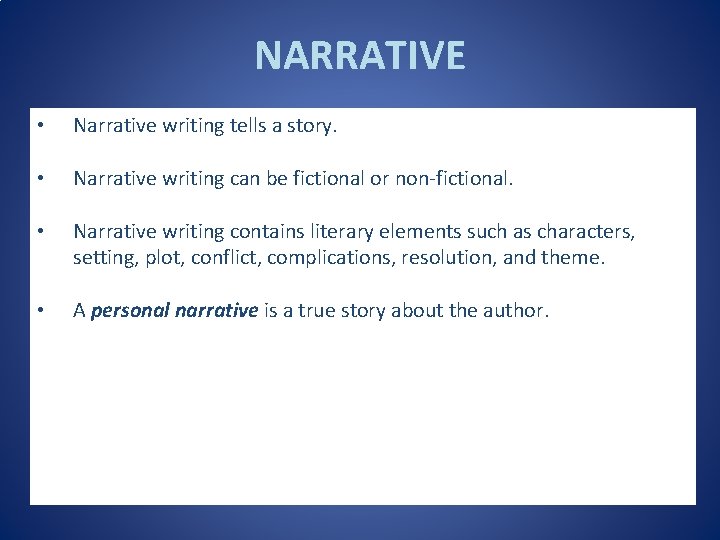
NARRATIVE • Narrative writing tells a story. • Narrative writing can be fictional or non-fictional. • Narrative writing contains literary elements such as characters, setting, plot, conflict, complications, resolution, and theme. • A personal narrative is a true story about the author.
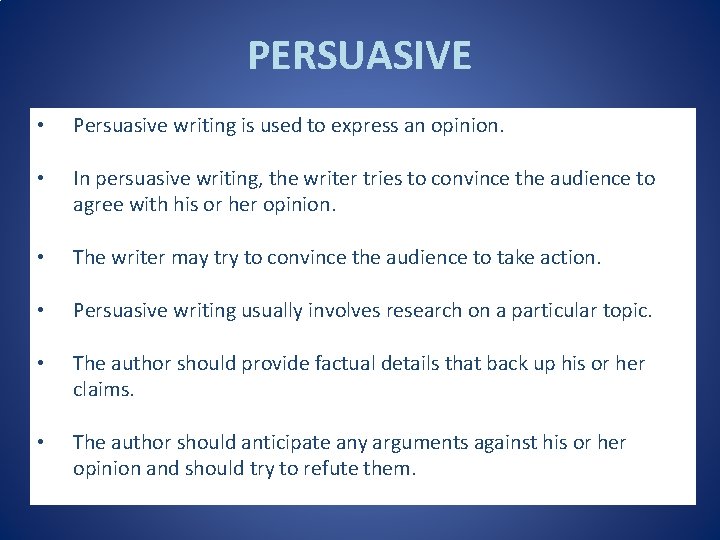
PERSUASIVE • Persuasive writing is used to express an opinion. • In persuasive writing, the writer tries to convince the audience to agree with his or her opinion. • The writer may try to convince the audience to take action. • Persuasive writing usually involves research on a particular topic. • The author should provide factual details that back up his or her claims. • The author should anticipate any arguments against his or her opinion and should try to refute them.