
The Four Pillars Four Pillars Medication SelfManagement n

- Slides: 11
The Four Pillars
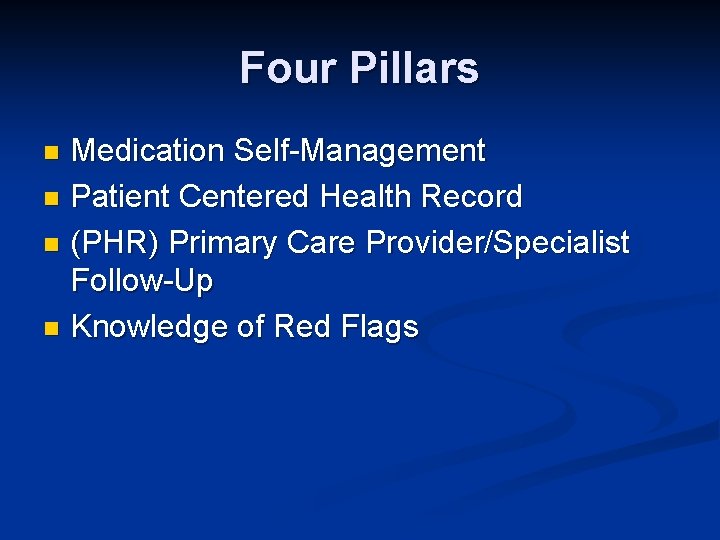
Four Pillars Medication Self-Management n Patient Centered Health Record n (PHR) Primary Care Provider/Specialist Follow-Up n Knowledge of Red Flags n
Pillar #1: Medication Self-Management n Focus: reinforcing the importance of knowing each medication – when, why, and how to take what is prescribed, and developing an effective medication management system
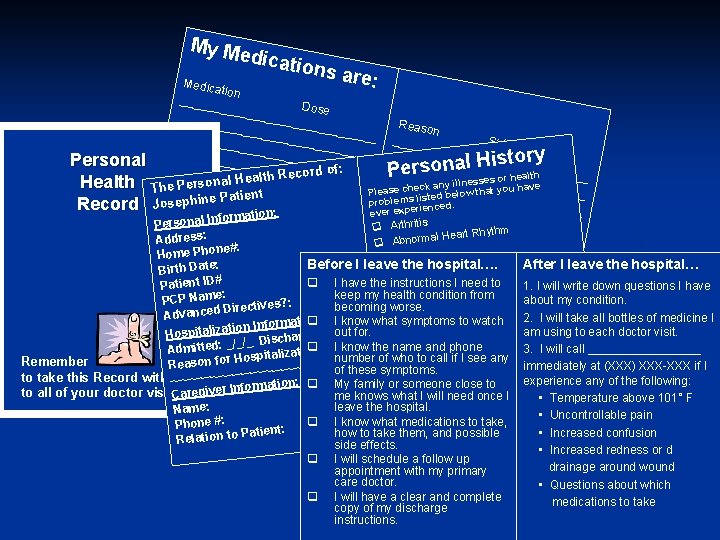
Pillar #2: Personal Health Record (PHR) n Focus: providing a health care management guide for patients; the PHR is introduced during the hospital visit and used throughout the program
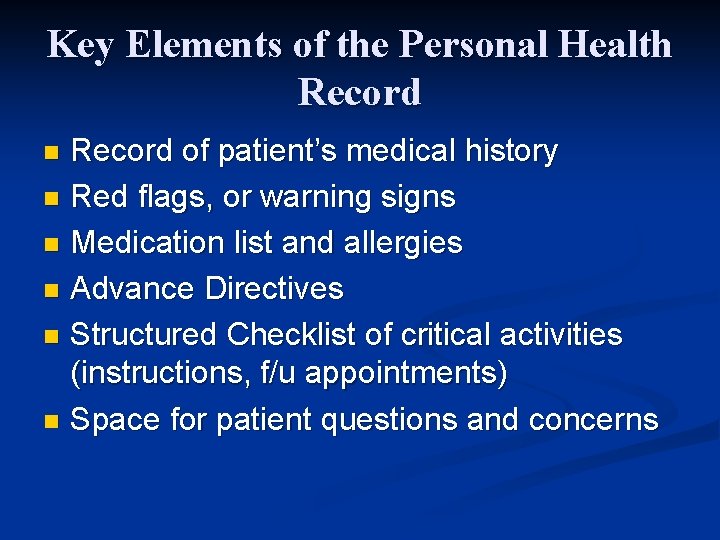
Key Elements of the Personal Health Record of patient’s medical history n Red flags, or warning signs n Medication list and allergies n Advance Directives n Structured Checklist of critical activities (instructions, f/u appointments) n Space for patient questions and concerns n
My Me dicatio ns are : Medic ation _____ Dose _____ _____ Reaso _____ n _ _____ Side E _ _ _____ ffects _____ _ _ _ Personal ________o_f: ____________ _____or health _____ __ecord _ ses _____ Health Th_e__P_e_r_s_o__n_a_l_H__e_a_lt_h__R_______ Ple_a_s_e_c_h_e_c_k_a_n_y_il_ln_we_sth you hav_e______ _m _ t _ belo __a_t ___ n _ _ d e _ _ te ti s a li _ _ P s _ _ e _____ ____ proble _ _. d _ e Record J_o_s_e_p_h_in c _ _ _ n e _ _ _ ri __ xpe _____ ___a_ti_on: _____ ever _e____ form _e In l _ a _ n _ s _ _ o ti _ _ rs h _ ___ _____ P ___A_rt_ _____ q _____ __a_l _H_eart Rh_y_th_m _A_d __ _q_ Abn_o_rm _____ re_s_s: _d _ _____ _ _____ _ Ph_o_n_e_#_: _____ _ e __H_o_m _ r _ e _ c _ n _ a _____ q__C __ _____ After __the _ _Before hospital…. I leave the hospital… _____ I leave _ _ s _ _ te _ Birth Date_: ____ b _ ia _ D _ __q _____ rteries ______ _ _ A # _ ____rd_ening o. Ifneed the __to _____1. I will write down questions I have q____I _have the instructions tient ID Alle. Pra Ha _____ q gies. N _ _ _ : e keep my health condition from _ _ _ condition. _____art Disease ______ about _____ my PCP : a_m : _ e ? s _ H _ e _ v _ _ q ti becoming worse. _ c _ _ e _ _____ Dir ______ __ take all bottles of medicine I _____ 2. _I_will Advanced _ti_oq _ : eart Failure n H _ I know what symptoms to watch _ _ a q _ _ rm _ _ _____ ure _____ tion Info am using to each doctor visit. /_/_for. ___H_ig_h Blood Press d: _out Hospitaliza e rg a q h c _ is D _ _ /_ _ _phone _re____ q I know the name ractu Admitted: Hip Fand _____ 3. I will call _________ qwho lization: __number a it p _ s __ o of to call if I see any _____ H __ r __ fo e s __ n a Remember __ o e s __ is a Re immediately at (XXX) XXX-XXX if I ung D L _____ itions __ q __ of these symptoms. __ __ l Back cond ____ a ic rg u to take this Record with __ you S l/ a experience any of the following: n: q My family or Medic close to q someone Informatio to all of your doctor visits ia n Caregiver o me knows q what I will need once I m • Temperature above 101° F Pneu leave the hospital. oke Name: Str ___ • __Uncontrollable pain q I know whatqmedications to__take, _____ _ _ Phone #: _ _ r: Otheand possible • Increased confusion how to takeqthem, Patient: Relation to side effects. • Increased redness or d q I will schedule a follow up drainage around wound appointment with my primary care doctor. • Questions about which q I will have a clear and complete medications to take copy of my discharge instructions. story i Personal H
Goal Attainment “What is one personal goal that is important for you to achieve one month after you get home? ”
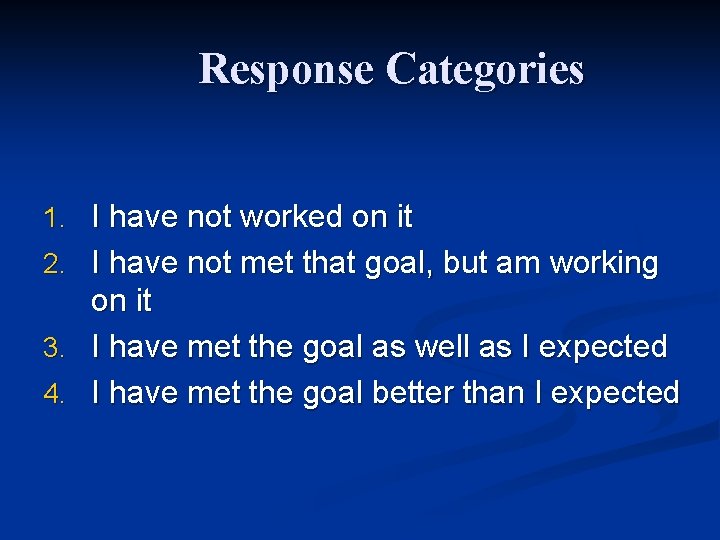
Response Categories 1. I have not worked on it 2. I have not met that goal, but am working on it 3. I have met the goal as well as I expected 4. I have met the goal better than I expected
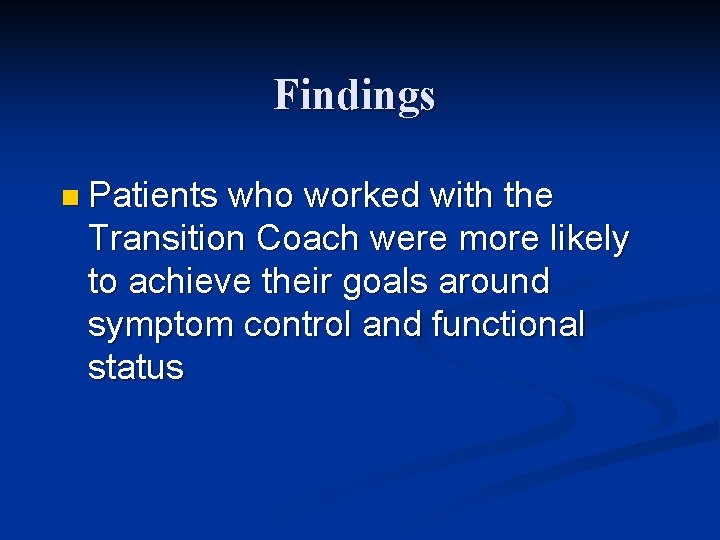
Findings n Patients who worked with the Transition Coach were more likely to achieve their goals around symptom control and functional status
Pillar #3: Primary Care Provider/Specialist Follow-Up n Focus: enlist patient’s involvement in scheduling appointment(s) with the primary care provider or specialist as soon as possible after discharge
Pillar #4: Knowledge of Red Flags n Focus: patient is knowledgeable about indicators that suggest that his or her condition is worsening and how to respond