
The Four Parts to a Story All Secrets
- Slides: 18
The Four Parts to a Story All Secrets Revealed
I. Setting – Time: Time when in history the story takes place • Also includes over what time frame the story takes place. – Place: Place where the story takes place – Social Conditions: Conditions daily life of the characters • • • Social Class Gender Education Level Occupation/s Mental/Physical Disabilities
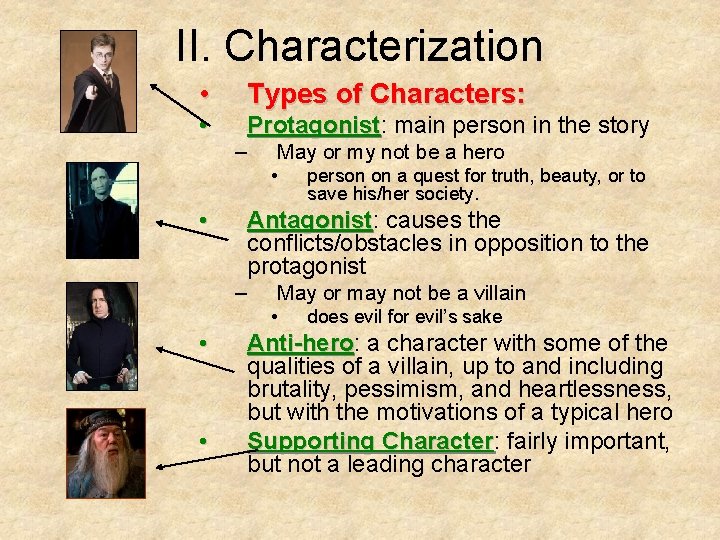
II. Characterization • Types of Characters: • Protagonist: Protagonist main person in the story – May or my not be a hero • • Antagonist: Antagonist causes the conflicts/obstacles in opposition to the protagonist – May or may not be a villain • • • person on a quest for truth, beauty, or to save his/her society. does evil for evil’s sake Anti-hero: Anti-hero a character with some of the qualities of a villain, up to and including brutality, pessimism, and heartlessness, but with the motivations of a typical hero Supporting Character: Character fairly important, but not a leading character
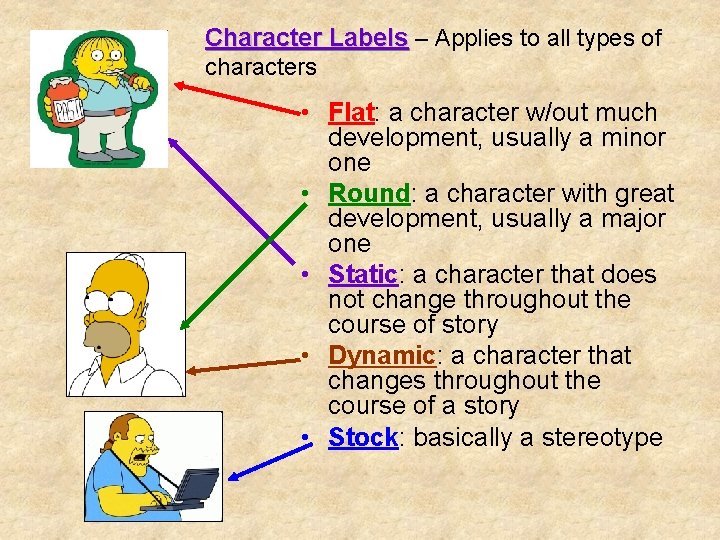
Character Labels – Applies to all types of characters • Flat: a character w/out much development, usually a minor one • Round: a character with great development, usually a major one • Static: a character that does not change throughout the course of story • Dynamic: a character that changes throughout the course of a story • Stock: basically a stereotype
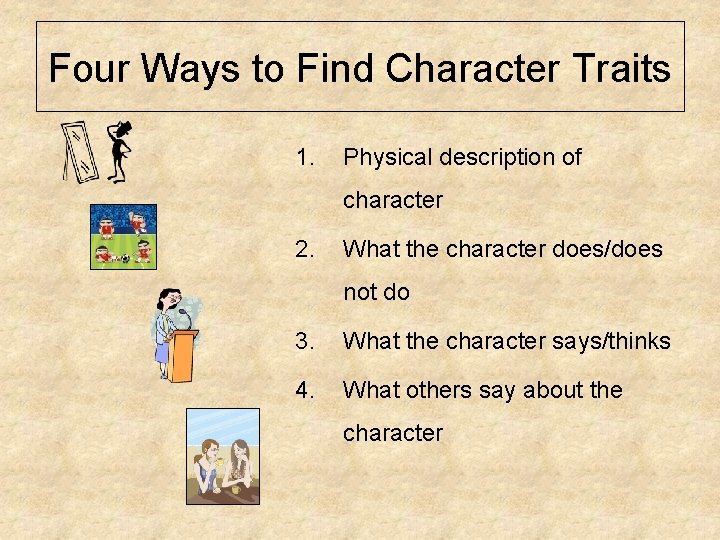
Four Ways to Find Character Traits 1. Physical description of character 2. What the character does/does not do 3. What the character says/thinks 4. What others say about the character
III. Conflict • Definition – struggle between two opposing forces • Internal – Character vs. Self: Outside elements cause tension within a character. • The character may have to struggle against a personality defect or struggle spiritually or emotionally.
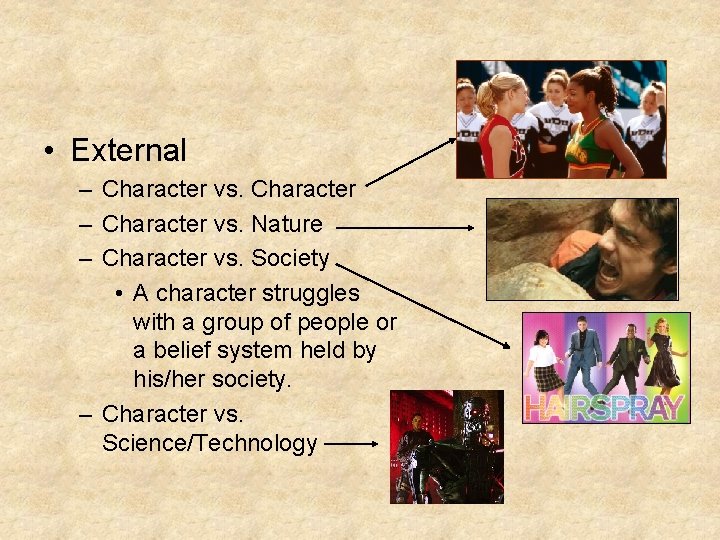
• External – Character vs. Character – Character vs. Nature – Character vs. Society • A character struggles with a group of people or a belief system held by his/her society. – Character vs. Science/Technology
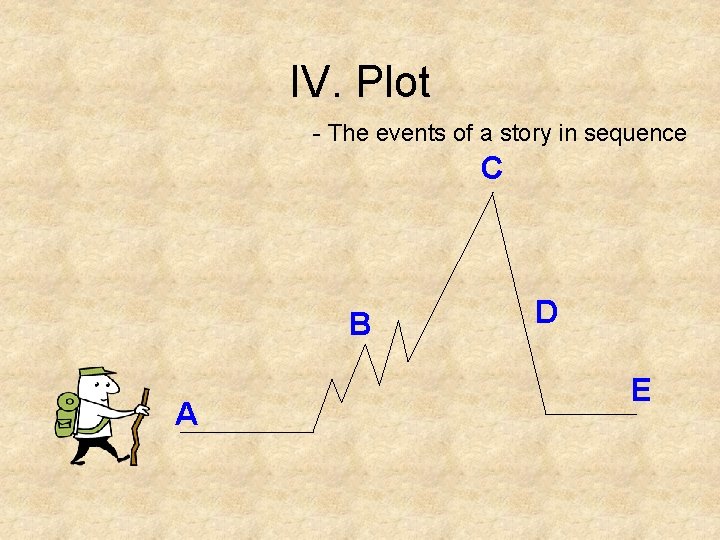
IV. Plot - The events of a story in sequence C B A D E
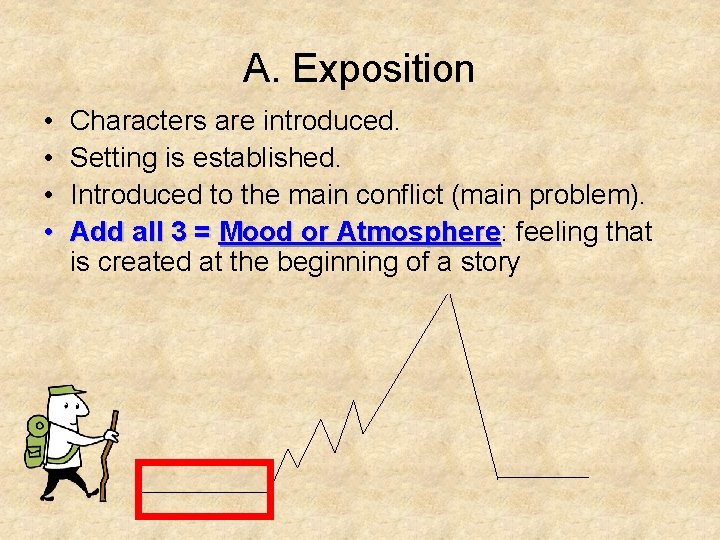
A. Exposition • • Characters are introduced. Setting is established. Introduced to the main conflict (main problem). Add all 3 = Mood or Atmosphere: Atmosphere feeling that is created at the beginning of a story
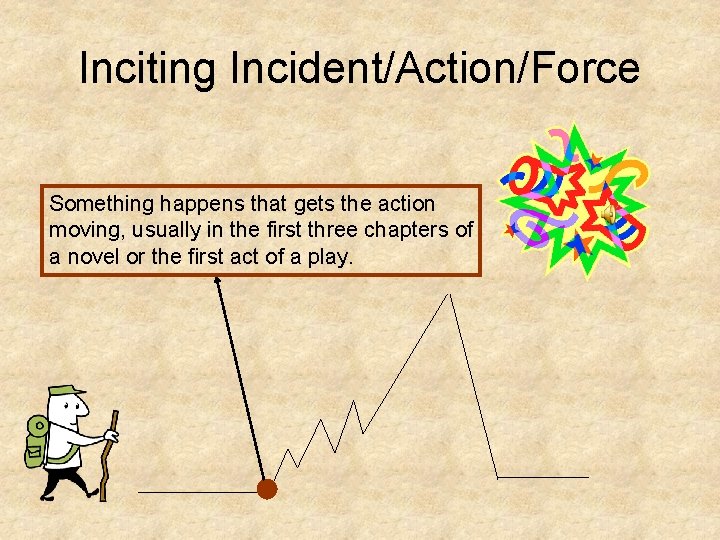
Inciting Incident/Action/Force Something happens that gets the action moving, usually in the first three chapters of a novel or the first act of a play.
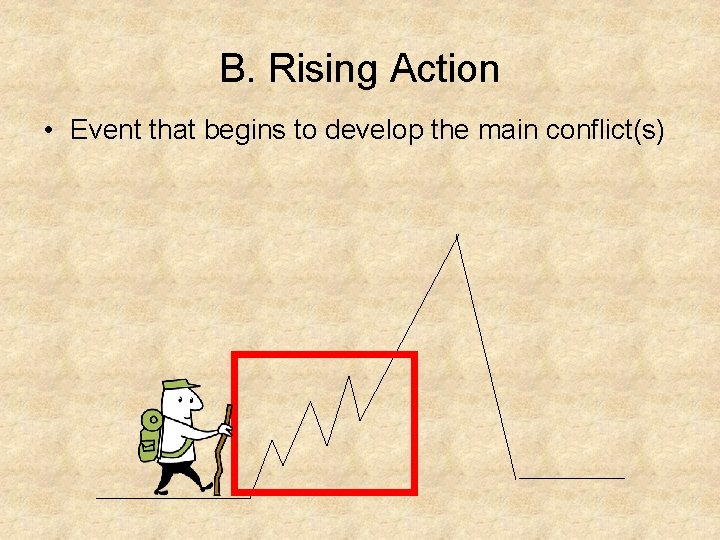
B. Rising Action • Event that begins to develop the main conflict(s)
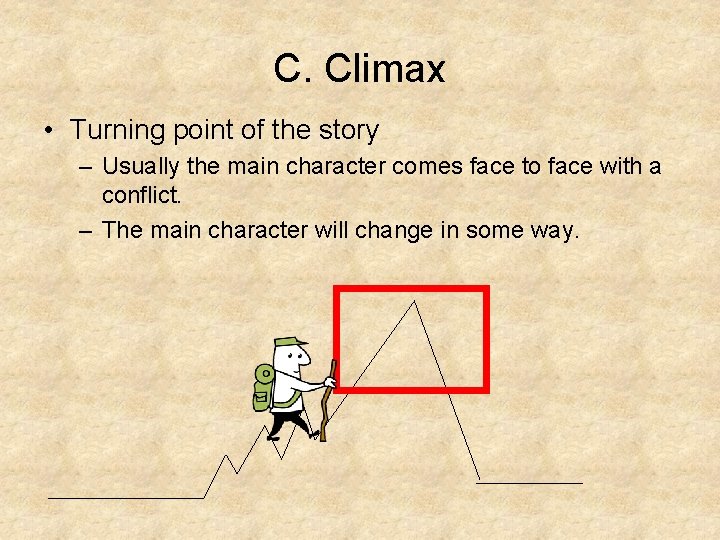
C. Climax • Turning point of the story – Usually the main character comes face to face with a conflict. – The main character will change in some way.
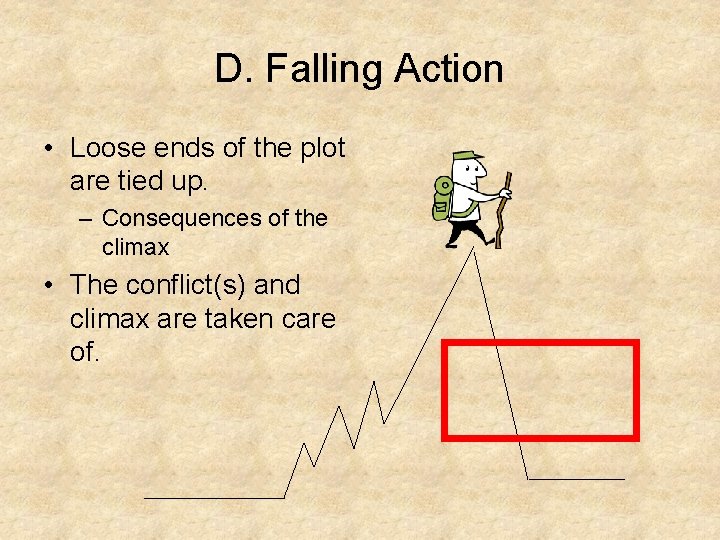
D. Falling Action • Loose ends of the plot are tied up. – Consequences of the climax • The conflict(s) and climax are taken care of.
E. Final Crisis • Sometimes called mini climax • Occurs mainly in plays and novels, but not a requirement • Final test/challenge/moment of suspense that will test the morality of the protagonist and supporting characters
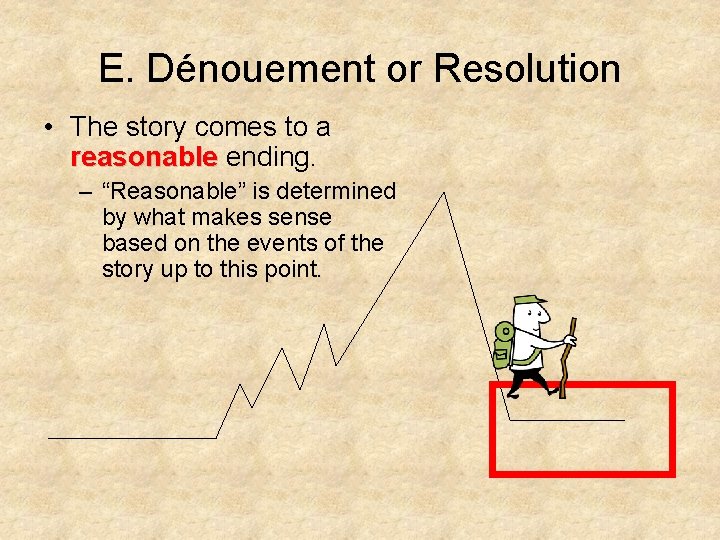
E. Dénouement or Resolution • The story comes to a reasonable ending. – “Reasonable” is determined by what makes sense based on the events of the story up to this point.
• By studying all four of these elements, one can conclude a theme or themes that the author has created. – Theme: Theme a major idea that an author develops in his/her writing; written in a declarative sentence • Can include: – Moral lesson – Comment author is making on society
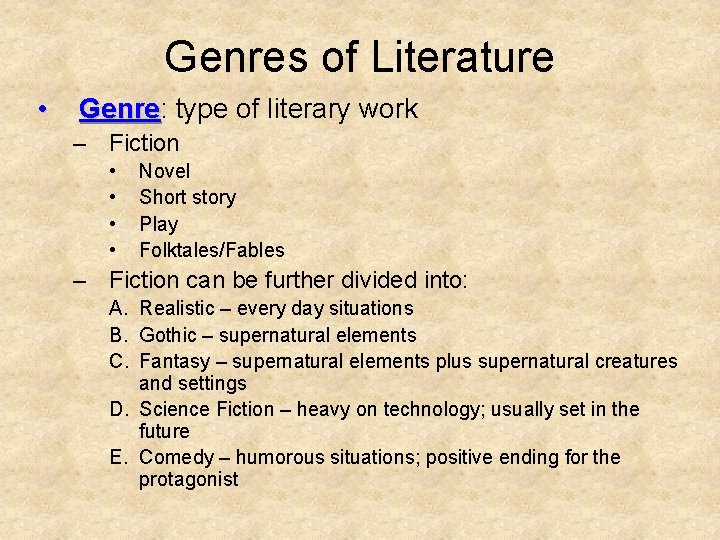
Genres of Literature • Genre: Genre type of literary work – Fiction • • Novel Short story Play Folktales/Fables – Fiction can be further divided into: A. Realistic – every day situations B. Gothic – supernatural elements C. Fantasy – supernatural elements plus supernatural creatures and settings D. Science Fiction – heavy on technology; usually set in the future E. Comedy – humorous situations; positive ending for the protagonist
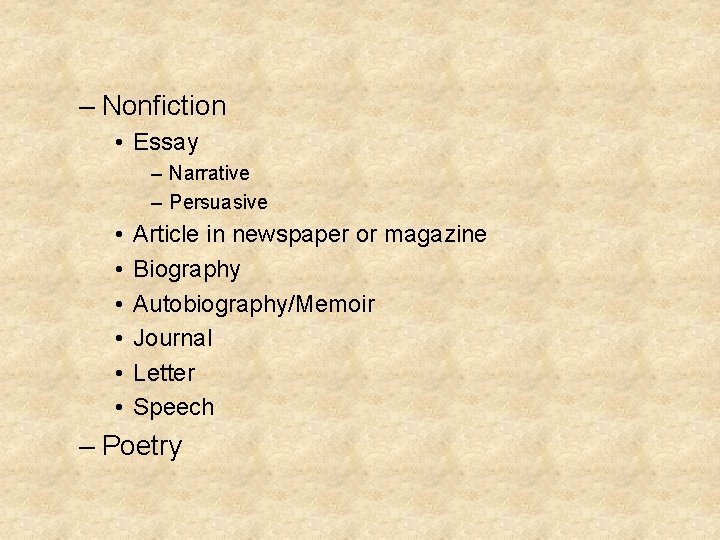
– Nonfiction • Essay – Narrative – Persuasive • • • Article in newspaper or magazine Biography Autobiography/Memoir Journal Letter Speech – Poetry