
The four major biomolecules Organic molecules part 1
The four major biomolecules Organic molecules part 1
What are we going to learn? SB 1. c Identify the function of the four major macromolecules (i. e. carbohydrates, proteins, lipids, nucleic acids).
Biomolecules • They are the foundation for the structure and function of every living cell in every organism. • They are the building materials and the storehouse for energy.
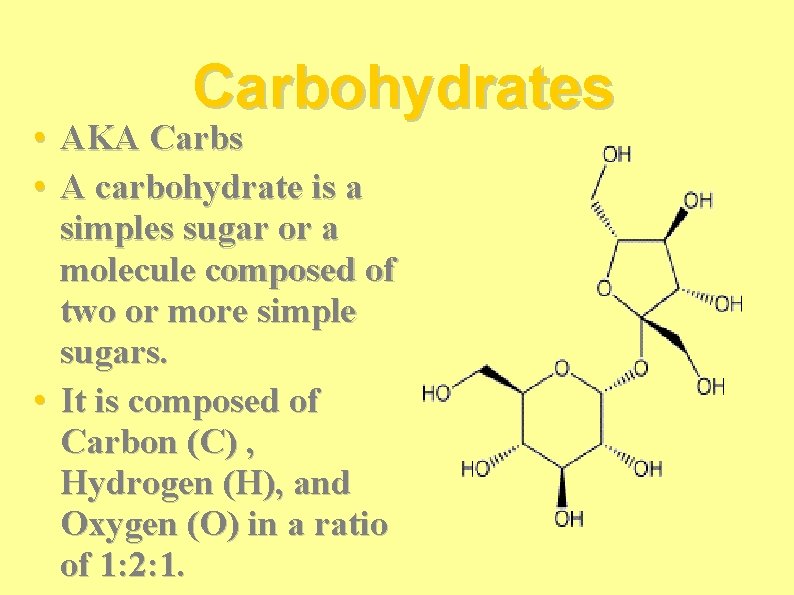
Carbohydrates • AKA Carbs • A carbohydrate is a simples sugar or a molecule composed of two or more simple sugars. • It is composed of Carbon (C) , Hydrogen (H), and Oxygen (O) in a ratio of 1: 2: 1.
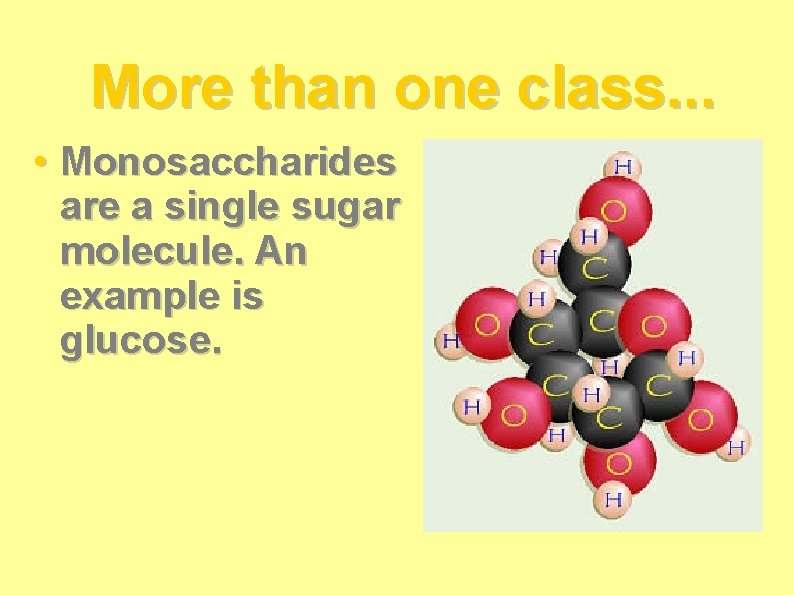
More than one class. . . • Monosaccharides are a single sugar molecule. An example is glucose.
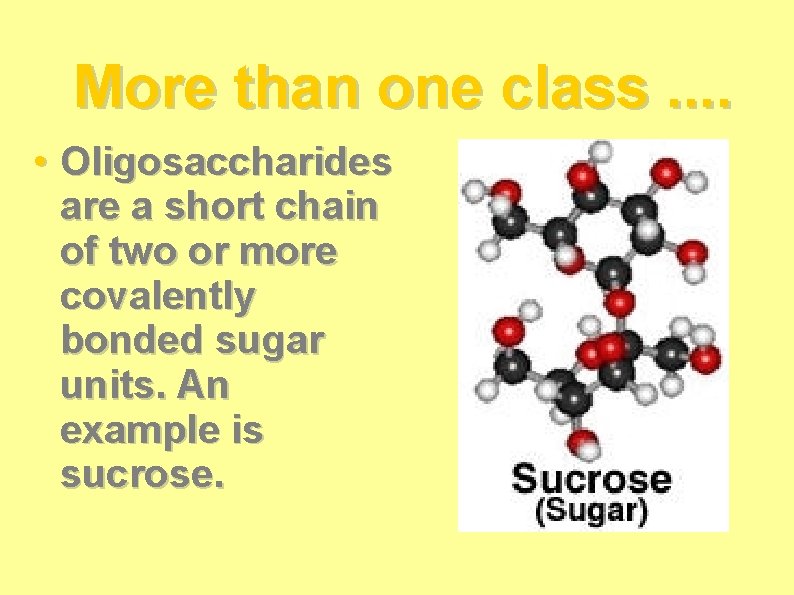
More than one class. . • Oligosaccharides are a short chain of two or more covalently bonded sugar units. An example is sucrose.
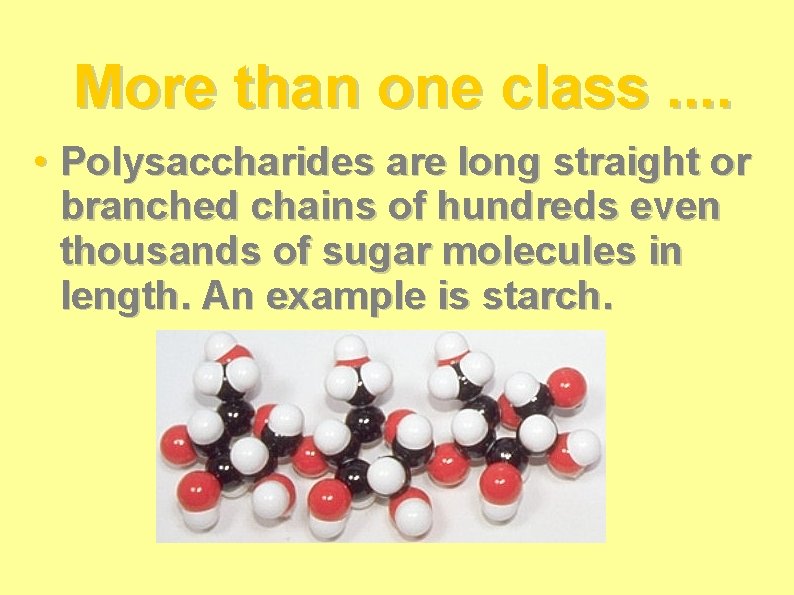
More than one class. . • Polysaccharides are long straight or branched chains of hundreds even thousands of sugar molecules in length. An example is starch.
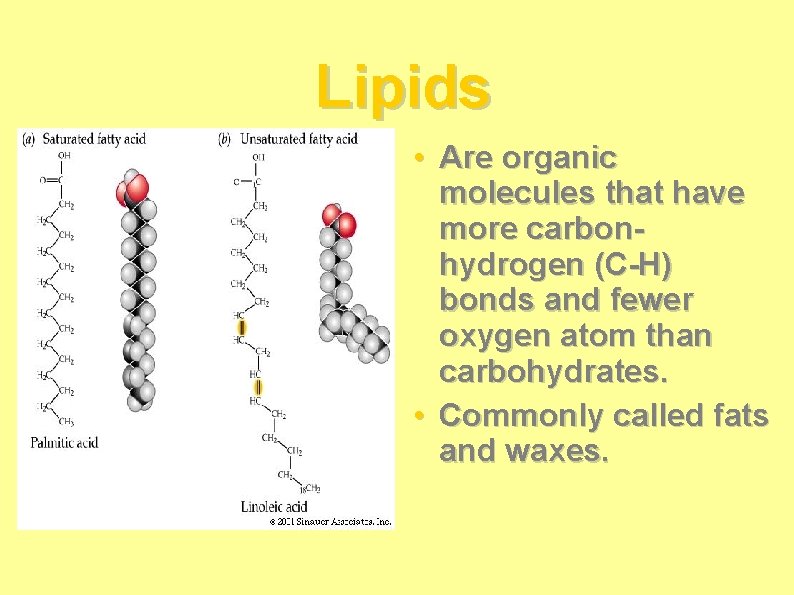
Lipids • Are organic molecules that have more carbonhydrogen (C-H) bonds and fewer oxygen atom than carbohydrates. • Commonly called fats and waxes.
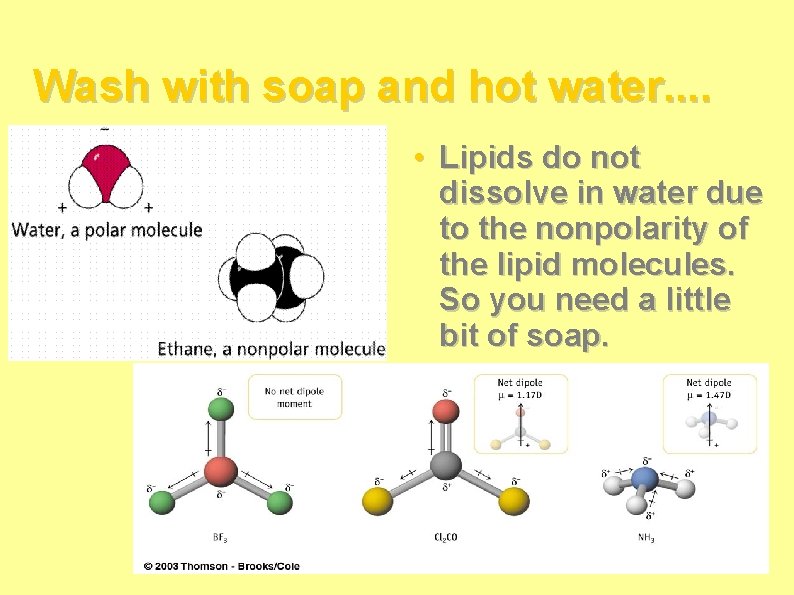
Wash with soap and hot water. . • Lipids do not dissolve in water due to the nonpolarity of the lipid molecules. So you need a little bit of soap.
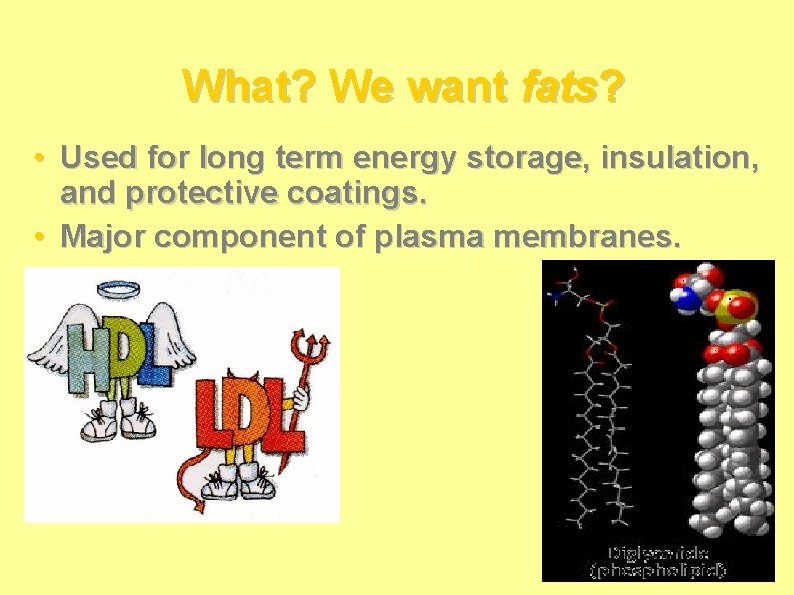
What? We want fats? • Used for long term energy storage, insulation, and protective coatings. • Major component of plasma membranes.
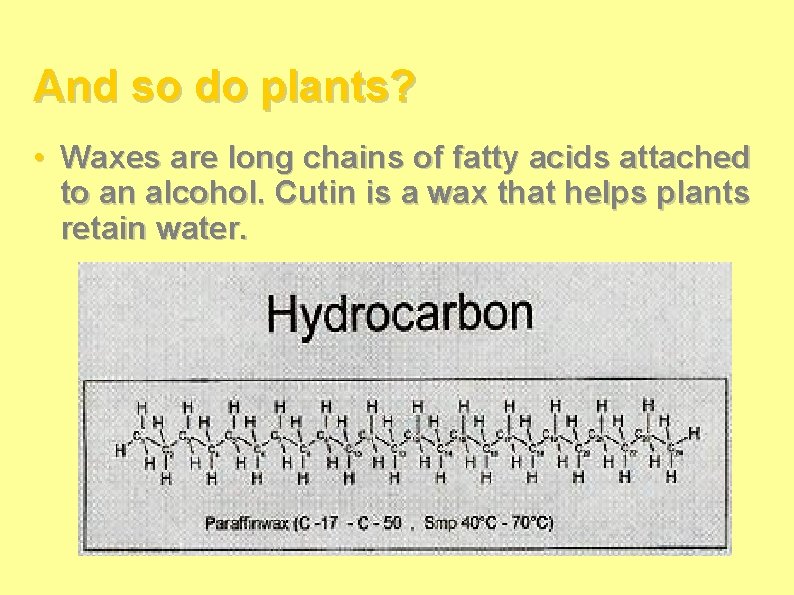
And so do plants? • Waxes are long chains of fatty acids attached to an alcohol. Cutin is a wax that helps plants retain water.
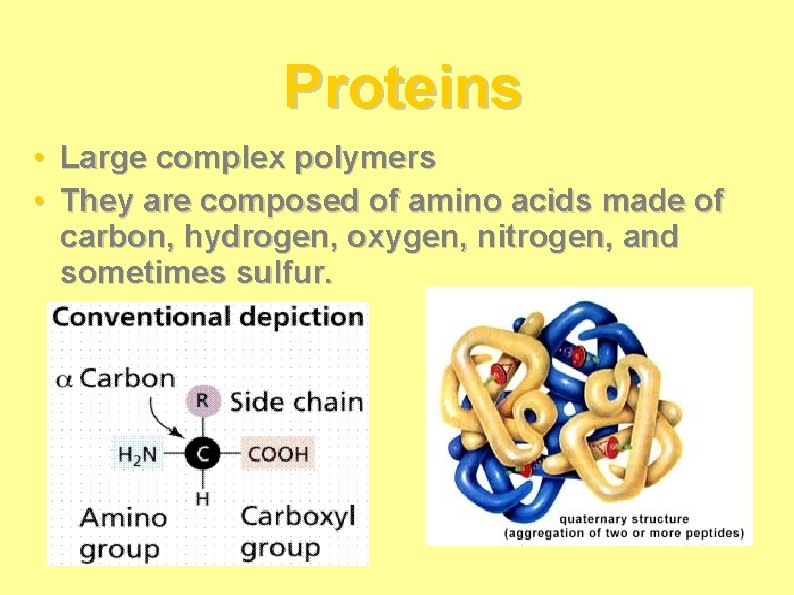
Proteins • • Large complex polymers They are composed of amino acids made of carbon, hydrogen, oxygen, nitrogen, and sometimes sulfur.
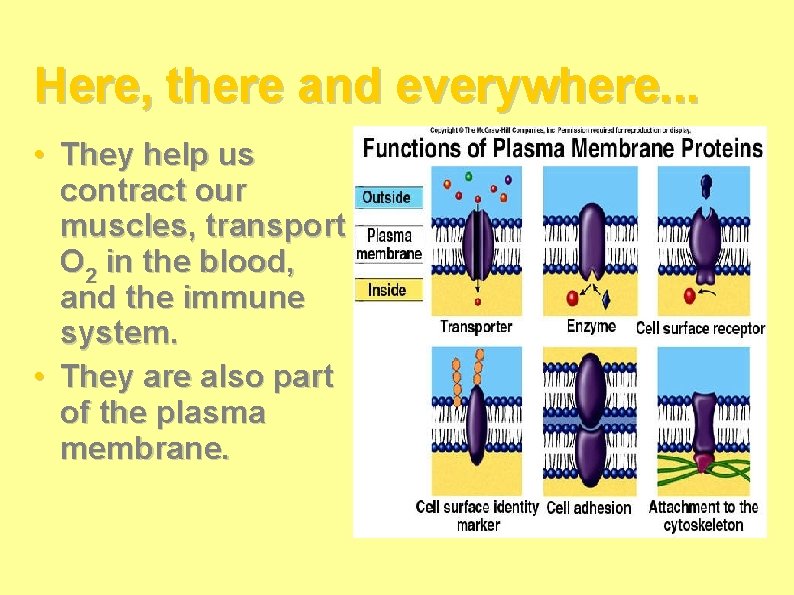
Here, there and everywhere. . . • They help us contract our muscles, transport O 2 in the blood, and the immune system. • They are also part of the plasma membrane.
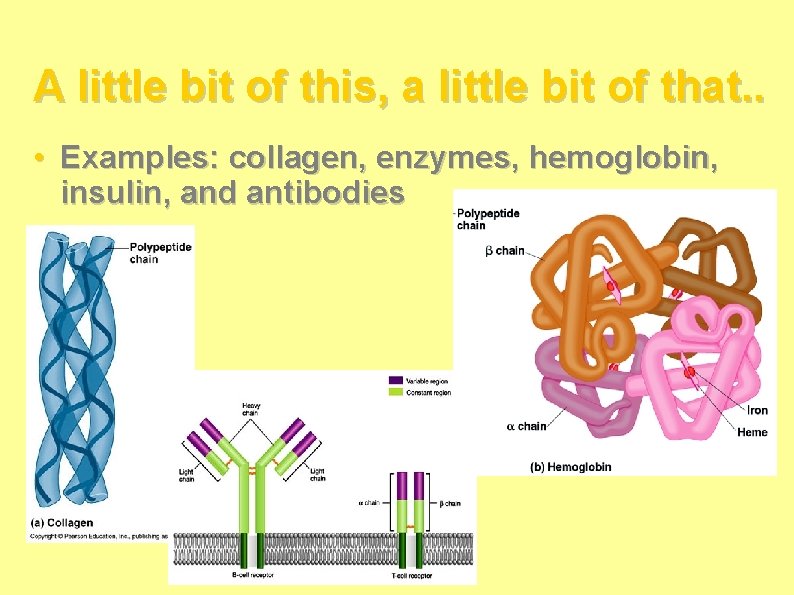
A little bit of this, a little bit of that. . • Examples: collagen, enzymes, hemoglobin, insulin, and antibodies
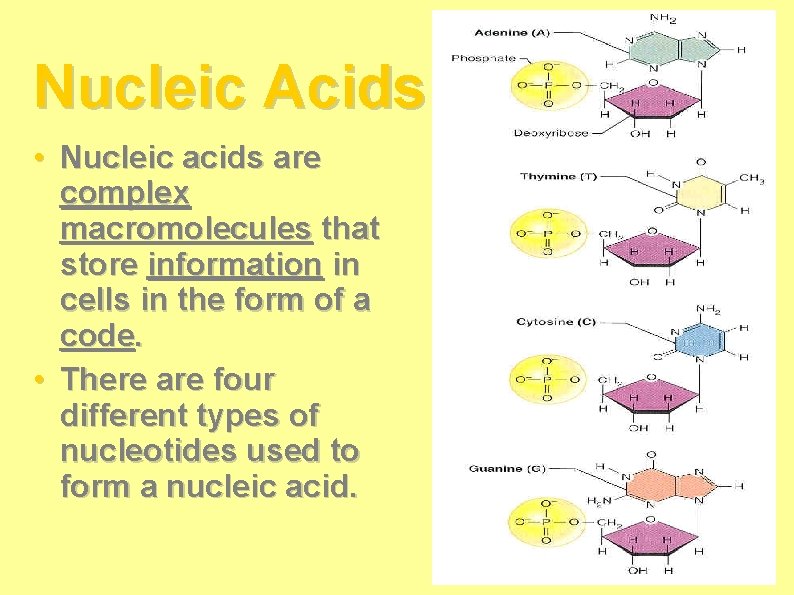
Nucleic Acids • Nucleic acids are complex macromolecules that store information in cells in the form of a code. • There are four different types of nucleotides used to form a nucleic acid.
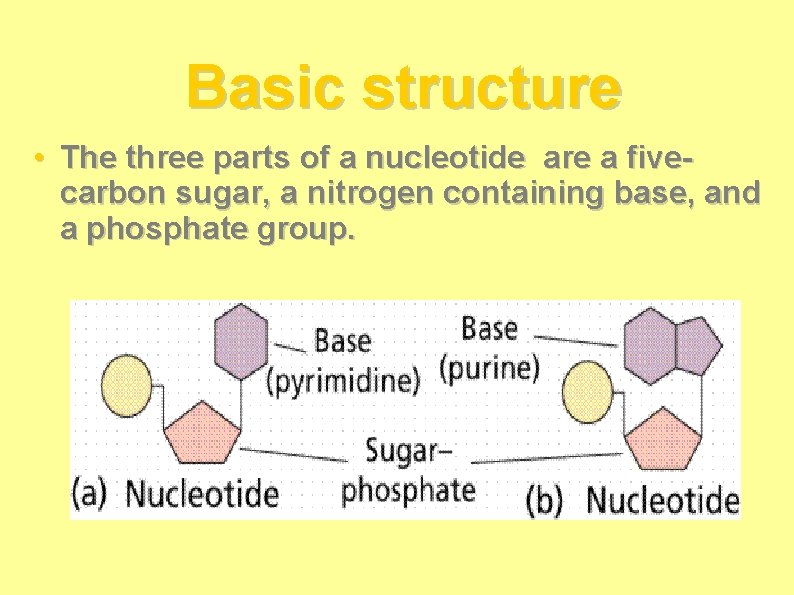
Basic structure • The three parts of a nucleotide are a fivecarbon sugar, a nitrogen containing base, and a phosphate group.
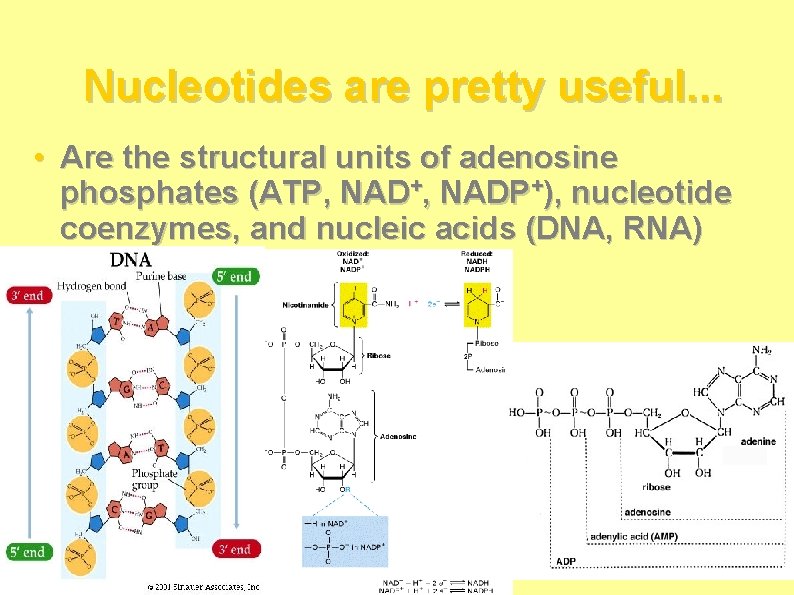
Nucleotides are pretty useful. . . • Are the structural units of adenosine phosphates (ATP, NAD+, NADP+), nucleotide coenzymes, and nucleic acids (DNA, RNA)
- Slides: 18