
The Four Enablers of Strategy 24 February 2014

The Four Enablers of Strategy 24 February 2014
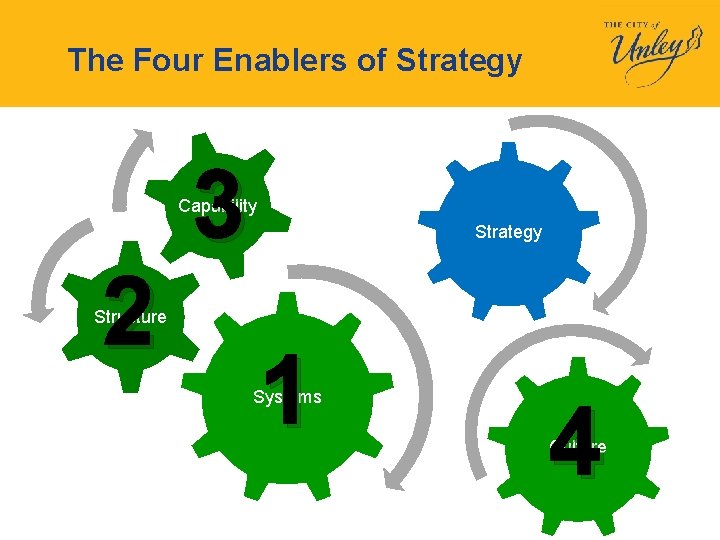
The Four Enablers of Strategy 3 Capability 2 Strategy Structure 1 Systems 4 Culture
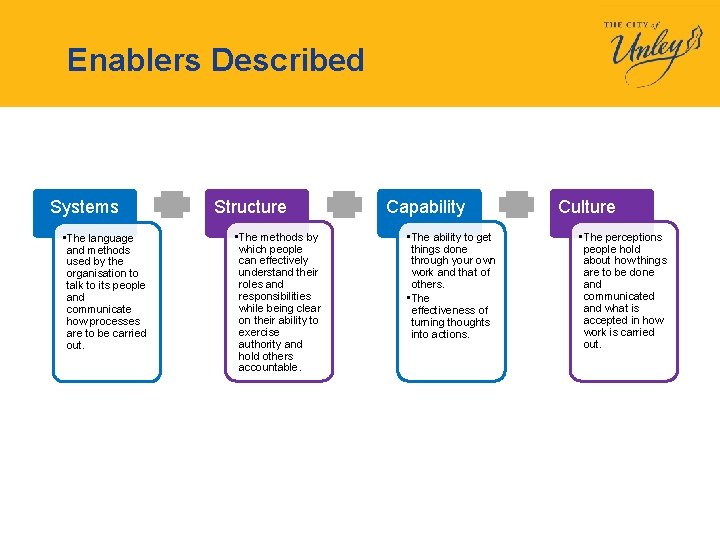
Enablers Described Systems • The language and methods used by the organisation to talk to its people and communicate how processes are to be carried out. Structure • The methods by which people can effectively understand their roles and responsibilities while being clear on their ability to exercise authority and hold others accountable. Capability • The ability to get things done through your own work and that of others. • The effectiveness of turning thoughts into actions. Culture • The perceptions people hold about how things are to be done and communicated and what is accepted in how work is carried out.
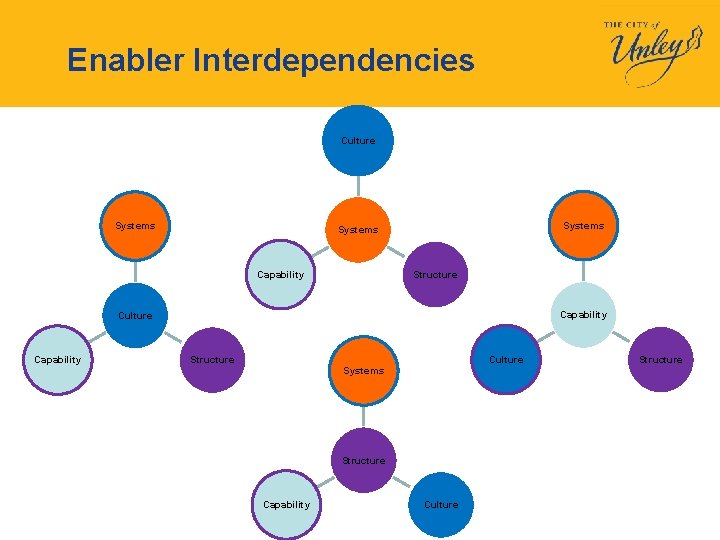
Enabler Interdependencies Culture Systems Capability Structure Capability Culture Structure Systems Structure Capability Culture Structure
Enabler 1 - Systems • Systems are the language in which the organization talks to its employees • Systems exist to underpin productive behaviour • Regardless of what is said in speeches and employee bulletins, people believe the message that comes from systems • People will observe any system change through a ‘lens’ of beliefs to interpret ‘what management’s real intention is’ and form judgments against their set of values • Based upon the actions taken by management or by employees, Systems will emerge that are either can be authorised or un-authorised (without responsibility, accountability or authority)
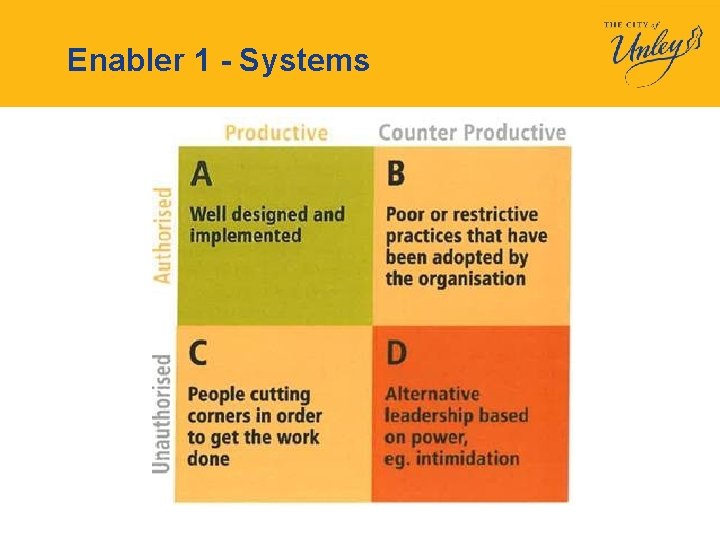
Enabler 1 - Systems
Enabler 1 - Recommendations • Design systems with the origination's people in mind If you don’t have this option, engage in sufficient and extensive consultation. Be prepared to make system changes based upon that consultation • Consider the message that employees will take from the implementation of a system, as well as from the system in use
Enabler 2 - Structure • Management is accountable for ensuring that employees have clear answers to the questions: • What is my work? • How am I going? • What is my future? • The Leadership Team is accountable for ensuring that management have clear answers to the questions: • What am I responsible to deliver through my team’s efforts? • Do I have sole authority to delegate work and assign tasks to my direct reports? • What is my role with respect to holding my direct reports accountable and how will I be supported by my manager (i. e. the next-up-manager?
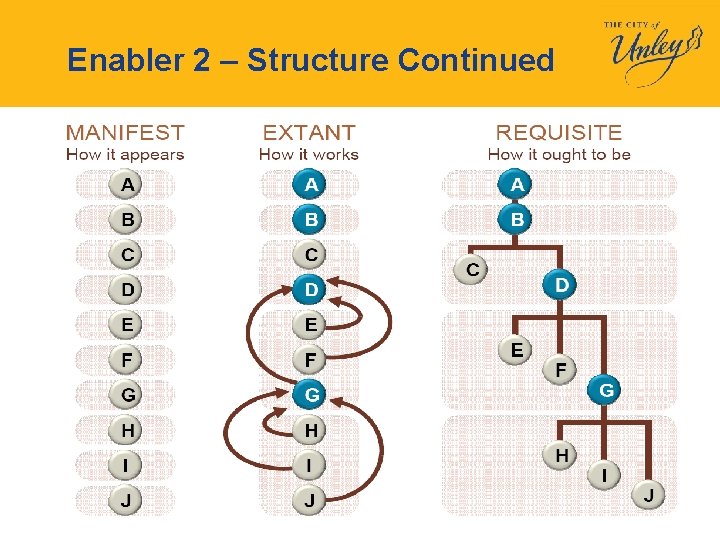
Enabler 2 – Structure Continued
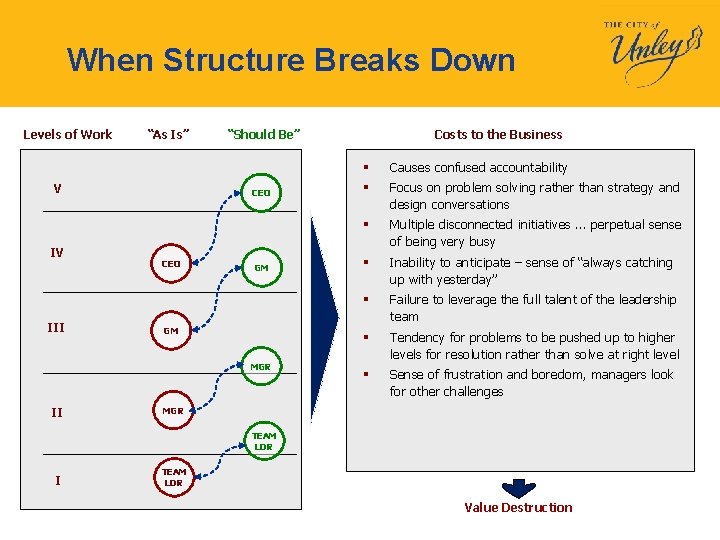
When Structure Breaks Down Levels of Work “As Is” V IV III “Should Be” CEO GM GM MGR II Costs to the Business § Causes confused accountability § Focus on problem solving rather than strategy and design conversations § Multiple disconnected initiatives. . . perpetual sense of being very busy § Inability to anticipate – sense of “always catching up with yesterday” § Failure to leverage the full talent of the leadership team § Tendency for problems to be pushed up to higher levels for resolution rather than solve at right level § Sense of frustration and boredom, managers look for other challenges MGR TEAM LDR I TEAM LDR Value Destruction
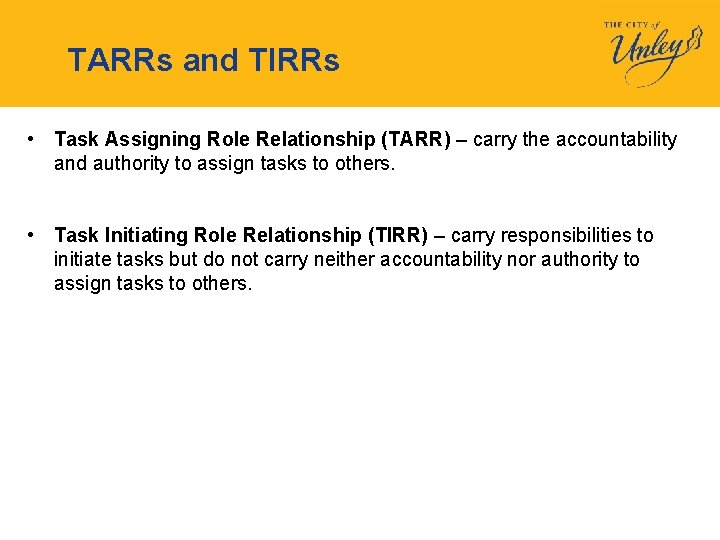
TARRs and TIRRs • Task Assigning Role Relationship (TARR) – carry the accountability and authority to assign tasks to others. • Task Initiating Role Relationship (TIRR) – carry responsibilities to initiate tasks but do not carry neither accountability nor authority to assign tasks to others.
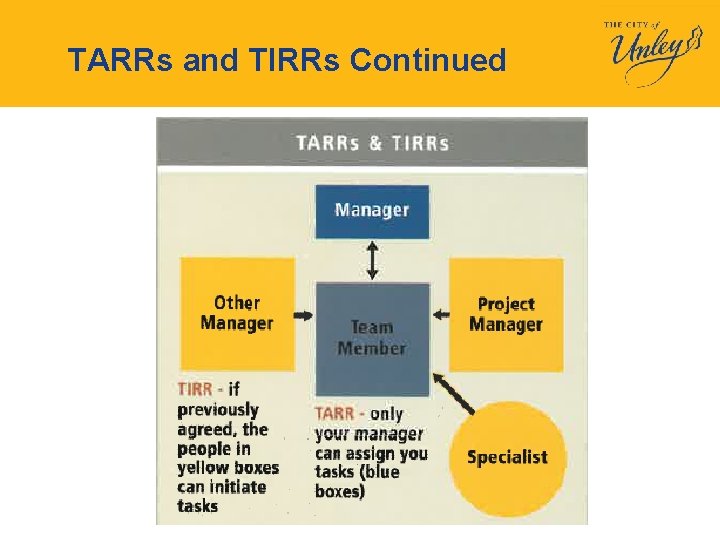
TARRs and TIRRs Continued
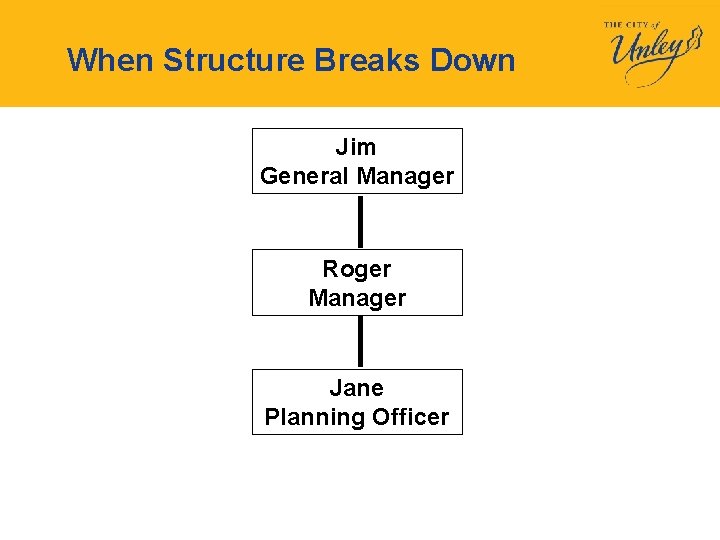
When Structure Breaks Down Jim General Manager Roger Manager Jane Planning Officer
Enabler 2 - Recommendations • Establish minimum authorities for managers and adhere to them strictly • These may include: • Veto power of the appointment of new team member; • Sole authority to assign tasks and delegate work to team members (i. e. a clear TARR); • Principle authority to recognize, review and reward performance of team members within policy; and • Power to initiate the removal of a team member (i. e. termination) with the action to be taken by the next-up-manager • Monitor and control TARRs and TIRRs from getting out of control outside of the authority of the manager
Enabler 3 - Capability is… • Our ability to act based upon our skills and knowledge; • The choices we make when deciding how to act; and • Our ability to balance the type of work we undertake between people, scheduling and technical responsibilities.
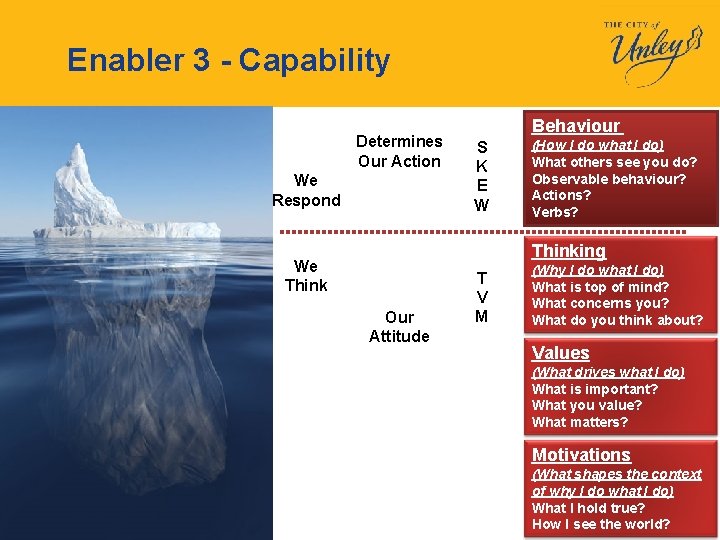
Enabler 3 - Capability Determines Our Action We Respond Behaviour S K E W (How I do what I do) What others see you do? Observable behaviour? Actions? Verbs? Thinking We Think Our Attitude T V M (Why I do what I do) What is top of mind? What concerns you? What do you think about? Values (What drives what I do) What is important? What you value? What matters? Motivations (What shapes the context of why I do what I do) What I hold true? How I see the world?
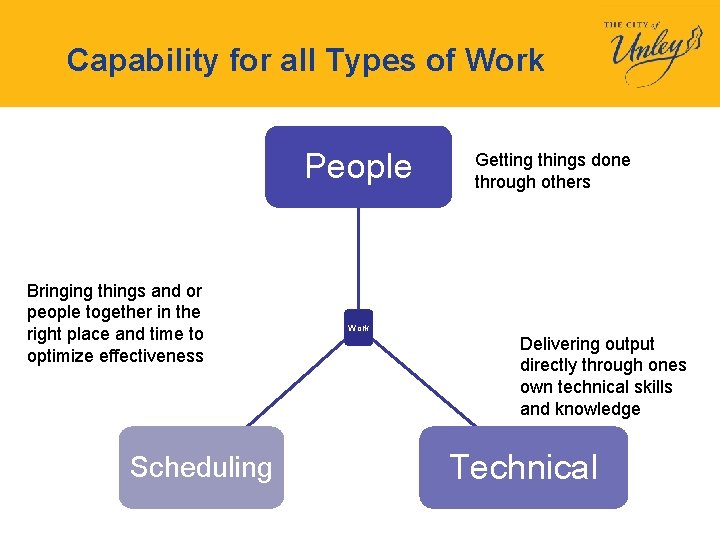
Capability for all Types of Work People Bringing things and or people together in the right place and time to optimize effectiveness Scheduling Getting things done through others Work Delivering output directly through ones own technical skills and knowledge Technical
Enabler 4 - Culture “The shared values, norms and expectations that govern the way people approach their work and interact with each other. ”
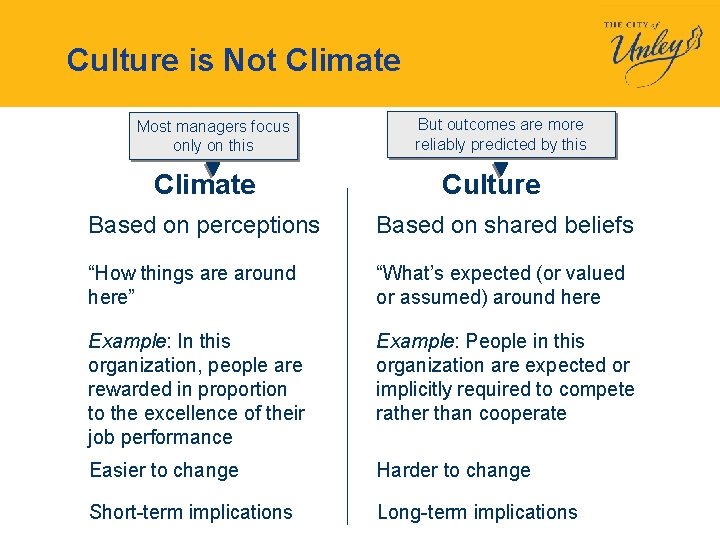
Culture is Not Climate Most managers focus only on this Climate But outcomes are more reliably predicted by this Culture Based on perceptions Based on shared beliefs “How things are around here” “What’s expected (or valued or assumed) around here Example: In this organization, people are rewarded in proportion to the excellence of their job performance Example: People in this organization are expected or implicitly required to compete rather than cooperate Easier to change Harder to change Short-term implications Long-term implications
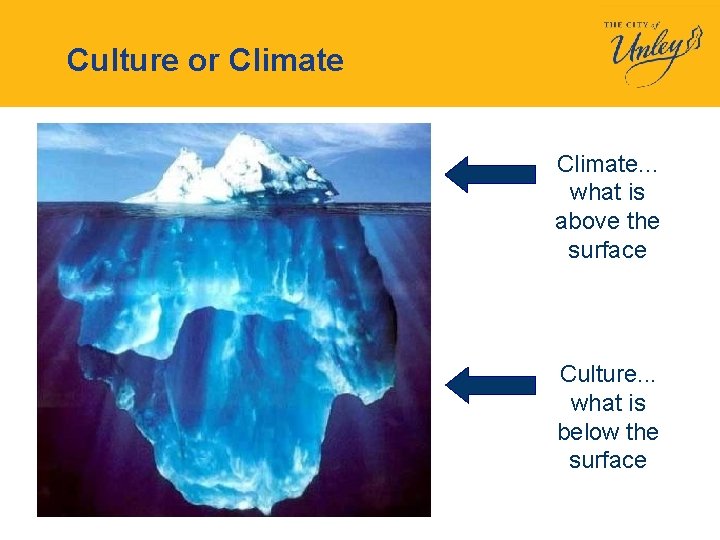
Culture or Climate. . . what is above the surface Culture. . . what is below the surface
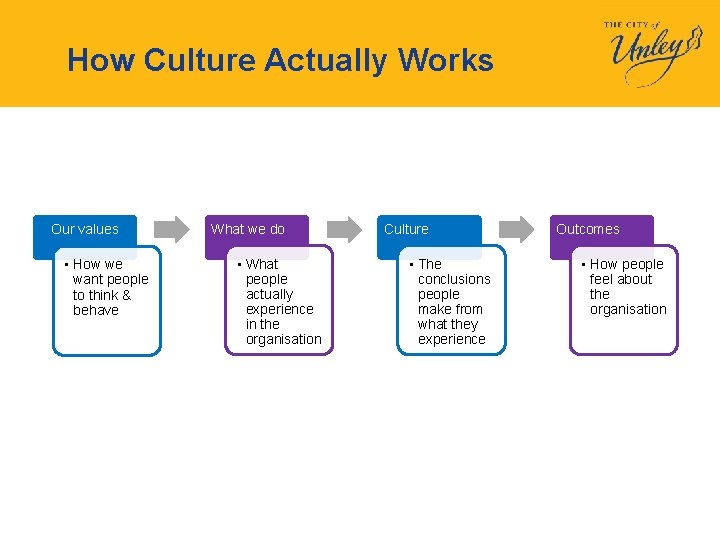
How Culture Actually Works Our values • How we want people to think & behave What we do • What people actually experience in the organisation Culture • The conclusions people make from what they experience Outcomes • How people feel about the organisation
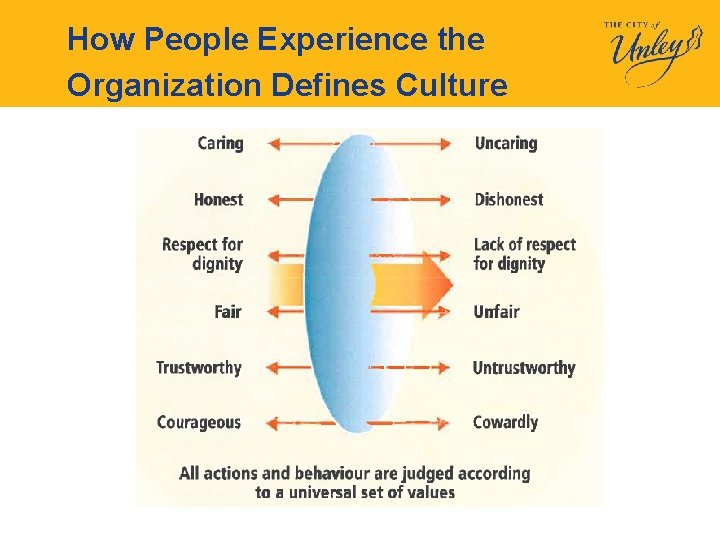
How People Experience the Organization Defines Culture
Managing Culture – 4 Step Model 1. Determine the gap between current and preferred culture 2. Interpret prevailing mythologies regarding people’s experience with systems, structure and capability 3. Test interpretations through consultation 4. Make small and continuous improvements within systems, structure and capabilities and monitor for change
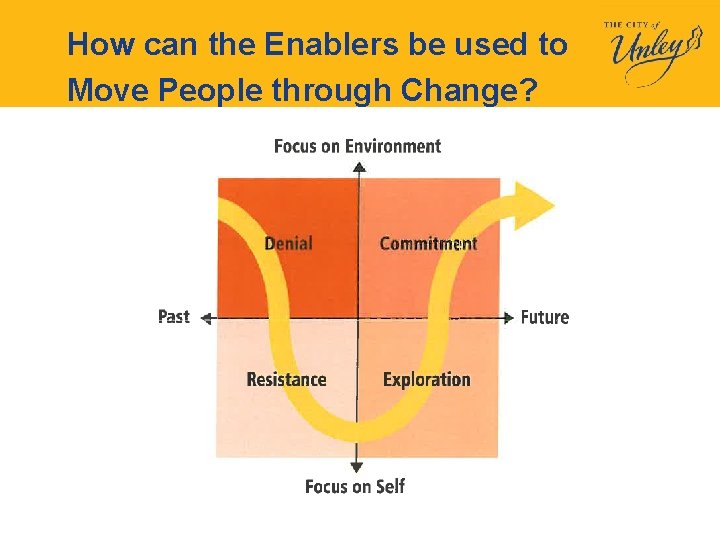
How can the Enablers be used to Move People through Change?
Other Questions to Check for Strategic Effectiveness • Is there one or more enabler that you perceive to be fixed, that you must alter the others to accommodate for? (i. e. people are fixed or systems are fixed) • Does the organization lack the capability to implement change? • Are systems given priority over people processes? • How has your organization leveraged the 4 Enablers during its most recent strategic initiative?
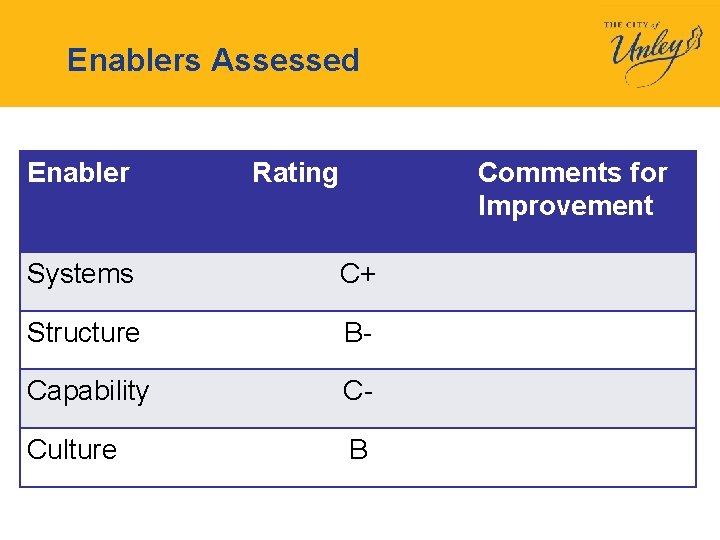
Enablers Assessed Enabler Rating Comments for Improvement Systems C+ Structure B- Capability C- Culture B
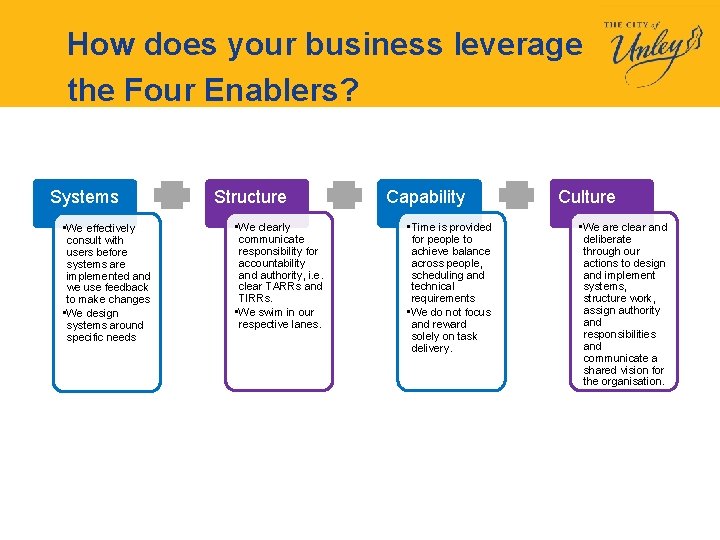
How does your business leverage the Four Enablers? Systems • We effectively consult with users before systems are implemented and we use feedback to make changes • We design systems around specific needs Structure • We clearly communicate responsibility for accountability and authority, i. e. clear TARRs and TIRRs. • We swim in our respective lanes. Capability • Time is provided for people to achieve balance across people, scheduling and technical requirements • We do not focus and reward solely on task delivery. Culture • We are clear and deliberate through our actions to design and implement systems, structure work, assign authority and responsibilities and communicate a shared vision for the organisation.
Close
- Slides: 28