
The Four Building Blocks of Food What are
The Four Building Blocks of Food
What are the four building blocks of food? Protein Carbohydrates Fats and Lipids Fruit and Vegetables
Protein Proteins are found in all living cells Children, adolescents, pregnant and breastfeeding woman especially need a diet high in protein Athletes need high protein foods to repair and renew body cells
Protein Sources Animal protein; Meat, fish, eggs, milk and milk products These contain nine essential amino acids Vegetable Protein; Vegetables especially legumes (peas, beans, lentils), also wholegrain cereals, wheat germ, bran, maize, peanuts These lack the essential amino acids

Protein Functions Growth of new tissue Maintenance of tissue Repair of wounds As an energy source (17 kj, 4 calories per gram) Helps store oxygen in the muscles for use in exercise
Amino Acids Protein is composed of amino acids There at least 22 amino acids found in our food in different combinations and with different functions 9 are called essential amino acids and they cannot be manufactured by the body and must therefore be supplied by diet
Carbohydrates They vary from complex carbohydrates (fruit, vegetables, cereals and breads) to simple carbohydrates (sugars) Complex carbohydrates are the healthier option when looking for energy Carbohydrates should be the major source of dietary energy
Carbohydrate Sources Complex Carbohydrates; potatoes, kumara, taro, wheat, rice, barley, bread, whole-meal, pasta Simple Carbohydrates; honey, jam, raisins, chocolate biscuits, muesli, icecream, bananas, apples
Carbohydrates and Energy Carbohydrates are broken down into glucose and stored as glycogen in the liver and muscles Complex carbs give a longer sustained release of energy Simple carbs give a quick short burst of energy. G. I index rates the carbohydrates
Fats and Oils (Lipids) May The be of animal or vegetable origin different sources are made up of different fatty acids
Fats and Oils Fats; usually set at room temp Animal source: butter, cream, meat fat, bacon, cheese, egg yolk, lard, Plant source: some nuts, coconut cream Oils; usually liquid at room temp Animal source: fish liver oils such as cod Plant source: olive, peanut, soya bean, sunflower, corn
Saturated and Trans-Fat Saturated fats: These fats are derived from animal products such as meat, dairy and eggs. But they are also found in some plant-based sources such as coconut, palm and palm kernel oils Trans fats: Trans fats are used to extend the shelf life of processed foods, typically cookies, cakes, fries and donuts.
Fruit and Vegetables According to the World Health Organization (WHO) it is recommended to consume a minimum of 400 g (about five handfuls) of fruit and vegetables per day (excluding potatoes and other starchy tubers) for the prevention of chronic diseases such as heart disease, cancer, diabetes and obesity 5 + A Day
Why Fruit and Vegetables? Fruit and vegetables are packed with vitamins, minerals and phytochemicals (which give the colour). Fruit and vegetables also give us plenty of fibre and some provide carbohydrate (for energy).
Typical Serving Size 1 medium potato or kumara ½ cup cooked vegetables ½ cup salad 1 tomato 1 apple, pear or orange 2 small apricots or plums ½ cup fresh fruit salad ½ cup stewed, canned or frozen fruit 1 cup fruit juice (250 ml)* 1 tablespoon dried fruit*
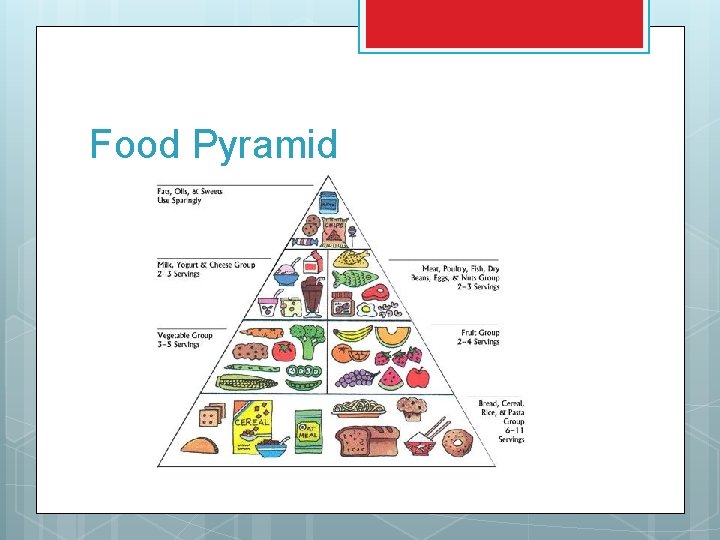
Food Pyramid
- Slides: 16