
THE FORENSICS OF BLOOD Acknowledgement bloody 2 com

THE FORENSICS OF BLOOD Acknowledgement : bloody 2. com/ sciencespot. net/ hemaspat. com/ bloodspatter. com/
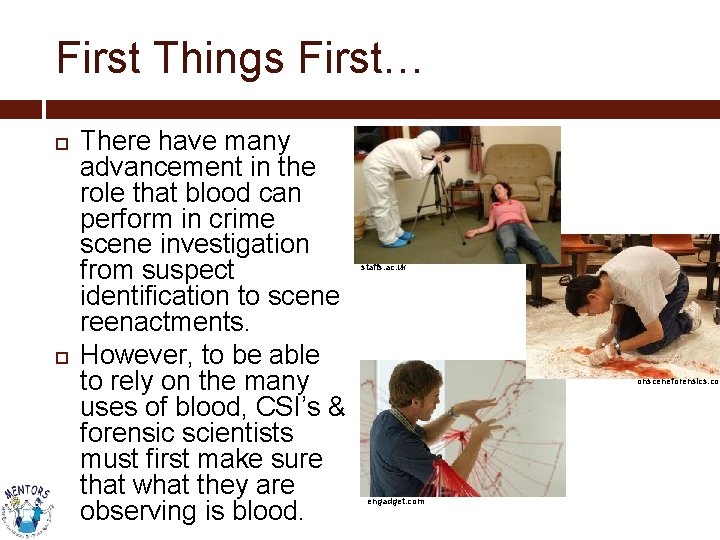
First Things First… There have many advancement in the role that blood can perform in crime scene investigation from suspect identification to scene reenactments. However, to be able to rely on the many uses of blood, CSI’s & forensic scientists must first make sure that what they are observing is blood. staffs. ac. uk onsceneforensics. com engadget. com
Blood Identification Tools & Tests for identifying blood.
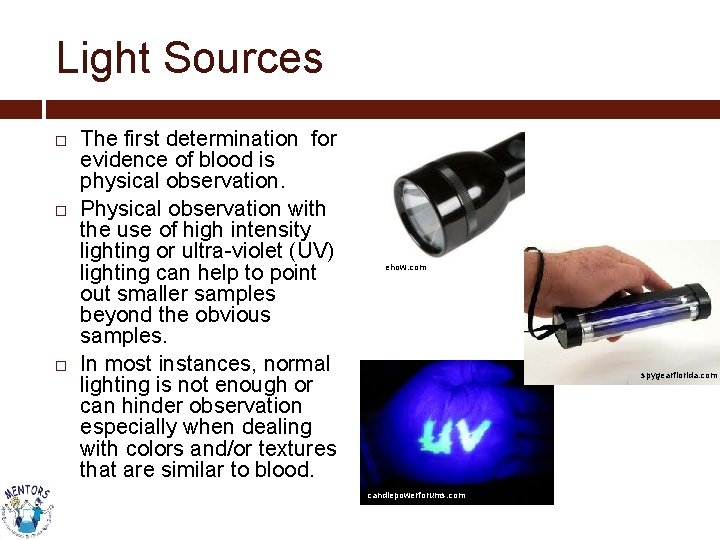
Light Sources The first determination for evidence of blood is physical observation. Physical observation with the use of high intensity lighting or ultra-violet (UV) lighting can help to point out smaller samples beyond the obvious samples. In most instances, normal lighting is not enough or can hinder observation especially when dealing with colors and/or textures that are similar to blood. ehow. com spygearflorida. com candlepowerforums. com
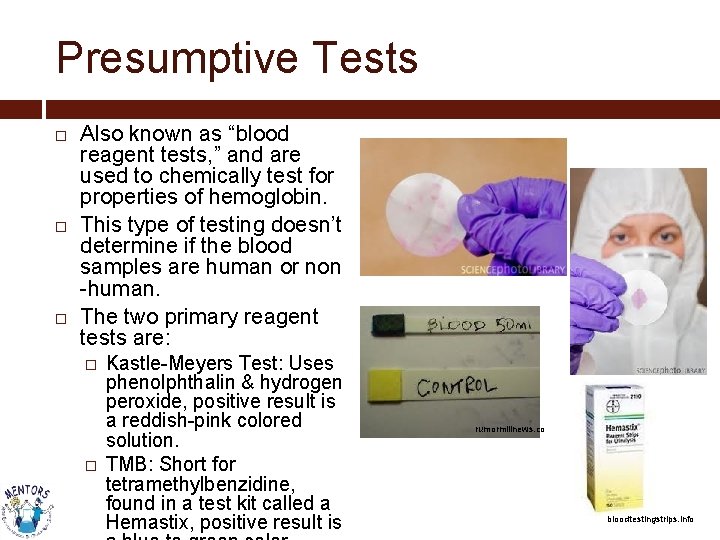
Presumptive Tests Also known as “blood reagent tests, ” and are used to chemically test for properties of hemoglobin. This type of testing doesn’t determine if the blood samples are human or non -human. The two primary reagent tests are: � � Kastle-Meyers Test: Uses phenolphthalin & hydrogen peroxide, positive result is a reddish-pink colored solution. TMB: Short for tetramethylbenzidine, found in a test kit called a Hemastix, positive result is rumormillnews. com bloodtestingstrips. info

Luminol A solution that reacts with the iron found in hemoglobin. Positive result is a luminescent blue color that can be seen in dim light to complete darkness. Downsides: Can react with other metals like copper, fecal material, household cleaners like bleach. � Usually degrades and/or destroys other evidence at a crime scene. trutv. com � forensicsrus. com jeanbont. pbworks. com
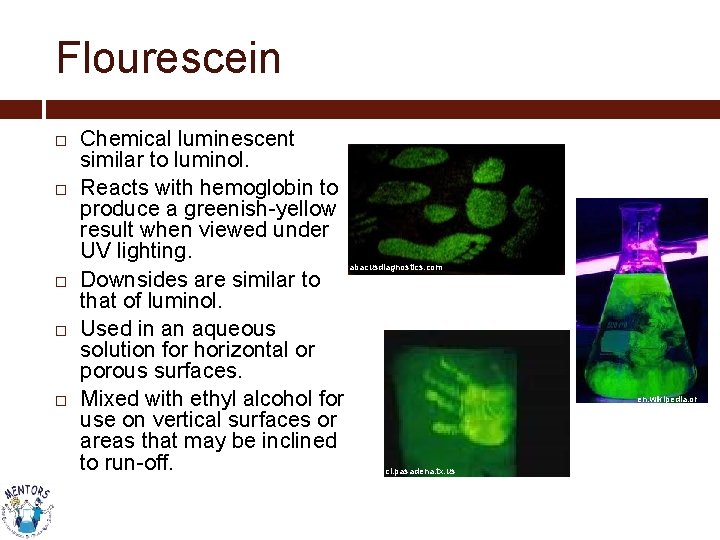
Flourescein Chemical luminescent similar to luminol. Reacts with hemoglobin to produce a greenish-yellow result when viewed under UV lighting. abacusdiagnostics. com Downsides are similar to that of luminol. Used in an aqueous solution for horizontal or porous surfaces. Mixed with ethyl alcohol for use on vertical surfaces or areas that may be inclined to run-off. ci. pasadena. tx. us en. wikipedia. or g

Leuco Crystal Violet Used to enhance blood trace evidence on nearly any surface. Based on a bloodcatalyzed reaction with hydrogen peroxide. Aids CSI’s to capture patterns or prints in blood that may be slightly visible to invisible under normal circumstances. Downside: ultimately the reaction will completely stain the entire application csitechblog. com evidentcrimescene. com camandstacyadoption. blogspot. com

Bloodstain Pattern Analysis (BPA) Positive for Blood, Positive for Answers

BPA at a Glance BPA is the study of size, shape, volume, directionality, & distribution of bloodstains found at a crime scene. Some things that bloodstains can tell us are: � Type and velocity of weapon � Number of blows � Handedness of assailant (right or left-handed) � Position and movements of the victim and assailant during and after the attack � Which wounds were inflicted first � Type of injuries � How long ago the crime was committed � Whether death was immediate or delayed science. howstuffworks. com/bloodstain-pattern-analysis 1. htm
BPA – Blood Drops Defining the categories & mechanisms of blood drops.
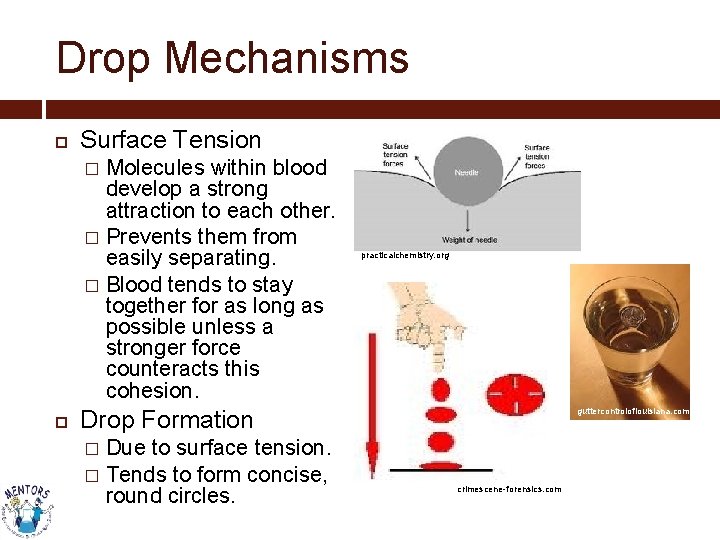
Drop Mechanisms Surface Tension Molecules within blood develop a strong attraction to each other. � Prevents them from easily separating. � Blood tends to stay together for as long as possible unless a stronger force counteracts this cohesion. � practicalchemistry. org Drop Formation Due to surface tension. � Tends to form concise, round circles. guttercontroloflouisiana. com � crimescene-forensics. com
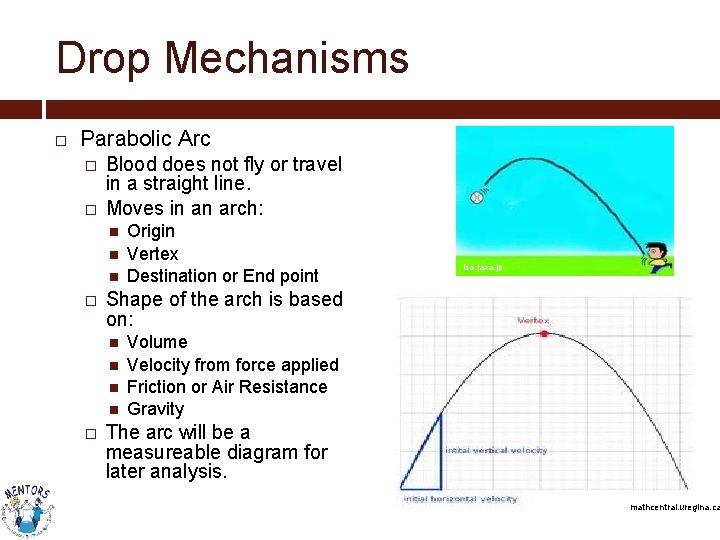
Drop Mechanisms Parabolic Arc � � Blood does not fly or travel in a straight line. Moves in an arch: � iss. jaxa. jp Shape of the arch is based on: � Origin Vertex Destination or End point Volume Velocity from force applied Friction or Air Resistance Gravity The arc will be a measureable diagram for later analysis. mathcentral. uregina. ca
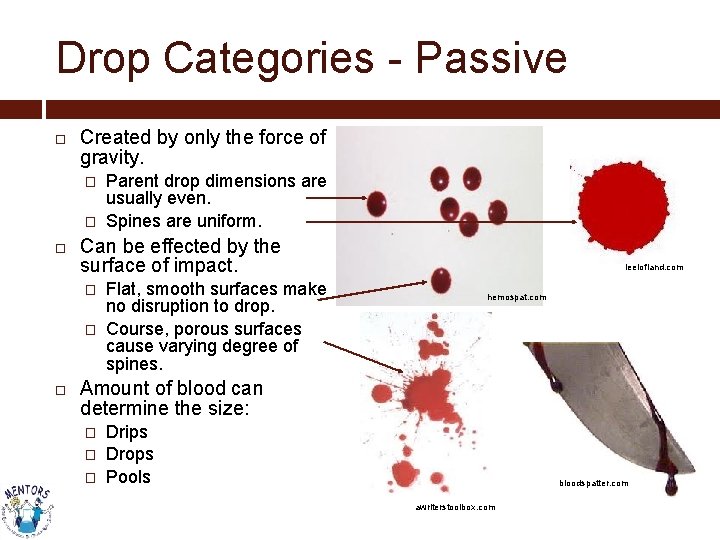
Drop Categories - Passive Created by only the force of gravity. � � Can be effected by the surface of impact. � � Parent drop dimensions are usually even. Spines are uniform. Flat, smooth surfaces make no disruption to drop. Course, porous surfaces cause varying degree of spines. leelofland. com hemospat. com Amount of blood can determine the size: � � � Drips Drops Pools bloodspatter. com awriterstoolbox. com
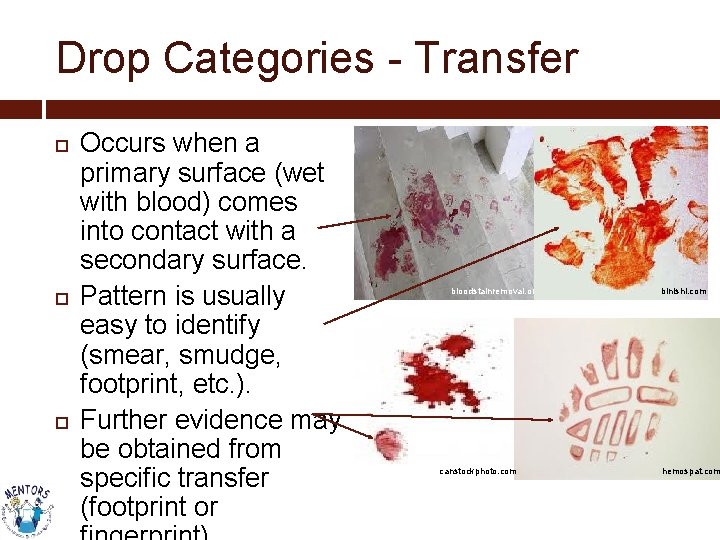
Drop Categories - Transfer Occurs when a primary surface (wet with blood) comes into contact with a secondary surface. Pattern is usually easy to identify (smear, smudge, footprint, etc. ). Further evidence may be obtained from specific transfer (footprint or bloodstainremoval. org canstockphoto. com binishi. com hemospat. com
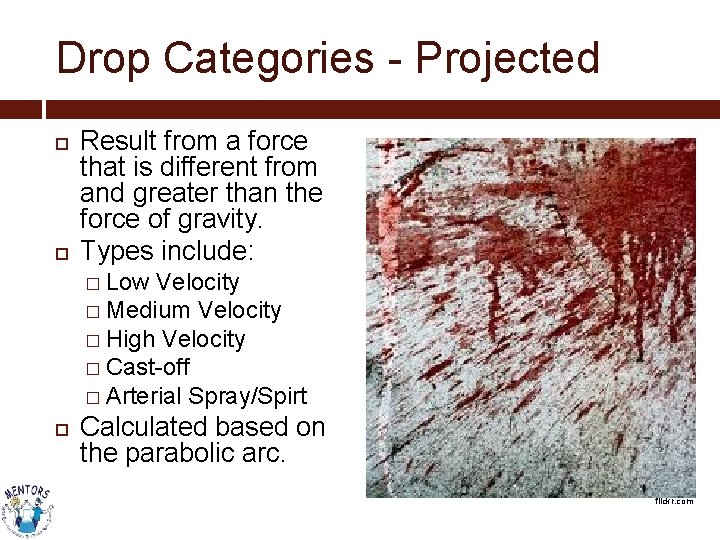
Drop Categories - Projected Result from a force that is different from and greater than the force of gravity. Types include: � Low Velocity � Medium Velocity � High Velocity � Cast-off � Arterial Spray/Spirt Calculated based on the parabolic arc. flickr. com
BPA – Blood Spatter Defining the types of projected blood spatter.
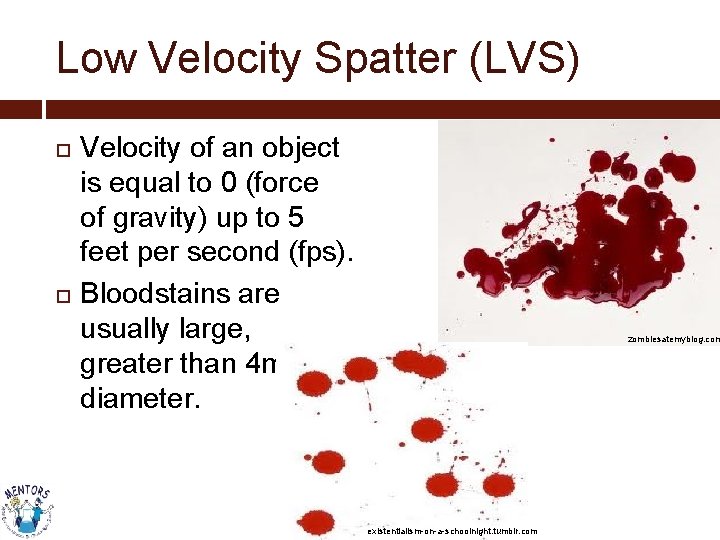
Low Velocity Spatter (LVS) Velocity of an object is equal to 0 (force of gravity) up to 5 feet per second (fps). Bloodstains are usually large, greater than 4 mm in diameter. zombiesatemyblog. com existentialism-on-a-schoolnight. tumblr. com
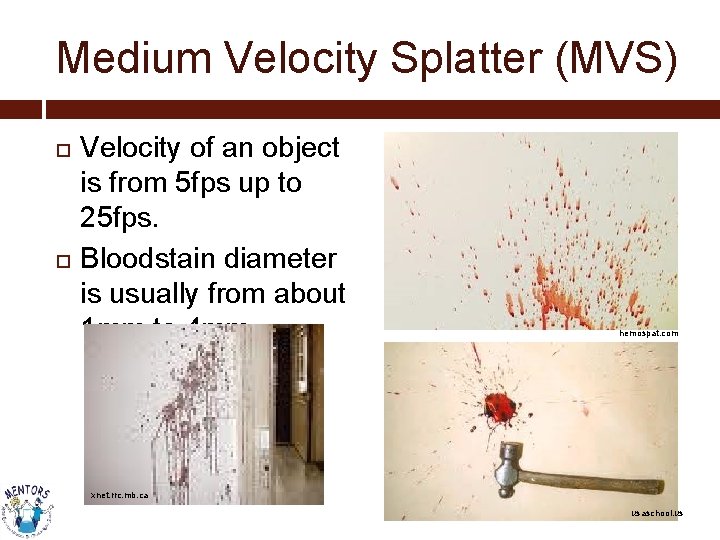
Medium Velocity Splatter (MVS) Velocity of an object is from 5 fps up to 25 fps. Bloodstain diameter is usually from about 1 mm to 4 mm. hemospat. com xnet. rrc. mb. ca usaschool. us
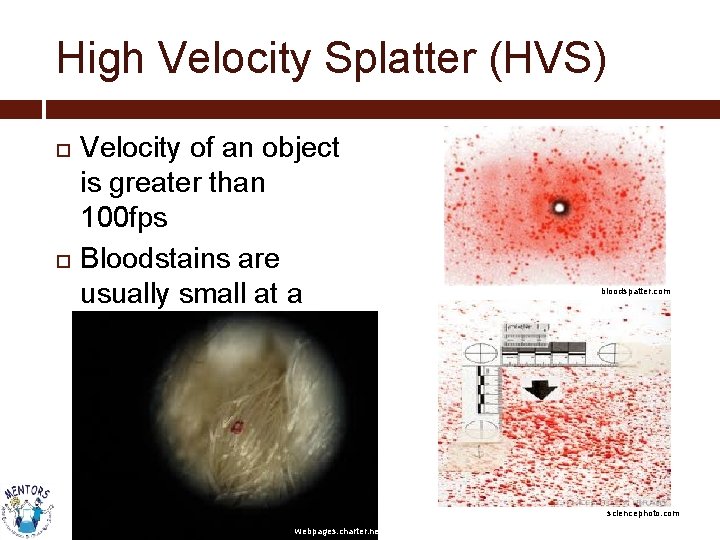
High Velocity Splatter (HVS) Velocity of an object is greater than 100 fps Bloodstains are usually small at a diameter of less than 1 mm. bloodspatter. com sciencephoto. com webpages. charter. net
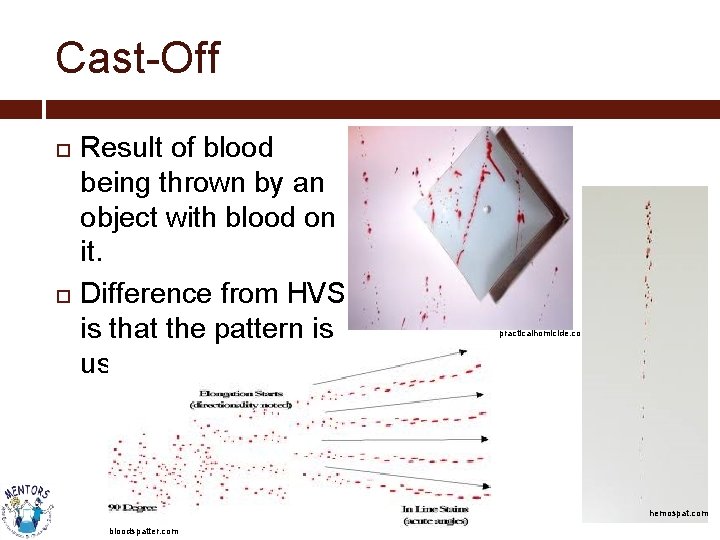
Cast-Off Result of blood being thrown by an object with blood on it. Difference from HVS is that the pattern is usually more linear. practicalhomicide. com hemospat. com bloodspatter. com
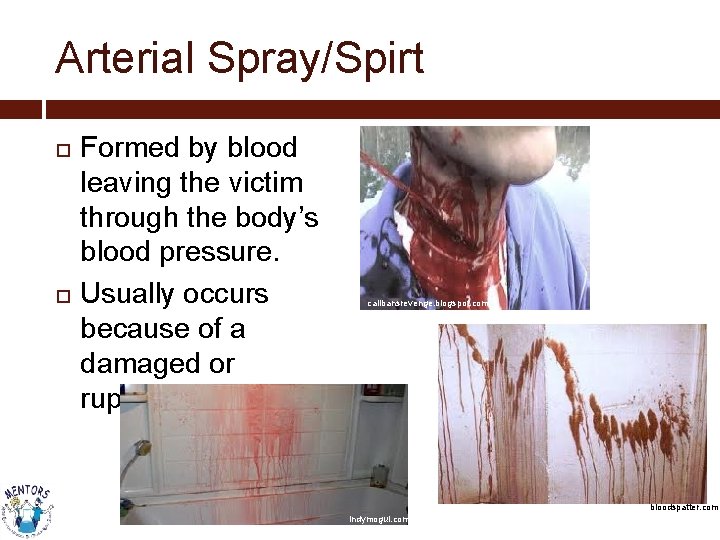
Arterial Spray/Spirt Formed by blood leaving the victim through the body’s blood pressure. Usually occurs because of a damaged or ruptured artery. calibansrevenge. blogspot. com bloodspatter. com indymogul. com
- Slides: 22