
THE FOOT ANKLE AND LOWER LEG ANGIE GUGGINO

- Slides: 46
THE FOOT, ANKLE, AND LOWER LEG ANGIE GUGGINO, MS, ATC, LAT
LEARNING TARGET • The common injuries to the foot, ankle, and lower leg
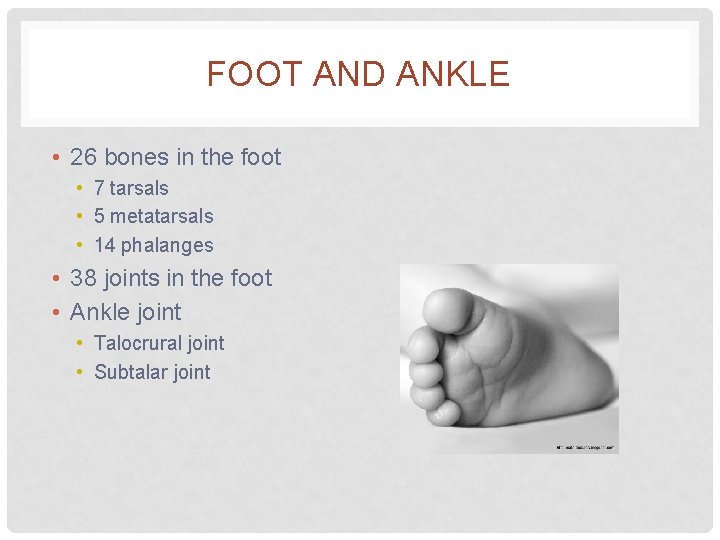
FOOT AND ANKLE • 26 bones in the foot • 7 tarsals • 5 metatarsals • 14 phalanges • 38 joints in the foot • Ankle joint • Talocrural joint • Subtalar joint
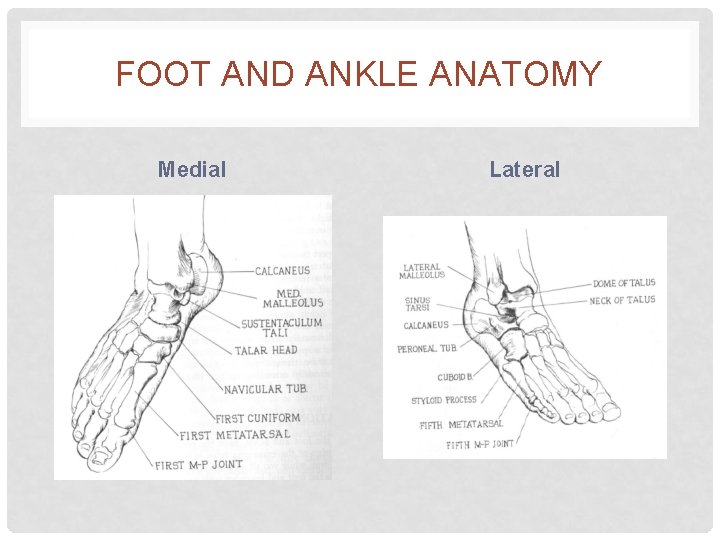
FOOT AND ANKLE ANATOMY Medial Lateral
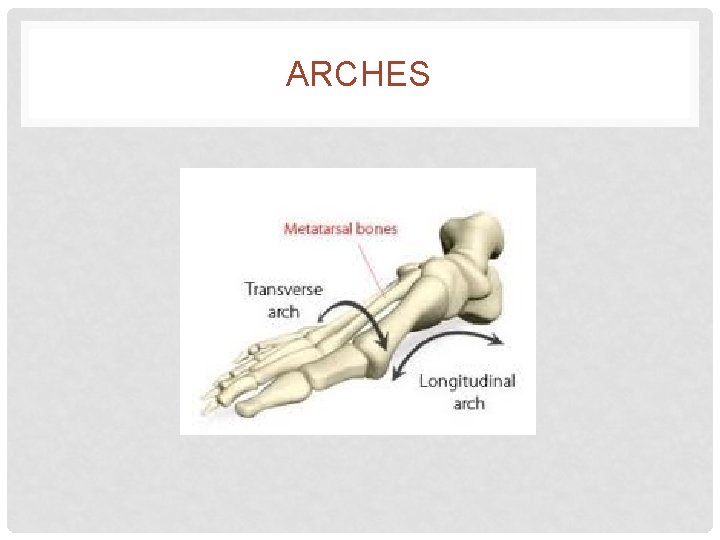
ARCHES
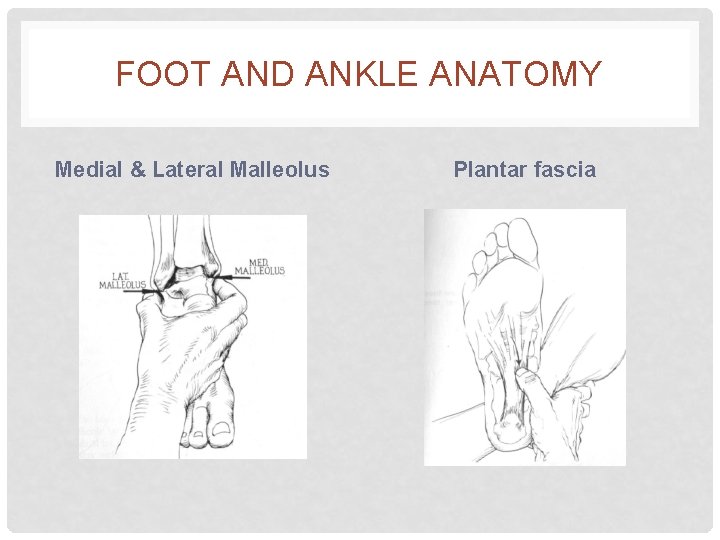
FOOT AND ANKLE ANATOMY Medial & Lateral Malleolus Plantar fascia
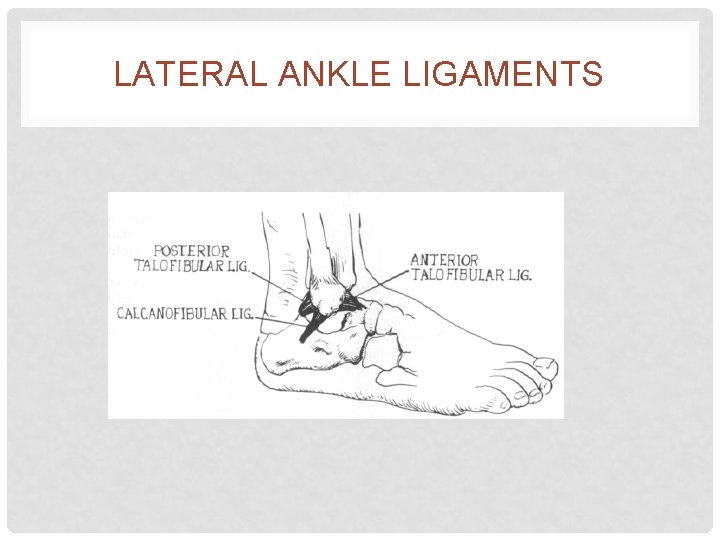
LATERAL ANKLE LIGAMENTS
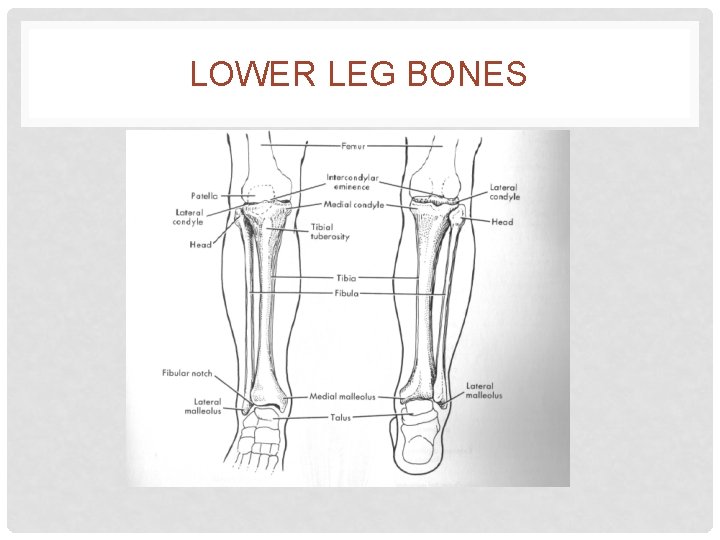
LOWER LEG BONES
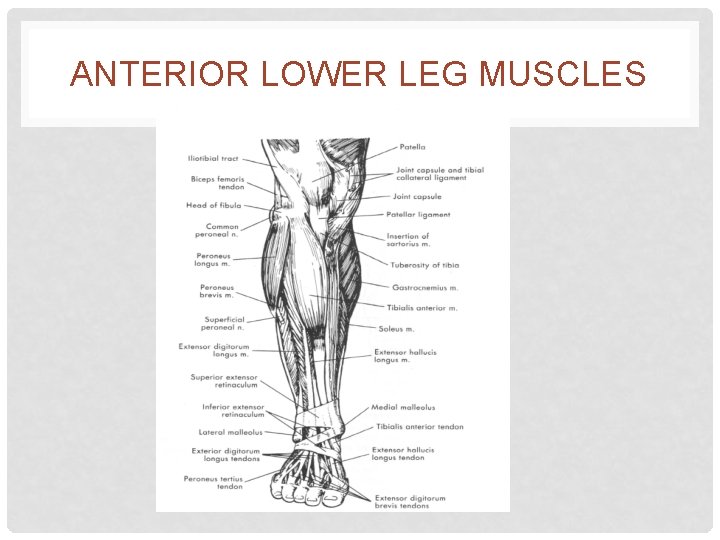
ANTERIOR LOWER LEG MUSCLES
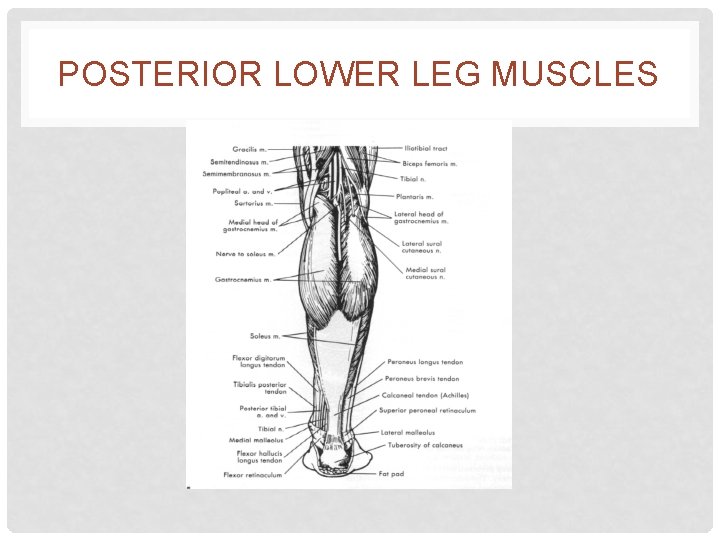
POSTERIOR LOWER LEG MUSCLES
INJURIES FOOT AND ANKLE
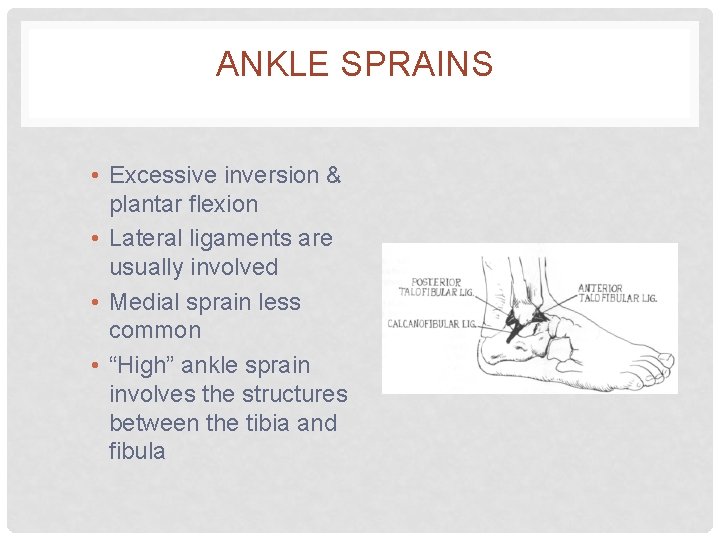
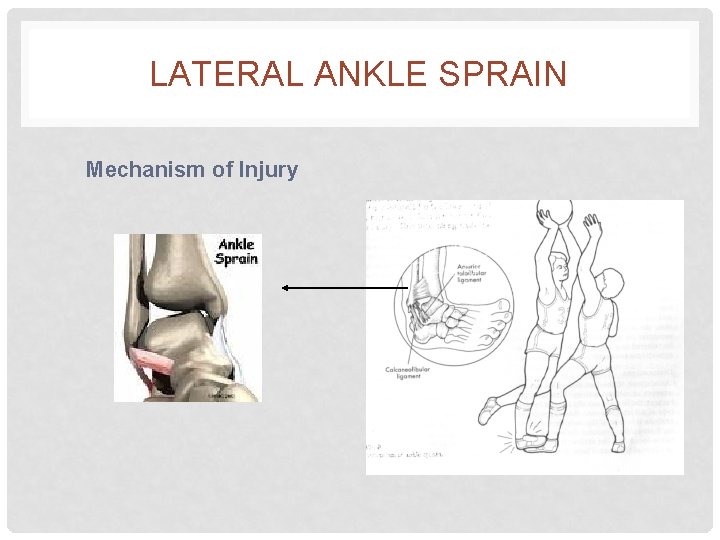
ANKLE SPRAINS • Excessive inversion & plantar flexion • Lateral ligaments are usually involved • Medial sprain less common • “High” ankle sprain involves the structures between the tibia and fibula
LATERAL ANKLE SPRAIN Mechanism of Injury
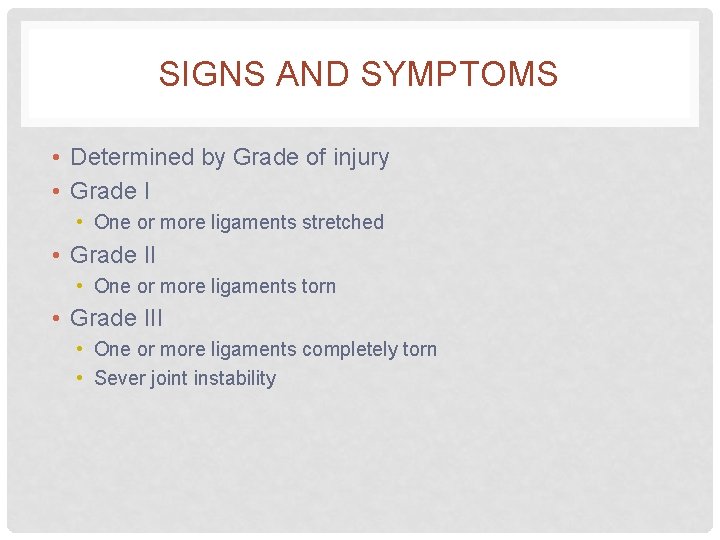
SIGNS AND SYMPTOMS • Determined by Grade of injury • Grade I • One or more ligaments stretched • Grade II • One or more ligaments torn • Grade III • One or more ligaments completely torn • Sever joint instability
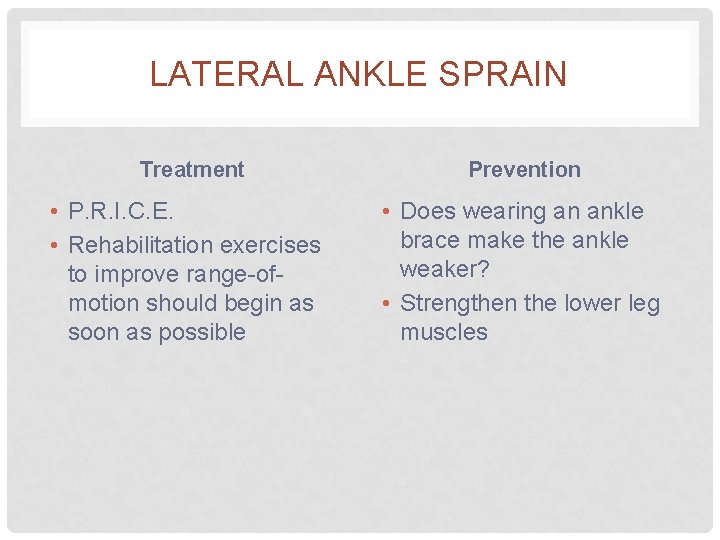
LATERAL ANKLE SPRAIN Treatment • P. R. I. C. E. • Rehabilitation exercises to improve range-ofmotion should begin as soon as possible Prevention • Does wearing an ankle brace make the ankle weaker? • Strengthen the lower leg muscles
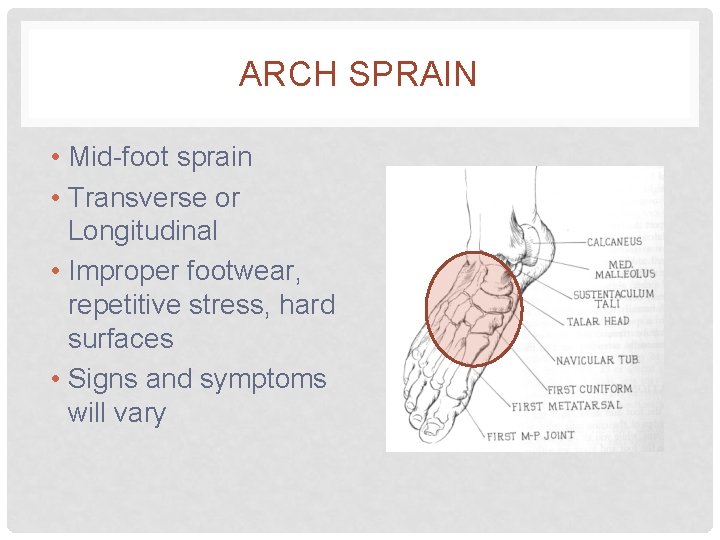
ARCH SPRAIN • Mid-foot sprain • Transverse or Longitudinal • Improper footwear, repetitive stress, hard surfaces • Signs and symptoms will vary
ARCH SPRAIN Treatment • P. R. I. C. E. • Can take several weeks to heal and may require a protective boot Prevention • Proper footwear for the activity
BLISTERS • • • Caused by friction Separation of the dermis and the epidermis Drain fluid if necessary Keep clean and protected Watch for signs of infection Prevent by wearing appropriate shoes, socks, and reducing friction
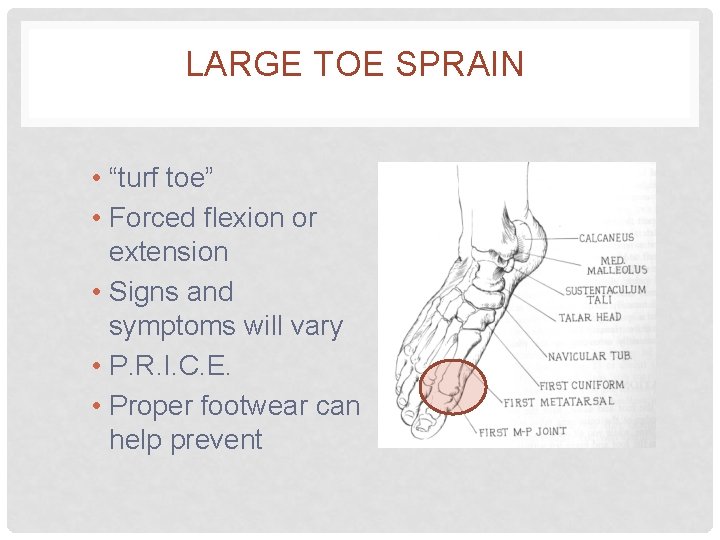
LARGE TOE SPRAIN • “turf toe” • Forced flexion or extension • Signs and symptoms will vary • P. R. I. C. E. • Proper footwear can help prevent
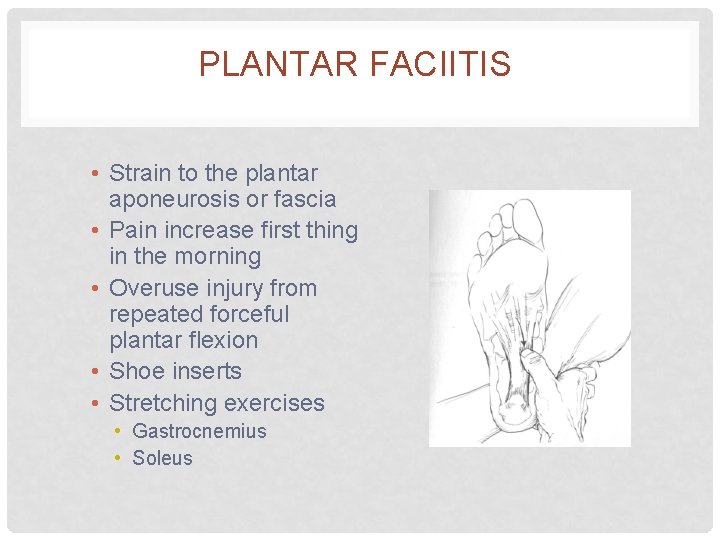
PLANTAR FACIITIS • Strain to the plantar aponeurosis or fascia • Pain increase first thing in the morning • Overuse injury from repeated forceful plantar flexion • Shoe inserts • Stretching exercises • Gastrocnemius • Soleus
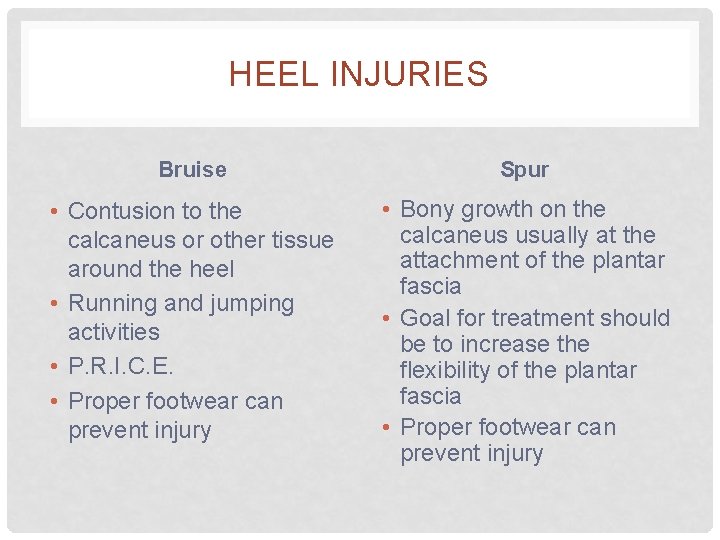
HEEL INJURIES Bruise Spur • Contusion to the calcaneus or other tissue around the heel • Running and jumping activities • P. R. I. C. E. • Proper footwear can prevent injury • Bony growth on the calcaneus usually at the attachment of the plantar fascia • Goal for treatment should be to increase the flexibility of the plantar fascia • Proper footwear can prevent injury
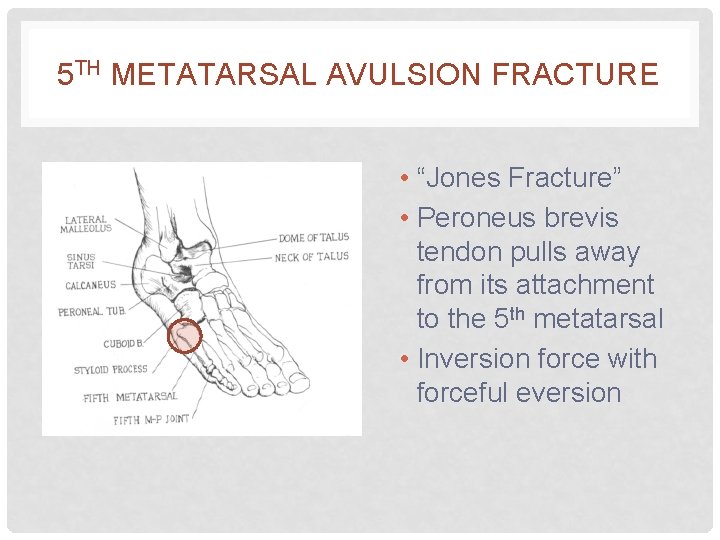
5 TH METATARSAL AVULSION FRACTURE • “Jones Fracture” • Peroneus brevis tendon pulls away from its attachment to the 5 th metatarsal • Inversion force with forceful eversion
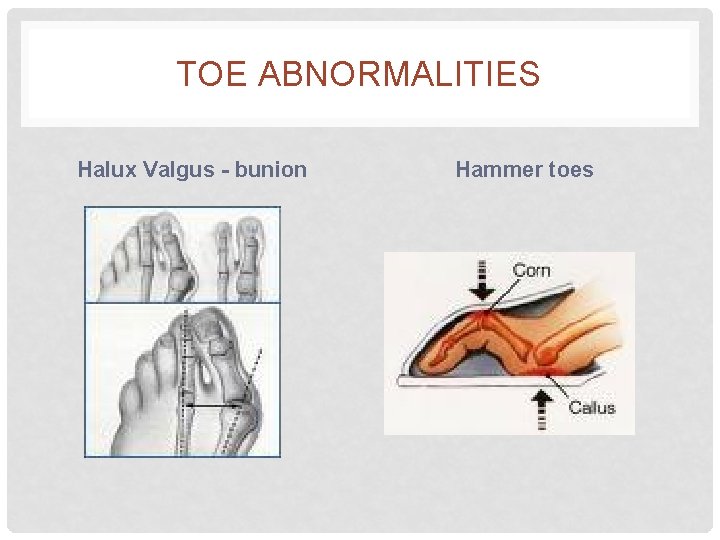
TOE ABNORMALITIES Halux Valgus - bunion Hammer toes
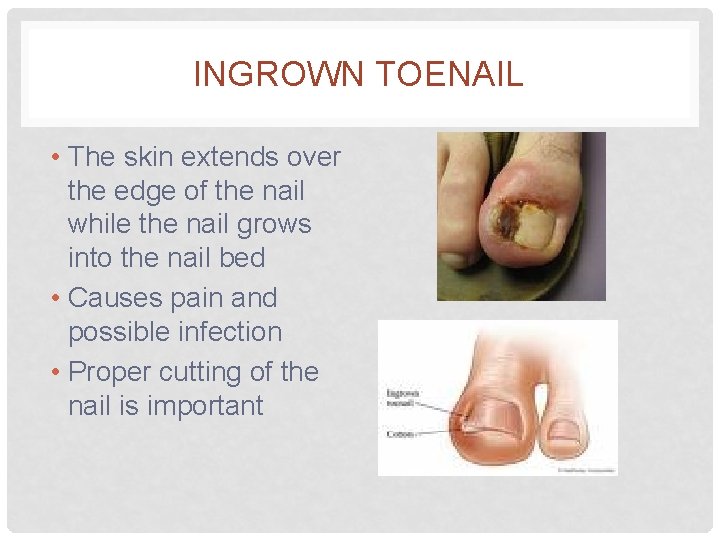
INGROWN TOENAIL • The skin extends over the edge of the nail while the nail grows into the nail bed • Causes pain and possible infection • Proper cutting of the nail is important
ATHLETE’S FOOT (TINEA PEDIS) • • Fungal infection of the foot Moisture, heat, darkness Itching, rash, pimples or blisters Keep feet clean and dry as much as possible
INJURIES LOWER LEG
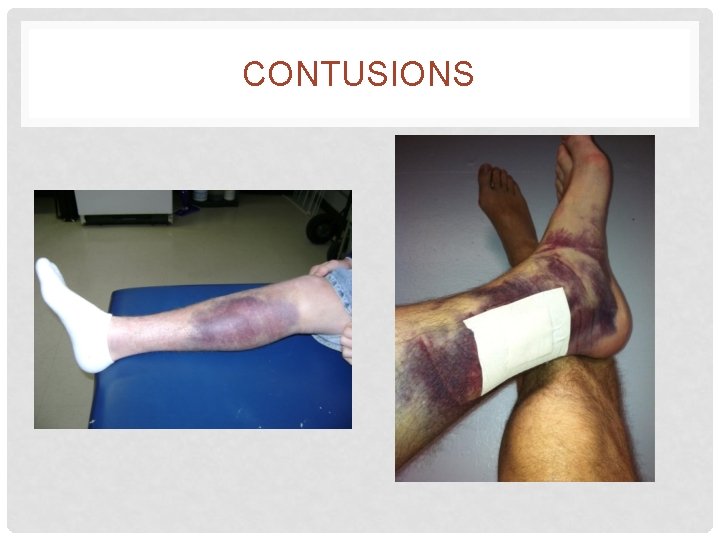
CONTUSIONS
CONTUSION COMPLICATIONS • Compartment syndrome (discussed later) • Myositis ossificans • Peroneal nerve damage that can cause “foot drop”
MUSCLE STRAINS • • Gastrocnemius muscle the most common Forceful contraction, overstretching, or overuse Signs and symptoms will vary Usual treatment and prevention for any muscle strain
MUSCLE CRAMP • Sudden and involuntary contraction of the muscle • • • Fatigue Dehydration muscle atrophy after fracture lack of nutrient poor flexibility improperly fitted equipment • Rest, passive stretching, and massage • Prevention will vary depending upon the cause
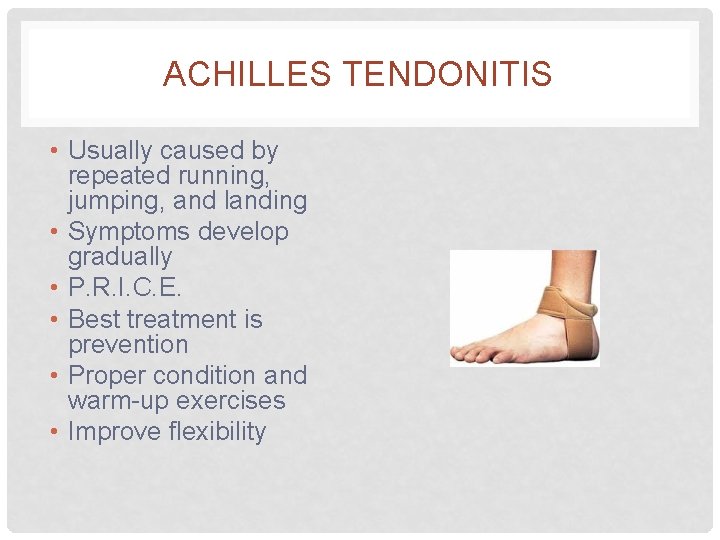
ACHILLES TENDONITIS • Usually caused by repeated running, jumping, and landing • Symptoms develop gradually • P. R. I. C. E. • Best treatment is prevention • Proper condition and warm-up exercises • Improve flexibility
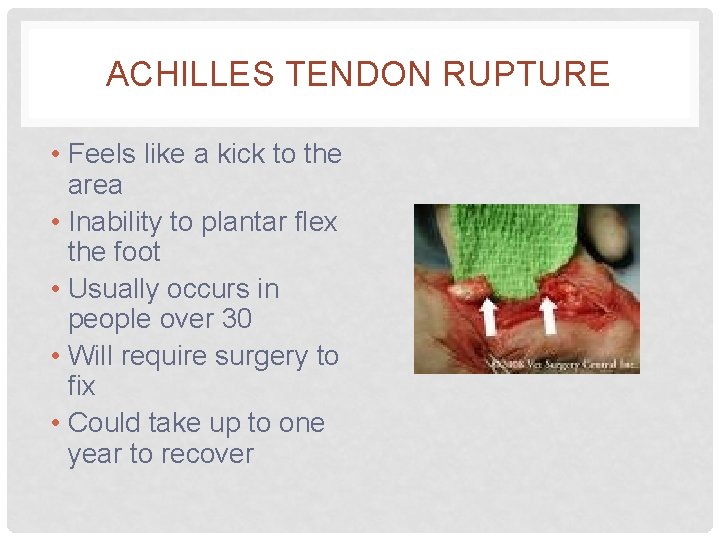
ACHILLES TENDON RUPTURE • Feels like a kick to the area • Inability to plantar flex the foot • Usually occurs in people over 30 • Will require surgery to fix • Could take up to one year to recover
SHIN SPLINTS • Describes a variety of conditions characterized by pain and irritation or inflammation in the lower leg • Medial Tibial Stress Syndrome • Overuse injury • Tightness in the soleus and gastrocnemius muscles • R. I. C. E. • Strengthen the lower leg muscles and improve flexibility • Address any biomechanical issues such overpronation
STRESS FRACTURE • • Common in the tibia Definite “hot spot” with palpation Hurts to walk, especially at the end of the day Rest – usually 4 -8 weeks with gradual, progressive return to activity • Need to answer why this happened to this person?
COMPARTMENT SYNDROME • Swelling of the compartment, or muscular area, between the tibia and the fibula • Usually the Anterior Compartment • Overuse or direct blow • Symptoms similar to shin splints • Intense pain that is exacerbated by movement, touch, pressure, and stretching • Muscle will feel tense with palpation • Acute cases are medical emergencies
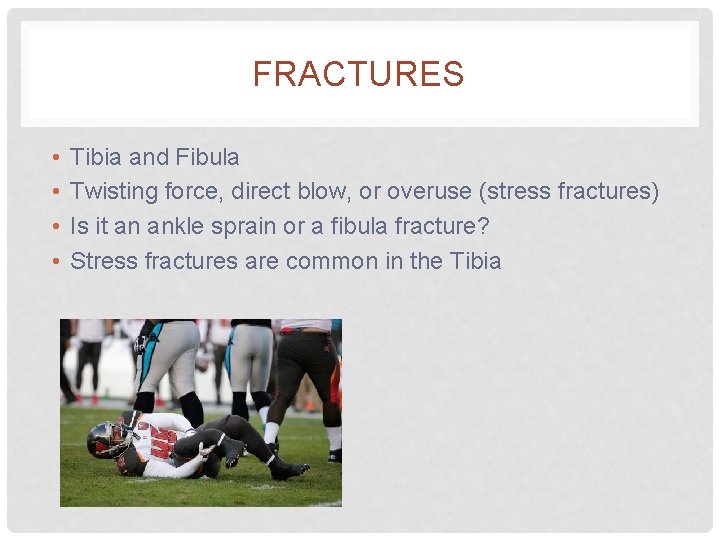
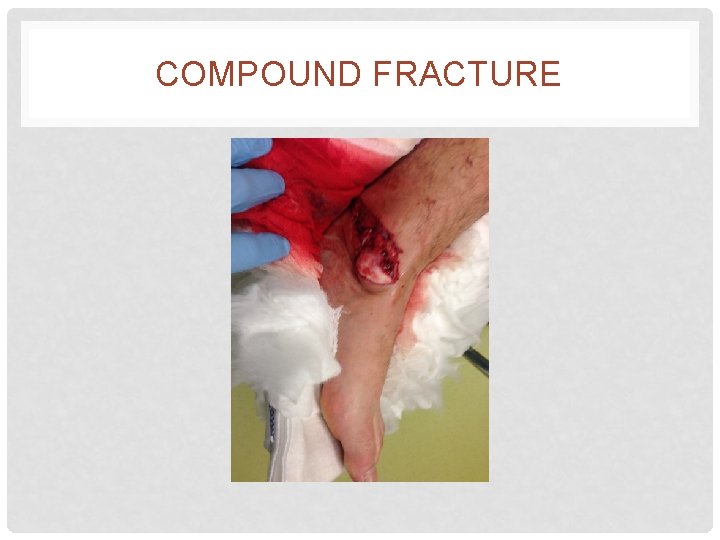
FRACTURES • • Tibia and Fibula Twisting force, direct blow, or overuse (stress fractures) Is it an ankle sprain or a fibula fracture? Stress fractures are common in the Tibia
COMPOUND FRACTURE
EVALUATIONS FOOT, ANKLE, AND LOWER LEG
S. O. A. P. • Subjective • History – chronic or acute injury? • Objective • • Observation Palpation Range of Motion (active, passive, resistive) Special Testing • Assessment • Plan
OBSERVATION Foot Ankle
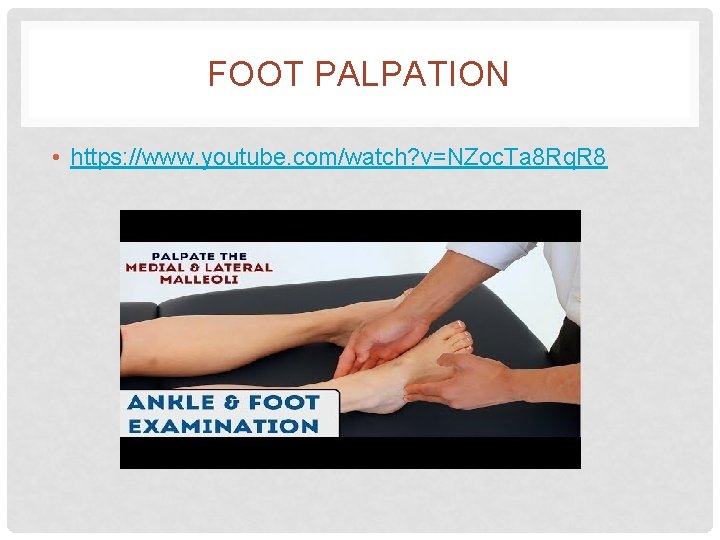
FOOT PALPATION • https: //www. youtube. com/watch? v=NZoc. Ta 8 Rq. R 8
ANKLE RANGE OF MOTION Dorsiflexion & Plantarflexion Inversion & Eversion
ANKLE SPECIAL TEST Anterior Drawer Talar Tilt - Inversion • https: //www. youtube. com/ watch? v=v. Ac. BEYZKcto • https: //www. youtube. com/ watch? v=UHNbm 6 Z 3 XK 4
FRACTURE SPECIAL TESTS Bump Test Squeeze Test
THOMPSON TEST • https: //www. youtube. com/watch? v=z-7 c. J 7 Lp. Cq. Y
THE END