
The following slides provide activities to help you

- Slides: 34
The following slides provide activities to help you embed your understanding of musical elements. These are the keywords we use from year 7 through to A Level. Elements of Music Lesson 1
Keywords for the unit rhythm pitch Texture tempo dynamics timbre structure silence ensemble Unison
To create a piece of music we use certain building blocks. These are known as elements. When we listen to music we can hear how the composer (person who wrote the piece) has used the elements to affect the mood of the music making it sound happy, sad, exciting, scary or even strange. We will be focussing on 6 elements of Music. They are: 1. Texture 4. Tempo 2. Timbre 5. Rhythm 3. Dynamics 6. Structure Fill in the blanks
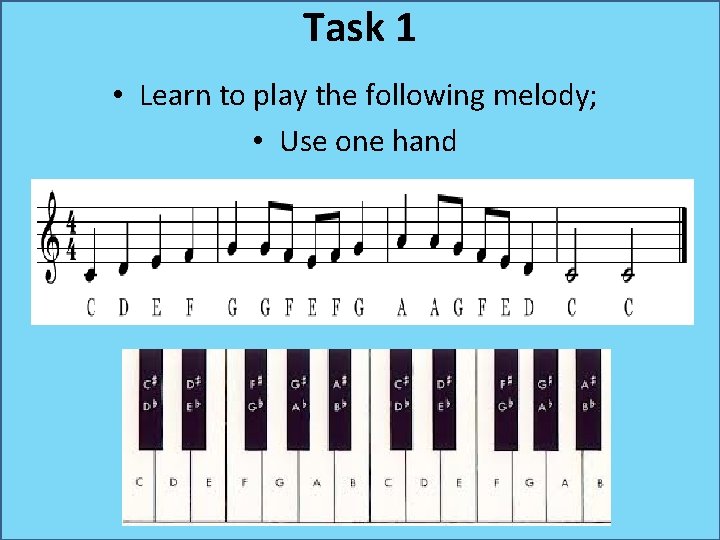
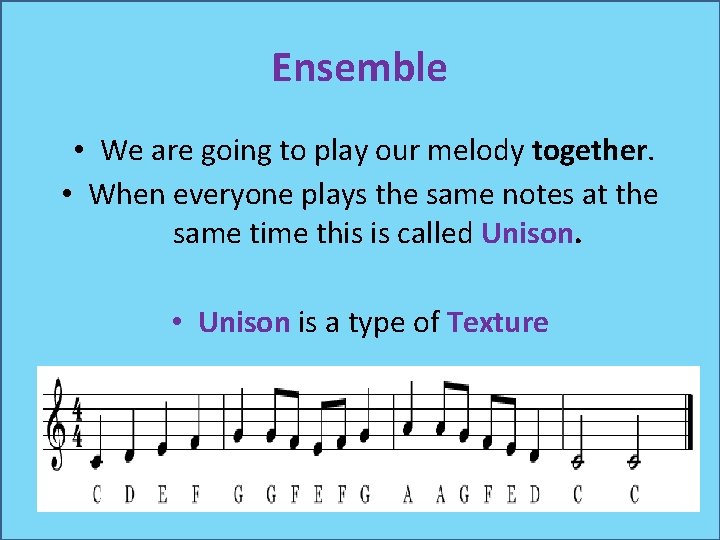
Task 1 • Learn to play the following melody; • Use one hand
Ensemble • We are going to play our melody together. • When everyone plays the same notes at the same time this is called Unison. • Unison is a type of Texture
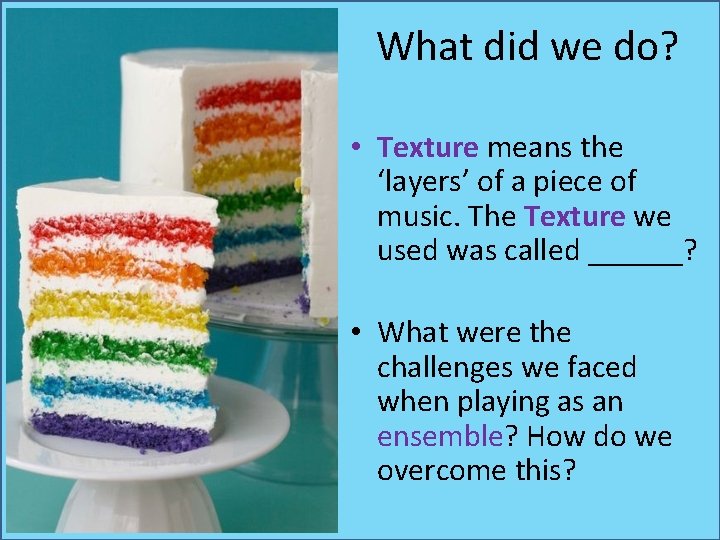
What did we do? • Texture means the ‘layers’ of a piece of music. The Texture we used was called ______? • What were the challenges we faced when playing as an ensemble? How do we overcome this?
Keywords – what do they mean? Texture Unison Elements ensemble
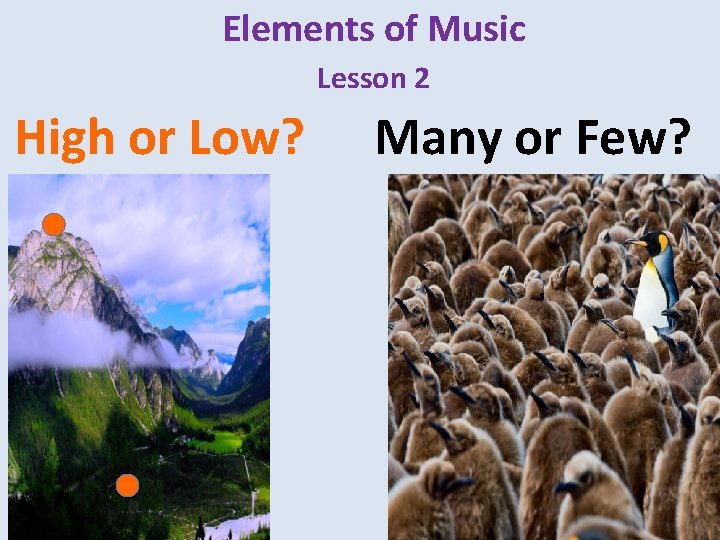
Elements of Music Lesson 2 High or Low? Many or Few?
Keywords for the lesson Pitch Texture Layers tempo ensemble Higher/Lower Unison
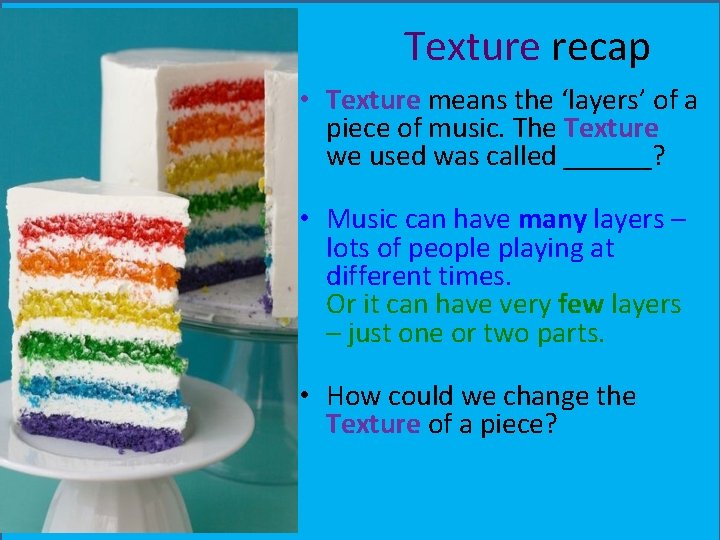
Texture recap • Texture means the ‘layers’ of a piece of music. The Texture we used was called ______? • Music can have many layers – lots of people playing at different times. Or it can have very few layers – just one or two parts. • How could we change the Texture of a piece?
Pitch We’ll start by humming two notes. 1. Thumbs UP if number one was HIGHER 2. Thumbs DOWN if number two was HIGHER We have just worked out which note was higher in PITCH. Pitch = how high or low a note is. Fill in ‘pitch is’ (Task 1)
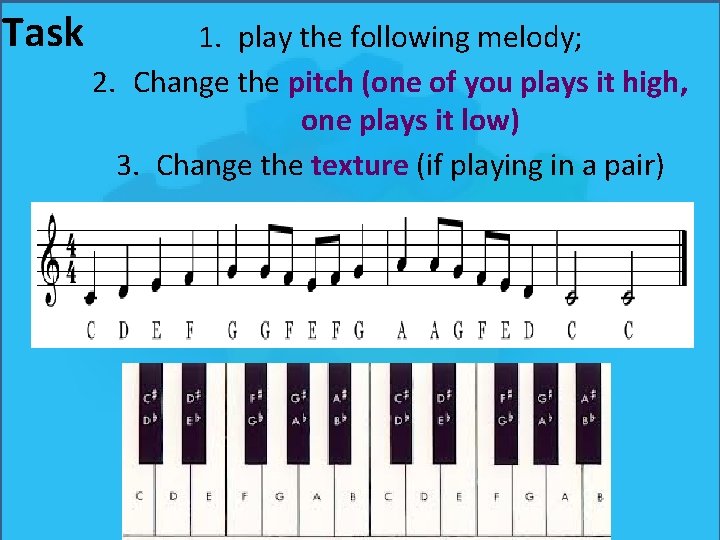
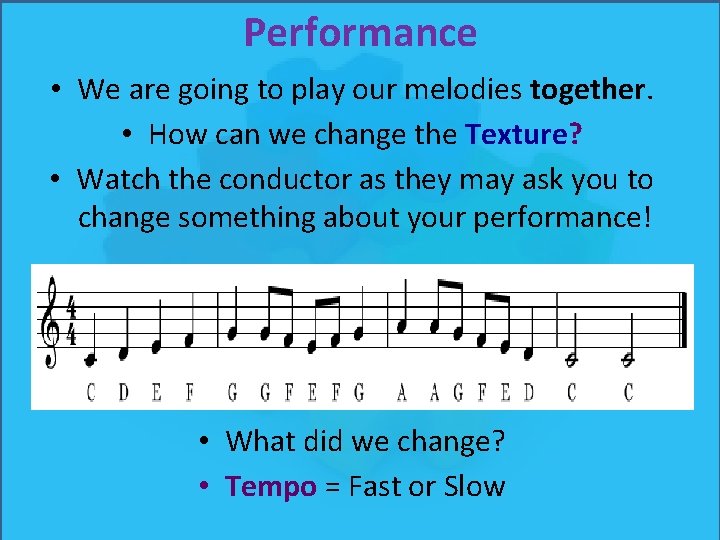
Task 1. play the following melody; 2. Change the pitch (one of you plays it high, one plays it low) 3. Change the texture (if playing in a pair)
Performance • We are going to play our melodies together. • How can we change the Texture? • Watch the conductor as they may ask you to change something about your performance! • What did we change? • Tempo = Fast or Slow
Keywords – what do they mean? Pitch Texture Layers tempo ensemble Higher/Lower Unison
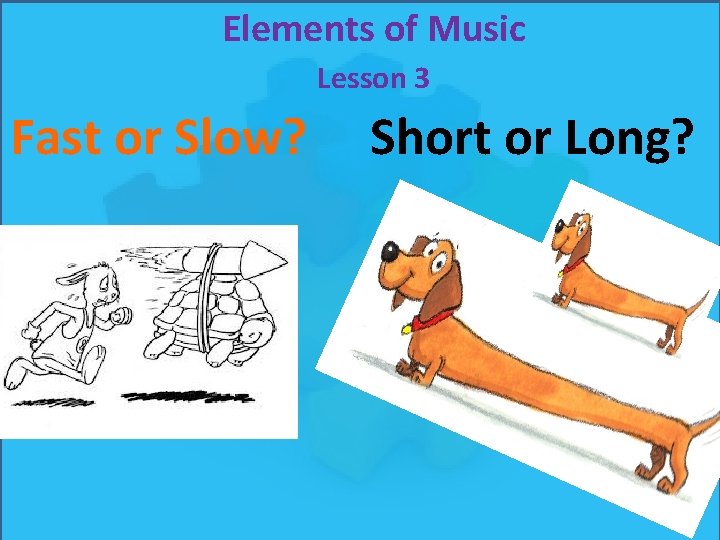
Elements of Music Lesson 3 Fast or Slow? Short or Long?
Objectives • Be able to define Tempo and Rhythm. • To be able to apply understanding of tempo and rhythm to adapt their melody. • To develop understanding of dynamics and apply this to their own work.
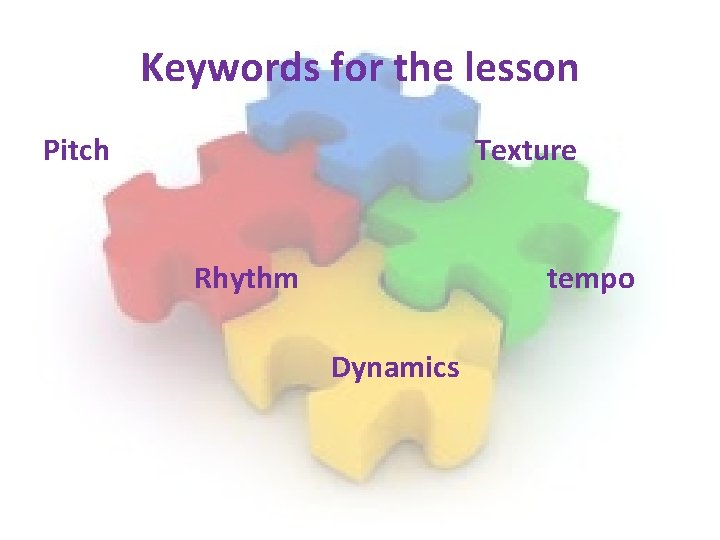
Keywords for the lesson Pitch Texture Rhythm tempo Dynamics
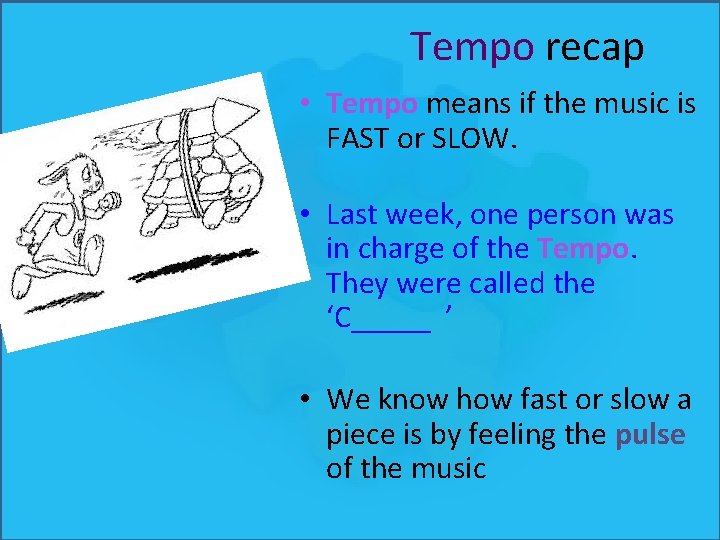
Tempo recap • Tempo means if the music is FAST or SLOW. • Last week, one person was in charge of the Tempo. They were called the ‘C_____ ’ • We know how fast or slow a piece is by feeling the pulse of the music
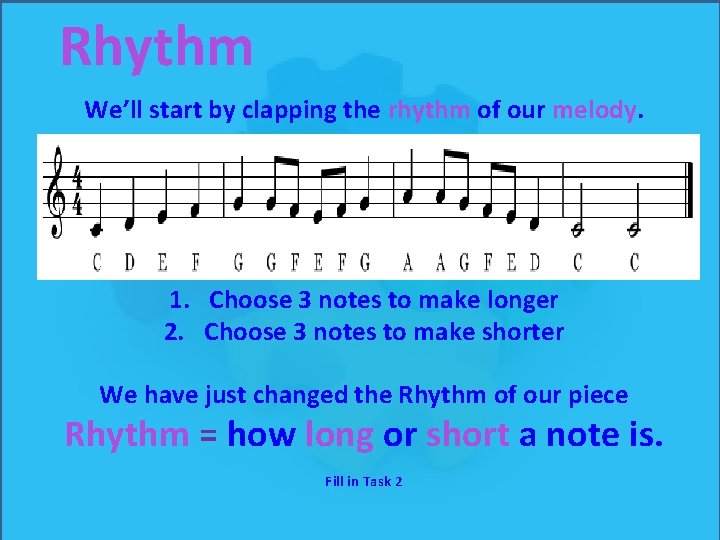
Rhythm We’ll start by clapping the rhythm of our melody. 1. Choose 3 notes to make longer 2. Choose 3 notes to make shorter We have just changed the Rhythm of our piece Rhythm = how long or short a note is. Fill in Task 2
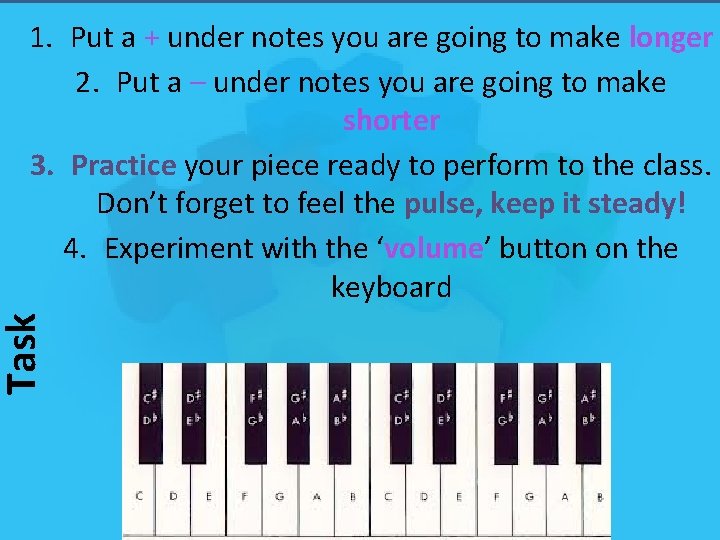
Task 1. Put a + under notes you are going to make longer 2. Put a – under notes you are going to make shorter 3. Practice your piece ready to perform to the class. Don’t forget to feel the pulse, keep it steady! 4. Experiment with the ‘volume’ button on the keyboard
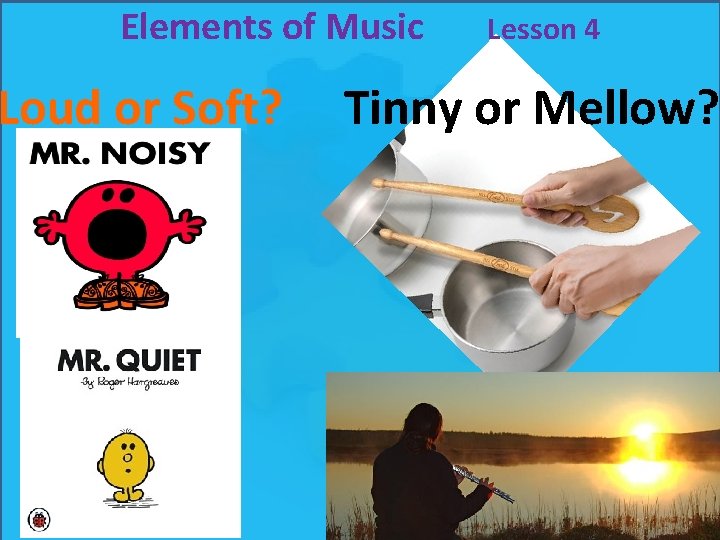
Elements of Music Loud or Soft? Lesson 4 Tinny or Mellow?
Objectives • Be able to define Dynamics and Timbre. • To be able to apply understanding of Dynamics and Timbre to adapt their melody. • To develop performance skills through performing to class and developing analytical skills through peer assessment.
Keywords for the lesson Instrumentation Timbre In Time tempo Dynamics
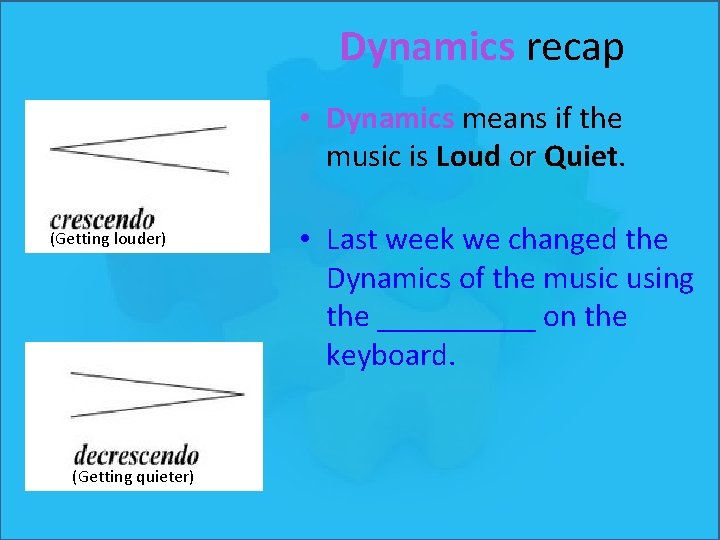
Dynamics recap • Dynamics means if the music is Loud or Quiet. (Getting louder) (Getting quieter) • Last week we changed the Dynamics of the music using the _____ on the keyboard.
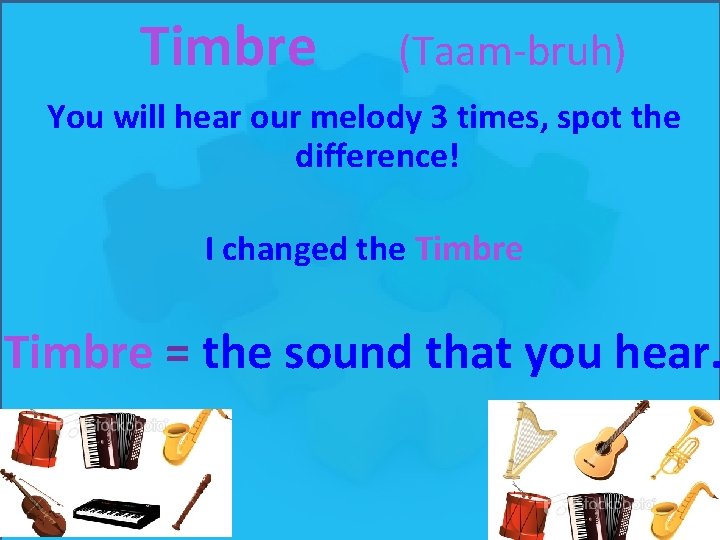
Timbre (Taam-bruh) You will hear our melody 3 times, spot the difference! I changed the Timbre = the sound that you hear.
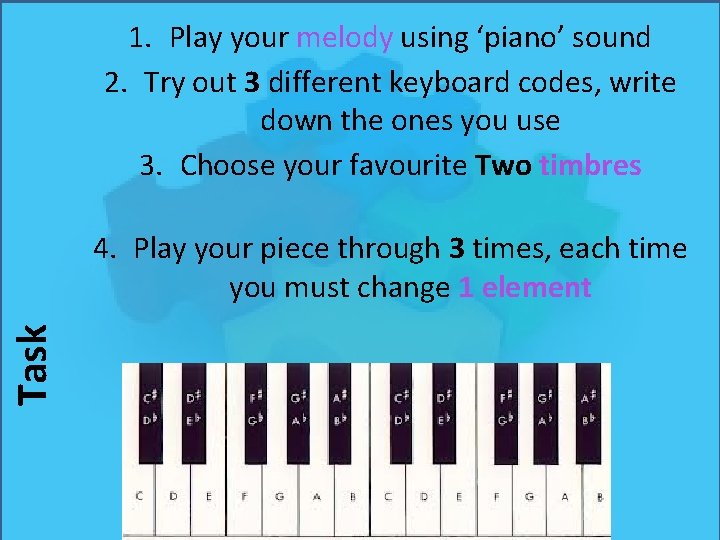
1. Play your melody using ‘piano’ sound 2. Try out 3 different keyboard codes, write down the ones you use 3. Choose your favourite Two timbres Task 4. Play your piece through 3 times, each time you must change 1 element
Extension task Two examples of timbres I have used today are ____________ and _____. My favourite timbre for my melody was _________ this is because ______. My partner’s favourite timbre to use was_______ they said that this was because ‘______’. • Some of you have practiced your piece in 3 different ways. Perform it! • Which 3 elements did they use, what was the order? Structure = The order of a piece of music.
Keywords – what do they mean? Instrumentation Timbre In Time tempo Dynamics
Elements of Music Lesson 5 Front to Back or Back to Front?
Objectives • Be able to define Structure. • To be able to apply understanding of Structure to extend their piece and play the melody in each of its variations using all 6 elements. • To develop listening and composition skills by determining, through trial and error, how best to structure the piece in addition to explaining their choices using musical language.
Keywords for the lesson Dynamics Timbre Structure Rhythm Tempo
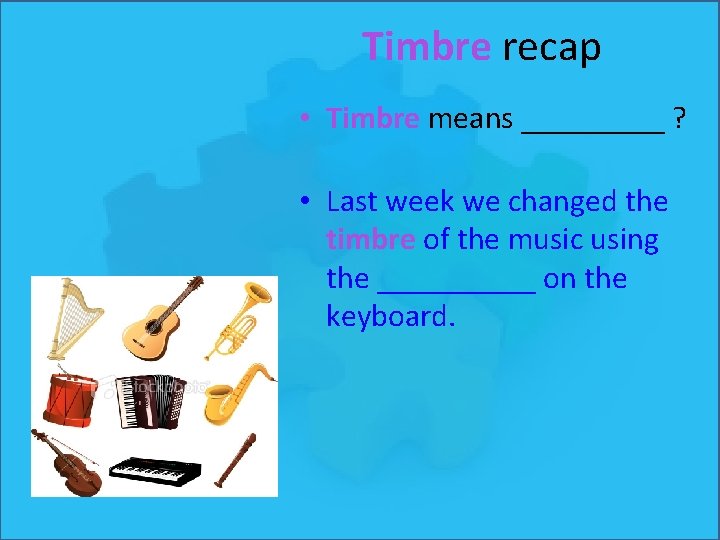
Timbre recap • Timbre means _____ ? • Last week we changed the timbre of the music using the _____ on the keyboard.
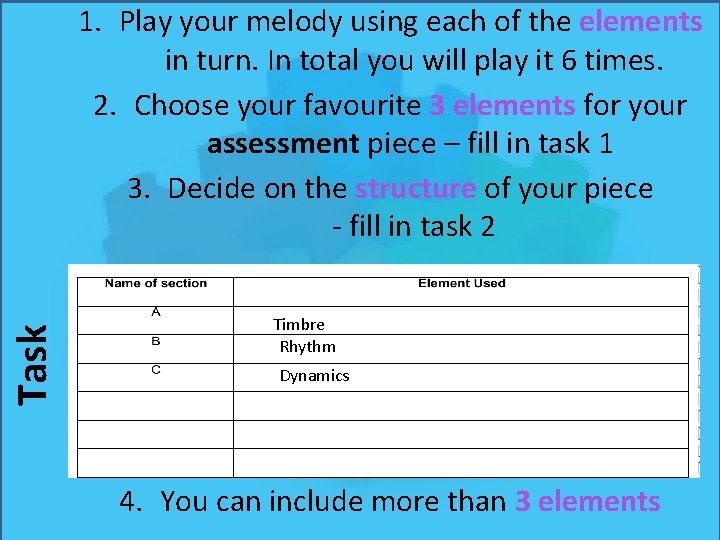
Task 1. Play your melody using each of the elements in turn. In total you will play it 6 times. 2. Choose your favourite 3 elements for your assessment piece – fill in task 1 3. Decide on the structure of your piece - fill in task 2 Timbre Rhythm Dynamics 4. You can include more than 3 elements
Keywords, What do they mean? Dynamics Timbre Structure Rhythm Tempo