
THE FOCUS GROUP AS A RESEARCH METHOD Wilkinson
- Slides: 18
THE FOCUS GROUP AS A RESEARCH METHOD
Wilkinson, S. (2008). Chapter 9: Focus Groups. In Smith, J. A. (2008). Qualitative Psychology: A practical guide to research methods. Second Edition. Sage.
Dates back 75 years but only used in psychology for last 10 years or so Earliest use in Psychology 1920 s: Bogardus and Thurstone used focus groups to develop survey instruments 1970 s they were popular in business and marketing 1980 s became popular in health research (i. e. Attitudes and behaviours towards sexual conduct, diseases like HIV/AIDs etc); still v popular in health education and promotion work
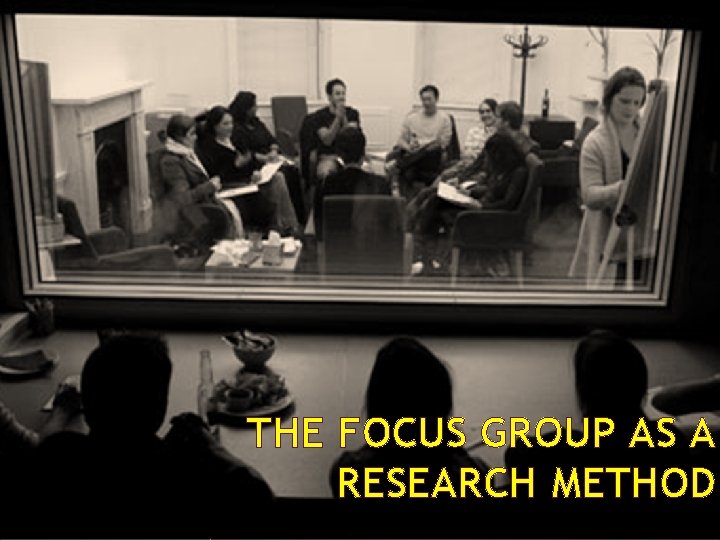
A way of collecting qualitative data from a small number of people engaged in an informal group discussion focused on a particular issue or topic Examples; young women discussing how they negotiate sexual refusals young men talking about body modification (i. e. tattoos, piercings). nurses evaluating different strategies for ward management lesbian parents discussing playground bullying
Common misconception that people will be inhibited when discussing certain matters in a group but in fact this does not appear to be so; group context seems to in fact facilitate disclosures (Farquhar 1999, Frith 2000) Focus groups usually have a ‘schedule’; a list of questions to guide the discussion Researchers acts as a moderator; posing questions keeping discussion flowing encouraging participation
The moderators role is to facilitate interaction between group members not to ask direct questions of individuals Interaction between participants is the key to focus groups and sets them apart form other types of interview Focus group is more natural, conversational, may include story telling, joking, arguing, boasting, teasing, persuasion, challenge, disagreement Discussions are audio-taped and later transcribed The best access to quality data occurs when the focus group is a rewarding experience for the Pps (hence needs careful planning) Date analysed using techniques such as content or thematic analysis
as the only research method or combined with other methods including quantitative. based in lab or in a more natural setting One off group or multiple sessions with same or different Pps Can involve just 2 Pps or up to 12; mostly between 4 -8 Pre-existing groups 9 family, work team etc) or put together for purpose of the research May be deliberately representative of a specific target population or share similar key characteristics
They may be shown video clip, or asked to participate in a group task; sorting cards, rating stimulus materials etc. Transcripts can be orthographic (spoken words only) or post-modern (recording paralinguistic features, false starts, self corrections, overlapping speech etc, etc. ) Computer programmes are available that assist in analysis (NUD. IST and ETHNOGRAPH)
Some psychologists (essentialists) think its best to try and elicit individual participants ideas, opinions and understanding of the world and that the focus group is a good way to go about this because co-Pps trigger memories Stimulate debate Facilitate disclosure Encourage elaboration
Other psychologists assume that people don’t have their own pre-existing ideas about things but that ideas are constructed through interaction with others and it is this process of ‘sense-making’ that they wish to explore through the focus group They are interested to see how people express, construct, defend and modify their views throughout the discussion Different techniques are used to analyse the data depending on whether psychologists are essentialist and social constructivists.
They are good for exploring people’s individuals ideas (essentialist) and/or the construction of views (social constructivist) not useful when trying to make comparisons between different types of individual or when trying to measure attitudes questionnaires may be better here using quantitative data The data tends to be voluminous, unstructured and doesn’t lend itself to be summarised! Best methods of analysis preserve the actual words of the Pps rather than quantification
when statistical data required or generalisable findings Groups are often small not representative making generalisation unwise Also unwise to compare findings from groups that can often be very diverse
Can acquire lots of data relatively quickly and cheaply Difficult to recruit and get together appropriate PPs Moderators need to be highly skilled (need training and practice) Data transcription can be painstaking and v. time consuming Requires specialist analytical skills (training)
Basic interviewing skills Establishing rapport Use of prompts and probes Sensitivity to non-verbal cues Knowledge of group dynamics Experience of running group discussions Need to be able top draw information from shy Pps and tactfully help dominant Pps to listen to others and allow all to contribute Be able to spot signs of discomfort and respond accordingly
good preparation: plan their sessions carefully (practice/pilot study? ); focus group schedule (like the interview schedule); any audio-visual resources; choose suitable venue know when to listen tolerate silences talk less than Pps! don’t ask strings of questions actually facilitate interaction between Pps Take their after the session
Decide on research question/aims What is the time scale available How many groups will you run? Where will you find Pps? Where will you run the groups (sometimes you have to do it in Pps ‘own territory’ –pros and cons); Pp comfort versus good recording environment/one way mirror How will you record, transcribe and analyse the data How much time, resources, expertise and energy (!) do you have?
Get clearance from your ethics committee Informed consent from Pps (written) Set ground rules for Pps such as right to privacy, respect, confidentiality of other group members Consider. . . psychological and physical harm (distress should be no more than anything you might expect to face in every day life) Right to withdraw Confidentiality and right to privacy Debriefing
Always more difficult than you think! Will you offer any incentives or expenses? Gain informed consent Over recruit by about 50% to allow for drop out on the day Issue reminders and directions! Call them the day before to remind them!