
The FOCI method versus other wavefield extrapolation methods
- Slides: 26
The FOCI method versus other wavefield extrapolation methods Saleh Al-Saleh, Gary Margrave, and Hugh Geiger November 19, 2004
Motivation To compare the forward operator and conjugate inverse (FOCI) method for calculating wavefield extrapolators with • the Hale (1991) method • the weighted least square (WLSQ) method (Thorbecke et al. , 2004)
Outline • Brief review of theory of Hale’s extrapolator • Brief review of theory of WLSQ’s extrapolator • Comparisons of the three extrapolators: Ø Ø Amplitude spectra Phase errors Impulse responses and prestack depth migrations of the Marmousi dataset using Hale’s, WLSQ’s, and FOCI’s extrapolators
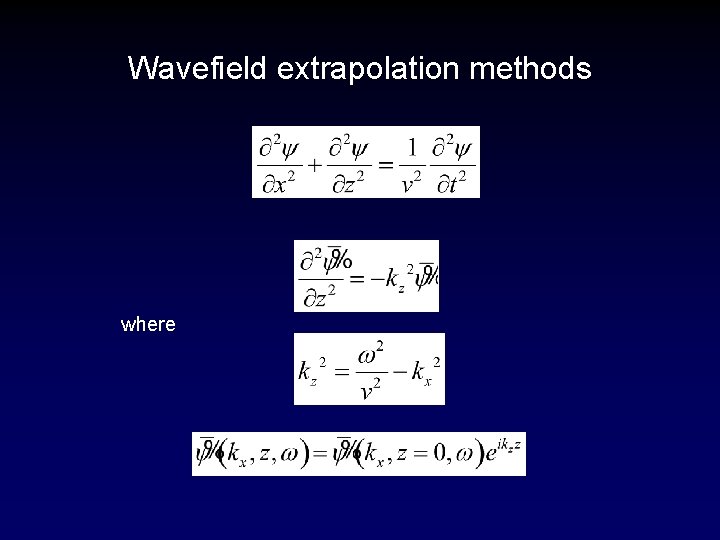
Wavefield extrapolation methods: • Are more powerful in handling strong lateral velocity variations than ray theory based methods • Have two major problems: Ø Computationally expensive Ø Instability of the extrapolation operator
Wavefield extrapolation methods where
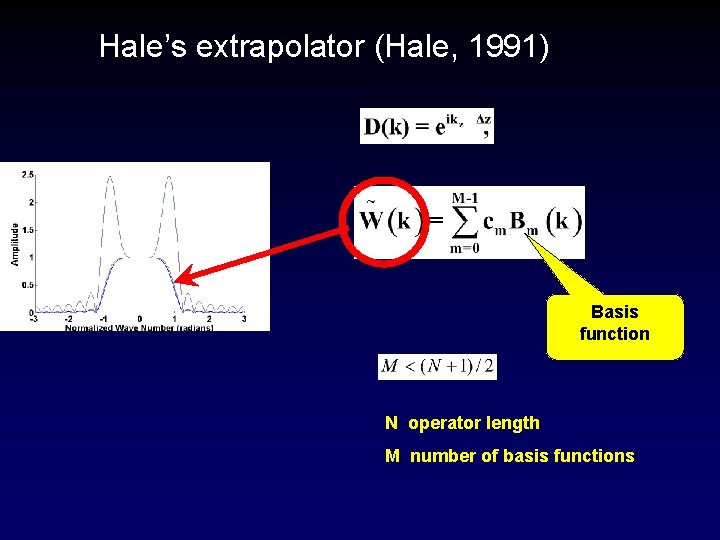
Hale’s extrapolator (Hale, 1991) Basis function N operator length M number of basis functions
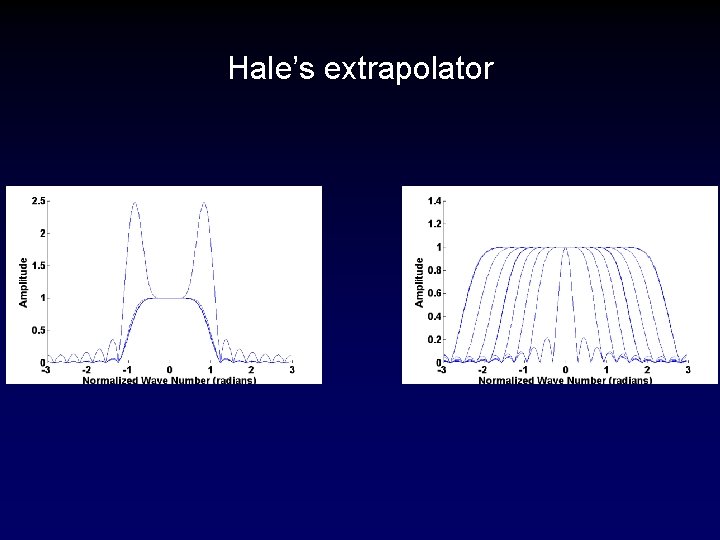
Hale’s extrapolator
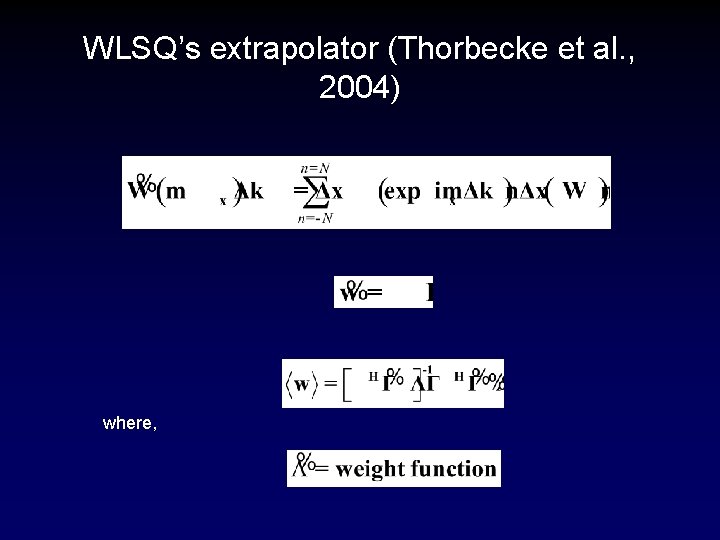
WLSQ’s extrapolator (Thorbecke et al. , 2004) where,
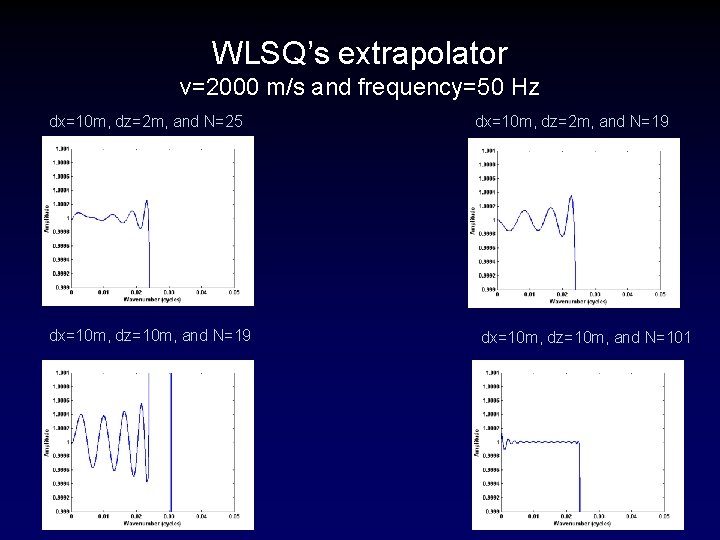
WLSQ’s extrapolator v=2000 m/s and frequency=50 Hz dx=10 m, dz=2 m, and N=25 dx=10 m, dz=10 m, and N=19 dx=10 m, dz=2 m, and N=19 dx=10 m, dz=10 m, and N=101
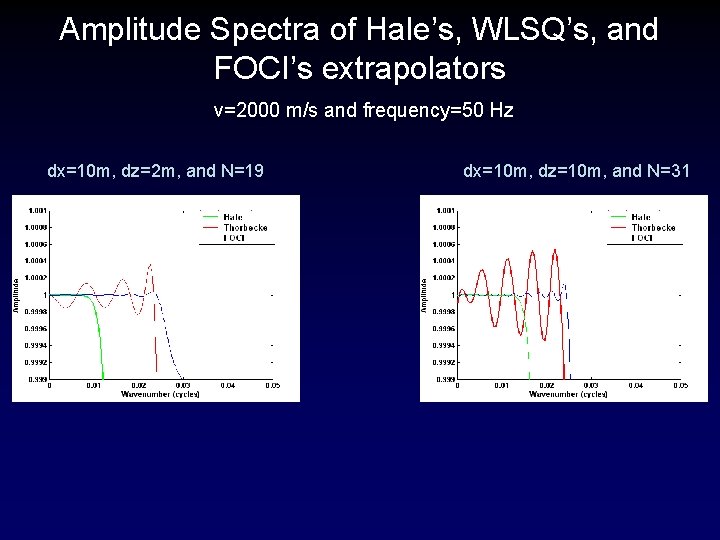
Amplitude Spectra of Hale’s, WLSQ’s, and FOCI’s extrapolators v=2000 m/s and frequency=50 Hz dx=10 m, dz=2 m, and N=19 dx=10 m, dz=10 m, and N=31
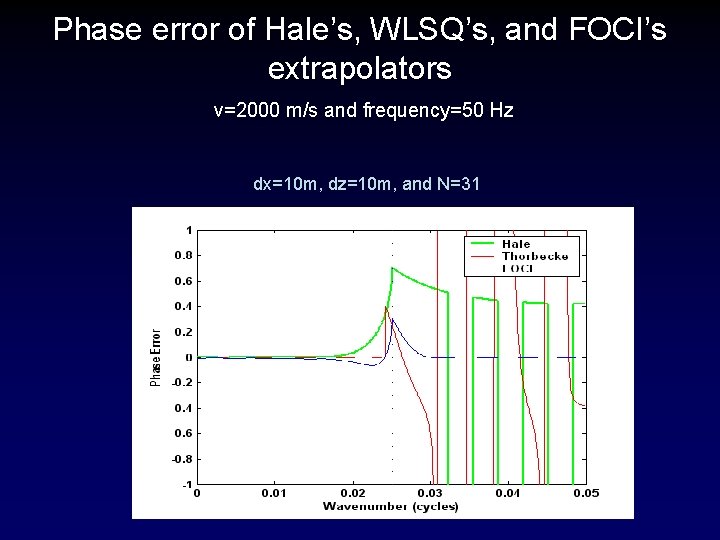
Phase error of Hale’s, WLSQ’s, and FOCI’s extrapolators v=2000 m/s and frequency=50 Hz dx=10 m, dz=10 m, and N=31
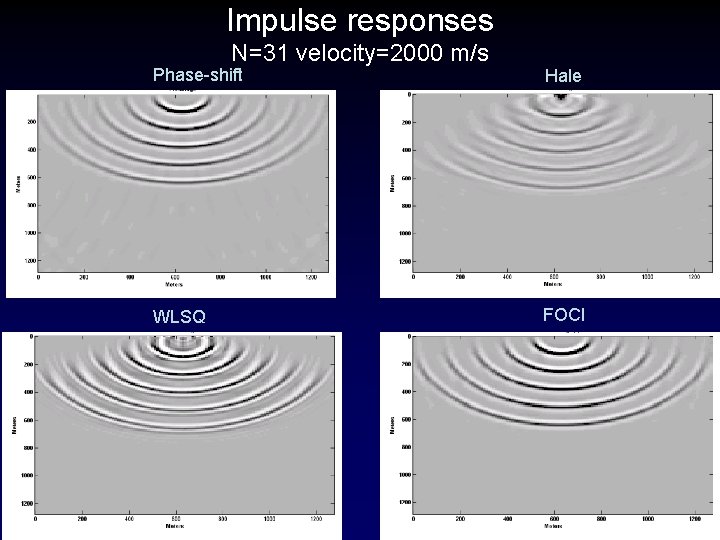
Impulse responses N=31 velocity=2000 m/s Phase-shift Hale WLSQ FOCI
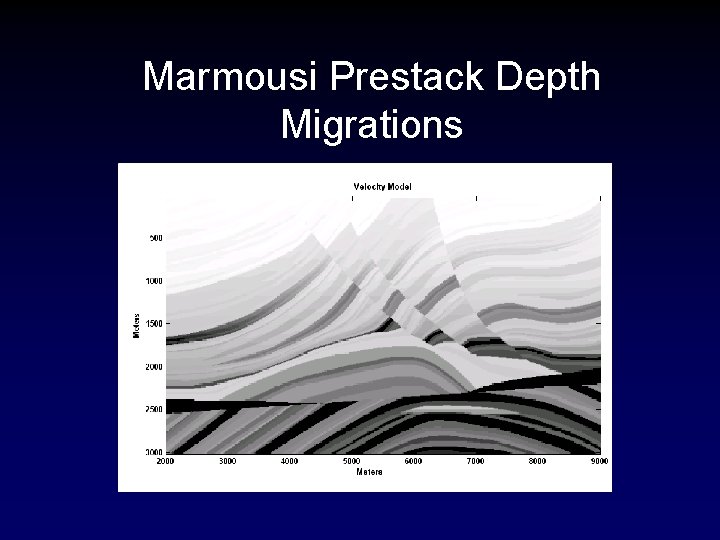
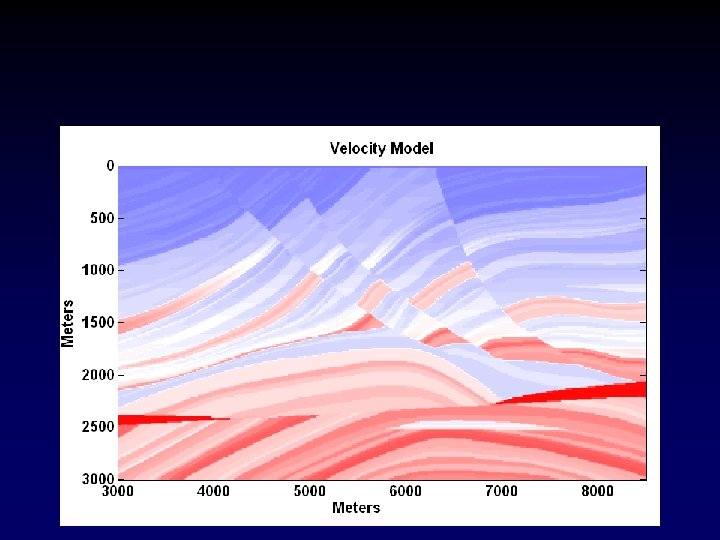
Marmousi Prestack Depth Migrations
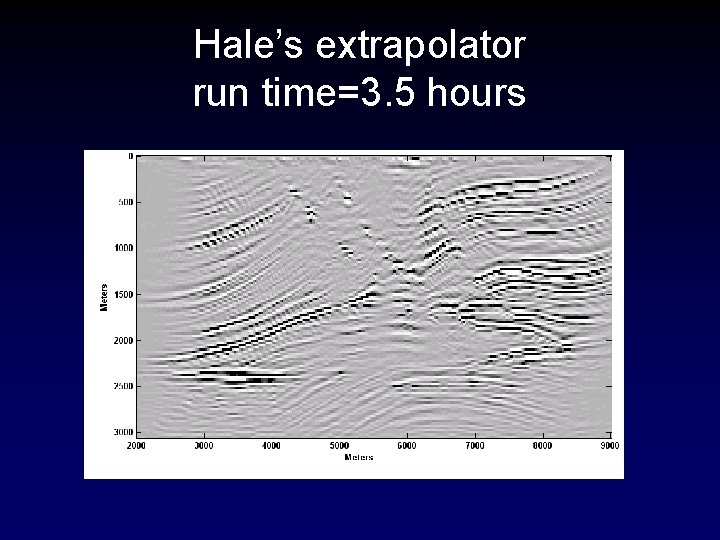
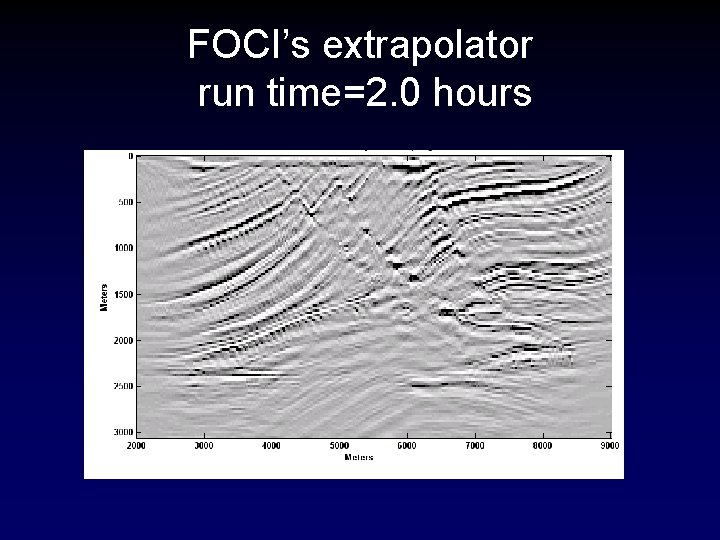
Hale’s and FOCI’s extrapolators dx=25 m dz=25 m operator length= 19 points
Hale’s extrapolator run time=3. 5 hours
FOCI’s extrapolator run time=2. 0 hours
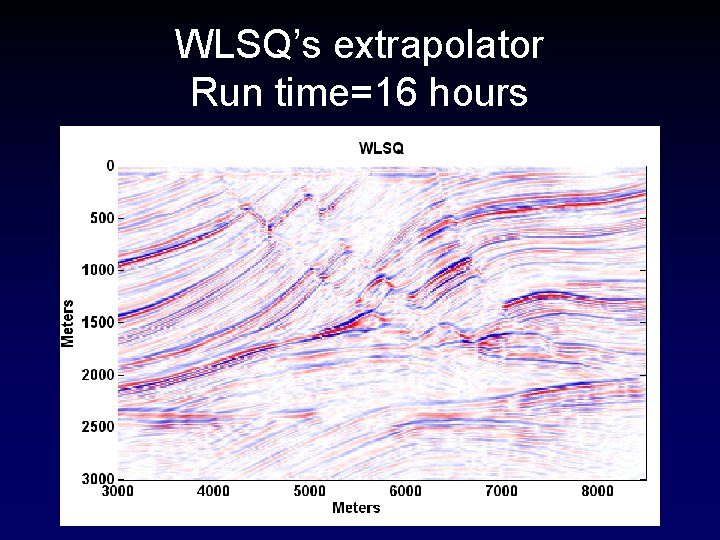
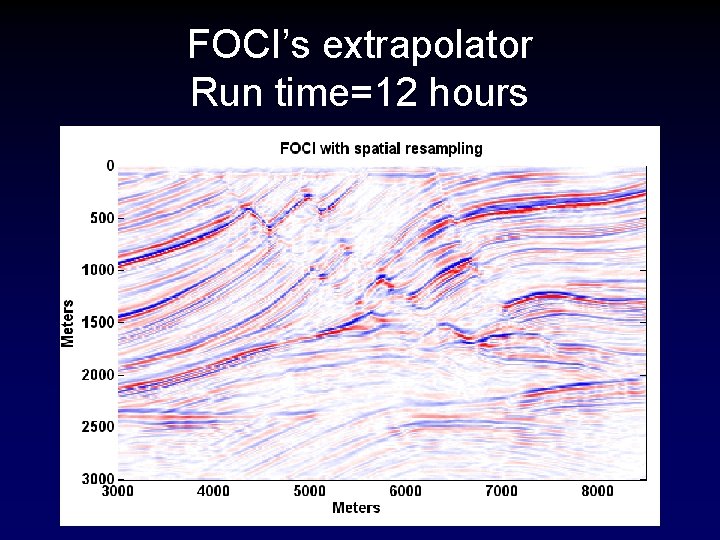
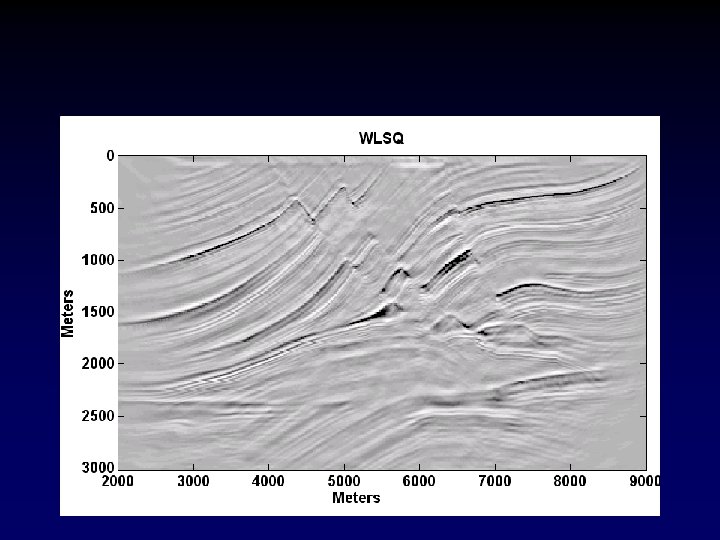
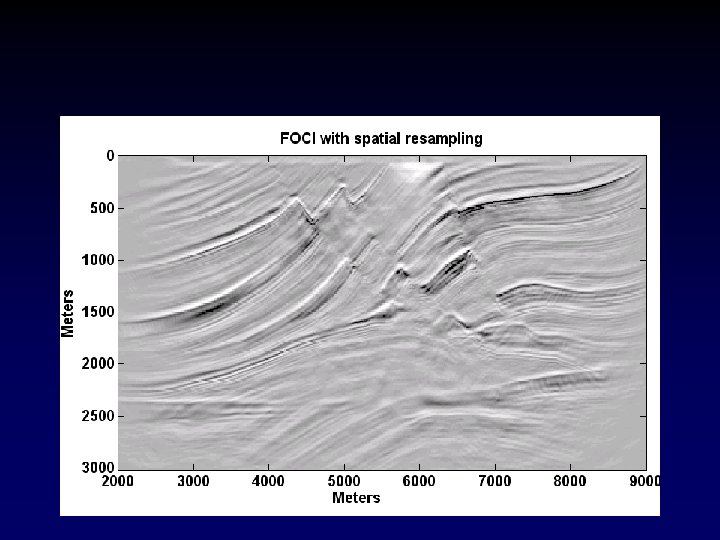
WLSQ’s and FOCI’s extrapolators dx=12. 5 m dz=12. 5 m operator length= 51 points
WLSQ’s extrapolator Run time=16 hours
FOCI’s extrapolator Run time=12 hours
Conclusions • FOCI results are comparable with Hale’s and WLSQ’s results. • FOCI is computationally more efficient than the other methods due to spatial resampling. • Spatial resampling can not be easily implemented in the other methods. • This new method is a promising technique for seismic imaging.
Acknowledgments We would like to thank: • The sponsors of the CREWES project. • The sponsors of the POTSI project. • NSERC, MITACS, and PIMS.
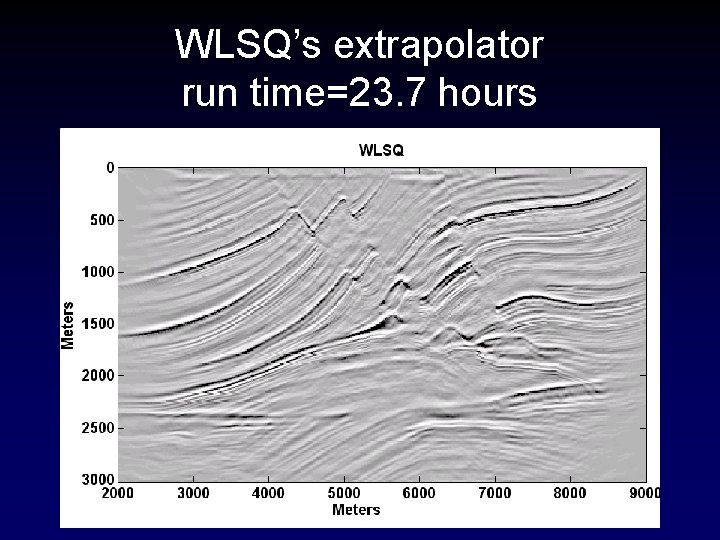
WLSQ’s extrapolator run time=23. 7 hours
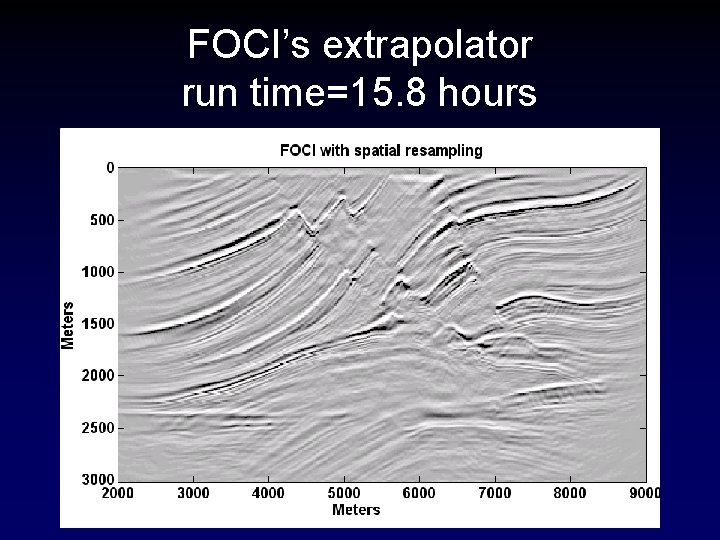
FOCI’s extrapolator run time=15. 8 hours