
The Flow of Fresh Water Chapter 11 Rivers
- Slides: 41
The Flow of Fresh Water Chapter 11
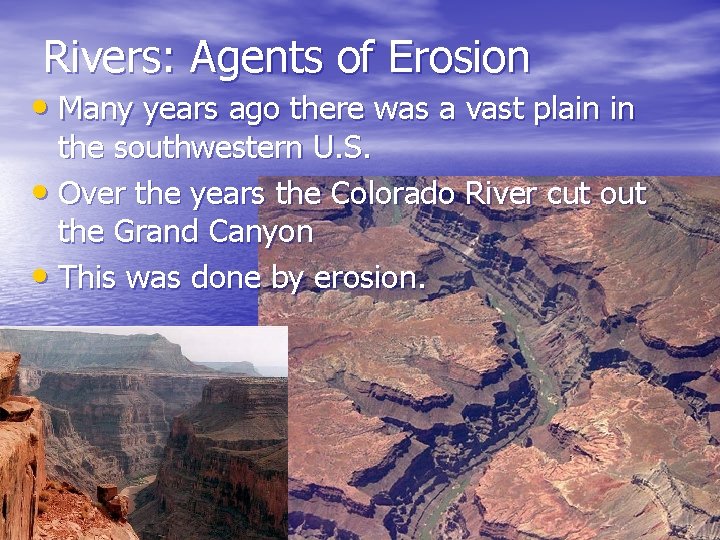
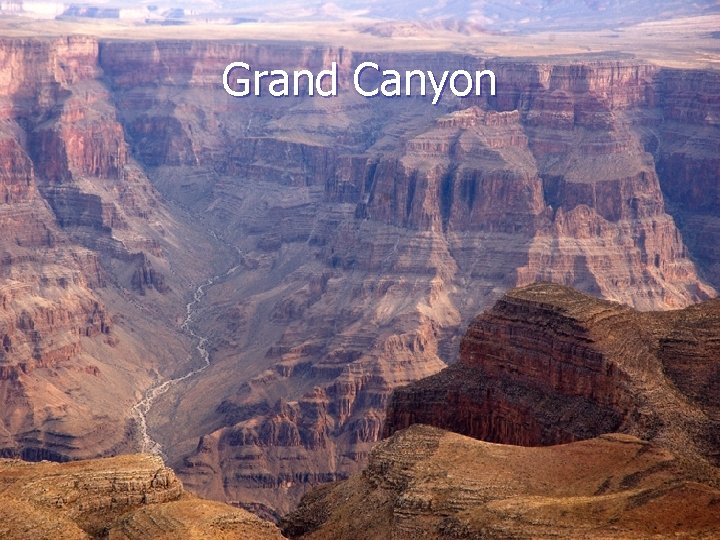
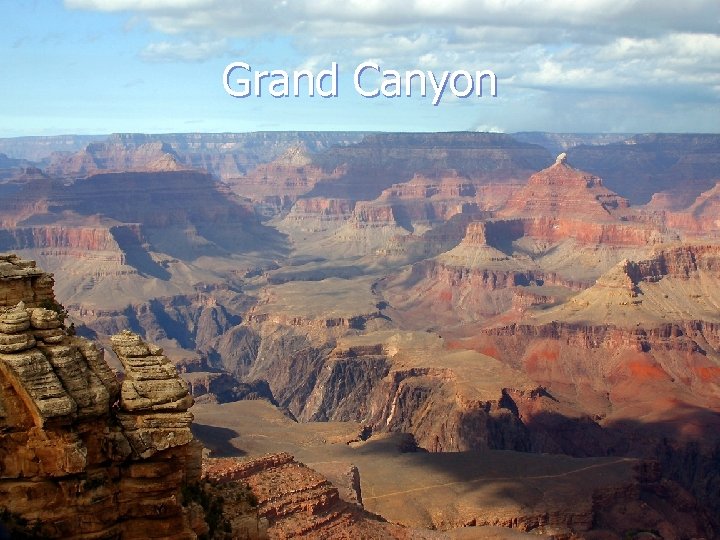
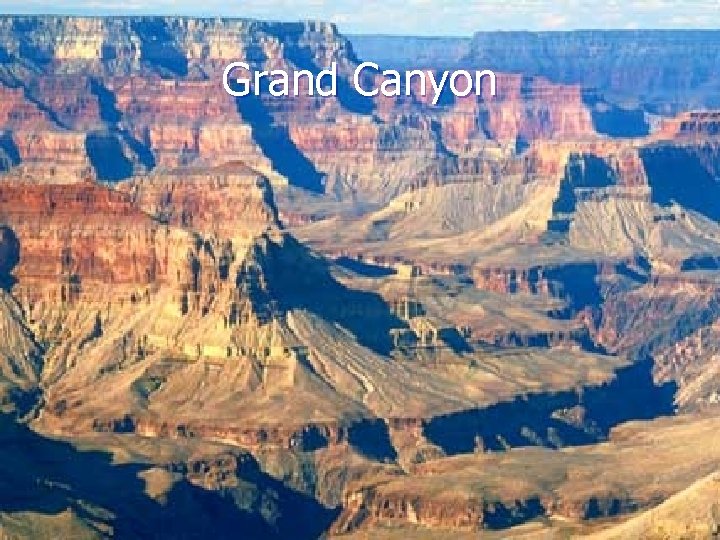
Rivers: Agents of Erosion • Many years ago there was a vast plain in the southwestern U. S. • Over the years the Colorado River cut out the Grand Canyon • This was done by erosion.
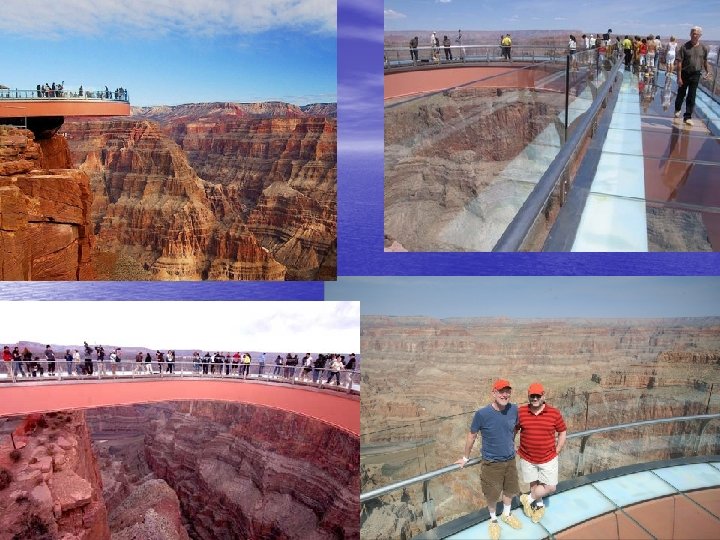
Grand Canyon
Grand Canyon
Grand Canyon
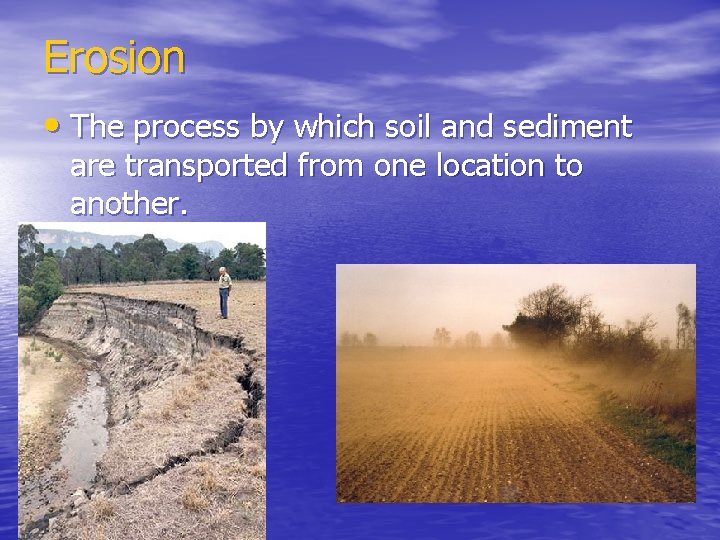
Erosion • The process by which soil and sediment are transported from one location to another.
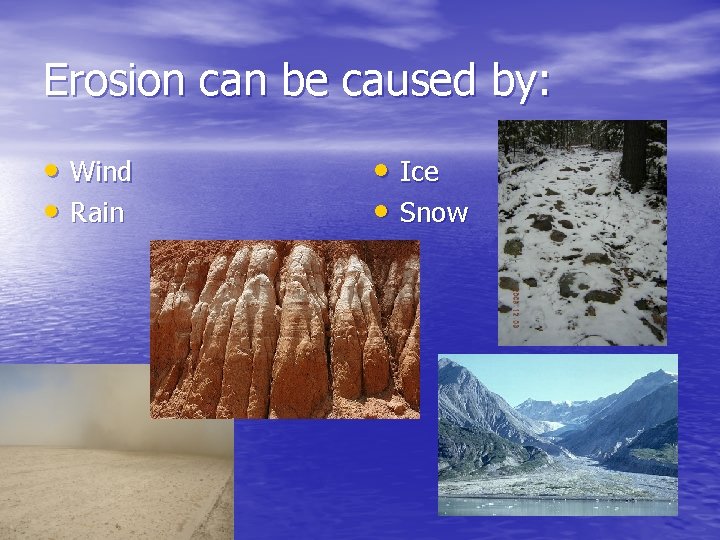
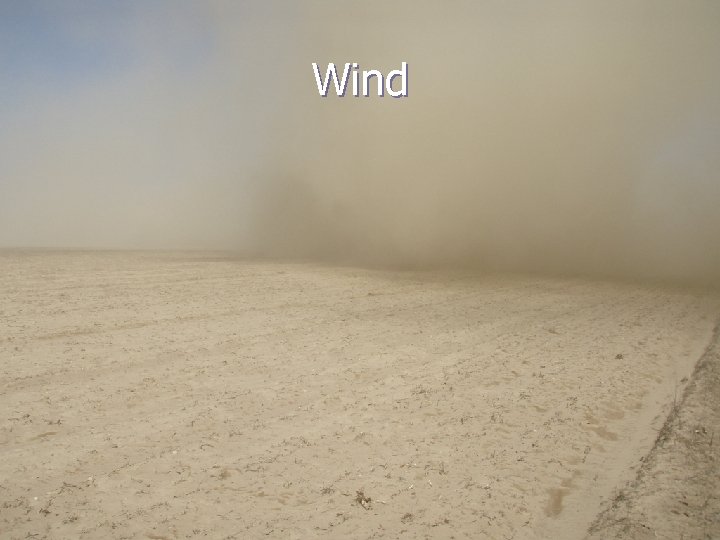
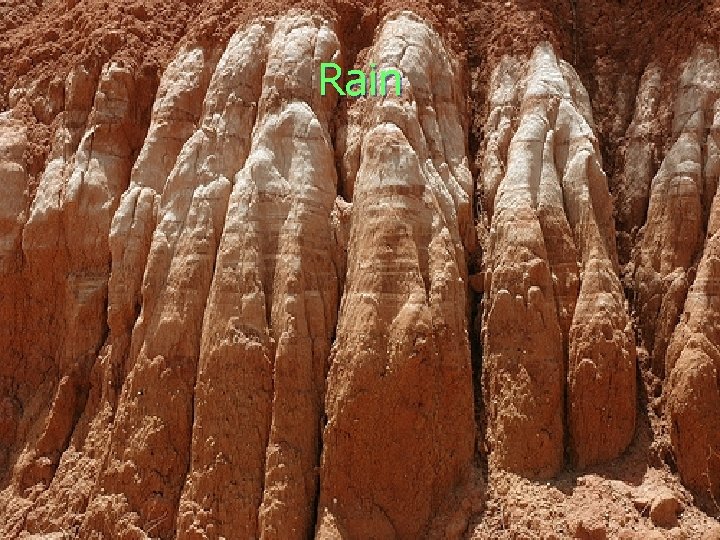
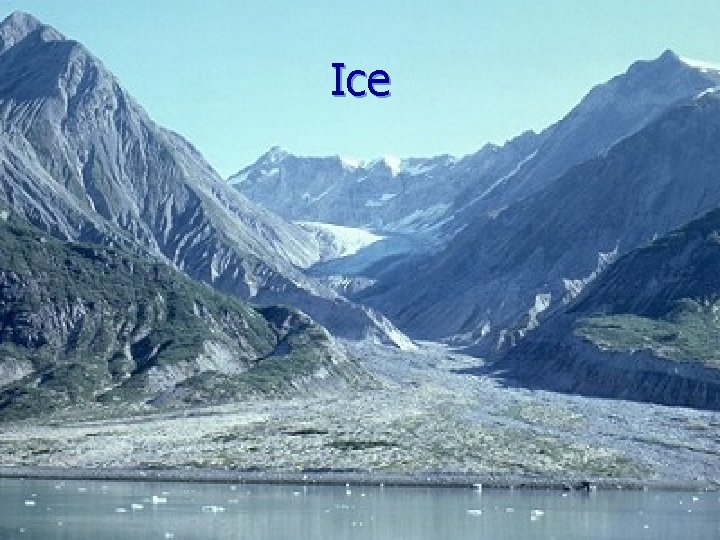
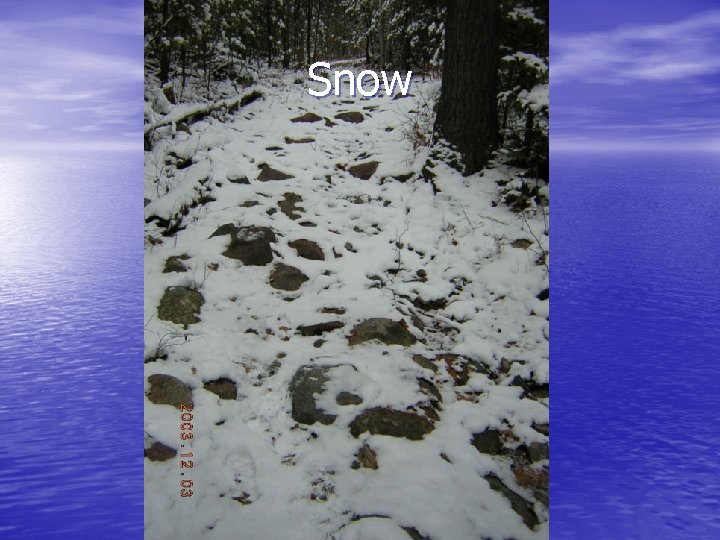
Erosion can be caused by: • Wind • Rain • Ice • Snow
Wind
Rain
Ice
Snow
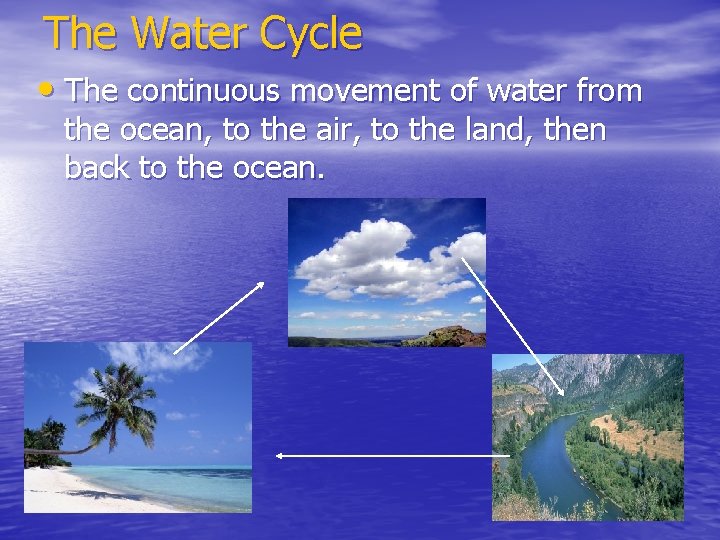
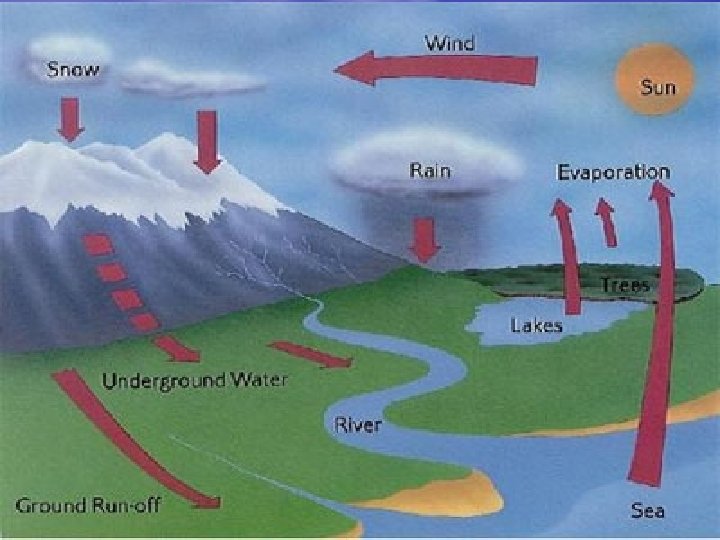
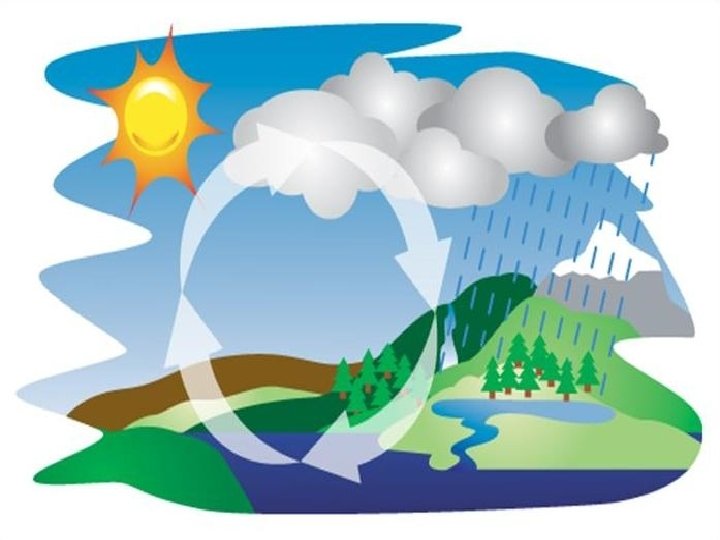
The Water Cycle • The continuous movement of water from the ocean, to the air, to the land, then back to the ocean.
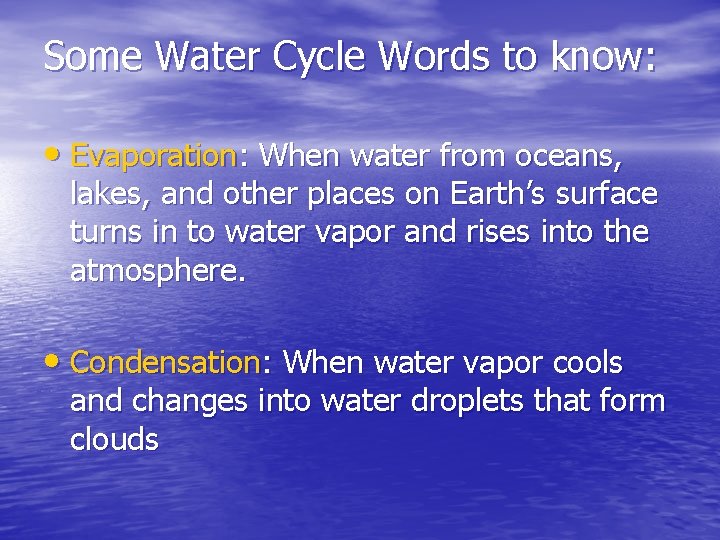
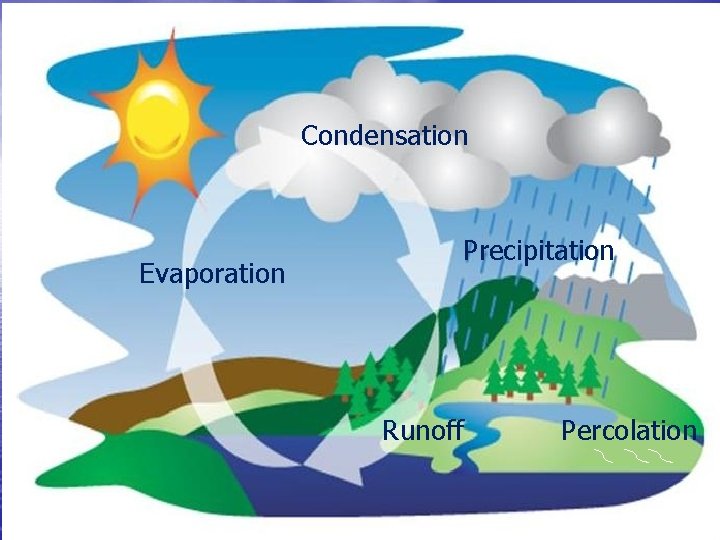
Some Water Cycle Words to know: • Evaporation: When water from oceans, lakes, and other places on Earth’s surface turns in to water vapor and rises into the atmosphere. • Condensation: When water vapor cools and changes into water droplets that form clouds
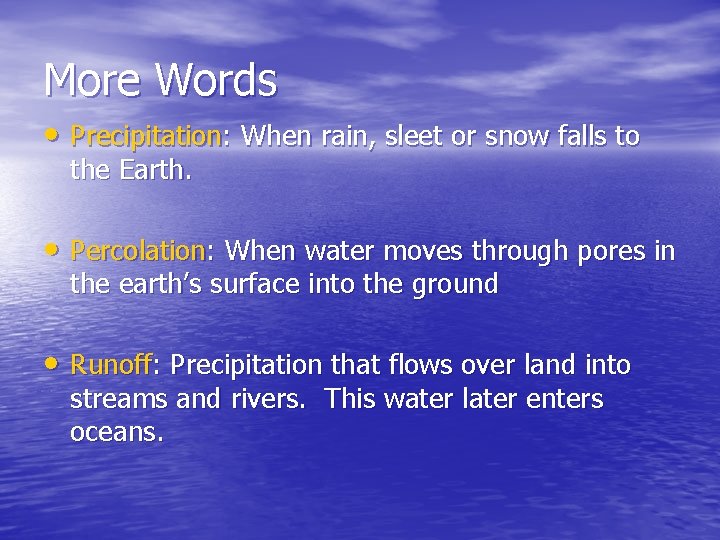
More Words • Precipitation: When rain, sleet or snow falls to the Earth. • Percolation: When water moves through pores in the earth’s surface into the ground • Runoff: Precipitation that flows over land into streams and rivers. This water later enters oceans.
Now you try! On the next slide, label all of the words below. • Evaporation • Condensation • Percolation • Runoff • Precipitation
Condensation Evaporation Precipitation Runoff Percolation
Think about it! • How does the water cycle help develop river systems?
Think about it! • How does the water cycle help develop river systems? – The water cycle causes continuous movement of water between the Earth’s surface and the atmosphere. The flow of water to the oceans creates river systems.
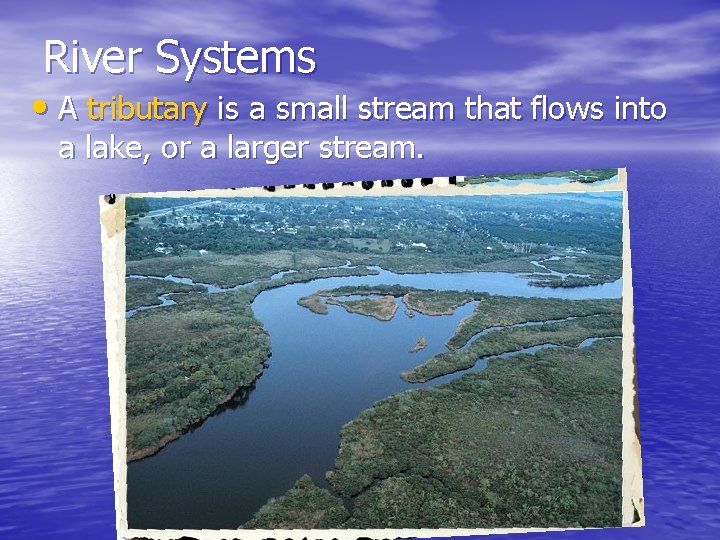
River Systems • A tributary is a small stream that flows into a lake, or a larger stream.
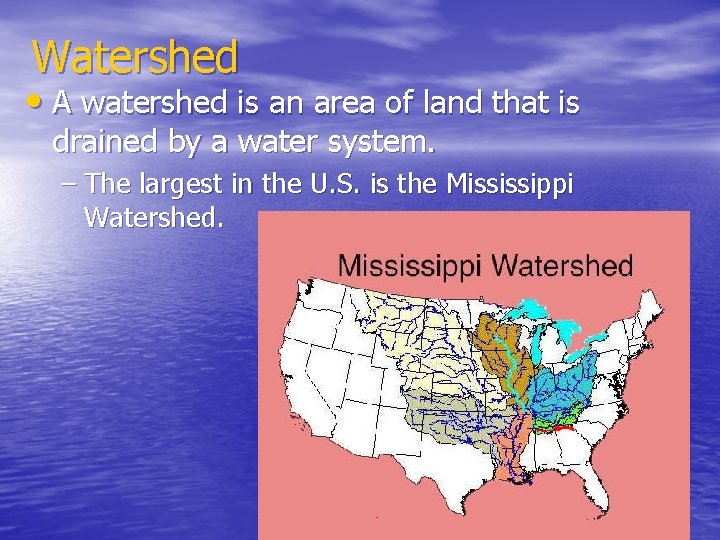
Watershed • A watershed is an area of land that is drained by a water system. – The largest in the U. S. is the Mississippi Watershed.
Think about it! • Which of the following drains a watershed? – a. – b. – c. – d. A divide A drainage basin A tributary A water system
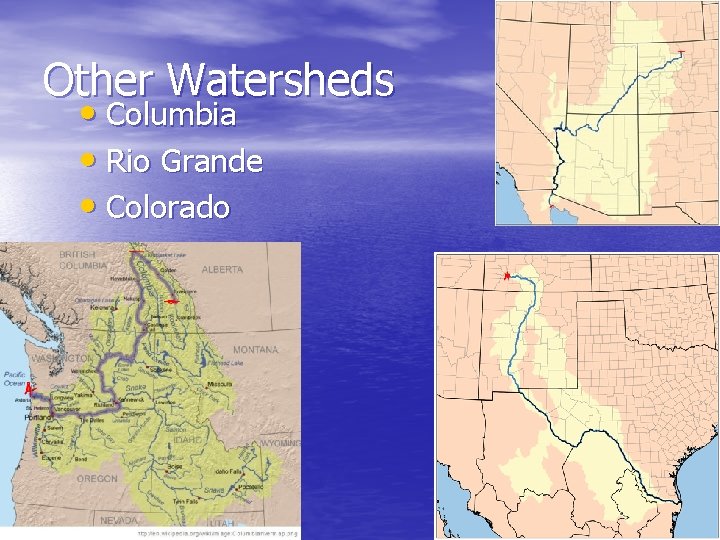
Other Watersheds • Columbia • Rio Grande • Colorado
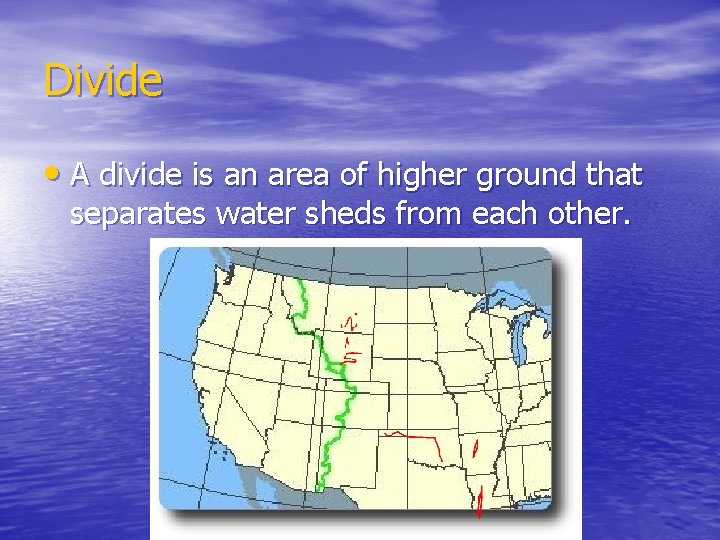
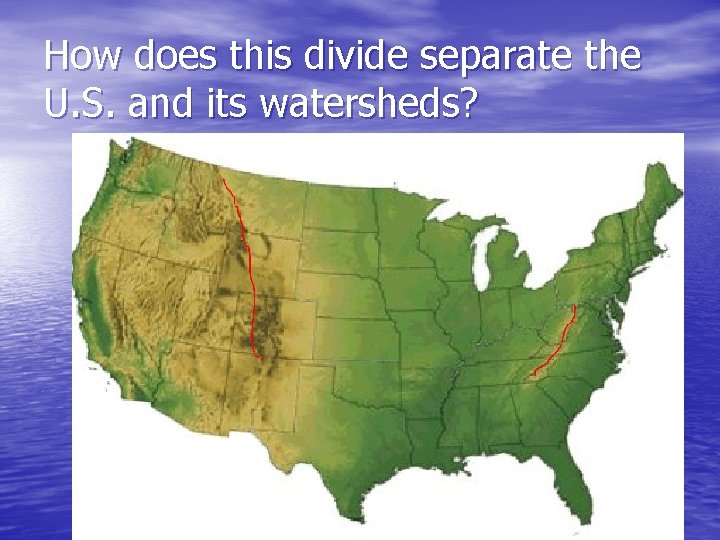
Divide • A divide is an area of higher ground that separates water sheds from each other.
How does this divide separate the U. S. and its watersheds?
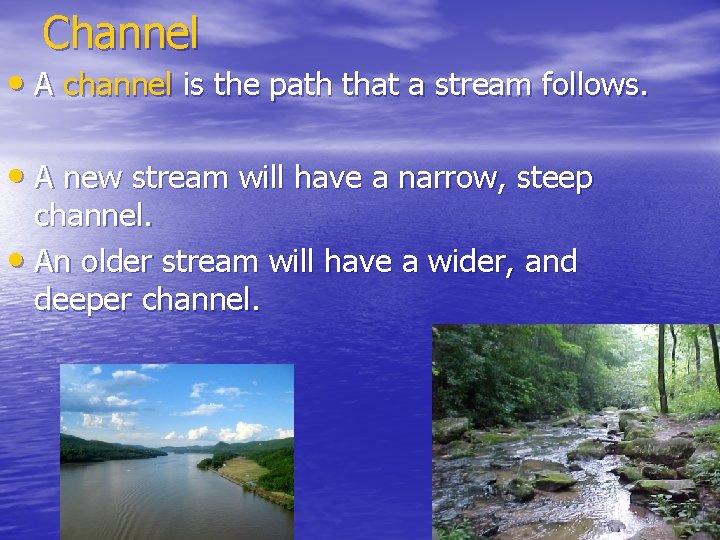
Channel • A channel is the path that a stream follows. • A new stream will have a narrow, steep channel. • An older stream will have a wider, and deeper channel.
The Ability to Erode • Gradient: Measure of change in elevation over a certain distance • Discharge: The amount of water a stream or river carries • Load: The material carried by a stream
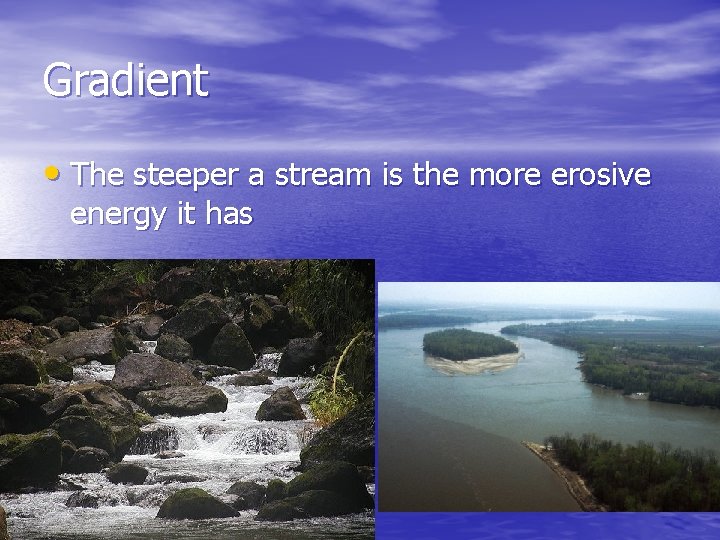
Gradient • The steeper a stream is the more erosive energy it has
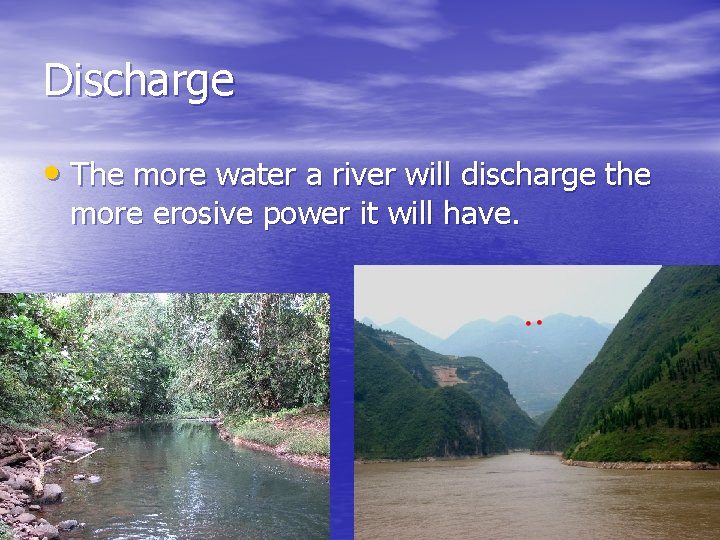
Discharge • The more water a river will discharge the more erosive power it will have.
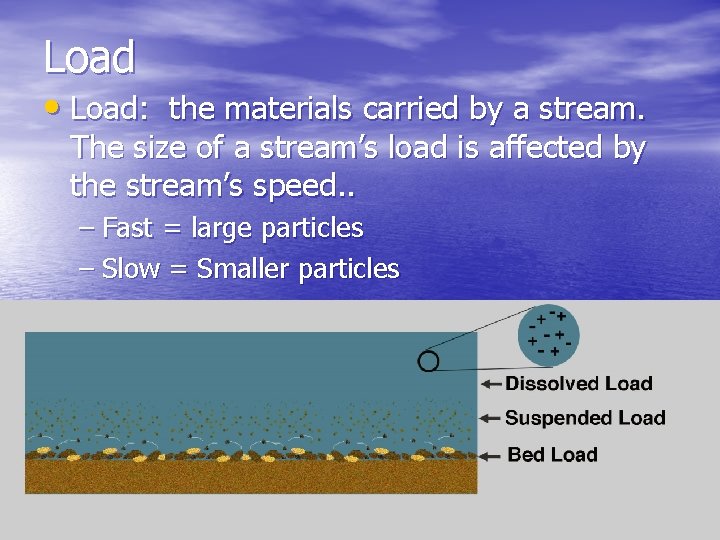
Load • Load: the materials carried by a stream. The size of a stream’s load is affected by the stream’s speed. . – Fast = large particles – Slow = Smaller particles
Think about it! • What are three factors that affect the rate of stream erosion?
Think about it! • What are three factors that affect the rate of stream erosion? – Gradient, Discharge, and Load
Stages of a River • Rivers go through a “life cycle. ” • Youthful • Mature • Old
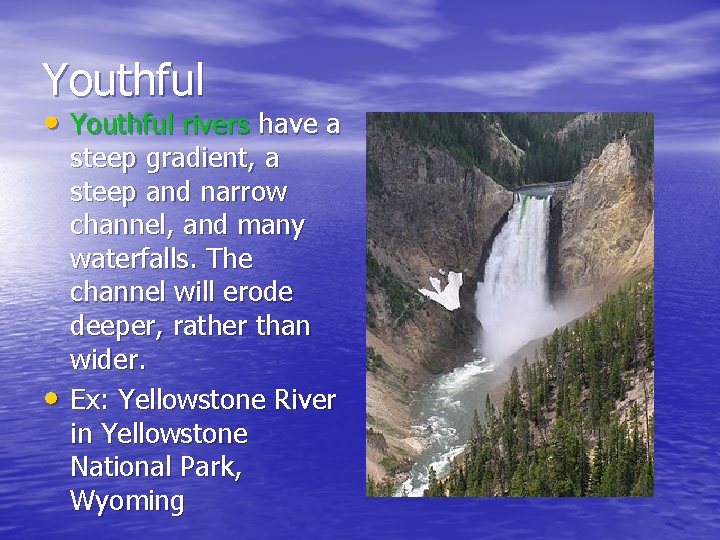
Youthful • Youthful rivers have a • steep gradient, a steep and narrow channel, and many waterfalls. The channel will erode deeper, rather than wider. Ex: Yellowstone River in Yellowstone National Park, Wyoming
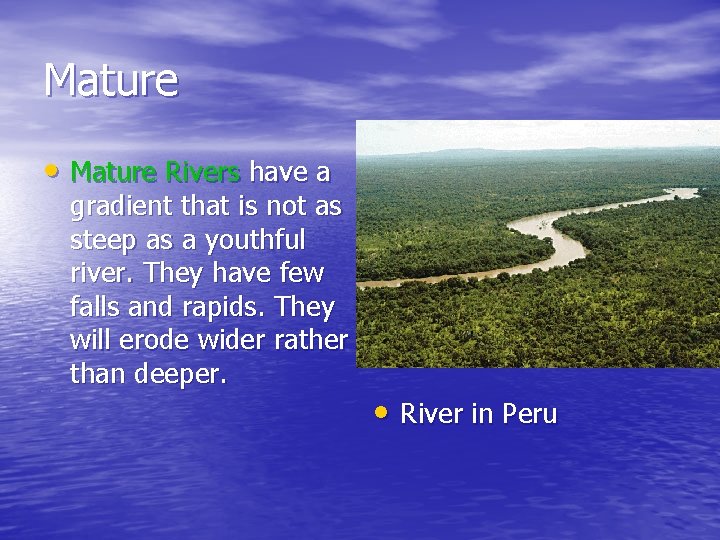
Mature • Mature Rivers have a gradient that is not as steep as a youthful river. They have few falls and rapids. They will erode wider rather than deeper. • River in Peru
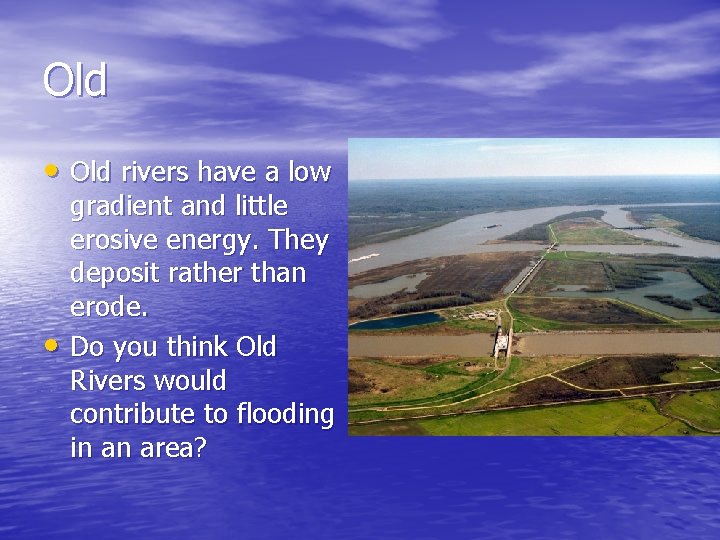
Old • Old rivers have a low • gradient and little erosive energy. They deposit rather than erode. Do you think Old Rivers would contribute to flooding in an area?
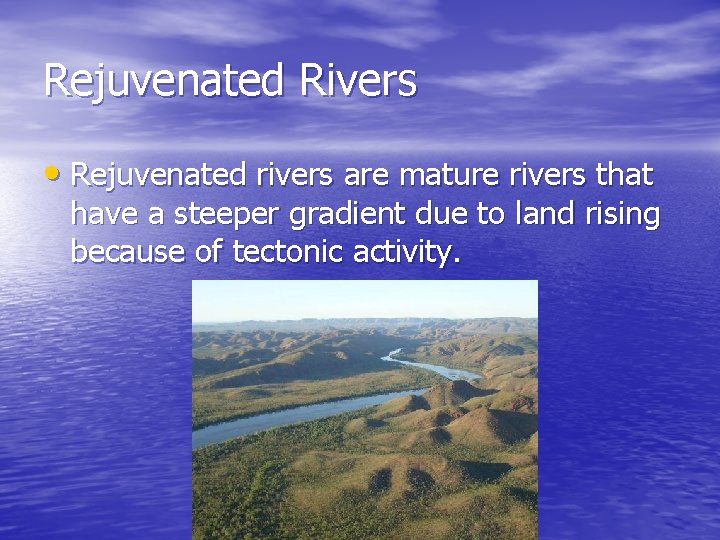
Rejuvenated Rivers • Rejuvenated rivers are mature rivers that have a steeper gradient due to land rising because of tectonic activity.
Think about it! • Which stage of river development is characterized by flat flood plains?
Think about it! • Which stage of river development is characterized by flat flood plains? – Old rivers