
The Flood of the Century Red River Valley
- Slides: 14
The Flood of the Century Red River Valley, Southern Manitoba Spring 1997
Lesson 1 Water on Earth Slides # 3 -14
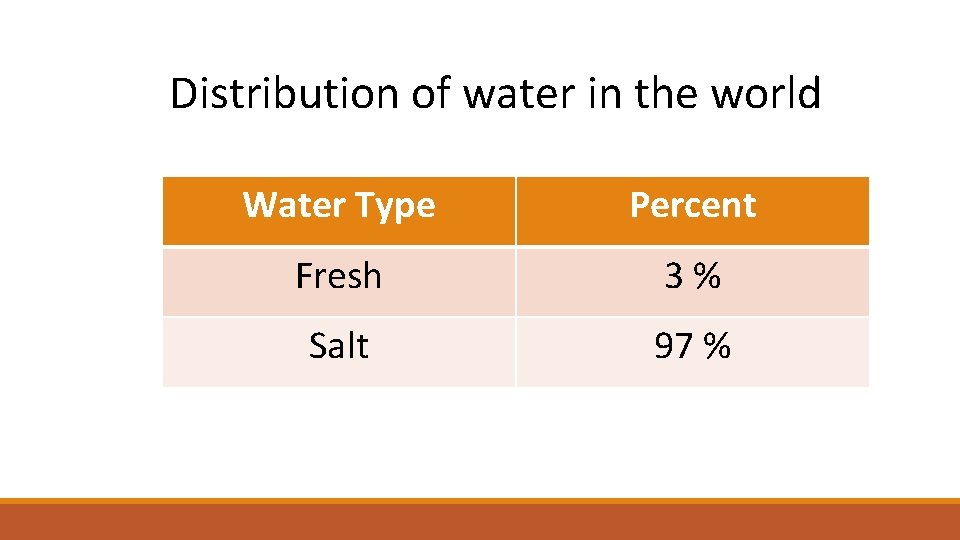
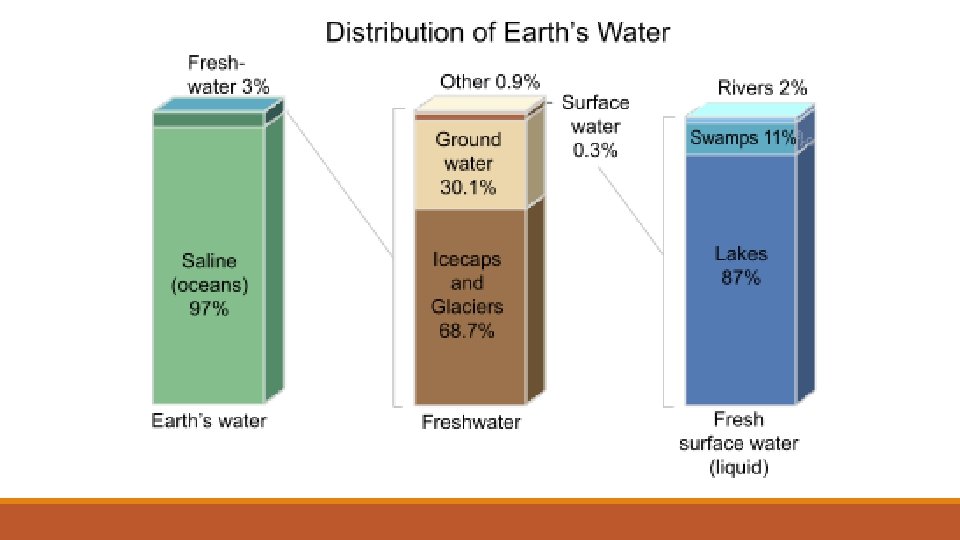
Distribution of water in the world Water Type Percent Fresh 3% Salt 97 %
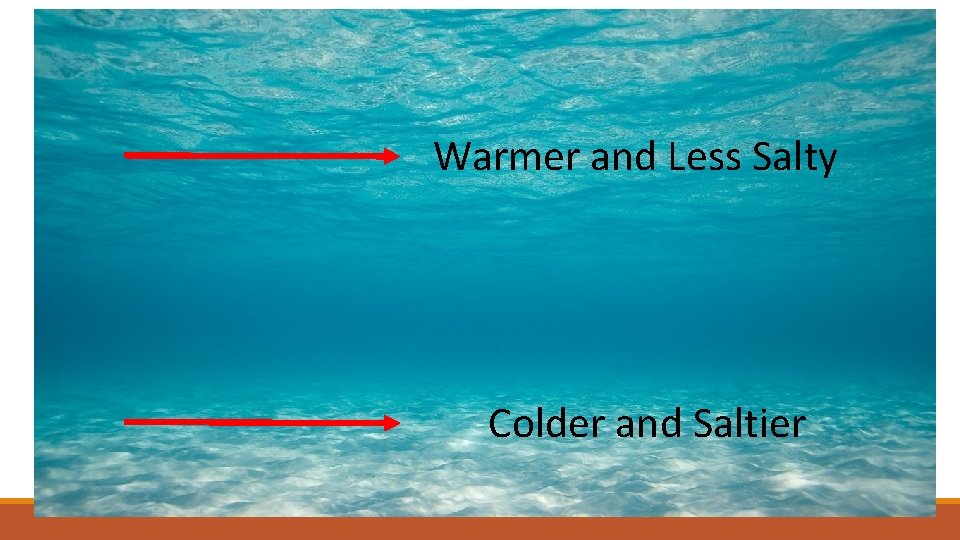
The Difference Between Fresh and Saltwater The average salinity (saltiness) of ocean water is 3. 5 percent which means that 35 grams of salt dissolve in a liter of seawater. The salinity of different bodies of water prevent organisms from thriving in both salt water and fresh water. Some plants and animals survive in one type of water but not the other. Another considerable difference between the two is their density. Salt water has a higher density than fresh water because of the sodium chloride it contains. Furthermore, cold salt water is denser than warm salt water, but it becomes less dense when water freezes into ice. The boiling point of seawater is higher than that of pure water, and its freezing point is lower. The density of salt water is 1. 025, while fresh water’s density is 1. 0. Objects float more easily in salt water than in fresh water. Humans typically find it easy to float in seawater but not in fresh water.
Warmer and Less Salty Colder and Saltier
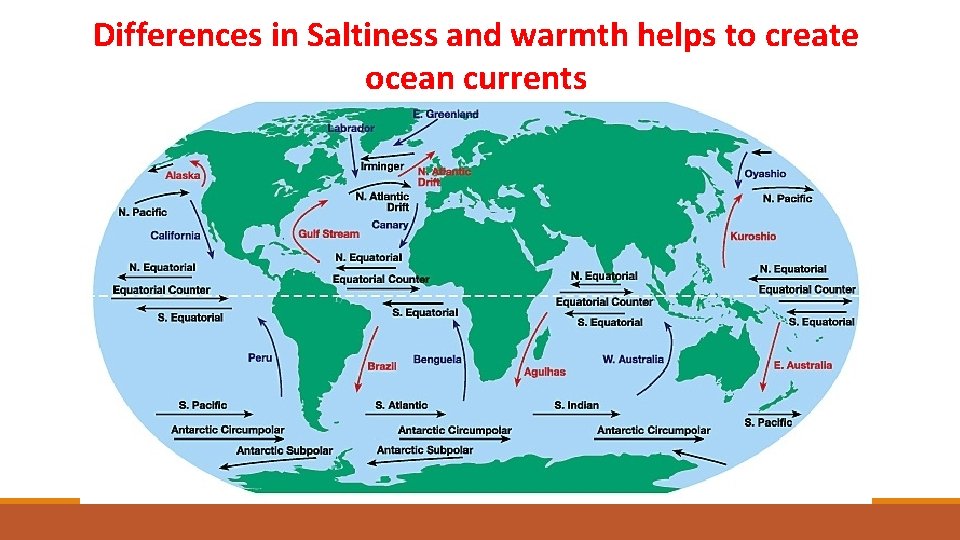
Differences in Saltiness and warmth helps to create ocean currents
You might remember one famous ocean current
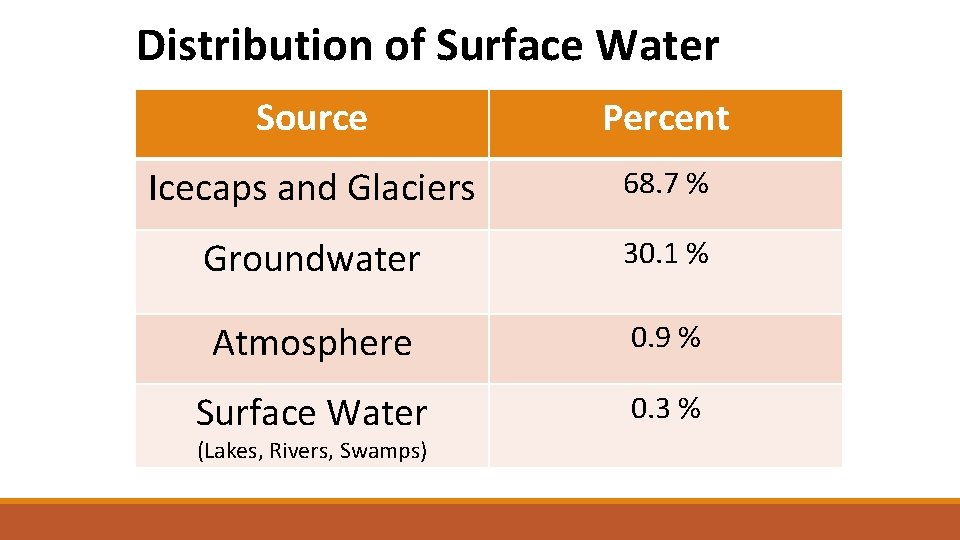
Distribution of Surface Water Source Percent Icecaps and Glaciers 68. 7 % Groundwater 30. 1 % Atmosphere 0. 9 % Surface Water 0. 3 % (Lakes, Rivers, Swamps)
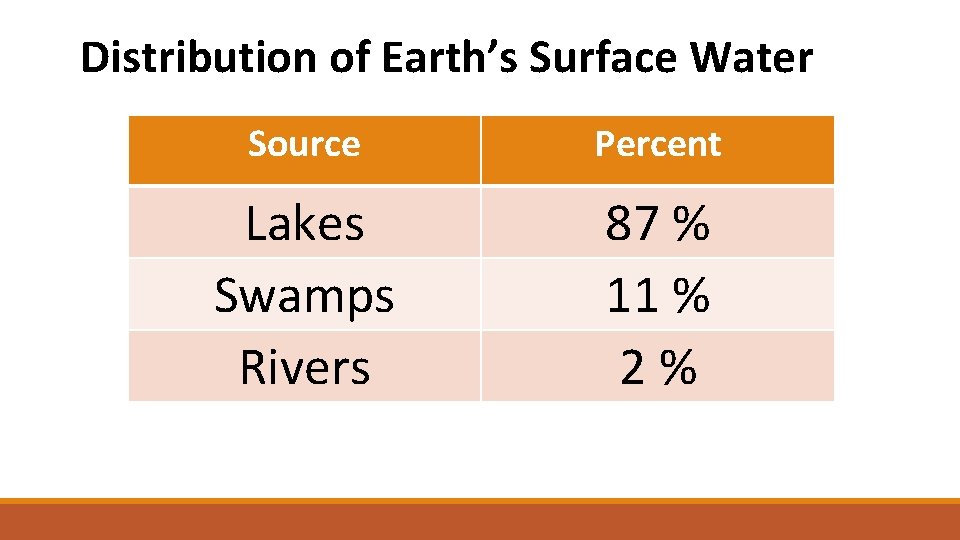
Distribution of Earth’s Surface Water Source Percent Lakes Swamps Rivers 87 % 11 % 2%
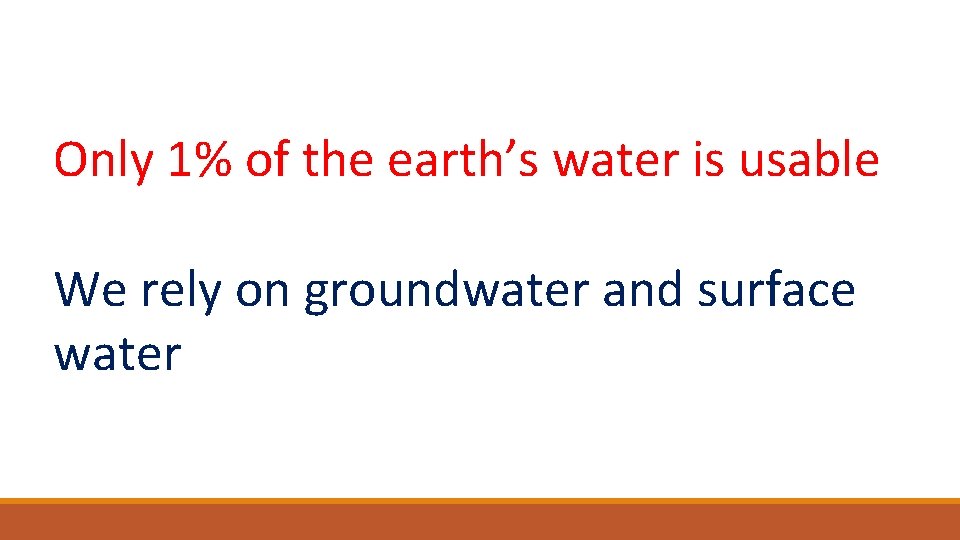
Only 1% of the earth’s water is usable We rely on groundwater and surface water
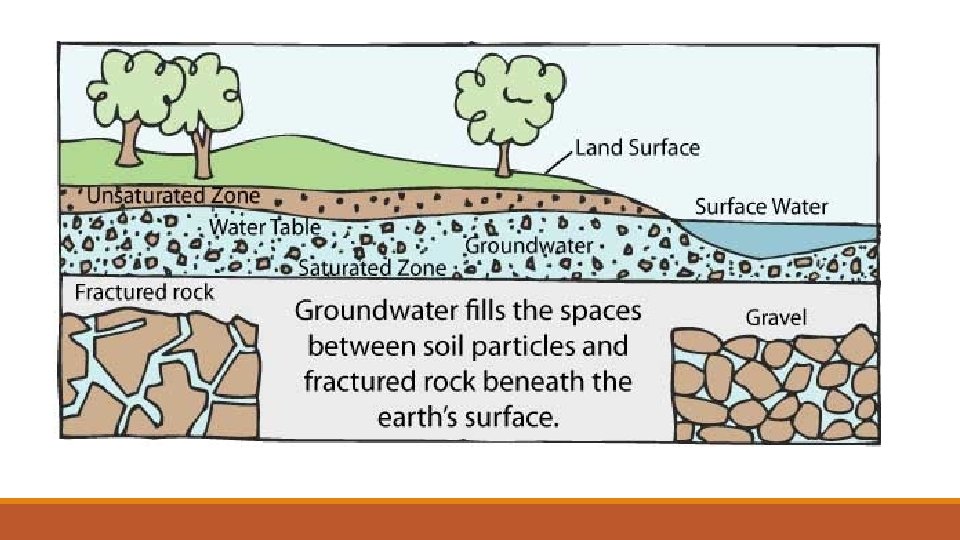
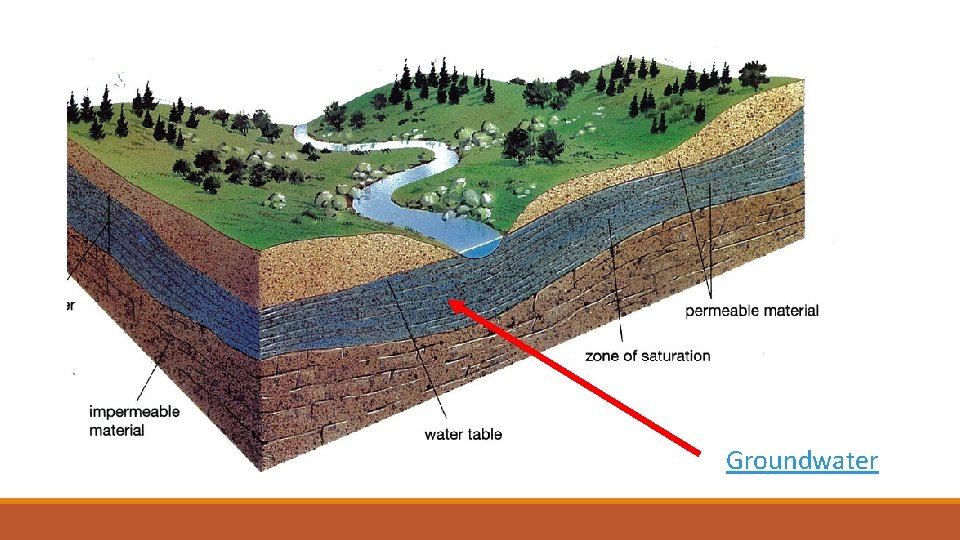
Groundwater