
THE FLIGHT ENVELOPE WHY WE NEED TO DEFINE
- Slides: 11
THE FLIGHT ENVELOPE • WHY WE NEED TO DEFINE LIMITS • THE MANOEUVRING ENVELOPE • DESIGN DIVE SPEED • MANOEUVRING AND ROUGH AIR • GUSTS AND LAUNCHING STRESSES • PLACARD LIMITS • ALTITUDE • FLAPS / AIRBRAKES
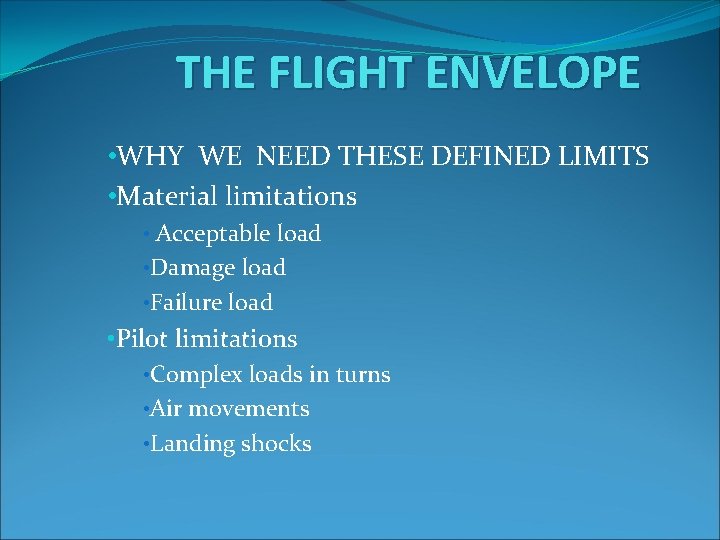
THE FLIGHT ENVELOPE • WHY WE NEED THESE DEFINED LIMITS • Material limitations • Acceptable load • Damage load • Failure load • Pilot limitations • Complex loads in turns • Air movements • Landing shocks
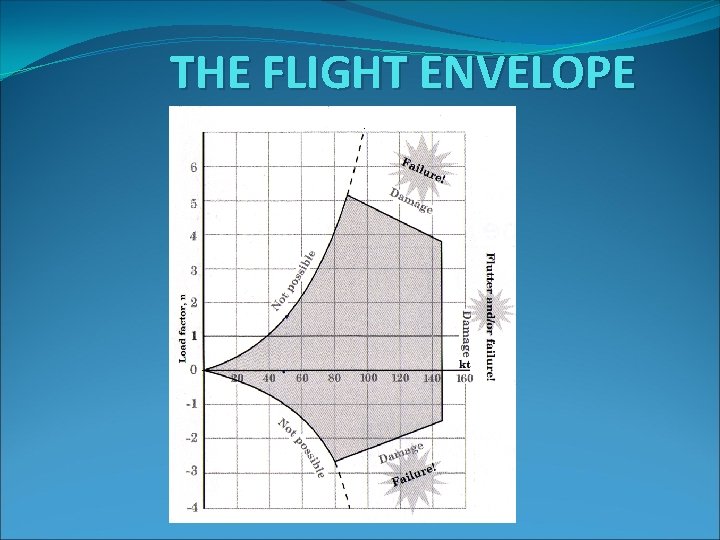
THE FLIGHT ENVELOPE
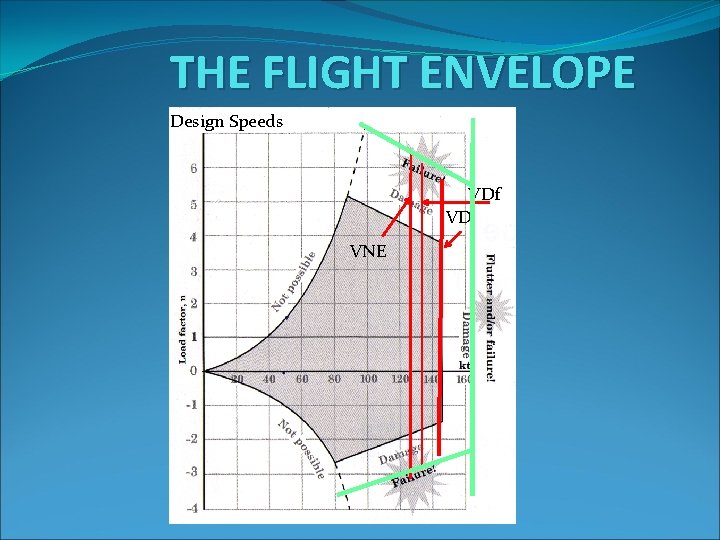
THE FLIGHT ENVELOPE Design Speeds VDf VD VNE
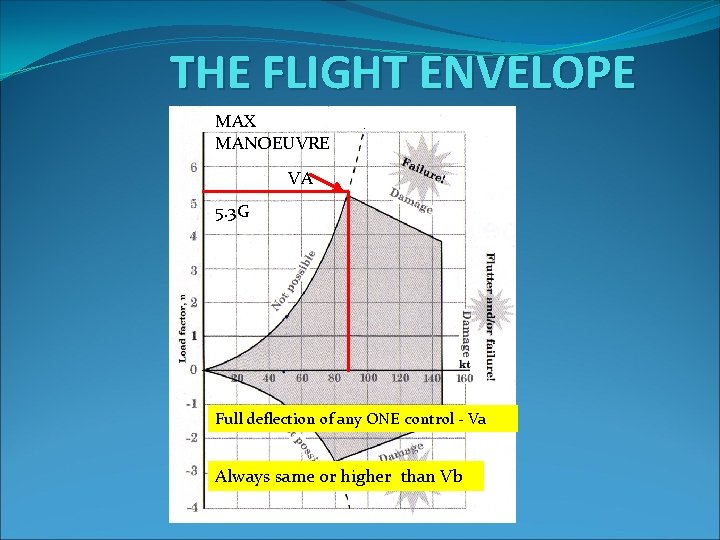
THE FLIGHT ENVELOPE MAX MANOEUVRE VA 5. 3 G Full deflection of any ONE control - Va Always same or higher than Vb
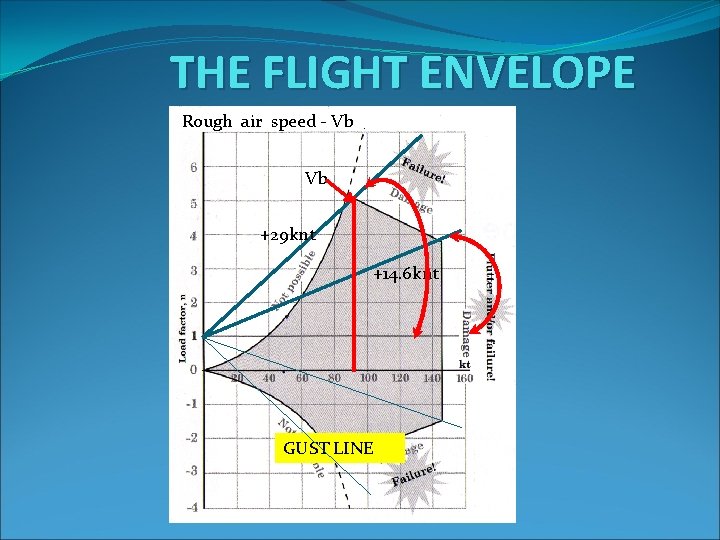
THE FLIGHT ENVELOPE Rough air speed - Vb Vb +29 knt +14. 6 knt GUST LINE
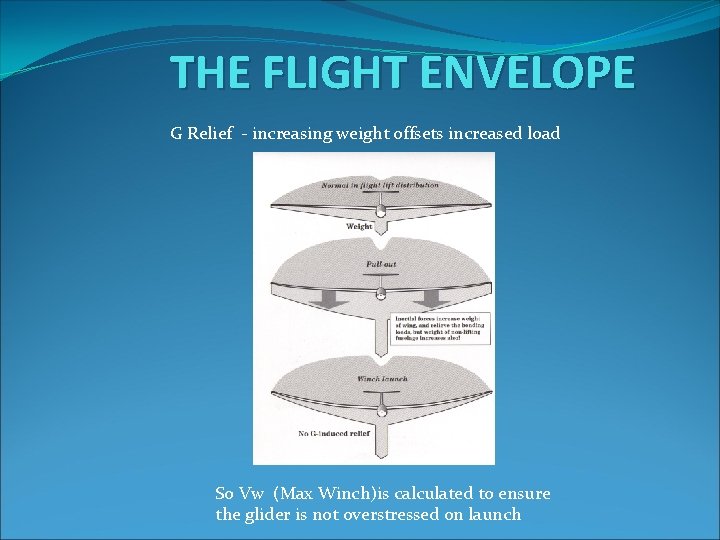
THE FLIGHT ENVELOPE G Relief - increasing weight offsets increased load So Vw (Max Winch)is calculated to ensure the glider is not overstressed on launch
THE FLIGHT ENVELOPE The Aircraft Placard • Velocities • Vne (Never exceed ) • Va ( Max Manoeuvring ) • Vb (Rough Air) • Vw / Vt ( Max winch and max aerotow) • Weights • Aerobatic Category
THE FLIGHT ENVELOPE Effect of Altitude • ASI measures air not speed • Air gets thinner so ASI underreads • 1. 5%/1000 ft • Lift is function of air density • Flutter (Dg 300)is related to air velocity not density(amount) • Vne is a fixed value, not related to air density
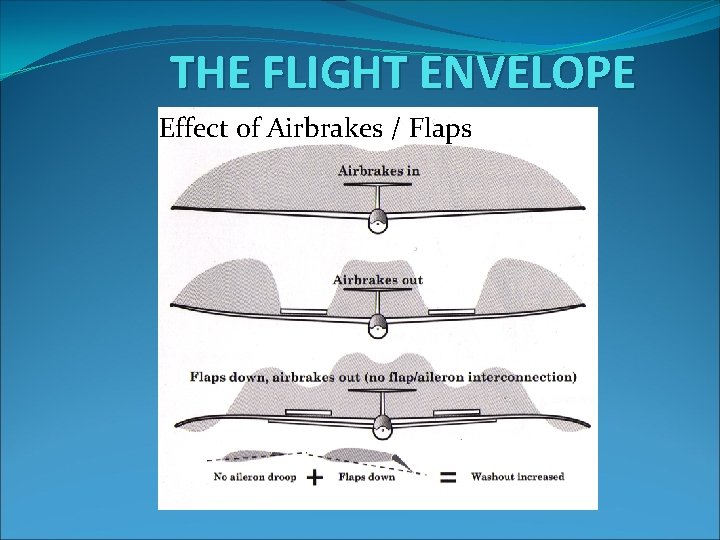
THE FLIGHT ENVELOPE Effect of Airbrakes / Flaps
THE FLIGHT ENVELOPE • WHY WE DEFINE LIMITS • THE MANOEUVRING ENVELOPE • DESIGN SPEEDS • MANOEUVRING AND ROUGH AIR • GUSTS AND LAUNCHING STRESSES • PLACARD LIMITS • ALTITUDE • FLAPS / AIRBRAKES QUESTIONS