
The Five Major World Religions Judaism Brief History
The Five Major World Religions
Judaism
Brief History p Judaism- The Hebrew leader Abraham founded Judaism in Mesopotamia around 1300 B. C. p Judaism is the oldest of the monotheistic faiths
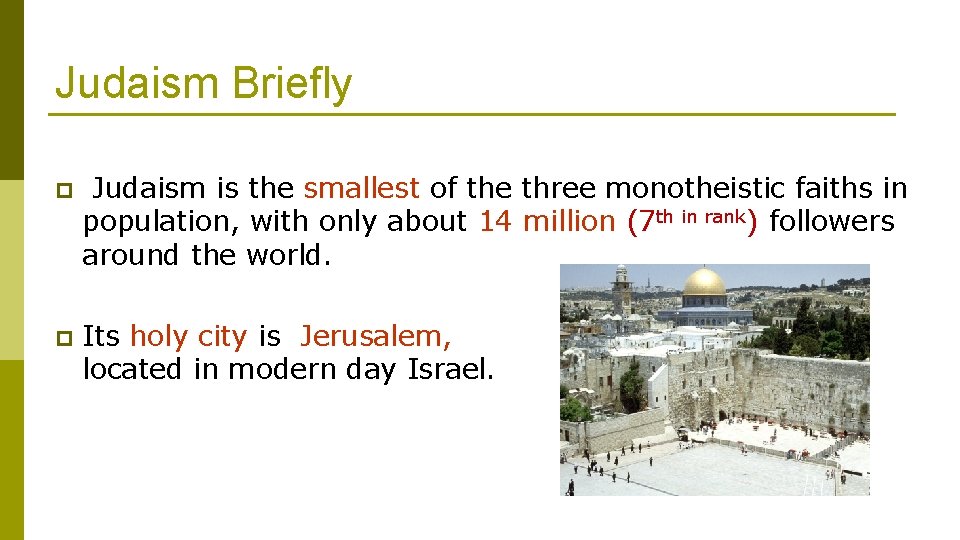
Judaism Briefly p Judaism is the smallest of the three monotheistic faiths in population, with only about 14 million (7 th in rank) followers around the world. p Its holy city is Jerusalem, located in modern day Israel.
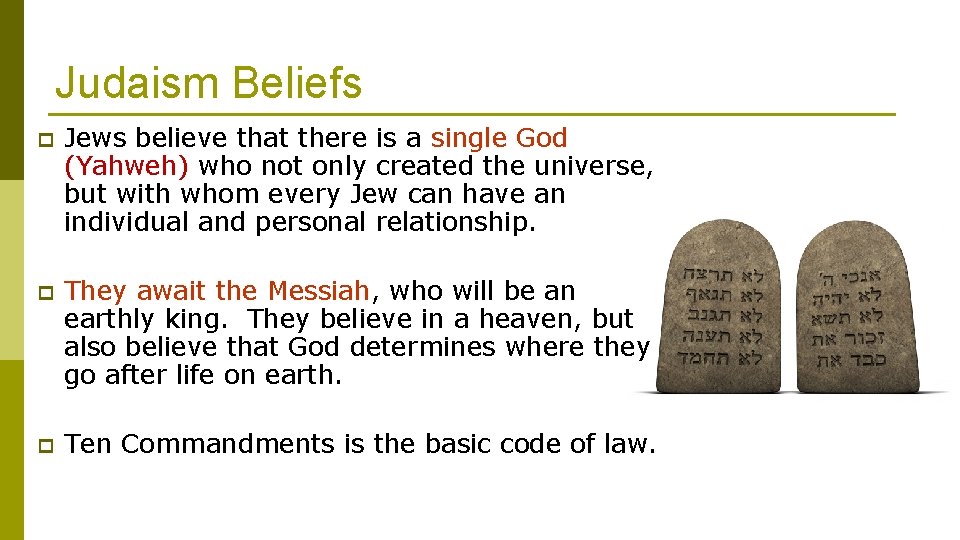
Judaism Beliefs p Jews believe that there is a single God (Yahweh) who not only created the universe, but with whom every Jew can have an individual and personal relationship. p They await the Messiah, who will be an earthly king. They believe in a heaven, but also believe that God determines where they go after life on earth. p Ten Commandments is the basic code of law.
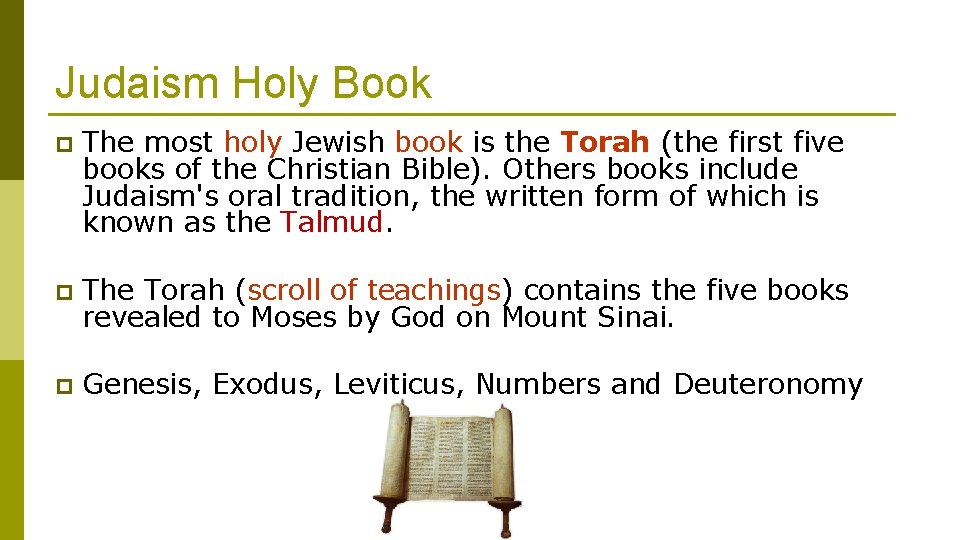
Judaism Holy Book p The most holy Jewish book is the Torah (the first five books of the Christian Bible). Others books include Judaism's oral tradition, the written form of which is known as the Talmud. p The Torah (scroll of teachings) contains the five books revealed to Moses by God on Mount Sinai. p Genesis, Exodus, Leviticus, Numbers and Deuteronomy
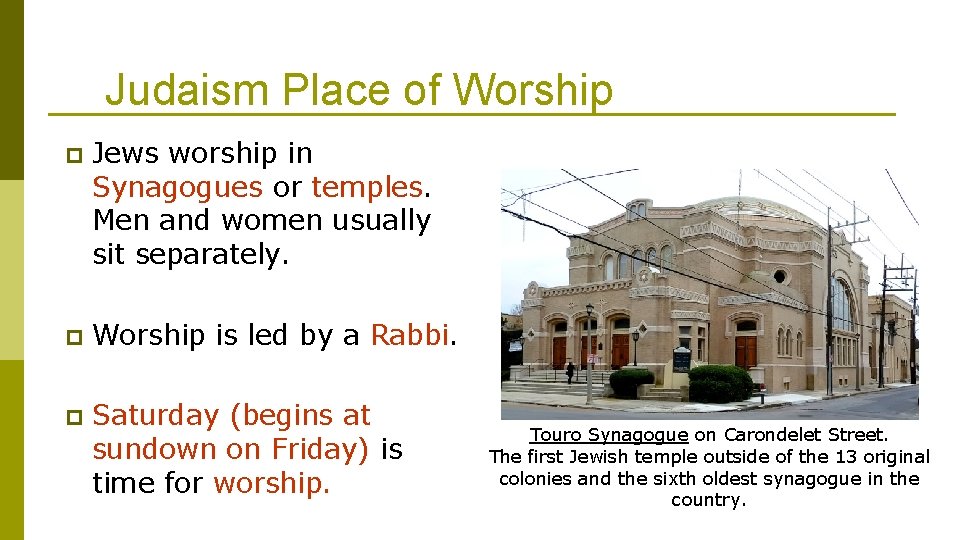
Judaism Place of Worship p Jews worship in Synagogues or temples. Men and women usually sit separately. p Worship is led by a Rabbi. p Saturday (begins at sundown on Friday) is time for worship. Touro Synagogue on Carondelet Street. The first Jewish temple outside of the 13 original colonies and the sixth oldest synagogue in the country.
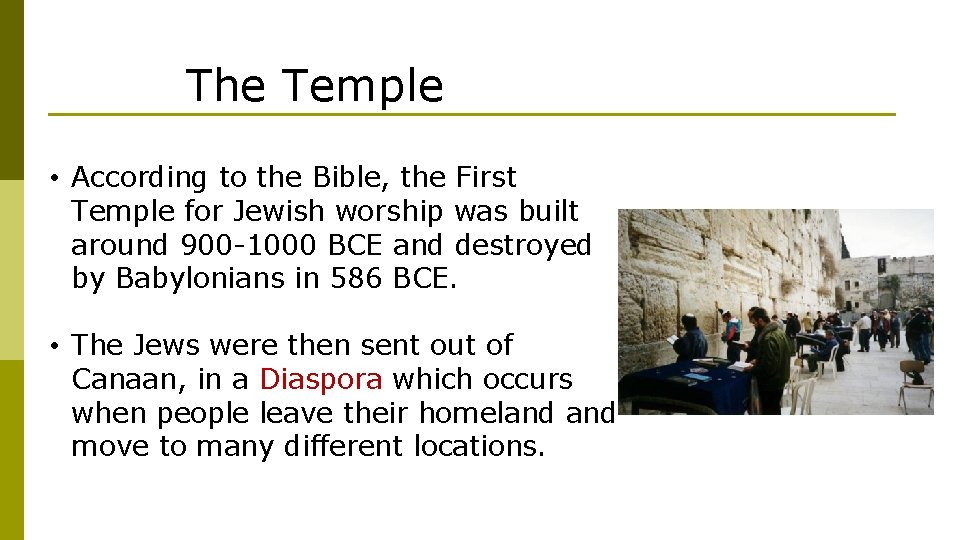
The Temple • According to the Bible, the First Temple for Jewish worship was built around 900 -1000 BCE and destroyed by Babylonians in 586 BCE. • The Jews were then sent out of Canaan, in a Diaspora which occurs when people leave their homeland move to many different locations.
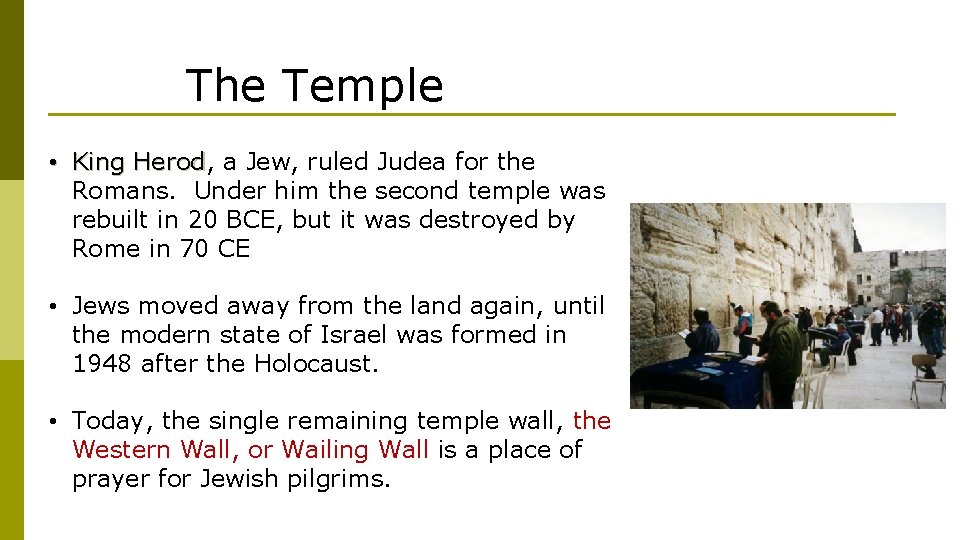
The Temple • King Herod, Herod a Jew, ruled Judea for the Romans. Under him the second temple was rebuilt in 20 BCE, but it was destroyed by Rome in 70 CE • Jews moved away from the land again, until the modern state of Israel was formed in 1948 after the Holocaust. • Today, the single remaining temple wall, the Western Wall, or Wailing Wall is a place of prayer for Jewish pilgrims.

Judaism – Map! Judaism Today Video Top Three population centers today in Israel, U. S. and France
Christianit y
Christianity briefly p Christianity is the world's largest religion, with about 2. 2 billion followers worldwide. p It is based on the teachings of Jesus Christ who lived and died in Judea (modern day Israel) 2, 000 years ago.
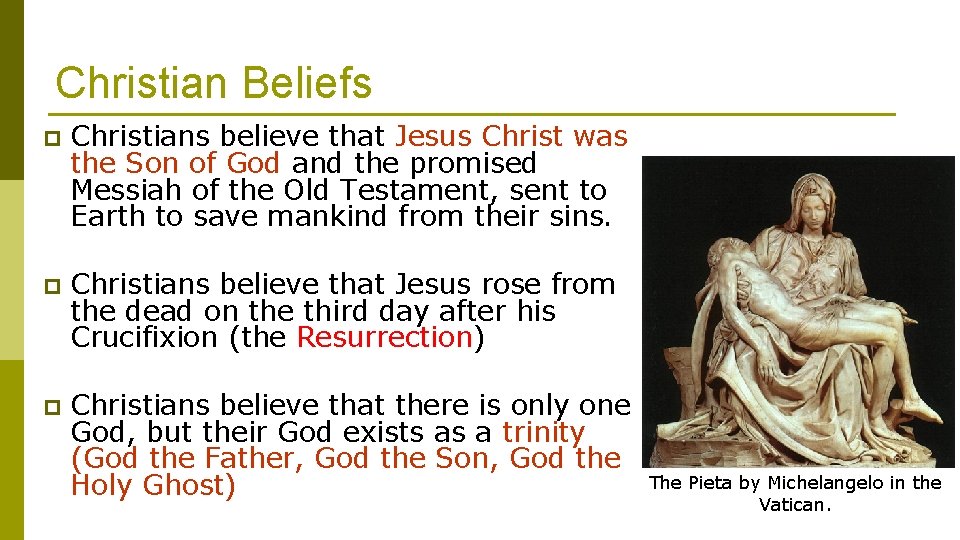
Christian Beliefs p Christians believe that Jesus Christ was the Son of God and the promised Messiah of the Old Testament, sent to Earth to save mankind from their sins. p Christians believe that Jesus rose from the dead on the third day after his Crucifixion (the Resurrection) p Christians believe that there is only one God, but their God exists as a trinity (God the Father, God the Son, God the Holy Ghost) The Pieta by Michelangelo in the Vatican.
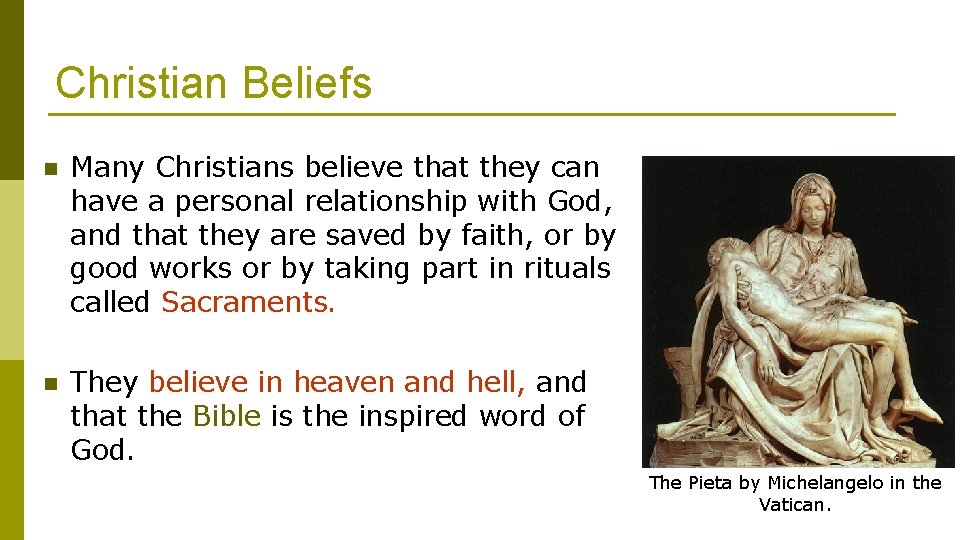
Christian Beliefs n Many Christians believe that they can have a personal relationship with God, and that they are saved by faith, or by good works or by taking part in rituals called Sacraments. n They believe in heaven and hell, and that the Bible is the inspired word of God. The Pieta by Michelangelo in the Vatican.
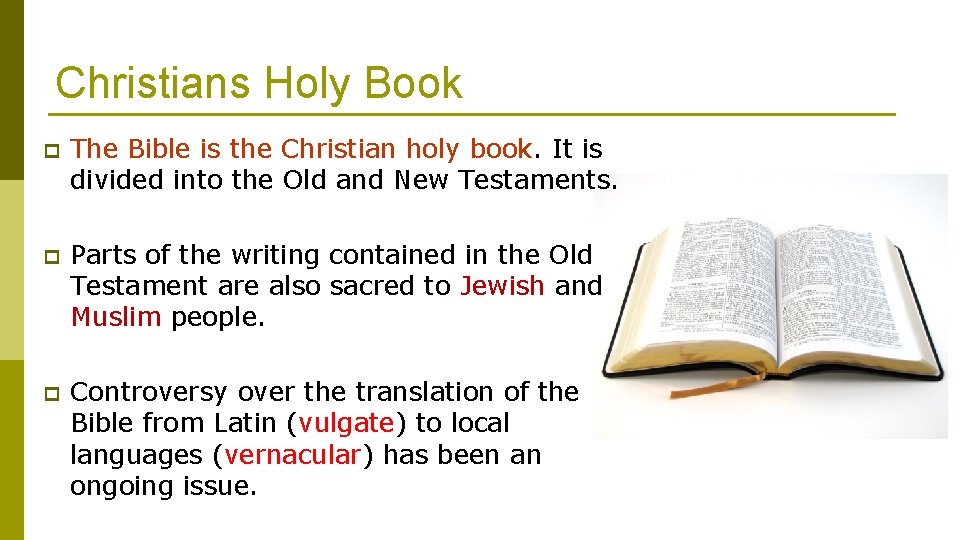
Christians Holy Book p The Bible is the Christian holy book. It is divided into the Old and New Testaments. p Parts of the writing contained in the Old Testament are also sacred to Jewish and Muslim people. p Controversy over the translation of the Bible from Latin (vulgate) to local languages (vernacular) has been an ongoing issue.
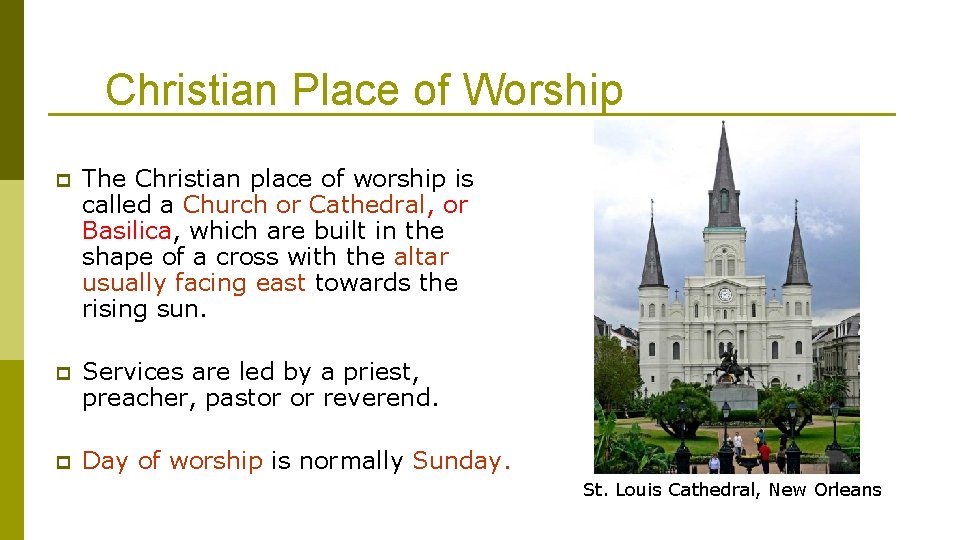
Christian Place of Worship p The Christian place of worship is called a Church or Cathedral, or Basilica, which are built in the shape of a cross with the altar usually facing east towards the rising sun. p Services are led by a priest, preacher, pastor or reverend. p Day of worship is normally Sunday. St. Louis Cathedral, New Orleans

Christian Sects
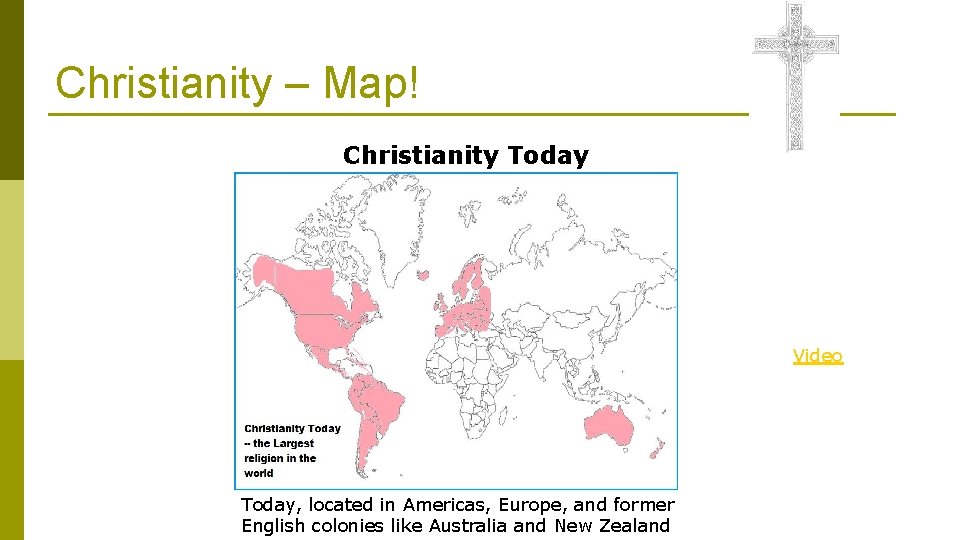
Christianity – Map! Christianity Today Video Today, located in Americas, Europe, and former English colonies like Australia and New Zealand
Islam 19
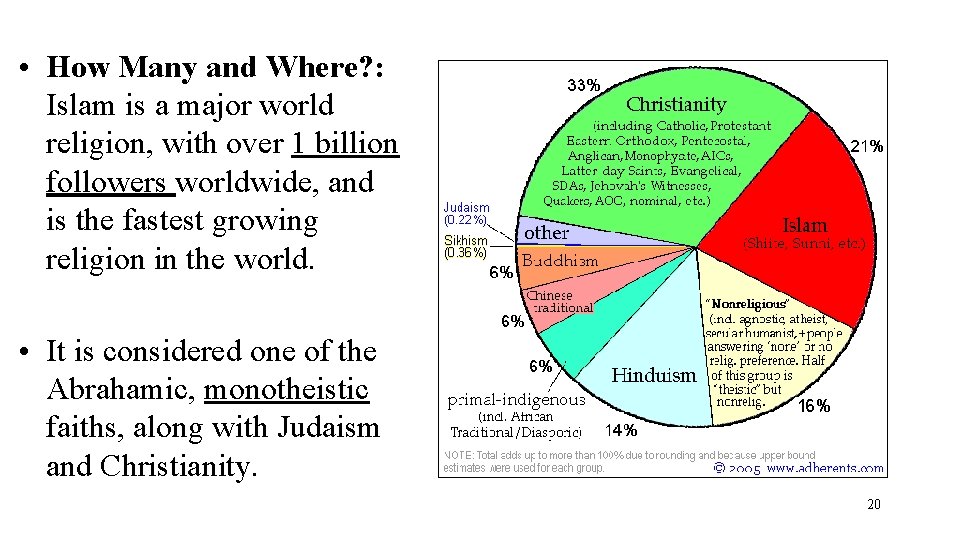
• How Many and Where? : Islam is a major world religion, with over 1 billion followers worldwide, and is the fastest growing religion in the world. • It is considered one of the Abrahamic, monotheistic faiths, along with Judaism and Christianity. 20
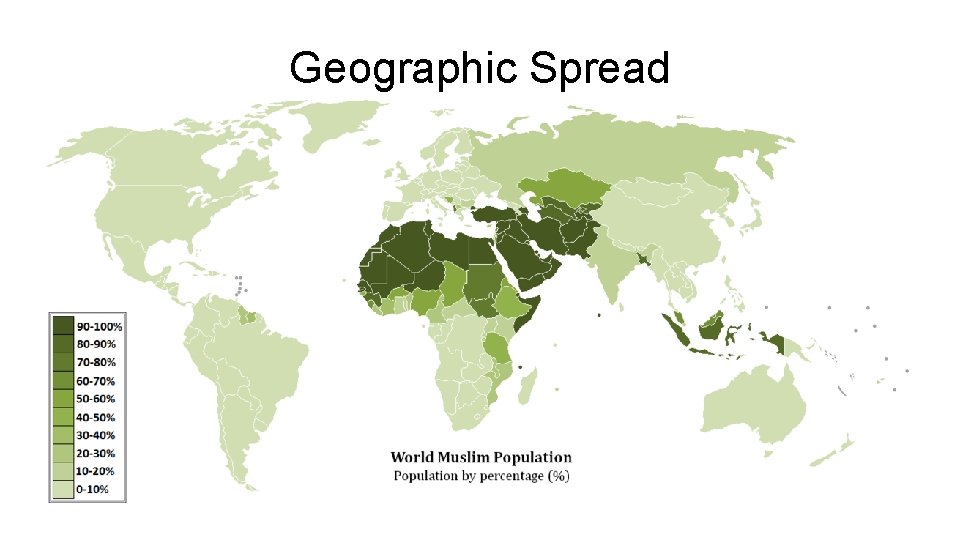
Geographic Spread 21
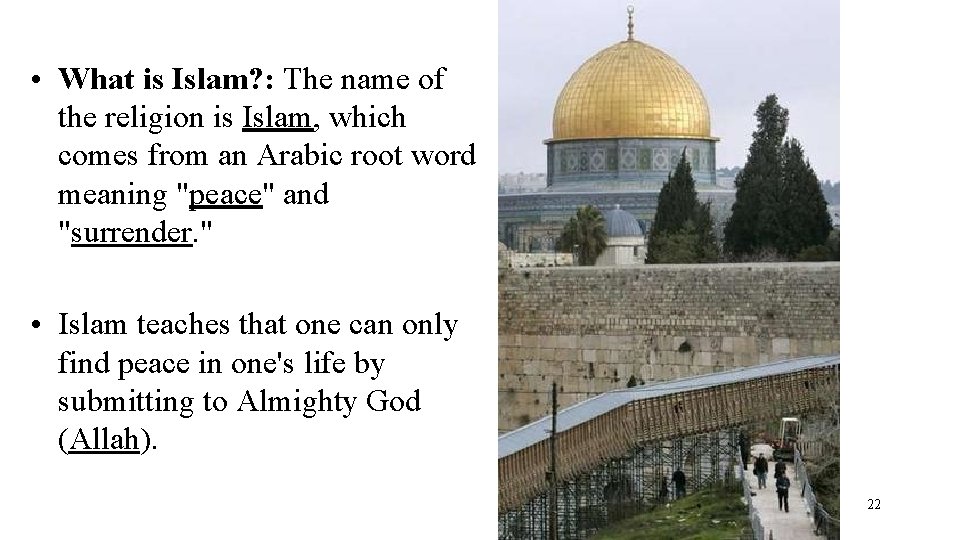
• What is Islam? : The name of the religion is Islam, which comes from an Arabic root word meaning "peace" and "surrender. " • Islam teaches that one can only find peace in one's life by submitting to Almighty God (Allah). 22
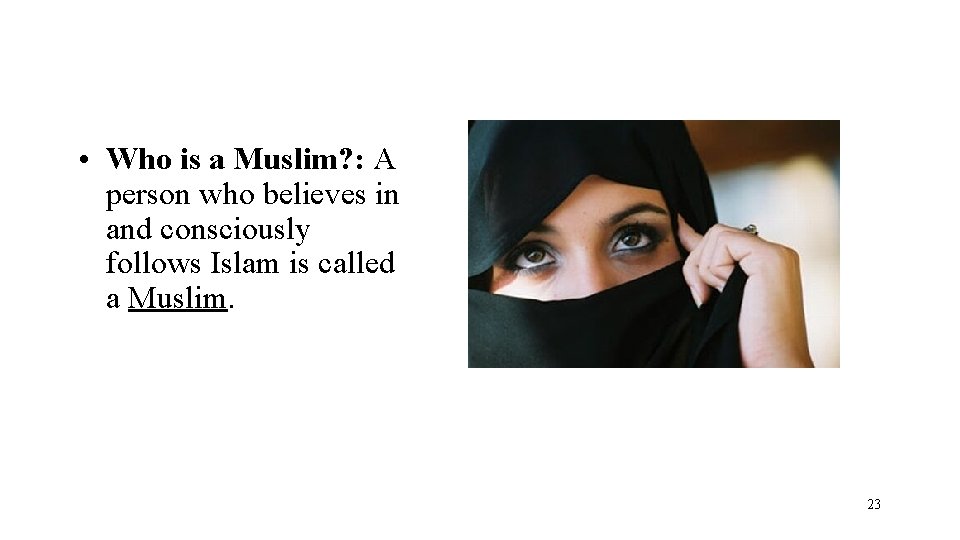
• Who is a Muslim? : A person who believes in and consciously follows Islam is called a Muslim. 23
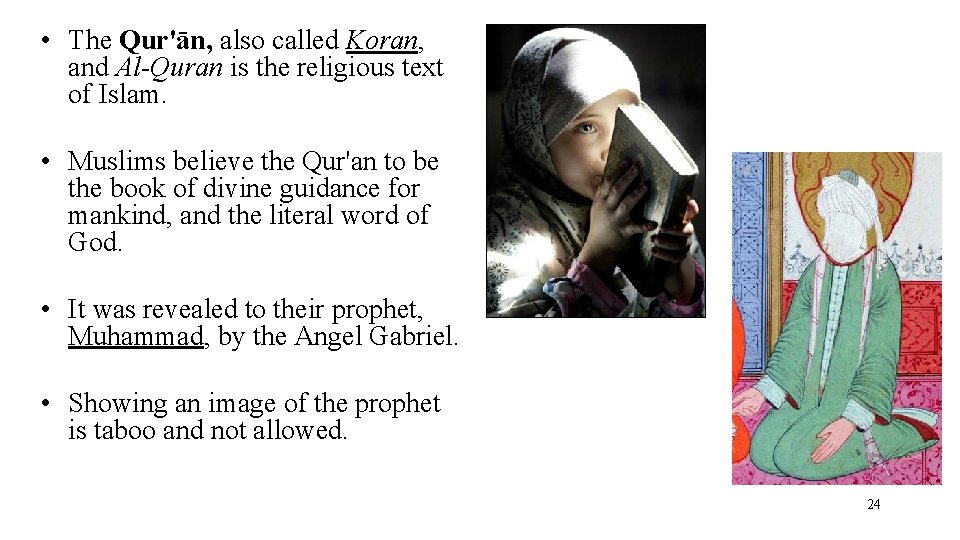
• The Qur'ān, also called Koran, and Al-Quran is the religious text of Islam. • Muslims believe the Qur'an to be the book of divine guidance for mankind, and the literal word of God. • It was revealed to their prophet, Muhammad, by the Angel Gabriel. • Showing an image of the prophet is taboo and not allowed. 24
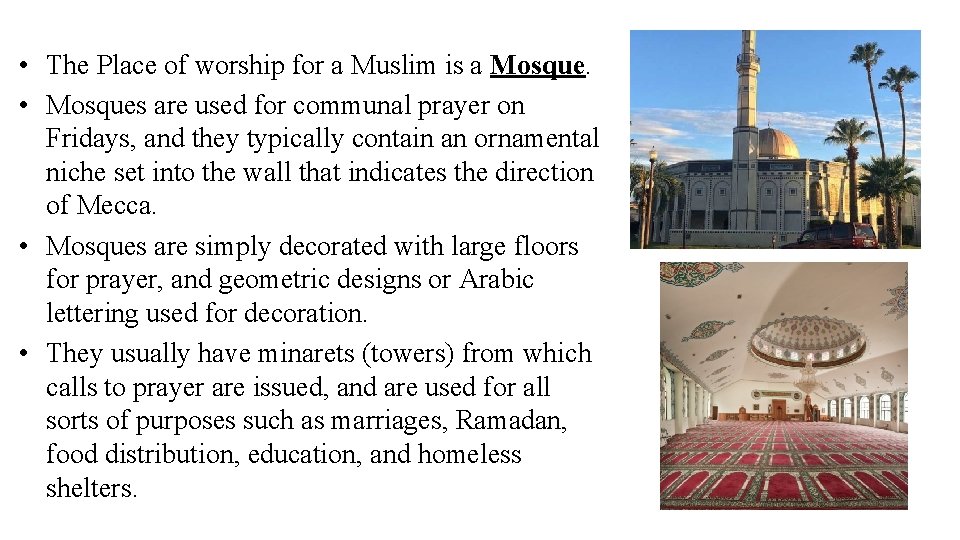
• The Place of worship for a Muslim is a Mosque. • Mosques are used for communal prayer on Fridays, and they typically contain an ornamental niche set into the wall that indicates the direction of Mecca. • Mosques are simply decorated with large floors for prayer, and geometric designs or Arabic lettering used for decoration. • They usually have minarets (towers) from which calls to prayer are issued, and are used for all sorts of purposes such as marriages, Ramadan, food distribution, education, and homeless shelters. 25
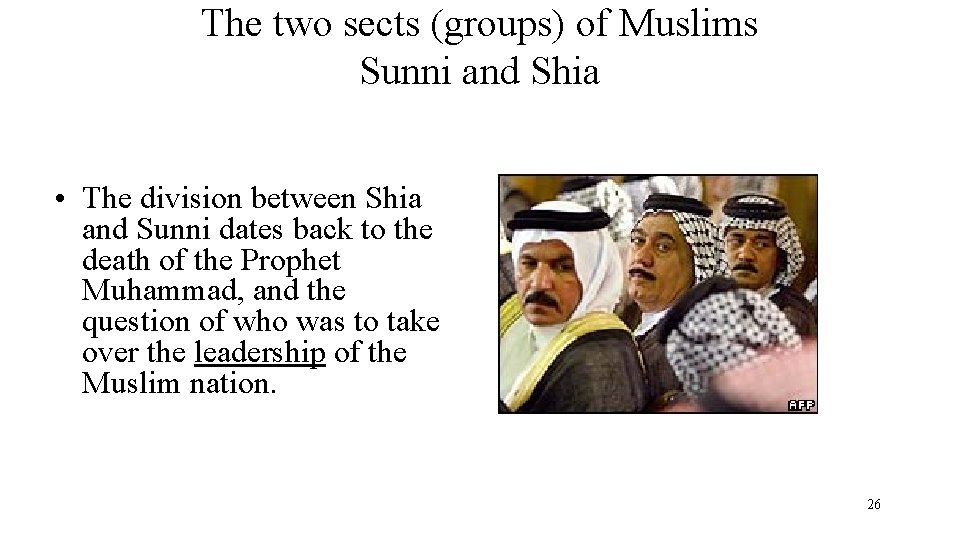
The two sects (groups) of Muslims Sunni and Shia • The division between Shia and Sunni dates back to the death of the Prophet Muhammad, and the question of who was to take over the leadership of the Muslim nation. 26
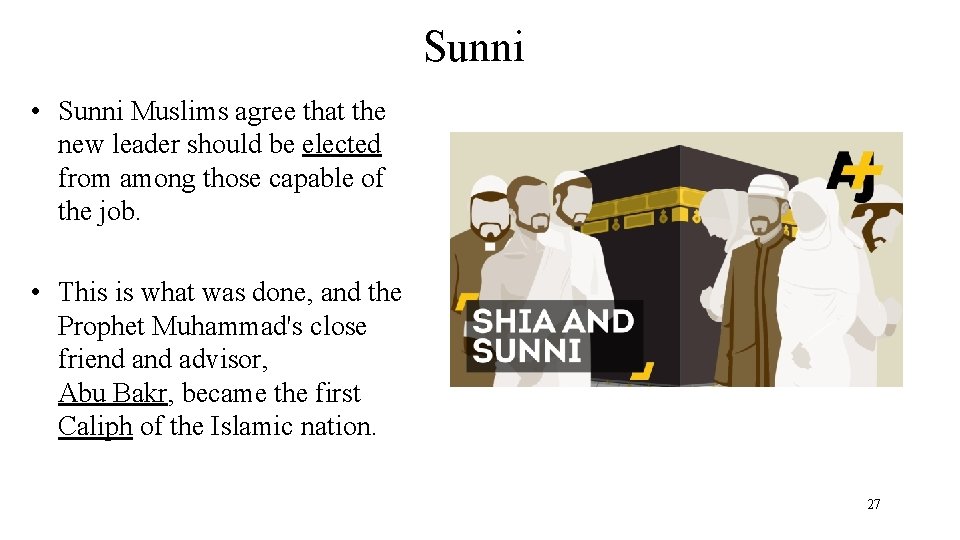
Sunni • Sunni Muslims agree that the new leader should be elected from among those capable of the job. • This is what was done, and the Prophet Muhammad's close friend advisor, Abu Bakr, became the first Caliph of the Islamic nation. 27
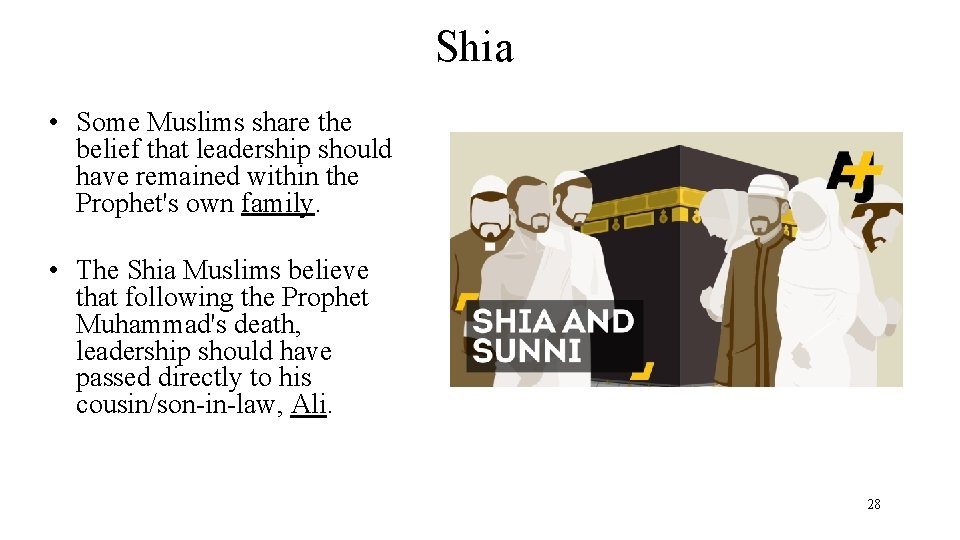
Shia • Some Muslims share the belief that leadership should have remained within the Prophet's own family. • The Shia Muslims believe that following the Prophet Muhammad's death, leadership should have passed directly to his cousin/son-in-law, Ali. 28
The Five Pillars of Faith There are five basics practices that all Muslims must follow in their faith. 29

“SHAHADA” The first is SHAHADA, a declaration to say that God is the one and only god and that Muhammed is His messenger and His last Prophet. 30
“SALAH” The second one is SALAH, which means to pray. Muslims perform it five times during the day. 31
“SAWM” The third one is SAWM, and that means to fast from dawn until dusk during the holy month of Ramadan is the month during which the Quran (holy book of Islam) was revealed to Muhammed. (timing is based on lunar calendar and can occur any month) 32
“ZAKAH” The fourth one is ZAKAH, a tax Muslims pay, to help the poor and the unfortunate. 33
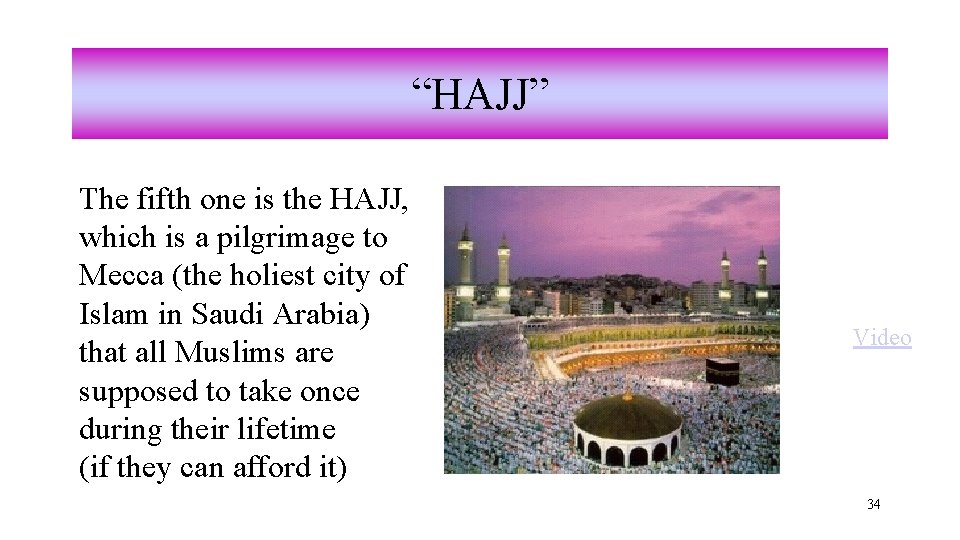
“HAJJ” The fifth one is the HAJJ, which is a pilgrimage to Mecca (the holiest city of Islam in Saudi Arabia) that all Muslims are supposed to take once during their lifetime (if they can afford it) Video 34
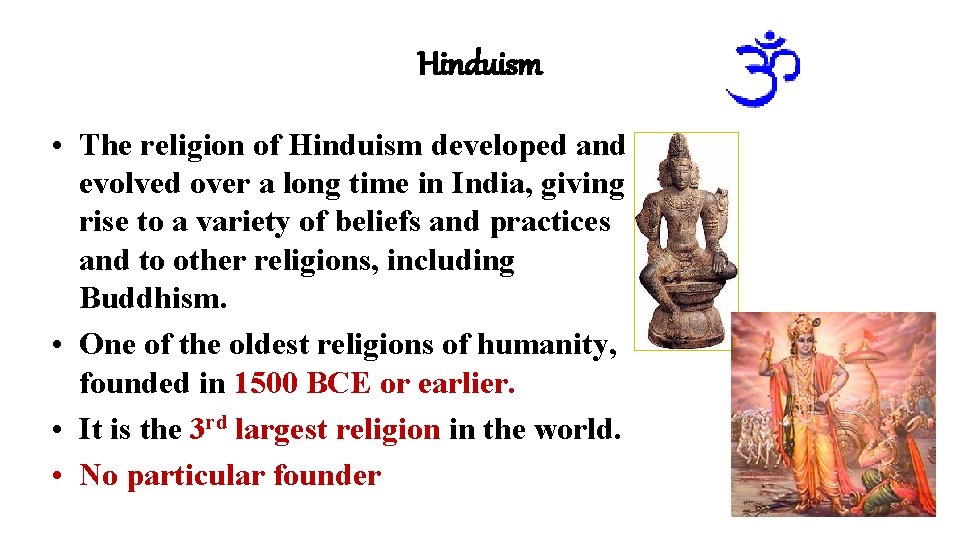
Hinduism • The religion of Hinduism developed and evolved over a long time in India, giving rise to a variety of beliefs and practices and to other religions, including Buddhism. • One of the oldest religions of humanity, founded in 1500 BCE or earlier. • It is the 3 rd largest religion in the world. • No particular founder
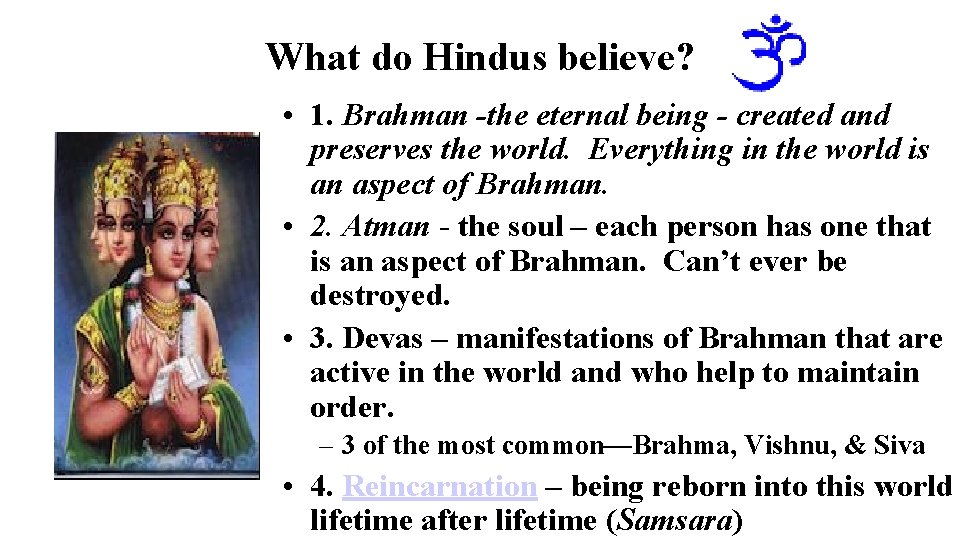
What do Hindus believe? • 1. Brahman -the eternal being - created and preserves the world. Everything in the world is an aspect of Brahman. • 2. Atman - the soul – each person has one that is an aspect of Brahman. Can’t ever be destroyed. • 3. Devas – manifestations of Brahman that are active in the world and who help to maintain order. – 3 of the most common—Brahma, Vishnu, & Siva • 4. Reincarnation – being reborn into this world lifetime after lifetime (Samsara)
What do Hindus believe? • 5. Karma – the sum effect of a person’s actions, good and bad, which helps shape future experiences • 6. Moksha - goal of human existence, escape from the cycle of reincarnation to join with the Brahman. • 7. Dharma – set of spiritual duties and obligations that must be fulfilled to achieve moksha.
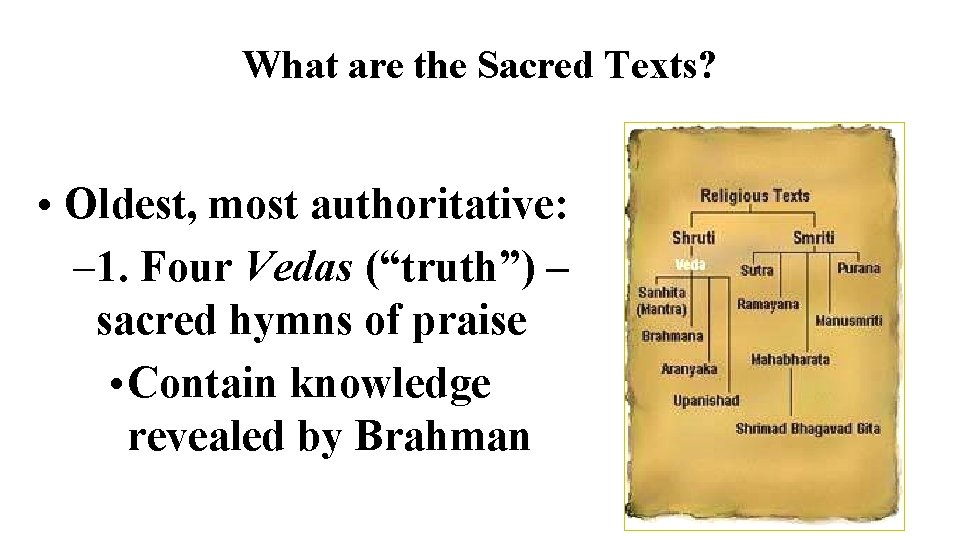
What are the Sacred Texts? • Oldest, most authoritative: – 1. Four Vedas (“truth”) – sacred hymns of praise • Contain knowledge revealed by Brahman
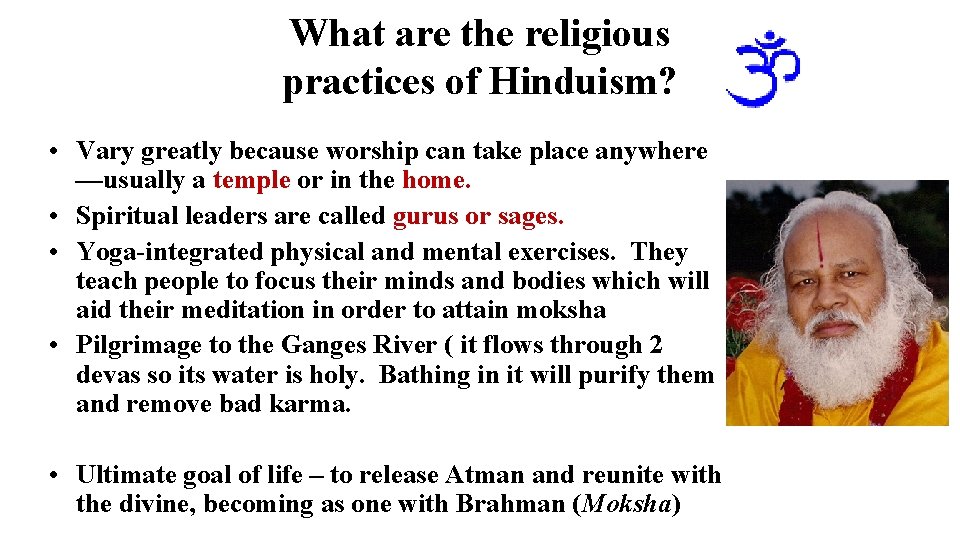
What are the religious practices of Hinduism? • Vary greatly because worship can take place anywhere —usually a temple or in the home. • Spiritual leaders are called gurus or sages. • Yoga-integrated physical and mental exercises. They teach people to focus their minds and bodies which will aid their meditation in order to attain moksha • Pilgrimage to the Ganges River ( it flows through 2 devas so its water is holy. Bathing in it will purify them and remove bad karma. • Ultimate goal of life – to release Atman and reunite with the divine, becoming as one with Brahman (Moksha)
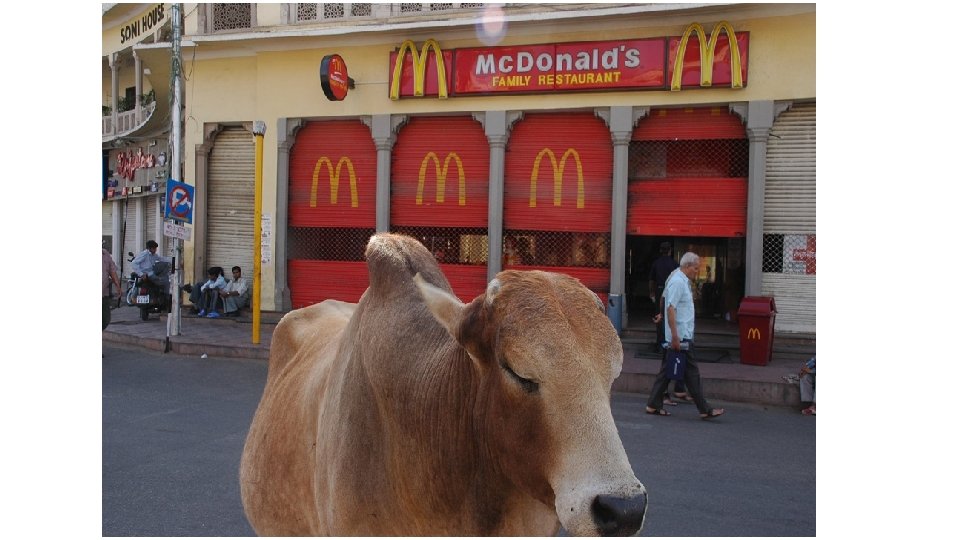


The Mc. Aloo Tikki is a pure veggie burger with a patty made of potato and chickpeas. Tomato, onions, and a vegetable-tomato mayonnaise top it off.

The Chicken Maharaja Mac has two grilled chicken patties with a smoke-flavored mayonnaise, fresh onions, tomatoes, processed cheddar cheese in a toasted sesame seeded bun. Also available — Lamb version.

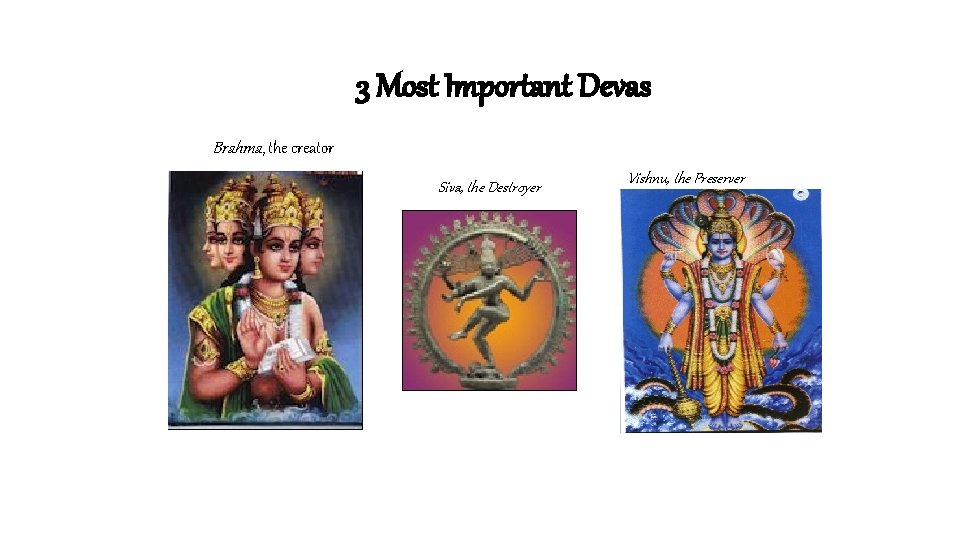
Who do Hindus worship? – 3 Most Important Devas Brahma, the creator Siva, the Destroyer Vishnu, the Preserver
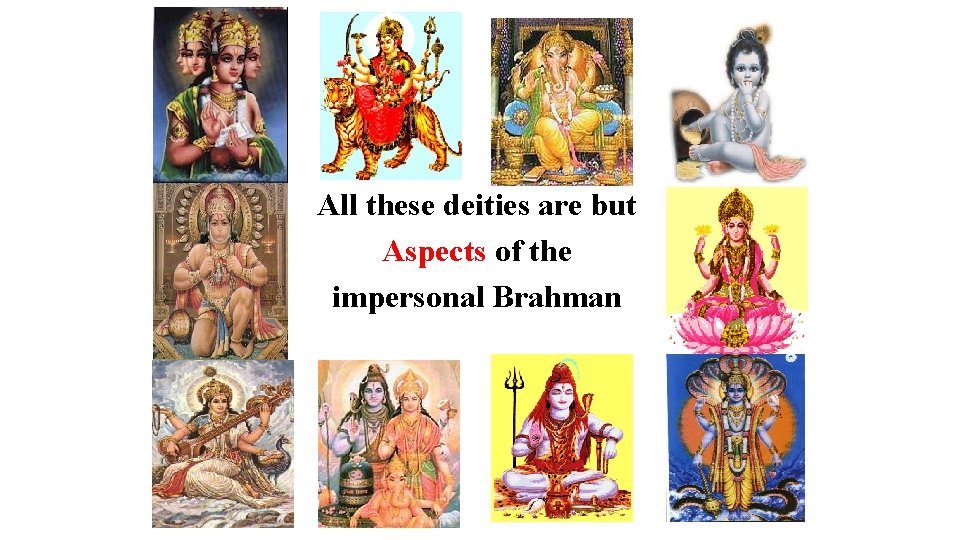
All these deities are but Aspects of the impersonal Brahman
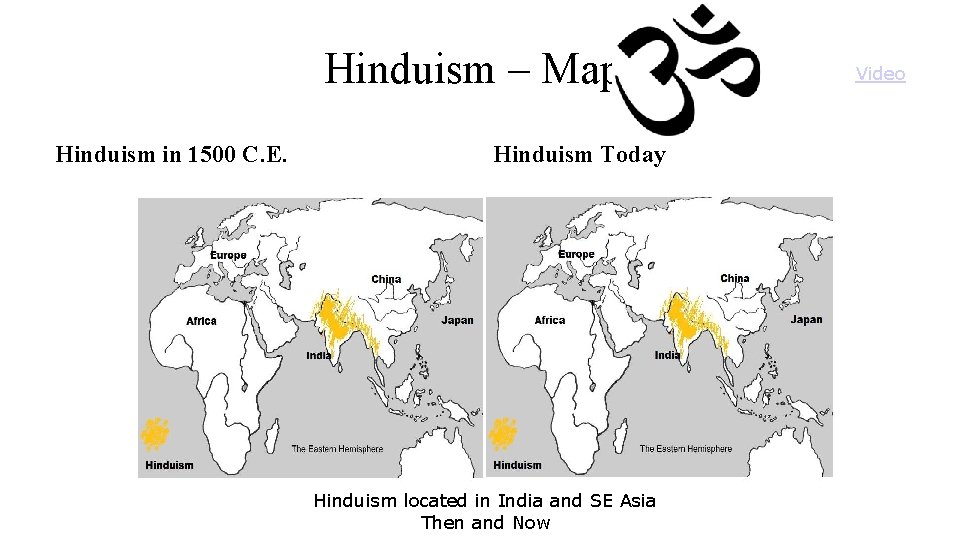
Hinduism – Map! Hinduism in 1500 C. E. Hinduism Today Hinduism located in India and SE Asia Then and Now Video
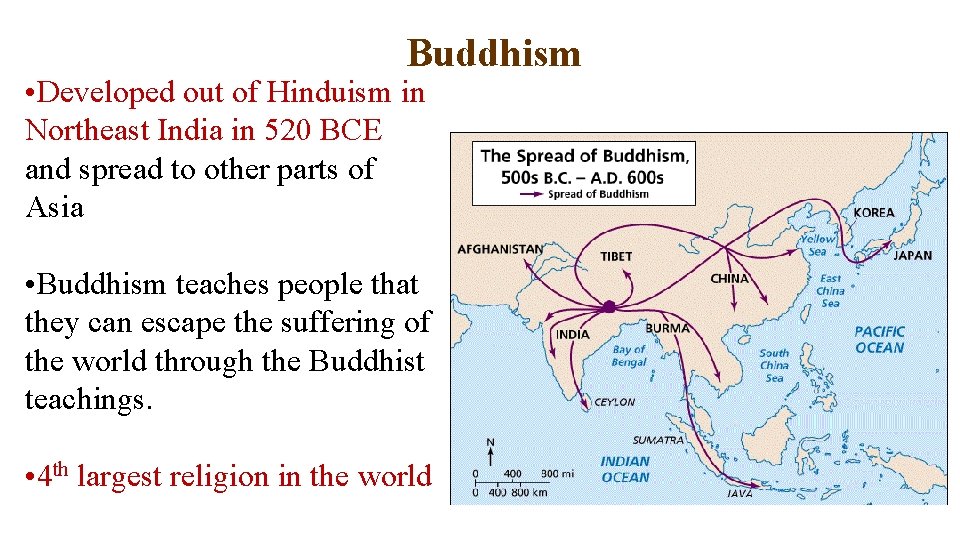
Buddhism • Developed out of Hinduism in Northeast India in 520 BCE and spread to other parts of Asia • Buddhism teaches people that they can escape the suffering of the world through the Buddhist teachings. • 4 th largest religion in the world
![Siddhartha Gautama (563 -483 BCE) ] Unlike Hinduism, Buddhism can be traced to one](http://slidetodoc.com/presentation_image_h2/92785658fb6de645a2c2c65e55682011/image-49.jpg "Siddhartha Gautama (563 -483 BCE) ] Unlike Hinduism, Buddhism can be traced to one")
Siddhartha Gautama (563 -483 BCE) ] Unlike Hinduism, Buddhism can be traced to one single founder, Siddhartha Gautama ] Prince of a small kingdom; he lived a sheltered life and sought the answer to ending suffering ] After years of meditation and searching, he sat under a tree where he became Enlightened ] He transformed into the Buddhathe Enlightened One.
![The Teachings of Buddhism What is the fundamental cause of all suffering? Desire! ]](http://slidetodoc.com/presentation_image_h2/92785658fb6de645a2c2c65e55682011/image-50.jpg "The Teachings of Buddhism What is the fundamental cause of all suffering? Desire! ]")
The Teachings of Buddhism What is the fundamental cause of all suffering? Desire! ] Therefore, extinguish the self, don’t obsess about oneself. Give up all materials and possessions of the world.
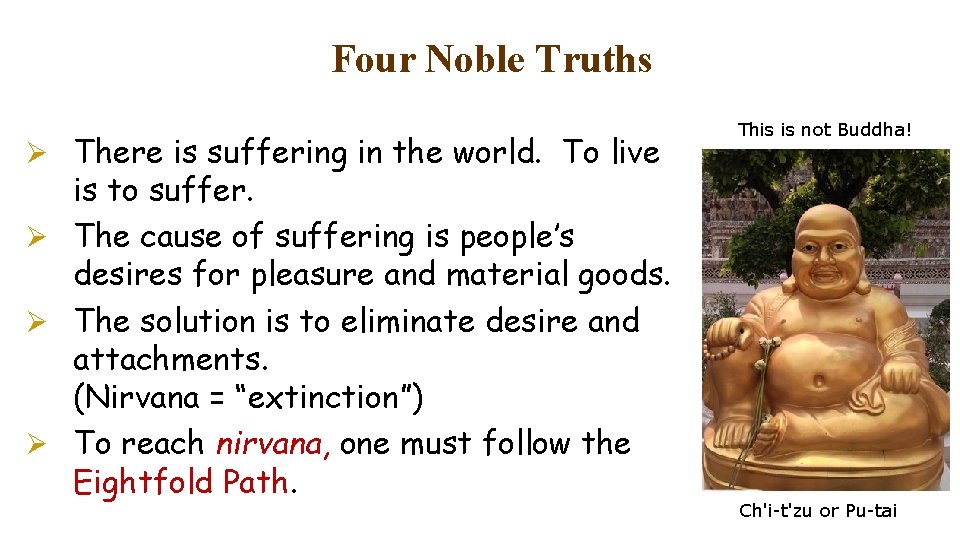
Four Noble Truths Ø There is suffering in the world. To live is to suffer. Ø The cause of suffering is people’s desires for pleasure and material goods. Ø The solution is to eliminate desire and attachments. (Nirvana = “extinction”) Ø To reach nirvana, one must follow the Eightfold Path. This is not Buddha! Ch'i-t'zu or Pu-tai
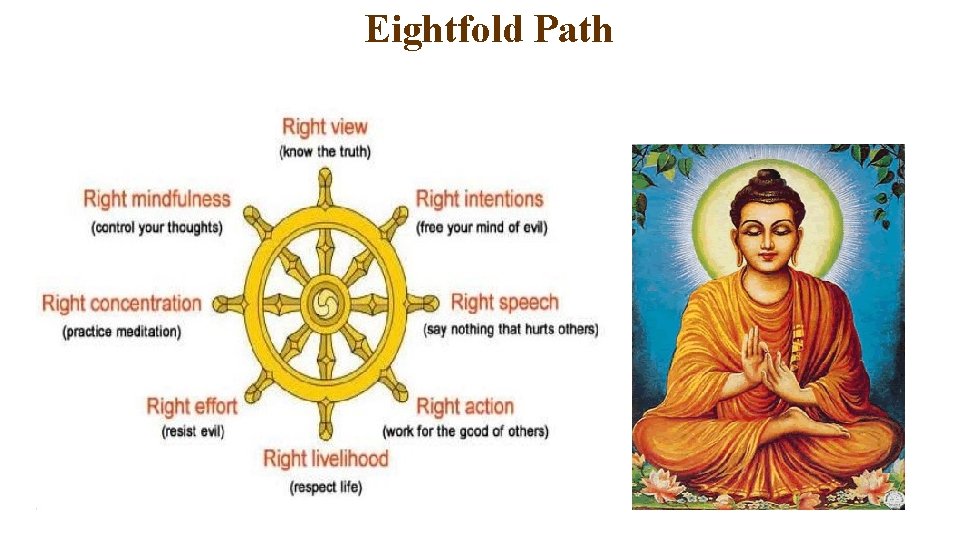
Eightfold Path
![Eightfold Path Nirvana ] Nirvana is a state of perfect peace in which the](http://slidetodoc.com/presentation_image_h2/92785658fb6de645a2c2c65e55682011/image-53.jpg "Eightfold Path Nirvana ] Nirvana is a state of perfect peace in which the")
Eightfold Path Nirvana ] Nirvana is a state of perfect peace in which the soul would be free from suffering forever. It would escape from the cycle of rebirth. ]If nirvana is not achieved, then the soul would be reborn to live through the cycle of suffering again. ]Spiritual leaders are called monks or lamas. ]Worship takes place in a temple or meditation hall.
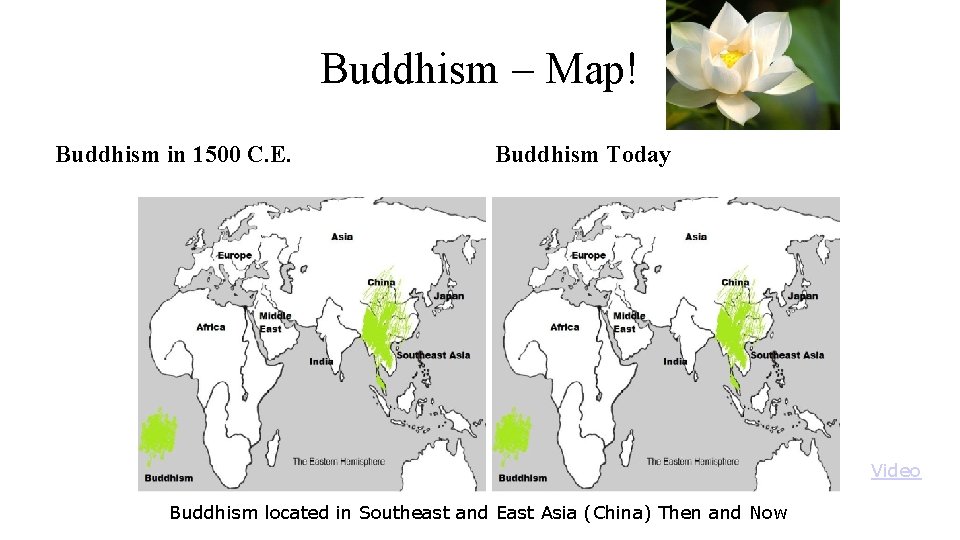
Buddhism – Map! Buddhism in 1500 C. E. Buddhism Today Video Buddhism located in Southeast and East Asia (China) Then and Now
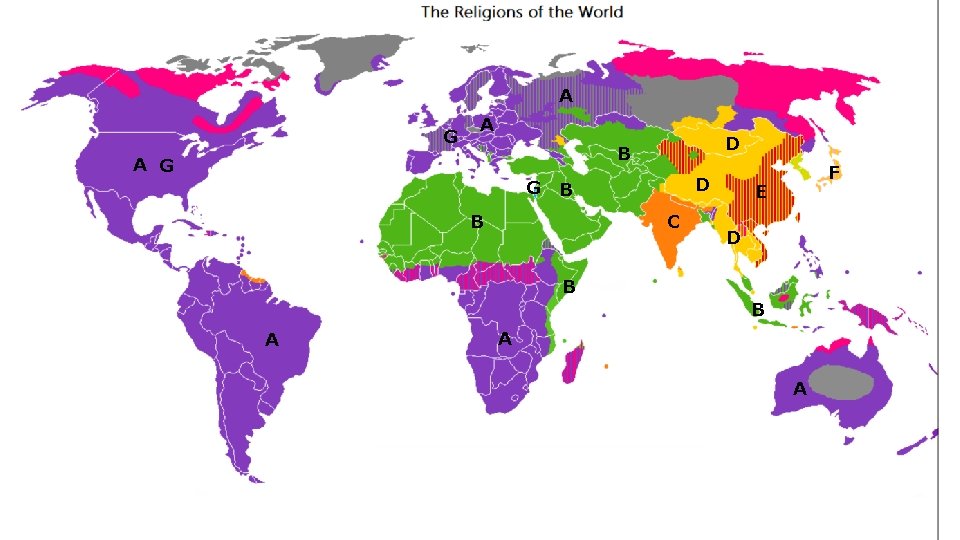
A G A D B A G G D B B C F E D B B A A A
- Slides: 55