
THE FIVE KINGDOMS 1 Bacteria Introduction to Bacteria
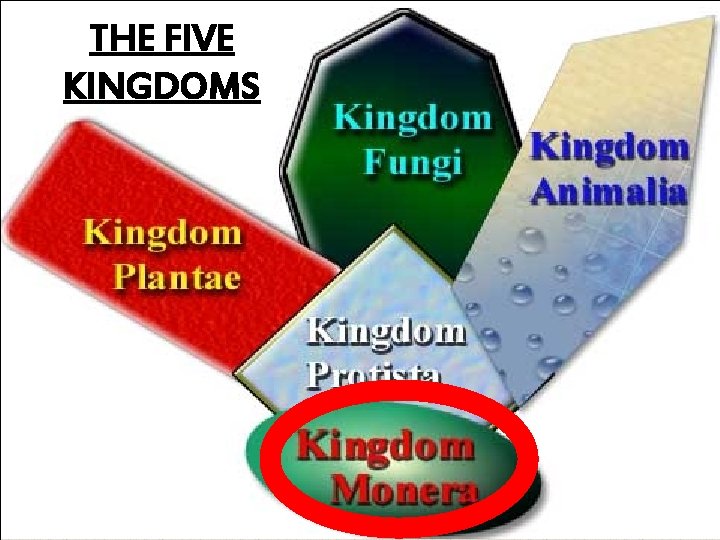
THE FIVE KINGDOMS 1
Bacteria

Introduction to Bacteria 2 TYPES OF BACTERIA: • Bacteria -Get food from an outside source • Blue-green Bacteria -Make their own food 3
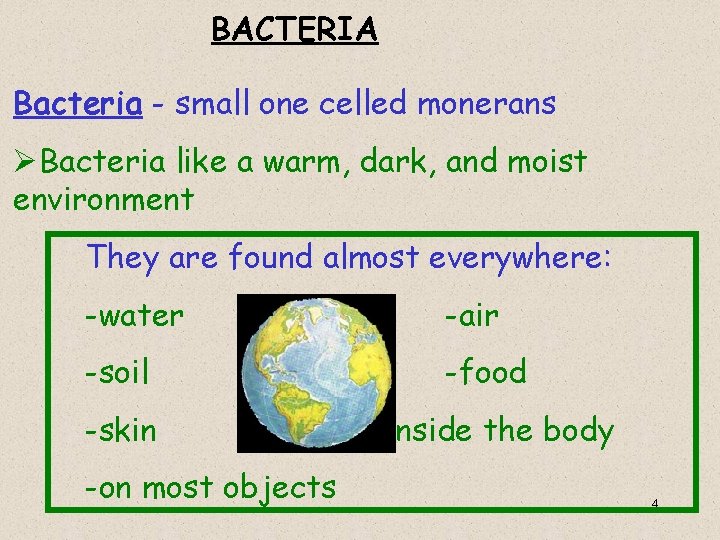
BACTERIA Bacteria - small one celled monerans ØBacteria like a warm, dark, and moist environment They are found almost everywhere: -water -air -soil -food -skin -inside the body -on most objects 4

3 Shapes of Bacteria are classified by shape into 3 groups: Spiral: spirilla rod-shaped: bacilli, bacillus Round: cocci 5
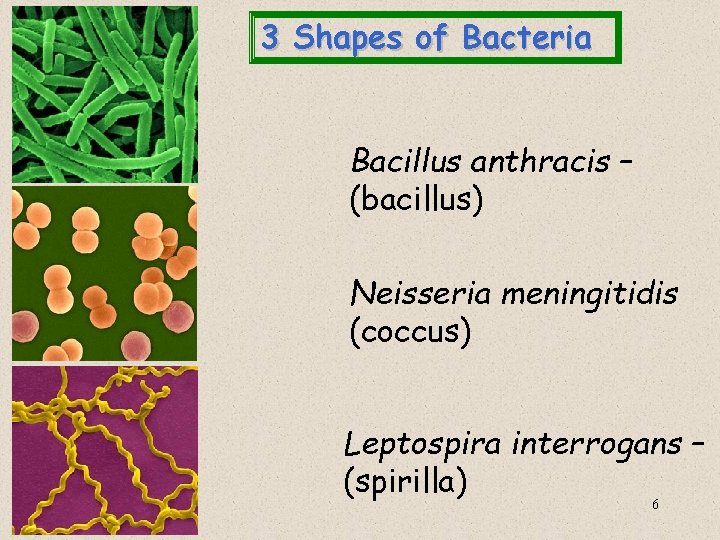
3 Shapes of Bacteria Bacillus anthracis – (bacillus) Neisseria meningitidis (coccus) Leptospira interrogans – (spirilla) 6
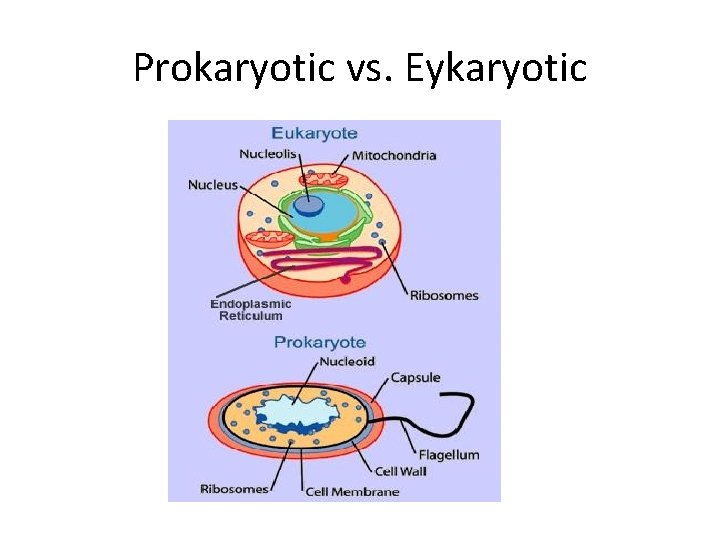
Prokaryotic vs. Eykaryotic

Facts about Bacteria…………. • Prokaryotes • There are more bacteria living in your mouth • • than there are people living on Earth…Yikes! 3 shapes: spherical, spiral, rod-like Flagellum: helps with movement, like a propeller (not all bacteria have flagellum) Archaebacteria: live in extreme environments i. e. hot springs, acidic places, intestines, swamps, sewage Eubacteria: do not live in extreme environments i. e. cat skin, swarm in nose

ROD-LIKE SPIRAL SPHERICAL
• Fun Fact: methane produced by archaebacteria that died millions of years ago is the major component in about 20% of Earth’s deposit of natural gas • Some bacteria is good-cheese, yogurt, pickles…food digestion • Antibiotic: chemical that can kill bacteria without harming cells i. e. (Penicillin) causes bacteria to burst
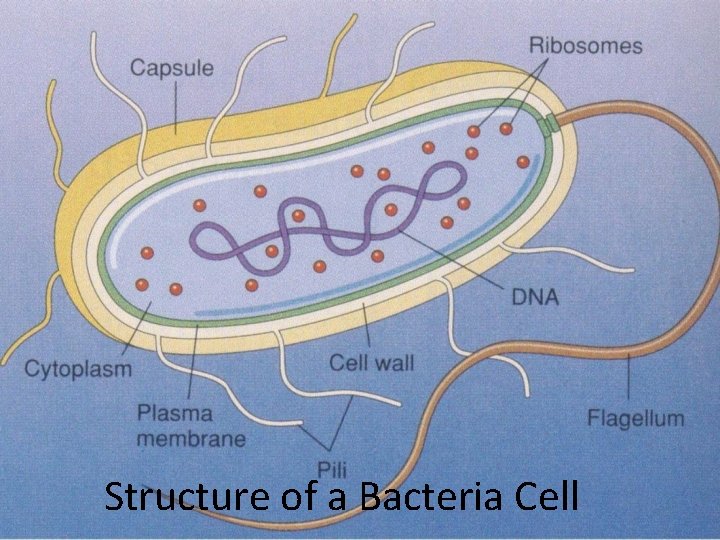
Structure of a Bacteria Cell
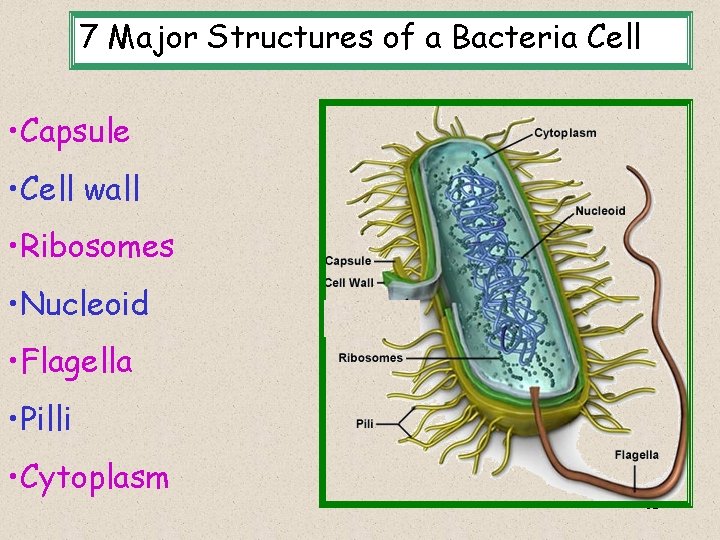
7 Major Structures of a Bacteria Cell • Capsule • Cell wall • Ribosomes • Nucleoid • Flagella • Pilli • Cytoplasm 12

7 Major Structures of a Bacteria Cell Capsule Ø keeps the cell from drying out and helps it stick to food or other cells 13
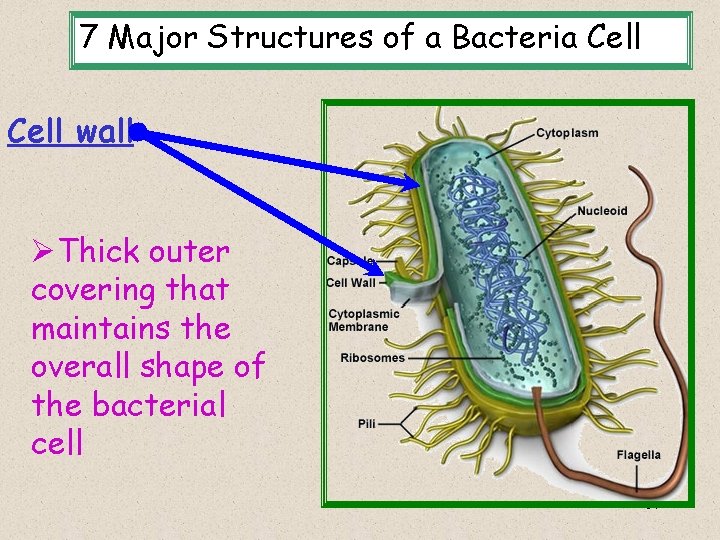
7 Major Structures of a Bacteria Cell wall ØThick outer covering that maintains the overall shape of the bacterial cell 14

7 Major Structures of a Bacteria Cell Ribosomes Ø cell part where proteins are made Ø Ribosomes give the cytoplasm of bacteria a granular appearance in electron micrographs 15

7 Major Structures of a Bacteria Cell Nucleoid Ø a ring made up of DNA 16
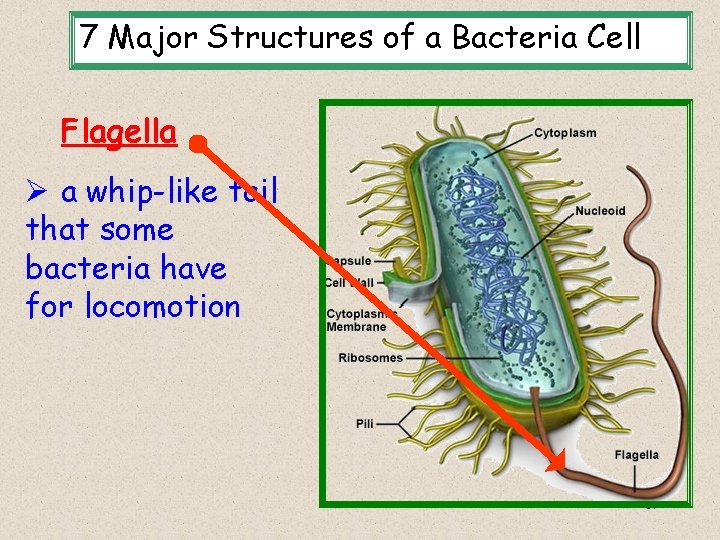
7 Major Structures of a Bacteria Cell Flagella Ø a whip-like tail that some bacteria have for locomotion 17
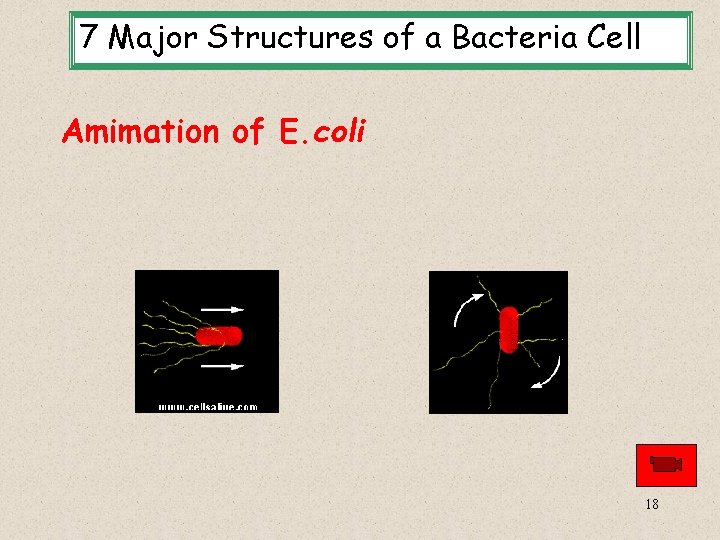
7 Major Structures of a Bacteria Cell Amimation of E. coli 18
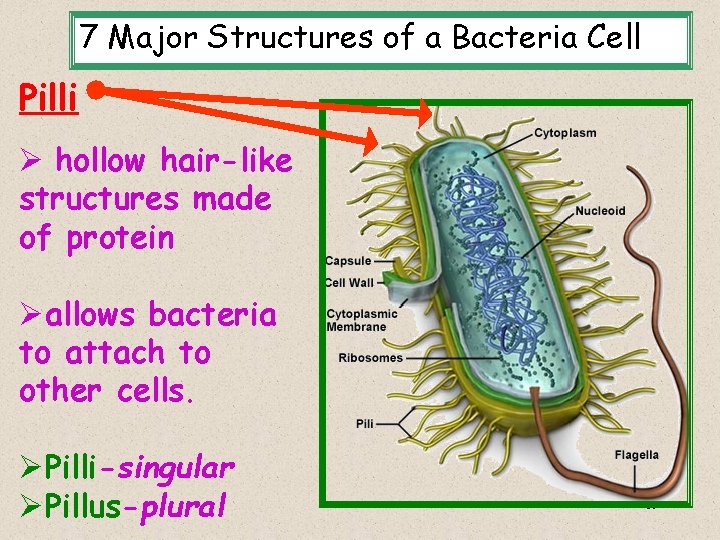
7 Major Structures of a Bacteria Cell Pilli Ø hollow hair-like structures made of protein Øallows bacteria to attach to other cells. ØPilli-singular ØPillus-plural 19
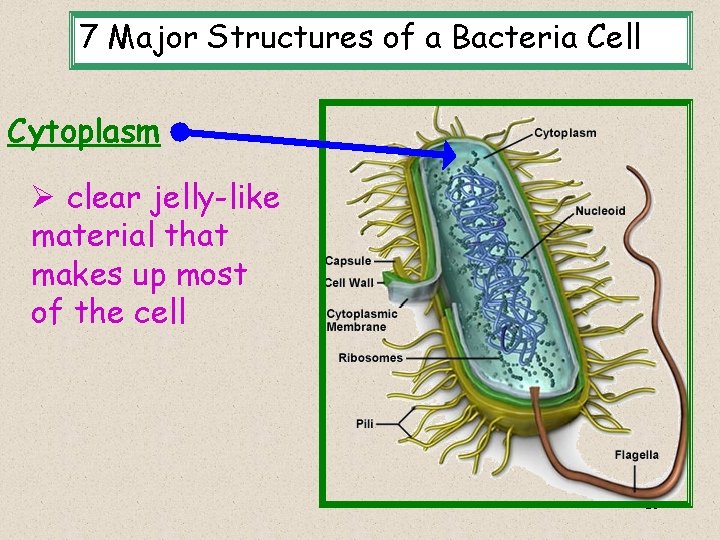
7 Major Structures of a Bacteria Cell Cytoplasm Ø clear jelly-like material that makes up most of the cell 20
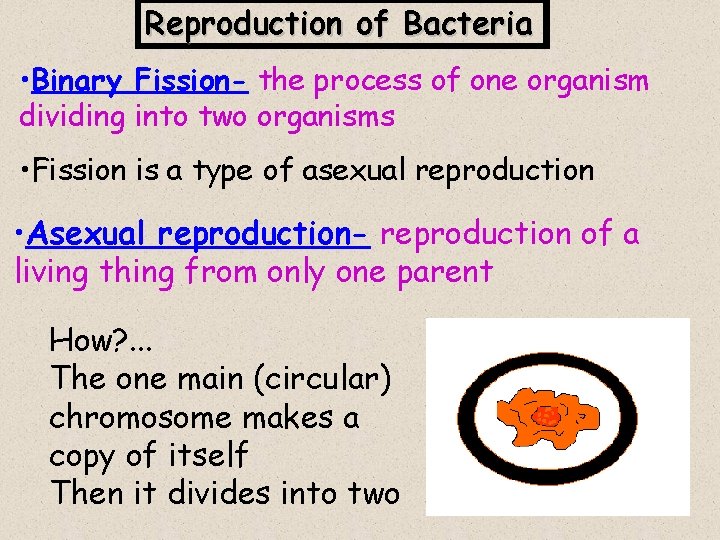
Reproduction of Bacteria • Binary Fission- the process of one organism dividing into two organisms • Fission is a type of asexual reproduction • Asexual reproduction- reproduction of a living thing from only one parent How? . . . The one main (circular) chromosome makes a copy of itself Then it divides into two 21
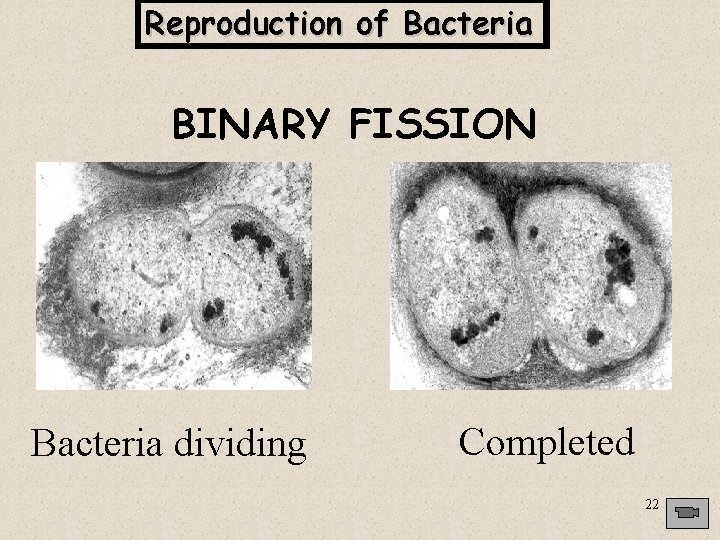
Reproduction of Bacteria BINARY FISSION Bacteria dividing Completed 22
Reproduction of Bacteria • The time of reproduction depends on how desirable the conditions are • Bacteria can rapidly reproduce themselves in warm, dark, and moist conditions • Some can reproduce every 20 minutes (one bacteria could be an ancestor to one million bacteria in six hours) 23
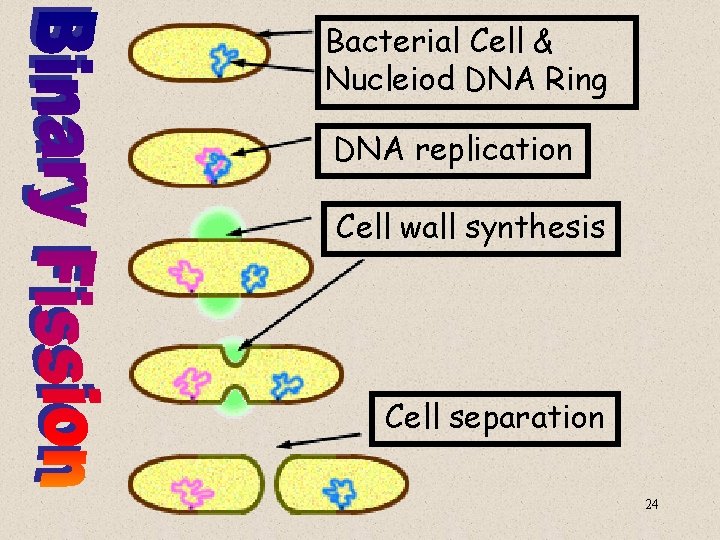
Bacterial Cell & Nucleiod DNA Ring DNA replication Cell wall synthesis Cell separation 24
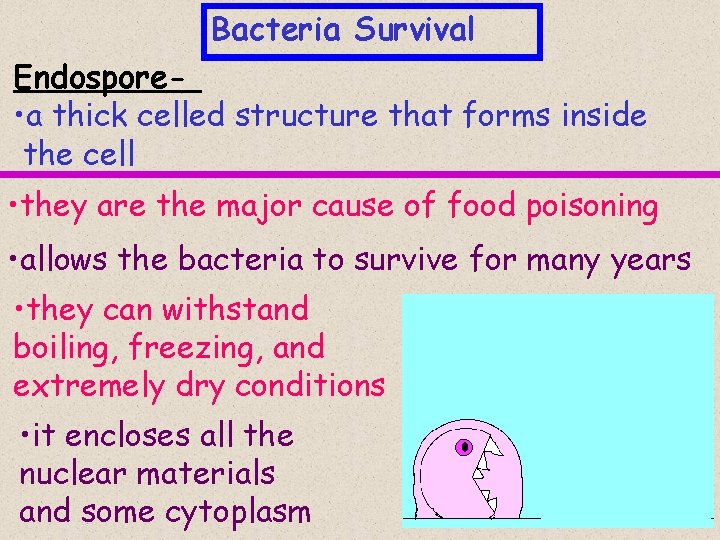
Bacteria Survival Endospore • a thick celled structure that forms inside the cell • they are the major cause of food poisoning • allows the bacteria to survive for many years • they can withstand boiling, freezing, and extremely dry conditions • it encloses all the nuclear materials and some cytoplasm 25
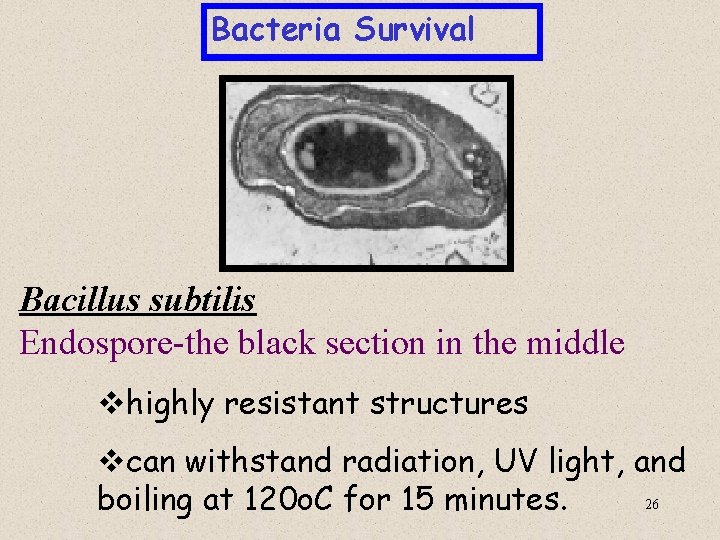
Bacteria Survival Bacillus subtilis Endospore-the black section in the middle vhighly resistant structures vcan withstand radiation, UV light, and 26 boiling at 120 o. C for 15 minutes.
Bacteria Survival – Food sources parasites – bacteria that feed on living things saprophytes – use dead materials for food (exclusively) decomposers – get food from breaking down dead matter into simple chemicals üimportant- because they send minerals and other materials back into the soil so 27 other organisms can use them
Harmful Bacteria • some bacteria cause diseases • Animals can pass diseases to humans Communicable Disease – Disease passed from one organism to another This can happen in several ways: • Air • Touching clothing, food, silverware, or toothbrush • Drinking water that contains bacteria 28
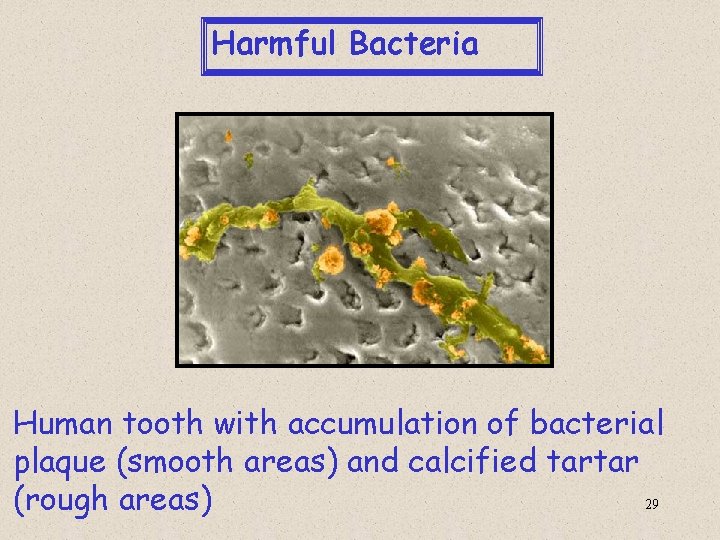
Harmful Bacteria Human tooth with accumulation of bacterial plaque (smooth areas) and calcified tartar 29 (rough areas)
Helpful Bacteria • Decomposers help recycle nutrients into the soil for other organisms to grow • Bacteria grow in the stomach of a cow to break down grass and hay • Most are used to make antibiotics • Some bacteria help make insulin • Used to make industrial chemicals 30
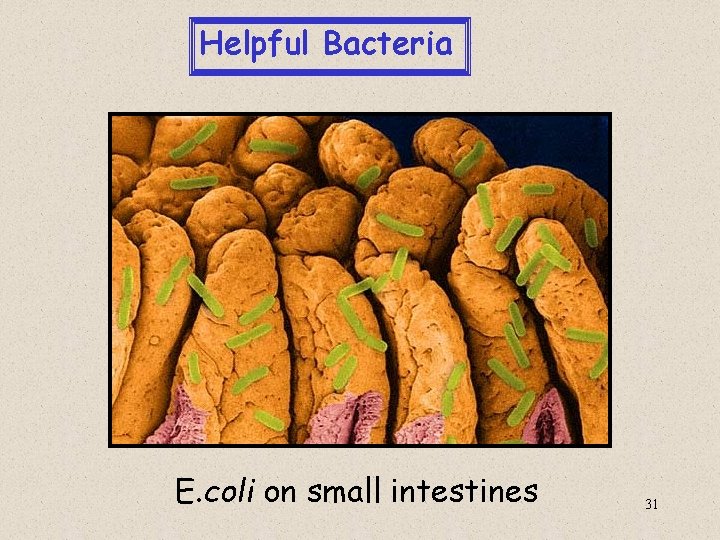
Helpful Bacteria E. coli on small intestines 31
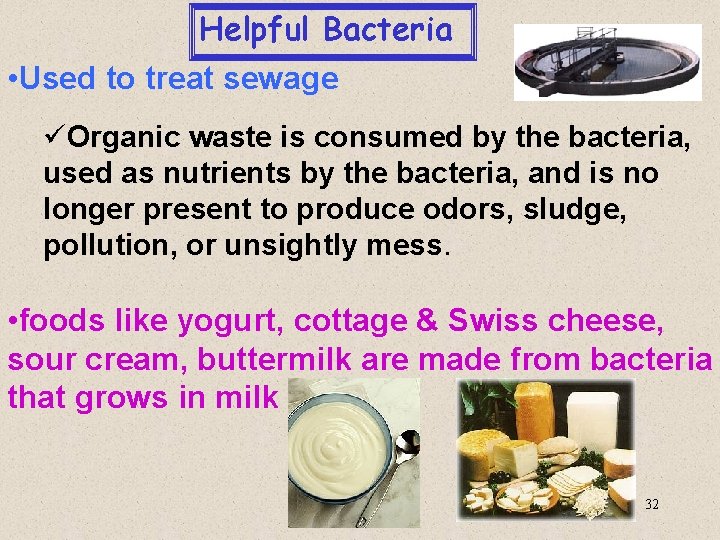
Helpful Bacteria • Used to treat sewage üOrganic waste is consumed by the bacteria, used as nutrients by the bacteria, and is no longer present to produce odors, sludge, pollution, or unsightly mess. • foods like yogurt, cottage & Swiss cheese, sour cream, buttermilk are made from bacteria that grows in milk 32

Controlling Bacteria 3 ways to control bacteria: 1) Canning- the process of sealing food in airtight cans or jars after killing bacteria • endospores are killed during this process 2) Pasteurization- process of heating milk to kill harmful bacteria 3) Dehydration- removing water from food • Bacteria can’t grow when H 2 O is removed • example: uncooked noodles & cold cereal 33
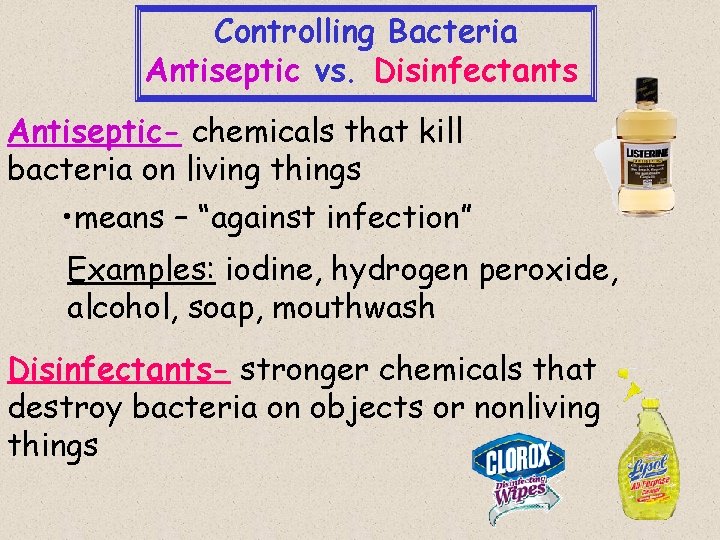
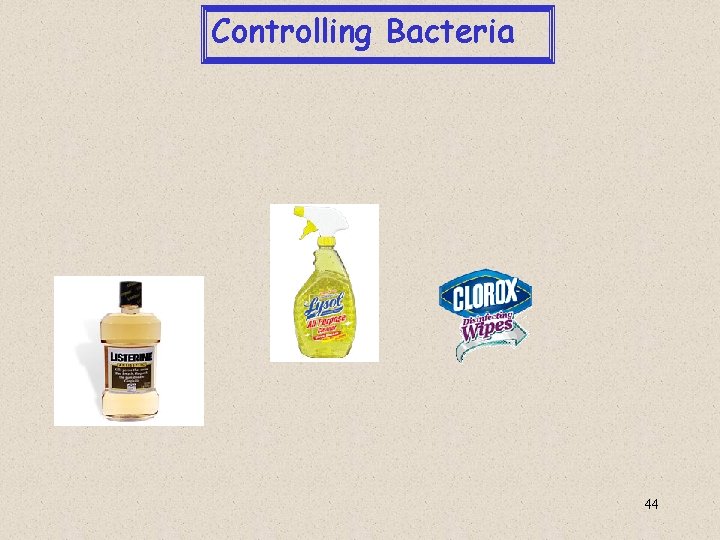
Controlling Bacteria Antiseptic vs. Disinfectants Antiseptic- chemicals that kill bacteria on living things • means – “against infection” Examples: iodine, hydrogen peroxide, alcohol, soap, mouthwash Disinfectants- stronger chemicals that destroy bacteria on objects or nonliving things 34
BLUE-GREEN BACTERIA Autotrophs – make their own food through photosynthesis Ølarger than most bacterial cells Øcommonly grow on water and surfaces that stay wet…such as rivers, creeks and dams ØSome live in salt water, snow, and acid water of hot springs Øfood source for animals that live in the 35 water

BLUE-GREEN BACTERIA Øcan be toxic to humans and animals Blooms- occur when the bacteria multiplies in great numbers and form scum on the top of the water 36

37
Bacteria Survival Endospore • a thick celled structure that forms inside the cell • it encloses all the nuclear materials and some cytoplasm • They can withstand boiling, freezing, and extremely dry conditions • Allows the bacteria to survive for many years 38

Bacteria Survival – Food sources parasites – bacteria that feed on living things saprophytes – use dead materials for food decomposers – get food from breaking down dead matter into simple chemicals üimportant- because they send minerals and other materials back into the soil so other organisms can use them 39
Harmful Bacteria • some bacteria cause diseases • Animals can pass diseases to humans Communicable Disease – Disease passed from one organism to another This can happen in several ways: • Air • Touching clothing, food, silverware, or toothbrush • Drinking water that contains bacteria 40

Harmful Bacteria Human tooth with accumulation of bacterial plaque (smooth areas) and calcified tartar 41 (rough areas)
Helpful Bacteria • Decomposers help recycle nutrients into the soil for other organisms to grow • Bacteria grow in the stomach of a cow to break down grass and hay • Most are sued to make antibiotics • Some bacteria help make insulin • Used to make industrial chemicals 42
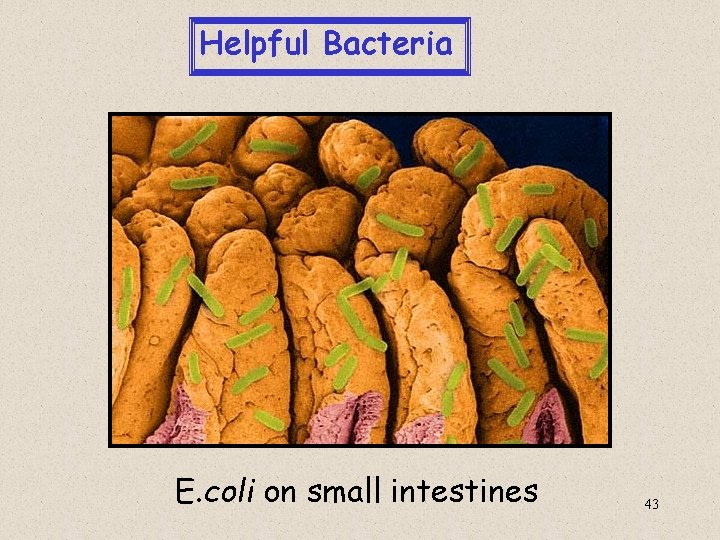
Helpful Bacteria E. coli on small intestines 43
Controlling Bacteria 44
BLUE-GREEN BACTERIA ØMake their own food through photosynthesis ØBigger than most bacterial cells ØCommonly grow on water and surfaces that stay wet…such as rivers, creeks and dams 45
BLUE-GREEN BACTERIA ØIt can be toxic to humans and animals Ø Blooms- occur when the bacteria multiplies in great numbers and form scum on the top of the water 46

Lake Champlain 47
48

49
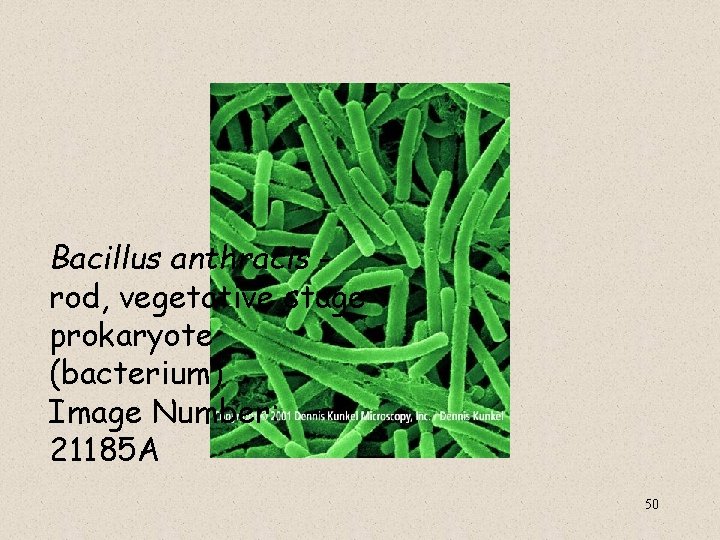
Bacillus anthracis rod, vegetative stage prokaryote (bacterium) Image Number: 21185 A 50
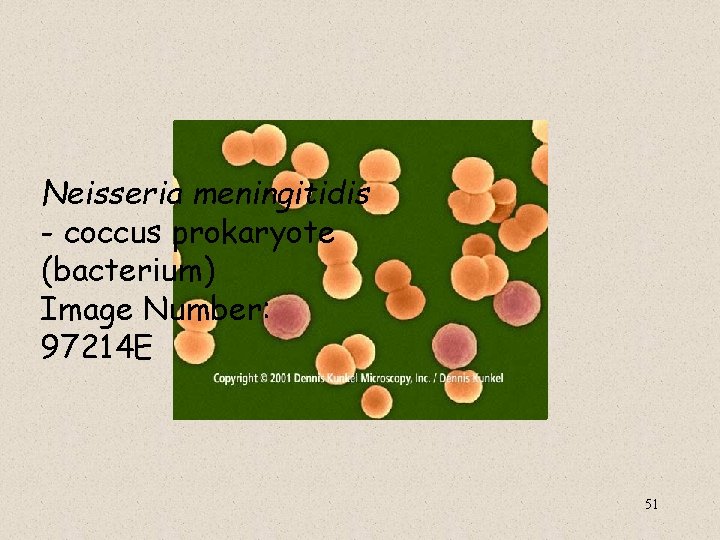
Neisseria meningitidis - coccus prokaryote (bacterium) Image Number: 97214 E 51
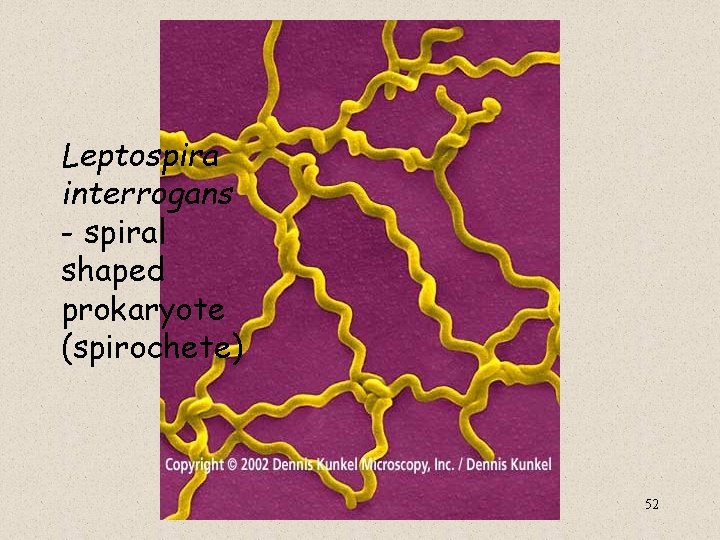
Leptospira interrogans - spiral shaped prokaryote (spirochete) 52

Strep animation http: //www. hybridmedicalanimatio n. com/pages/jjani_qt/strep_pneu mo_qt. html Ecoli movement animatoin http: //www. hybridmedicalanimati on. com/pages/jjani_qt/ecoli_qt. h tml 53
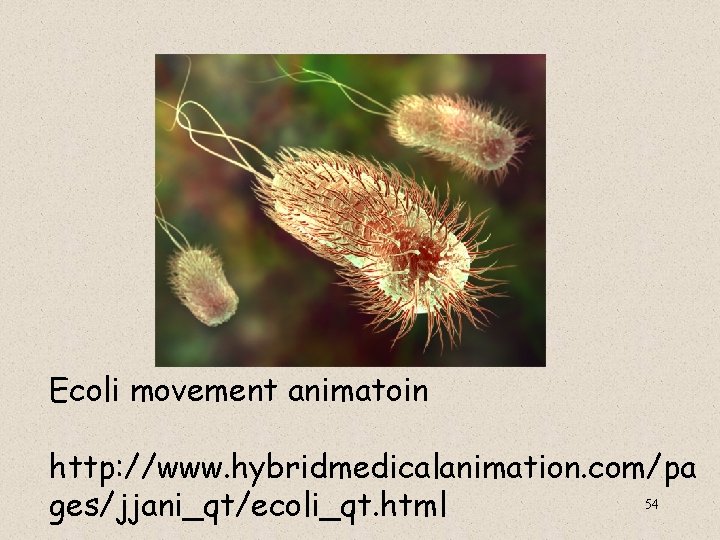
Ecoli movement animatoin http: //www. hybridmedicalanimation. com/pa 54 ges/jjani_qt/ecoli_qt. html
HIV movie http: //www-micro. msb. le. ac. uk/Video/HIV. mov 55
- Slides: 55