
THE FIVE FACTORS OF EVOLUTION 1 Genetic drift
- Slides: 8
THE FIVE FACTORS OF EVOLUTION
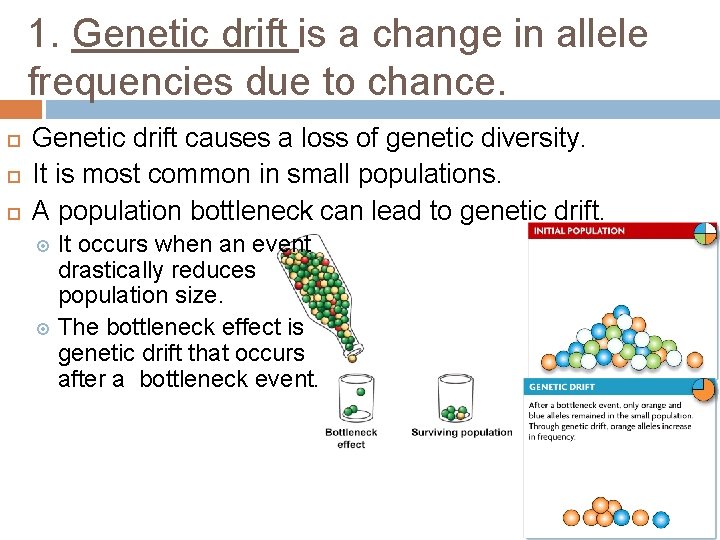
1. Genetic drift is a change in allele frequencies due to chance. Genetic drift causes a loss of genetic diversity. It is most common in small populations. A population bottleneck can lead to genetic drift. It occurs when an event drastically reduces population size. The bottleneck effect is genetic drift that occurs after a bottleneck event.
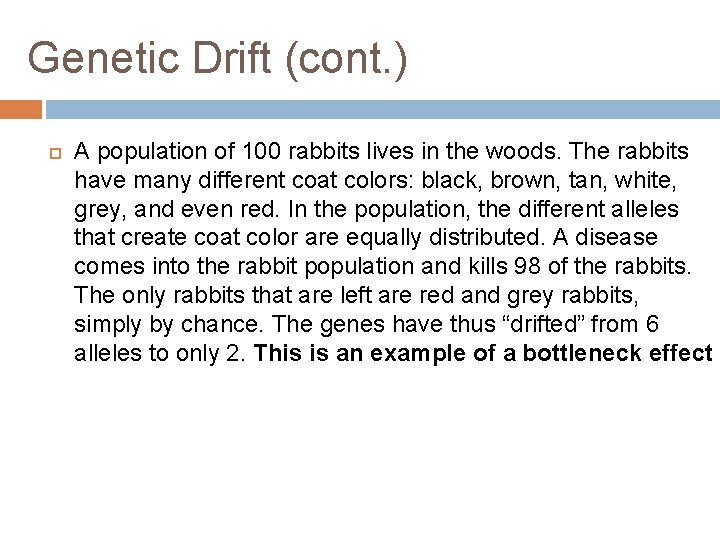
Genetic Drift (cont. ) A population of 100 rabbits lives in the woods. The rabbits have many different coat colors: black, brown, tan, white, grey, and even red. In the population, the different alleles that create coat color are equally distributed. A disease comes into the rabbit population and kills 98 of the rabbits. The only rabbits that are left are red and grey rabbits, simply by chance. The genes have thus “drifted” from 6 alleles to only 2. This is an example of a bottleneck effect
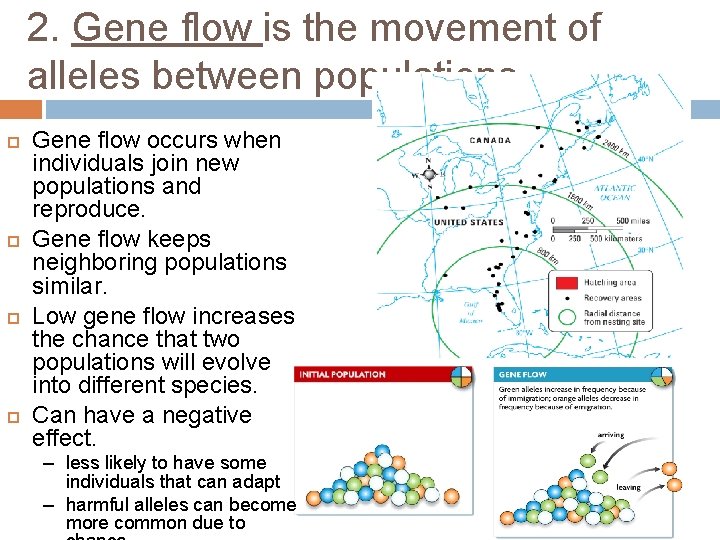
2. Gene flow is the movement of alleles between populations. Gene flow occurs when individuals join new populations and reproduce. Gene flow keeps neighboring populations similar. Low gene flow increases the chance that two populations will evolve into different species. Can have a negative effect. – less likely to have some individuals that can adapt – harmful alleles can become more common due to
3. Mutations produce the genetic variation needed for evolution. • A mutation is a change in DNA, which can change an organisms traits • Evolution cannot occur without mutations • Mutations are not ALL bad, some can be beneficial as well
4. Sexual selection is when organisms “choose” their mates to reproduce by some criteria Examples: Different dewlap colors in anole lizards – will only mate with lizards with similar looking dewlaps - Bright colored feathers of peacocks to attract other sex
5. Natural selection selects for traits advantageous for survival. Natural selection is when organisms that have better adaptations will have better chances of survival and reproduction
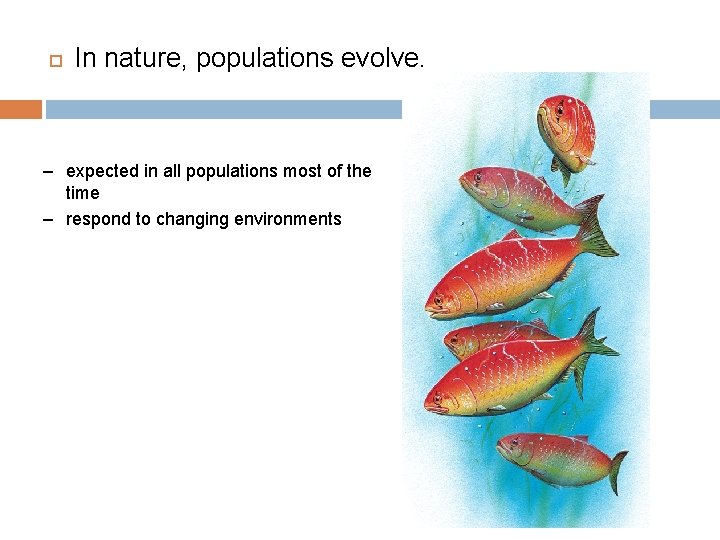
In nature, populations evolve. – expected in all populations most of the time – respond to changing environments