
The Fishes Vertebrate Success in Water Chapter 18

The Fishes: Vertebrate Success in Water Chapter 18 Chapter 3 By Anna Maria Noronha

Fish vs. Fishes “This tank is full of fish. ” “The ocean is full of fishes. ”
• Phylum Chordata- notochord, pharyngeal slits, dorsal tubular nerve cord, postanal tail. – Group Craniata: skull surrounds brain, olfactory organs, eyes, and inner • Subphylum Hyperotreti- fishlike; skull cartilaginous bars; jawless; slime glands; Hagfish • Subphylum Vertebratavertebrate surrounds nerve cord
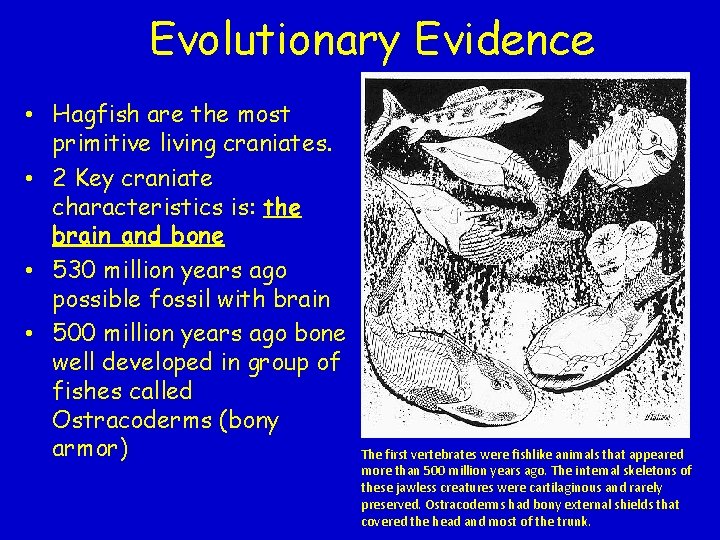
Evolutionary Evidence • Hagfish are the most primitive living craniates. • 2 Key craniate characteristics is: the brain and bone • 530 million years ago possible fossil with brain • 500 million years ago bone well developed in group of fishes called Ostracoderms (bony armor) The first vertebrates were fishlike animals that appeared more than 500 million years ago. The internal skeletons of these jawless creatures were cartilaginous and rarely preserved. Ostracoderms had bony external shields that covered the head and most of the trunk.

Evolutionary Evidence • First vertebrates probably marine • Vertebrates did adapt to freshwater and much of the evolution of fish occurred there. • Early vertebrate evolution involved the movement of fishes back and forth between marine and freshwater environments.
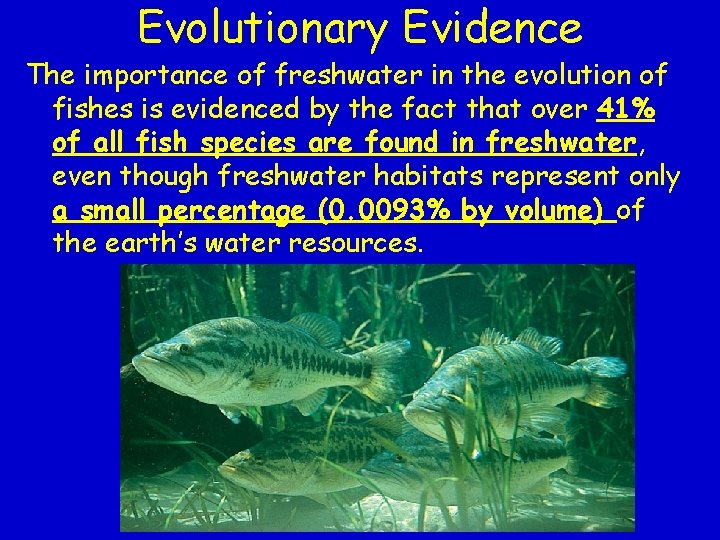
Evolutionary Evidence The importance of freshwater in the evolution of fishes is evidenced by the fact that over 41% of all fish species are found in freshwater, even though freshwater habitats represent only a small percentage (0. 0093% by volume) of the earth’s water resources.
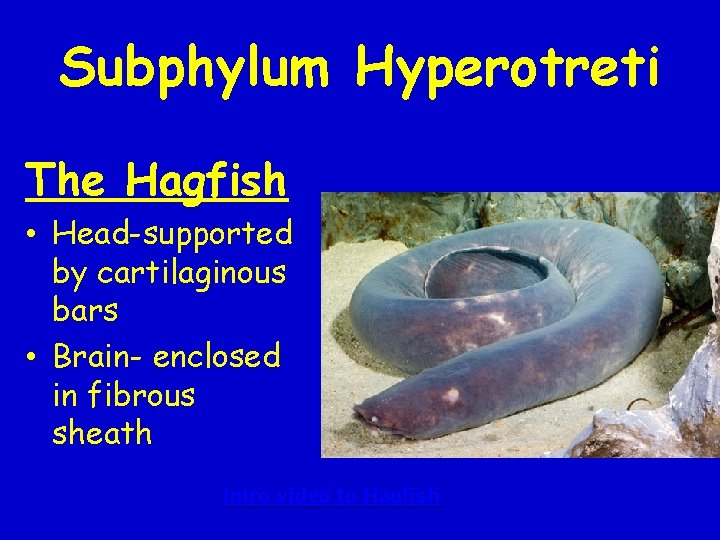
Subphylum Hyperotreti The Hagfish • Head-supported by cartilaginous bars • Brain- enclosed in fibrous sheath Intro video to Hagfish
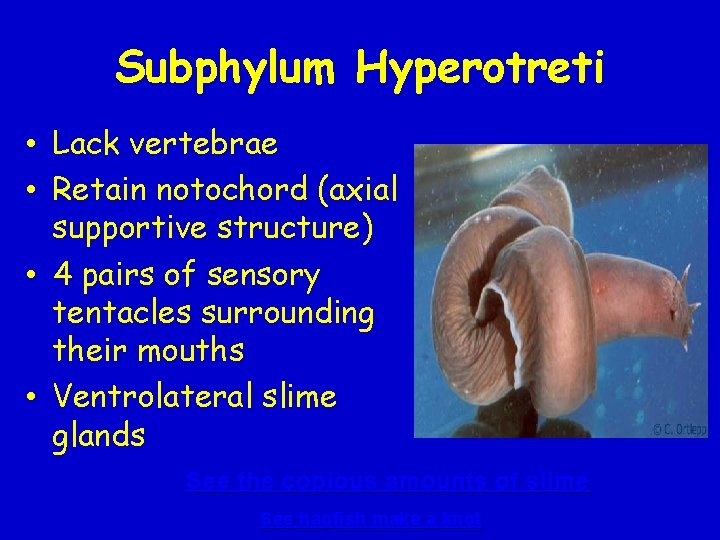
Subphylum Hyperotreti • Lack vertebrae • Retain notochord (axial supportive structure) • 4 pairs of sensory tentacles surrounding their mouths • Ventrolateral slime glands See the copious amounts of slime See hagfish make a knot
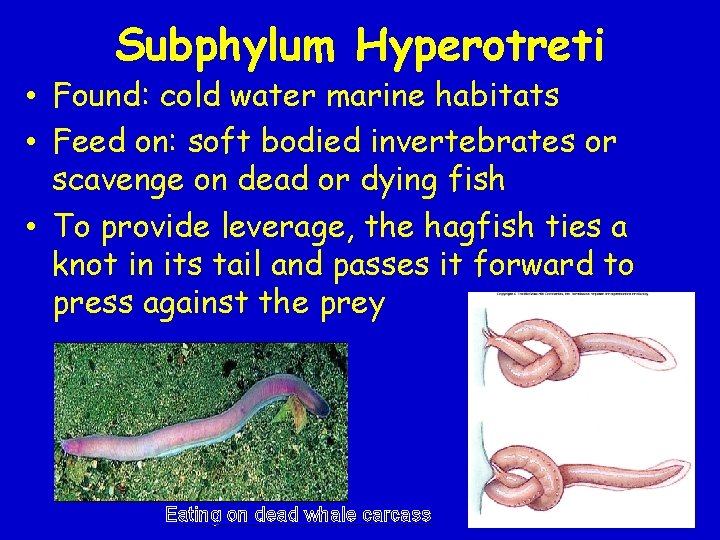
Subphylum Hyperotreti • Found: cold water marine habitats • Feed on: soft bodied invertebrates or scavenge on dead or dying fish • To provide leverage, the hagfish ties a knot in its tail and passes it forward to press against the prey Eating on dead whale carcass
Subphylum Vertebrata • Vertebrae that surrounds a nerve cord and serves as the primary axial support • Most are vertebrates are members of the superclass Gnathostomata • Jawed fishes • Tetrapods
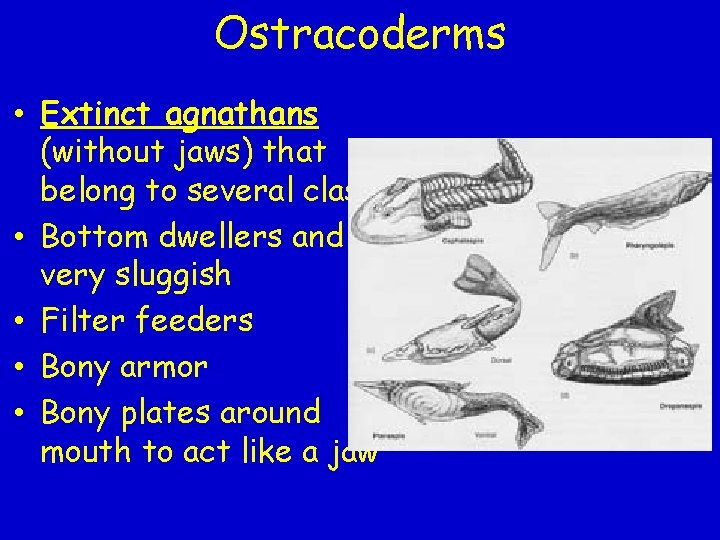
Ostracoderms • Extinct agnathans (without jaws) that belong to several classes. • Bottom dwellers and very sluggish • Filter feeders • Bony armor • Bony plates around mouth to act like a jaw
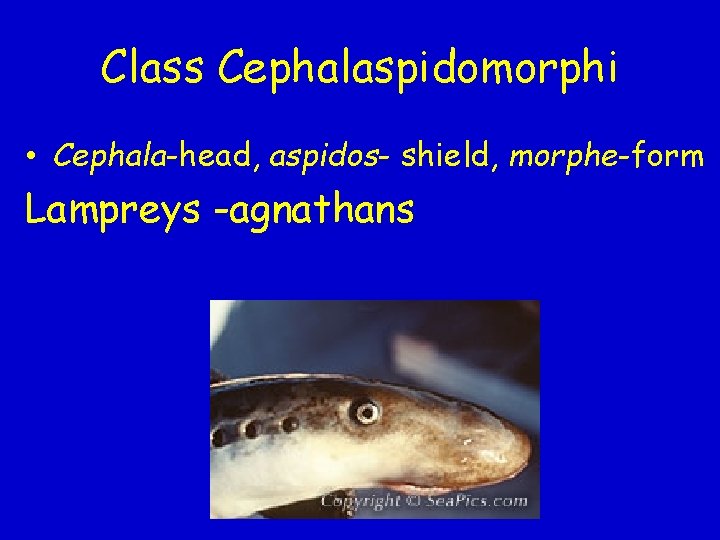
Class Cephalaspidomorphi • Cephala-head, aspidos- shield, morphe-form Lampreys -agnathans
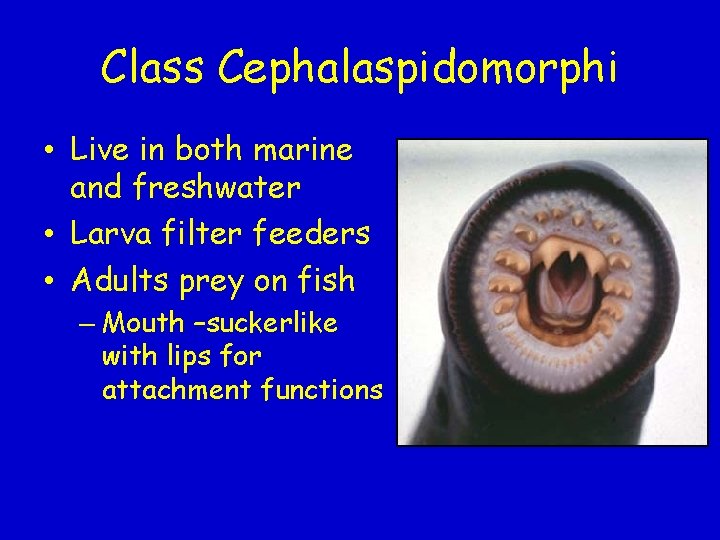
Class Cephalaspidomorphi • Live in both marine and freshwater • Larva filter feeders • Adults prey on fish – Mouth –suckerlike with lips for attachment functions
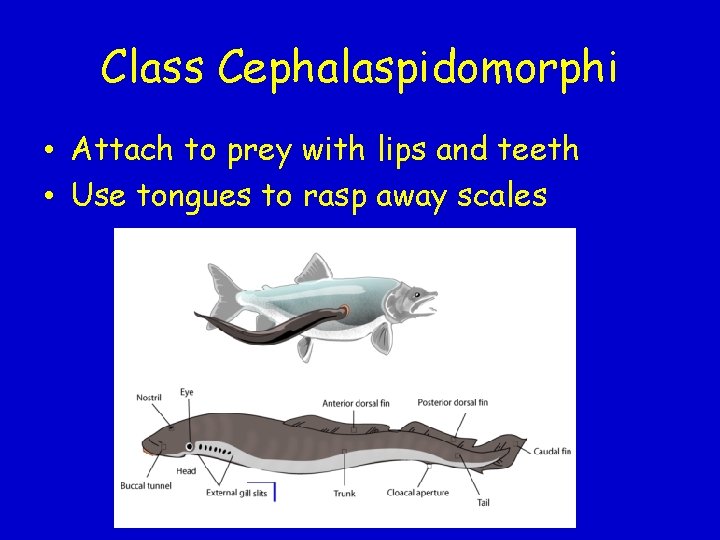
Class Cephalaspidomorphi • Attach to prey with lips and teeth • Use tongues to rasp away scales
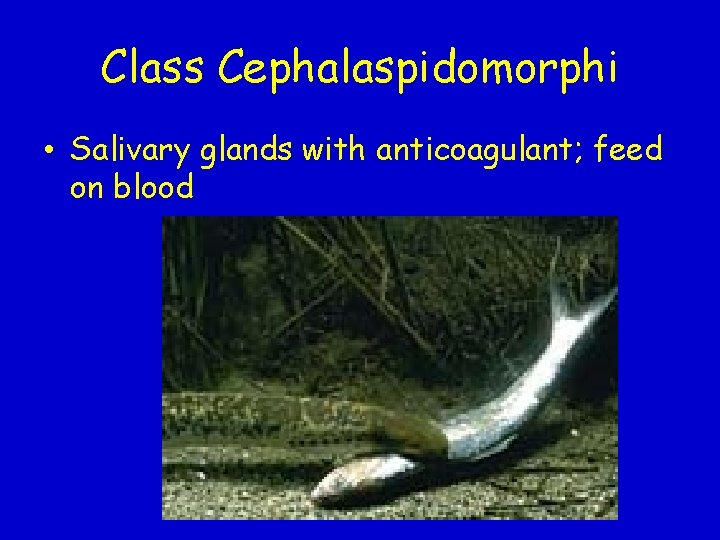
Class Cephalaspidomorphi • Salivary glands with anticoagulant; feed on blood
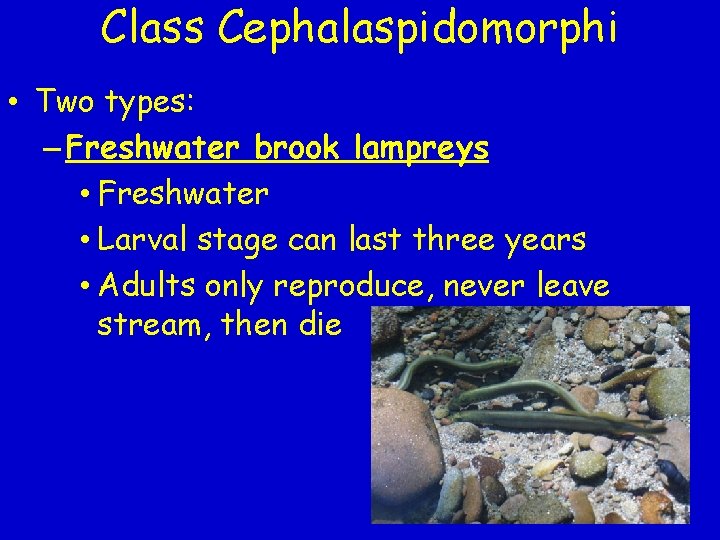
Class Cephalaspidomorphi • Two types: – Freshwater brook lampreys • Freshwater • Larval stage can last three years • Adults only reproduce, never leave stream, then die
Class Cephalaspidomorphi • Two types: – Sea lamprey • Live in ocean or Great lakes • End of live, migrate to freshwater stream to spawn – Female attaches to a stone with mouth – Male uses his mouth and attaches to female’s head – Eggs are shed – Fertilization is external
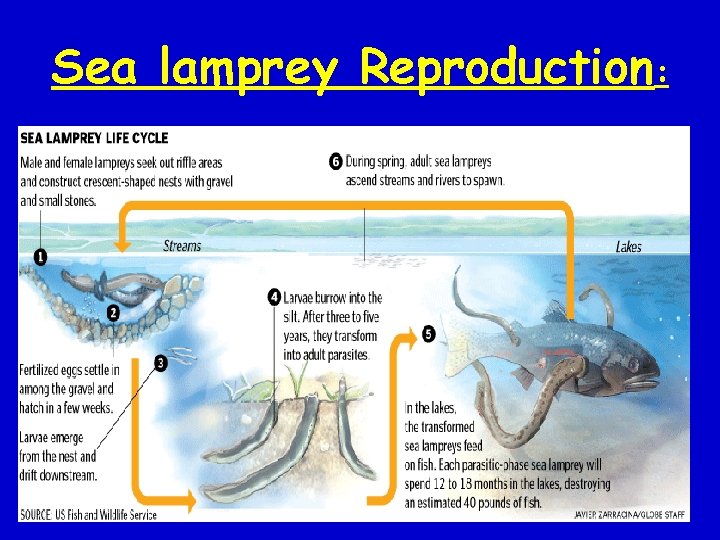
Sea lamprey Reproduction:
Gnathostomata Vertebrates with jaws anterior pair of pharyngeal arches) (evolved from • Jaws importance: –More efficient gill ventilation –Capture and ingestion of a variety of food sources
Gnathostomata • Paired appendages importance: –Decease rolling during locomation –Controls tilt or pitch –Lateral steering
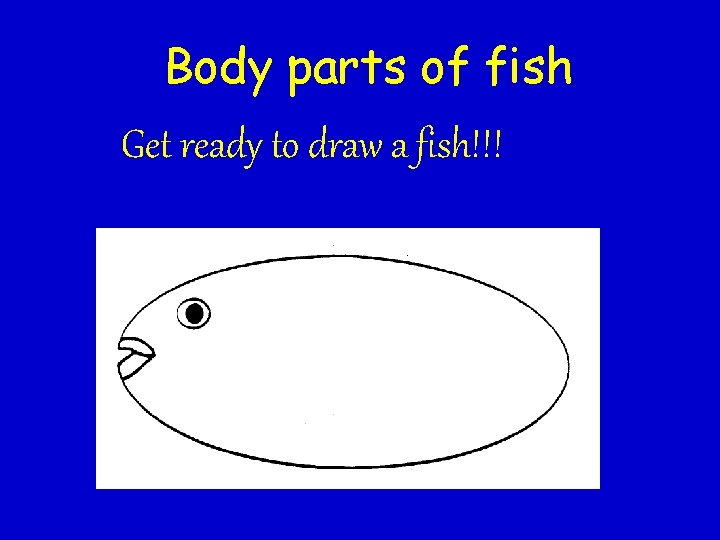
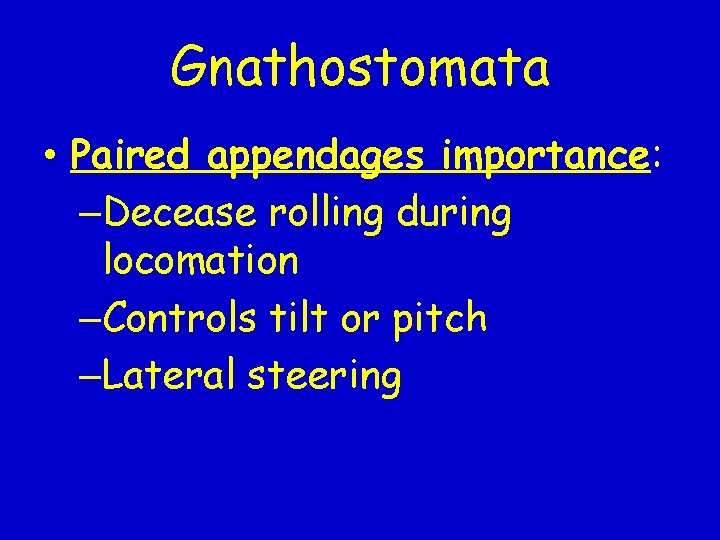
Body parts of fish Get ready to draw a fish!!!
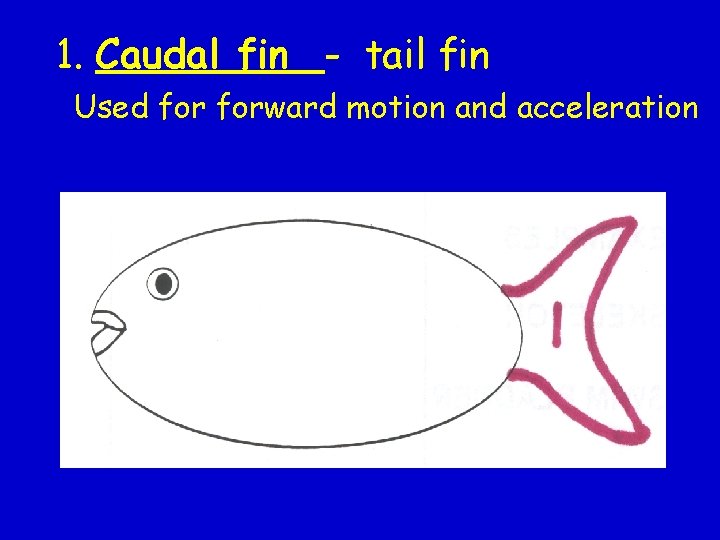
1. Caudal fin - tail fin Used forward motion and acceleration
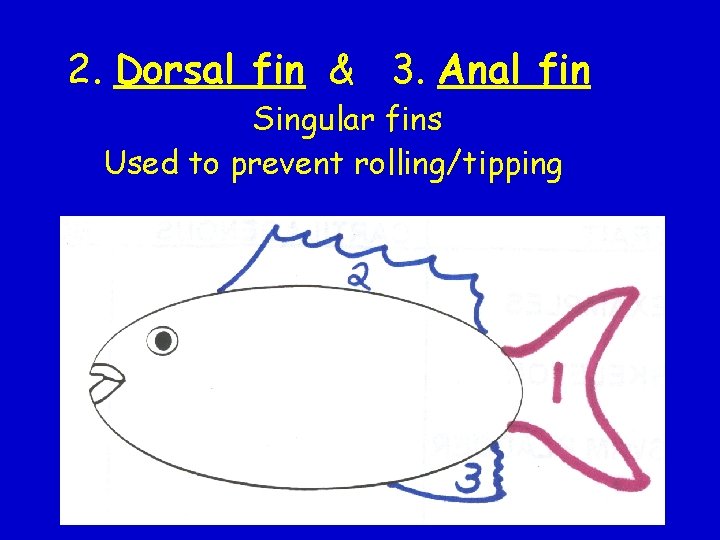
2. Dorsal fin & 3. Anal fin Singular fins Used to prevent rolling/tipping
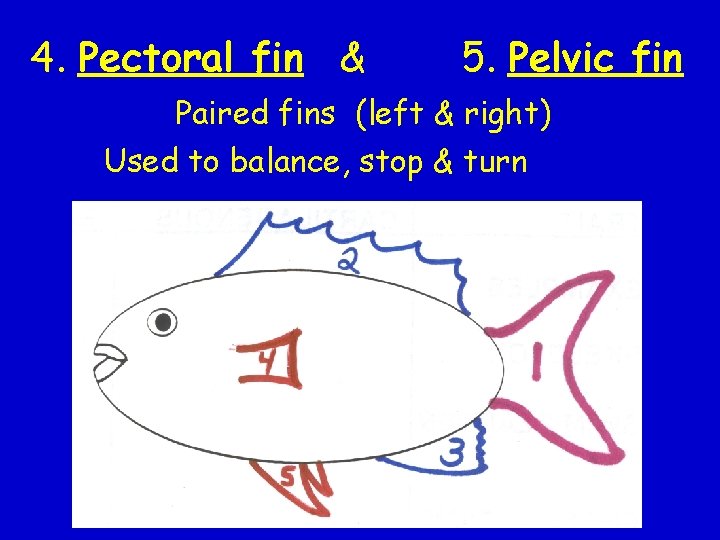
4. Pectoral fin & 5. Pelvic fin Paired fins (left & right) Used to balance, stop & turn
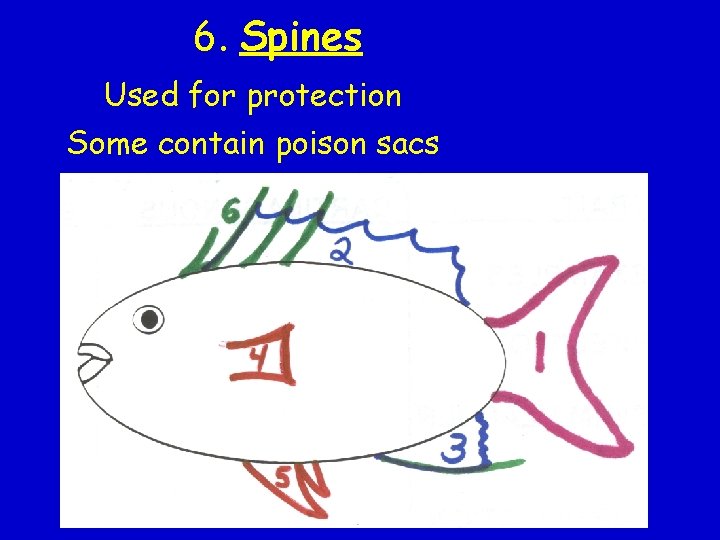
6. Spines Used for protection Some contain poison sacs
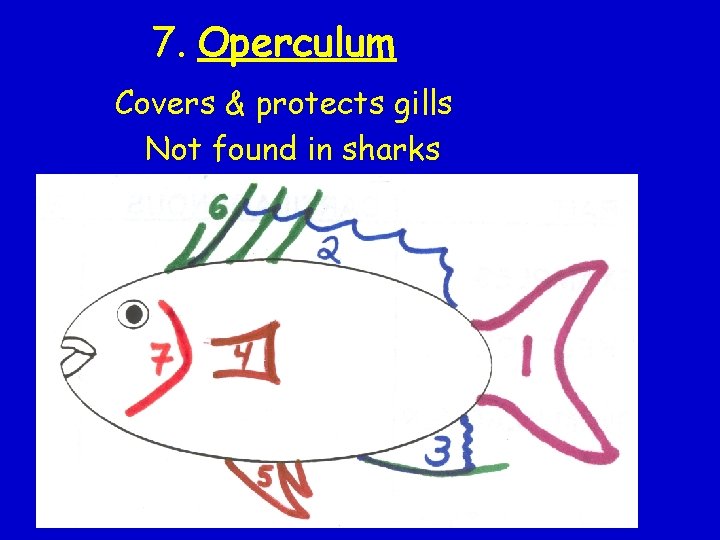
7. Operculum Covers & protects gills Not found in sharks
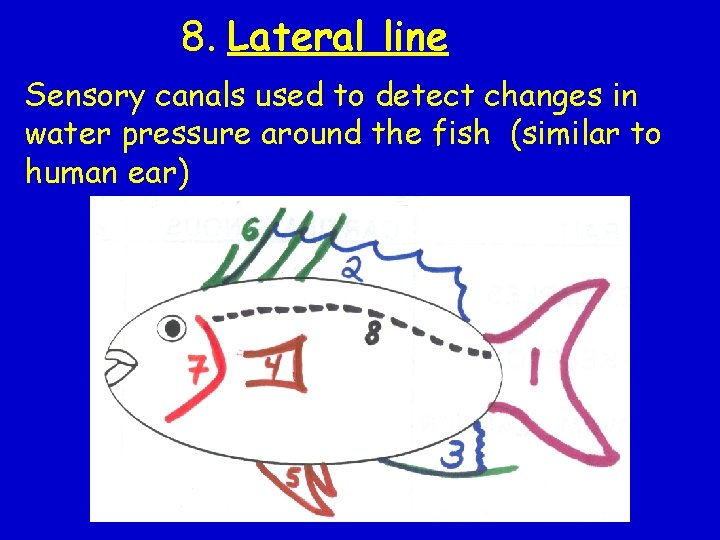
8. Lateral line Sensory canals used to detect changes in water pressure around the fish (similar to human ear)
Gnathostomata • Jaws and appendages: –Increase predatory lifestyles • More feeding: –Increase offspring –Exploit new habitats
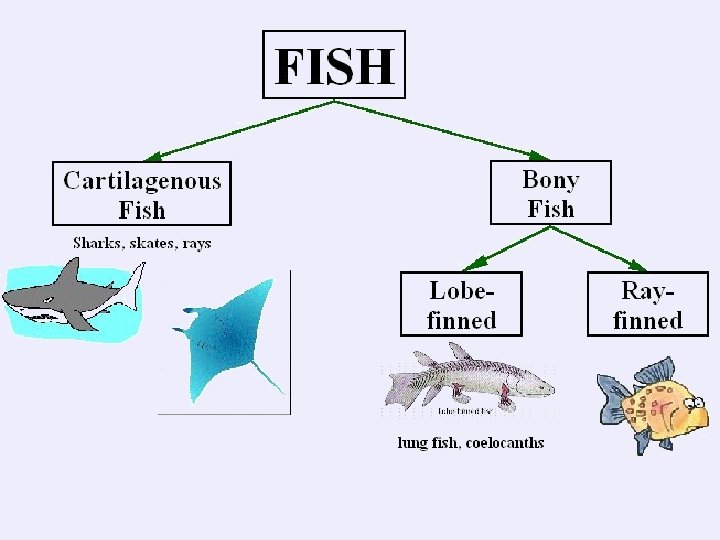
Gnathostomata • Two Classes: –Class Chondrichthyessharks, skates, rays, ratfish –Class Osteichthyes- bone fish
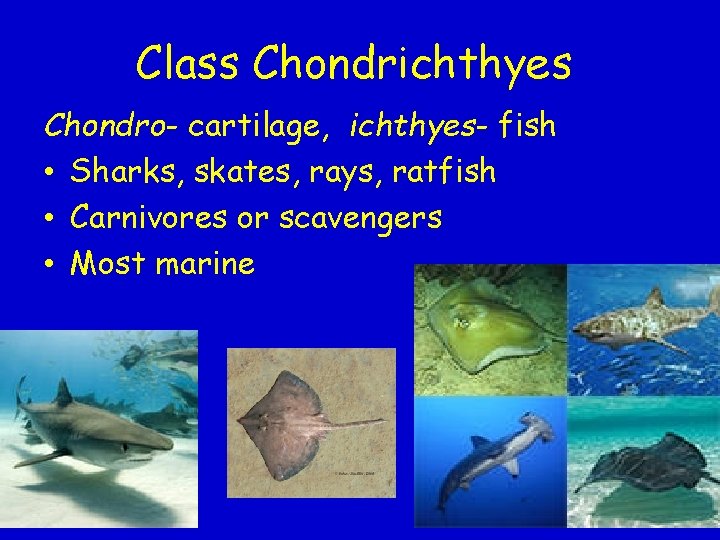
Class Chondrichthyes Chondro- cartilage, ichthyes- fish • Sharks, skates, rays, ratfish • Carnivores or scavengers • Most marine
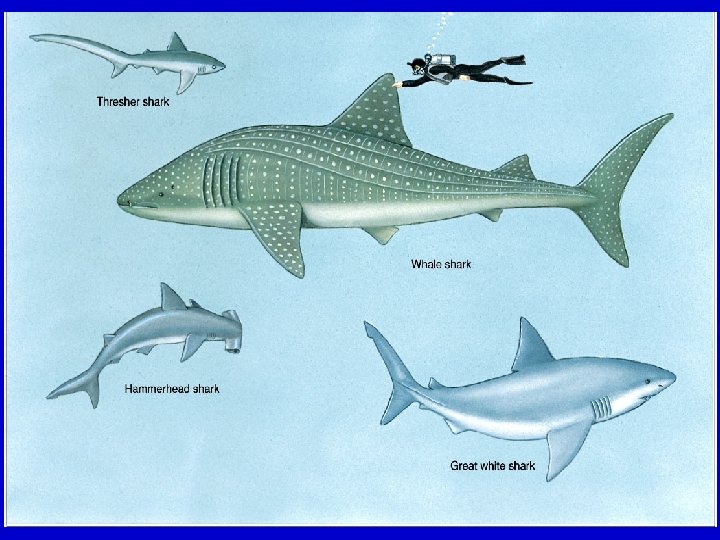
Order : pluerotremata • • Body typically spindle shaped. Gill slits lateral Tail heteroceral Ex: Dog fishes, sevengilled shark, zebra shark, whale shark, hammer headed shark.
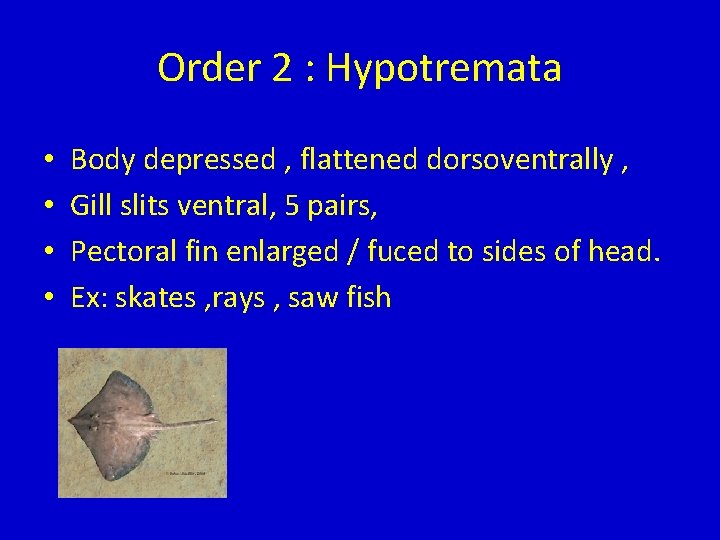
Order 2 : Hypotremata • • Body depressed , flattened dorsoventrally , Gill slits ventral, 5 pairs, Pectoral fin enlarged / fuced to sides of head. Ex: skates , rays , saw fish
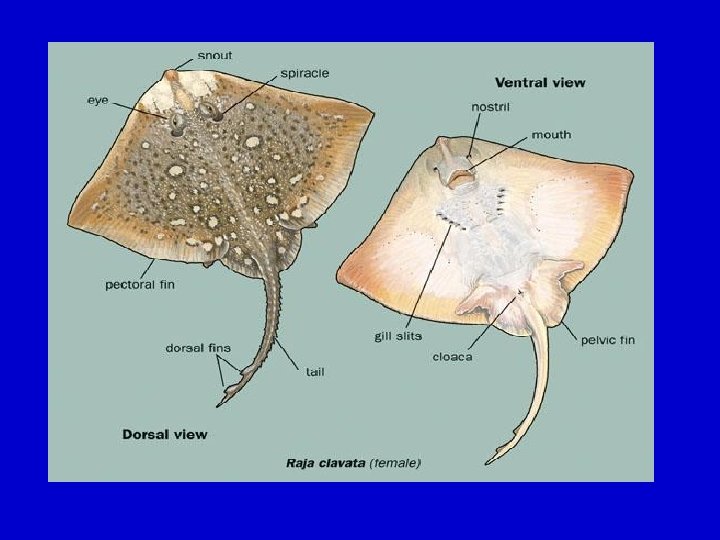
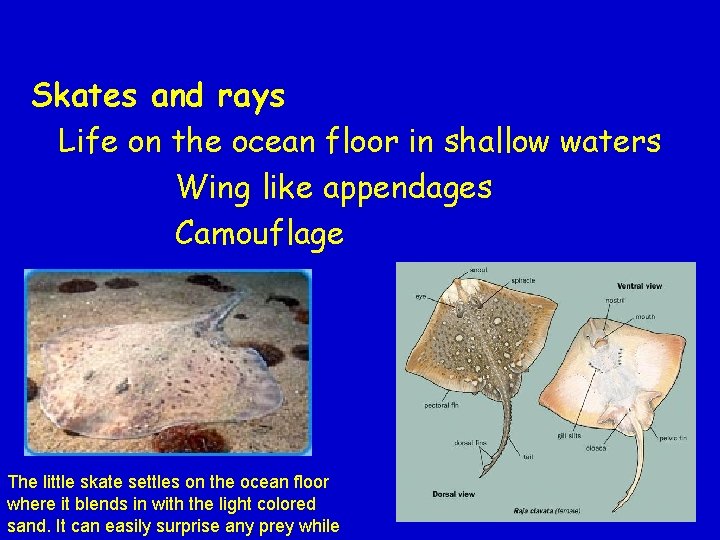
Skates and rays Life on the ocean floor in shallow waters Wing like appendages Camouflage The little skate settles on the ocean floor where it blends in with the light colored sand. It can easily surprise any prey while
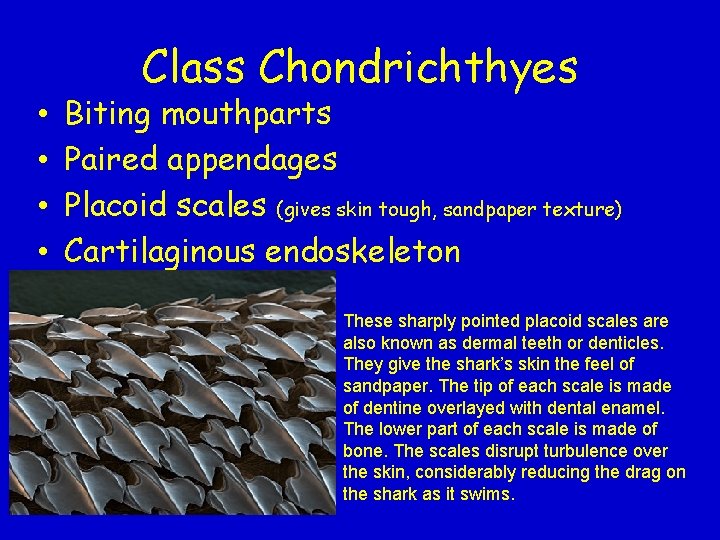
• • Class Chondrichthyes Biting mouthparts Paired appendages Placoid scales (gives skin tough, sandpaper texture) Cartilaginous endoskeleton These sharply pointed placoid scales are also known as dermal teeth or denticles. They give the shark’s skin the feel of sandpaper. The tip of each scale is made of dentine overlayed with dental enamel. The lower part of each scale is made of bone. The scales disrupt turbulence over the skin, considerably reducing the drag on the shark as it swims.
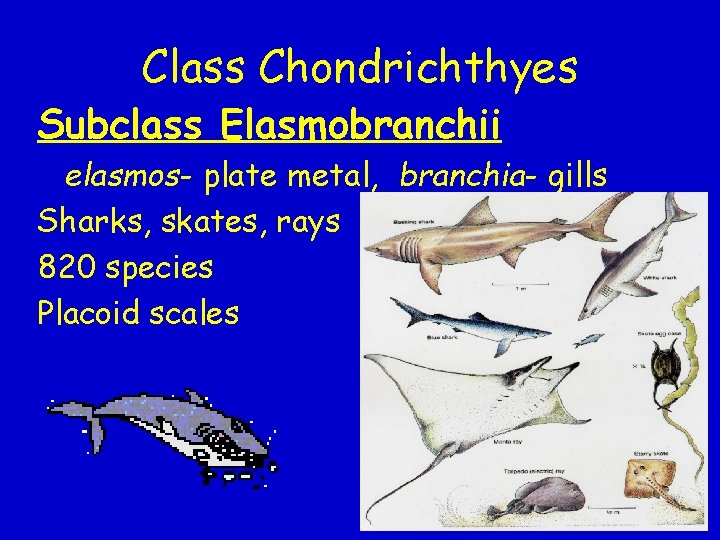
Class Chondrichthyes Subclass Elasmobranchii elasmos- plate metal, branchia- gills Sharks, skates, rays 820 species Placoid scales
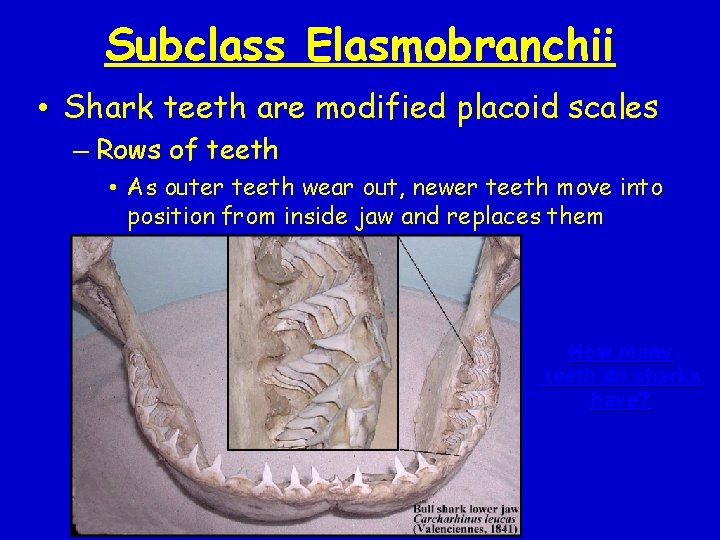
Subclass Elasmobranchii • Shark teeth are modified placoid scales – Rows of teeth • As outer teeth wear out, newer teeth move into position from inside jaw and replaces them How many teeth do sharks have?
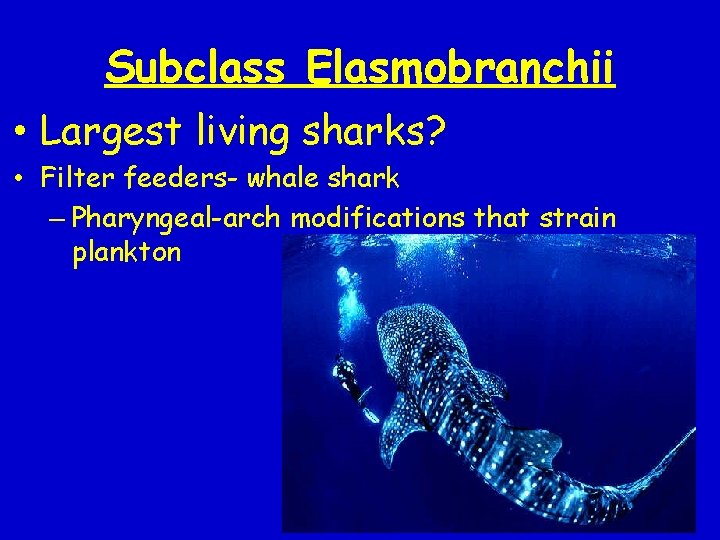
Subclass Elasmobranchii • Largest living sharks? • Filter feeders- whale shark – Pharyngeal-arch modifications that strain plankton
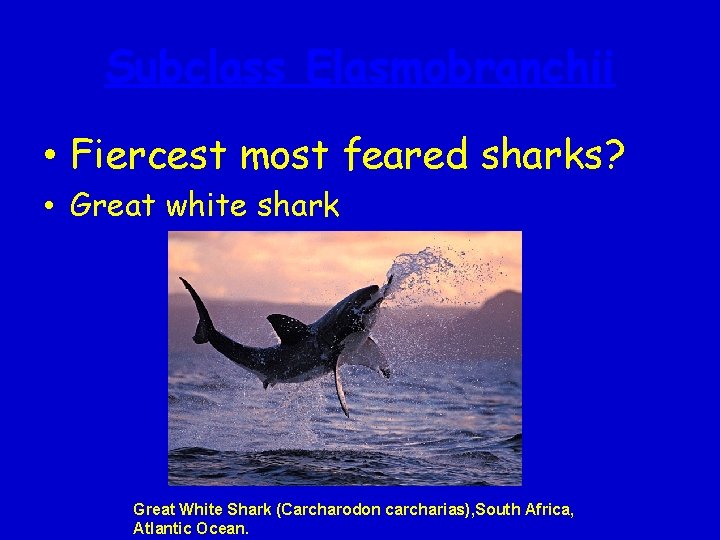
Subclass Elasmobranchii • Fiercest most feared sharks? • Great white shark Great White Shark (Carcharodon carcharias), South Africa, Atlantic Ocean.
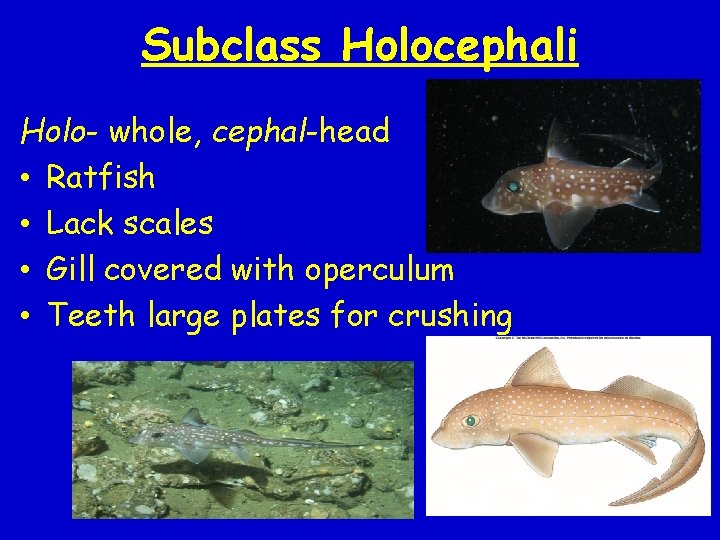
Subclass Holocephali Holo- whole, cephal-head • Ratfish • Lack scales • Gill covered with operculum • Teeth large plates for crushing
Class Osteichthyes • Osteo- bone, ichthyes- fish • Bone in skeleton and/or scales • Bony operculum covering the gill openings • Lungs or swim bladder

Class Osteichthyes • Subclass Sarcopterygii Sacro-flesh, pteryx- fin – Muscular lobes associated with fins – Use lungs in gas exchange
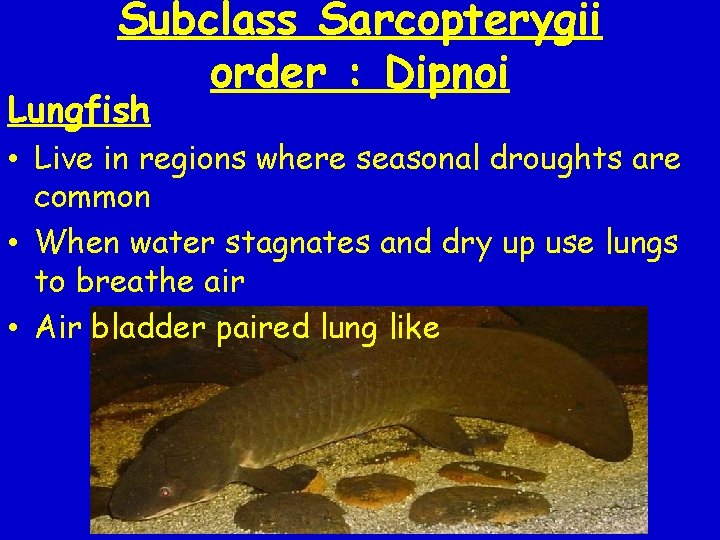
Subclass Sarcopterygii order : Dipnoi Lungfish • Live in regions where seasonal droughts are common • When water stagnates and dry up use lungs to breathe air • Air bladder paired lung like
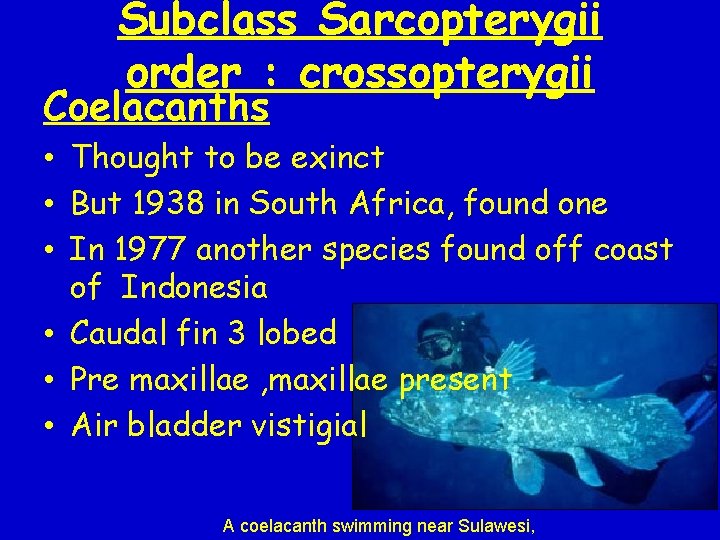
Subclass Sarcopterygii order : crossopterygii Coelacanths • Thought to be exinct • But 1938 in South Africa, found one • In 1977 another species found off coast of Indonesia • Caudal fin 3 lobed • Pre maxillae , maxillae present • Air bladder vistigial A coelacanth swimming near Sulawesi,
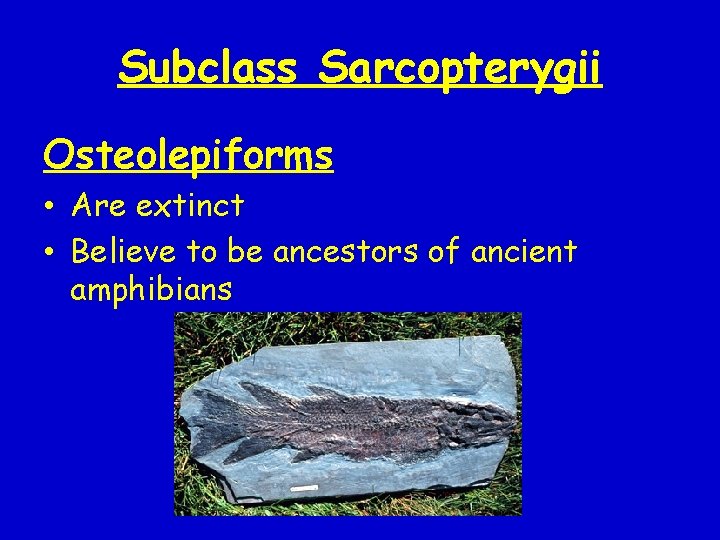
Subclass Sarcopterygii Osteolepiforms • Are extinct • Believe to be ancestors of ancient amphibians
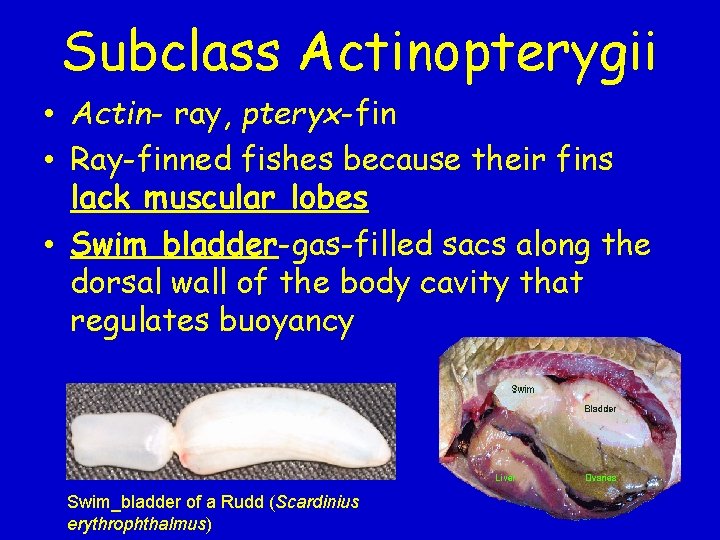
Subclass Actinopterygii • Actin- ray, pteryx-fin • Ray-finned fishes because their fins lack muscular lobes • Swim bladder-gas-filled sacs along the dorsal wall of the body cavity that regulates buoyancy Swim_bladder of a Rudd (Scardinius erythrophthalmus)
Subclass Actinopterygii • One group is called: Chondrosteans • 25 living species today • Ancestral species had a bony skeleton but living members have a cartilaginous skeleton. • Tail with a large upper lobe.
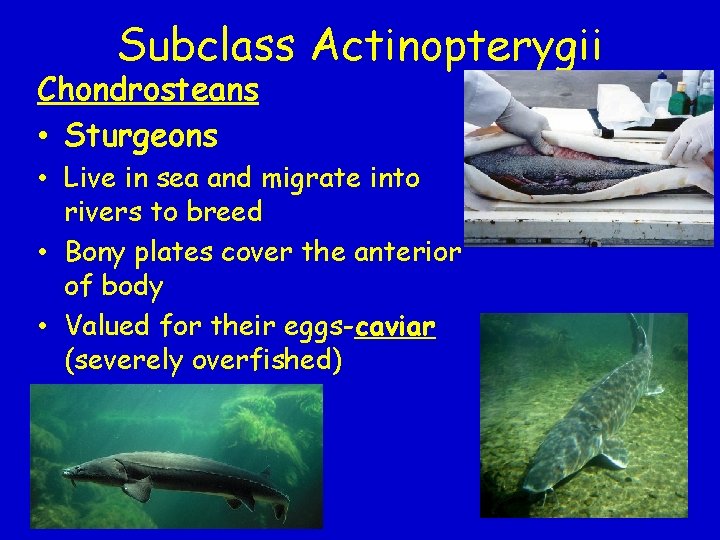
Subclass Actinopterygii Chondrosteans • Sturgeons • Live in sea and migrate into rivers to breed • Bony plates cover the anterior of body • Valued for their eggs-caviar (severely overfished)
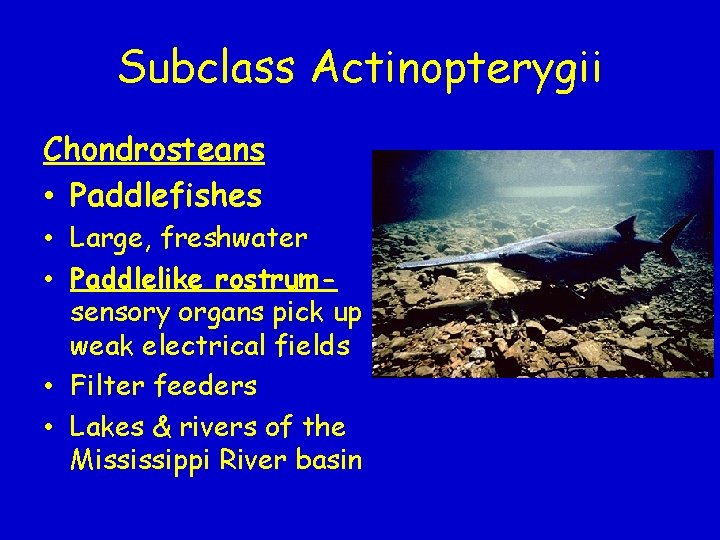
Subclass Actinopterygii Chondrosteans • Paddlefishes • Large, freshwater • Paddlelike rostrumsensory organs pick up weak electrical fields • Filter feeders • Lakes & rivers of the Mississippi River basin
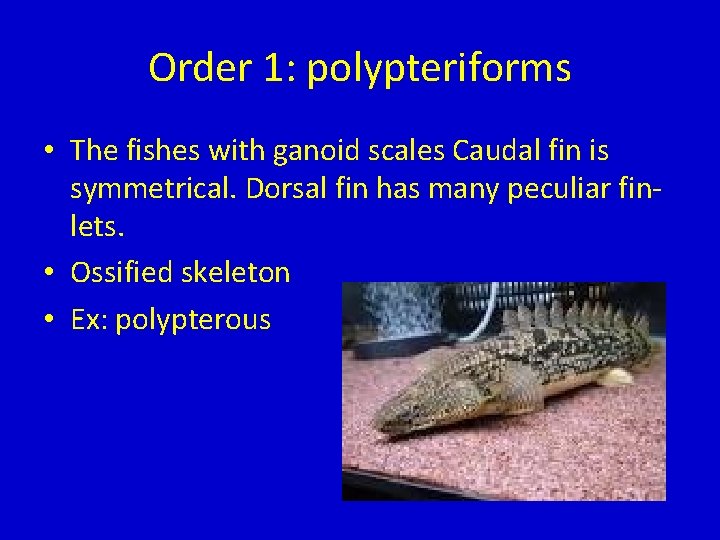
Order 1: polypteriforms • The fishes with ganoid scales Caudal fin is symmetrical. Dorsal fin has many peculiar finlets. • Ossified skeleton • Ex: polypterous
Order 2: Acipenseriformes • Scale less or ganoid scutes • Skeletal largly cartilagenous • Ex: Acipenser , polydon

Sub order holostei • • Mouth opening small Ganoid or cycloid scales Tail fin heteroceral Transition between chondrostei and teleostei
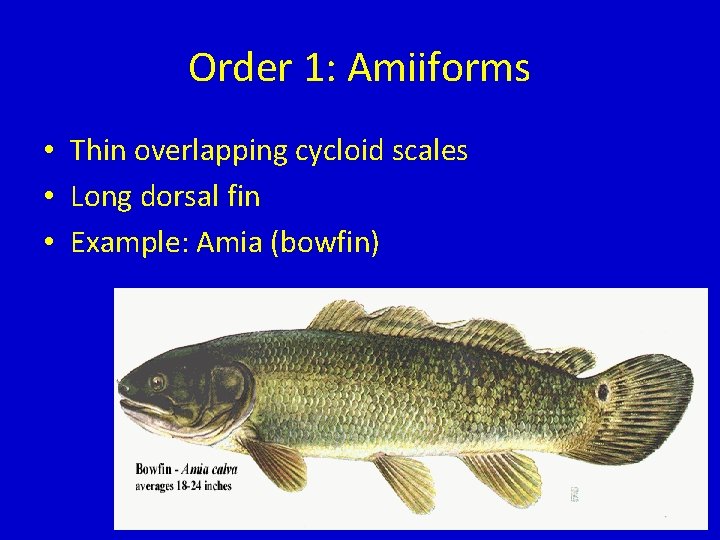
Order 1: Amiiforms • Thin overlapping cycloid scales • Long dorsal fin • Example: Amia (bowfin)
Order 2 : semionotiformes • Snout and body elongated • Scales rhomboidal ganoid in oblique rows • Ex: Lepidosteus
Super order II: Holostel: This include 2 orders. Order 1. Amiiformes. • Caudal fin is heterocercal. Ex Antia (Bowin) • Order 2. Lepldoeteiformes: • Nasal opening at the end of the much elongate snout. Caudal fin is abbreviate heterocercal. • Ex: Lepidpsteus (Gar pike).

• Super order III. Telosteti : This is a very important super order. It includes nearly 25, 000 species. They are divided into many orders.
Order I. Clupelformes : Caudal fin is homocercàl. • • Ex: 1. Hilsa hisha (Herrings). 2. Salmon. Head and operculum not scaled Fins without spines Pelvic fin abdominal Air bladder with open duct to pharynx
Order 2 : Scopeliformes • • Deep sea fishes with phosphorescent organs Mouth wide with numerous minute teeth Swim bladder absent Ex: herpondon
Order 3. Cypriniformes: • Weberian ossicles connecting the ear with air bladder is present. air-bladder is connected with duct to the alimentary cana. L • Ex: Cyprinus( carp)

Order 4: Anguilllformes. • : Body eel like, air-bladder, If present connected with intestine by a duct. • Snake like body. Scales vestigial • Ex: Anguilla. morey
Oredr 5 : Beloniformes • Physoclistic fishes in which fins are without spines. • Pectoral fin large and high on body • Scales cycloid • Ex : Exocoetus, (flying fish). , Cypsilurus
Order 6: . Syngnathlformes • Physoclistic fishes In which the first dorsal fin, If present, Is spinous. • Bony rings on body • Snout tubural with suctorial mouth. • Ex Hippocampus (Sea horse). Syngnathus (Pipe -fish)
Order 7: Psrciformes • Physoclistic fishes fins usually with spines. Usually two dorsal fins. • Air blader without duct • Eg: Fierasfer, Anabas (Climbing perch). Yellow pearch
Order 8. Pleuronectiformes • Both eyes are situated on one side skull is asymmetilcal. • Fins usually without spine. Adults without air bladder. • Body flat, bottom dwellers • Dorsal and anal fin fringing body • Ex : Cynogiossus • Solea
Order 9. Echenelformes • The spinous first dorsal fin converted into an adhesive disc placed on the head. Air bladder is absent. • Ex: Echenis (Sucker fish).
Order 10. Ophiocephaliformes • : Physoclisfic fishes in which are Without spine, scales are cycloid, air bladder is very long. • Ex Channa or opiocephalus. (snake head)
Order 11. Tefradontiformes • Gill openings restricted air bladder is present or absent. • Strong jaws with a sharp beak • Scales often spiny • Ex: Tetrodon, Diodon (Porcupine fish). globe fish

Order 12. Gadiformes Physoclistic fishes in which fins are without spines, scales cycloid
Order 13: Scorpaeniformes • Enlarged heads , and pectoral fins, • Projecting spine from pectoral fins. • Ex: pterois( scorpion fish )
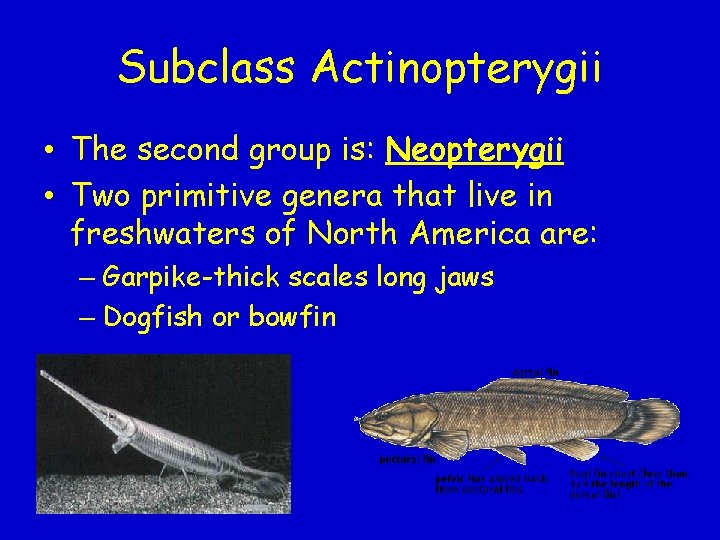
Subclass Actinopterygii • The second group is: Neopterygii • Two primitive genera that live in freshwaters of North America are: – Garpike-thick scales long jaws – Dogfish or bowfin
Subclass Actinopterygii Neopterygii • Most living fishes that are members of this group are refered to as: – Teleosts or modern bony fishes • Number of teleost species exceeds 24, 000! • When you think of fishes these are animals that pop into your head!
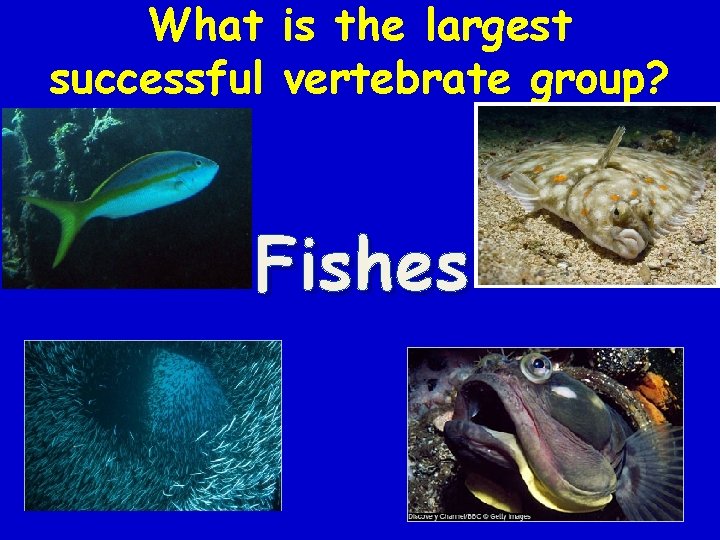
What is the largest successful vertebrate group? Fishes

Why are fishes so successful? • Adapt to environment • Extract oxygen from small amounts of oxygen per unit volume • Efficient locomotor structures • High sensory system • Efficient reproduction (produces overwhelming number of offspring)
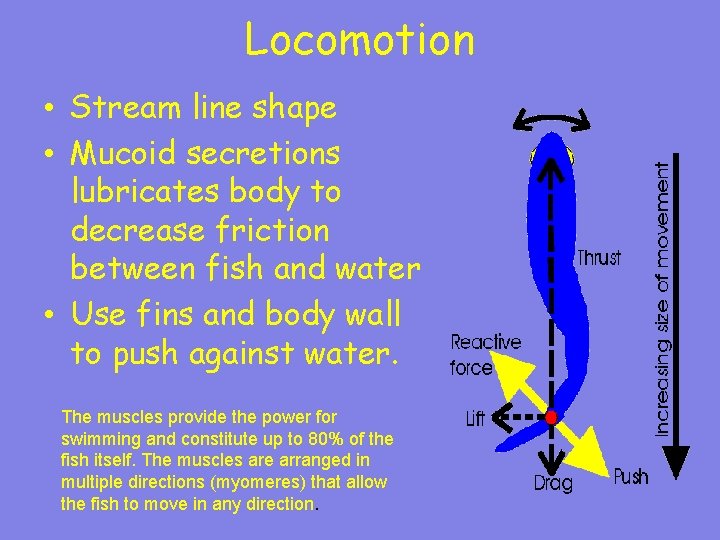
Locomotion • Stream line shape • Mucoid secretions lubricates body to decrease friction between fish and water • Use fins and body wall to push against water. The muscles provide the power for swimming and constitute up to 80% of the fish itself. The muscles are arranged in multiple directions (myomeres) that allow the fish to move in any direction.
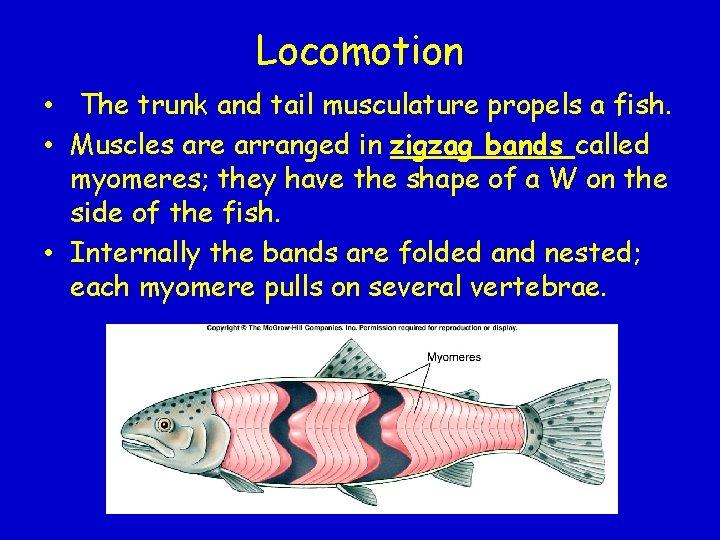
Locomotion • The trunk and tail musculature propels a fish. • Muscles are arranged in zigzag bands called myomeres; they have the shape of a W on the side of the fish. • Internally the bands are folded and nested; each myomere pulls on several vertebrae.
Nutrition and Digestion • Most are predators (always searching for food) – Invertebrates, vertebrates – Swallow prey whole – Capture prey: suction-closing the opercula and rapidly opening mouth • Some filter feeders- Gill rakers: trap plankton while the fish is swimming with mouth open. • Some herbivores and omnivores
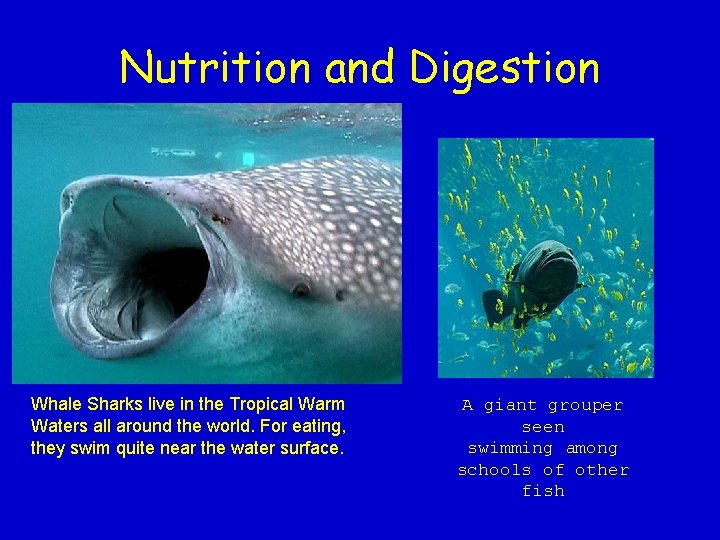
Nutrition and Digestion Whale Sharks live in the Tropical Warm Waters all around the world. For eating, they swim quite near the water surface. A giant grouper seen swimming among schools of other fish

Circulation and Gas Exchange • The heart only has two chambers • Fish heart only pumps blood in one direction
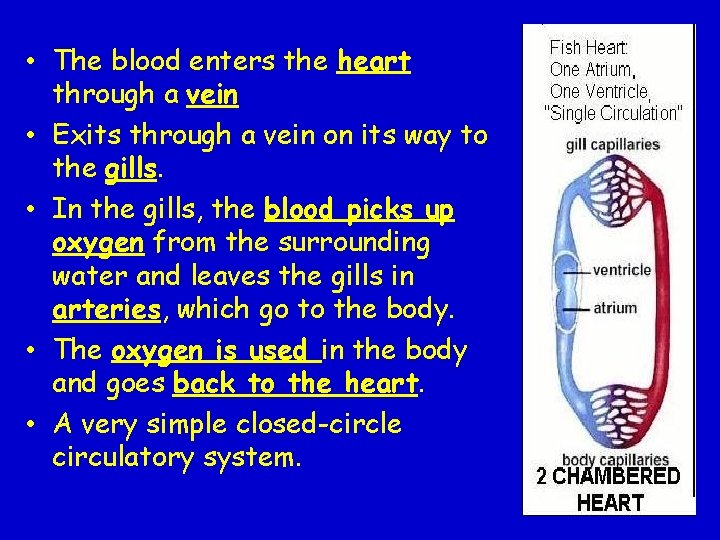
• The blood enters the heart through a vein • Exits through a vein on its way to the gills. • In the gills, the blood picks up oxygen from the surrounding water and leaves the gills in arteries, which go to the body. • The oxygen is used in the body and goes back to the heart. • A very simple closed-circle circulatory system.
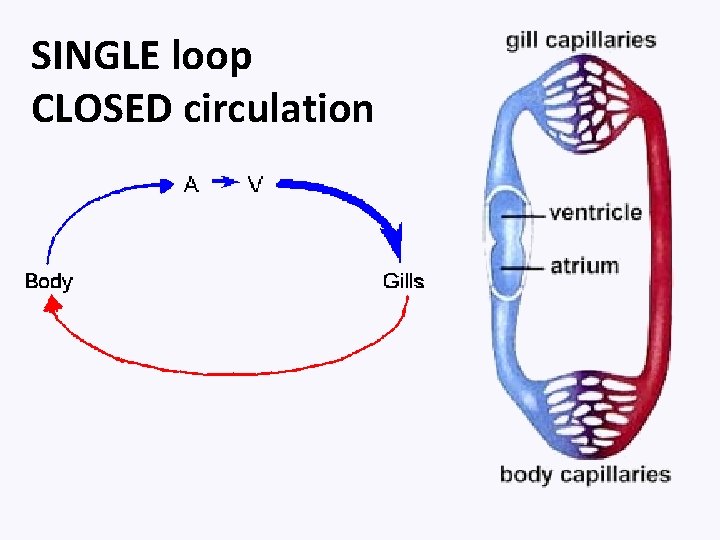
SINGLE loop CLOSED circulation
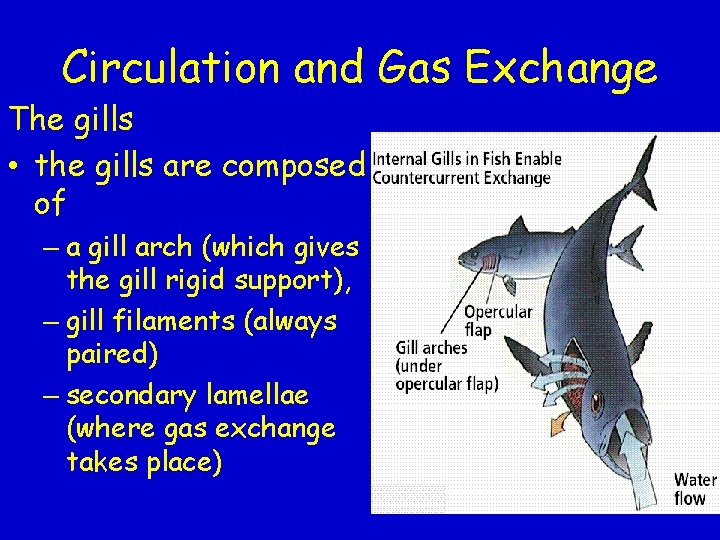
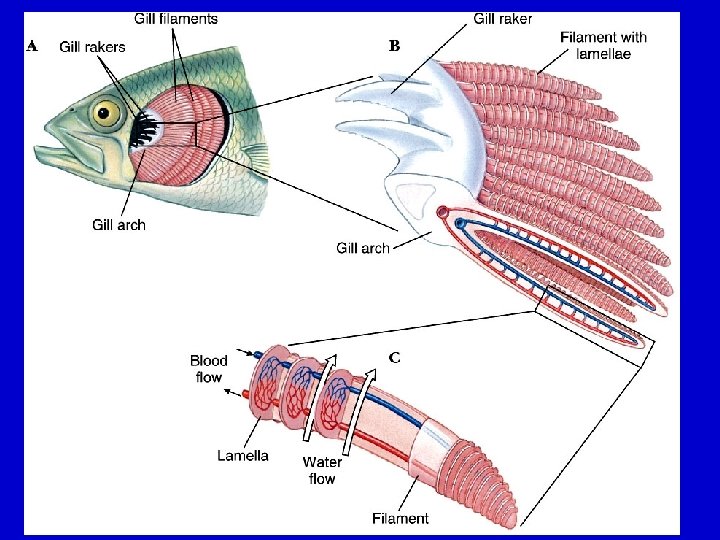
Circulation and Gas Exchange The gills • the gills are composed of – a gill arch (which gives the gill rigid support), – gill filaments (always paired) – secondary lamellae (where gas exchange takes place)
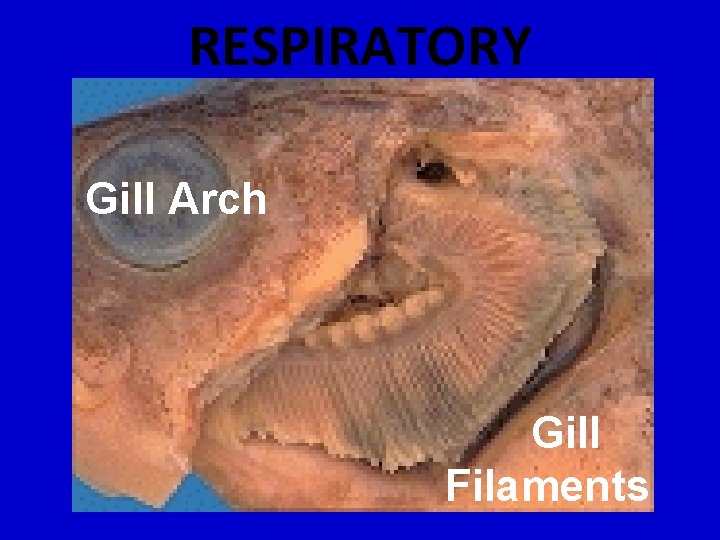
RESPIRATORY Gill Arch Gill Filaments
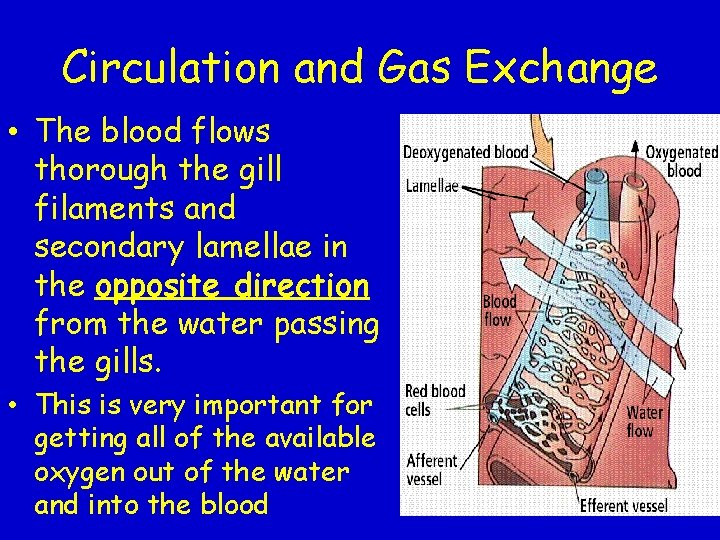
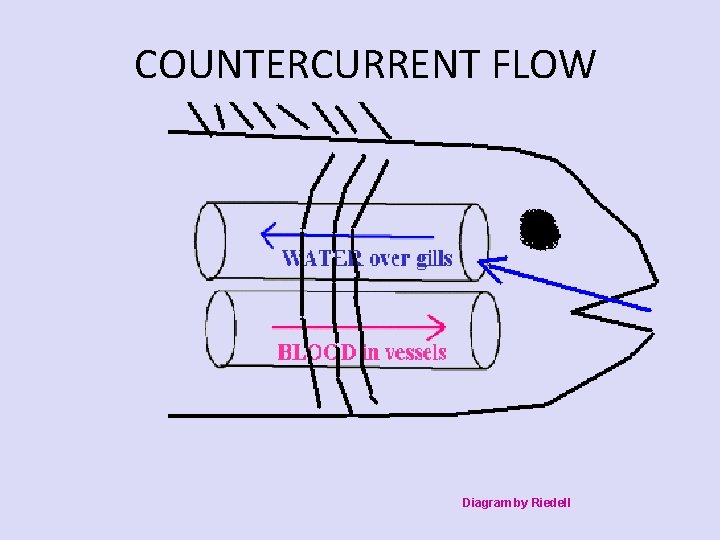
Circulation and Gas Exchange • The blood flows thorough the gill filaments and secondary lamellae in the opposite direction from the water passing the gills. • This is very important for getting all of the available oxygen out of the water and into the blood

The countercurrent exchange system Provides very efficient gas exchange by maintaining a concentration gradient between the blood and the water over the entire length of the capillary bed.
COUNTERCURRENT FLOW Diagram by Riedell
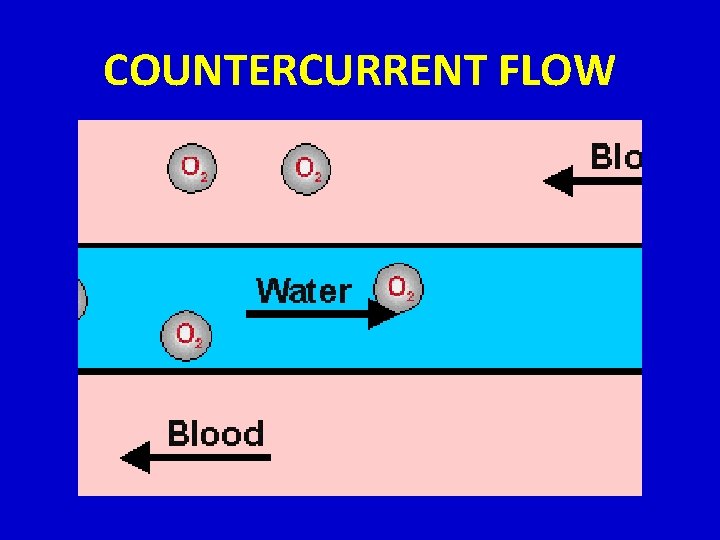
COUNTERCURRENT FLOW

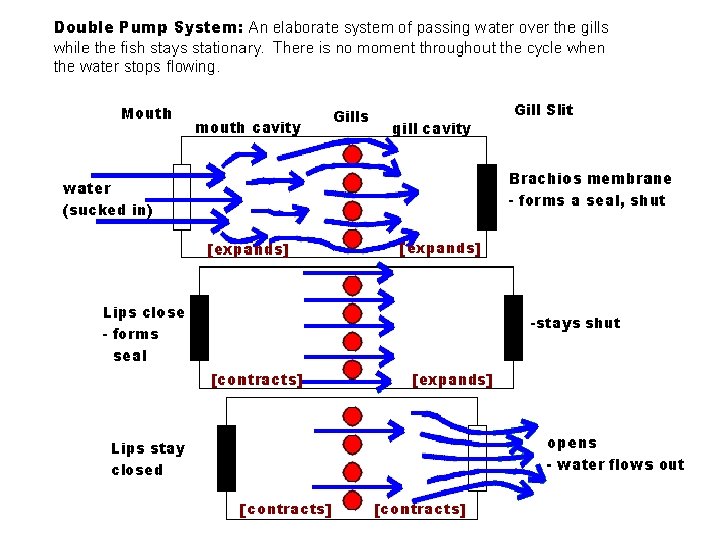
Circulation and Gas Exchange • How do fish ventilate their gills? • Fish must pass new water over their gills continuously to keep a supply of oxygenated water available for diffusion. • Fishes use two different methods – Ram Ventilation – Double pump system
Ram Ventilation • Swim through the water and open your mouth (ram water into mouth) – include the great white shark, the mako shark, the salmon shark and the whale shark , tuna
FYI • When fish are taken out of the water, they suffocate. This is not because they cannot breathe oxygen available in the air, but because their gill arches collapse and there is not enough surface area for diffusion to take place. There actually some fish that can survive out of the water, such as the walking catfish (which have modified lamellae allowing them to breathe air. • It is possible for a fish to suffocate in the water. This could happen when the oxygen in the water has been used up by another biotic source such as bacteria decomposing a red tide. SEE March 8, 2011
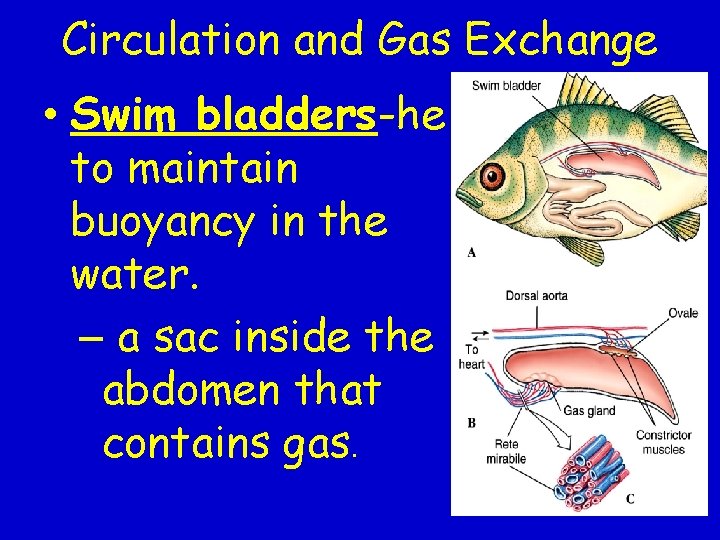
Circulation and Gas Exchange • Swim bladders-help to maintain buoyancy in the water. – a sac inside the abdomen that contains gas.
4 Ways Fishes can Maintain their Vertical Position • 1. Fishes are saturated with buoyant oils. (especially in liver) • 2. Use their fins to provide lift. • 3. Reduction of heavy tissues. (bones less dense, cartilaginous skeletons) • 4. Swim bladder.
Nervous and Sensory Functions • Has a brain and a spinal cord • External nares – in snouts of fishes lead to olfactory receptors – Salmon and lampreys return to streams they were spawned from due to the odors • Eyes – lidless with round lenses; focus by moving lens forward or backward • Inner ears – equilibrium, balance, hearing (similar to other vertebrates)
Nervous and Sensory Functions • Lateral-line system – sensory pits in epidermis detect water currents (from predators) or low frequency sounds • Electroreception – detection of electrical fields that the fish or another organism generates – Highly developed in the rays and sharks
Nervous and Sensory Functions • Electric fish – currents circulate from electric organs in fish’s tail to electroreceptors near its head – an object in the field changes the pattern – Live in murky fresh waters in Africa ( elephant fish) or Amazon basin in South America – EX: electric eel (bony fish) • Shocks in excess of 500 volts – EX: electric ray (an elasmobranch) • Pulses of 50 volts

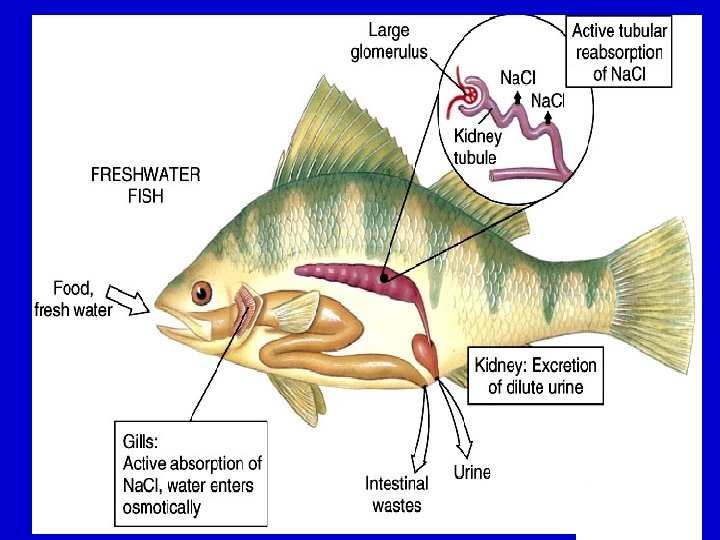
Excretion and Osmoregulation • Kidneys and gills- maintain proper balance of electrolytes (ions) and water in their tissues • Nephrons- excretory structures in the kidneys that filter bloodborne nitrogenous waste, ions, water, and small organic compounds across a network of capillaries called: glomerulus • Filtrate passes to a tubule system essential components are absorbed into blood filtrate remaining- is excreted
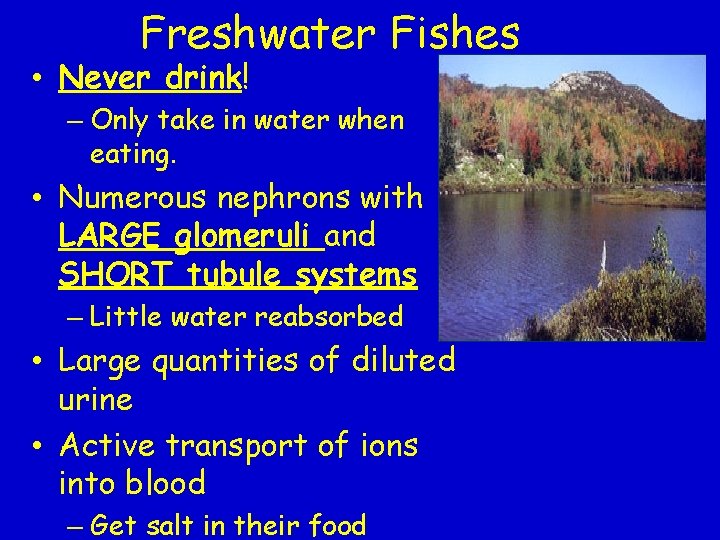
Freshwater Fishes • Never drink! – Only take in water when eating. • Numerous nephrons with LARGE glomeruli and SHORT tubule systems – Little water reabsorbed • Large quantities of diluted urine • Active transport of ions into blood – Get salt in their food
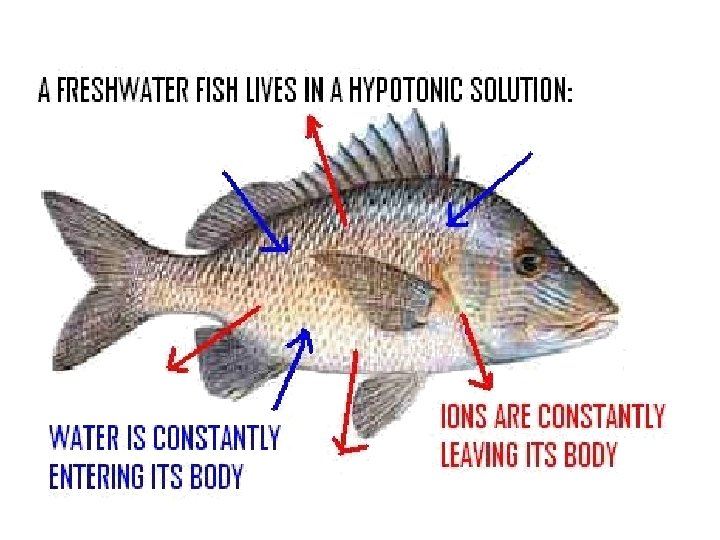
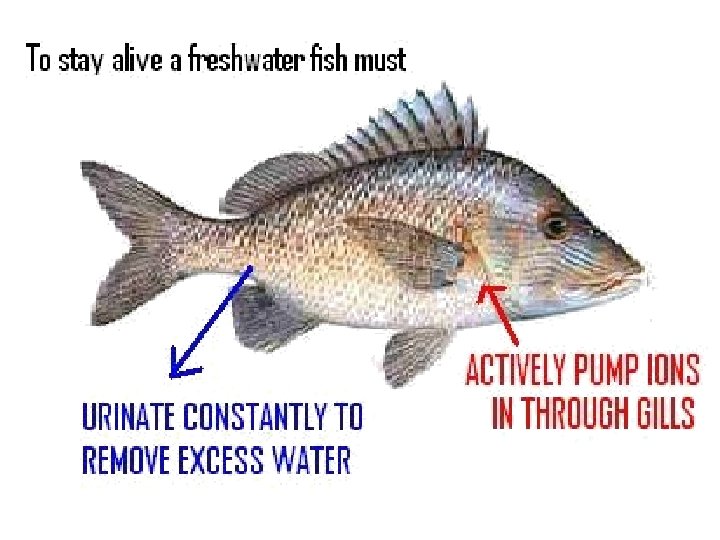
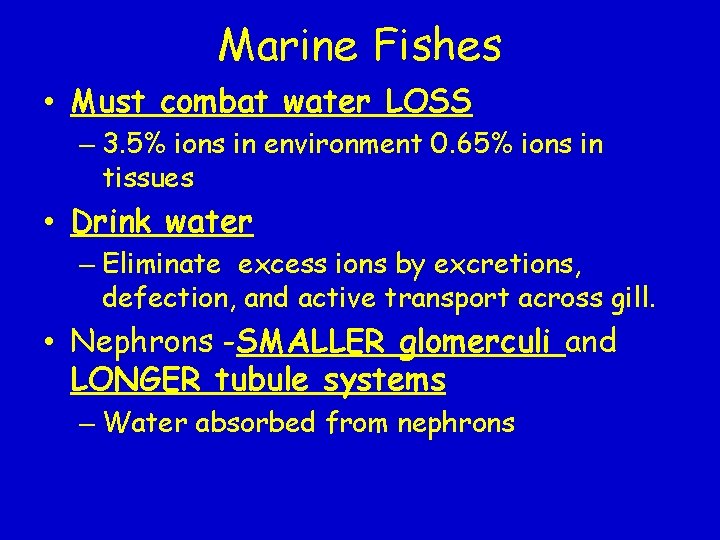
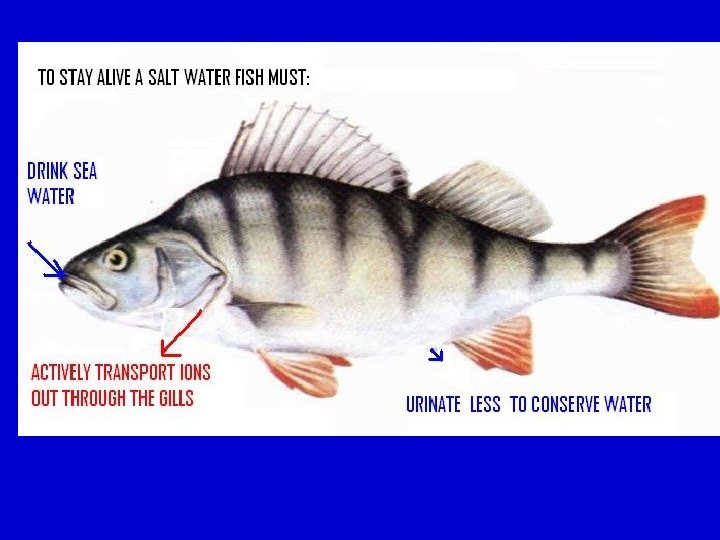
Marine Fishes • Must combat water LOSS – 3. 5% ions in environment 0. 65% ions in tissues • Drink water – Eliminate excess ions by excretions, defection, and active transport across gill. • Nephrons -SMALLER glomerculi and LONGER tubule systems – Water absorbed from nephrons
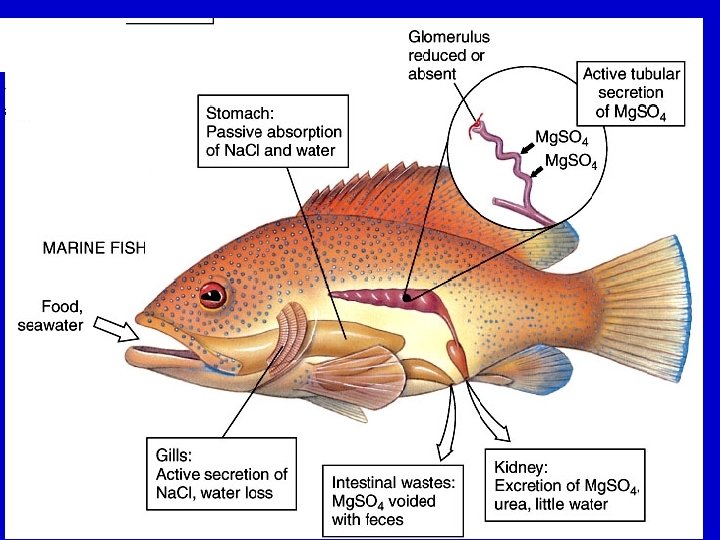


Elasmobranchs • Convert nitrogenous waste into urea in the liver – Urea is stored in tissues all over body (hyperosmotic to seawater) • Sharks tissue is same as concentration of ions in sea water – Possess rectal gland that removes excess Na. Cl from blood and excretes it into the cloaca
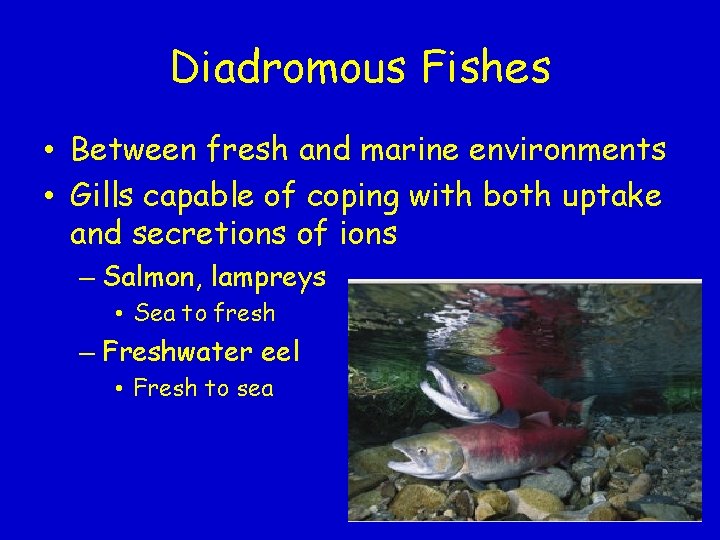
Diadromous Fishes • Between fresh and marine environments • Gills capable of coping with both uptake and secretions of ions – Salmon, lampreys • Sea to fresh – Freshwater eel • Fresh to sea

Reproduction and Development • Ovoparous-- Lay undeveloped eggs, External fertilization (90% of bony fish), Internal fertilization (some sharks and rays) – fish lay huge numbers of eggs; a female cod may release 4 -6 million eggs. • Ovoviviparous- Internal developmentwithout direct maternal nourishment. Advanced at birth (most sharks + rays)Larval birth (some scorpeaniformsrockfish)
Reproduction and Development • Viviparous- Internal developmentdirect nourishment from mother-Fully advanced at birth (some sharks, surf perches)
- Slides: 111