
THE FIRST WORLD WAR 1914 1918 Who is

- Slides: 80
THE FIRST WORLD WAR 1914 -1918
Who is this band? https: //www. youtube. com/watc h? v=Ijk 4 j-r 7 q. PA
“Take Me Out” by…
Book Search • Now…look up the “band” in your text books. Use your index! • What does “the band” have to do with WWI? • What is ironic about the song title and the name of the band?
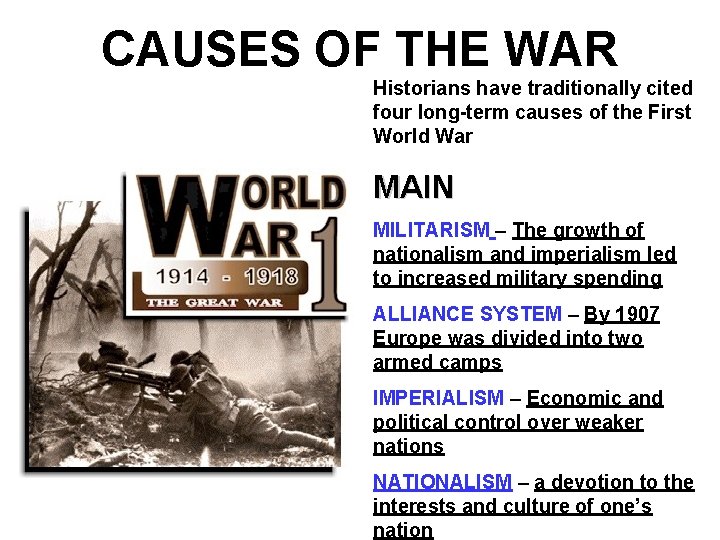
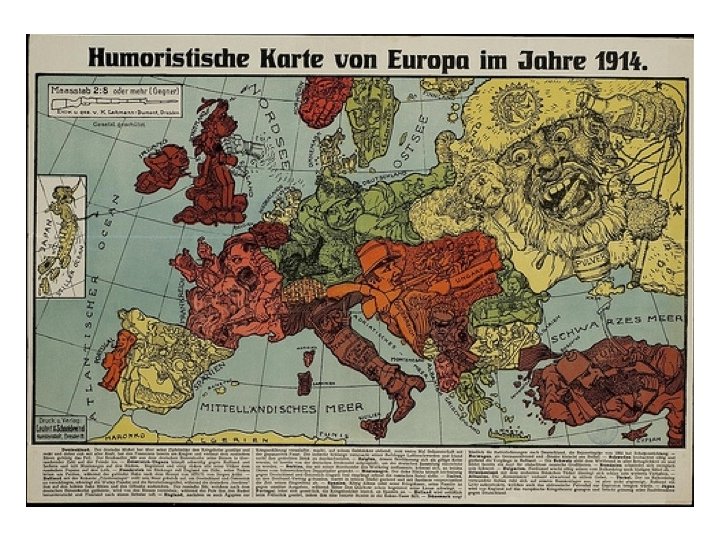
CAUSES OF THE WAR Historians have traditionally cited four long-term causes of the First World War MAIN MILITARISM – The growth of nationalism and imperialism led to increased military spending ALLIANCE SYSTEM – By 1907 Europe was divided into two armed camps IMPERIALISM – Economic and political control over weaker nations NATIONALISM – a devotion to the interests and culture of one’s nation
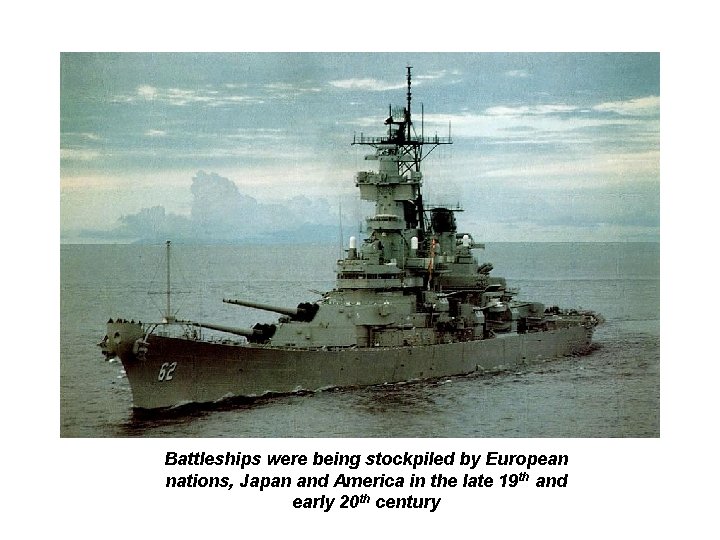
MILITARISM Ø Empires had to be defended and European nations increased military spending enormously in the late 19 th and early 20 th century Ø By 1890 the strongest nation militarily in Europe was Germany Ø Germany had a strong army and built up a navy to rival England’s fleet Ø France, Italy, Japan and the United States quickly joined in the naval buildup = stockpile
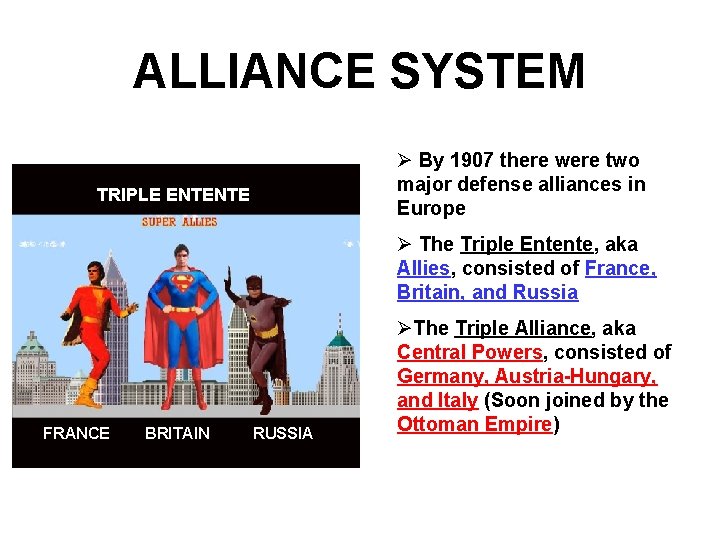
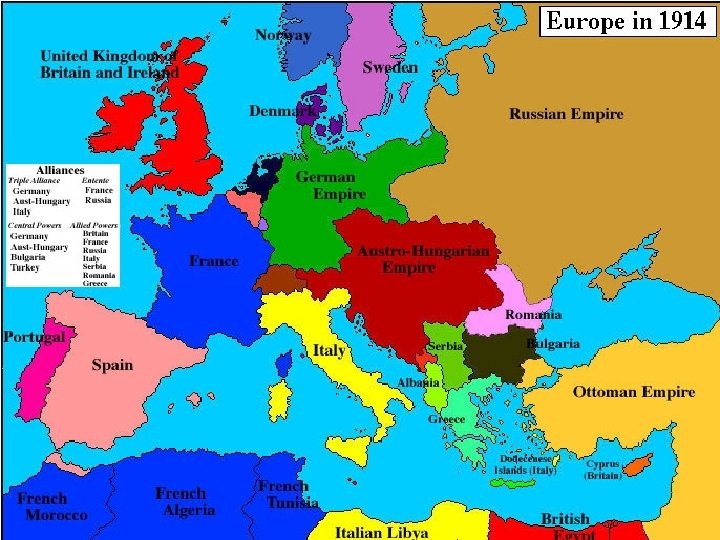
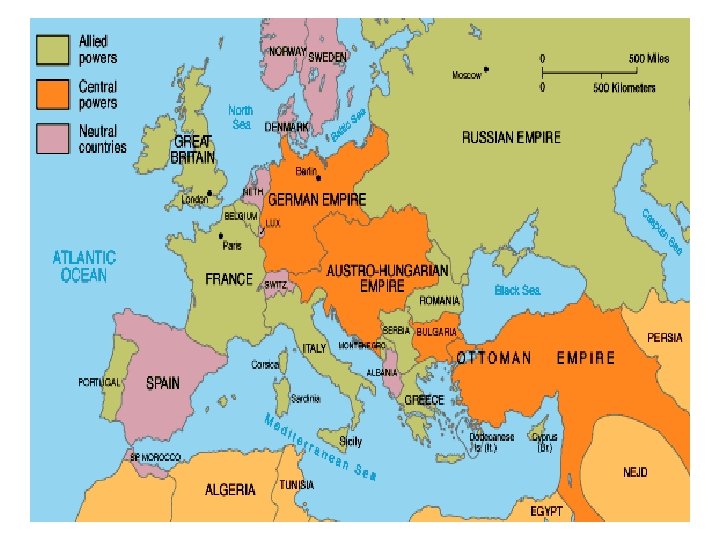
ALLIANCE SYSTEM Ø By 1907 there were two major defense alliances in Europe TRIPLE ENTENTE Ø The Triple Entente, aka Allies, consisted of France, Britain, and Russia FRANCE BRITAIN RUSSIA ØThe Triple Alliance, aka Central Powers, consisted of Germany, Austria-Hungary, and Italy (Soon joined by the Ottoman Empire)
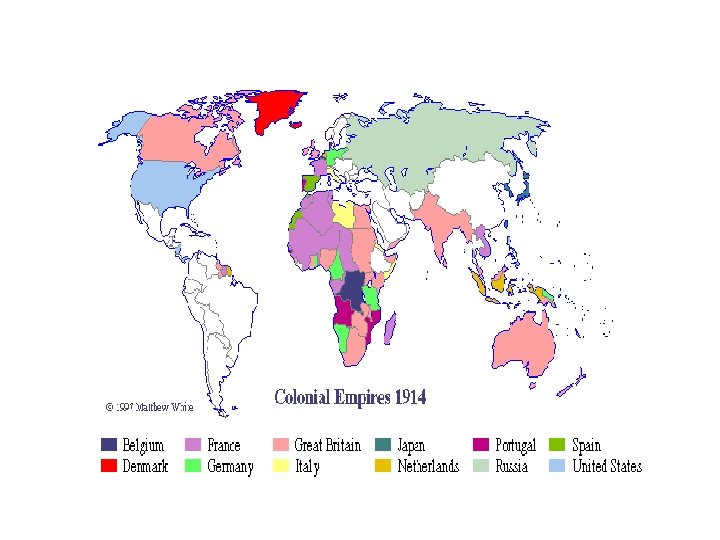
IMPERIALISM § For many centuries, European nations built empires § Colonies supplied European nations with raw materials and provided markets for manufactured goods § As Germany industrialized it competed directly with France and Britain § Major European countries also competed for land in Africa
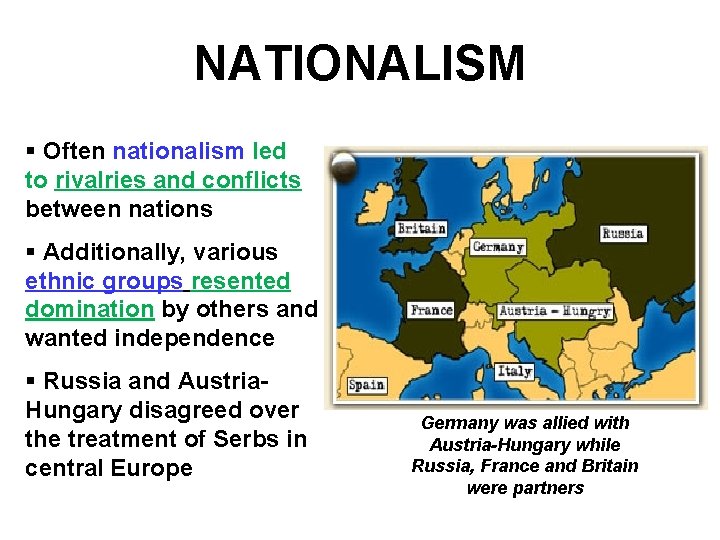
NATIONALISM § Often nationalism led to rivalries and conflicts between nations § Additionally, various ethnic groups resented domination by others and wanted independence § Russia and Austria. Hungary disagreed over the treatment of Serbs in central Europe Germany was allied with Austria-Hungary while Russia, France and Britain were partners
Battleships were being stockpiled by European nations, Japan and America in the late 19 th and early 20 th century
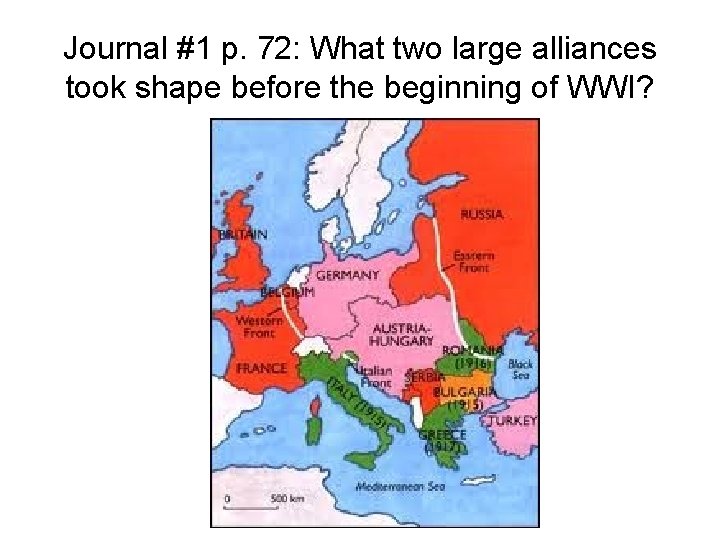
Journal #1 p. 72: What two large alliances took shape before the beginning of WWI?
Answer: Central Powers Allies • Italy, Austria-Hungary, Germany, • France, Britain, Russia, and Japan– after war begins become the Allies
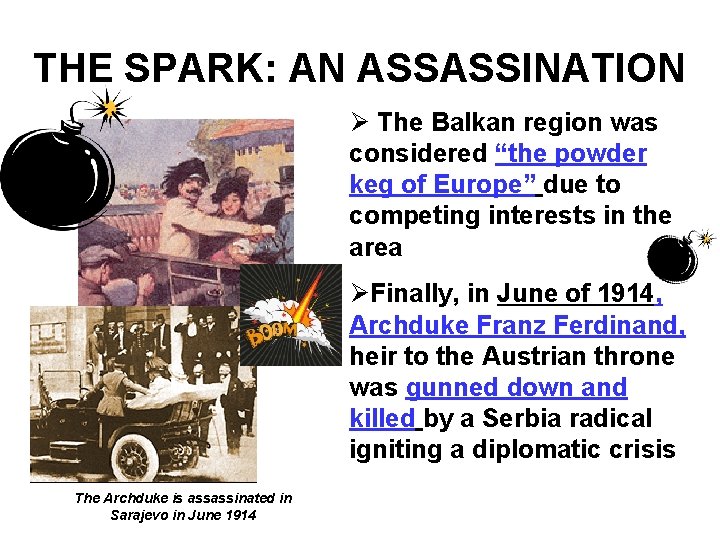
THE SPARK: AN ASSASSINATION Ø The Balkan region was considered “the powder keg of Europe” due to competing interests in the area ØFinally, in June of 1914, Archduke Franz Ferdinand, heir to the Austrian throne was gunned down and killed by a Serbia radical igniting a diplomatic crisis The Archduke is assassinated in Sarajevo in June 1914
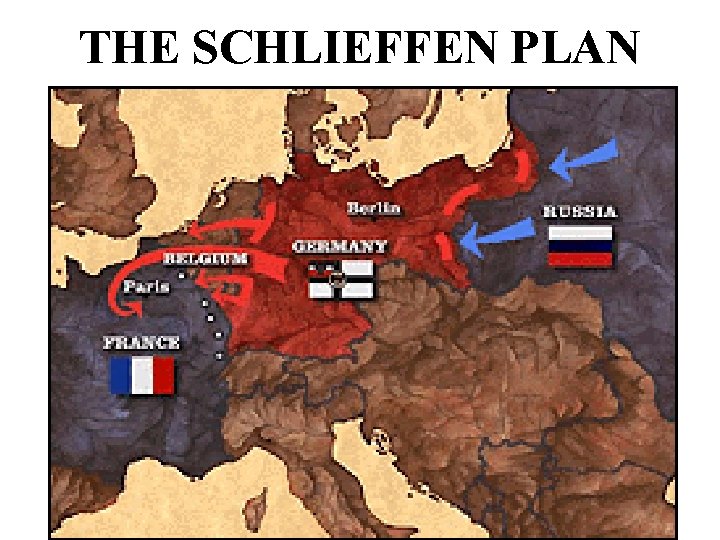
THE SCHLIEFFEN PLAN
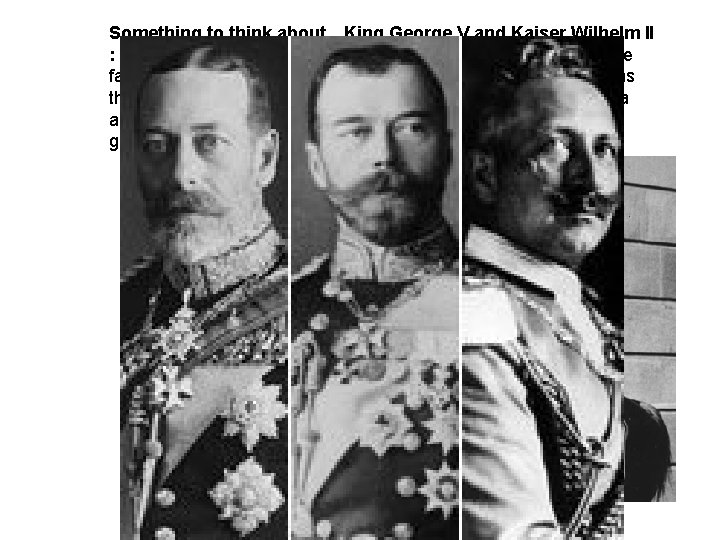
Something to think about…King George V and Kaiser Wilhelm II : Adding to the tensions in pre-World War I Europe were the close familial ties that bound many rulers. England's King George V was the first cousin of both Kaiser Wilhelm II and Nicholas II of Russia and George, Wilhelm and Nicholas' wife, Alexandra were all grandchildren of Queen Victoria.
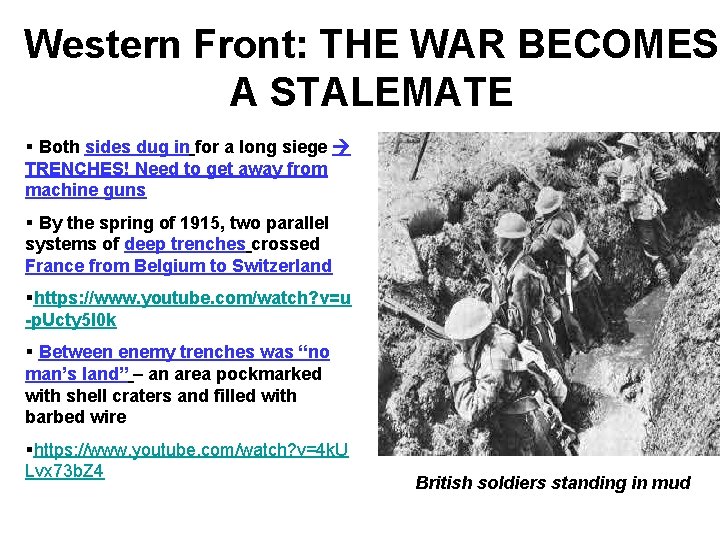
Western Front: THE WAR BECOMES A STALEMATE § Both sides dug in for a long siege TRENCHES! Need to get away from machine guns § By the spring of 1915, two parallel systems of deep trenches crossed France from Belgium to Switzerland §https: //www. youtube. com/watch? v=u -p. Ucty 5 I 0 k § Between enemy trenches was “no man’s land” – an area pockmarked with shell craters and filled with barbed wire §https: //www. youtube. com/watch? v=4 k. U Lvx 73 b. Z 4 British soldiers standing in mud
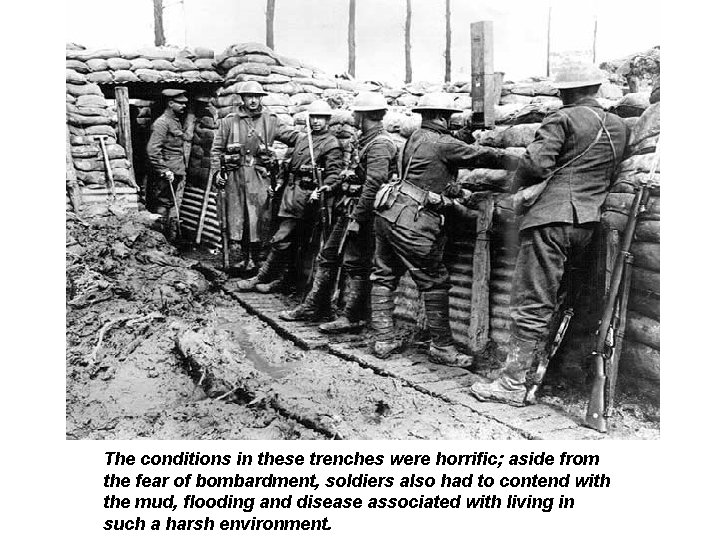
German Soldiers The conditions in these trenches were horrific; aside from the fear of bombardment, soldiers also had to contend with the mud, flooding and disease associated with living in such a harsh environment.
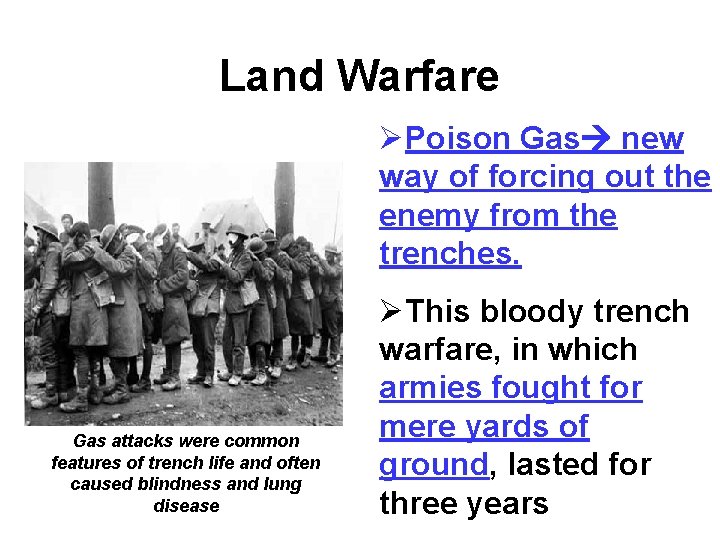
Land Warfare ØPoison Gas new way of forcing out the enemy from the trenches. Gas attacks were common features of trench life and often caused blindness and lung disease ØThis bloody trench warfare, in which armies fought for mere yards of ground, lasted for three years
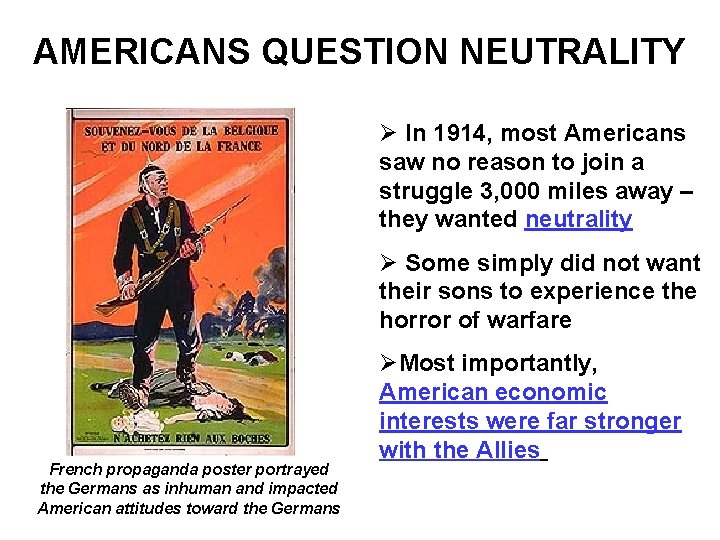
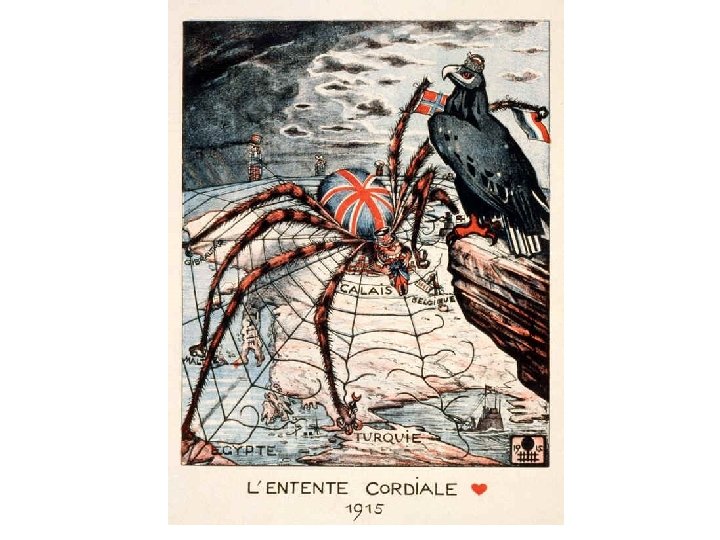
AMERICANS QUESTION NEUTRALITY Ø In 1914, most Americans saw no reason to join a struggle 3, 000 miles away – they wanted neutrality Ø Some simply did not want their sons to experience the horror of warfare French propaganda poster portrayed the Germans as inhuman and impacted American attitudes toward the Germans ØMost importantly, American economic interests were far stronger with the Allies
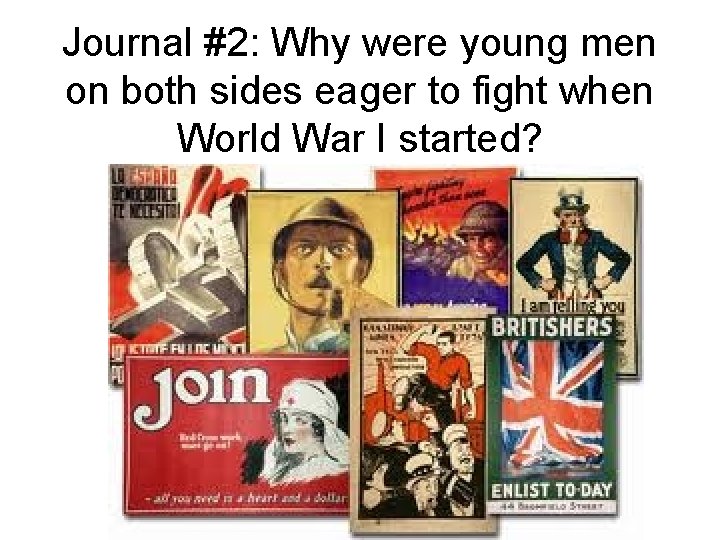
Journal #2: Why were young men on both sides eager to fight when World War I started?
Answer: • Stirred by feelings of national pride, young men joined looking for an exciting adventure.
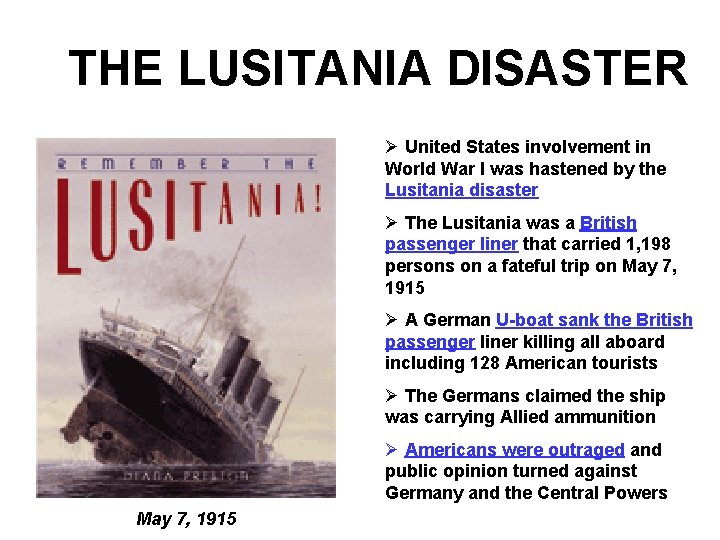
THE LUSITANIA DISASTER Ø United States involvement in World War I was hastened by the Lusitania disaster Ø The Lusitania was a British passenger liner that carried 1, 198 persons on a fateful trip on May 7, 1915 Ø A German U-boat sank the British passenger liner killing all aboard including 128 American tourists Ø The Germans claimed the ship was carrying Allied ammunition Ø Americans were outraged and public opinion turned against Germany and the Central Powers May 7, 1915
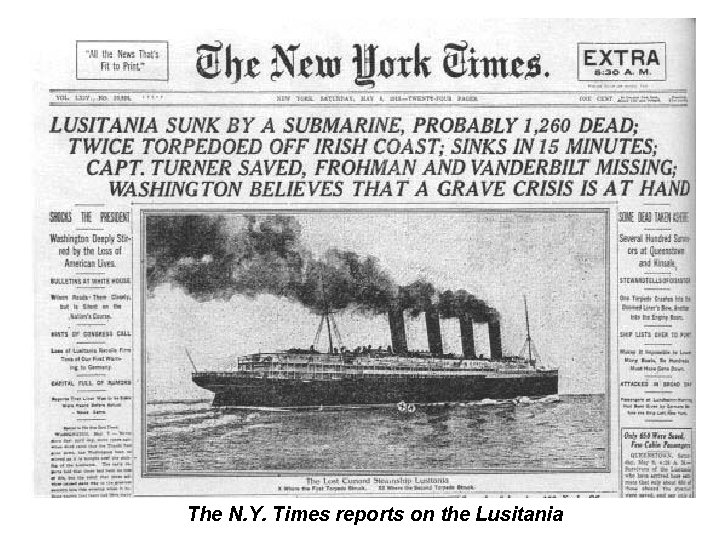
The N. Y. Times reports on the Lusitania
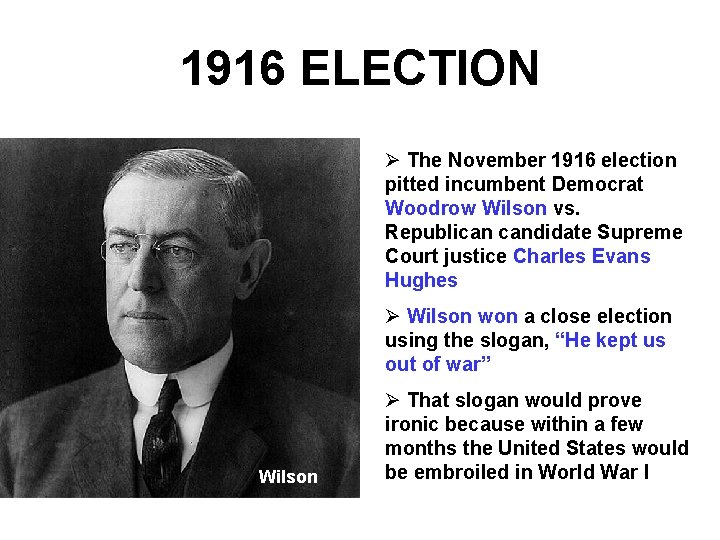
1916 ELECTION Ø The November 1916 election pitted incumbent Democrat Woodrow Wilson vs. Republican candidate Supreme Court justice Charles Evans Hughes Ø Wilson won a close election using the slogan, “He kept us out of war” Wilson Ø That slogan would prove ironic because within a few months the United States would be embroiled in World War I
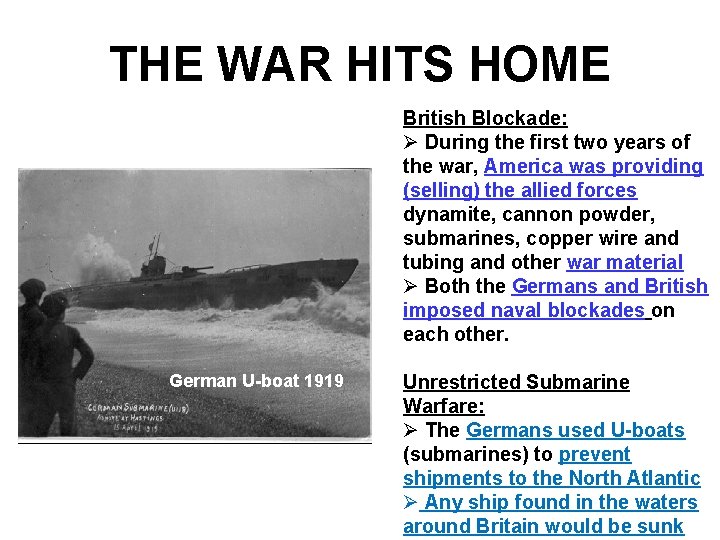
THE WAR HITS HOME British Blockade: Ø During the first two years of the war, America was providing (selling) the allied forces dynamite, cannon powder, submarines, copper wire and tubing and other war material Ø Both the Germans and British imposed naval blockades on each other. German U-boat 1919 Unrestricted Submarine Warfare: Ø The Germans used U-boats (submarines) to prevent shipments to the North Atlantic Ø Any ship found in the waters around Britain would be sunk
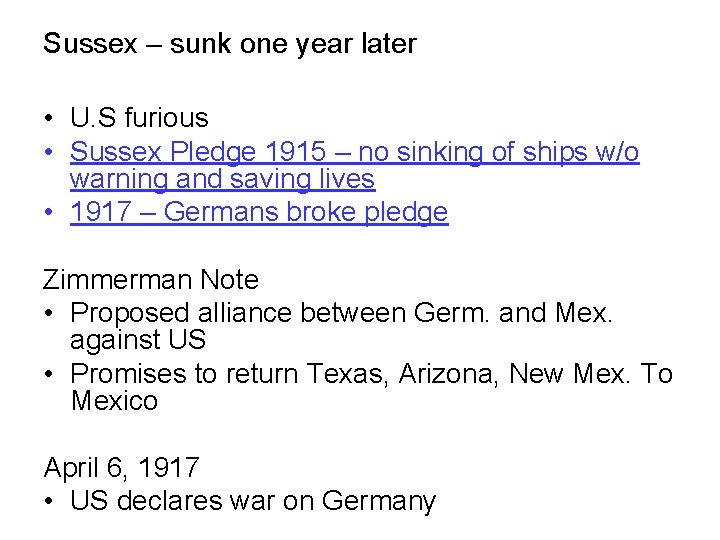
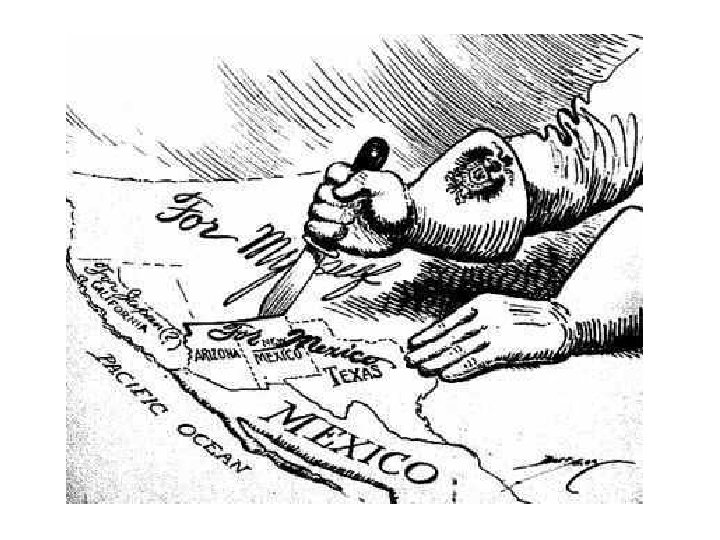
Sussex – sunk one year later • U. S furious • Sussex Pledge 1915 – no sinking of ships w/o warning and saving lives • 1917 – Germans broke pledge Zimmerman Note • Proposed alliance between Germ. and Mex. against US • Promises to return Texas, Arizona, New Mex. To Mexico April 6, 1917 • US declares war on Germany
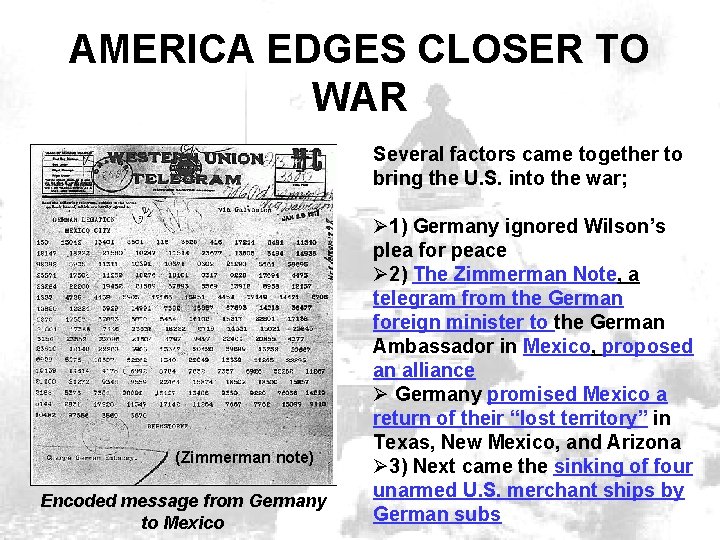
AMERICA EDGES CLOSER TO WAR Several factors came together to bring the U. S. into the war; (Zimmerman note) Encoded message from Germany to Mexico Ø 1) Germany ignored Wilson’s plea for peace Ø 2) The Zimmerman Note, a telegram from the German foreign minister to the German Ambassador in Mexico, proposed an alliance Ø Germany promised Mexico a return of their “lost territory” in Texas, New Mexico, and Arizona Ø 3) Next came the sinking of four unarmed U. S. merchant ships by German subs
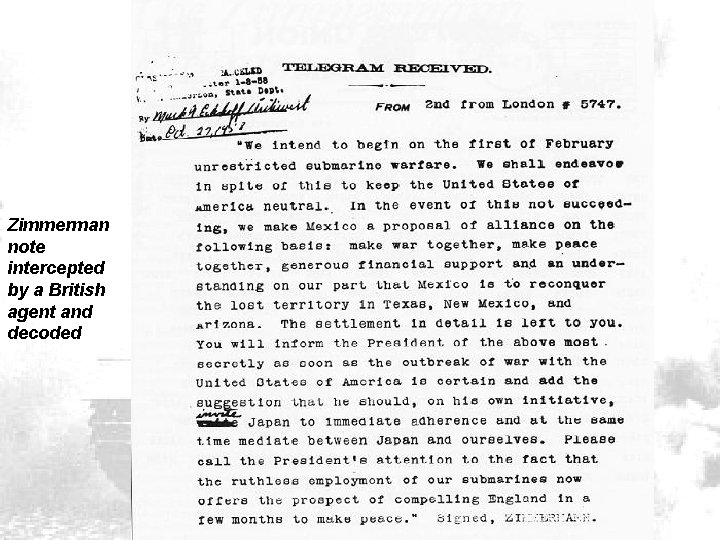
Zimmerman note intercepted by a British agent and decoded
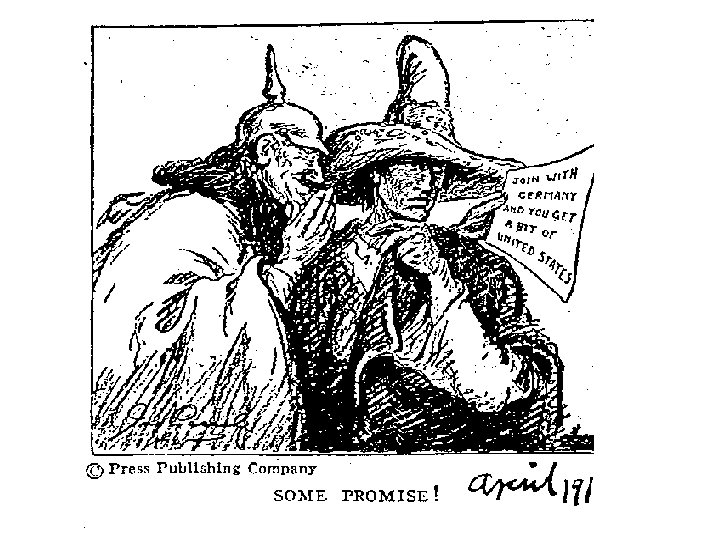
Zimmerman Notes
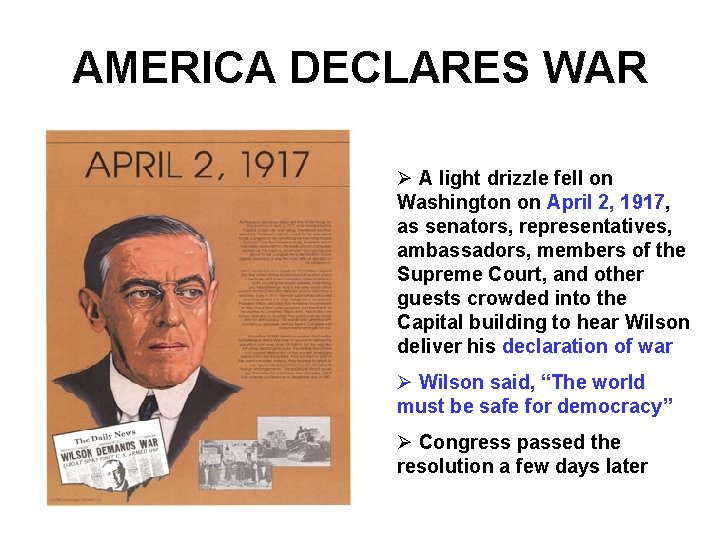
AMERICA DECLARES WAR Ø A light drizzle fell on Washington on April 2, 1917, as senators, representatives, ambassadors, members of the Supreme Court, and other guests crowded into the Capital building to hear Wilson deliver his declaration of war Ø Wilson said, “The world must be safe for democracy” Ø Congress passed the resolution a few days later
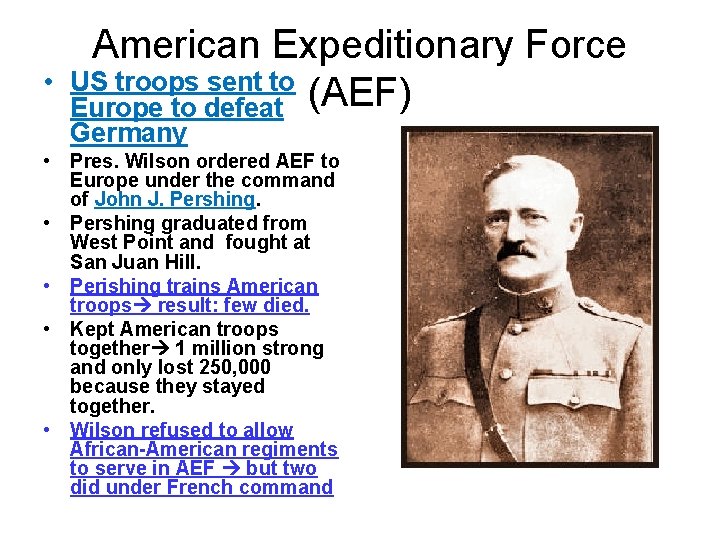
• American Expeditionary Force US troops sent to Europe to defeat (AEF) Germany • Pres. Wilson ordered AEF to Europe under the command of John J. Pershing. • Pershing graduated from West Point and fought at San Juan Hill. • Perishing trains American troops result: few died. • Kept American troops together 1 million strong and only lost 250, 000 because they stayed together. • Wilson refused to allow African-American regiments to serve in AEF but two did under French command
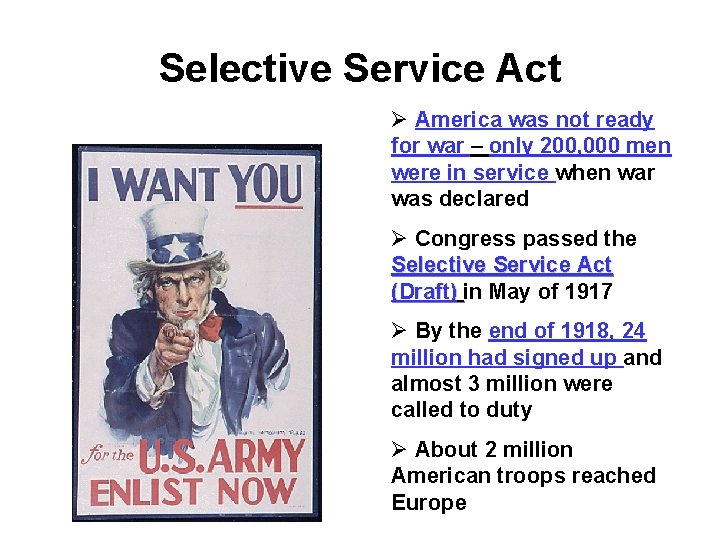
Selective Service Act Ø America was not ready for war – only 200, 000 men were in service when war was declared Ø Congress passed the Selective Service Act (Draft) in May of 1917 Ø By the end of 1918, 24 million had signed up and almost 3 million were called to duty Ø About 2 million American troops reached Europe
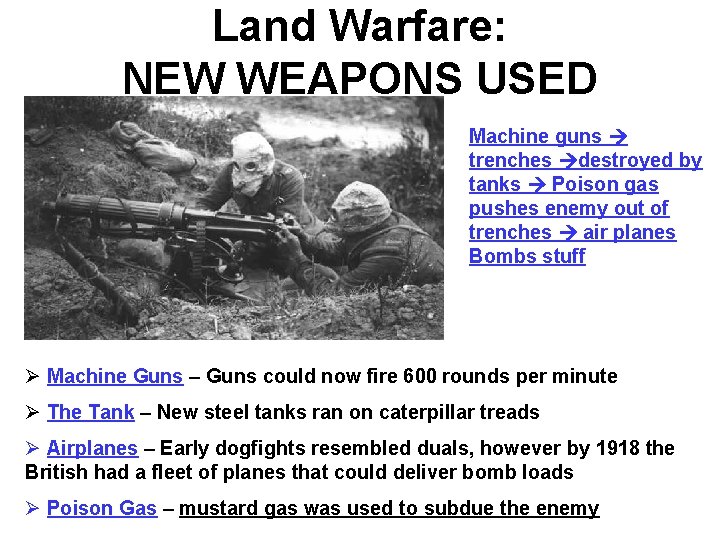
Land Warfare: NEW WEAPONS USED Machine guns trenches destroyed by tanks Poison gas pushes enemy out of trenches air planes Bombs stuff Ø Machine Guns – Guns could now fire 600 rounds per minute Ø The Tank – New steel tanks ran on caterpillar treads Ø Airplanes – Early dogfights resembled duals, however by 1918 the British had a fleet of planes that could deliver bomb loads Ø Poison Gas – mustard gas was used to subdue the enemy
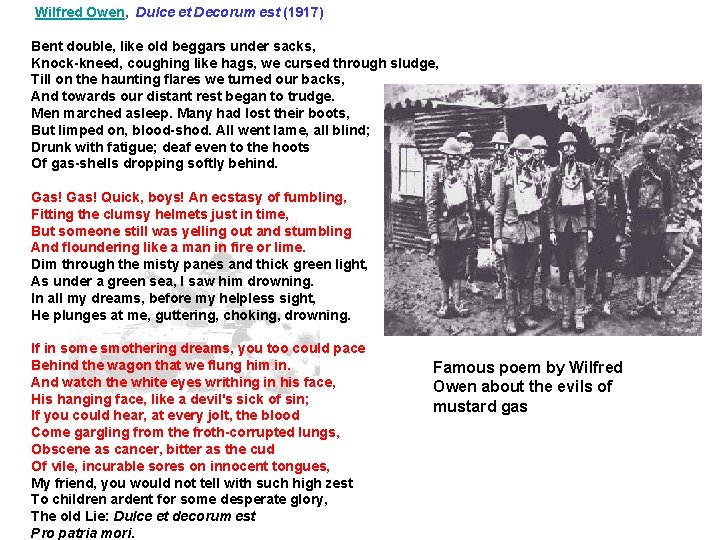
Wilfred Owen, Dulce et Decorum est (1917) Bent double, like old beggars under sacks, Knock-kneed, coughing like hags, we cursed through sludge, Till on the haunting flares we turned our backs, And towards our distant rest began to trudge. Men marched asleep. Many had lost their boots, But limped on, blood-shod. All went lame, all blind; Drunk with fatigue; deaf even to the hoots Of gas-shells dropping softly behind. Gas! Quick, boys! An ecstasy of fumbling, Fitting the clumsy helmets just in time, But someone still was yelling out and stumbling And floundering like a man in fire or lime. Dim through the misty panes and thick green light, As under a green sea, I saw him drowning. In all my dreams, before my helpless sight, He plunges at me, guttering, choking, drowning. If in some smothering dreams, you too could pace Behind the wagon that we flung him in. And watch the white eyes writhing in his face, His hanging face, like a devil's sick of sin; If you could hear, at every jolt, the blood Come gargling from the froth-corrupted lungs, Obscene as cancer, bitter as the cud Of vile, incurable sores on innocent tongues, My friend, you would not tell with such high zest To children ardent for some desperate glory, The old Lie: Dulce et decorum est Pro patria mori. Famous poem by Wilfred Owen about the evils of mustard gas
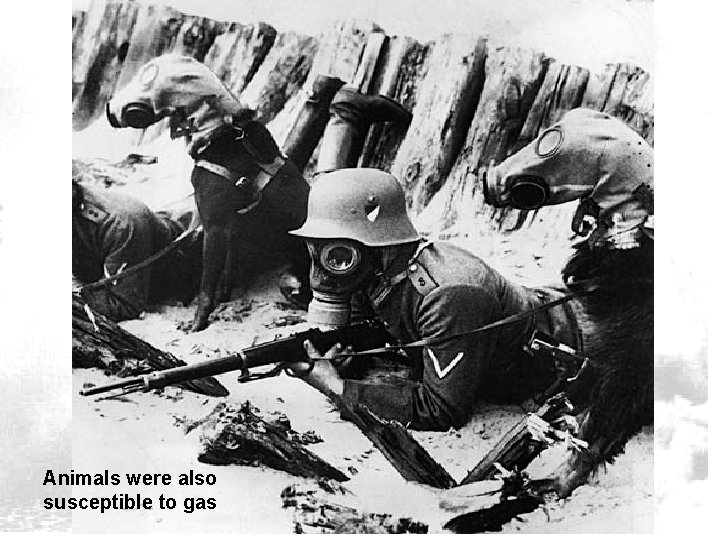
Animals were also susceptible to gas
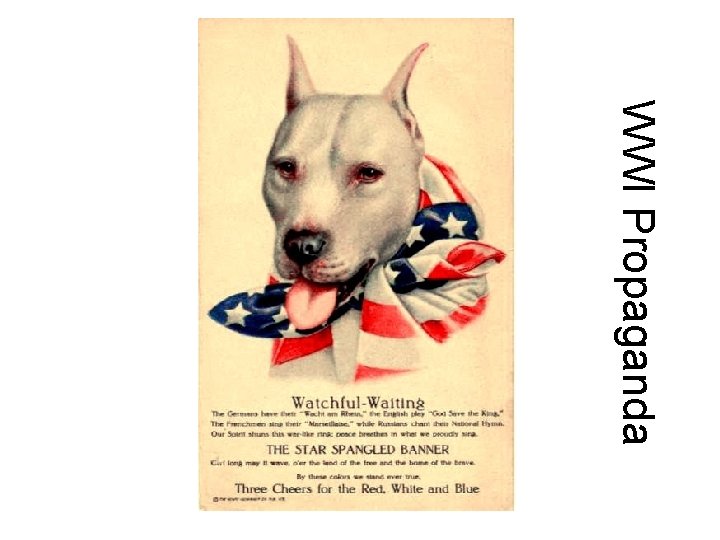
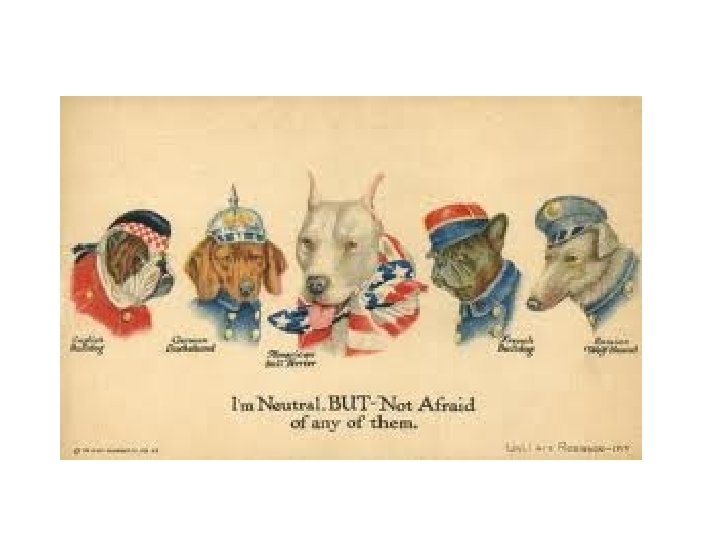
WWI Propaganda
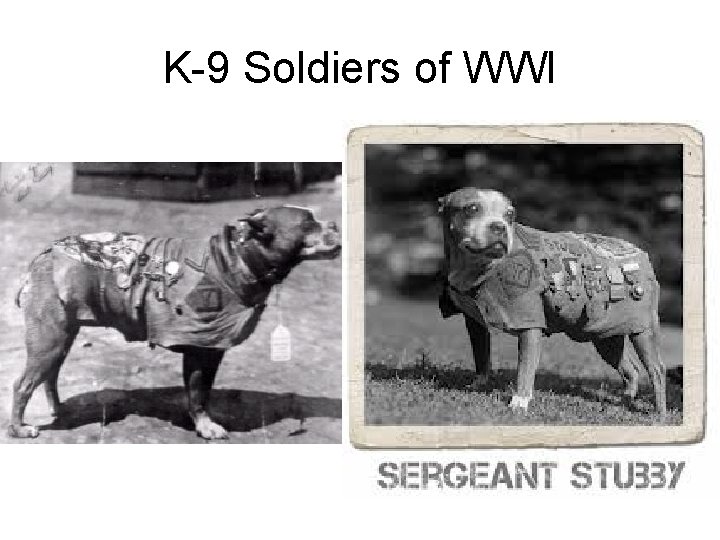
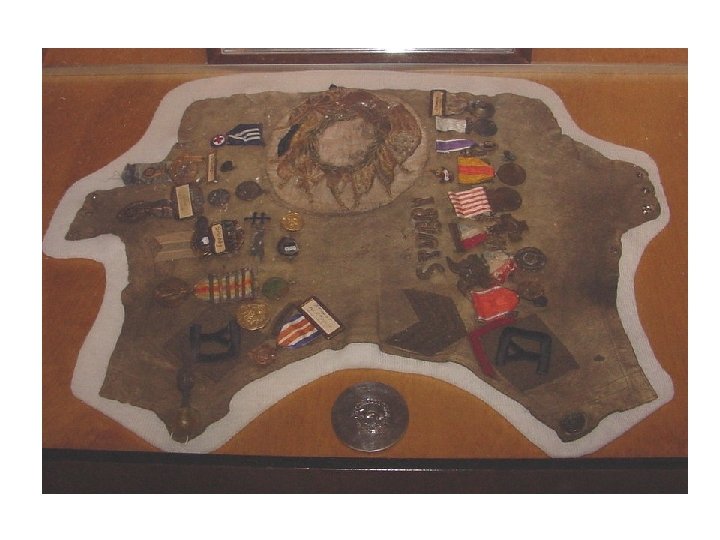
K-9 Soldiers of WWI
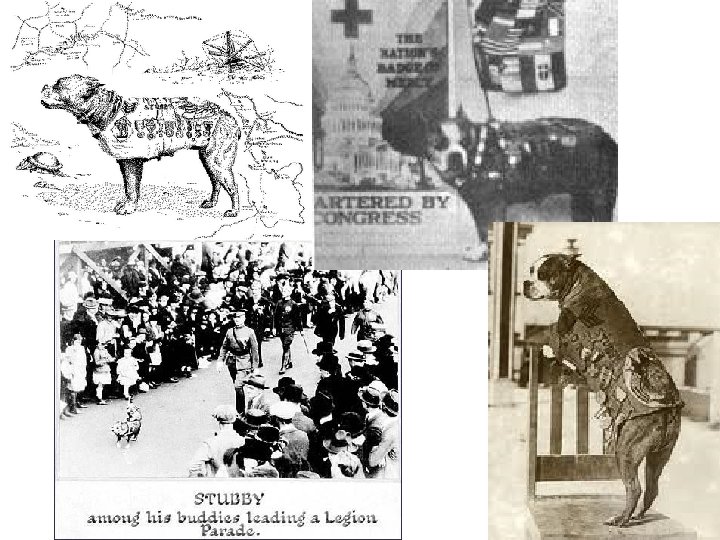
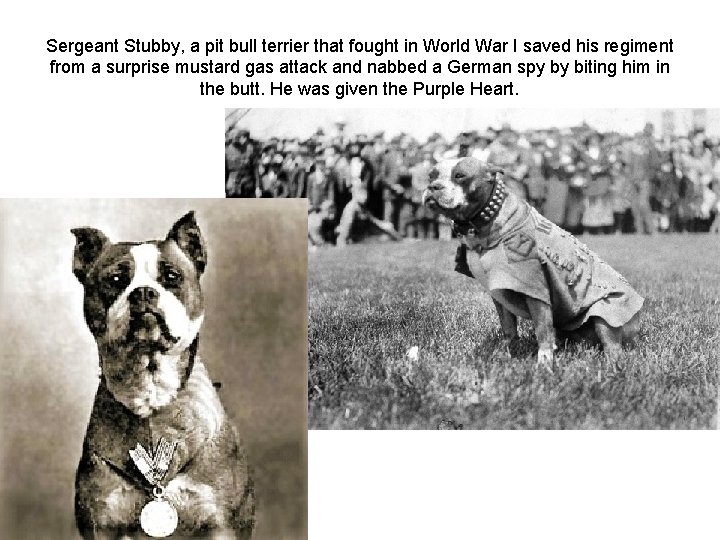
Sergeant Stubby, a pit bull terrier that fought in World War I saved his regiment from a surprise mustard gas attack and nabbed a German spy by biting him in the butt. He was given the Purple Heart.
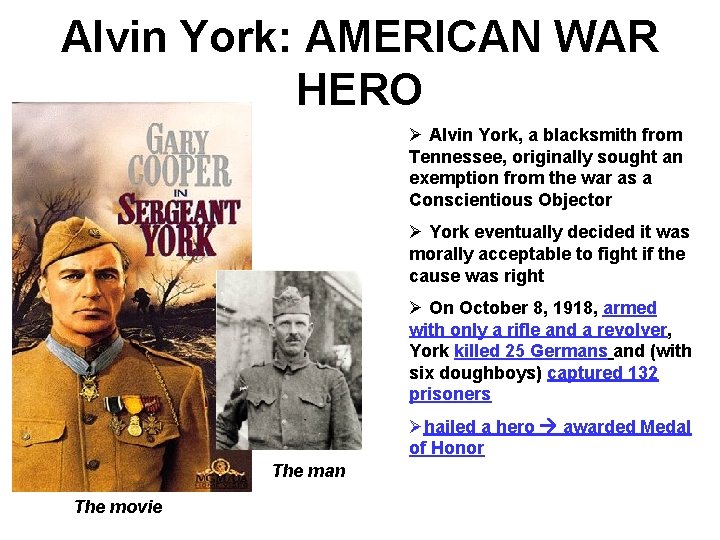
Alvin York: AMERICAN WAR HERO Ø Alvin York, a blacksmith from Tennessee, originally sought an exemption from the war as a Conscientious Objector Ø York eventually decided it was morally acceptable to fight if the cause was right Ø On October 8, 1918, armed with only a rifle and a revolver, York killed 25 Germans and (with six doughboys) captured 132 prisoners Øhailed a hero awarded Medal of Honor The man The movie
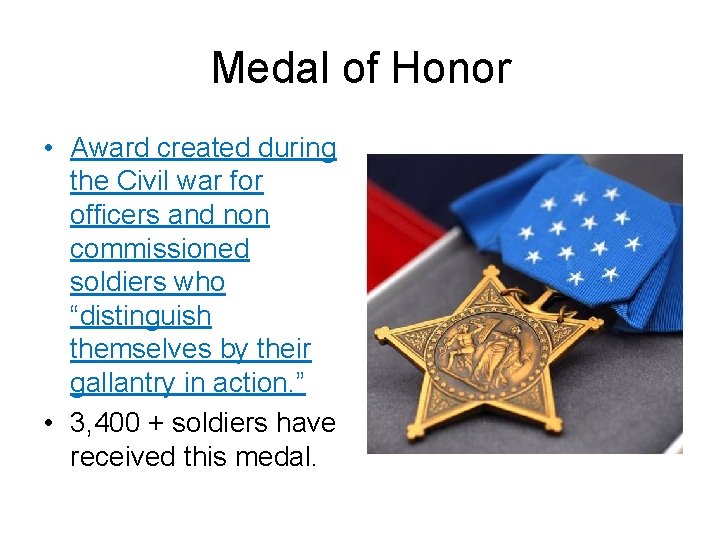
Medal of Honor • Award created during the Civil war for officers and non commissioned soldiers who “distinguish themselves by their gallantry in action. ” • 3, 400 + soldiers have received this medal.
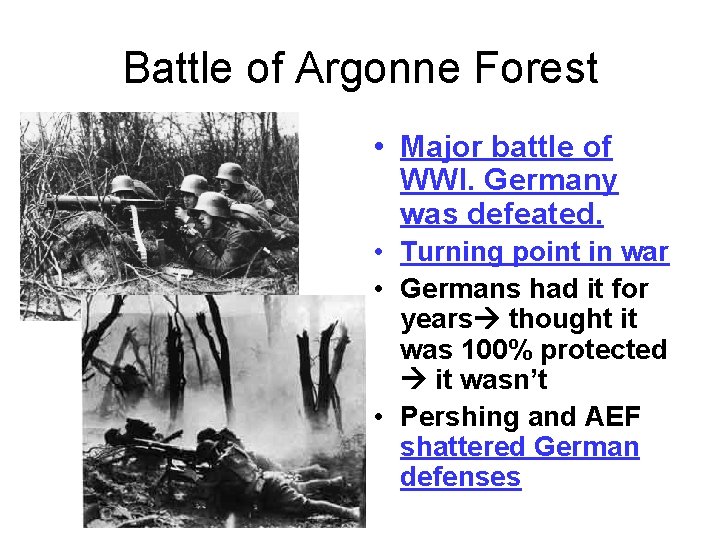
Battle of Argonne Forest • Major battle of WWI. Germany was defeated. • Turning point in war • Germans had it for years thought it was 100% protected it wasn’t • Pershing and AEF shattered German defenses
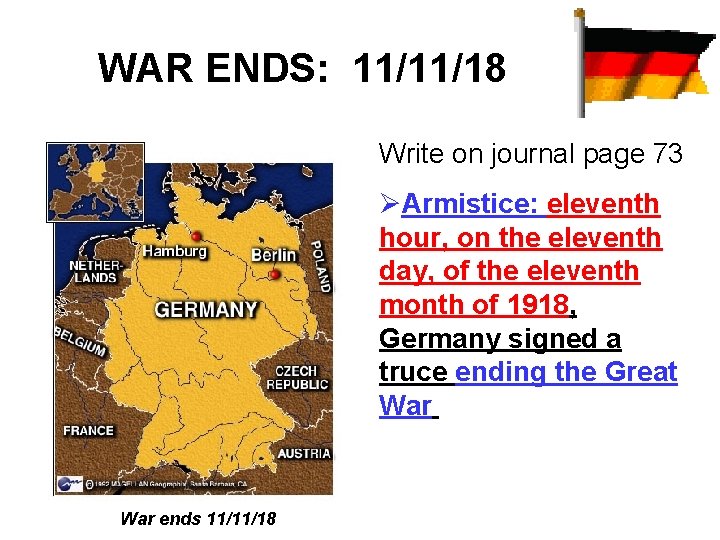
WAR ENDS: 11/11/18 Write on journal page 73 ØArmistice: eleventh hour, on the eleventh day, of the eleventh month of 1918, Germany signed a truce ending the Great War ends 11/11/18
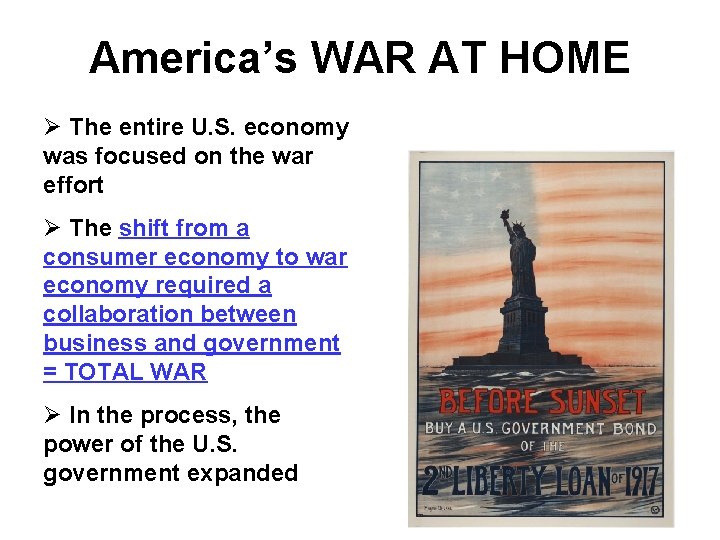
America’s WAR AT HOME Ø The entire U. S. economy was focused on the war effort Ø The shift from a consumer economy to war economy required a collaboration between business and government = TOTAL WAR Ø In the process, the power of the U. S. government expanded
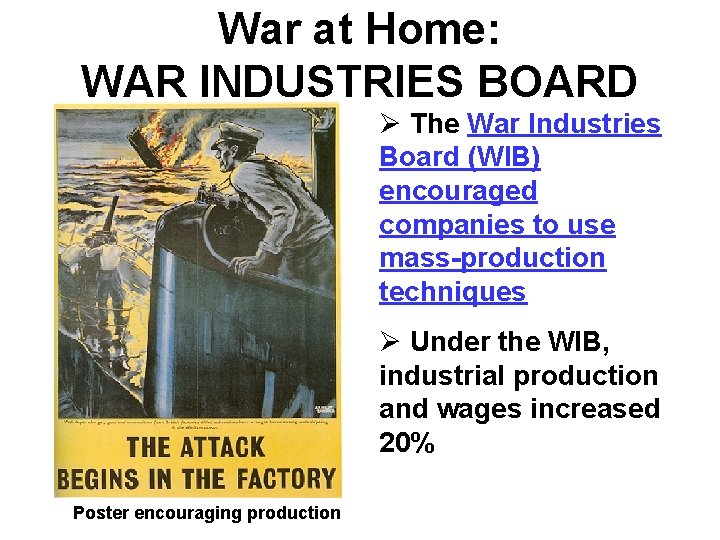
War at Home: WAR INDUSTRIES BOARD Ø The War Industries Board (WIB) encouraged companies to use mass-production techniques Ø Under the WIB, industrial production and wages increased 20% Poster encouraging production
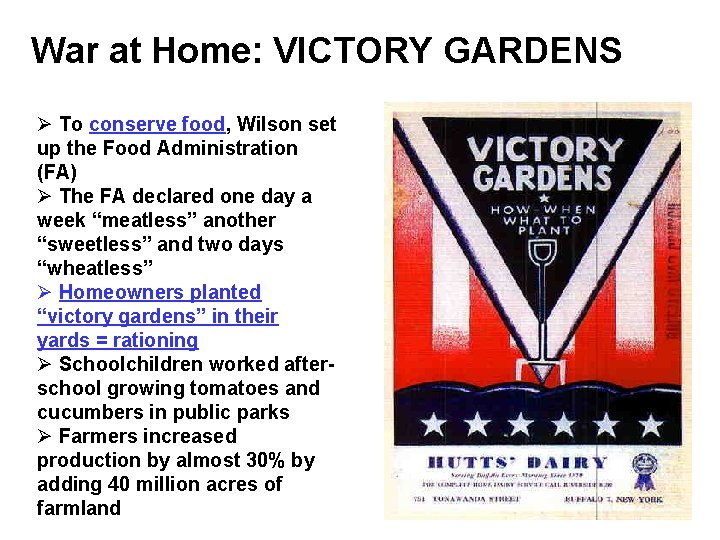
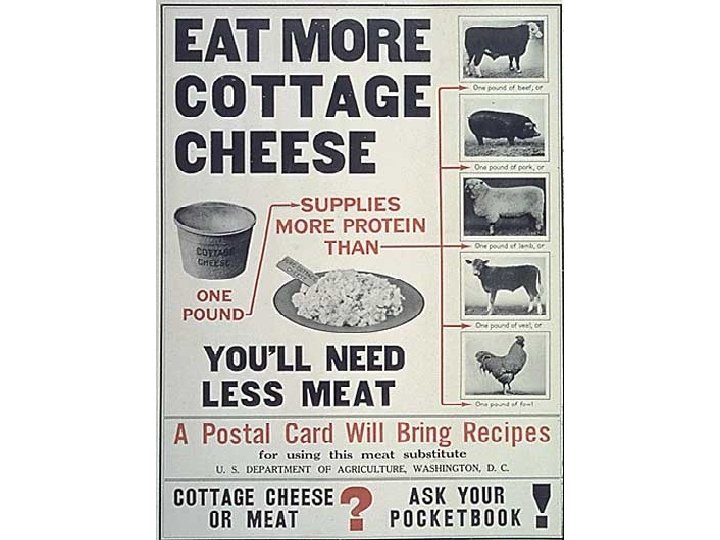
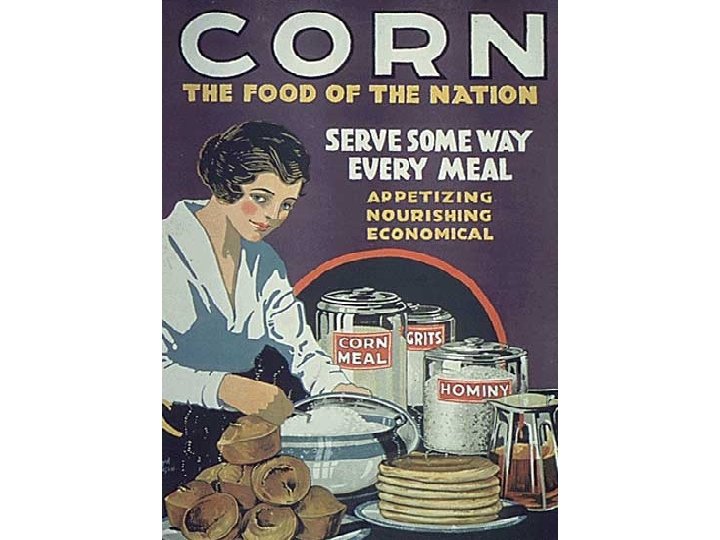
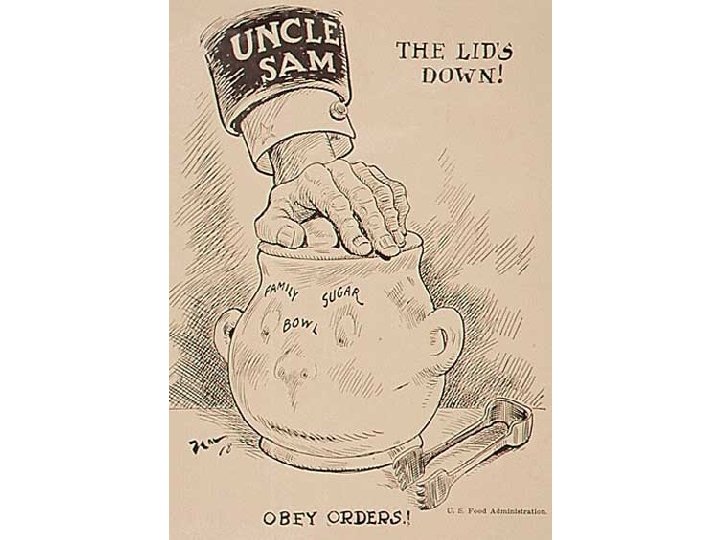
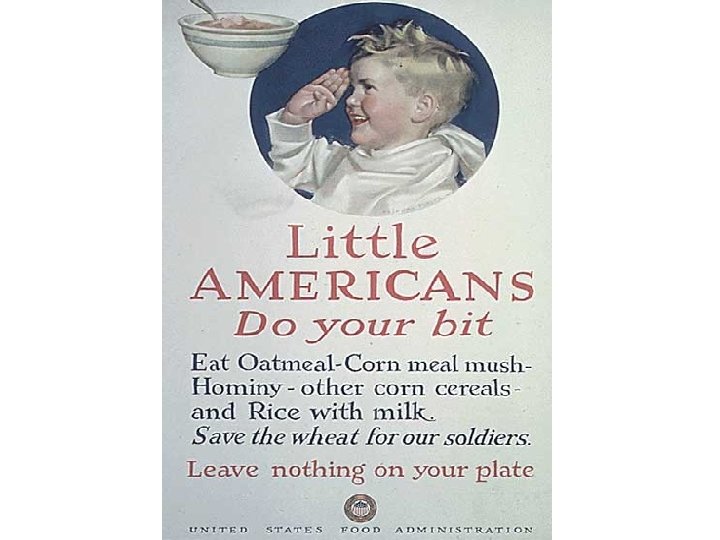
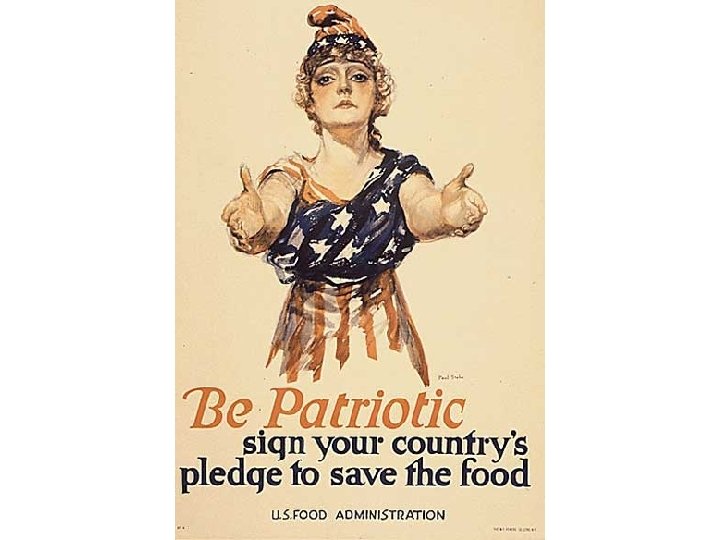
War at Home: VICTORY GARDENS Ø To conserve food, Wilson set up the Food Administration (FA) Ø The FA declared one day a week “meatless” another “sweetless” and two days “wheatless” Ø Homeowners planted “victory gardens” in their yards = rationing Ø Schoolchildren worked afterschool growing tomatoes and cucumbers in public parks Ø Farmers increased production by almost 30% by adding 40 million acres of farmland
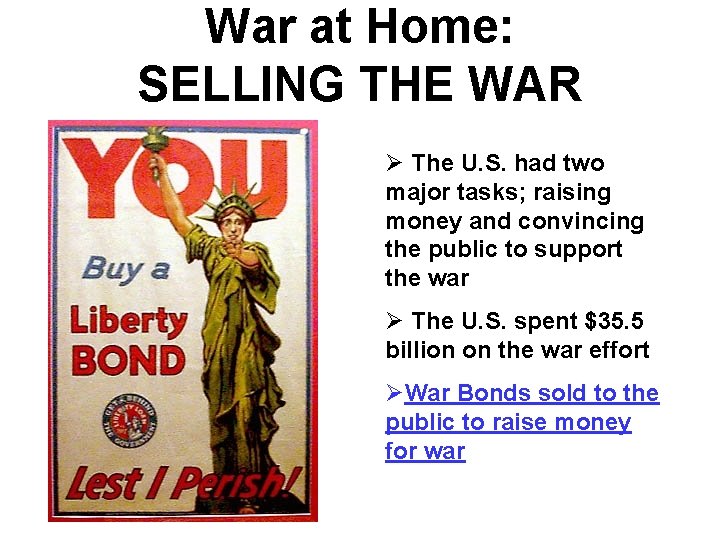
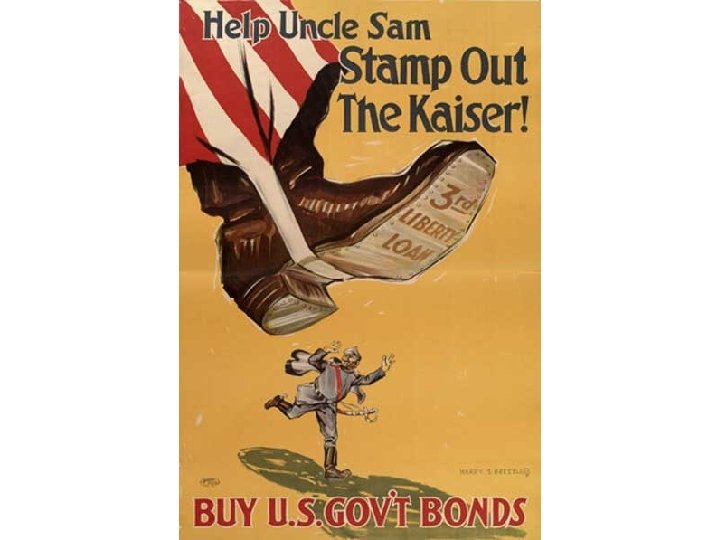
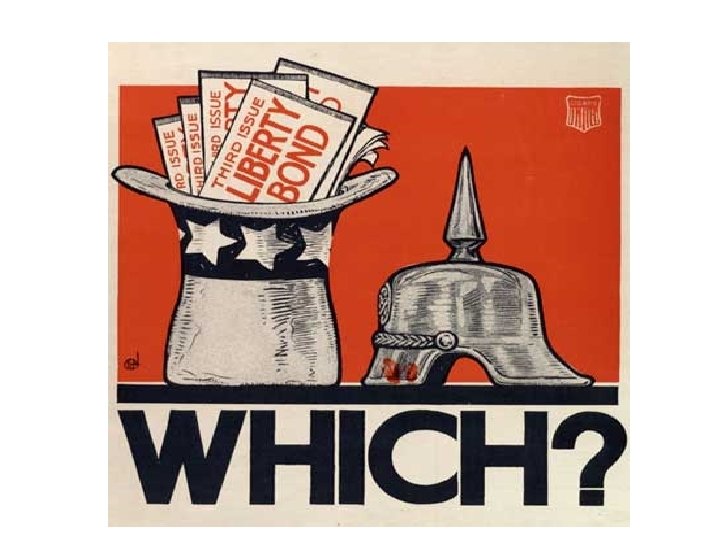
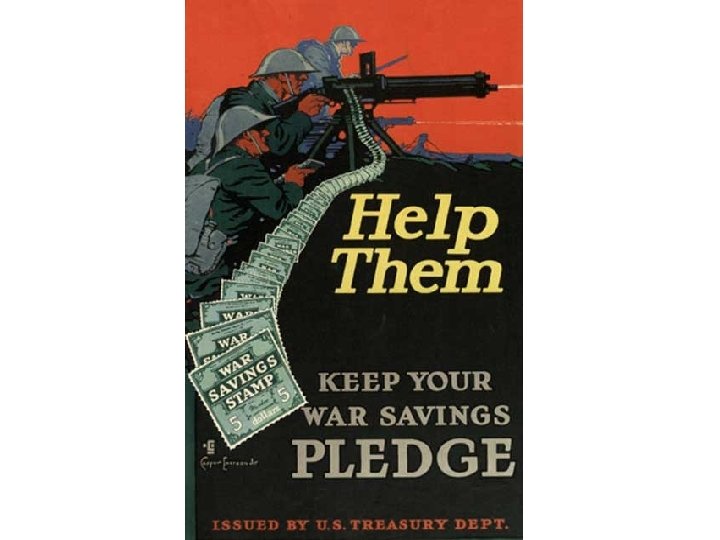
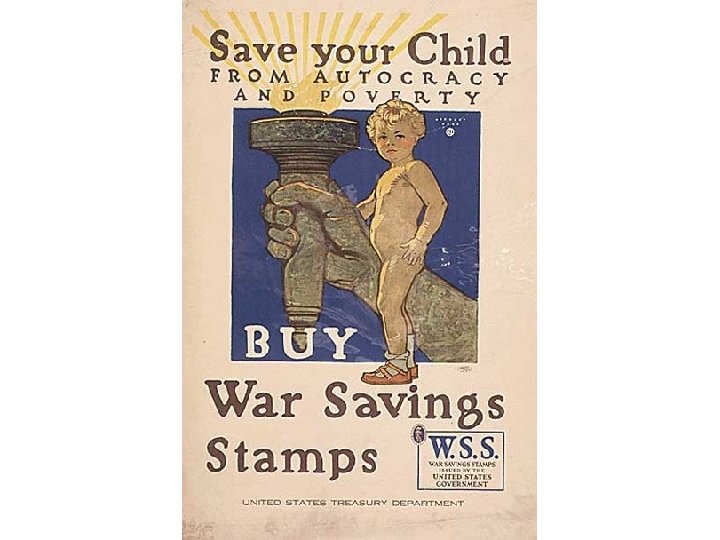
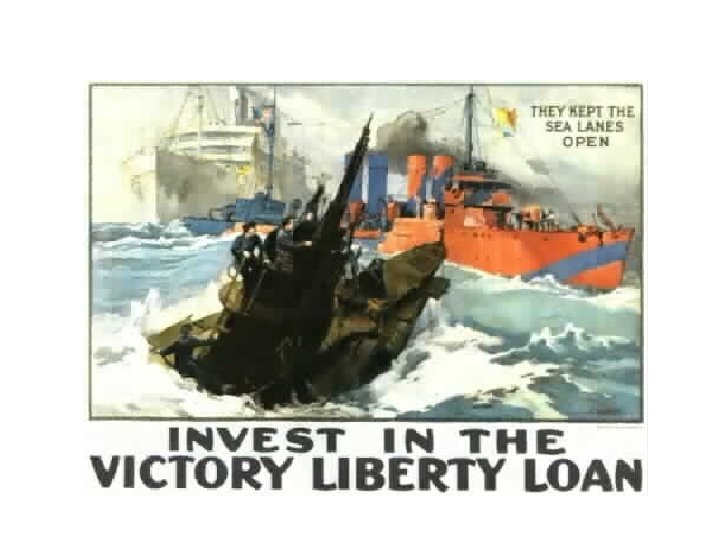
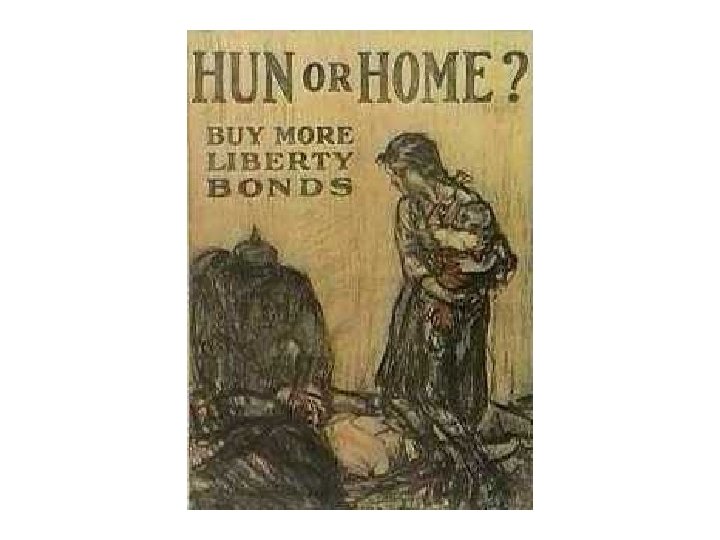
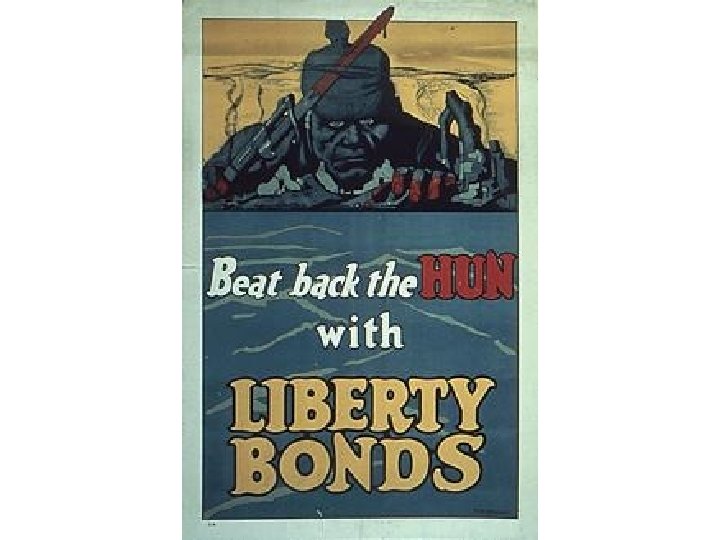
War at Home: SELLING THE WAR Ø The U. S. had two major tasks; raising money and convincing the public to support the war Ø The U. S. spent $35. 5 billion on the war effort ØWar Bonds sold to the public to raise money for war
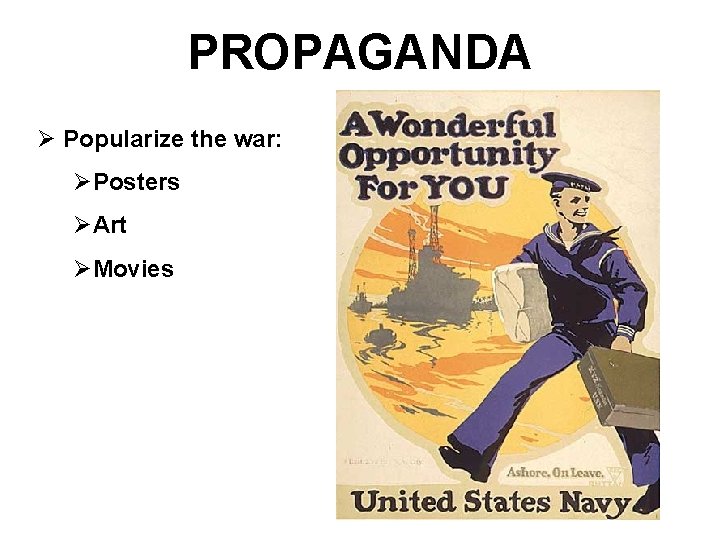
PROPAGANDA Ø Popularize the war: ØPosters ØArt ØMovies
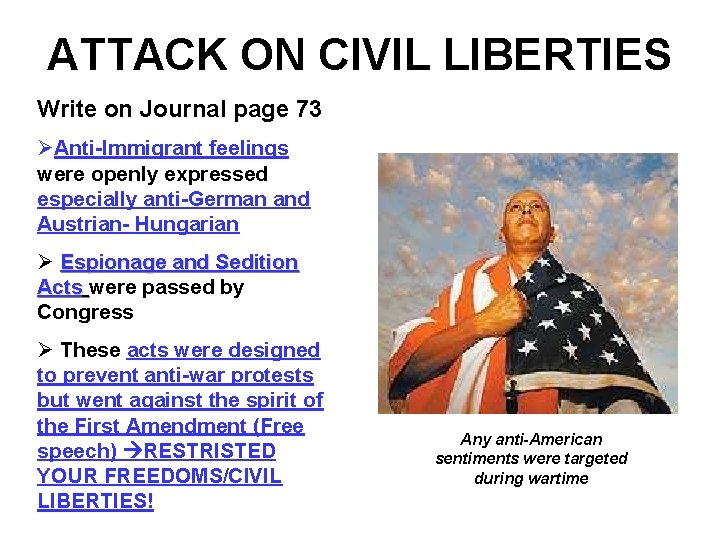
ATTACK ON CIVIL LIBERTIES Write on Journal page 73 ØAnti-Immigrant feelings were openly expressed especially anti-German and Austrian- Hungarian Ø Espionage and Sedition Acts were passed by Congress Ø These acts were designed to prevent anti-war protests but went against the spirit of the First Amendment (Free speech) RESTRISTED YOUR FREEDOMS/CIVIL LIBERTIES! Any anti-American sentiments were targeted during wartime
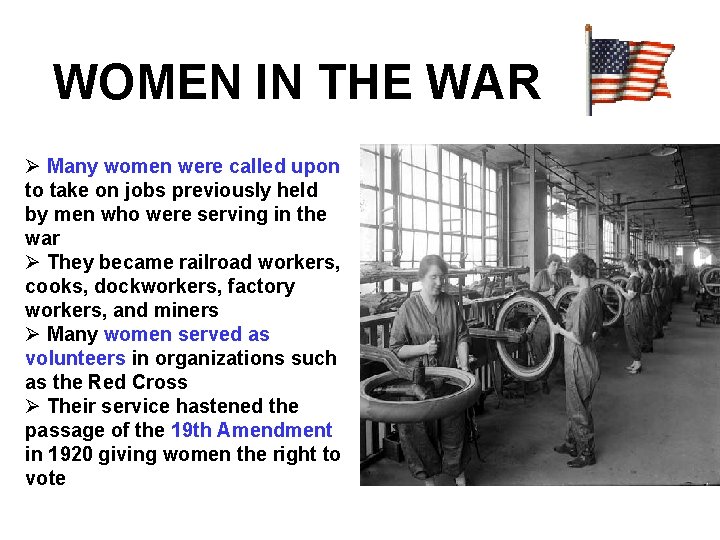
WOMEN IN THE WAR Ø Many women were called upon to take on jobs previously held by men who were serving in the war Ø They became railroad workers, cooks, dockworkers, factory workers, and miners Ø Many women served as volunteers in organizations such as the Red Cross Ø Their service hastened the passage of the 19 th Amendment in 1920 giving women the right to vote
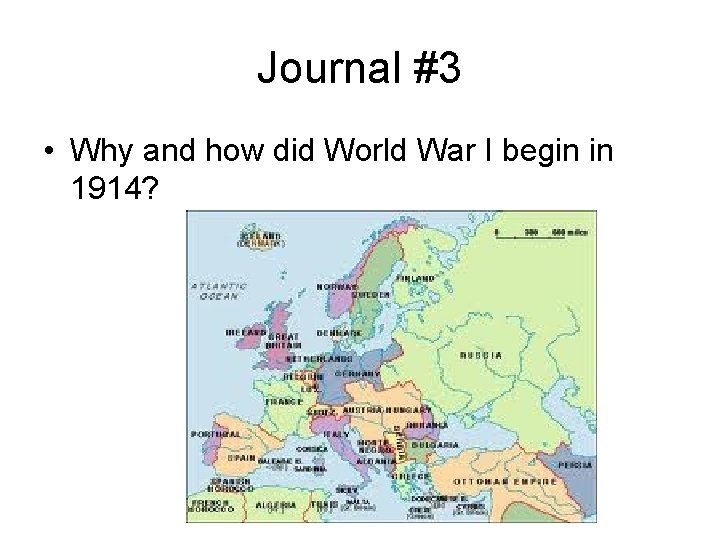
Journal #3 • Why and how did World War I begin in 1914?
Answer: • MAAIN! • 3 strikes and you’re out! • Supplies!
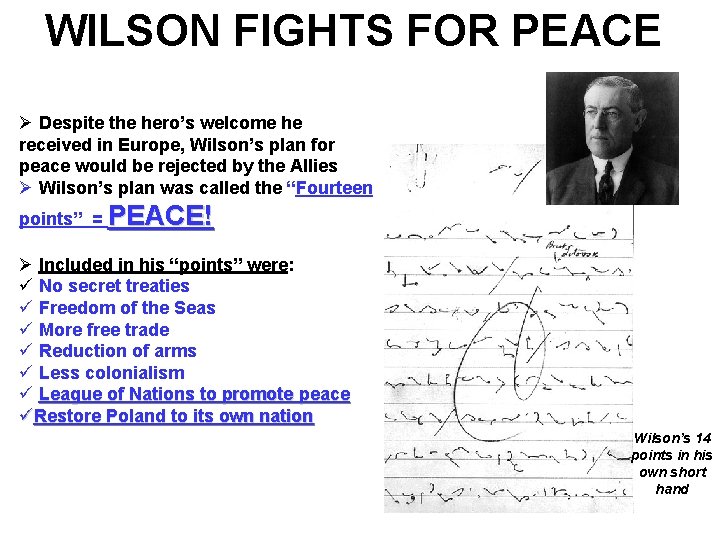
WILSON FIGHTS FOR PEACE Ø Despite the hero’s welcome he received in Europe, Wilson’s plan for peace would be rejected by the Allies Ø Wilson’s plan was called the “Fourteen points” = PEACE! Ø Included in his “points” were: ü No secret treaties ü Freedom of the Seas ü More free trade ü Reduction of arms ü Less colonialism ü League of Nations to promote peace üRestore Poland to its own nation Wilson’s 14 points in his own short hand
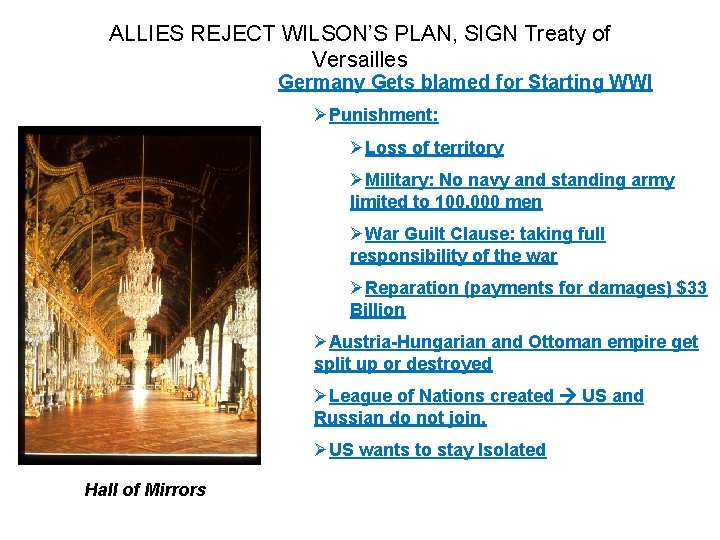
ALLIES REJECT WILSON’S PLAN, SIGN Treaty of Versailles Germany Gets blamed for Starting WWI ØPunishment: ØLoss of territory ØMilitary: No navy and standing army limited to 100, 000 men ØWar Guilt Clause: taking full responsibility of the war ØReparation (payments for damages) $33 Billion ØAustria-Hungarian and Ottoman empire get split up or destroyed ØLeague of Nations created US and Russian do not join. ØUS wants to stay Isolated Hall of Mirrors
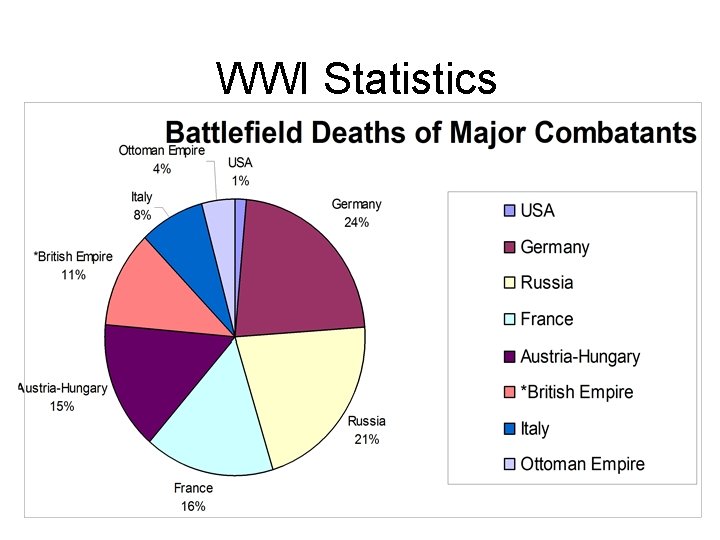
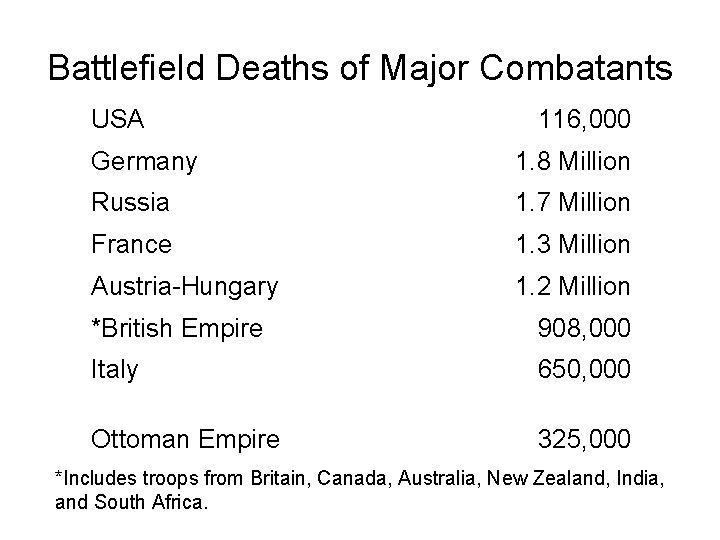
WWI Statistics
Battlefield Deaths of Major Combatants USA 116, 000 Germany 1. 8 Million Russia 1. 7 Million France 1. 3 Million Austria-Hungary 1. 2 Million *British Empire 908, 000 Italy 650, 000 Ottoman Empire 325, 000 *Includes troops from Britain, Canada, Australia, New Zealand, India, and South Africa.
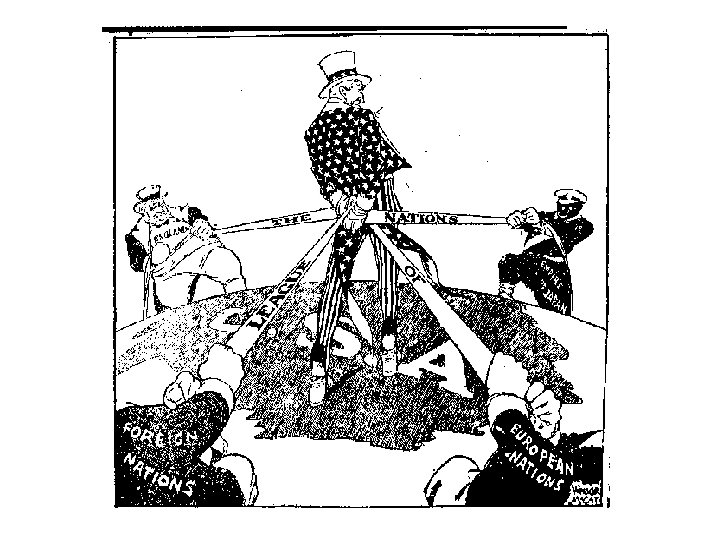
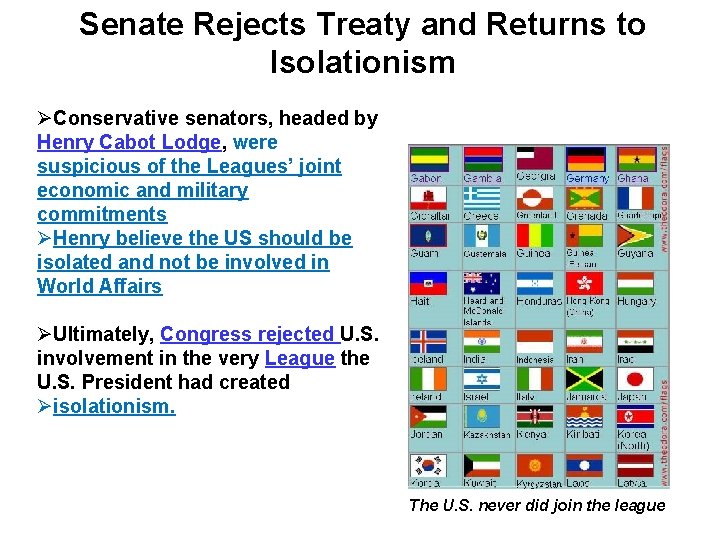
Senate Rejects Treaty and Returns to Isolationism ØConservative senators, headed by Henry Cabot Lodge, were suspicious of the Leagues’ joint economic and military commitments ØHenry believe the US should be isolated and not be involved in World Affairs ØUltimately, Congress rejected U. S. involvement in the very League the U. S. President had created Øisolationism. The U. S. never did join the league
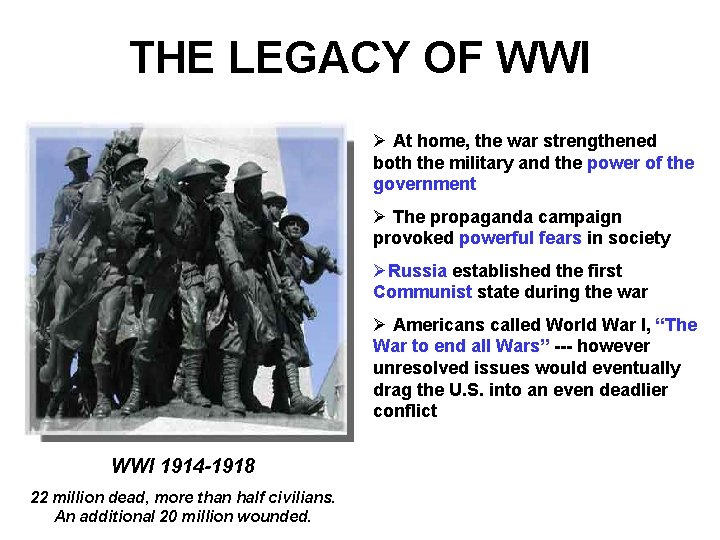
THE LEGACY OF WWI Ø At home, the war strengthened both the military and the power of the government Ø The propaganda campaign provoked powerful fears in society ØRussia established the first Communist state during the war Ø Americans called World War I, “The War to end all Wars” --- however unresolved issues would eventually drag the U. S. into an even deadlier conflict WWI 1914 -1918 22 million dead, more than half civilians. An additional 20 million wounded.