
The First People in America Prehistoric Cultures Archaeologists
- Slides: 24
The First People in America Prehistoric Cultures Archaeologists -are scientists who study artifacts Artifacts—objects from past that shed light on prehistoric cultures Prehistoric—time before written history Culture—shared ways of daily life: arts, beliefs, customs Anthropologists -study humans via culture, environment, human remains Oral vs. Written History
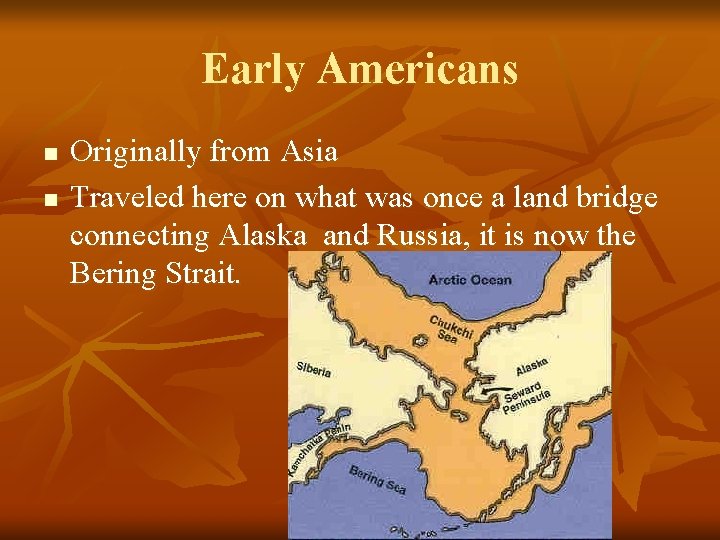
Early Americans n n Originally from Asia Traveled here on what was once a land bridge connecting Alaska and Russia, it is now the Bering Strait.
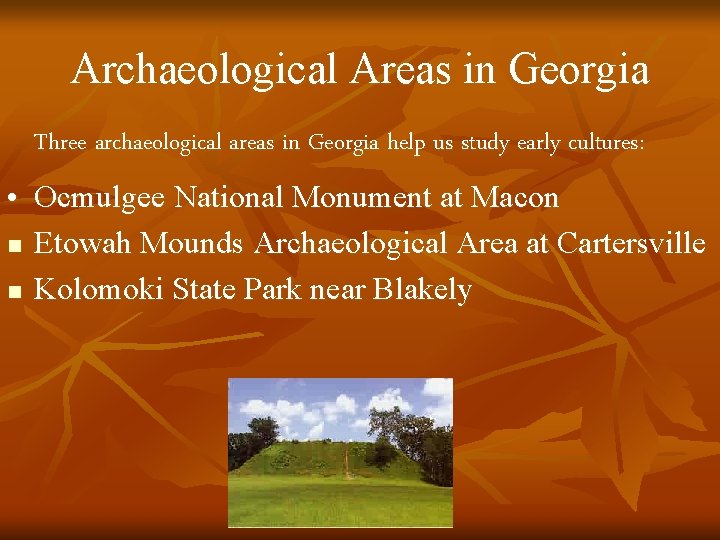
Archaeological Areas in Georgia Three archaeological areas in Georgia help us study early cultures: • Ocmulgee National Monument at Macon n Etowah Mounds Archaeological Area at Cartersville n Kolomoki State Park near Blakely
Paleo Archaic Woodland Mississippian
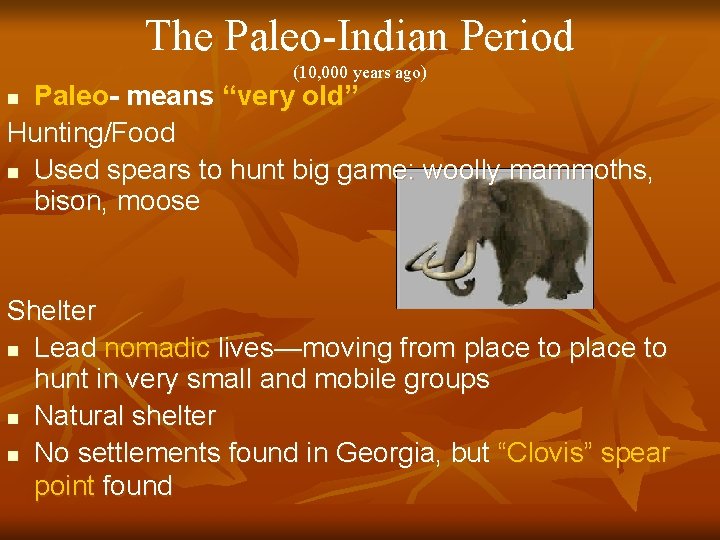
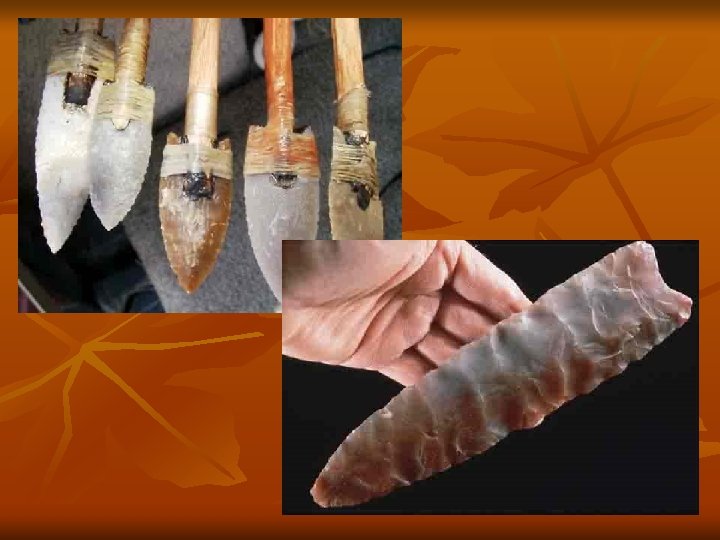
The Paleo-Indian Period (10, 000 years ago) Paleo- means “very old” Hunting/Food n Used spears to hunt big game: woolly mammoths, bison, moose n Shelter n Lead nomadic lives—moving from place to hunt in very small and mobile groups n Natural shelter n No settlements found in Georgia, but “Clovis” spear point found
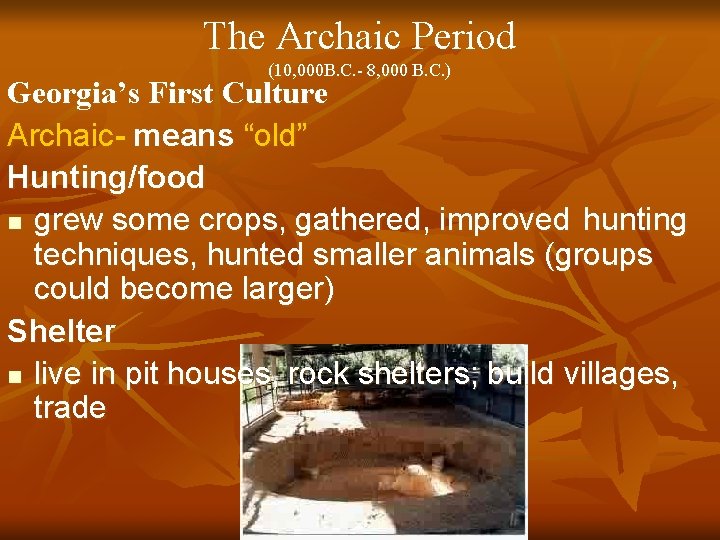
The Archaic Period (10, 000 B. C. - 8, 000 B. C. ) Georgia’s First Culture Archaic- means “old” Hunting/food n grew some crops, gathered, improved hunting techniques, hunted smaller animals (groups could become larger) Shelter n live in pit houses, rock shelters; build villages, trade
The Woodland Period (1, 000 B. C. -800 A. D. ) Woodland Indians Early Agriculture n Develop farming, store excess food; Hunting • Develop bows and arrows, single hunter can now hunt deer Settlements • Villages along stream valleys; protective walls around villages
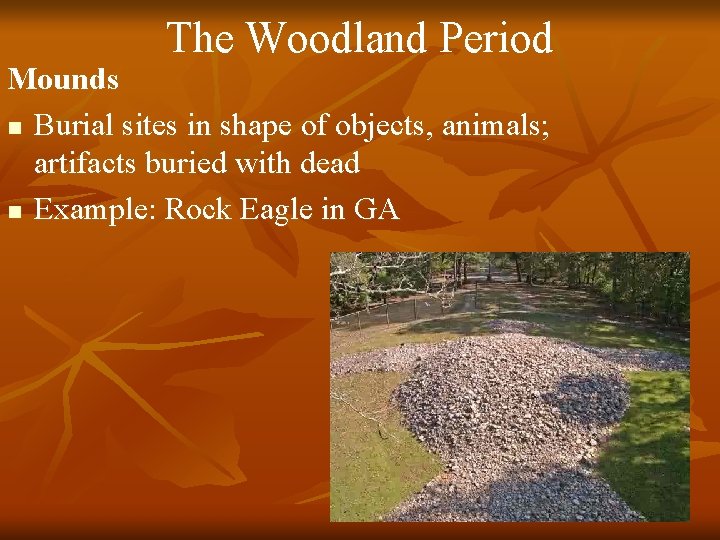
The Woodland Period Mounds n Burial sites in shape of objects, animals; artifacts buried with dead n Example: Rock Eagle in GA
The Development of the Mississippian Culture n n n Mississippian culture begins along Mississippi, Ohio River valleys Was influenced by Mexican art and agriculture (pottery, beans etc. ) Improved agriculture led to less reliance on hunting.
A More Complex Culture Civilizations Develop n Mississippians develop 5 characteristics of civilization: - cities as trade centers - specialized jobs - organized government, religion - record keeping - advanced tools
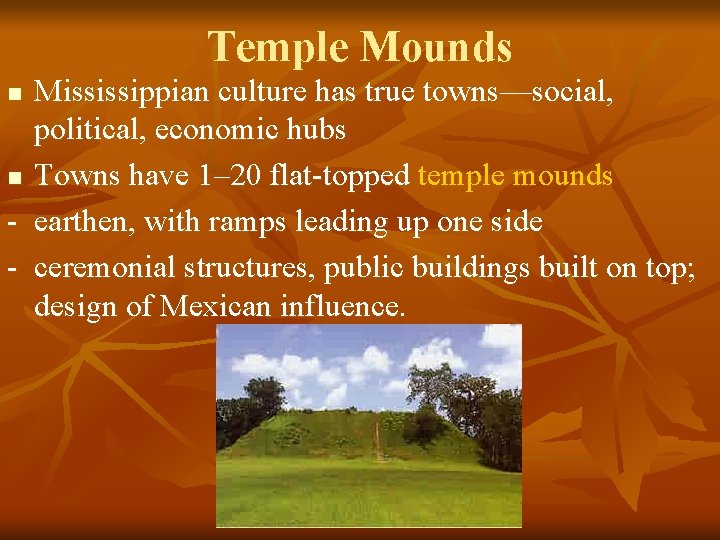
Temple Mounds Mississippian culture has true towns—social, political, economic hubs n Towns have 1– 20 flat-topped temple mounds - earthen, with ramps leading up one side - ceremonial structures, public buildings built on top; design of Mexican influence. n
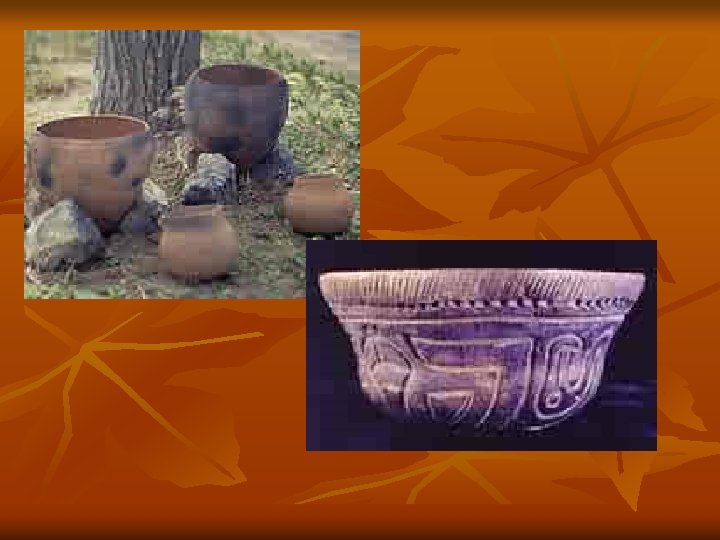
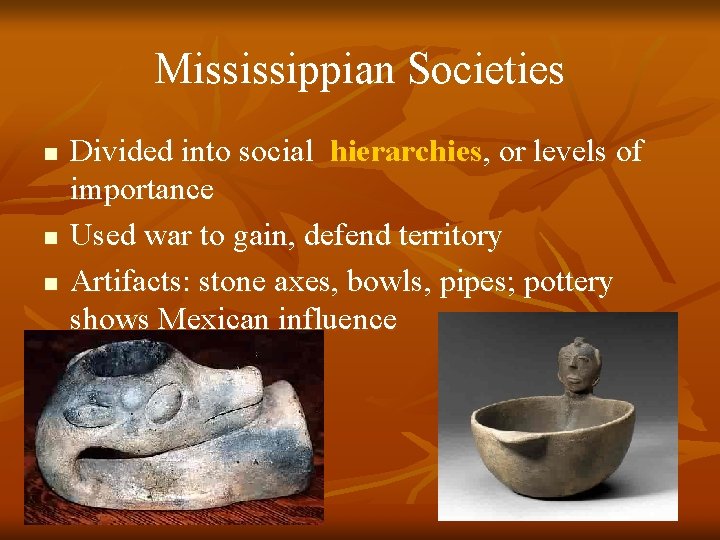
Mississippian Societies n n n Divided into social hierarchies, or levels of importance Used war to gain, defend territory Artifacts: stone axes, bowls, pipes; pottery shows Mexican influence
The End of the Mississippian Culture n n Europeans meet Mississippians upon landing in North America Entire towns abandoned as early as 1540; several theories why: - overcrowding, disease - rulers lost power, tightly organized societies unraveled
Creek, Cherokee, and Seminole n n n “Five Civilized Tribes” descend from Mississippian Culture: -Creek, Cherokee, Seminole, Choctaw, Chickasaw Mississippian chiefdoms band together to form a confederacy Creek Confederacy —Southeast’s largest group; occupy most of Georgia
Creek Culture Creek Towns n 7, 000– 8, 000 Creek in 50– 80 towns; divided into Upper and Lower Creek n Spoke the Muskhogean language n Town centers used for political, ceremonial functions n Chakofa- community houses contain ceremonial fires -Creek leaders meet here in cold months
Creek Towns n Most Creek live in large family compounds -near town center or along waterways -have clusters of gardens, fields buildings Clan—group of people with common ancestor n Creek are matrilineal—ancestry traced through mother’s family
Creek Government n n n Creek towns are groups of farming communities Chief governs; position usually inherited, always from specific clan Group of town council elders advise chief
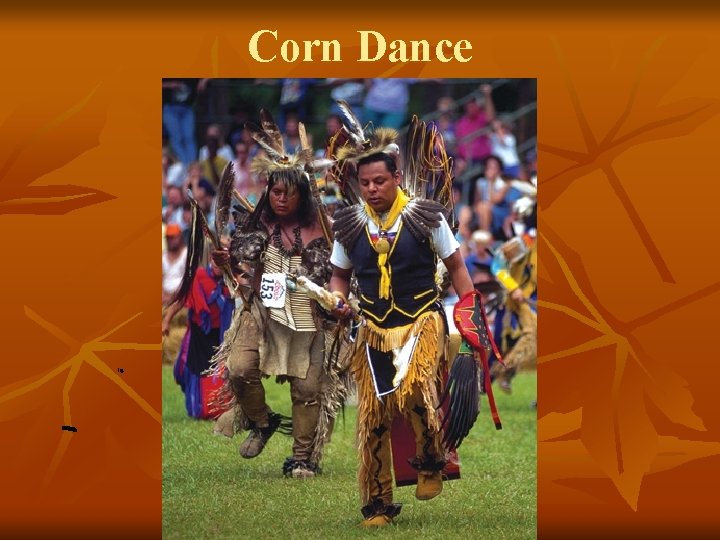
Creek Religion n n Green Corn ceremony is most significant festival -thanks for new crop; celebration of town history, light council fire Fire, corn symbols of life, health, happiness, friendship, kinship
Corn Dance
The Cherokee migrate to Georgia from North Carolina in 1700 s n Similar to Creek culture: matrilineal, Green Corn ceremony, towns n Women farm, make goods; men hunt; deer most important game n
Cherokee Government n n n Differs from Creek; no chiefs, national council until 1700 s Town council meetings run democratically -people debate issues, reach agreement -women, men both have say War most important issue debated -wage war only to pay back enemies, not for land
The Seminole n n Another descendent of Mississippian culture Most live in what is now Florida, some in Georgia Seminole culture similar to Creek, speak Muskhogean language Europeans called them Seminole—from native word for “free people”