
The first Civilizations in Mesopotamia Some geographic names

- Slides: 19
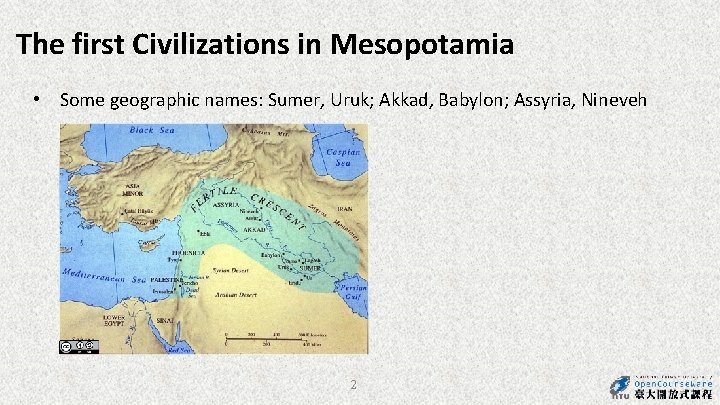
The first Civilizations in Mesopotamia • Some geographic names: Sumer, Uruk; Akkad, Babylon; Assyria, Nineveh 2
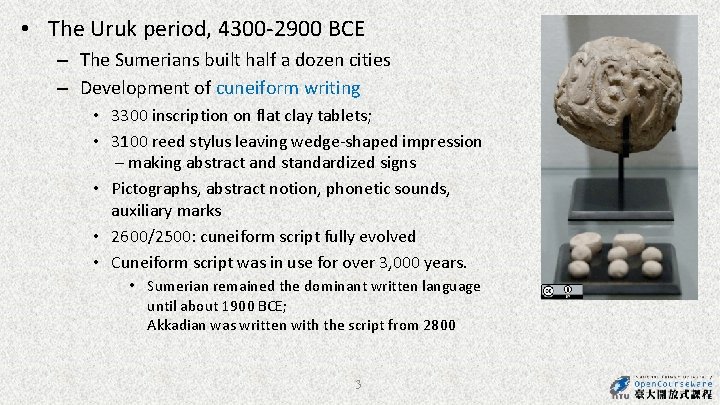
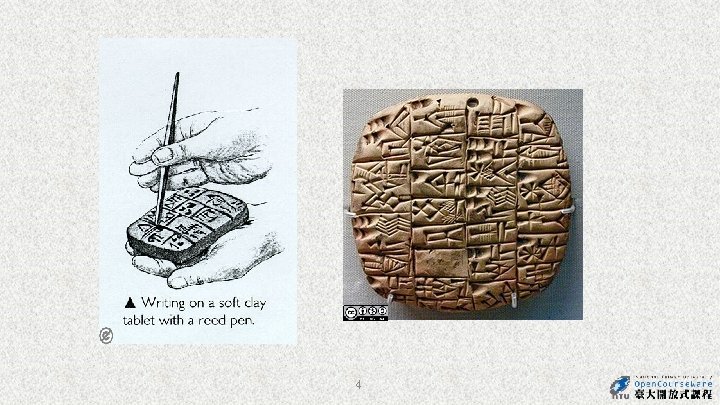
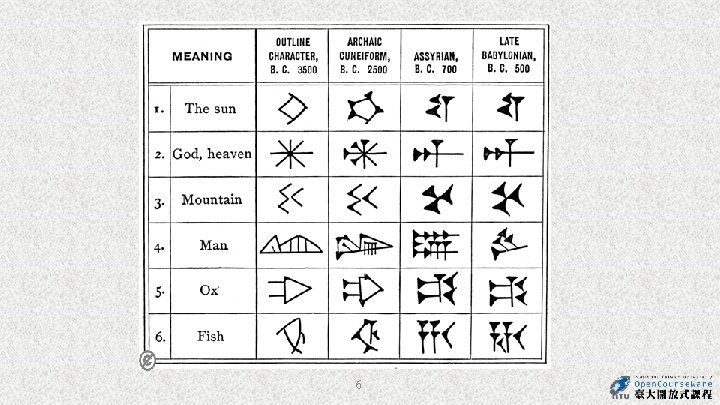
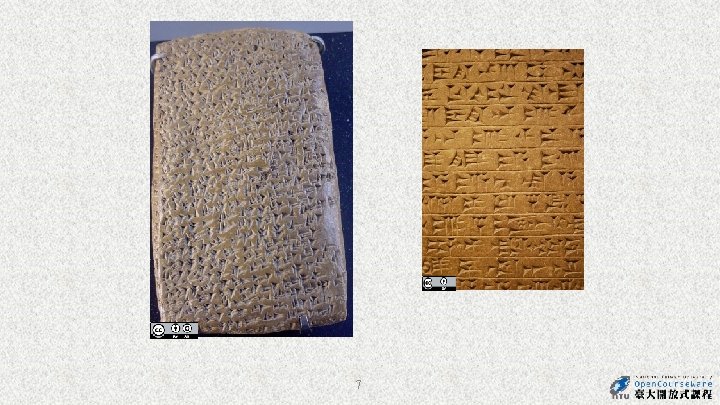
• The Uruk period, 4300 -2900 BCE – The Sumerians built half a dozen cities – Development of cuneiform writing • 3300 inscription on flat clay tablets; • 3100 reed stylus leaving wedge-shaped impression – making abstract and standardized signs • Pictographs, abstract notion, phonetic sounds, auxiliary marks • 2600/2500: cuneiform script fully evolved • Cuneiform script was in use for over 3, 000 years. • Sumerian remained the dominant written language until about 1900 BCE; Akkadian was written with the script from 2800 3
4
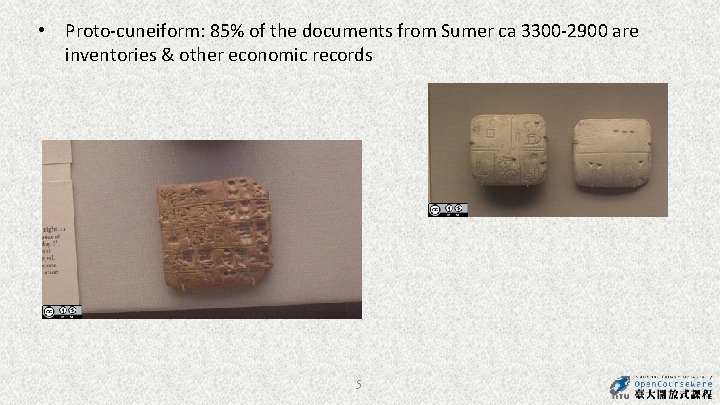
• Proto-cuneiform: 85% of the documents from Sumer ca 3300 -2900 are inventories & other economic records 5
6
7
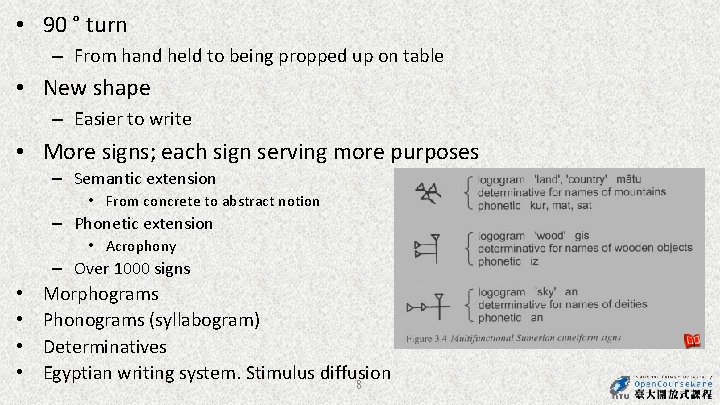
• 90 ° turn – From hand held to being propped up on table • New shape – Easier to write • More signs; each sign serving more purposes – Semantic extension • From concrete to abstract notion – Phonetic extension • Acrophony – Over 1000 signs • • Morphograms Phonograms (syllabogram) Determinatives Egyptian writing system. Stimulus diffusion 8
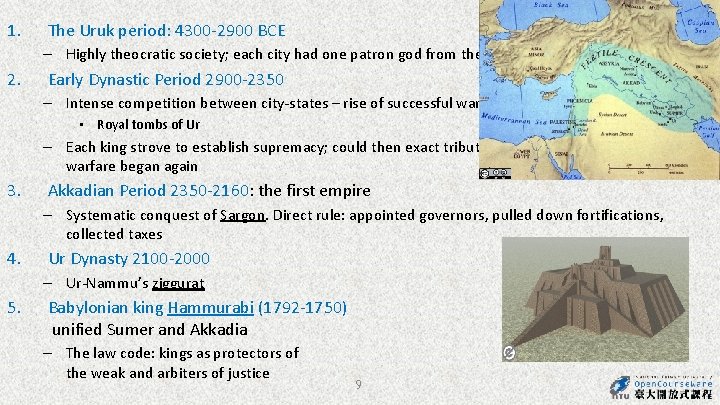
1. The Uruk period: 4300 -2900 BCE – Highly theocratic society; each city had one patron god from the Sumerian pantheon 2. Early Dynastic Period 2900 -2350 – Intense competition between city-states – rise of successful war leaders, e. g. Gilgamesh • Royal tombs of Ur – Each king strove to establish supremacy; could then exact tribute. Conquered cities revolted, warfare began again 3. Akkadian Period 2350 -2160: the first empire – Systematic conquest of Sargon. Direct rule: appointed governors, pulled down fortifications, collected taxes 4. Ur Dynasty 2100 -2000 – Ur-Nammu’s ziggurat 5. Babylonian king Hammurabi (1792 -1750) unified Sumer and Akkadia – The law code: kings as protectors of the weak and arbiters of justice 9
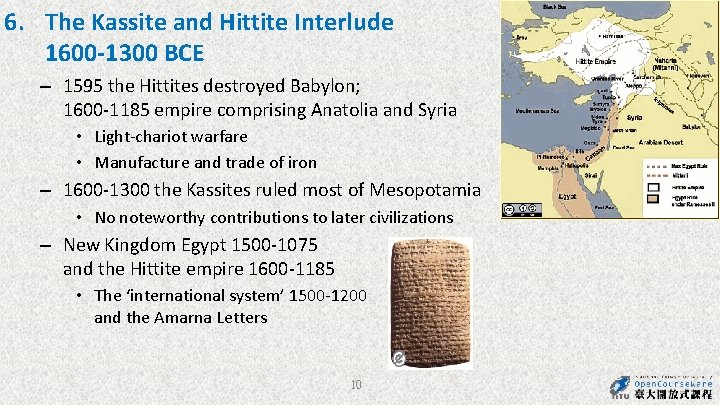
6. The Kassite and Hittite Interlude 1600 -1300 BCE – 1595 the Hittites destroyed Babylon; 1600 -1185 empire comprising Anatolia and Syria • Light-chariot warfare • Manufacture and trade of iron – 1600 -1300 the Kassites ruled most of Mesopotamia • No noteworthy contributions to later civilizations – New Kingdom Egypt 1500 -1075 and the Hittite empire 1600 -1185 • The ‘international system’ 1500 -1200 and the Amarna Letters 10
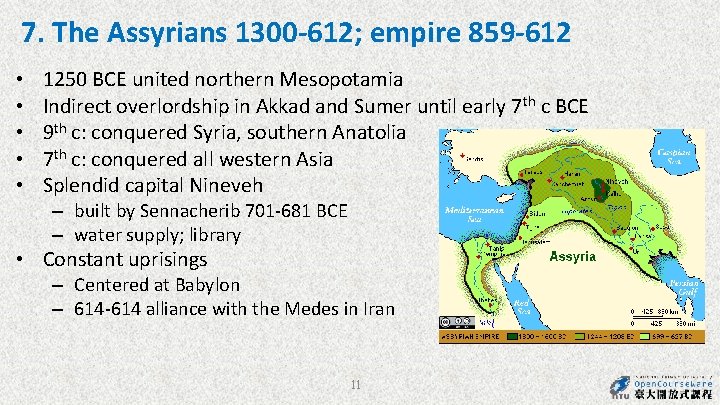
7. The Assyrians 1300 -612; empire 859 -612 • • • 1250 BCE united northern Mesopotamia Indirect overlordship in Akkad and Sumer until early 7 th c BCE 9 th c: conquered Syria, southern Anatolia 7 th c: conquered all western Asia Splendid capital Nineveh – built by Sennacherib 701 -681 BCE – water supply; library • Constant uprisings – Centered at Babylon – 614 -614 alliance with the Medes in Iran 11
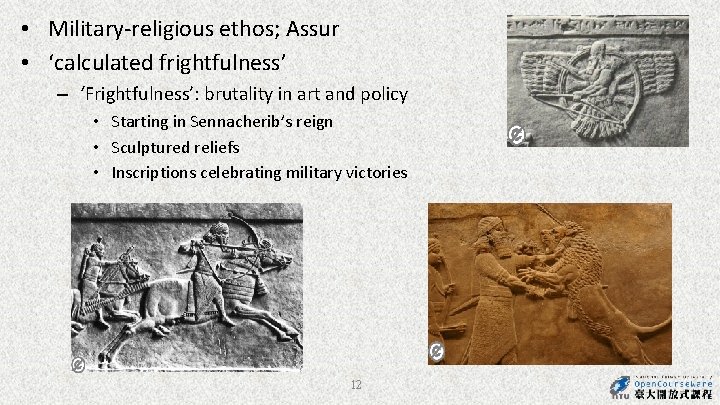
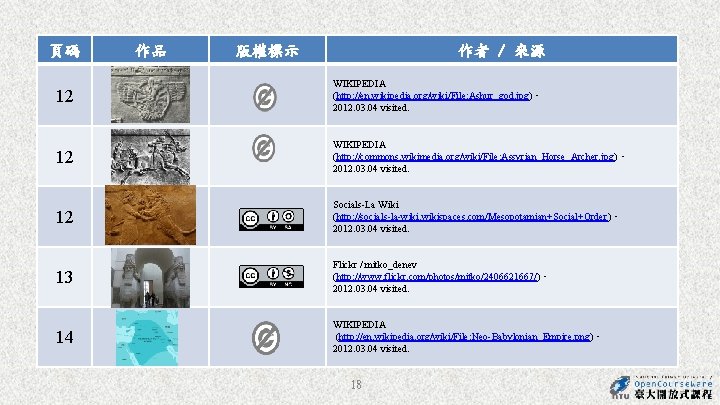
• Military-religious ethos; Assur • ‘calculated frightfulness’ – ‘Frightfulness’: brutality in art and policy • Starting in Sennacherib’s reign • Sculptured reliefs • Inscriptions celebrating military victories 12
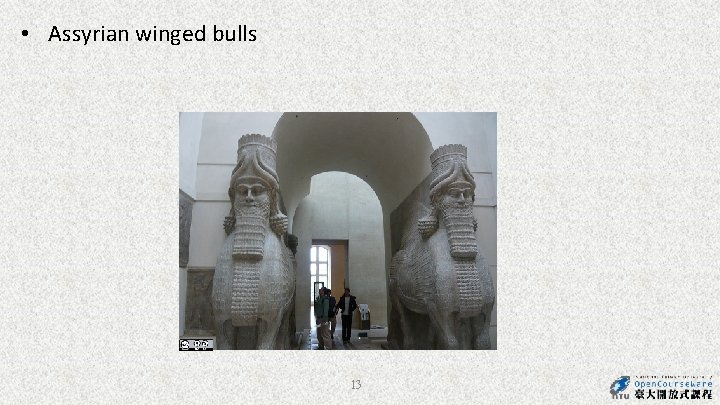
• Assyrian winged bulls 13
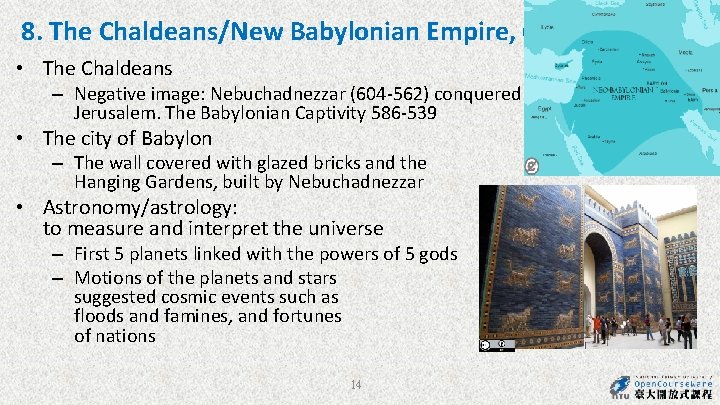
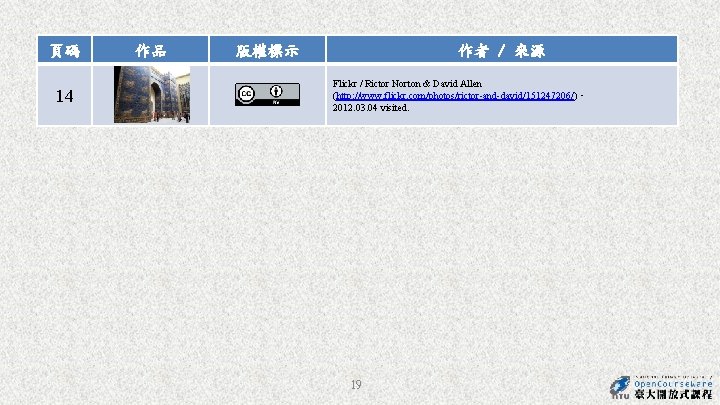
8. The Chaldeans/New Babylonian Empire, 612 -539 • The Chaldeans – Negative image: Nebuchadnezzar (604 -562) conquered Jerusalem. The Babylonian Captivity 586 -539 • The city of Babylon – The wall covered with glazed bricks and the Hanging Gardens, built by Nebuchadnezzar • Astronomy/astrology: to measure and interpret the universe – First 5 planets linked with the powers of 5 gods – Motions of the planets and stars suggested cosmic events such as floods and famines, and fortunes of nations 14
版權聲明 頁碼 作品 版權標示 作者 / 來源 2 Kohler History (http: //kohlerhistory. wikispaces. com/Mesopotamia), 2012. 03. 07 visited. 3 WIKIPEDIA / Marie-Lan Nguyen( http: //commons. wikimedia. org/wiki/File: Accountancy_clay_envelope_Louvre_Sb 1 932. jpg),2012. 03. 01 visited. 4 Flickr / listentoreason (http: //www. flickr. com/photos/charlestilford/2552654321/), 2012. 02. 24 visited. 4 WIKIPEDIA (http: //ro. wikipedia. org/wiki/Fi%C 8%99 ier: Cuni. jpg), 2012. 02. 24 visited. 4 Flickr / johnurlock (http: //www. flickr. com/photos/jonhurlock/3528510508/), 2012. 03. 01 visited. 15
頁碼 作品 版權標示 作者 / 來源 5 Flickr / johnurlock (http: //www. flickr. com/photos/jonhurlock/3527697349/), 2012. 03. 01 visited. 6 Karen Whimsy (http: //karenswhimsy. com/cuneiform. shtm), 2012. 03. 01 visited. 7 WIKIPEDIA / Matt Neale (http: //commons. wikimedia. org/wiki/File: British_Museum_Room_10_cuneiform. jp g),2012. 03. 1 visited. 7 Hentz-humanities-wiki / DJGreen (http: //hentz-humanities-wikispaces. com/DJGreen), 2012. 03. 1 visited. 8 Google Library (http: //books. google. com. tw/books? id=km. KLxz. Tn. L 9 IC&pg=PA 47&lpg=PA 47&dq=MULTIFUNCTIO NAL+SUMERIAN+CUNEIFORM+SIGNS&source=bl&ots=s. Wueecda. Wh&sig=ivlo 5 MDVYZogempel y. K 0 m 5 W 0 wng&hl=zh. TW&sa=X&ei=07 d. WT 9 j 8 Na_Im. AWn 8 Ojz. CQ&redir_esc=y#v=onepage&q=MULTIFUNCTIONAL%2 0 SUMERIAN%20 CUNEIFORM%20 SIGNS&f=false), 2012. 03. 07 visited. 依據著作權法第 46、52、65 條合理使用。 16
頁碼 作品 版權標示 作者 / 來源 9 Kohler History (http: //kohlerhistory. wikispaces. com/Mesopotamia), 2012. 03. 07 visited. 9 WIKIPEDIA (http: //commons. wikimedia. org/wiki/File: Ziggurat_of_ur. jpg), 2012. 03. 01 visited. 10 WIKIPEDIA (http: //en. wikipedia. org/wiki/File: Amarna_Akkadian_letter. png), 2012. 03. 01 visited. 10 World. Historyat. YHS (http: //worldhistoryatyhs. wikispaces. com/Hittites), 2012. 03. 04 visited. 11 World. Historyat. YHS (http: //worldhistoryatyhs. wikispaces. com/Geography), 2012. 03. 04 visited. 17
頁碼 作品 版權標示 作者 / 來源 12 WIKIPEDIA (http: //en. wikipedia. org/wiki/File: Ashur_god. jpg), 2012. 03. 04 visited. 12 WIKIPEDIA (http: //commons. wikimedia. org/wiki/File: Assyrian_Horse_Archer. jpg), 2012. 03. 04 visited. 12 Socials-La Wiki (http: //socials-la-wikispaces. com/Mesopotamian+Social+Order), 2012. 03. 04 visited. 13 Flickr / mitko_denev (http: //www. flickr. com/photos/mitko/2406621667/), 2012. 03. 04 visited. 14 WIKIPEDIA (http: //en. wikipedia. org/wiki/File: Neo-Babylonian_Empire. png), 2012. 03. 04 visited. 18
頁碼 14 作品 版權標示 作者 / 來源 Flickr / Rictor Norton & David Allen (http: //www. flickr. com/photos/rictor-and-david/151247206/), 2012. 03. 04 visited. 19