
The First Americans Americas First Settlers Introduction Native


- Slides: 19
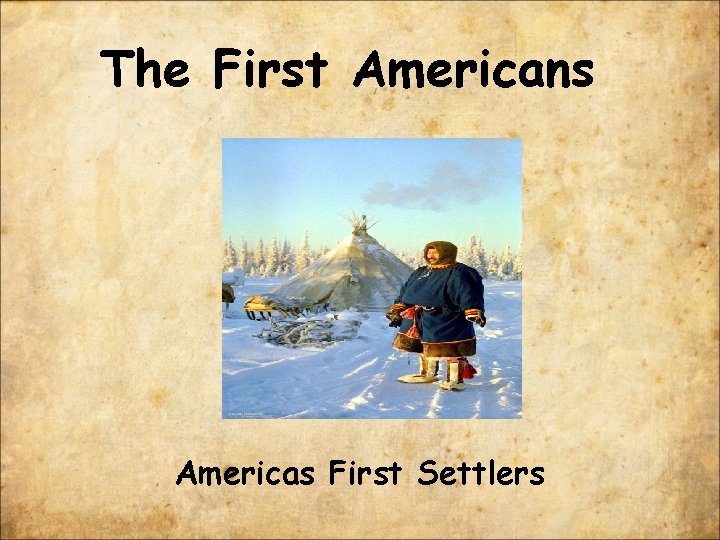
The First Americans Americas First Settlers
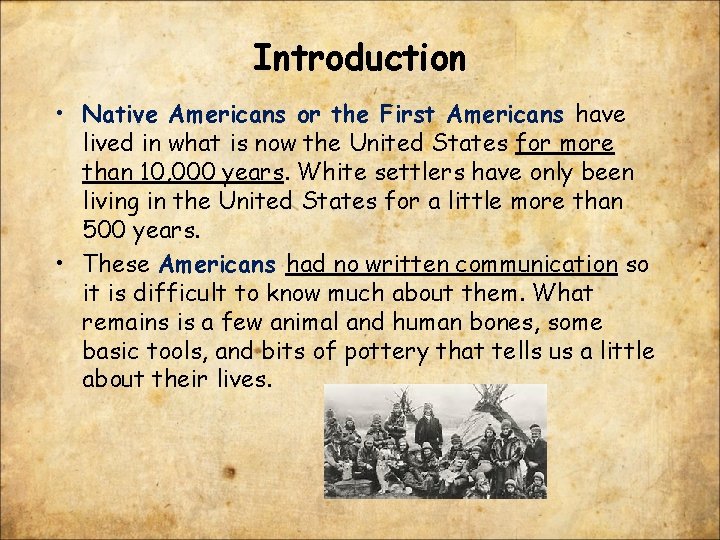
Introduction • Native Americans or the First Americans have lived in what is now the United States for more than 10, 000 years. White settlers have only been living in the United States for a little more than 500 years. • These Americans had no written communication so it is difficult to know much about them. What remains is a few animal and human bones, some basic tools, and bits of pottery that tells us a little about their lives.
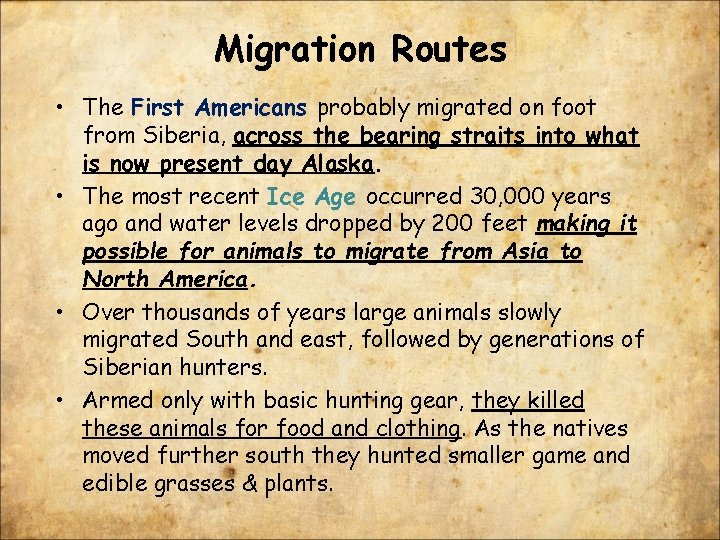
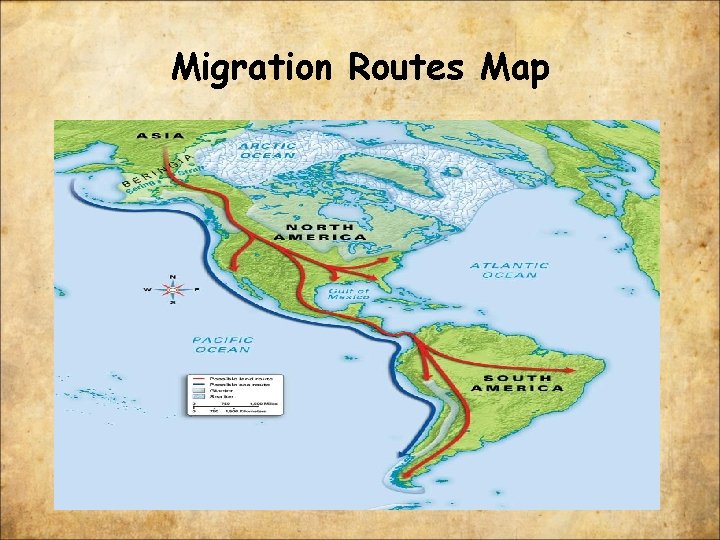
Migration Routes • The First Americans probably migrated on foot from Siberia, across the bearing straits into what is now present day Alaska. • The most recent Ice Age occurred 30, 000 years ago and water levels dropped by 200 feet making it possible for animals to migrate from Asia to North America. • Over thousands of years large animals slowly migrated South and east, followed by generations of Siberian hunters. • Armed only with basic hunting gear, they killed these animals for food and clothing. As the natives moved further south they hunted smaller game and edible grasses & plants.
Migration Routes Map
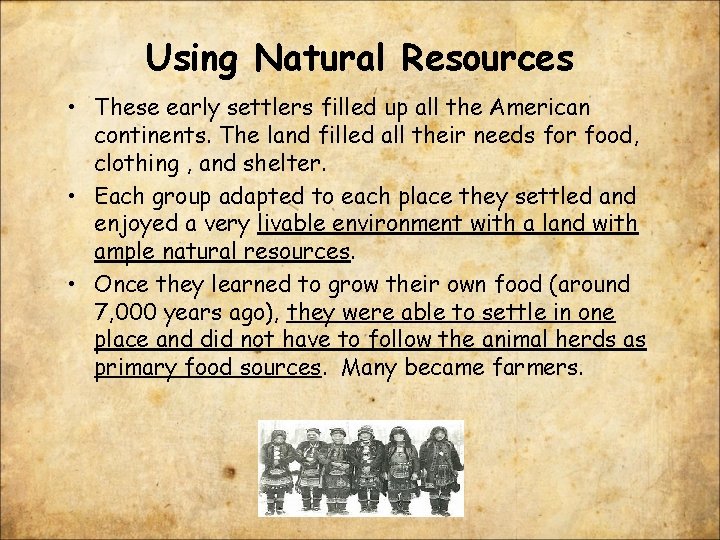
Using Natural Resources • These early settlers filled up all the American continents. The land filled all their needs for food, clothing , and shelter. • Each group adapted to each place they settled and enjoyed a very livable environment with a land with ample natural resources. • Once they learned to grow their own food (around 7, 000 years ago), they were able to settle in one place and did not have to follow the animal herds as primary food sources. Many became farmers.
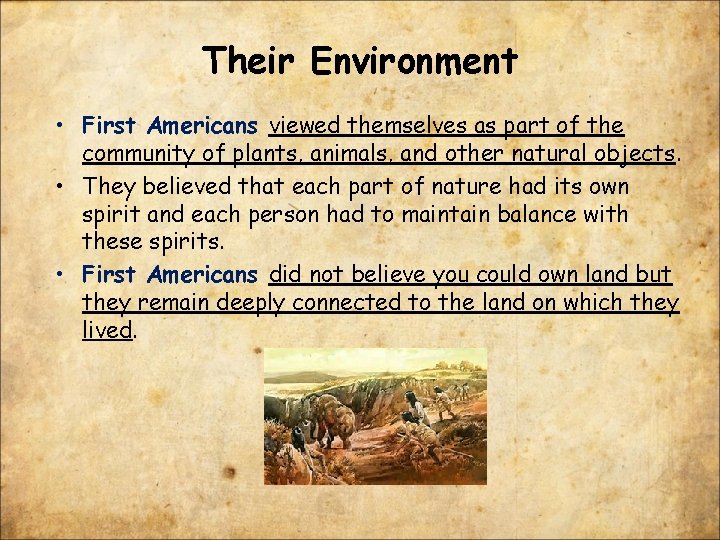
Their Environment • First Americans viewed themselves as part of the community of plants, animals, and other natural objects. • They believed that each part of nature had its own spirit and each person had to maintain balance with these spirits. • First Americans did not believe you could own land but they remain deeply connected to the land on which they lived.
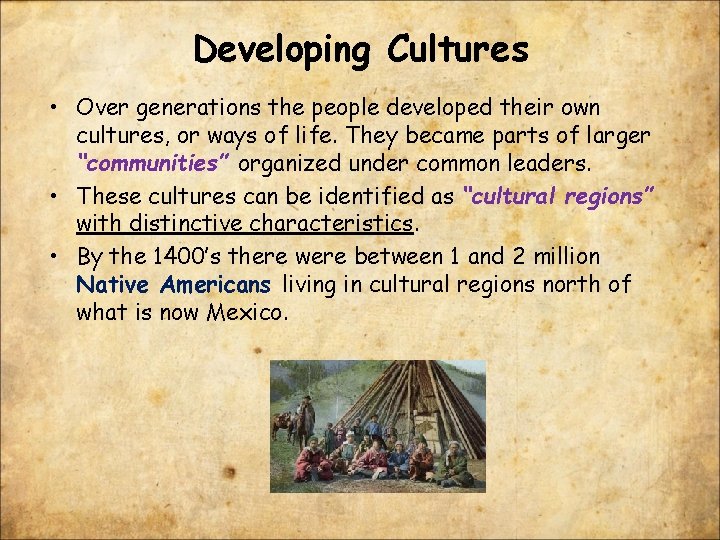
Developing Cultures • Over generations the people developed their own cultures, or ways of life. They became parts of larger “communities” organized under common leaders. • These cultures can be identified as “cultural regions” with distinctive characteristics. • By the 1400’s there were between 1 and 2 million Native Americans living in cultural regions north of what is now Mexico.
The Eight “Cultural Regions” The 8 cultural regions include: The Northwest Coast California The Great Basin The Plateau The Southwest The Great Plains The Eastern Woodlands The Southeast
“Cultural Regions” Map
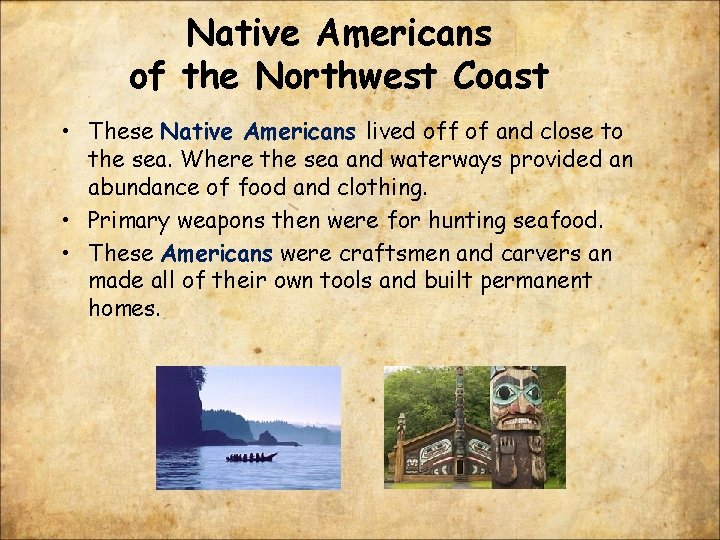
Native Americans of the Northwest Coast • These Native Americans lived off of and close to the sea. Where the sea and waterways provided an abundance of food and clothing. • Primary weapons then were for hunting seafood. • These Americans were craftsmen and carvers an made all of their own tools and built permanent homes.
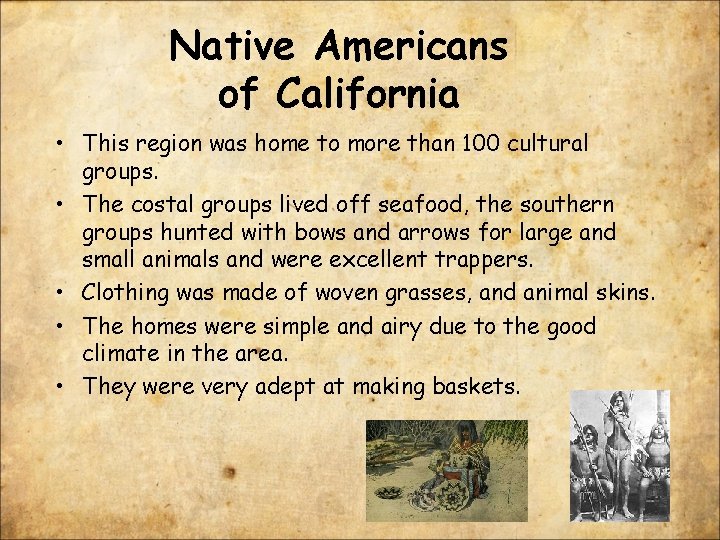
Native Americans of California • This region was home to more than 100 cultural groups. • The costal groups lived off seafood, the southern groups hunted with bows and arrows for large and small animals and were excellent trappers. • Clothing was made of woven grasses, and animal skins. • The homes were simple and airy due to the good climate in the area. • They were very adept at making baskets.
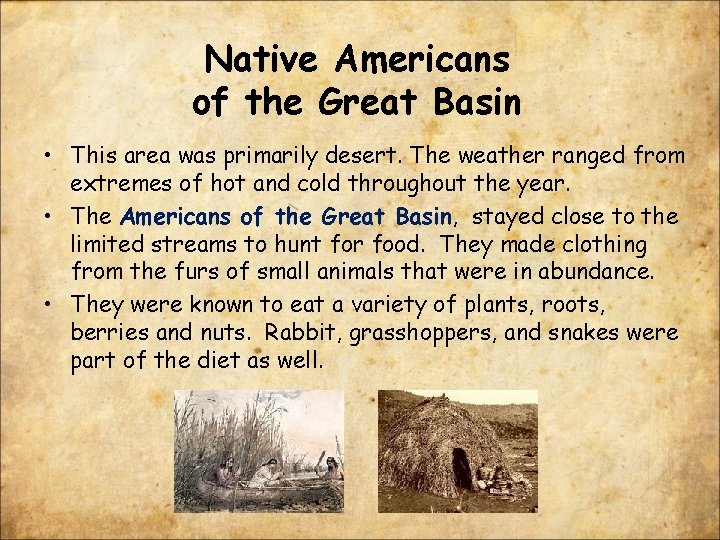
Native Americans of the Great Basin • This area was primarily desert. The weather ranged from extremes of hot and cold throughout the year. • The Americans of the Great Basin, stayed close to the limited streams to hunt for food. They made clothing from the furs of small animals that were in abundance. • They were known to eat a variety of plants, roots, berries and nuts. Rabbit, grasshoppers, and snakes were part of the diet as well.
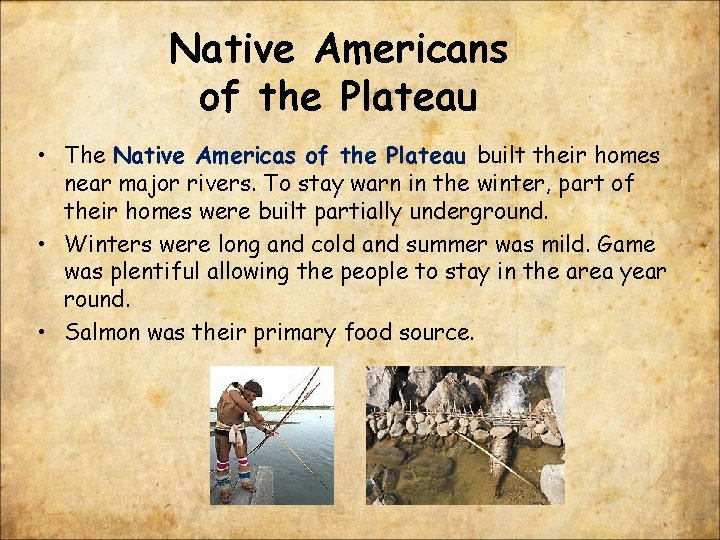
Native Americans of the Plateau • The Native Americas of the Plateau built their homes near major rivers. To stay warn in the winter, part of their homes were built partially underground. • Winters were long and cold and summer was mild. Game was plentiful allowing the people to stay in the area year round. • Salmon was their primary food source.
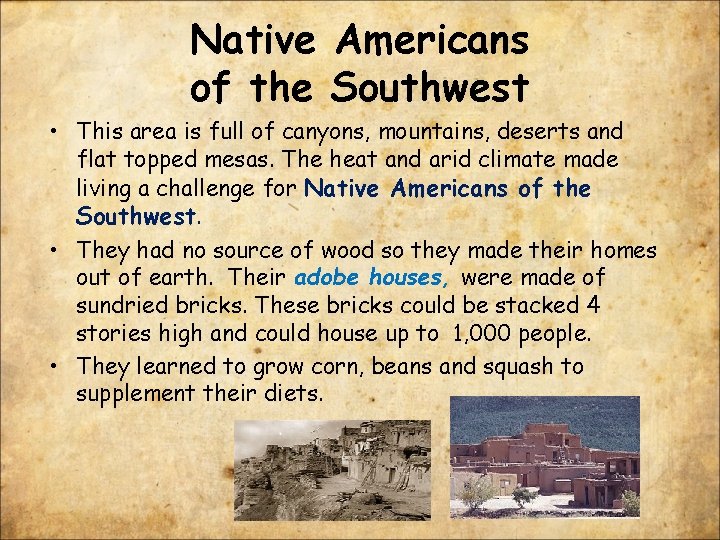
Native Americans of the Southwest • This area is full of canyons, mountains, deserts and flat topped mesas. The heat and arid climate made living a challenge for Native Americans of the Southwest. • They had no source of wood so they made their homes out of earth. Their adobe houses, were made of sundried bricks. These bricks could be stacked 4 stories high and could house up to 1, 000 people. • They learned to grow corn, beans and squash to supplement their diets.
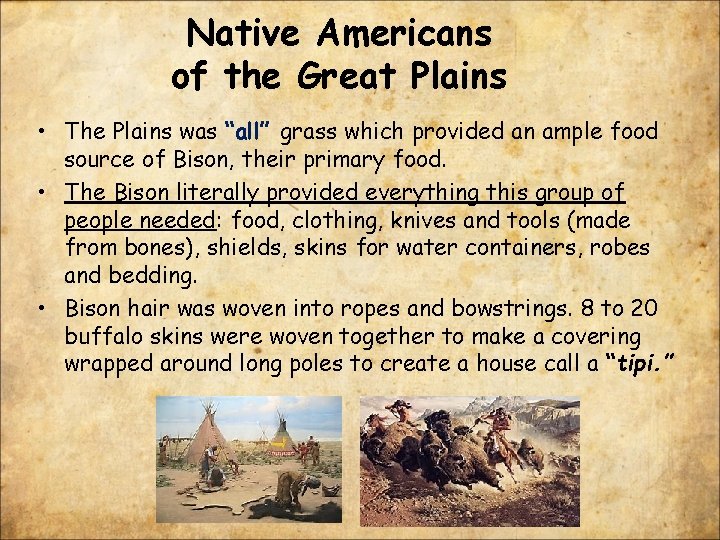
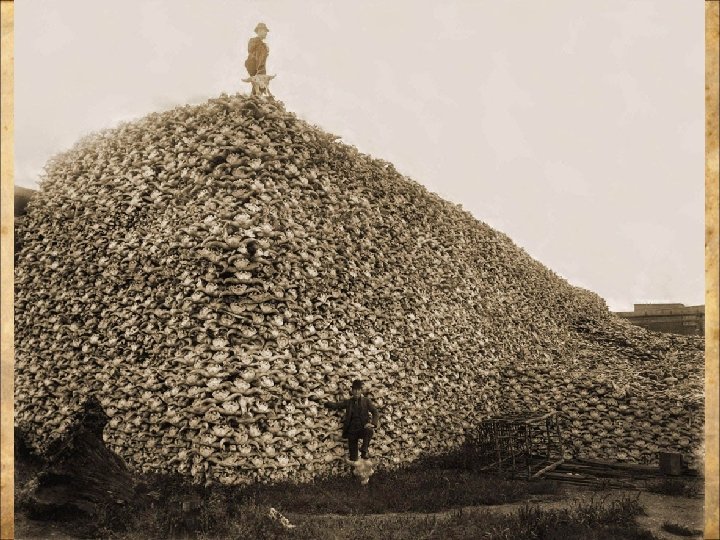
Native Americans of the Great Plains • The Plains was “all” grass which provided an ample food source of Bison, their primary food. • The Bison literally provided everything this group of people needed: food, clothing, knives and tools (made from bones), shields, skins for water containers, robes and bedding. • Bison hair was woven into ropes and bowstrings. 8 to 20 buffalo skins were woven together to make a covering wrapped around long poles to create a house call a “tipi. ”
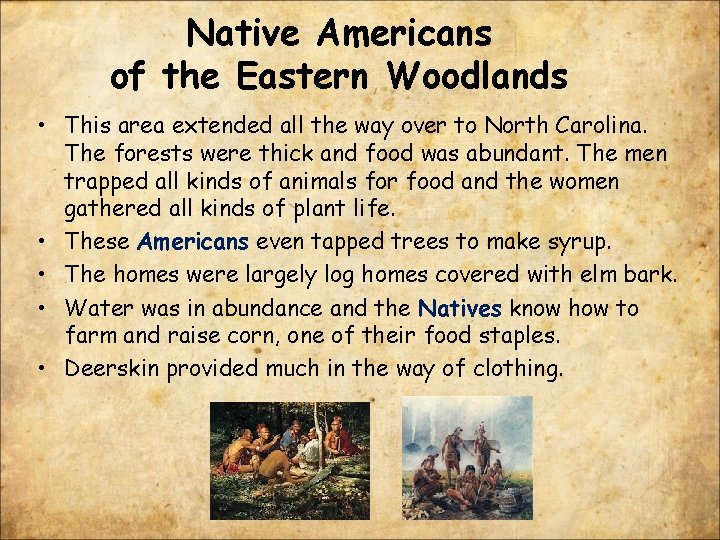
Native Americans of the Eastern Woodlands • This area extended all the way over to North Carolina. The forests were thick and food was abundant. The men trapped all kinds of animals for food and the women gathered all kinds of plant life. • These Americans even tapped trees to make syrup. • The homes were largely log homes covered with elm bark. • Water was in abundance and the Natives know how to farm and raise corn, one of their food staples. • Deerskin provided much in the way of clothing.
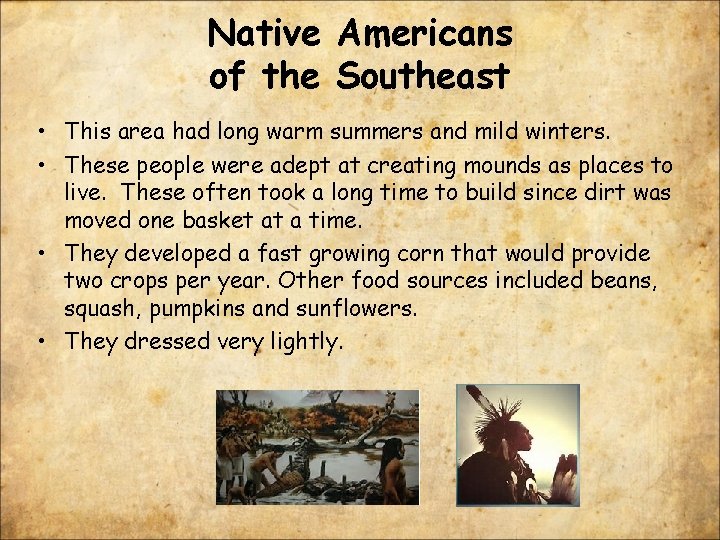
Native Americans of the Southeast • This area had long warm summers and mild winters. • These people were adept at creating mounds as places to live. These often took a long time to build since dirt was moved one basket at a time. • They developed a fast growing corn that would provide two crops per year. Other food sources included beans, squash, pumpkins and sunflowers. • They dressed very lightly.
End of Presentation • For thousands of years these First Americans had the Americas all to themselves. • That would change when the Europeans learned of the existence of the American continents.