
The Finnish Educational System The Place of Private

- Slides: 35
The Finnish Educational System: The Place of Private Schools – autonomy and curriculum Associate Professor Jari Salminen University of Helsinki Department of Teacher Education e-mail: jari. salminen@helsinki. fi telephone: 19129563
This presentation: • Some theoretical aspects • Finnish Private School development • Autonomy and curriculum: the future of Finnish (Private) Schools
School education • past v. future, tradition v. change • dynamo of the modern society: (Hegel, Marx, Dewey, Spencer, Gadamer, Russell) • economy • politics • ideologies • family structures • pedagogical issues
Explanatory framework * • The impact of government-centered political control • Reconciliation of ideological, social and local aspirations • Systemic change • Human capital theory • The reform of economic structures and the distribution of power in political spheres of interest * Tyack, D. 1976; Shulman, L. S. 1997, Salminen, J. 2002.
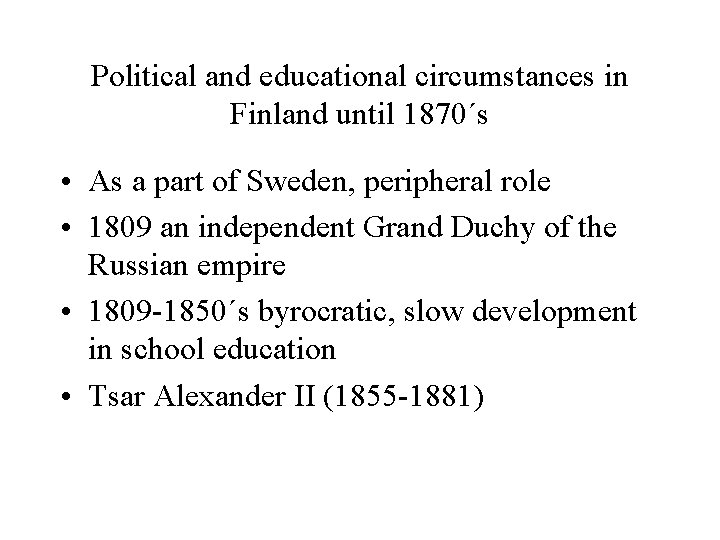
Political and educational circumstances in Finland until 1870´s • As a part of Sweden, peripheral role • 1809 an independent Grand Duchy of the Russian empire • 1809 -1850´s byrocratic, slow development in school education • Tsar Alexander II (1855 -1881)
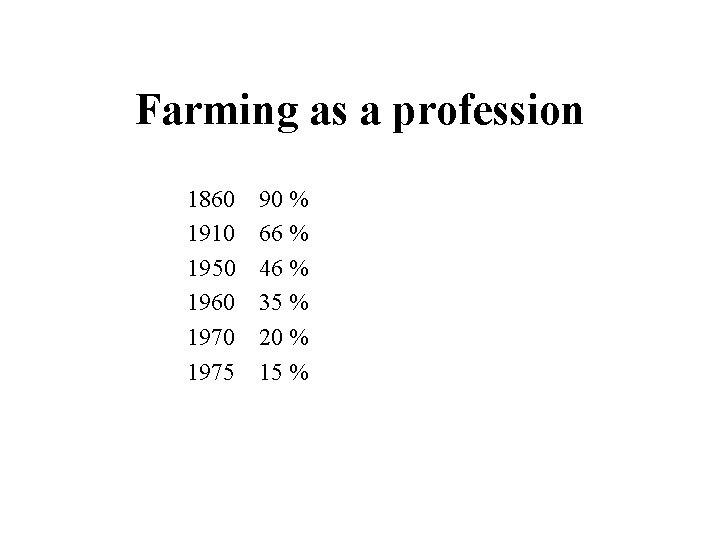
Farming as a profession 1860 1910 1950 1960 1975 90 % 66 % 46 % 35 % 20 % 15 %
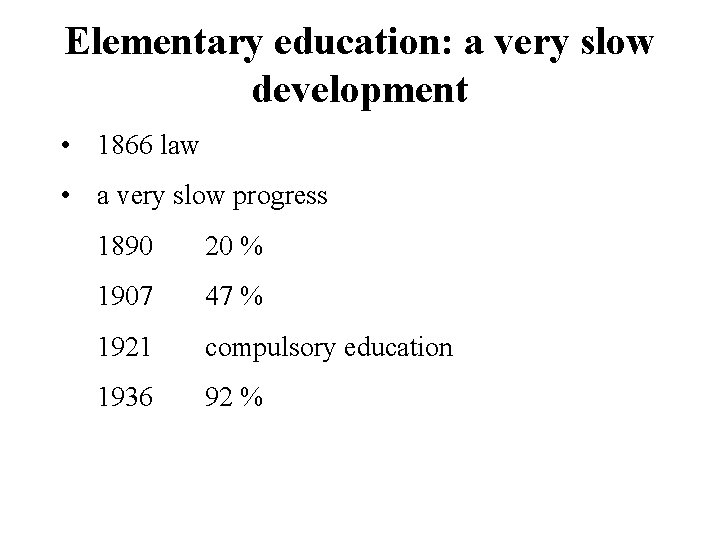
Elementary education: a very slow development • 1866 law • a very slow progress 1890 20 % 1907 47 % 1921 compulsory education 1936 92 %
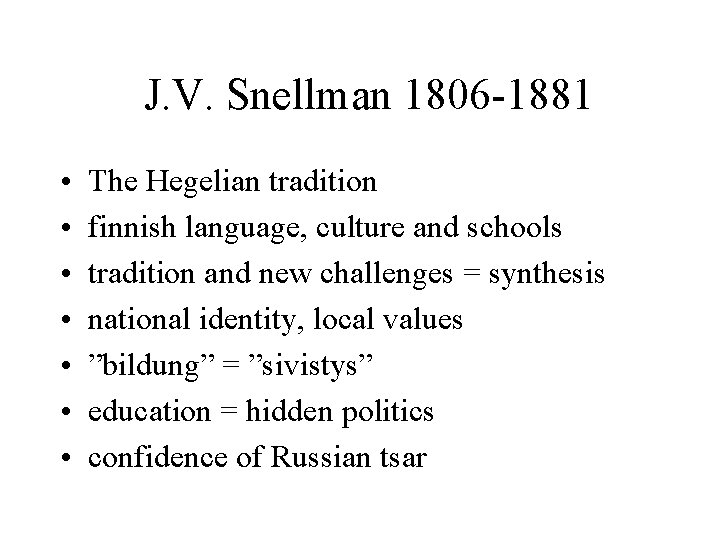
J. V. Snellman 1806 -1881 • • The Hegelian tradition finnish language, culture and schools tradition and new challenges = synthesis national identity, local values ”bildung” = ”sivistys” education = hidden politics confidence of Russian tsar
Finnish Private School History • Civic society was a very important factor in developing secondary education • Because of: - Russian control and byrocracy - Economy - Different regional demands - Language question - Pedagogigal innovations (swedish speaking schools)
First Private Schools in Finland • 1830 -1850 first girlschools were established ( 1849 first statut for private schools) • Private School in Hämeenlinna 1812 • Bergenheim´s Realschool in Turku 1843 • Helsingfors Lyceum 1831 -1891 • Behms educational institution in Viipuri
Development 1870 -1900 • 1860 - several private girlschools, 1870 - also finnish speaking girlchools • 1870 - finnish speaking lyceums for boys • 1877 Realschool i Fredrikshamn • 1882 Nya svenska läröverket • 1883 Läroverket för gossar och flickor • 1886 Helsingin suomalainen yhteiskoulu
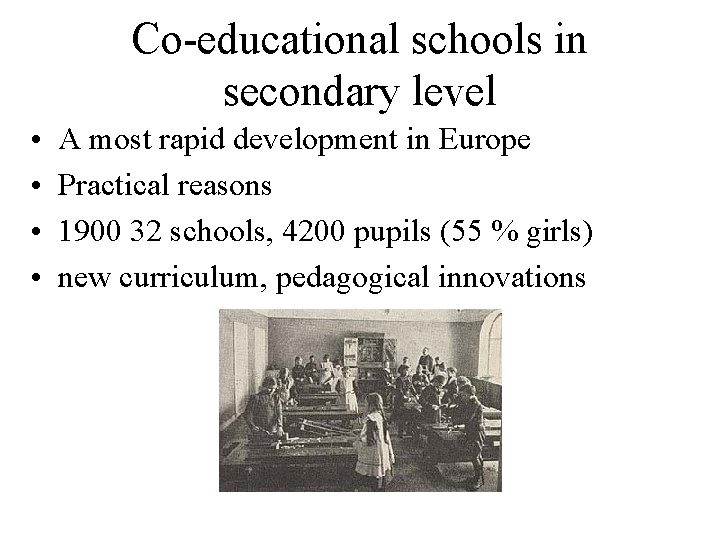
Co-educational schools in secondary level • • A most rapid development in Europe Practical reasons 1900 32 schools, 4200 pupils (55 % girls) new curriculum, pedagogical innovations
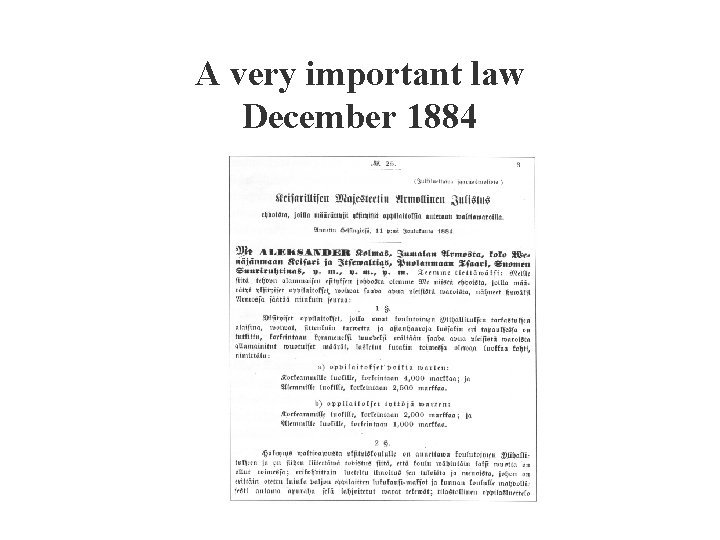
A very important law December 1884
Private school history 1900 -1917 • 1900 co-educational secondary schools in countryside • First special upper-secondary schools: Helsingin maanviljelyslyseo 1908 -
The young republic 1917 -1945 • civil war 1918 • private school law 1919 • 1918 -1944 106 new private secondary schools were established • 1930 economic depression, right wing ideologies: IKL, ASK
Pedagogical development 1917 -1945 • A very stabil curriculum • swedish speaking schools more innovative • problematic question between public primary schools and private secondary schools • war time problems
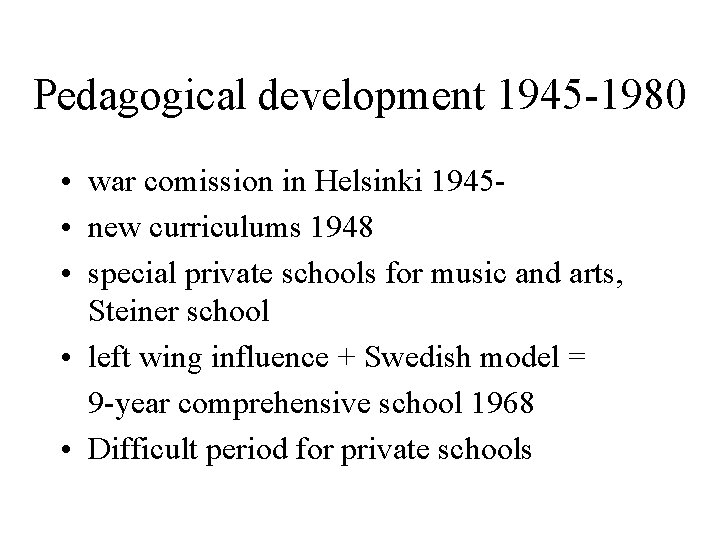
Pedagogical development 1945 -1980 • war comission in Helsinki 1945 • new curriculums 1948 • special private schools for music and arts, Steiner school • left wing influence + Swedish model = 9 -year comprehensive school 1968 • Difficult period for private schools
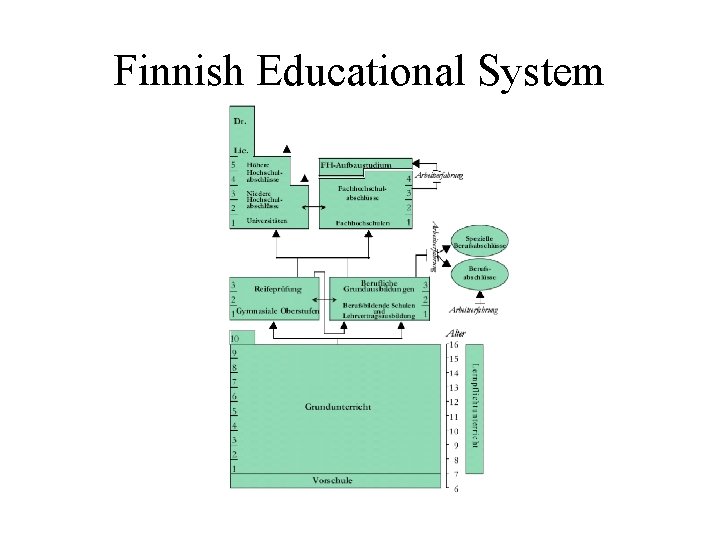
Finnish Educational System
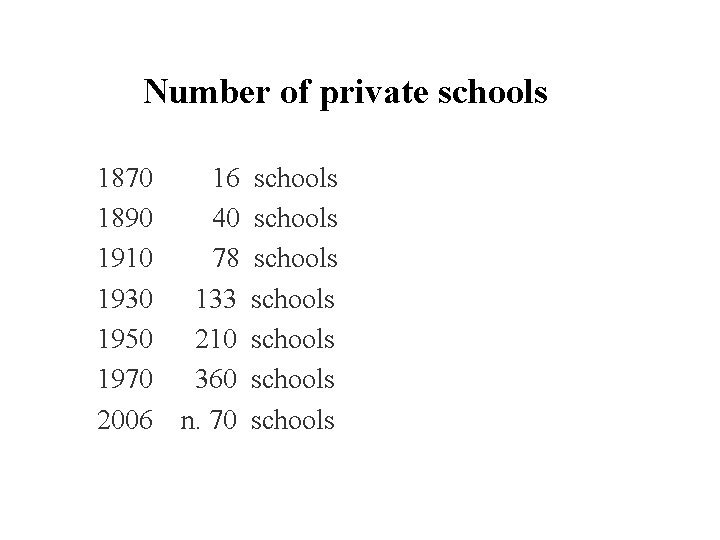
Number of private schools 1870 1890 1910 1930 1950 1970 2006 16 40 78 133 210 360 n. 70 schools schools
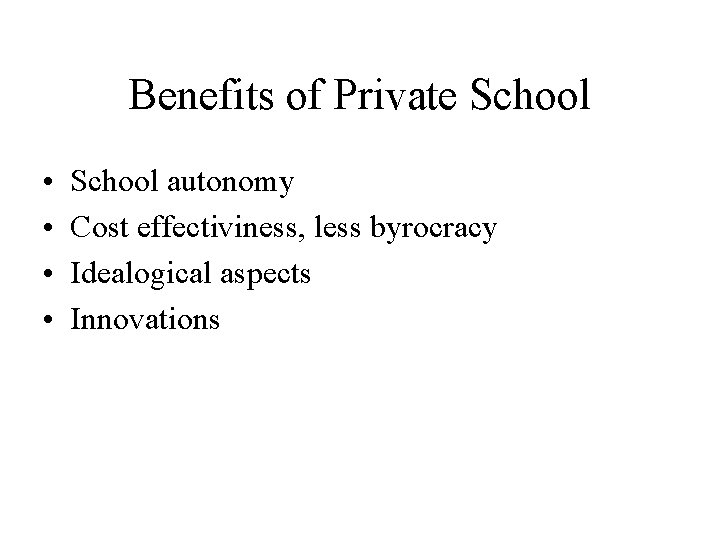
Benefits of Private School • • School autonomy Cost effectiviness, less byrocracy Idealogical aspects Innovations
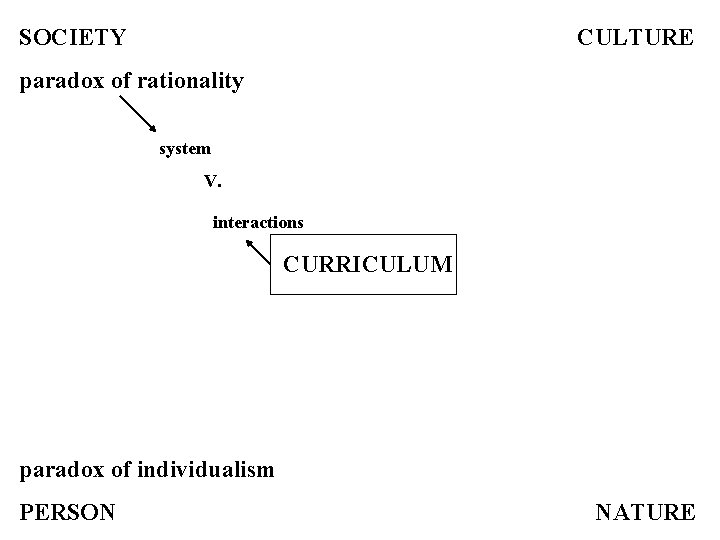
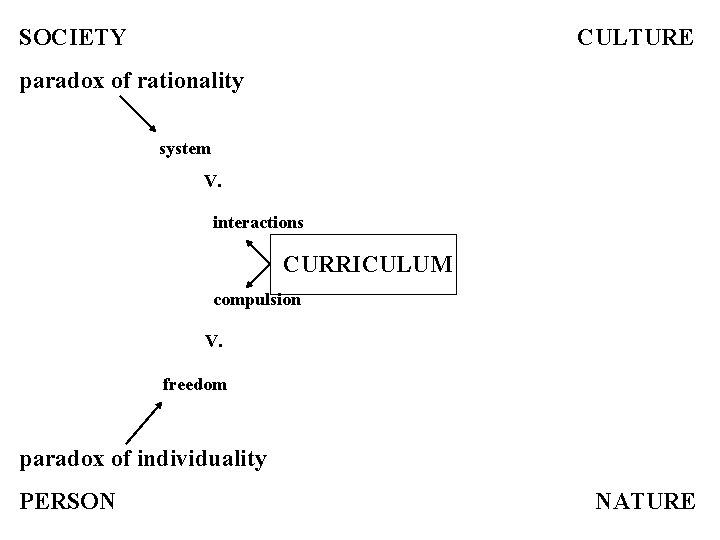
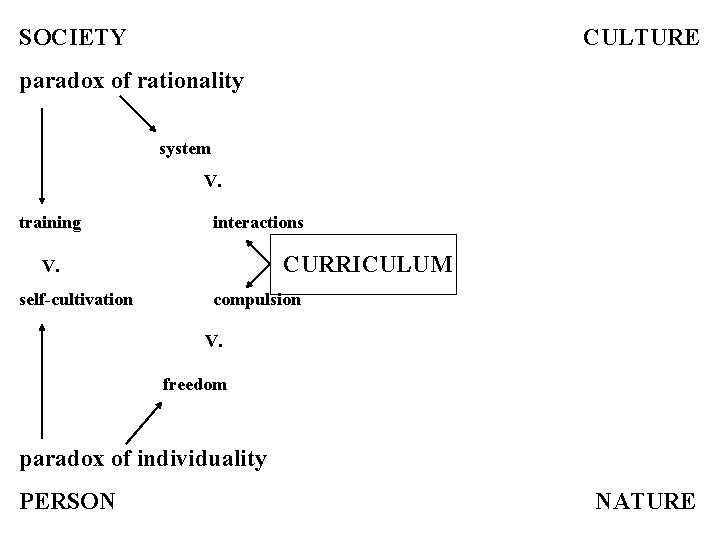
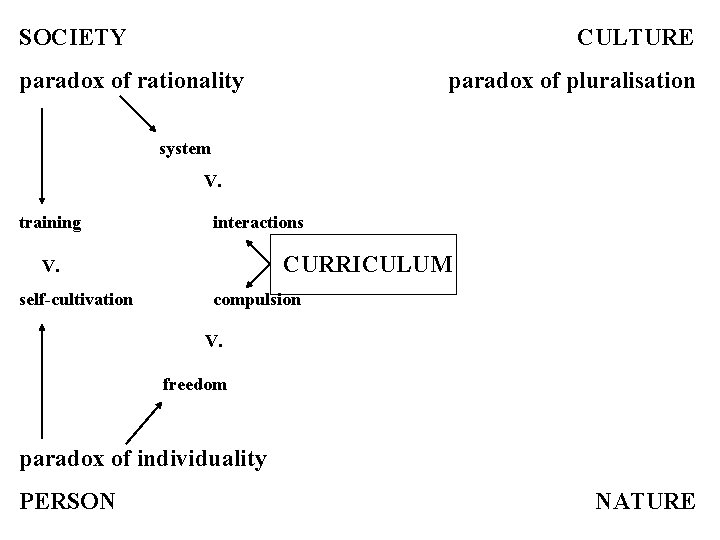
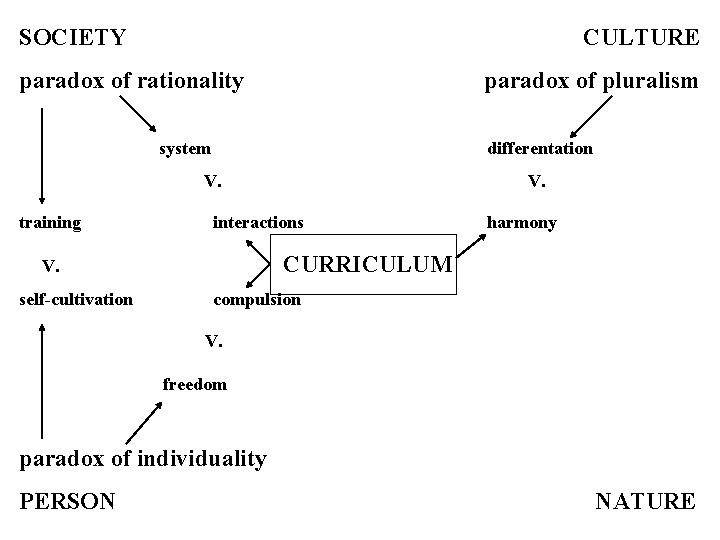
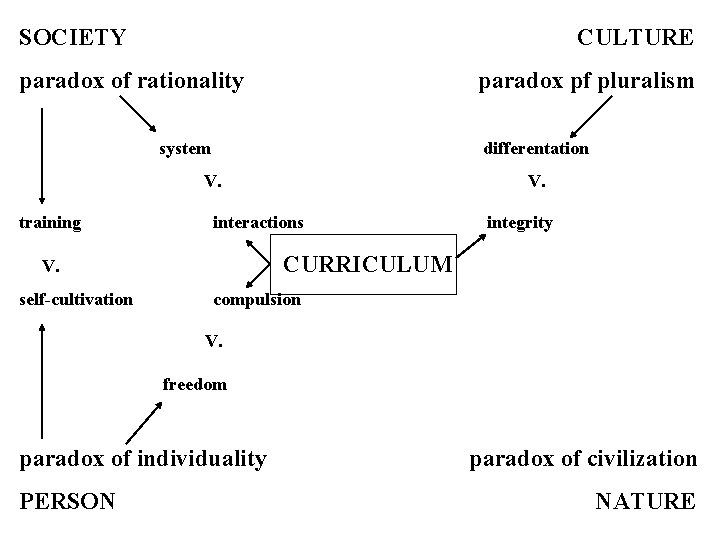
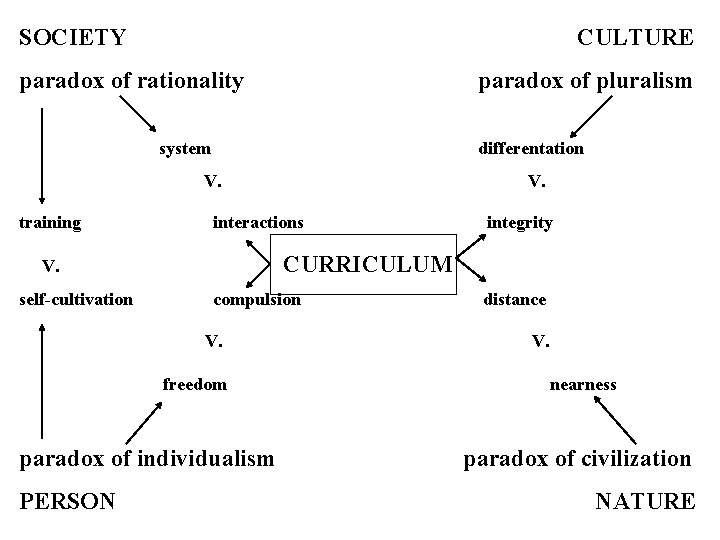
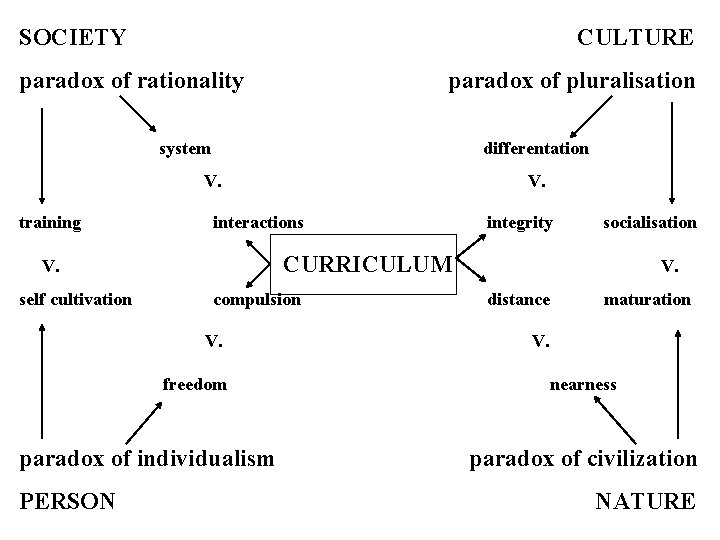
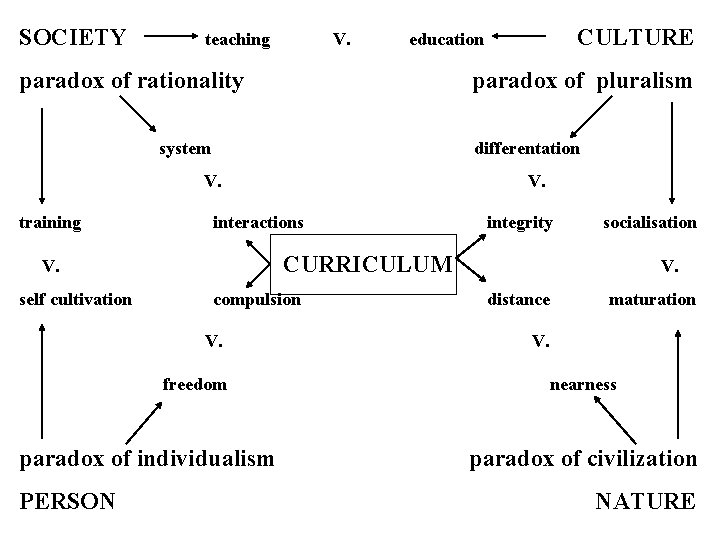
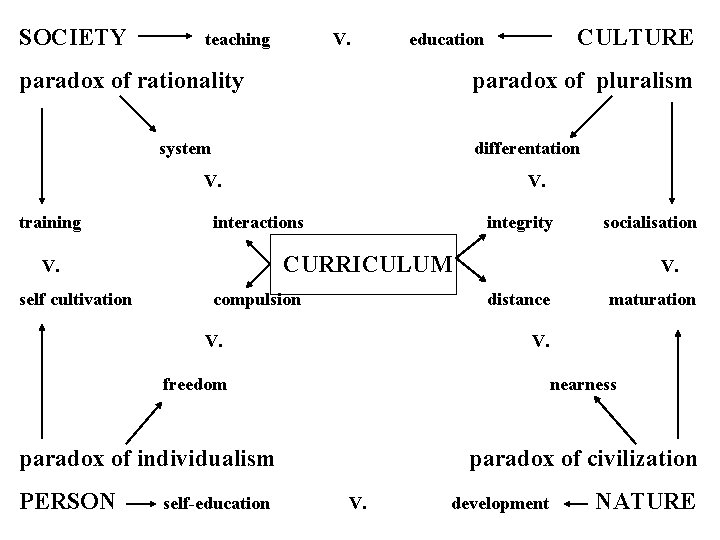
Helsper, W. 1996. Pädagogisches Handeln in den Antinomien der Moderne. Einführung in Grundbegriffe und Grundfragen der Erziehungswissenschaft (S. 15 -34). Krüger, H-H. & Helsper, W. Leske + Budrich Verlag Opladen 1996.
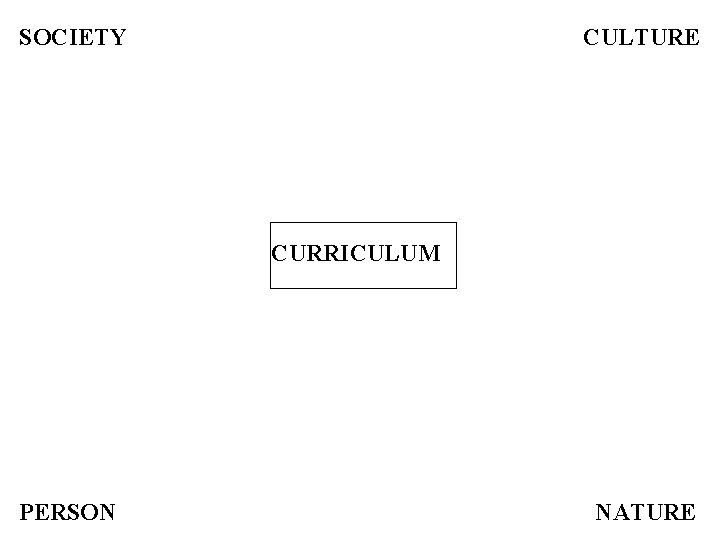
SOCIETY PERSON CULTURE NATURE
SOCIETY CULTURE CURRICULUM PERSON NATURE
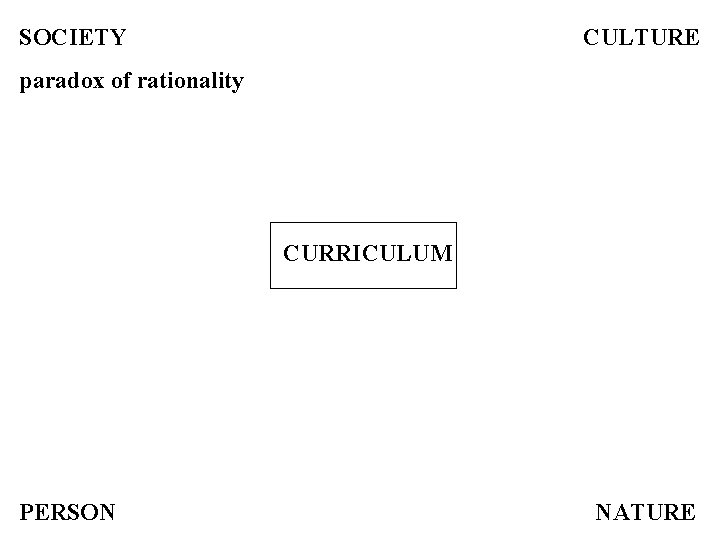
SOCIETY CULTURE paradox of rationality CURRICULUM PERSON NATURE
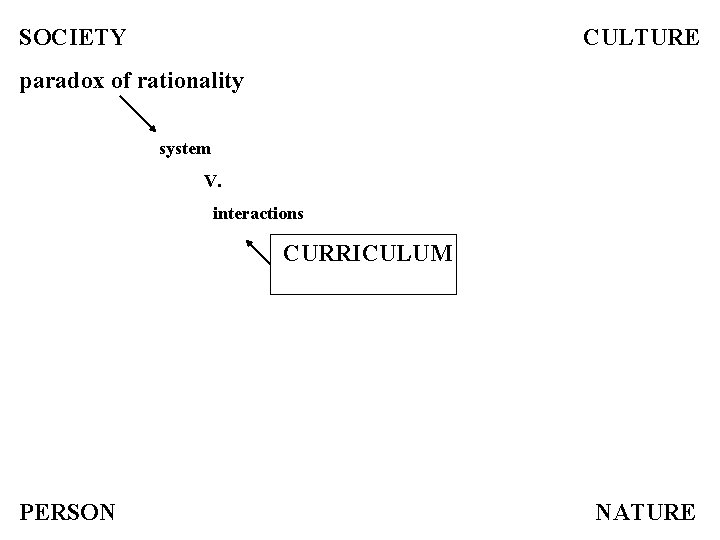
SOCIETY CULTURE paradox of rationality system V. interactions CURRICULUM PERSON NATURE
SOCIETY CULTURE paradox of rationality system V. interactions CURRICULUM paradox of individualism PERSON NATURE
SOCIETY CULTURE paradox of rationality system V. interactions CURRICULUM compulsion V. freedom paradox of individuality PERSON NATURE
SOCIETY CULTURE paradox of rationality system V. training interactions CURRICULUM V. self-cultivation compulsion V. freedom paradox of individuality PERSON NATURE
SOCIETY CULTURE paradox of rationality paradox of pluralisation system V. training interactions CURRICULUM V. self-cultivation compulsion V. freedom paradox of individuality PERSON NATURE
SOCIETY CULTURE paradox of rationality paradox of pluralism system differentation V. training interactions harmony CURRICULUM V. self-cultivation V. compulsion V. freedom paradox of individuality PERSON NATURE
SOCIETY CULTURE paradox of rationality paradox pf pluralism system differentation V. training interactions integrity CURRICULUM V. self-cultivation V. compulsion V. freedom paradox of individuality PERSON paradox of civilization NATURE
SOCIETY CULTURE paradox of rationality paradox of pluralism system differentation V. training interactions compulsion V. freedom paradox of individualism PERSON integrity CURRICULUM V. self-cultivation V. distance V. nearness paradox of civilization NATURE
SOCIETY CULTURE paradox of rationality paradox of pluralisation system differentation V. training interactions compulsion V. freedom paradox of individualism PERSON integrity socialisation CURRICULUM V. self cultivation V. distance maturation V. nearness paradox of civilization NATURE
SOCIETY teaching V. paradox of rationality paradox of pluralism system differentation V. training integrity socialisation CURRICULUM compulsion V. freedom paradox of individualism PERSON V. interactions V. self cultivation CULTURE education V. distance maturation V. nearness paradox of civilization NATURE
SOCIETY teaching V. paradox of rationality paradox of pluralism system differentation V. training V. interactions integrity compulsion V. distance V. nearness paradox of individualism self-education maturation V. freedom PERSON socialisation CURRICULUM V. self cultivation CULTURE education paradox of civilization V. development NATURE