
THE FILMS OF MASUMURA IN THE 1960S By
THE FILMS OF MASUMURA IN THE 1960’S By Finley and Claudia
MASUMURA Masumura was born in Kōfu, Yamanashi. He worked as an assistant director at the Daiei Film studio. He also won a scholarship to study film in Italy. Masumura worked as a second-unit director on many films before directing his own first film, Kisses, in 1957. Over the next three decades, he directed 58 films in a variety of genres. Masumara triggered the 1960 s Japanese New Wave, directly inspiring Oshima and Imamura, two other directors. The contemporary bad boys of Japanese cinema wouldn’t have been as prominent without Masumura's fearless lead.
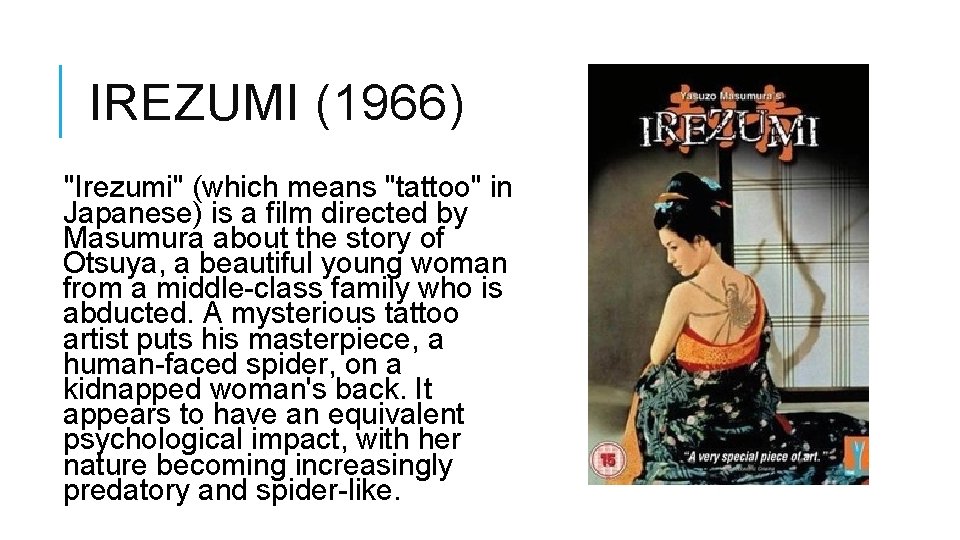
IREZUMI (1966) "Irezumi" (which means "tattoo" in Japanese) is a film directed by Masumura about the story of Otsuya, a beautiful young woman from a middle-class family who is abducted. A mysterious tattoo artist puts his masterpiece, a human-faced spider, on a kidnapped woman's back. It appears to have an equivalent psychological impact, with her nature becoming increasingly predatory and spider-like.
REVIEWS v. Irezumi was rated 7. 2/10 on IMDb. v‘Irezumi is a masterclass in miss-en-scene, careful framing and pacing’ v‘Superb editing and some great acting’ v‘A piece of art’
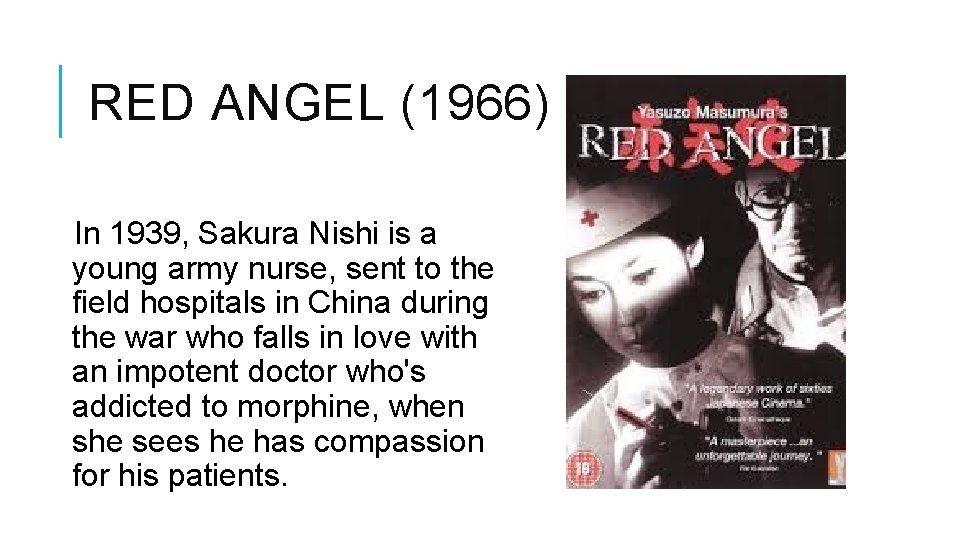
RED ANGEL (1966) In 1939, Sakura Nishi is a young army nurse, sent to the field hospitals in China during the war who falls in love with an impotent doctor who's addicted to morphine, when she sees he has compassion for his patients.
REVIEWS v‘A masterpiece… an unforgettable journey’ – The Guardian v‘Although the structure is simple and the tone is unrelentingly grim, the messages are powerful and heartfelt. ’ v‘Incredibly beautiful and moving. ’ v‘Grim but very gripping, brutal but essential’
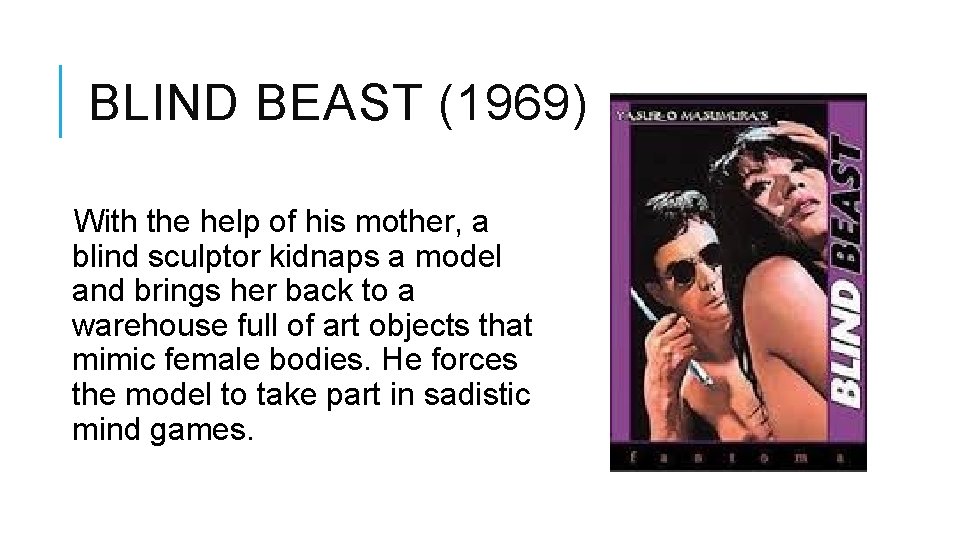
BLIND BEAST (1969) With the help of his mother, a blind sculptor kidnaps a model and brings her back to a warehouse full of art objects that mimic female bodies. He forces the model to take part in sadistic mind games.
REVIEWS v‘The cinematography and music are equally haunting. ’ v‘Blind Beast is a fascinating exploration of the human senses. ’ v‘Certainly recommended for those with a fascination with the darker aspects of the human heart as well as those that enjoy films with genuine artistic aspirations. ’
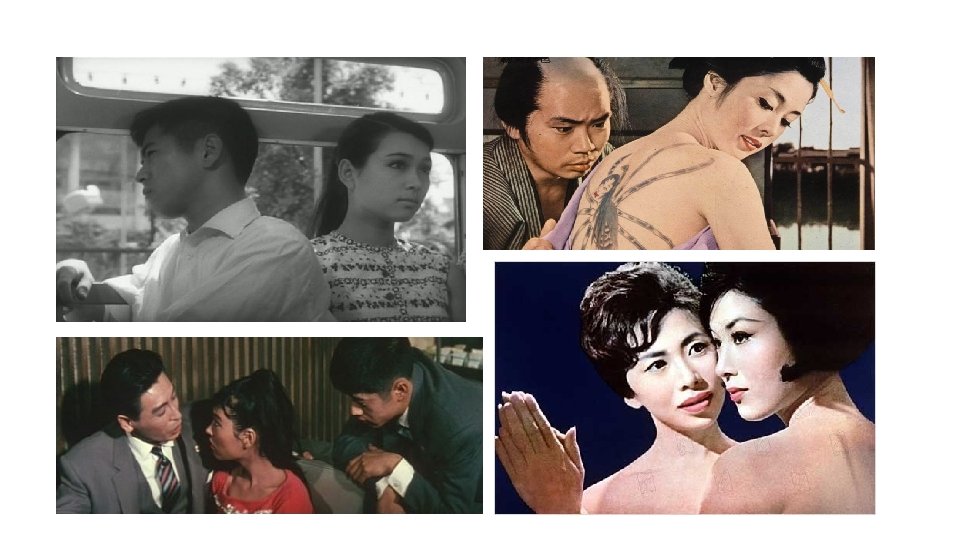
MASUMARA’S STYLE Masumura's films all tend to have the ability to shock and inspire intellectually and emotionally. His protagonists frequently have a passion for truth and tenderness. Masumura's films feature a ranges of eroticism, satire, war, crime, capitalism and gender politics.
- Slides: 10