
The Fifties Demobilization After WWII the number of

The Fifties
Demobilization: After WWII, the number of soldiers on active duty dropped from 12 million in 1945 to 1. 6 million in 1947. These workers came home, looking for jobs and the lives they left behind.

GI Bill: (1944) Serviceman’s Readjustment Act This law, signed by FDR, eased the transition from combat to home. It provided veterans with financial aid for education, training, starting a business, and finding housing. ---8 Million veterans benefited---
First in the family to go to college GI Bill: $67 billion spent over 50 years (famous GIs: Johnny Carson & Al Gore) Overcrowding led to improvements in many Universities’ campuses and staff. Veterans were more mature than standard college students, defying expectations of those who anticipated failures and problems.
Consumption Skyrockets. . . After the rationing during the war, people were ready to enjoy some luxuries--1946 1955 Cars: 2 million ~4 million 1948 1950 TVs: 975, 000 7, 500, 000 also: fridges, washing machines, vacuum cleaners, cameras, electric can openers, garage door openers, and pencil sharpeners. . .
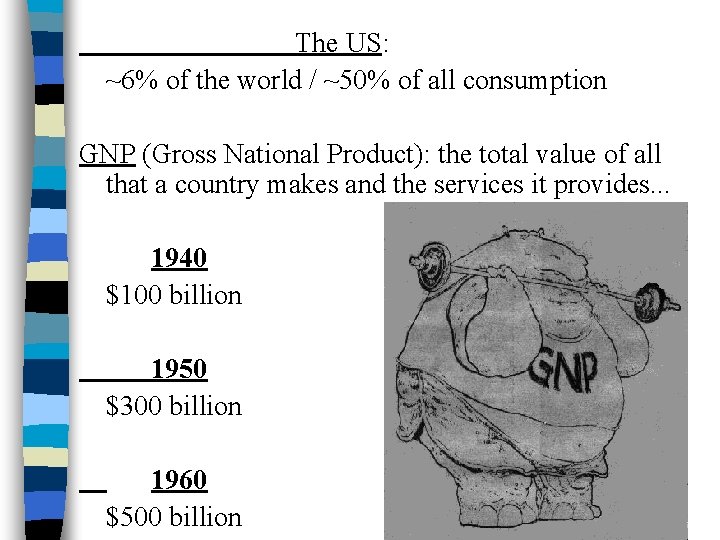
The US: ~6% of the world / ~50% of all consumption GNP (Gross National Product): the total value of all that a country makes and the services it provides. . . 1940 $100 billion 1950 $300 billion 1960 $500 billion
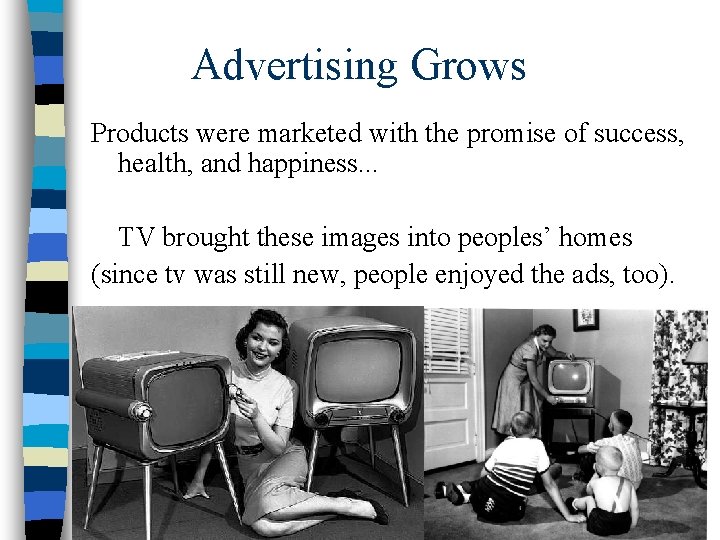
Advertising Grows Products were marketed with the promise of success, health, and happiness. . . TV brought these images into peoples’ homes (since tv was still new, people enjoyed the ads, too).

The invention of ‘childhood’ Kids don’t grow up working on the family farm. . . they’re living in planned communities, protected from the dangers of the outside world. Parents want to give their kids the life they never had (b/c Great Depression, etc).
So what do you do with all this money, now? Highway Act of 1956: $32 billion to develop the Interstate System. . . 40, 000 miles of highways link the States. ---People go West! This changes all aspects of life: business, travel, migration People can work farther from home and buy things made in distant places.
MONEY VOCAB Real Income The amount you earn (accounting for inflation) Discretionary Income Money people spend on basic needs + the extras
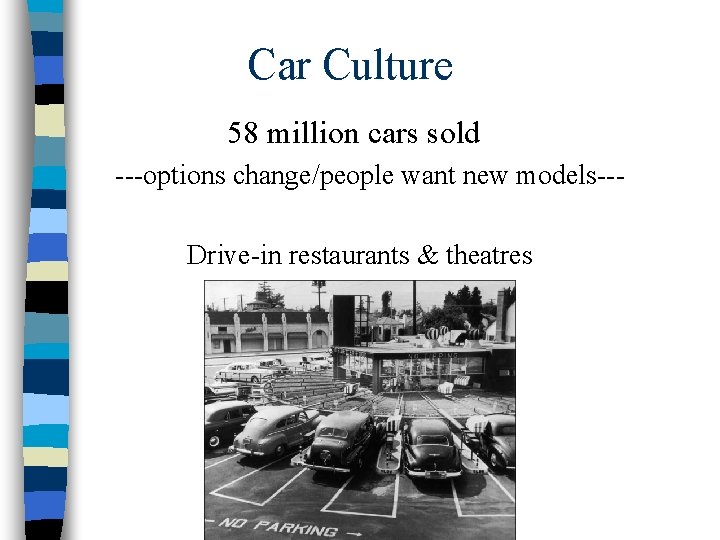
Car Culture 58 million cars sold ---options change/people want new models--Drive-in restaurants & theatres
Big Business Conglomerate: A firm that is a combination of several companies. . . Corporation: a company that acts as a single individual. . . IBM 1946 $119. 4 mill ][ GM 1961 ][ 1951 1960 $1. 7 billion ][ $1. 5 billion $2. 8 billion
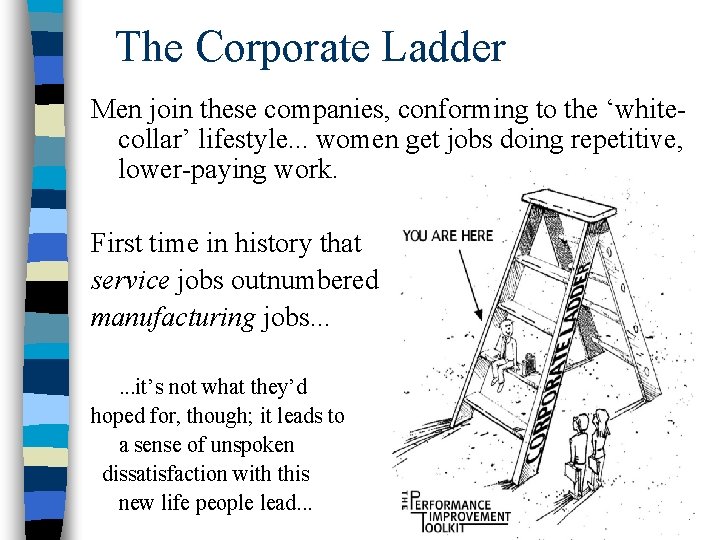
The Corporate Ladder Men join these companies, conforming to the ‘whitecollar’ lifestyle. . . women get jobs doing repetitive, lower-paying work. First time in history that service jobs outnumbered manufacturing jobs. . . it’s not what they’d hoped for, though; it leads to a sense of unspoken dissatisfaction with this new life people lead. . .
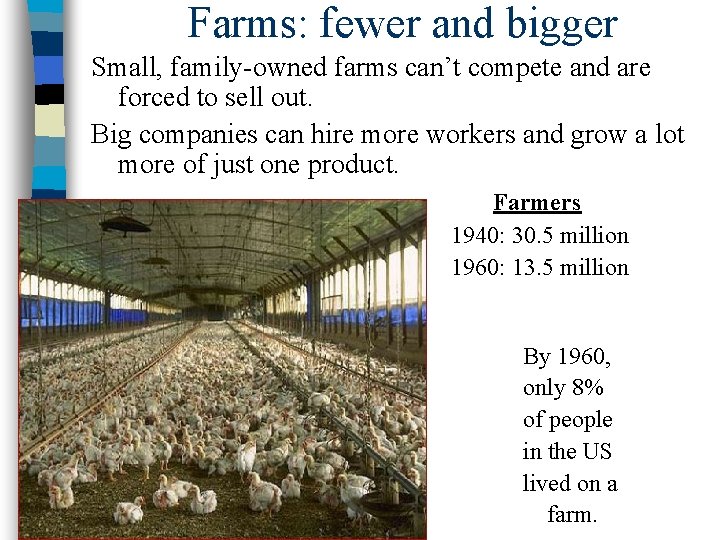
Farms: fewer and bigger Small, family-owned farms can’t compete and are forced to sell out. Big companies can hire more workers and grow a lot more of just one product. Farmers 1940: 30. 5 million 1960: 13. 5 million By 1960, only 8% of people in the US lived on a farm.
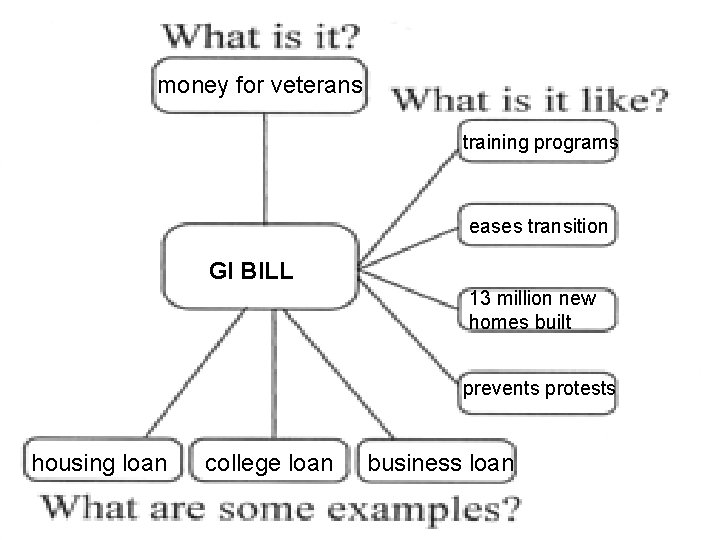
money for veterans training programs eases transition GI BILL 13 million new homes built prevents protests housing loan college loan business loan

Now you try! -Look to the pages in parentheses and create a ‘CDM’. Group 1: “Suburbia” (607) Group 2: “Baby Boom” (609) Group 3: “Dr Jonas Salk” (611) Group 4: “Dr Spock” (612) Group 5: “Role of Religion” (608 -609)
Exit Slips: “Describe 3 ways the GI Bill helped returning soldiers transition back to home life. ” OR “Describe 3 ways people spent their discretionary income. ”
- Slides: 17