
THE FETAL CIRCULATION INTRODUCTION In the fully developed

- Slides: 21
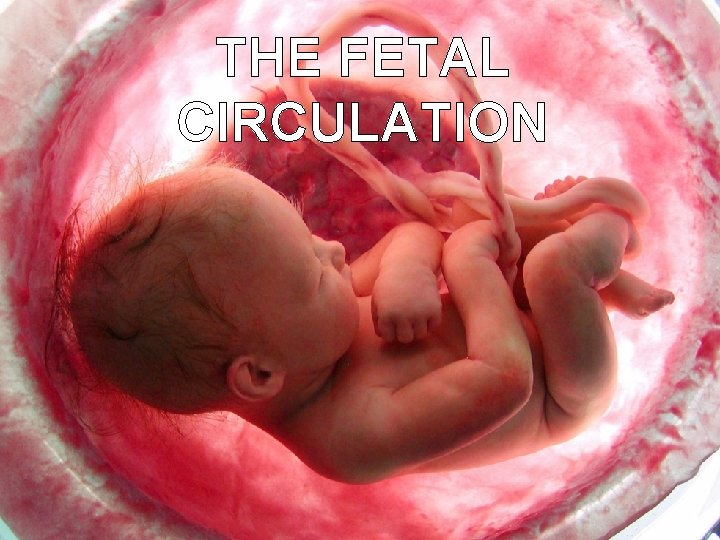
THE FETAL CIRCULATION
INTRODUCTION • In the fully developed human, the heart serves two main purposes. • The right heart pumps blood to the lungs for oxygenation and the left heart pumps oxygenated blood to rest of the body. • In the embryo and fetus, the lungs do not oxygenate the blood. • Fetal circulation is consequently quite different than that of a breathing baby or adult. • When a baby is born and takes its first breathes, the ducts close and blood is re-routed to the lungs.
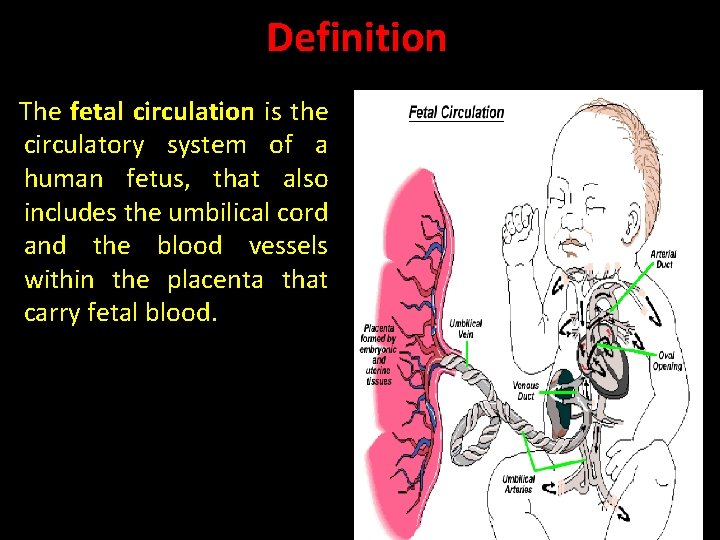
Definition The fetal circulation is the circulatory system of a human fetus, that also includes the umbilical cord and the blood vessels within the placenta that carry fetal blood.
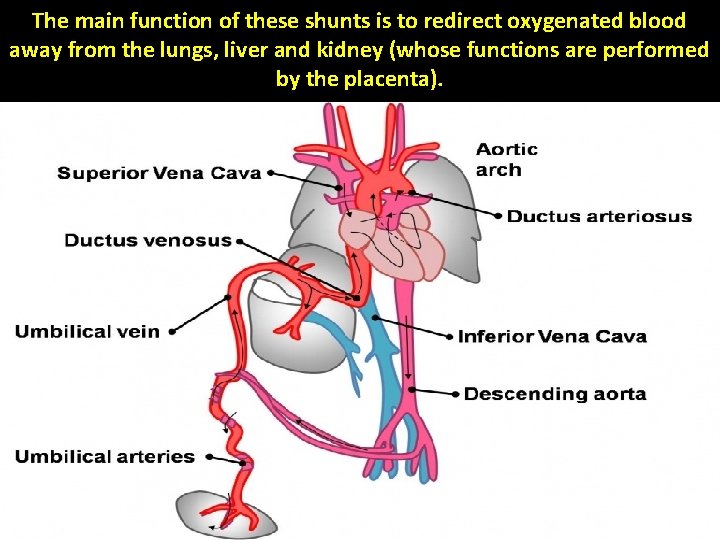
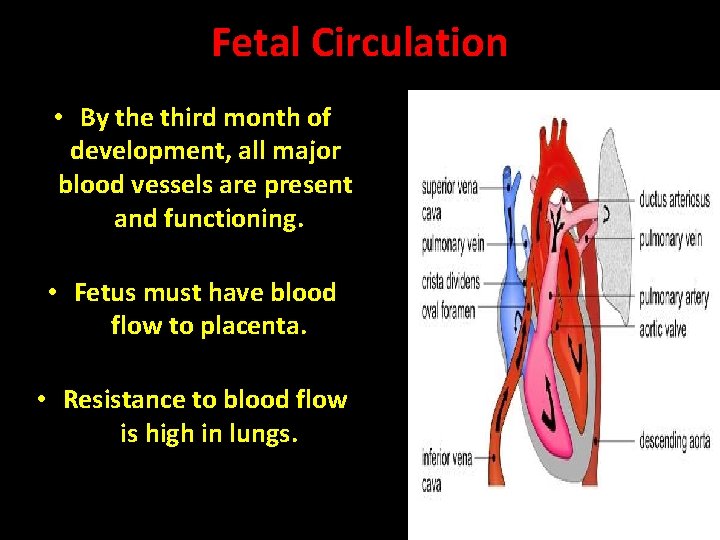
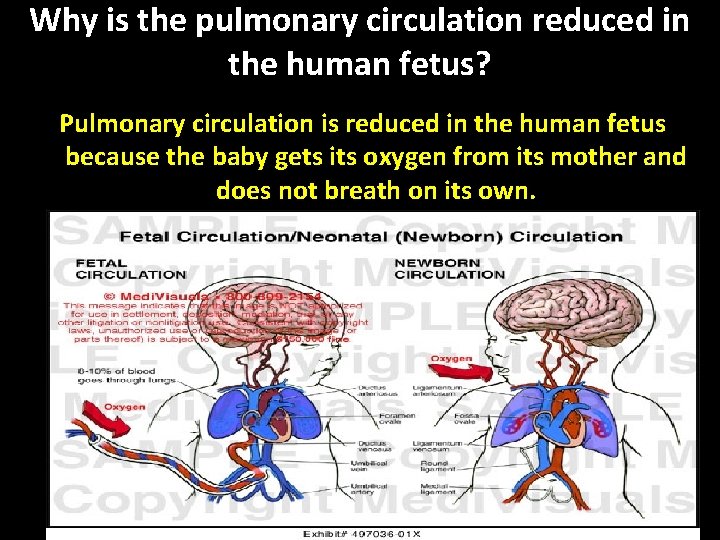
Fetal Circulation Foetal circulation consequently differs from the adult one predominantly due to the presence of 3 major vascular shunts: • Ductus venosus: between the umbilical vein and IVC • Foramen ovale: between the right and left atrium • Ductus arteriosus: between the pulmonary artery and descending aorta
The main function of these shunts is to redirect oxygenated blood away from the lungs, liver and kidney (whose functions are performed by the placenta).
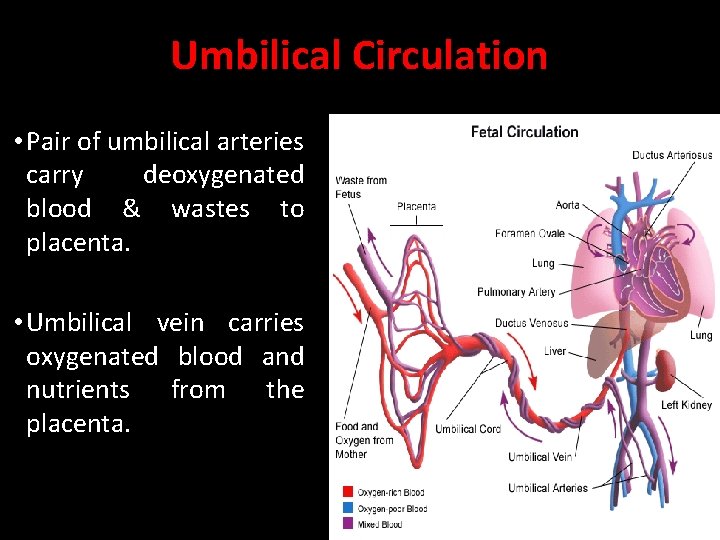
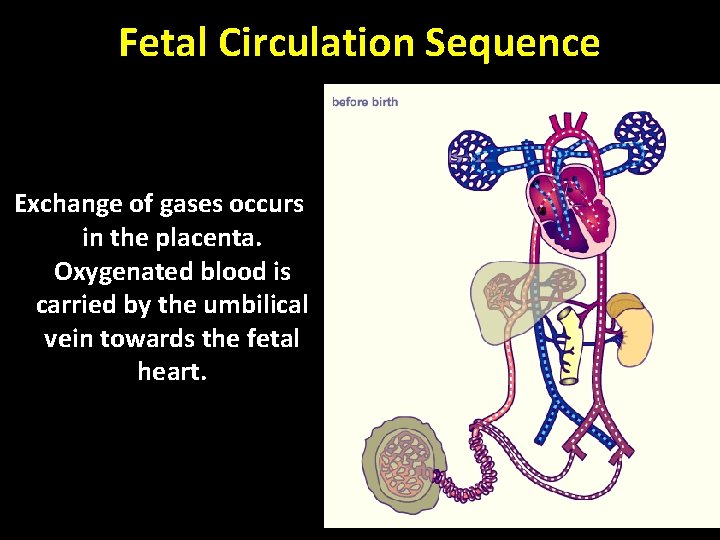
Umbilical Circulation • Pair of umbilical arteries carry deoxygenated blood & wastes to placenta. • Umbilical vein carries oxygenated blood and nutrients from the placenta.
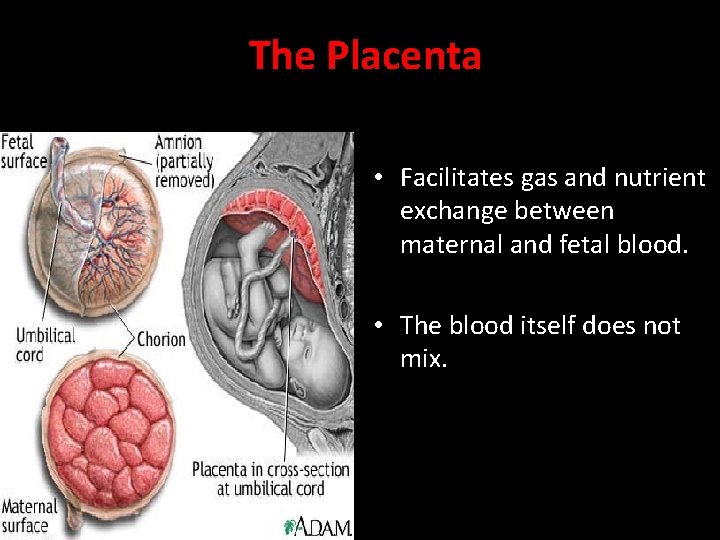
The Placenta • Facilitates gas and nutrient exchange between maternal and fetal blood. • The blood itself does not mix.
Placental role The core concept behind fetal circulation is that fetal hemoglobin has a higher affinity for oxygen than does adult hemoglobin, which allows a diffusion of oxygen from the mother's circulatory system to the fetus. The circulatory system of the mother is not directly connected to that of the fetus, so the placenta functions as the respiratory center for the fetus as well as a site of filtration for plasma nutrients and wastes.
Fetal Circulation • By the third month of development, all major blood vessels are present and functioning. • Fetus must have blood flow to placenta. • Resistance to blood flow is high in lungs.
Fetal Circulation Sequence Exchange of gases occurs in the placenta. Oxygenated blood is carried by the umbilical vein towards the fetal heart.
The ductus venosus directs part of the blood flow from the umbilical vein away from the fetal liver (filtration of the blood by the liver is unnecessary during the fetal life) and directly to the inferior vena cava. Blood from the ductus venosus enters to the inferior vena cava. Increase levels of oxygenated blood flows into the right atrium.
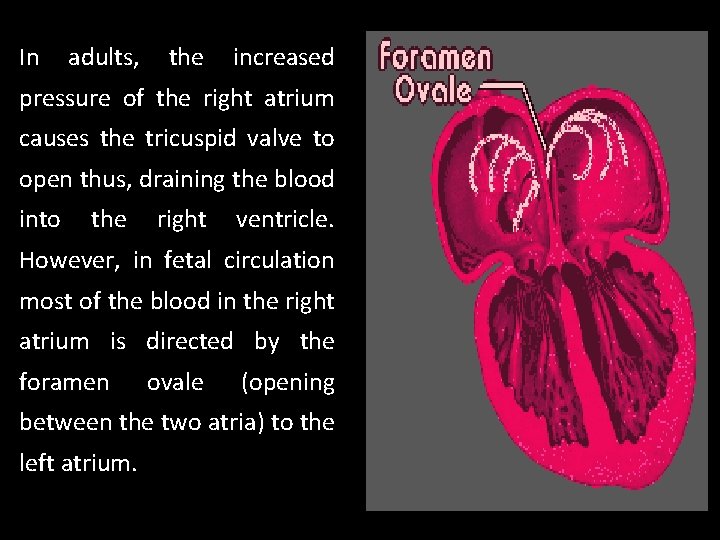
In adults, the increased pressure of the right atrium causes the tricuspid valve to open thus, draining the blood into the right ventricle. However, in fetal circulation most of the blood in the right atrium is directed by the foramen ovale (opening between the two atria) to the left atrium.
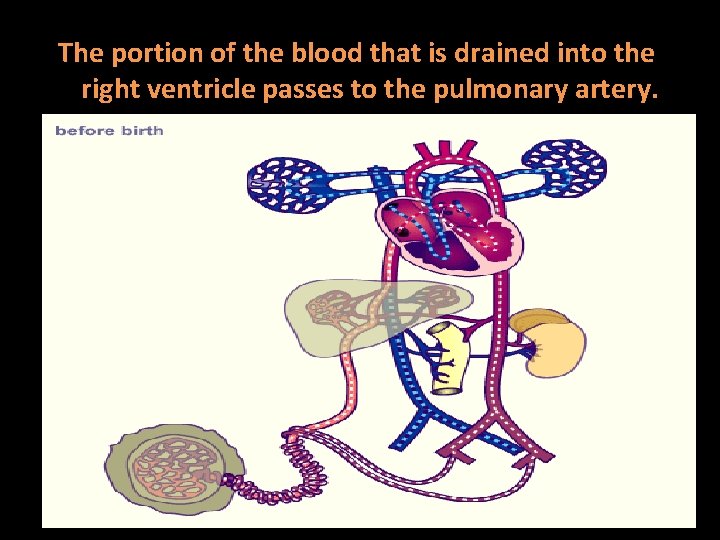
The portion of the blood that is drained into the right ventricle passes to the pulmonary artery.
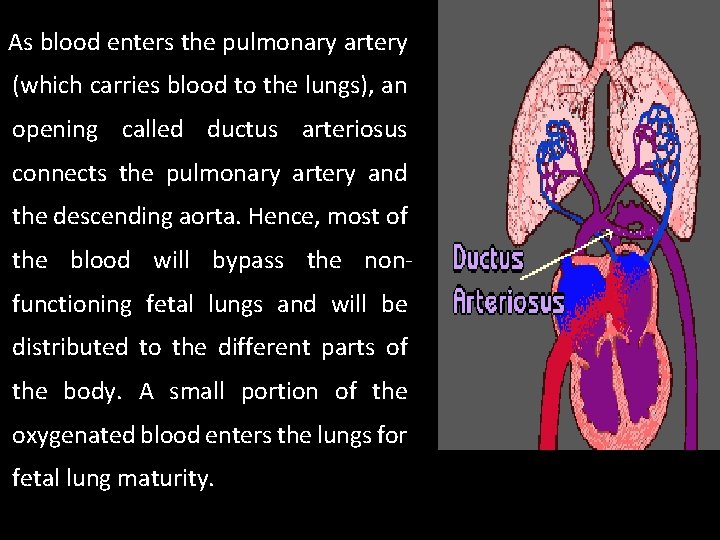
As blood enters the pulmonary artery (which carries blood to the lungs), an opening called ductus arteriosus connects the pulmonary artery and the descending aorta. Hence, most of the blood will bypass the nonfunctioning fetal lungs and will be distributed to the different parts of the body. A small portion of the oxygenated blood enters the lungs for fetal lung maturity.
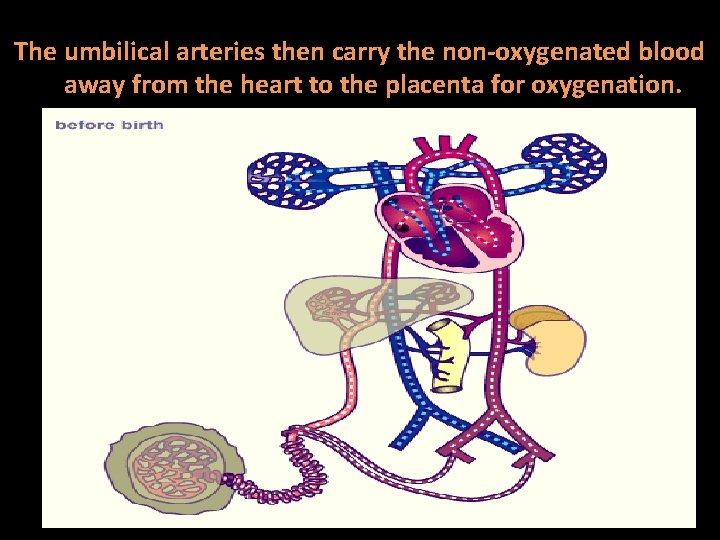
The umbilical arteries then carry the non-oxygenated blood away from the heart to the placenta for oxygenation.
Why is the pulmonary circulation reduced in the human fetus? Pulmonary circulation is reduced in the human fetus because the baby gets its oxygen from its mother and does not breath on its own.
Postnatal changes in circulation
Post natal changes • Gas exchange function is transferred from placenta to the lungs. • Separation of systemic and pulmonary circulations • Increased metabolism to maintain body temperature and hence increased cardiac output.
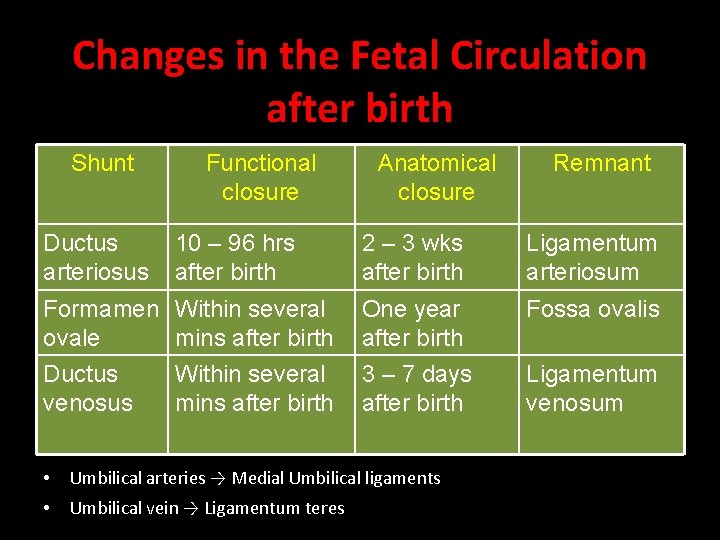
Changes in the Fetal Circulation after birth Shunt Ductus arteriosus Functional closure 10 – 96 hrs after birth Anatomical closure Remnant 2 – 3 wks after birth Ligamentum arteriosum Formamen Within several ovale mins after birth One year after birth Fossa ovalis Ductus venosus 3 – 7 days after birth Ligamentum venosum Within several mins after birth • Umbilical arteries → Medial Umbilical ligaments • Umbilical vein → Ligamentum teres
Problem with persistence of fetal circulation • Patent (open) ductus arteriosus and patent foramen ovale each characterize about 8% of congenital heart defects. • Both cause a mixing of oxygen-rich and oxygen-poor blood; blood reaching tissues not fully oxygenated. Can cause cyanosis • Surgical correction now available, ideally completed around age two. • Many of these defects go undetected until child is at least school age.
ENJOY WITH LITTLE ONE THANK YOU