
The Ferment of Reform and Culture 1790 1860
- Slides: 27
The Ferment of Reform and Culture (1790 -1860) Chapter 15
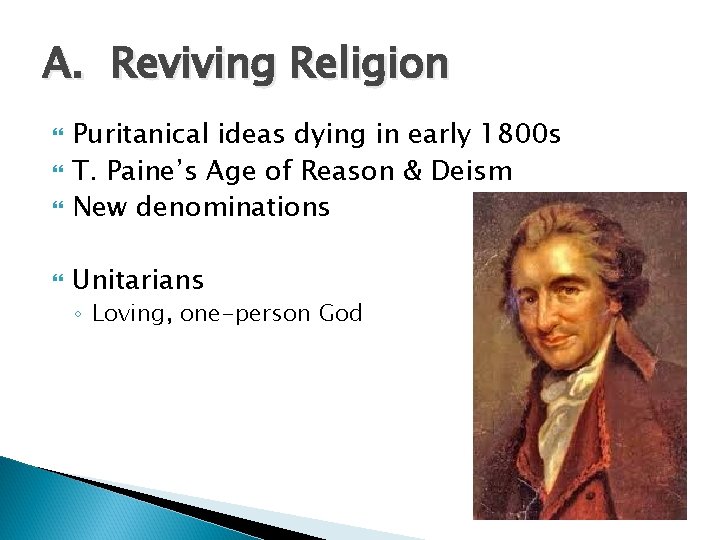
A. Reviving Religion Puritanical ideas dying in early 1800 s T. Paine’s Age of Reason & Deism New denominations Unitarians ◦ Loving, one-person God
2 nd Great Awakening Reaction against growing liberalism in religion
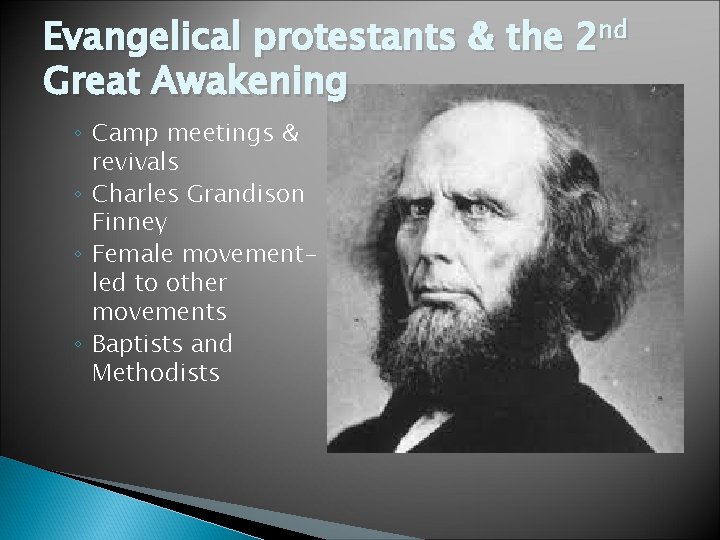
Evangelical protestants & the 2 nd Great Awakening ◦ Camp meetings & revivals ◦ Charles Grandison Finney ◦ Female movementled to other movements ◦ Baptists and Methodists
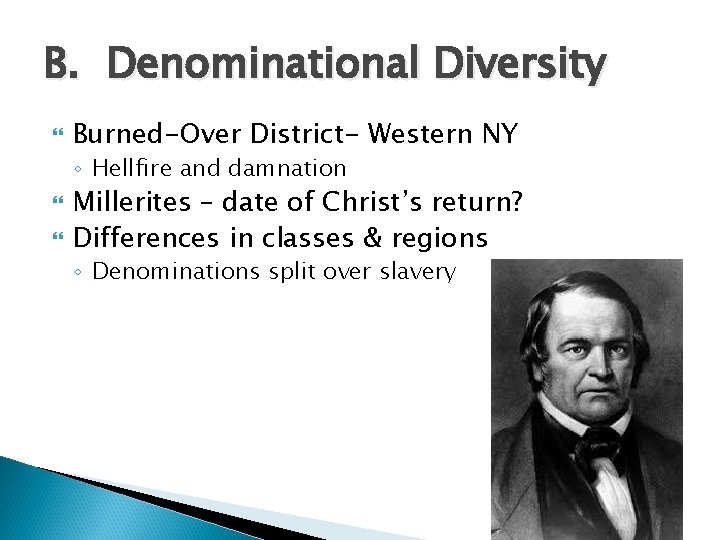
B. Denominational Diversity Burned-Over District- Western NY ◦ Hellfire and damnation Millerites – date of Christ’s return? Differences in classes & regions ◦ Denominations split over slavery
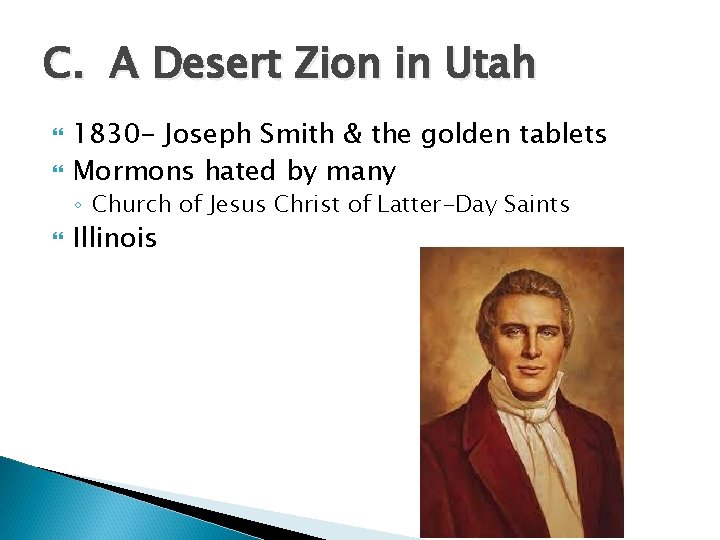
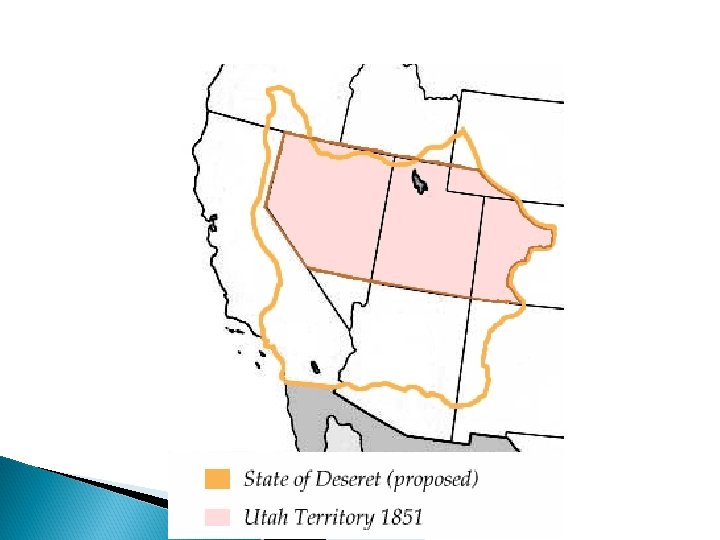
C. A Desert Zion in Utah 1830 - Joseph Smith & the golden tablets Mormons hated by many ◦ Church of Jesus Christ of Latter-Day Saints Illinois
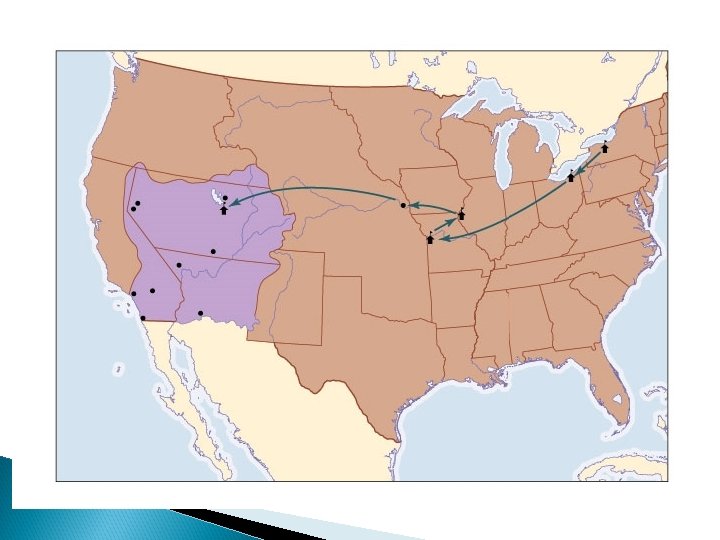
1844 - Smith killed Brigham Young- 1846 -1847 - Utah
D. Free Schools for a Free People Many against free public educ. Argument for Universal manhood suffrage Early schools & teachers Early opponents of public education, why the change?
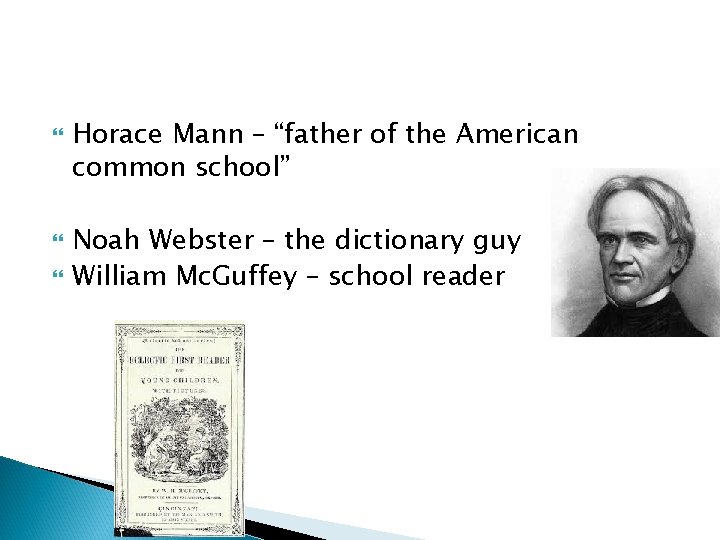
Horace Mann – “father of the American common school” Noah Webster – the dictionary guy William Mc. Guffey – school reader
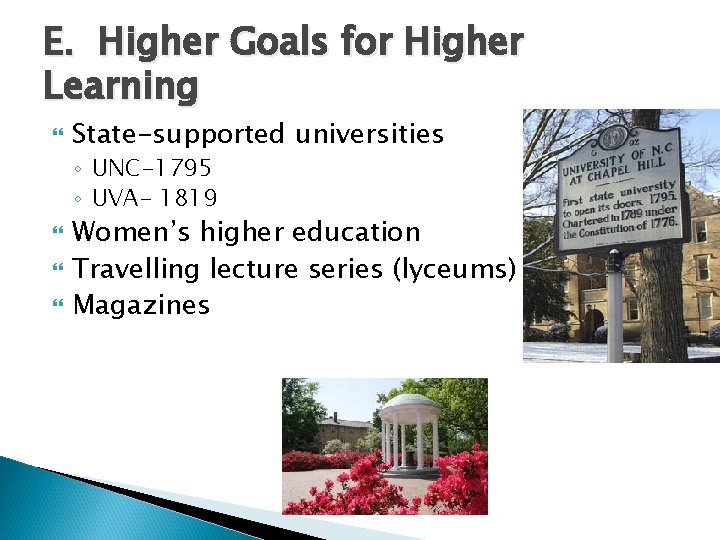
E. Higher Goals for Higher Learning State-supported universities ◦ UNC-1795 ◦ UVA- 1819 Women’s higher education Travelling lecture series (lyceums) Magazines
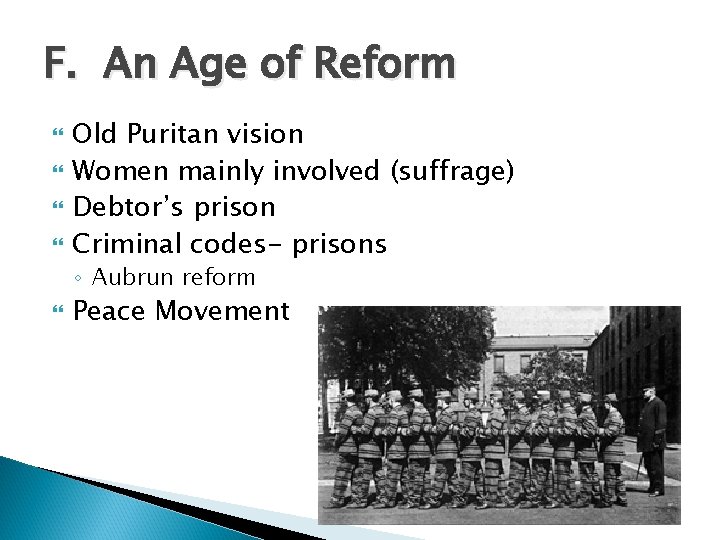
F. An Age of Reform Old Puritan vision Women mainly involved (suffrage) Debtor’s prison Criminal codes- prisons ◦ Aubrun reform Peace Movement
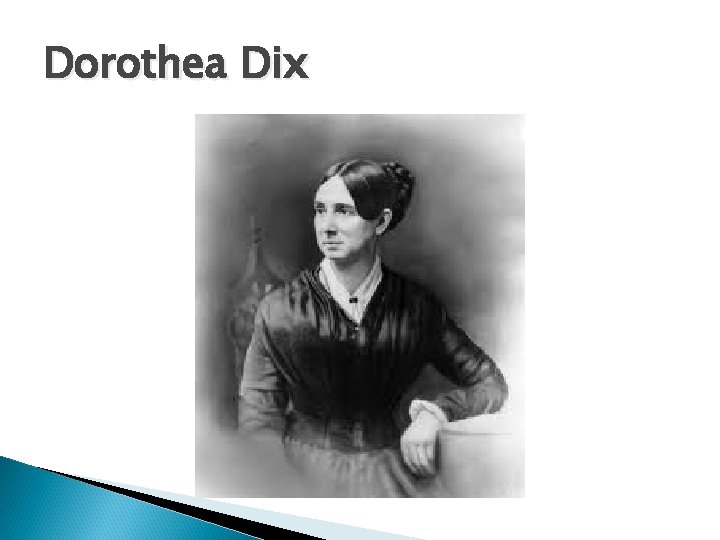
Dorothea Dix
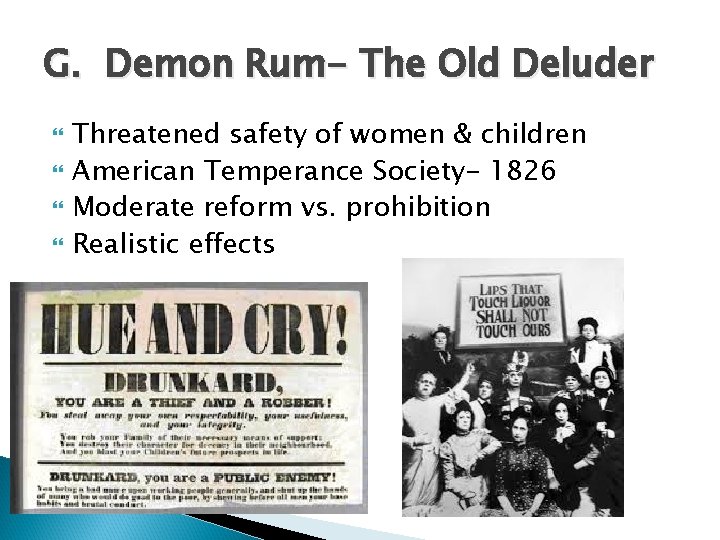
G. Demon Rum- The Old Deluder Threatened safety of women & children American Temperance Society- 1826 Moderate reform vs. prohibition Realistic effects
H. Women in Revolt Women considered “perpetual minors” Different gender roles Cult of domesticity- glorified her role
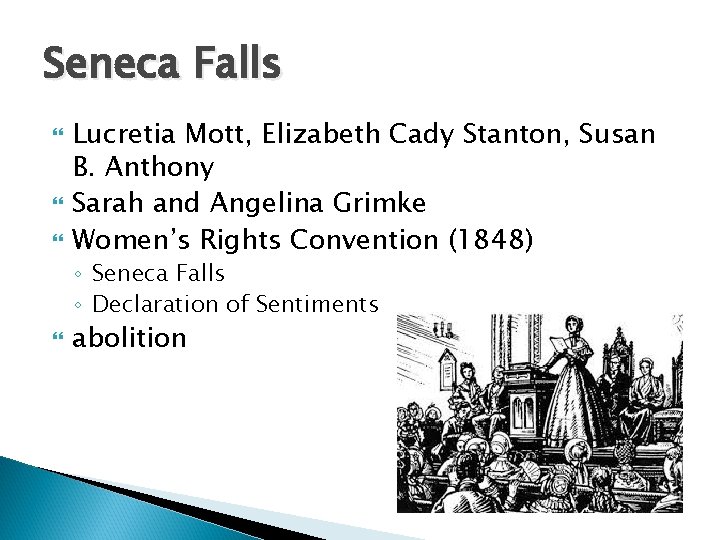
Seneca Falls Lucretia Mott, Elizabeth Cady Stanton, Susan B. Anthony Sarah and Angelina Grimke Women’s Rights Convention (1848) ◦ Seneca Falls ◦ Declaration of Sentiments abolition
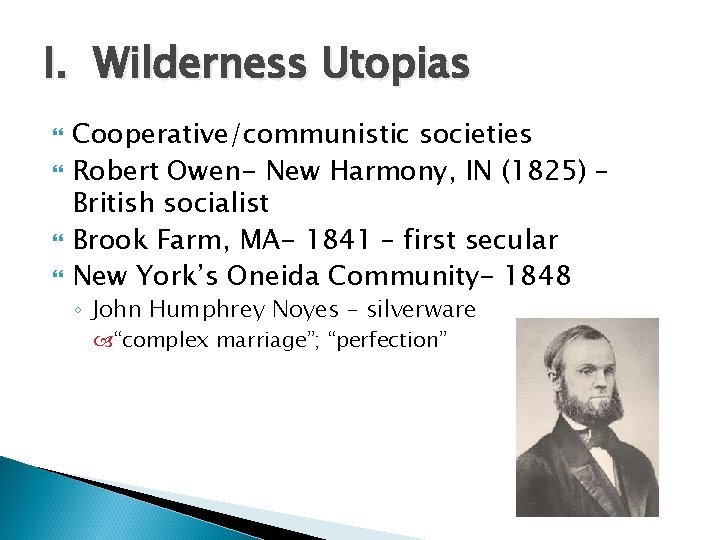
I. Wilderness Utopias Cooperative/communistic societies Robert Owen- New Harmony, IN (1825) – British socialist Brook Farm, MA- 1841 – first secular New York’s Oneida Community- 1848 ◦ John Humphrey Noyes – silverware “complex marriage”; “perfection”
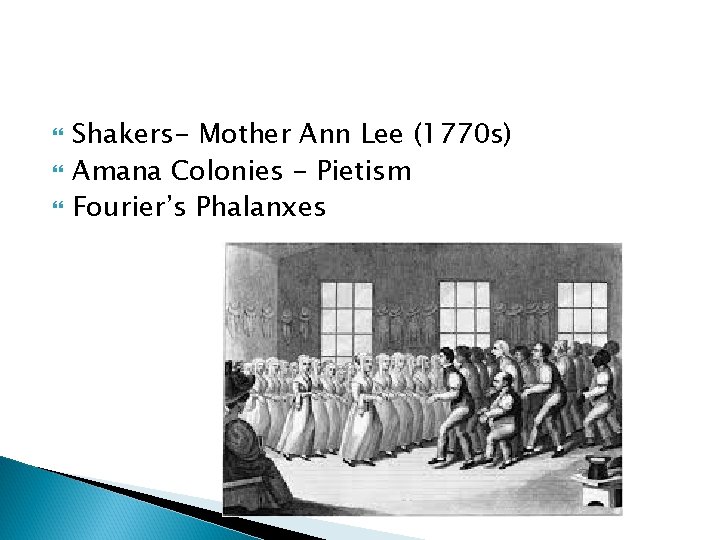
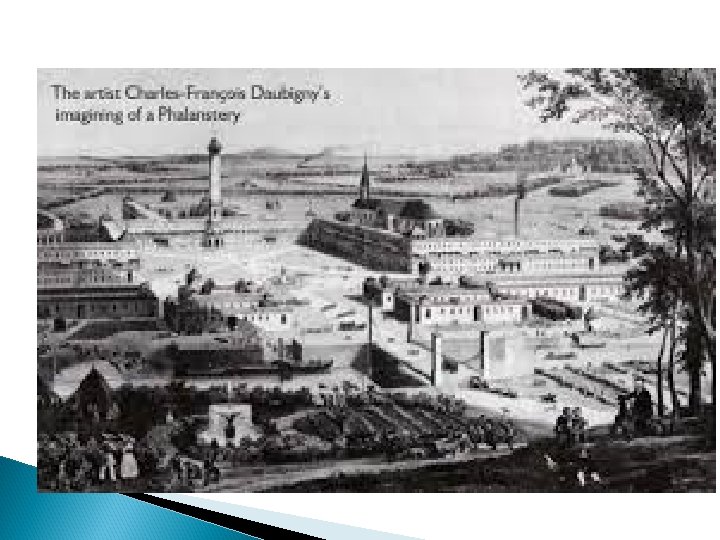
Shakers- Mother Ann Lee (1770 s) Amana Colonies - Pietism Fourier’s Phalanxes
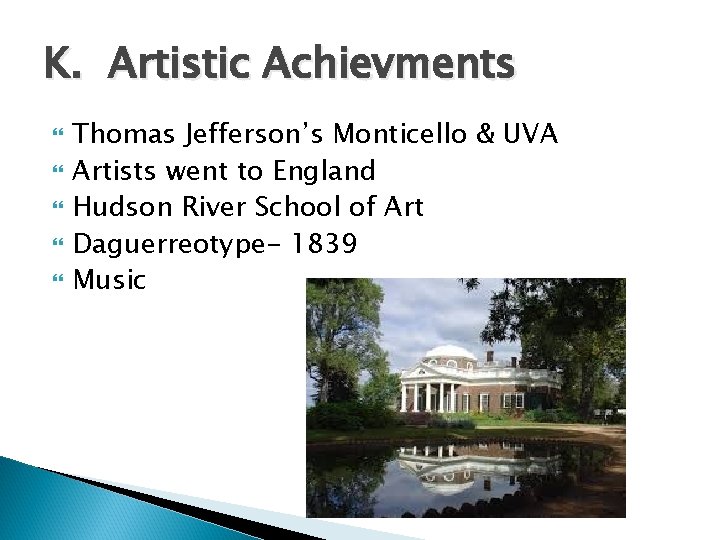
K. Artistic Achievments Thomas Jefferson’s Monticello & UVA Artists went to England Hudson River School of Art Daguerreotype- 1839 Music
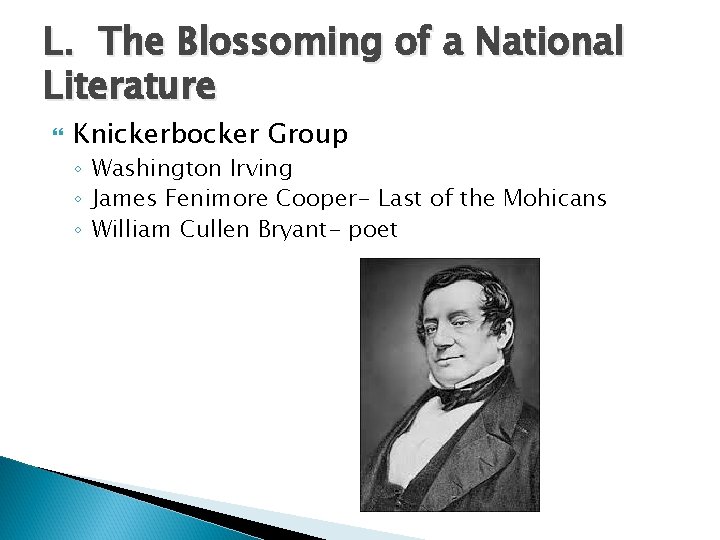
L. The Blossoming of a National Literature Knickerbocker Group ◦ Washington Irving ◦ James Fenimore Cooper- Last of the Mohicans ◦ William Cullen Bryant- poet
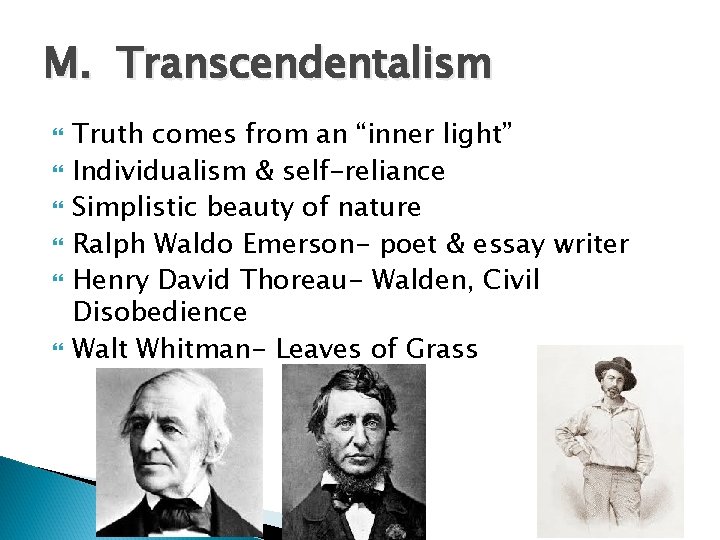
M. Transcendentalism Truth comes from an “inner light” Individualism & self-reliance Simplistic beauty of nature Ralph Waldo Emerson- poet & essay writer Henry David Thoreau- Walden, Civil Disobedience Walt Whitman- Leaves of Grass
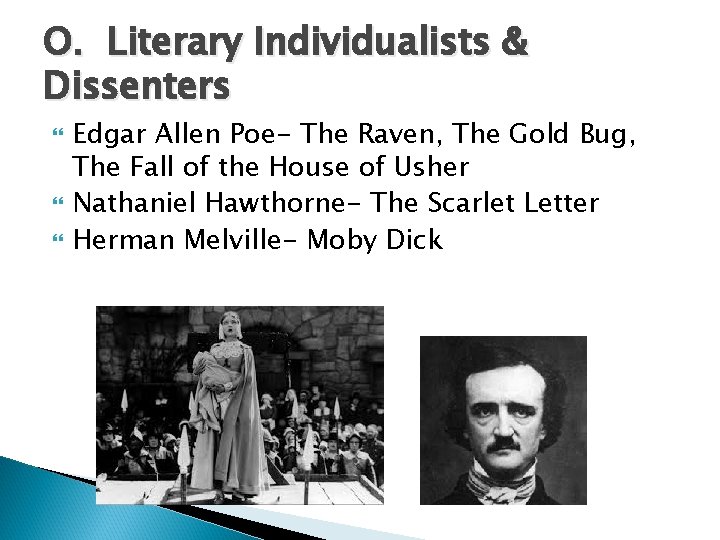
O. Literary Individualists & Dissenters Edgar Allen Poe- The Raven, The Gold Bug, The Fall of the House of Usher Nathaniel Hawthorne- The Scarlet Letter Herman Melville- Moby Dick
P. Portrayers of the Past Early American Historians ◦ George Bancroft ◦ William H. Prescott ◦ Francis Parkman “northern” histories
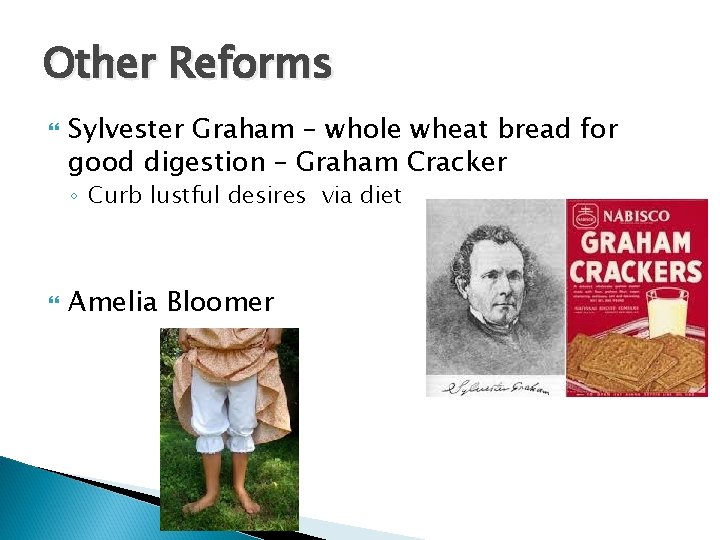
Other Reforms Sylvester Graham – whole wheat bread for good digestion – Graham Cracker ◦ Curb lustful desires via diet Amelia Bloomer
What motivated reformers? Tyler (1944) – idealistic humanitarians Recent years – desire of upper and middle class citizens to control the masses ◦ ◦ ◦ Public schools “Americanize” immigrants Penitentiaries control crime Control drinking of recent immigrants More Whigs than Jacksonian Democrats Dix – reforms would save public money in long run Most successful reforms had broad support ◦ -for a mix of reasons