
The Ferment of Reform and Culture 1790 1860




- Slides: 104
The Ferment of Reform and Culture 1790 -1860
Religion in America • Most Americans attended church on a regular basis, but the fervor of the colonial era had waned.
• 1794 -- Thomas Paine publishes The Age of Reason attacking the institution of the church.
• Many people became believers in Deism -Franklin and Jefferson. • Deists relied on reason over faith.
Unitarianism • Belief in God as one person -- not the trinity. • Stressed the essential goodness of human beings.
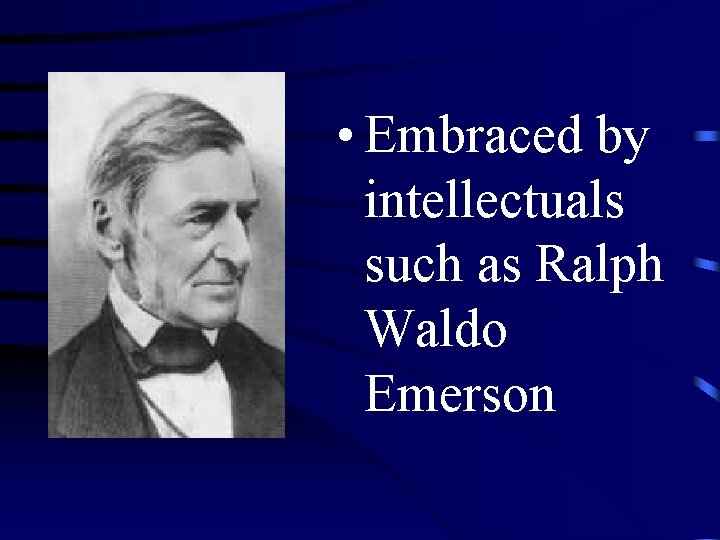
• Embraced by intellectuals such as Ralph Waldo Emerson
The Second Great Awakening • 1800 - Second Great Awakening begins as a backlash against the liberalism of the Age of Reason.
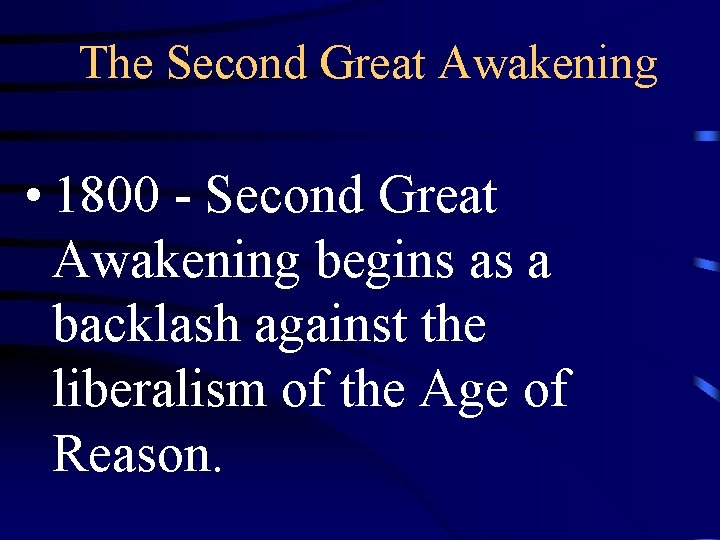
• Led to an era of evangelism and reform.
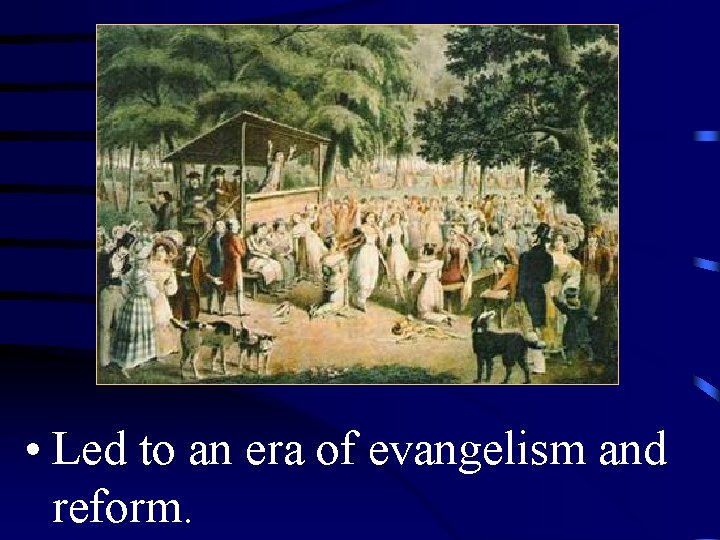
• Methodists and Baptists led camp meetings and sent missionaries to the Indians and overseas.
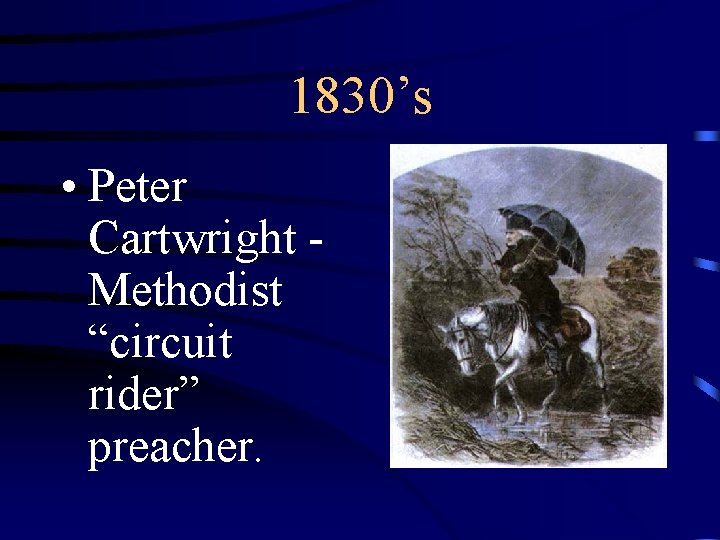
1830’s • Peter Cartwright Methodist “circuit rider” preacher.
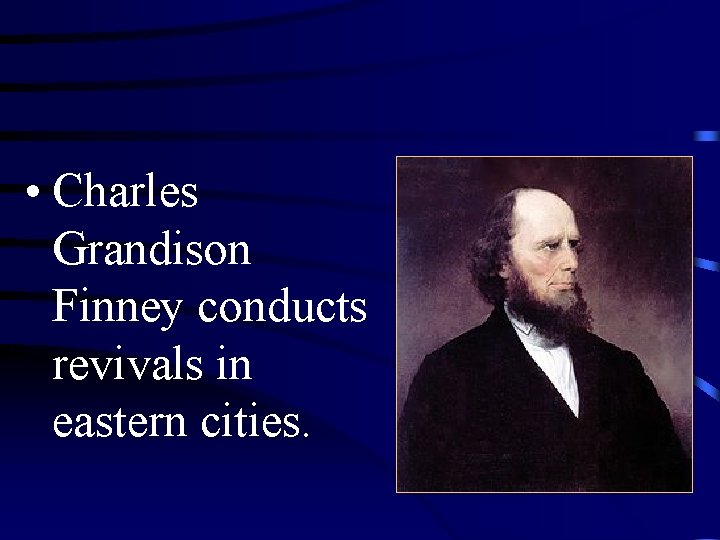
• Charles Grandison Finney conducts revivals in eastern cities.
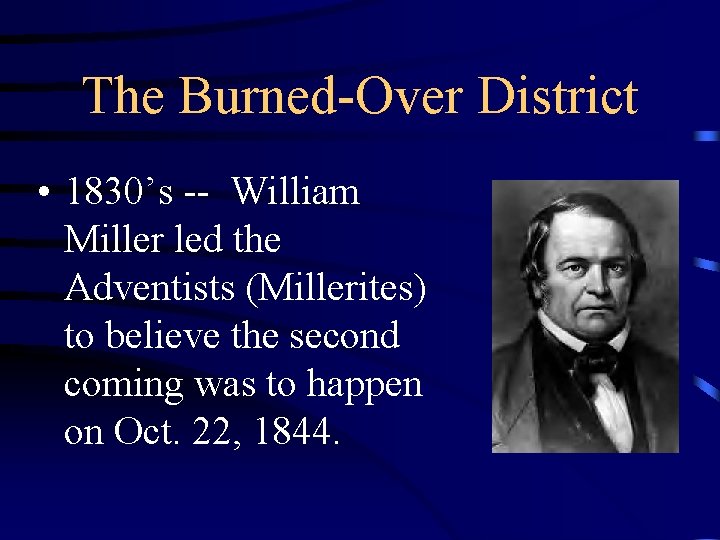
The Burned-Over District • 1830’s -- William Miller led the Adventists (Millerites) to believe the second coming was to happen on Oct. 22, 1844.
• Southern and northern branches of the Methodist and Baptist churches broke apart over the issue of slavery.
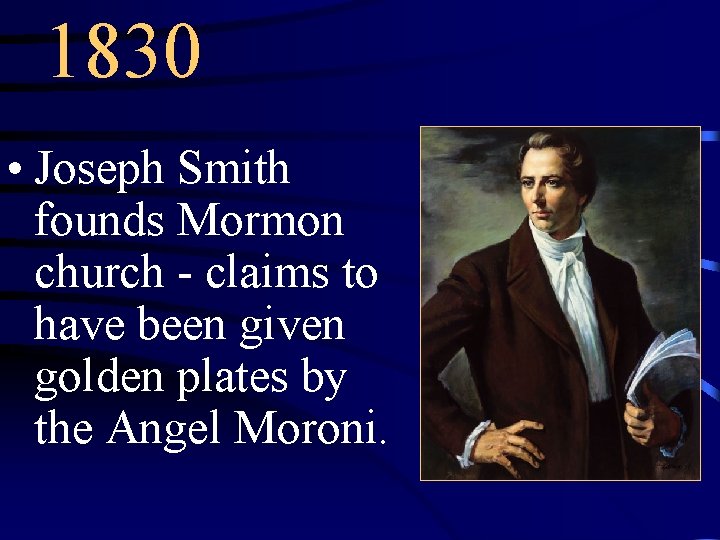
1830 • Joseph Smith founds Mormon church - claims to have been given golden plates by the Angel Moroni.
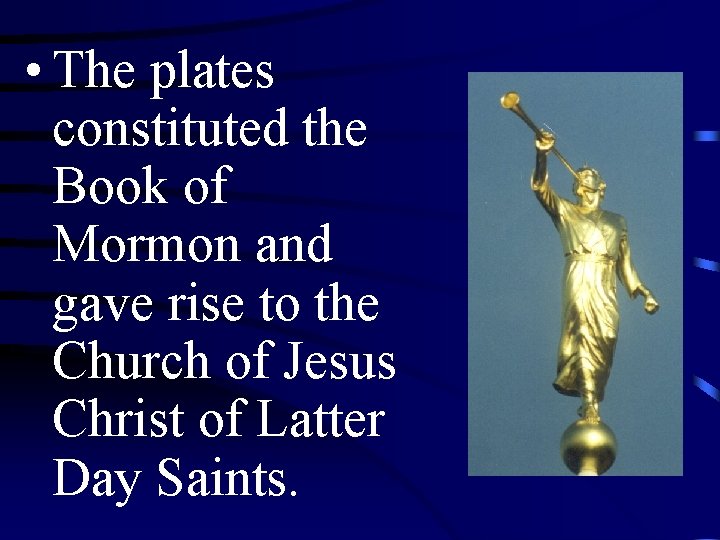
• The plates constituted the Book of Mormon and gave rise to the Church of Jesus Christ of Latter Day Saints.
• Mormons follow Smith west to Ohio, Missouri and finally Illinois.
• Locals persecuted the Mormons for cooperativism, voting as a unit, having their own militia and practicing polygamy.
• 1844 -- Joseph Smith and his brother were killed by a mob in Carthage, Ill.
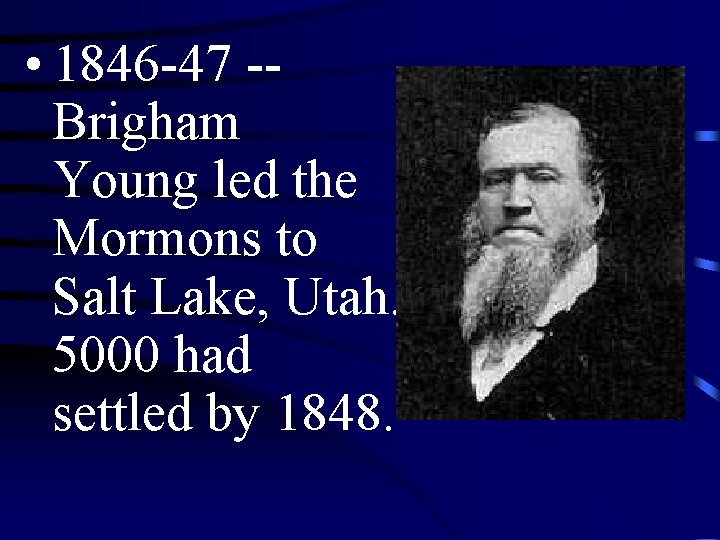
• 1846 -47 -Brigham Young led the Mormons to Salt Lake, Utah. 5000 had settled by 1848.
• 1850 -- Young becomes territorial governor • 1859 -- “Mormon War” -Federal troops force Mormons to submit to Federal authority.
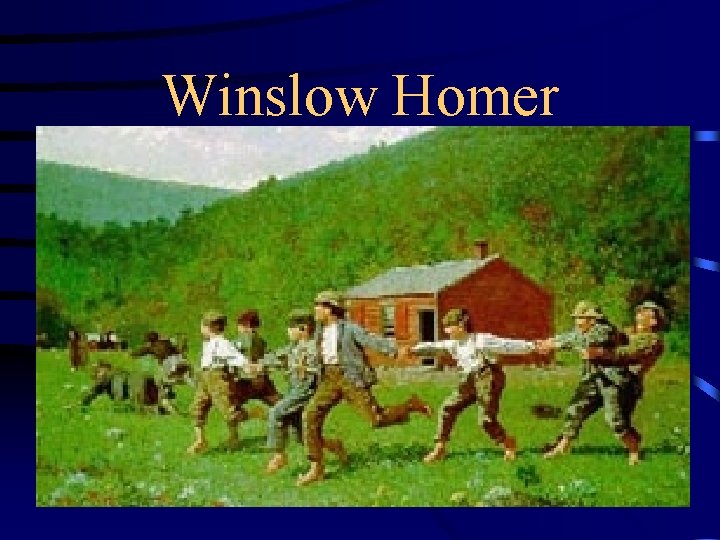
Education • Free tax-supported education slowly gained support at all levels of society. • The Little Red Schoolhouse and the “ 3 R’s”
Winslow Homer
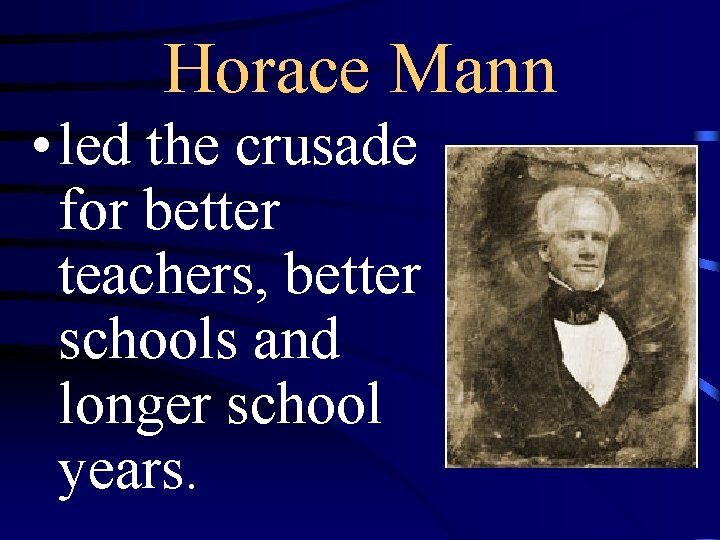
Horace Mann • led the crusade for better teachers, better schools and longer school years.
• Helped create “normal schools” -- teaching colleges to train teachers.
Noah Webster • “the Schoolmaster of the Republic, ” he improved textbooks and standardized an American dictionary.
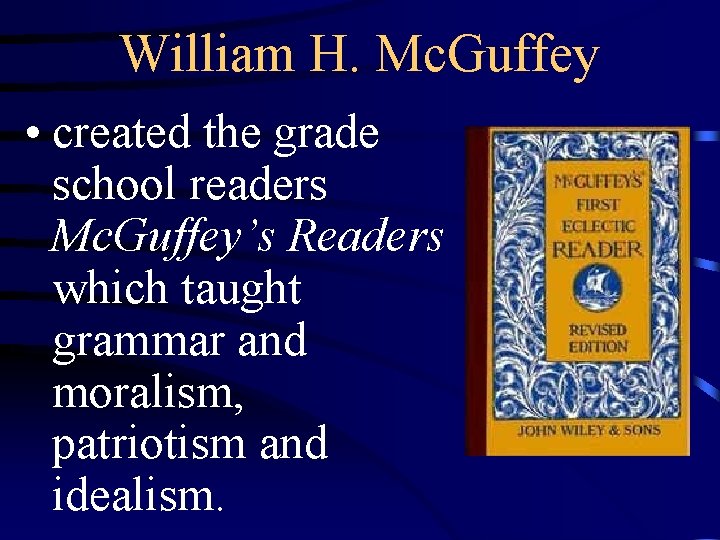
William H. Mc. Guffey • created the grade school readers Mc. Guffey’s Readers which taught grammar and moralism, patriotism and idealism.
Higher Education • The Second Great Awakening led to the creation of many small, denominational liberal-arts colleges. • Federal land grant colleges.
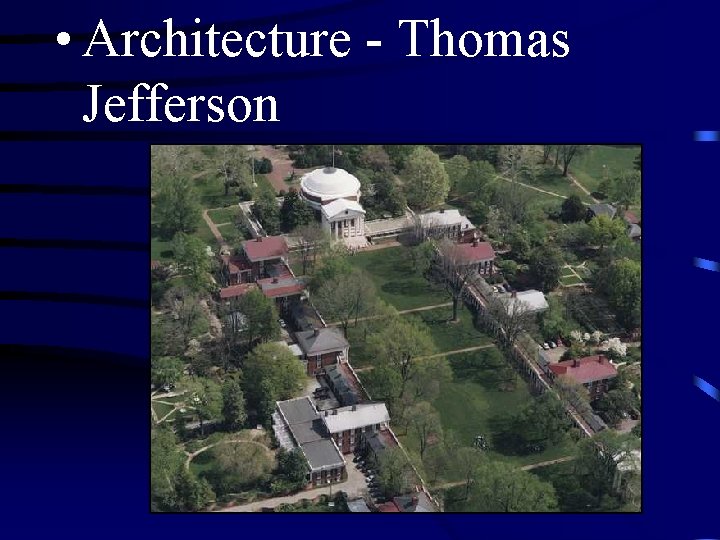
The University of Virginia • founded and designed by Thomas Jefferson - founded as a non-religious institution dedicated to science and modern language.
Women’s education • education for women was considered frivolous. • Emma Willard established the Troy Female Seminary in 1821.
• Oberlin College -admitted women in 1837 after already having admitted Blacks.
• Mary Lyon established Mount Holyoke Seminary in Mass.
The Lyceums • Travelling lecturers made the circuit giving talks on science, literature and philosophy. • Ralph Waldo Emerson
Magazines • The North American Review founded in 1815
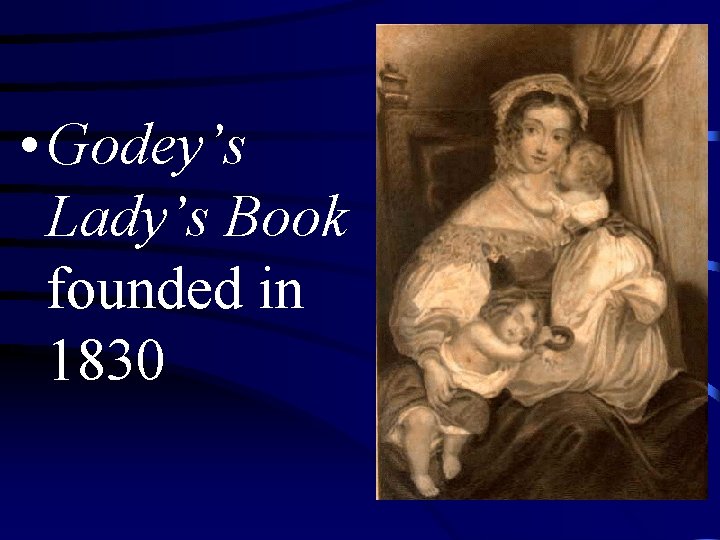
• Godey’s Lady’s Book founded in 1830
An Age of Reform • Reform movements included: • women’s rights, communal living,
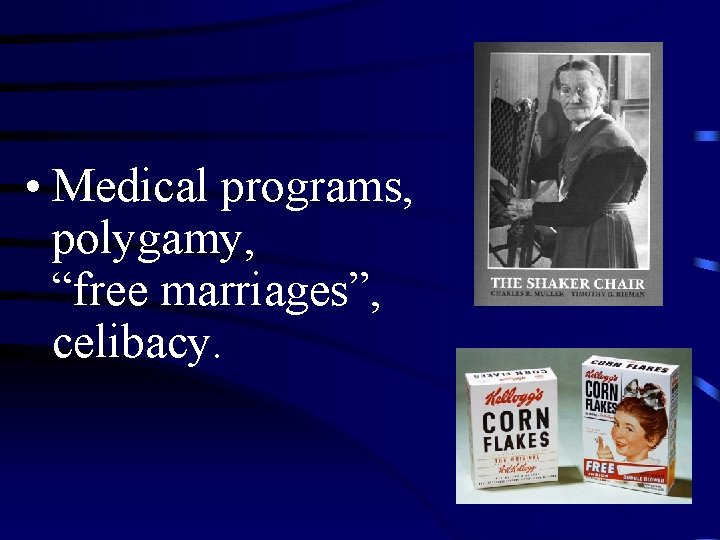
• Medical programs, polygamy, “free marriages”, celibacy.
• Anti- tobacco, antialcohol, and mail on Sundays.
• Women were very involved in abolitionism, women’s suffrage and other reforms.
Prison Reform • The laboring class voted for an end to debtors prisons.
• The number of capital crimes was reduced and prisons were called to reform instead of just punish.
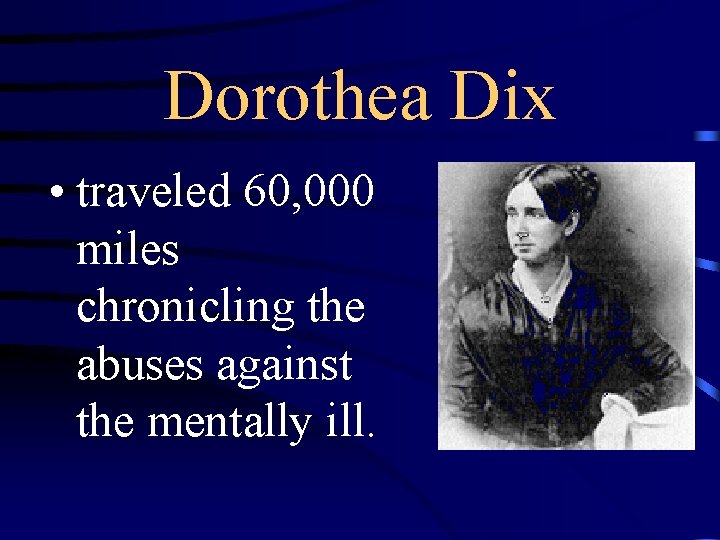
Dorothea Dix • traveled 60, 000 miles chronicling the abuses against the mentally ill.
• Dix petitioned the Massachusetts Legislature to improve conditions.
The American Peace Society • Anti-war group led by William Ladd called for an end to war.
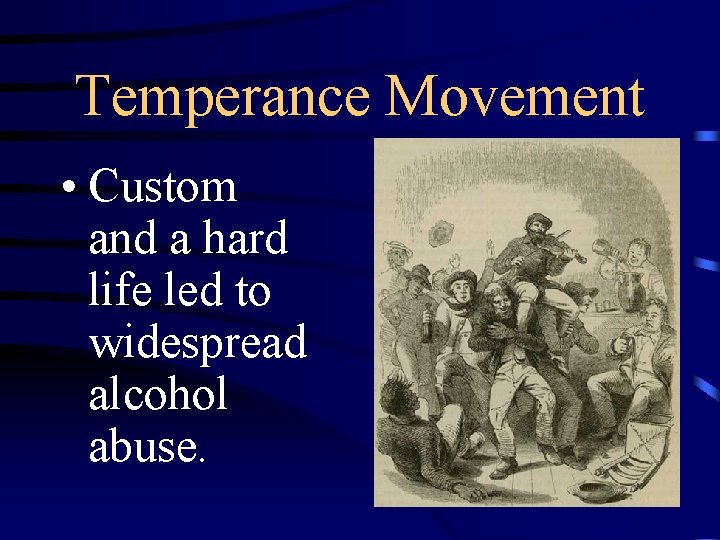
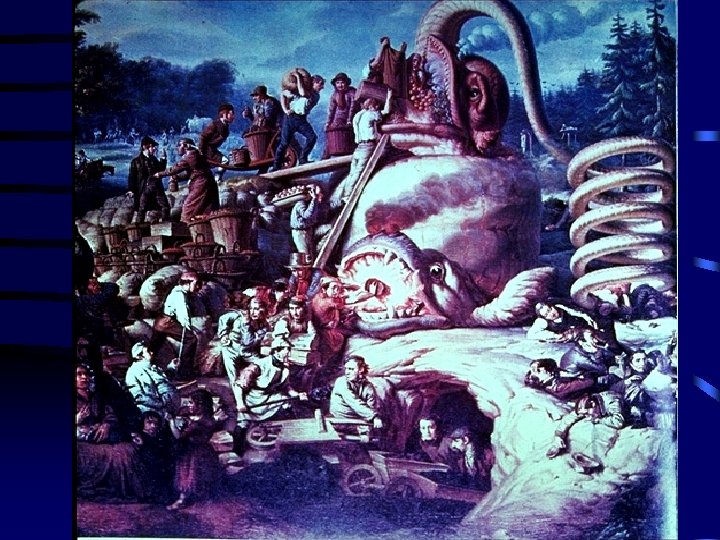
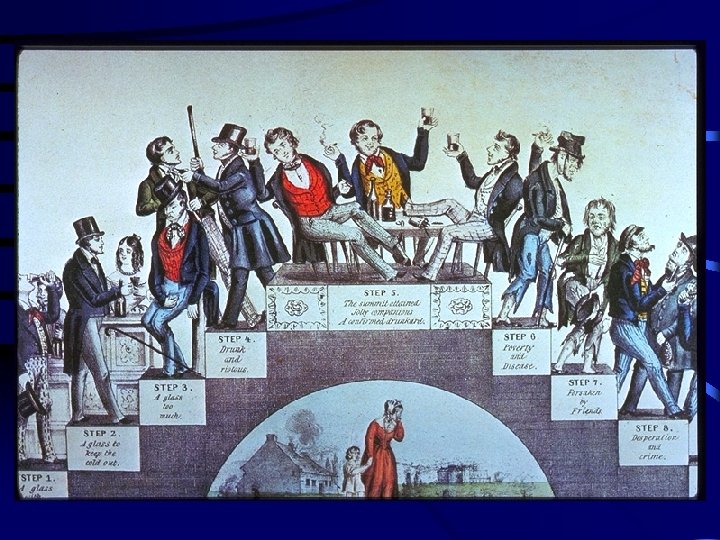
Temperance Movement • Custom and a hard life led to widespread alcohol abuse.
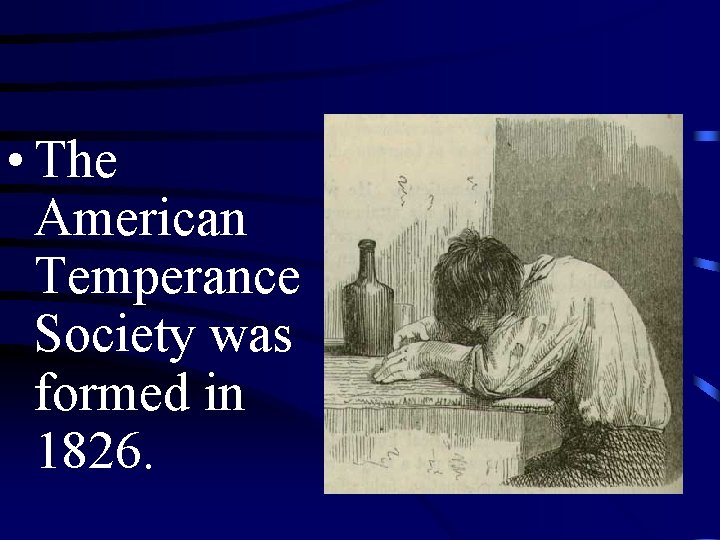
• The American Temperance Society was formed in 1826.
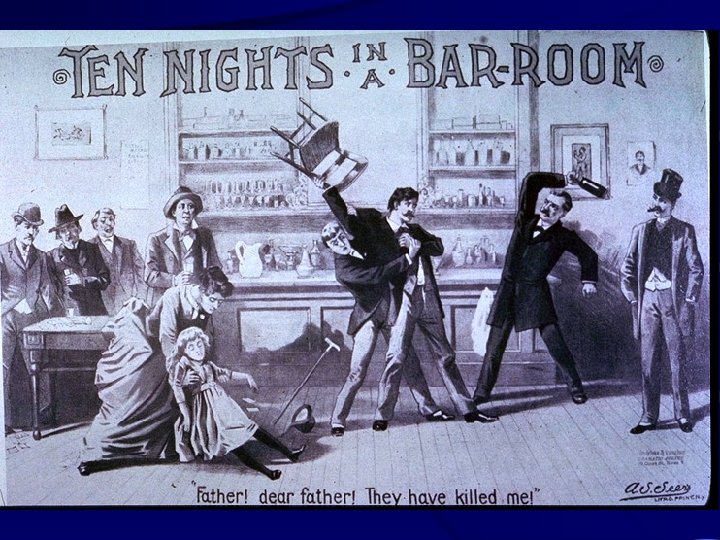
• T. S. Arthur wrote the novel Ten Nights in a Barroom and What I Saw There.
• Neal S. Dow sponsored the Maine Law of 1851 which prohibited the manufacture and sale of alcohol.
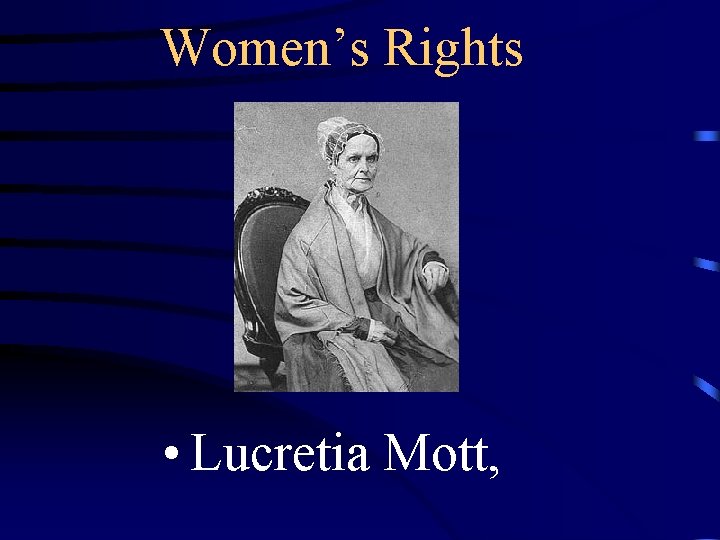
Women’s Rights • Lucretia Mott,
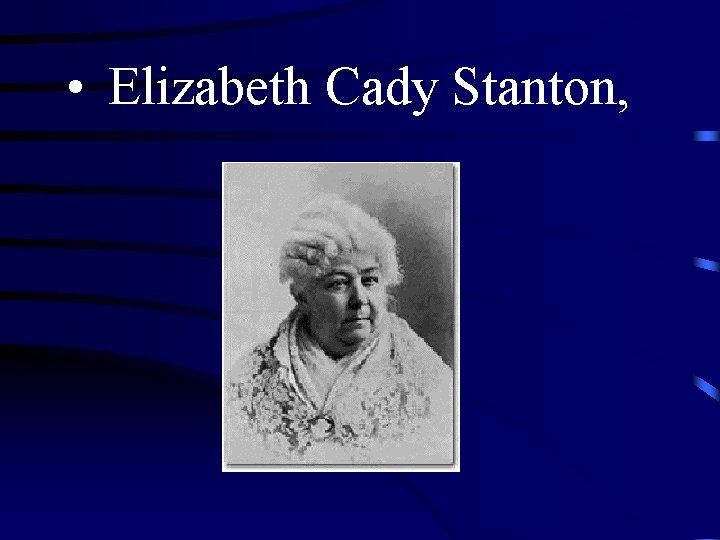
• Elizabeth Cady Stanton,
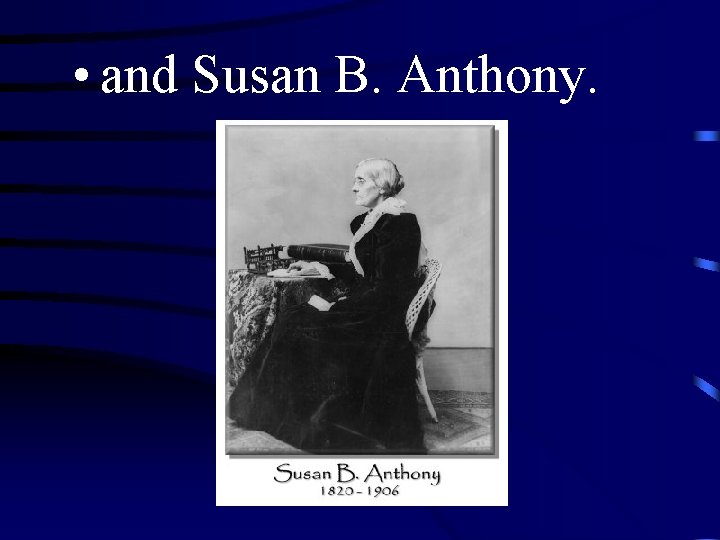
• and Susan B. Anthony.
• Advocated women’s suffrage.
• Dr. Elizabeth Blackwell was the first female graduate of a medical college.
• Margaret Fuller edited The Dial. • The Grimke sister spoke against slavery.
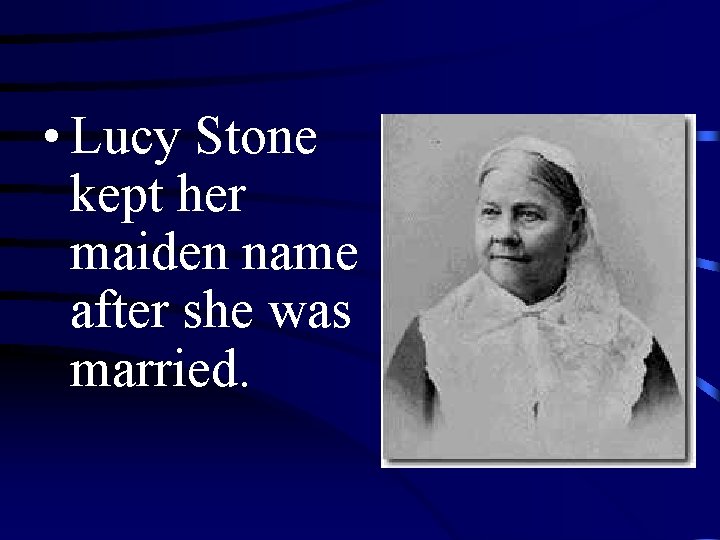
• Lucy Stone kept her maiden name after she was married.
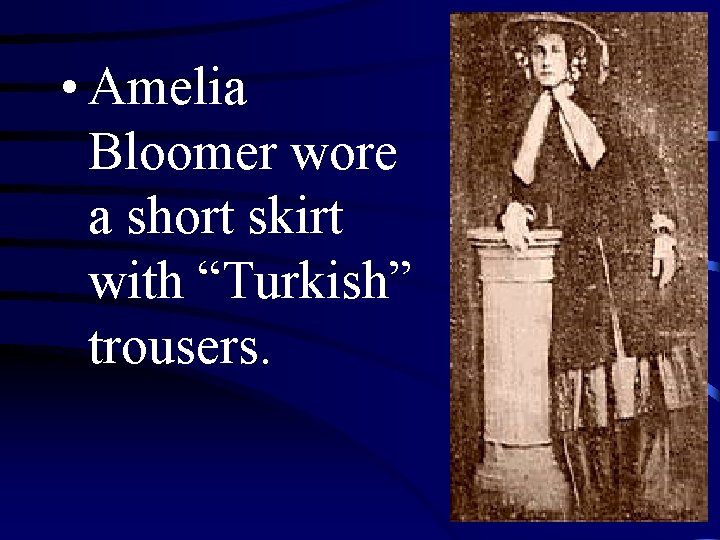
• Amelia Bloomer wore a short skirt with “Turkish” trousers.
Seneca Falls (1848) • Women’s Rights convention at which Stanton read the “Declaration of Sentiments”
• Women’s rights became eclipsed by Abolition and the Civil War.
Utopianism • more than 40 communes were created during the period.
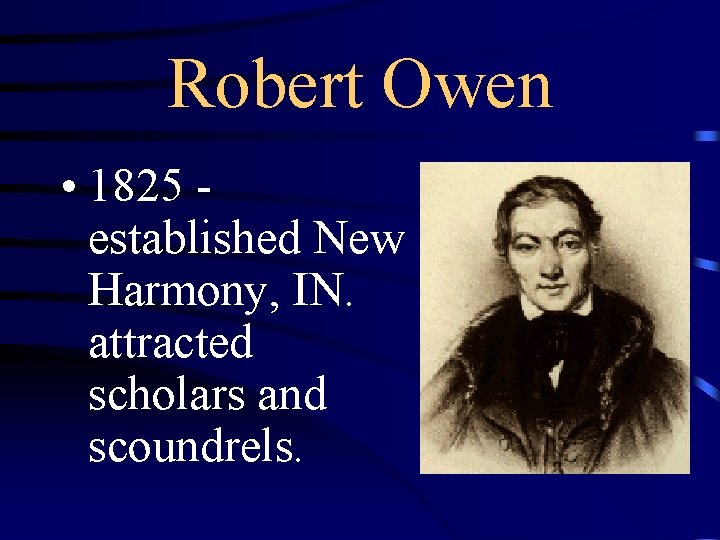
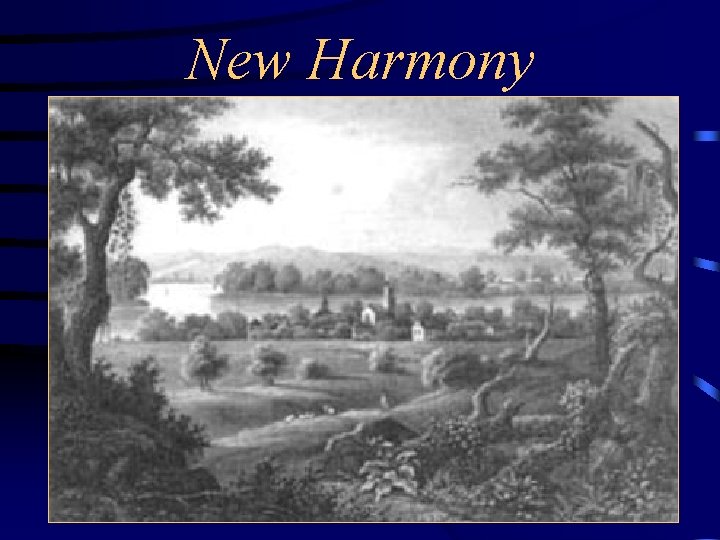
Robert Owen • 1825 established New Harmony, IN. attracted scholars and scoundrels.
New Harmony
Brook Farm • was a successful attempt at communal living until fire destroyed the experiment.
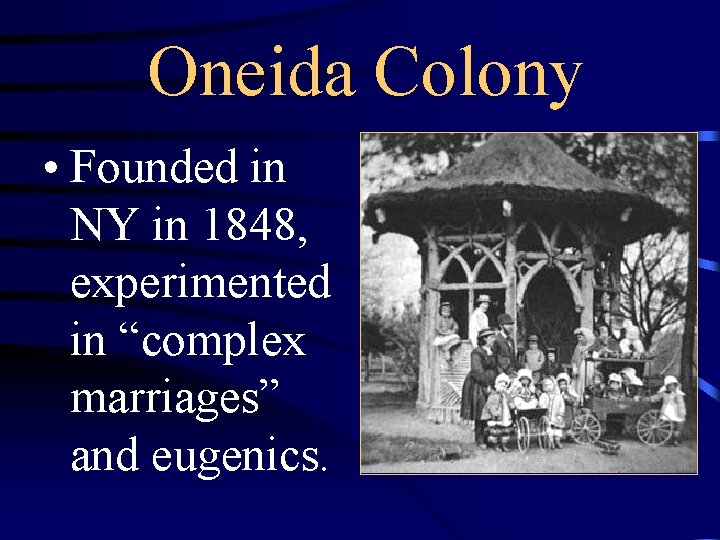
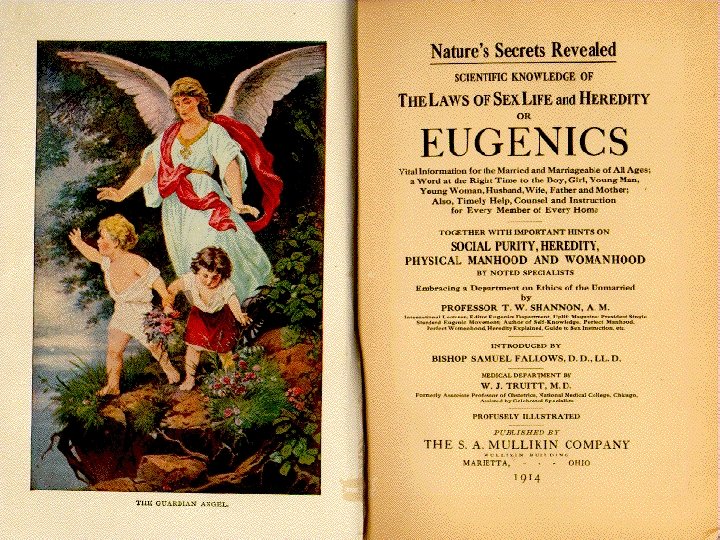
Oneida Colony • Founded in NY in 1848, experimented in “complex marriages” and eugenics.
• They made and sold steel traps and silverware.
• After troubles with the law the group embraced monogamy and abandoned communism.
Scientific Achievement • Practical science • Nathaniel Bowditch and Matthew Maury in Navigation and Oceanography
• Benjamin Silliman biology and geology professor at Yale.
• Louis Aggasiz - biology professor at Harvard.
• Asa Gray - Botany at Harvard • were supporters of Charles Darwin.
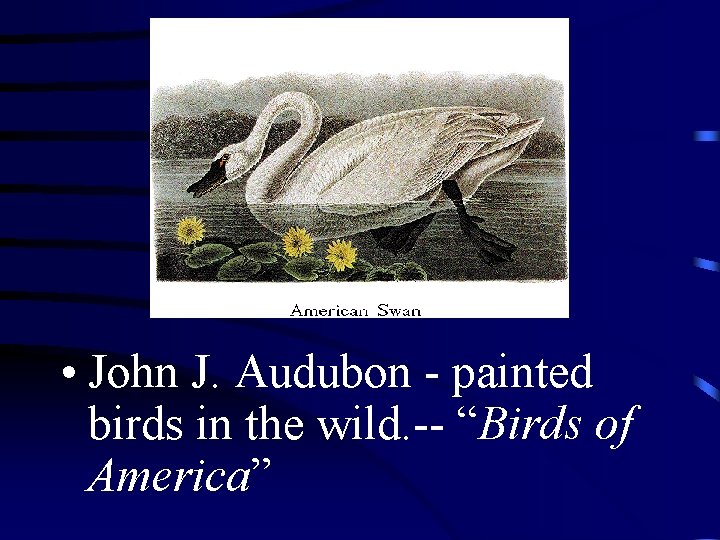
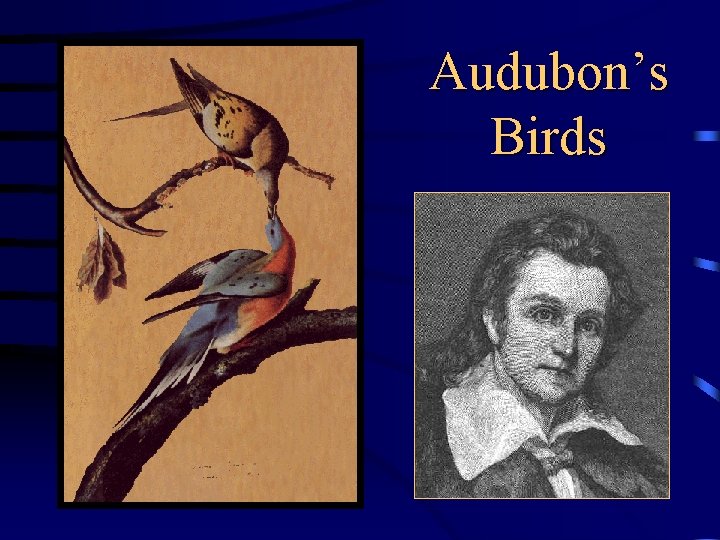
• John J. Audubon - painted birds in the wild. -- “Birds of America”
Audubon’s Birds
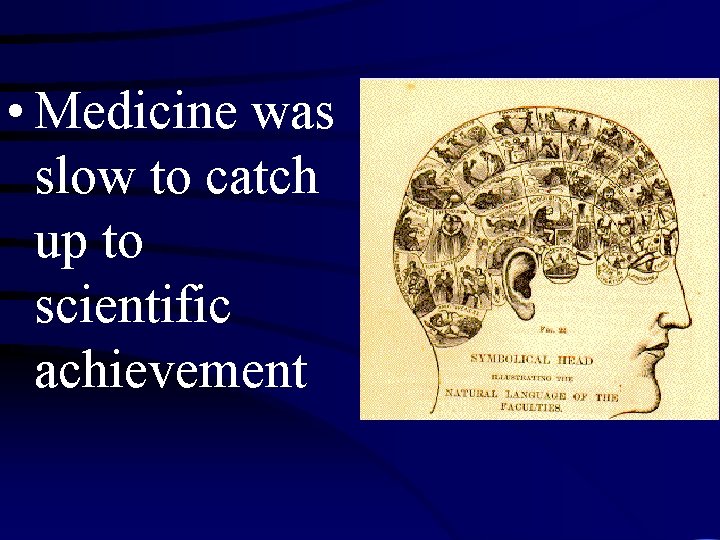
• Medicine was slow to catch up to scientific achievement
The Arts
• Architecture - Thomas Jefferson
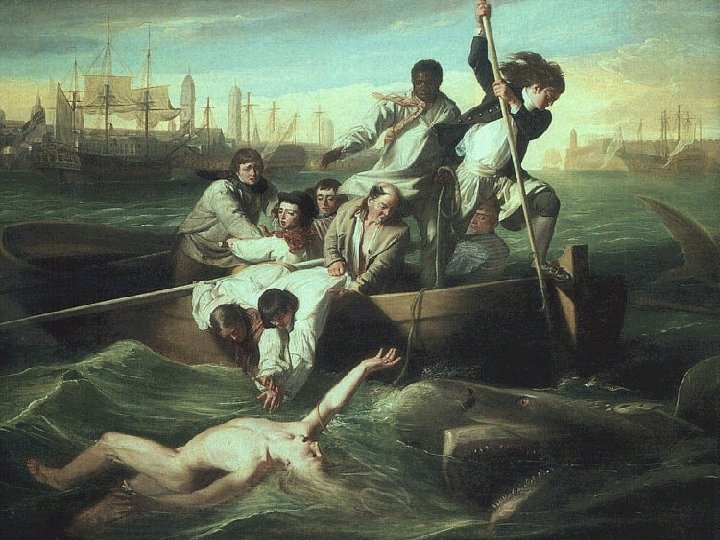
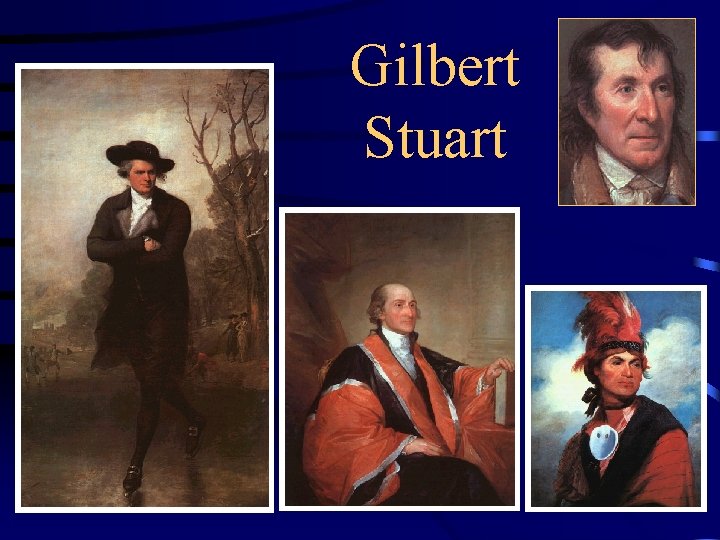
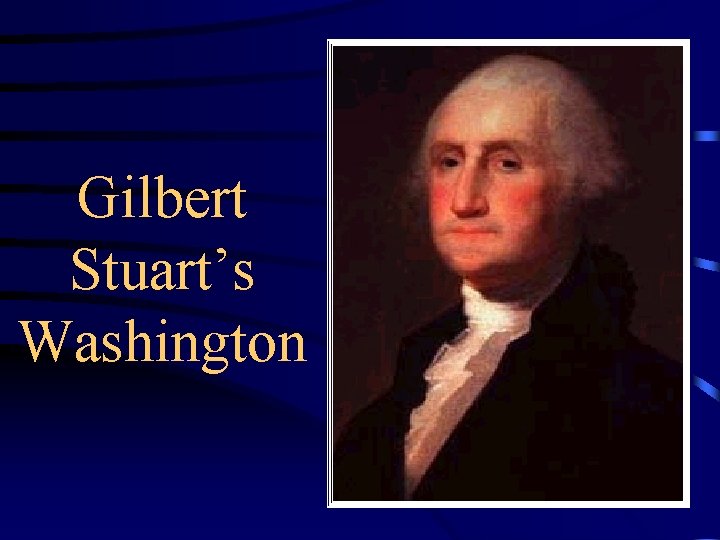
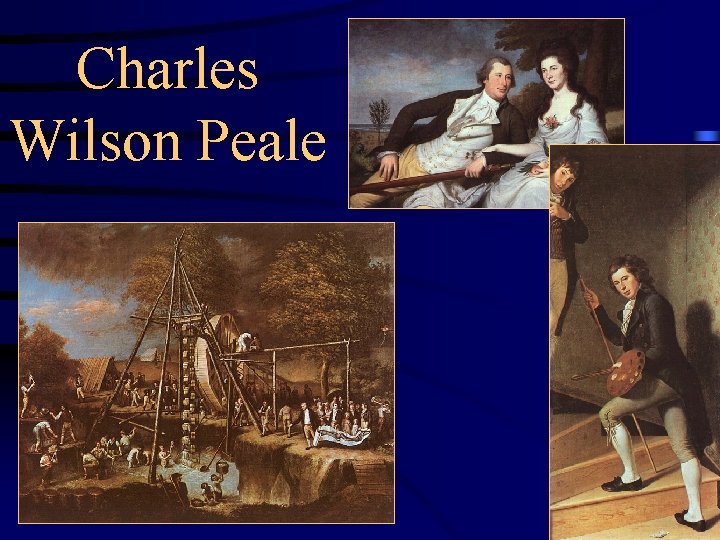
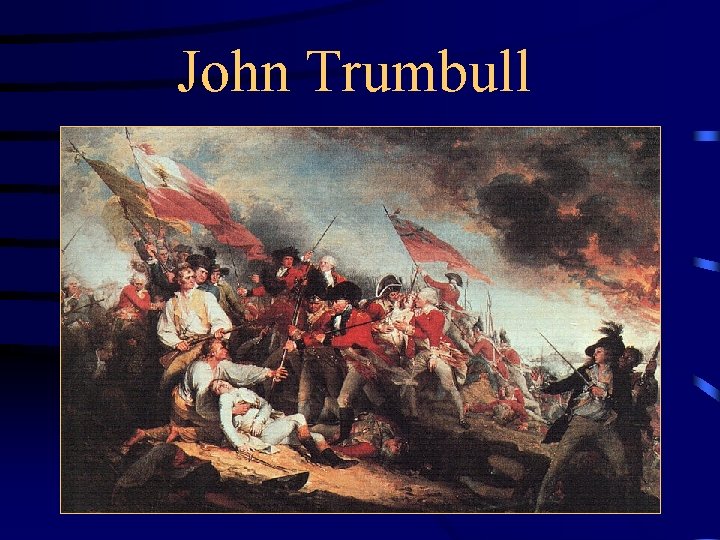
• Painters - Gilbert Stuart, Charles Wilson Peale, John Trumbull.
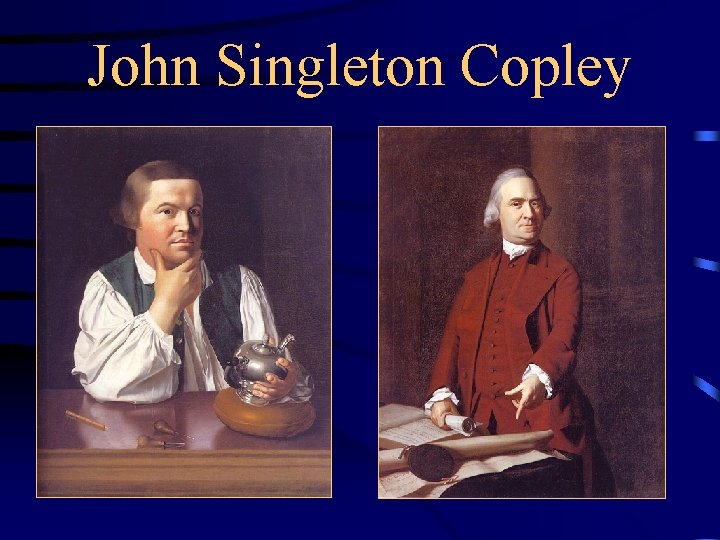
John Singleton Copley
Gilbert Stuart
Gilbert Stuart’s Washington
Charles Wilson Peale
John Trumbull
Music • Minstrels in “blackface” sang “darky tunes” • Stephen Foster - “Old Folks at Home”
Literature • essays - The Federalist, Common Sense. • Ben Franklin's Autobiography
The Knickerbocker Group • Washington Irving - Rip Van Winkle. • James Fenimore Cooper the first American novelist.
• William Cullen Bryant poet (“Thanatopsis”) and editor of the New York Evening Post.
Transcendentalism • believed that people have an inner light that allows direct contact with God.
• They emphasized individualism and self reliance.
Ralph Waldo Emerson • famous address to Phi Beta Kappa “The American Scholar”
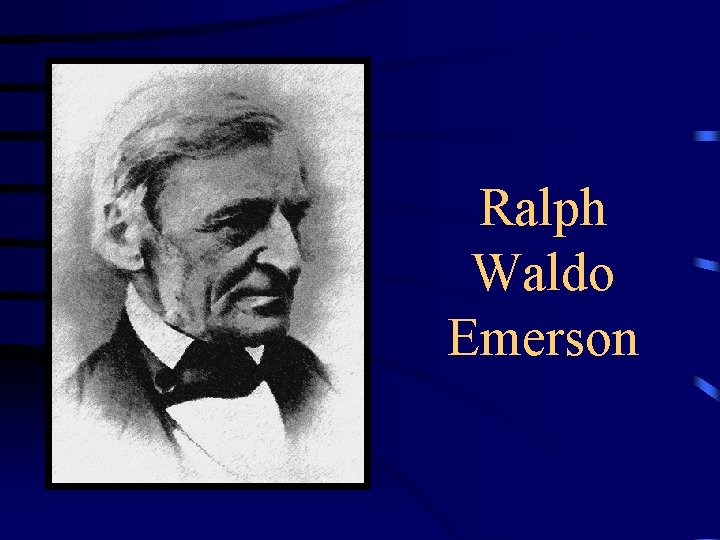
Ralph Waldo Emerson
Henry David Thoreau • Walden: Or Life in the Woods • Civil Disobedience
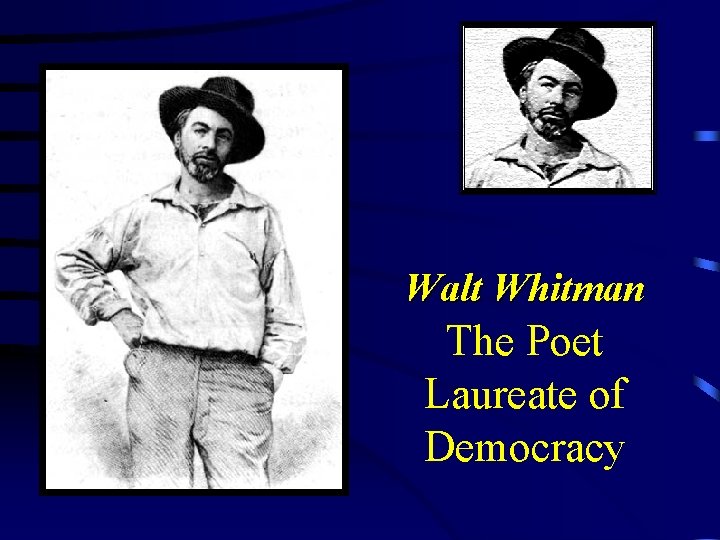
Walt Whitman The Poet Laureate of Democracy
• Leaves of Grass
Literary Lights. • Henry Wadsworth Longfellow • John Greenleaf Whittier
• James Russell Lowell • Dr. Oliver Wendell Holmes
• William Gilmore Simms • Edgar Allan Poe
• Herman Melville
Daily Diversions • Stage plays: Uncle Tom’s Cabin ; Ten Nights in a Barroom.
• Famous Actors: Edwin Forrest, Junius Brutus Booth - (sons = Edwin Booth and John W. Booth)
Sports and Shows • Horse racing; baseball; • Showboats; Circuses • Phineas T. Barnum “a sucker is born every minute”
Taking the waters • upper class crowd “summered” at resorts like Saratoga Springs and Newport, RI.
• Rich often made the “Grand Tour” of Europe.