
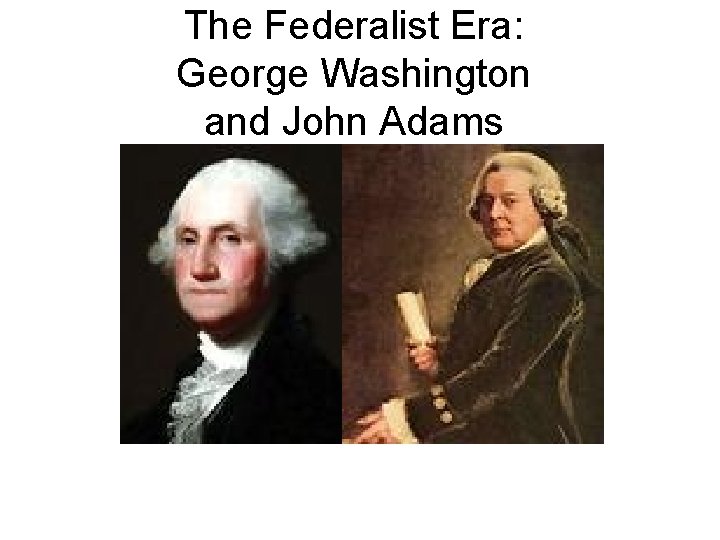
The Federalist Era George Washington and John Adams
- Slides: 31
The Federalist Era: George Washington and John Adams
George Washington • • Precedents: Two Terms in office Heads of Departments named: Thomas Jefferson (Sec. of State) Alexander Hamilton (Sec. of Treasury) Henry Knox (Sec. of War ) Edmund Randolph (Attorney General) John Jay (Supreme Court Chief Justice)
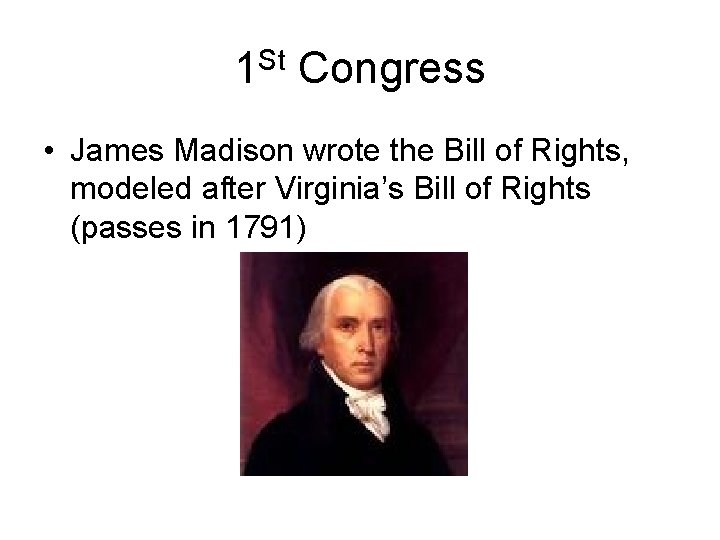
1 St Congress • James Madison wrote the Bill of Rights, modeled after Virginia’s Bill of Rights (passes in 1791)
Foreign Policy • French Revolution • Federalists opposed any intervention • Anti-Federalist supported the French Republic • Citizen Genet – Tried to convince Americans to volunteer to fight • War breaks out between France & England • Washington declares neutrality • British navy seizes American ships headed for French ports • England violates American sovereignty, neutrality on high seas – Jefferson: punish England by cutting off trade – Hamilton: appease England because too strong
Hamilton and Jefferson clash over the assumption of state debts • Alexander Hamilton makes compromise with Thomas Jefferson and James Madison to built nation’s capital on the banks of the Potomac in exchange for the assumption of state debts.
Hamilton and Jefferson clash over the national bank • Bank disagreement between Hamilton and Jefferson –Hamilton wants the bank to allow the government to be able to lend money and spawn the development of new businesses. Jefferson says that it is unconstitutional because the government would have a virtual monopoly on banking. Hamilton calls it necessary for the independence and stability of the nation.
Hamilton and Jefferson clash over tariff and excise taxes • Hamilton’s excise taxes on whiskey pass, but tariff fails because Jefferson argues in the senate that the tariff would promote industrialization which will lead to poverty and pollution.
Interpretation of the Constitution – Anti/fed point of view • Jefferson/Madison (strict interpretation) enumerated powers stated in document • Mr. Hamilton no provision for central bank – concerned too powerful – Federalist position • Hamilton is a staunch federalist • loose interpretation Implied powers not stated in document
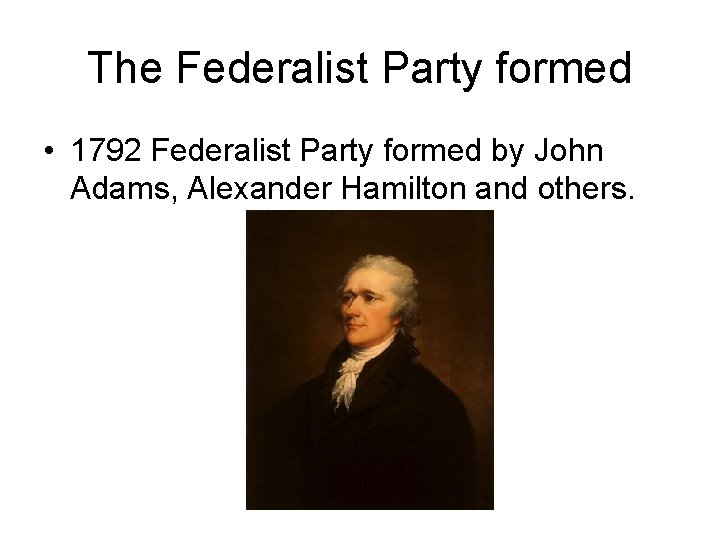
The Federalist Party formed • 1792 Federalist Party formed by John Adams, Alexander Hamilton and others.
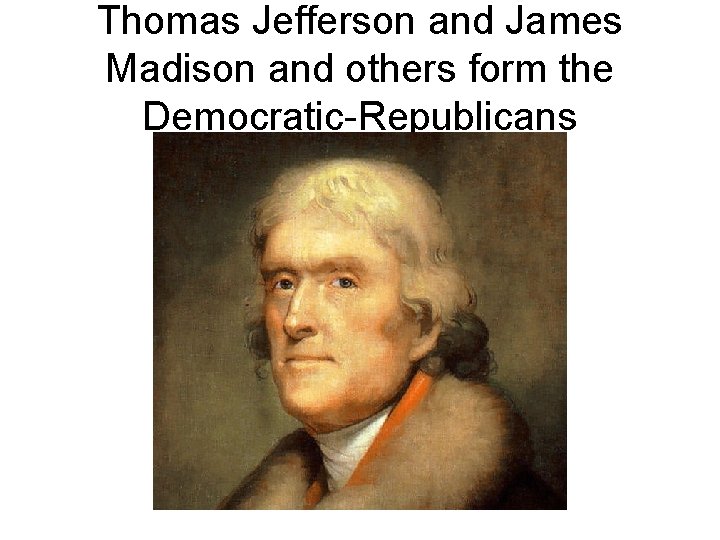
Thomas Jefferson and James Madison and others form the Democratic-Republicans
Root cause of political parties: differences of republican ideology • Federalists (Hamiltonians) stress national economy to preserve U. S. independence • Tariff of 1789—federal gov’t raise $ by taxing imports • Importers had to pay a % of the value of the cargo • Shippers also had to pay tonnage—a tax on how much cargo their ship carried – Tariff & tonnage rates angered farmers
Democratic-Republican Ideals • Democratic/Republicans: states’ rights, small government, local authority • Agriculture (Agrarian Society): A nation of farmers • Ruling power to All landowners • Protective tariffs hurt farmers • Believed that France should be our ally. • Stronghold in the West and South
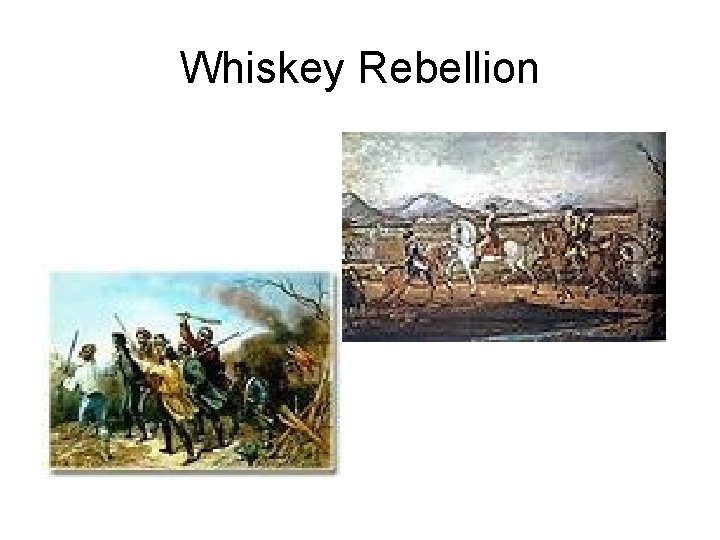
Whiskey Rebellion • 1794 -Whiskey Rebellion: Western Penn. Farmers rise up because they were converting their grains into alcohol for easy transportation. President Washington led 15, 000 Troops into Pennsylvania to put down the Rebellion.
Whiskey Rebellion
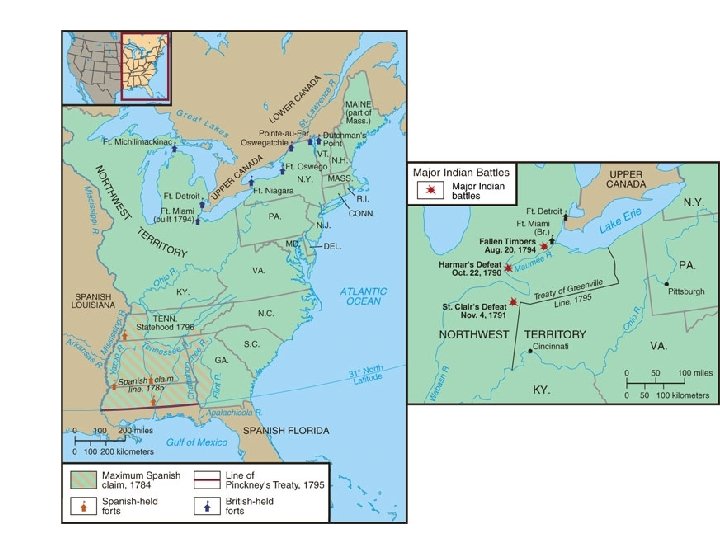
Problems with Native Americans • 1794 – General “Mad Anthony” Wayne defeated Shawnee Indians at the Battle of Fallen Timbers opening up the Ohio Valley to White Settlement with the Treaty of Greenville. The natives had been supplied with alcohol and guns by the British who still occupied forts on American Soil.
Problems with England • 1794 - Jay Treaty – Chief Justice John Jay was sent to England to talk about British ships stopping American ships headed for France and searching them. • British troops were still on our Western Frontier.
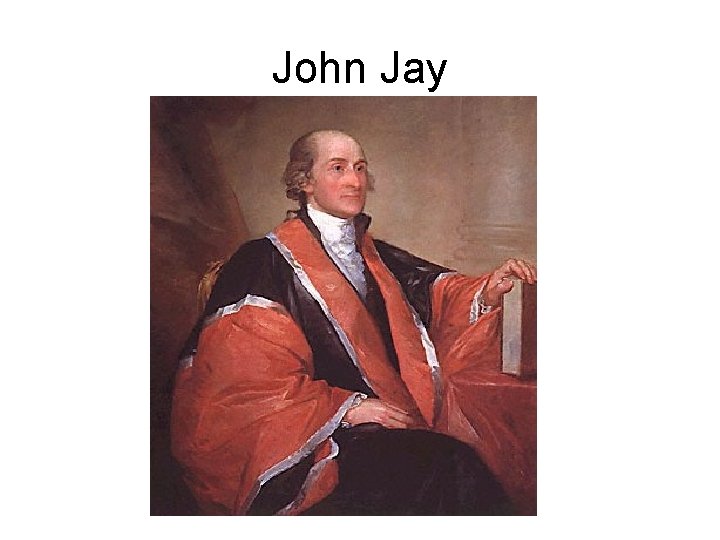
John Jay
Final result of Jay’s Treaty • Avoid war with England • England had right to seize ships headed to French ports • No money for American merchants whose goods were seized • Most Favored Nation American shippers would not be discriminated against & were allowed limited trade in the Caribbean • Democratic-Republicans are very upset about the “most favored nation” status.
Problems with Spain • 1795 – Pinckney’s Treaty – Thomas Pinckney sent to Spain to negotiate American use of New Orleans port. Spain had taken away the American right of deposit in this Spanish City (yes it was French earlier and it will become French again later). • Farmers in the west happy to get crops to market via the Mississippi River. • Opens Up (Mid) West to far more settlers.
Farewell words from the father of our nation • The Farewell Address- In essence, Washington warned the country to remain united at home and neutral abroad since Europeans had major wars every twenty years.
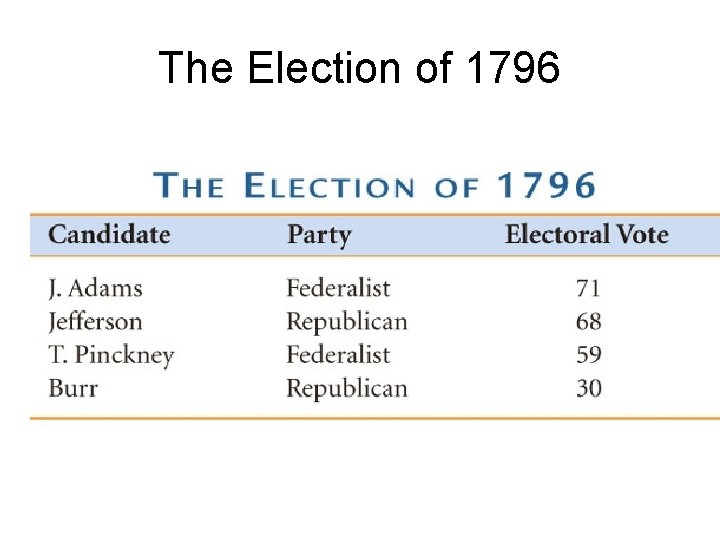
The Election of 1796
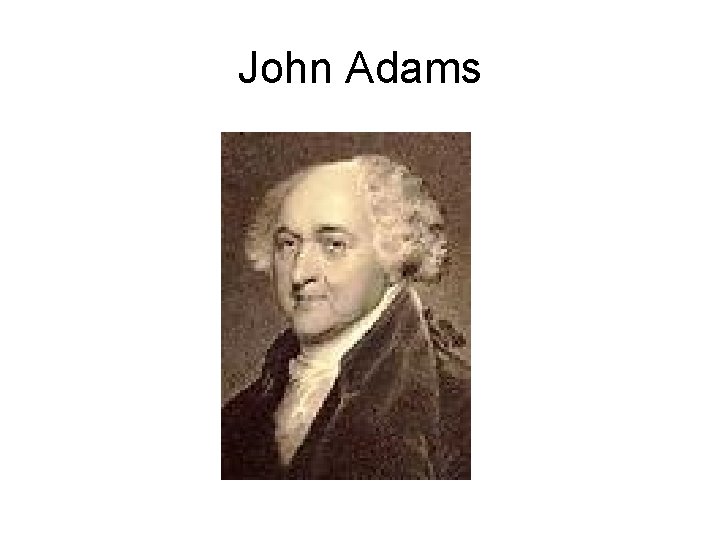
John Adams
The Federalist attempt to curb the growth of the Democratic. Republicans • Naturalization Act- Must live in the United States for 14 years before you can be a citizen • Aliens can be deported without a trial • Sedition Act – can’t speak out against the government.
Republican responses: Kentucky and Virginia Resolutions • Jefferson’s Kentucky Resolutions--states Resolutions • may nullify unconstitutional federal law • Madison's Virginia Resolutions--urge Resolutionsstates to protect their citizens The Kentucky and Virginia Resolutions • Clarifies differences between Republicans and Federalists • States rights over Federal rights
Problems with France • England France were still at war and the United States was officially neutral and planned to sell goods to both sides in the conflict. • Jay’s Treaty prompts France to treat U. S. as unfriendly nation
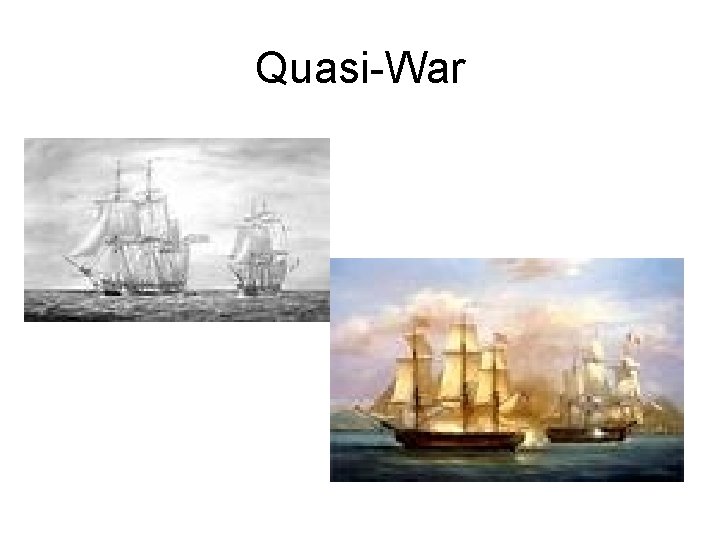
Quasi-War • Quasi-War: French seize American ships heading for England. • Diplomatic mission fails when three French officials (X, Y, and Z) demand bribe • Bride provokes anti-French outrage in U. S. • XYZ Affair – “Millions for Defense, not a penny for tribute, ” is the battle cry of the United States.
Military Expansion • George Washington asks for a commission to lead troops –denied. • The Department of the Navy was created with three ships and was expanded. • The Marine Corps, disbanded after the Revolution was re established. • New army of 10, 000 men was authorized.
Quasi-War
Cooler heads prevail • With the Convention of 1800, signed in Paris, Adams puts patriotism over party and works out a settlement with France before it came to full scale war. • England had already sent cannons and war supplies to the United States and promised to continue aid to the US in event of a full scale war.
American Politics Problems • Federalists attempt to crush Republicans by branding them as pro-French. • Federalist Party splits as Hamiltonian War Hawks demand war with France. Hamilton forms his own group, “the High Federalists. ” The High Federalists are very friendly to the English.