
The Federal Reserve and Monetary Policy Government role
- Slides: 22
The Federal Reserve and Monetary Policy
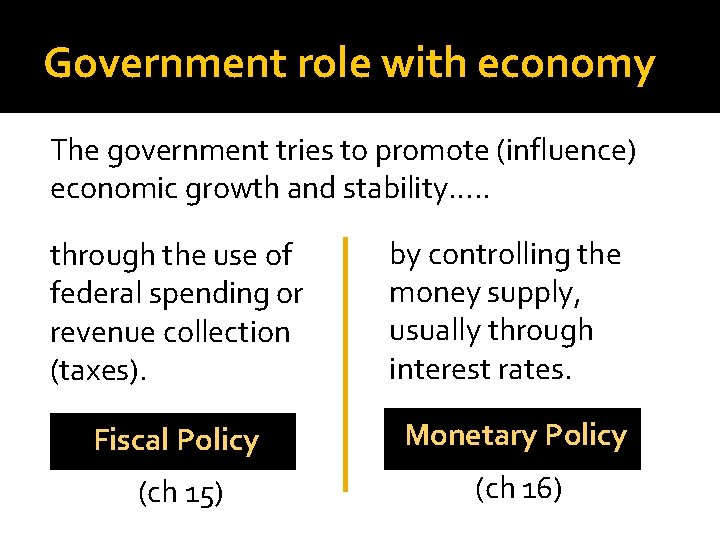
Government role with economy The government tries to promote (influence) economic growth and stability…. . through the use of federal spending or revenue collection (taxes). by controlling the money supply, usually through interest rates. Fiscal Policy Monetary Policy (ch 15) (ch 16)
the FED (Federal Reserve System) The need for a Central Bank? �Bank failures (1907) resulted in Congress passing the Federal Reserve Act (1913) �This act created 12 independent regional banks that could lend to other banks in time of need.
the FED (Federal Reserve System)
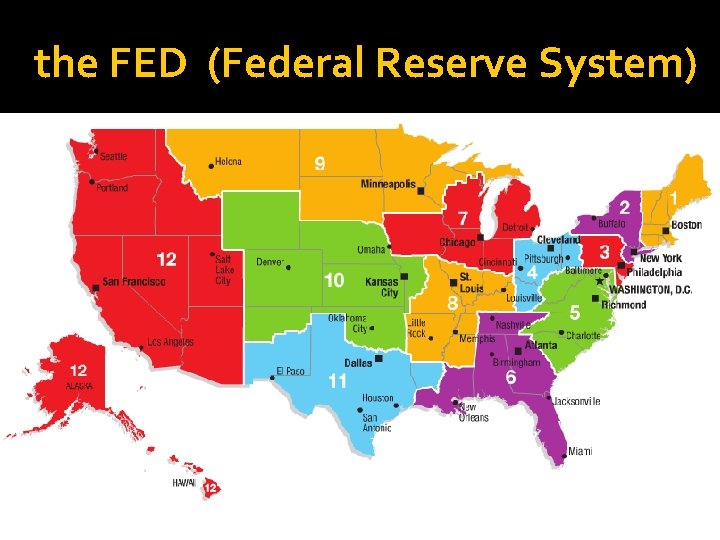
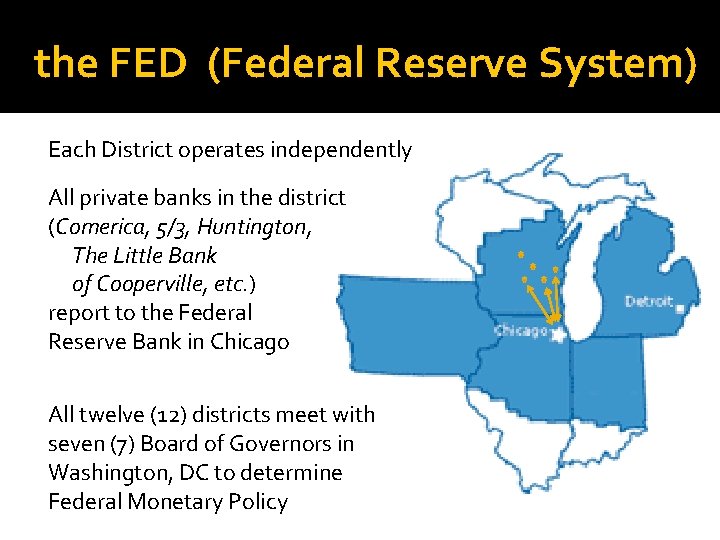
the FED (Federal Reserve System) Each District operates independently All private banks in the district (Comerica, 5/3, Huntington, The Little Bank of Cooperville, etc. ) report to the Federal Reserve Bank in Chicago All twelve (12) districts meet with seven (7) Board of Governors in Washington, DC to determine Federal Monetary Policy
the FED (Federal Reserve System) What does the FED do? �Keeps Banks Safe (supervision and regulation) �Makes Payments Secure (protects cash flow) �Stabilizes the Economy (monetary policy)
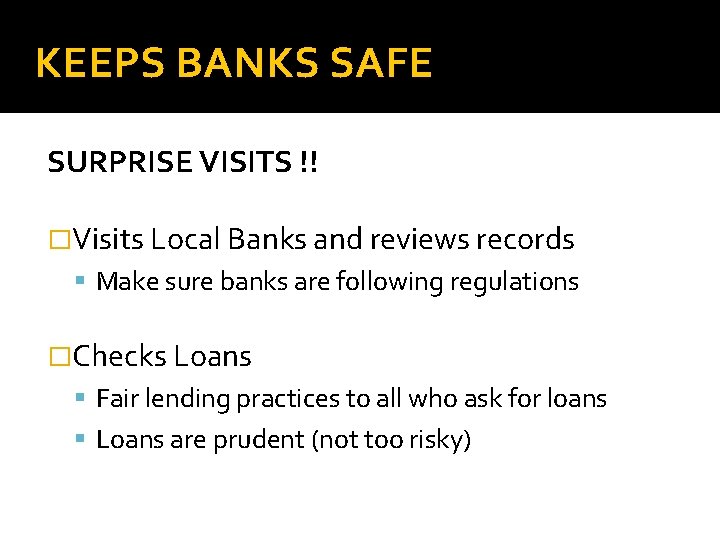
KEEPS BANKS SAFE SURPRISE VISITS !! �Visits Local Banks and reviews records Make sure banks are following regulations �Checks Loans Fair lending practices to all who ask for loans Loans are prudent (not too risky)
the FED (Federal Reserve System) What does the FED do? �Keeps Banks Safe (supervision and regulation) �Makes Payments Secure (protects cash flow) �Stabilizes the Economy (monetary policy)
MAKES PAYMENTS SECURE Protect cash flow (customer’s money) �Check Clearing House ALL checks are sent to the FED for review Make sure money gets to different bank accounts This includes electronic payments/direct deposits
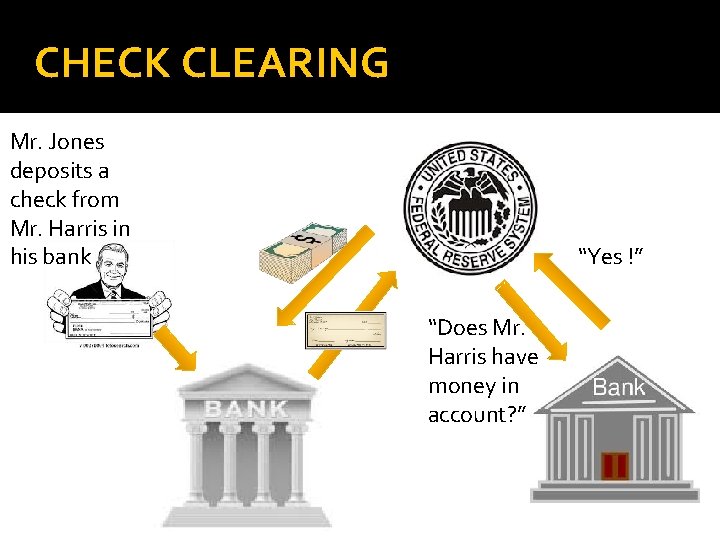
CHECK CLEARING Mr. Jones deposits a check from Mr. Harris in his bank “Yes !” “Does Mr. Harris have money in account? ”
MAKES PAYMENTS SECURE Protects cash flow (customer’s money) �Banks and FED Hold a Reserve of Money Individual Banks are required to send excess money to Fed (they will get paid interest by FED) When banks need more money they call the FED (prevents bank failures)
the FED (Federal Reserve System) What does the FED do? �Keeps Banks Safe (supervision and regulation) �Makes Payments Secure (protects cash flow) �Stabilize the Economy (monetary policy)
STABILIZE THE ECONOMY The Federal Reserve will try to stabilize the economy by preventing recessions and fighting inflation �by Changing Reserve Requirements �through Open Market Operations �by Sets Interest Rates
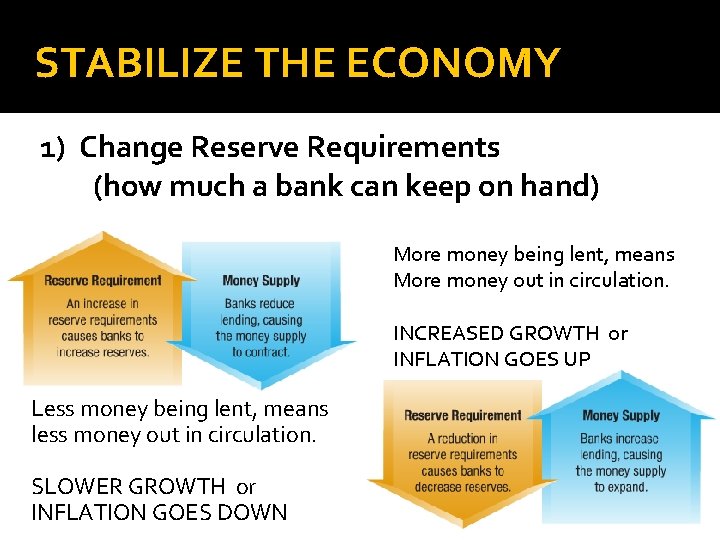
STABILIZE THE ECONOMY 1) Change Reserve Requirements (how much a bank can keep on hand) More money being lent, means More money out in circulation. INCREASED GROWTH or INFLATION GOES UP Less money being lent, means less money out in circulation. SLOWER GROWTH or INFLATION GOES DOWN
STABILIZE THE ECONOMY 2) Open Market Operations �The most common strategy used by the FED �The Federal Reserve will buy and sell government securities (bonds) �This either puts money into circulation or takes money out of circulation
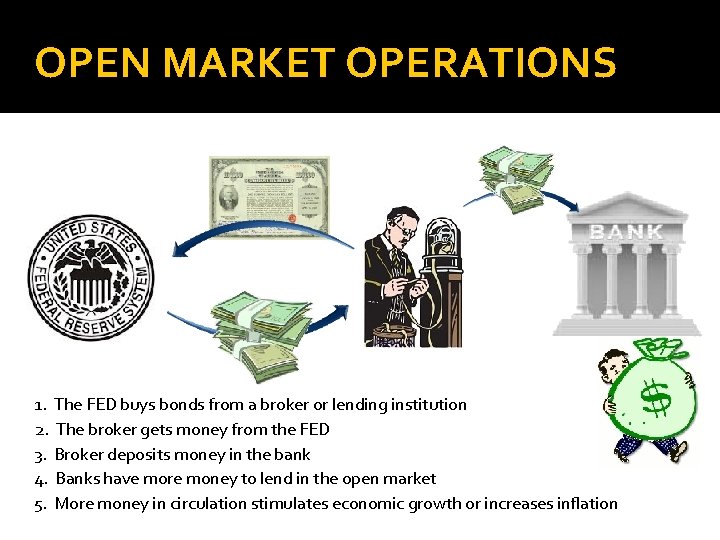
OPEN MARKET OPERATIONS 1. The FED buys bonds from a broker or lending institution 2. The broker gets money from the FED 3. Broker deposits money in the bank 4. Banks have more money to lend in the open market 5. More money in circulation stimulates economic growth or increases inflation
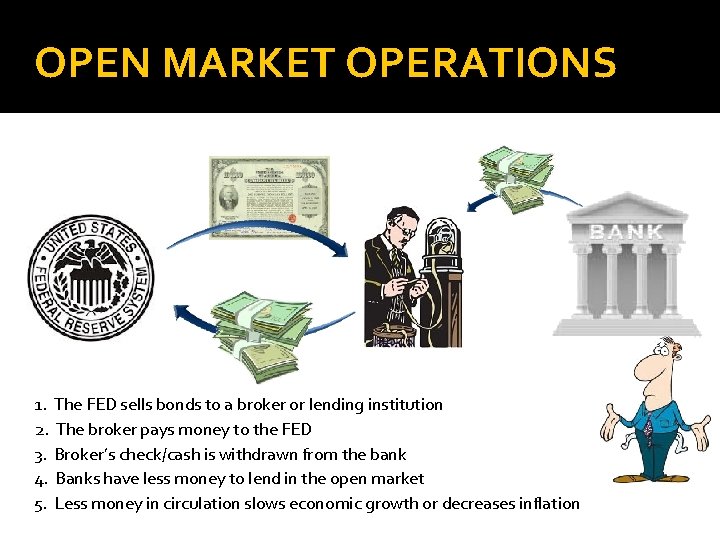
OPEN MARKET OPERATIONS 1. The FED sells bonds to a broker or lending institution 2. The broker pays money to the FED 3. Broker’s check/cash is withdrawn from the bank 4. Banks have less money to lend in the open market 5. Less money in circulation slows economic growth or decreases inflation
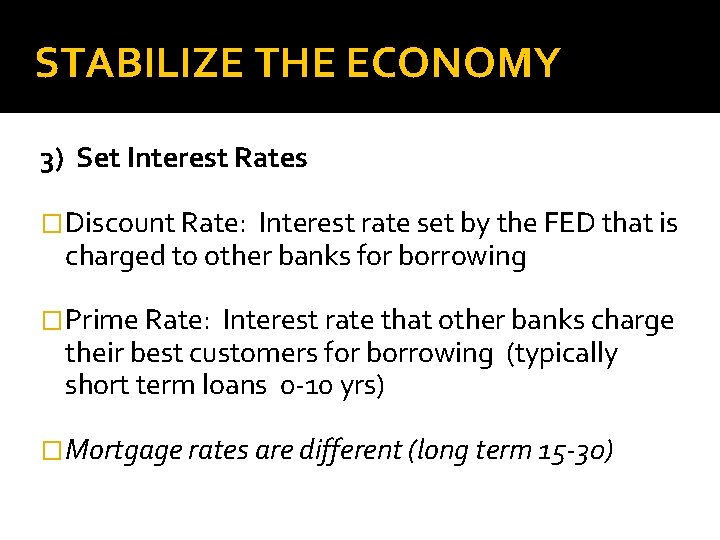
STABILIZE THE ECONOMY 3) Set Interest Rates �Discount Rate: Interest rate set by the FED that is charged to other banks for borrowing �Prime Rate: Interest rate that other banks charge their best customers for borrowing (typically short term loans 0 -10 yrs) �Mortgage rates are different (long term 15 -30)
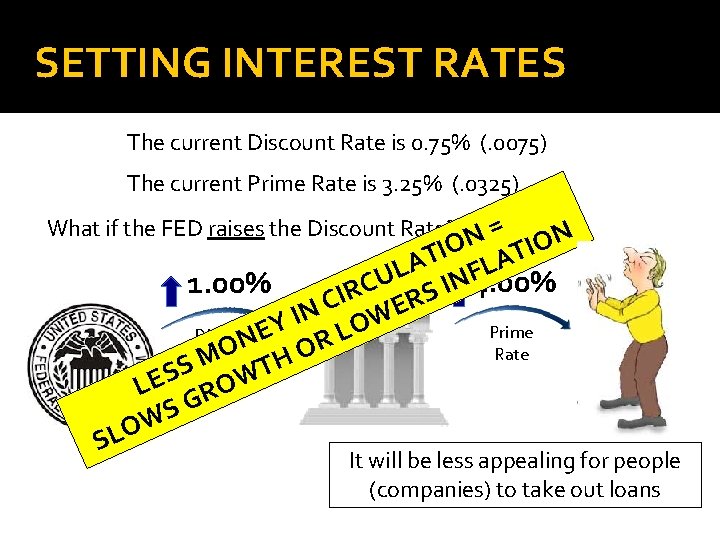
SETTING INTEREST RATES �The FED will raise or lower the Discount Rate to impact the money supply It will raise interest rates to slow growth or decrease inflation It will lower rates to grow the economy or increase inflation
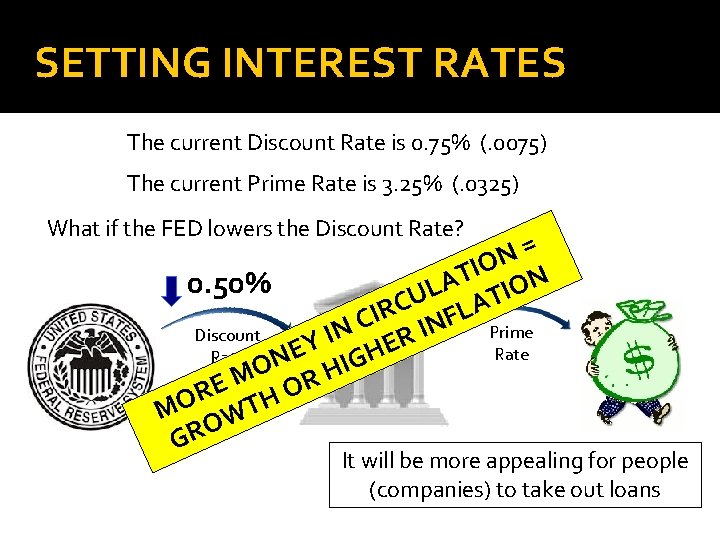
SETTING INTEREST RATES The current Discount Rate is 0. 75% (. 0075) The current Prime Rate is 3. 25% (. 0325) What if the FED lowers the Discount Rate? = N IO N T A 3. 00% 0. 50% O L I U T C A R L I F C IN Prime N Discount I R Y E E Rate H Rate N G I O H M R E O R MO WTH O R G It will be more appealing for people (companies) to take out loans
SETTING INTEREST RATES The current Discount Rate is 0. 75% (. 0075) The current Prime Rate is 3. 25% (. 0325) What if the FED raises the Discount Rate? N = IO N O I T AT FLA L U N 4. 00% 1. 00% I C R S I R C E N I W Y O Prime E Discount L N R O HO Rate M S T S W E O L R G S W O SL It will be less appealing for people (companies) to take out loans
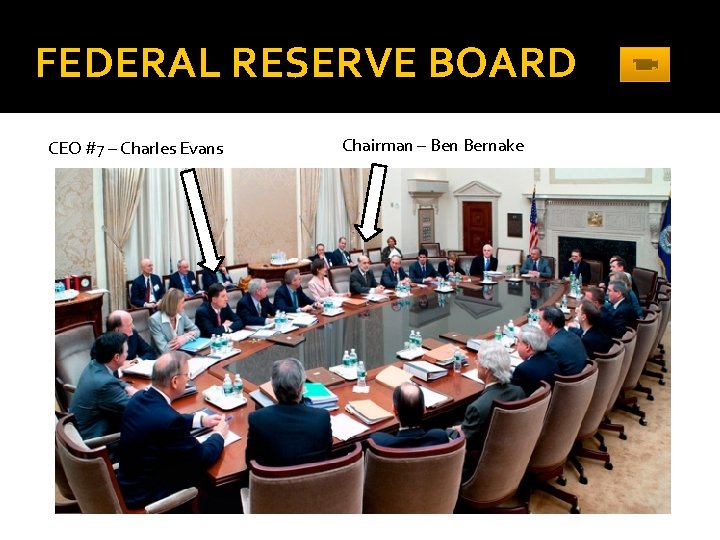
FEDERAL RESERVE BOARD CEO #7 – Charles Evans Chairman – Ben Bernake