
The Federal Judiciary Functions of the Court Three
- Slides: 52
The Federal Judiciary
Functions of the Court
Three Functions of Courts 1. Interpreting the Laws 2. Settling Disputes -- Resolving arguments 3. Setting Precedents – “guiding principles” that may be followed in later, similar cases
Jurisdiction of the Court
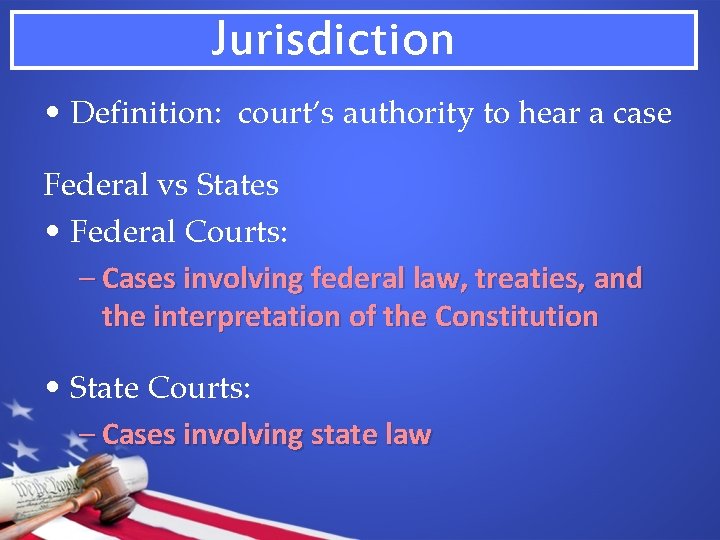
Jurisdiction • Definition: court’s authority to hear a case Federal vs States • Federal Courts: – Cases involving federal law, treaties, and the interpretation of the Constitution • State Courts: – Cases involving state law
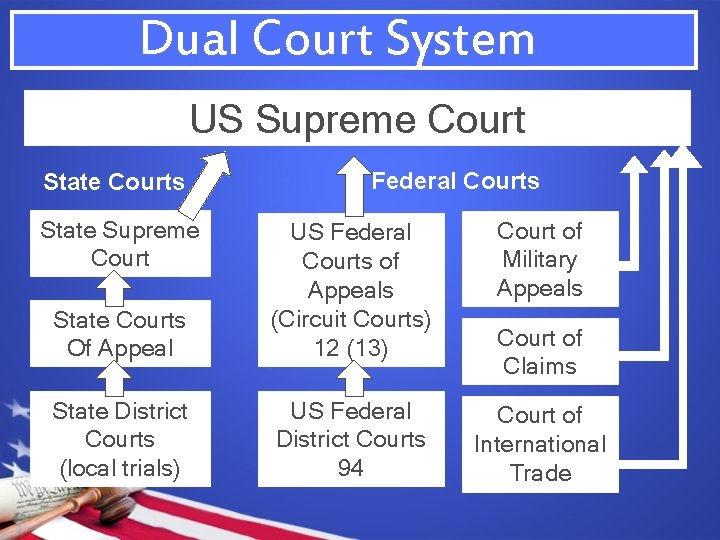
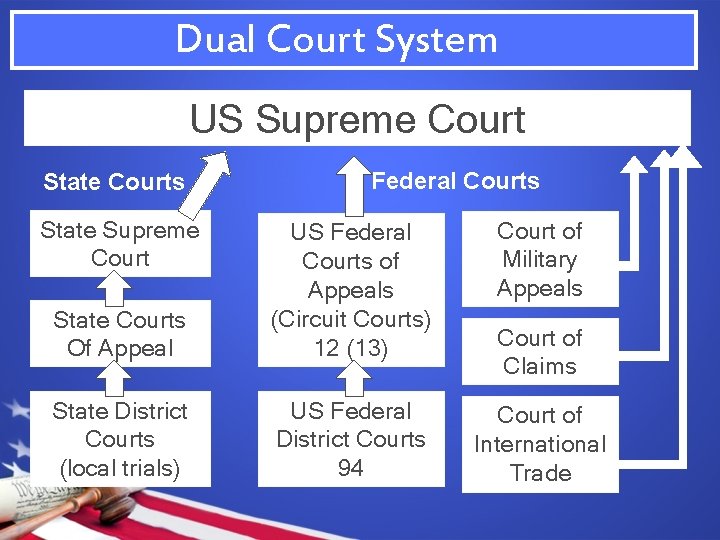
Dual Court System US Supreme Court State Courts State Supreme Court Federal Courts Court of Military Appeals State Courts Of Appeal US Federal Courts of Appeals (Circuit Courts) 12 (13) State District Courts (local trials) US Federal District Courts 94 Court of International Trade Court of Claims
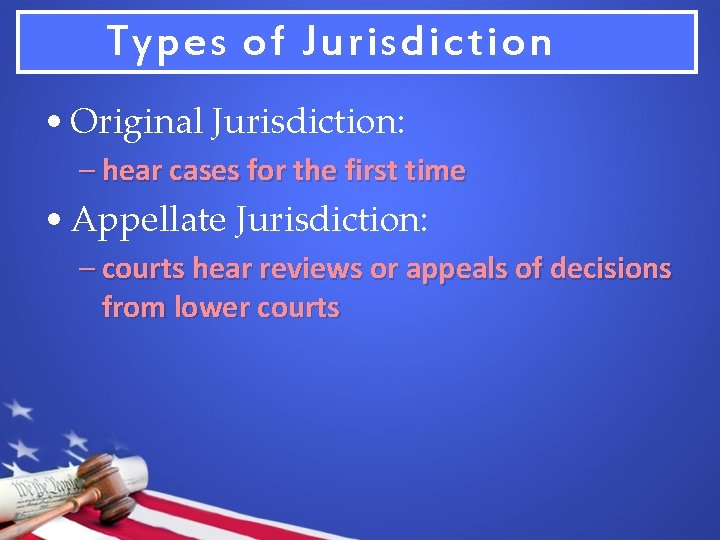
Types of Jurisdiction • Original Jurisdiction: – hear cases for the first time • Appellate Jurisdiction: – courts hear reviews or appeals of decisions from lower courts
Dual Court System US Supreme Court State Courts State Supreme Court Federal Courts Court of Military Appeals State Courts Of Appeal US Federal Courts of Appeals (Circuit Courts) 12 (13) State District Courts (local trials) US Federal District Courts 94 Court of International Trade Court of Claims
Structure of the Federal Courts
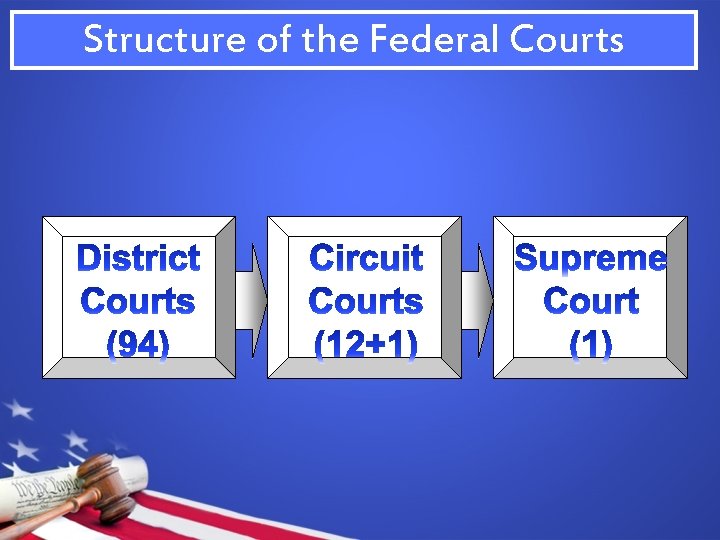
Structure of the Federal Courts
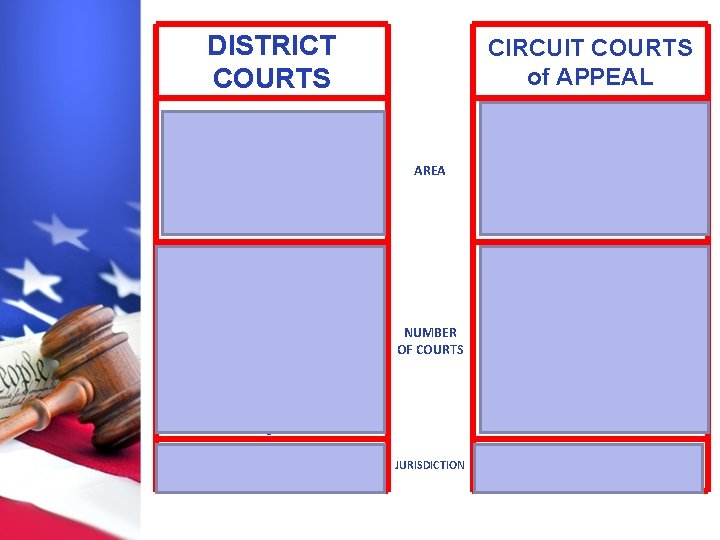
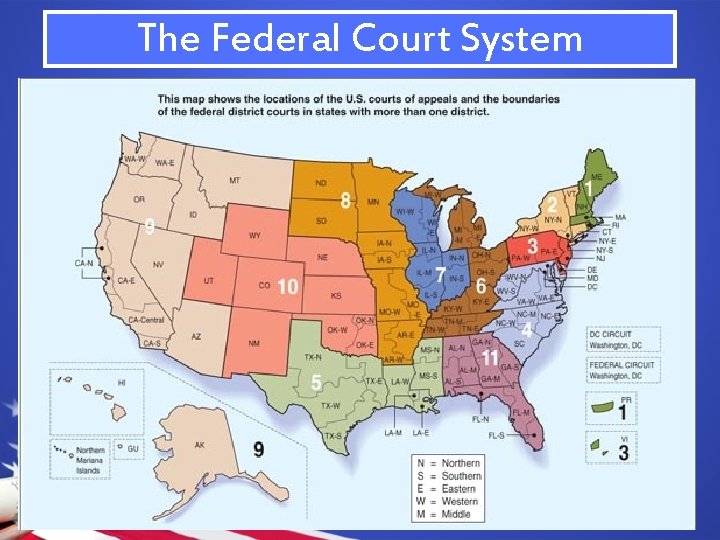
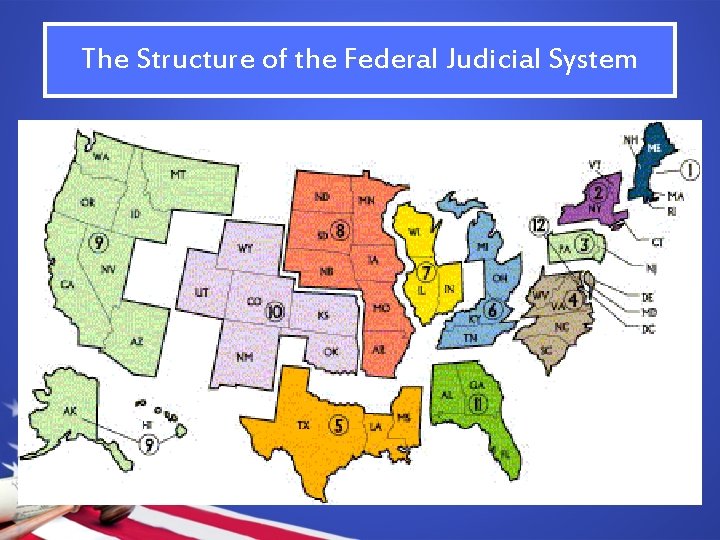
DISTRICT COURTS State or part of a state CIRCUIT COURTS of APPEAL AREA • Circuit – group of states • Total = 94 • Each state has at least 1 NUMBER OF COURTS Total = 12 + 1 • Larger states have up to 4 Original JURISDICTION appellate
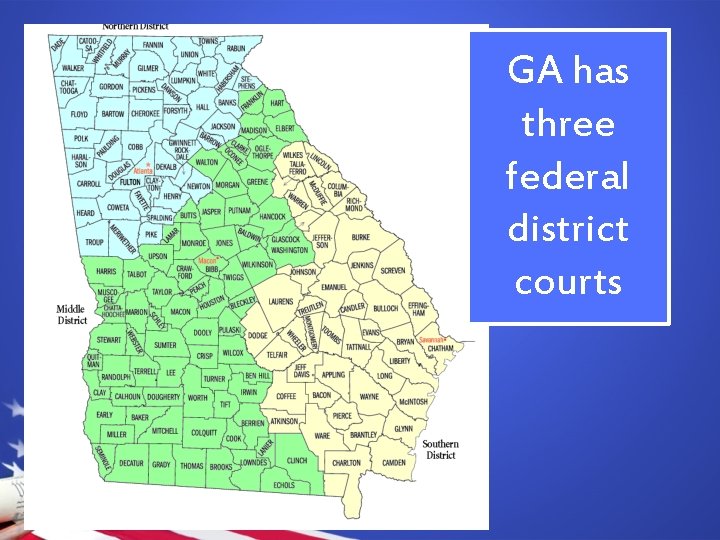
GA has three federal district courts
The Federal Court System
The Structure of the Federal Judicial System
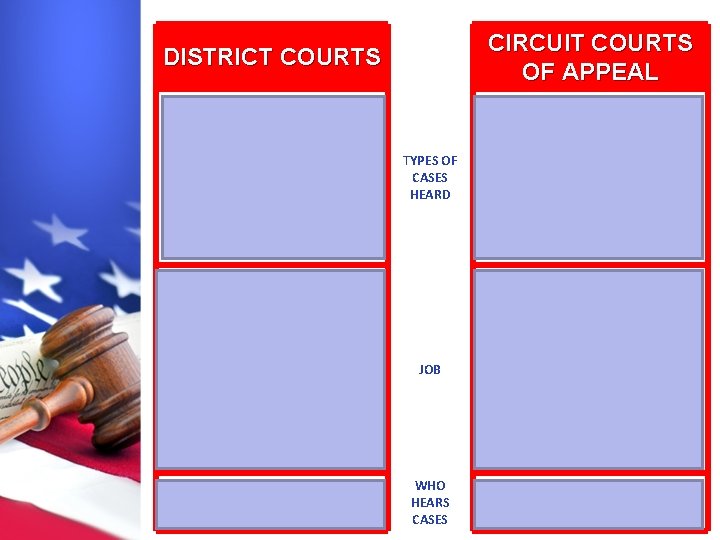
CIRCUIT COURTS OF APPEAL DISTRICT COURTS • Federal laws: Criminal cases & Civil cases • Constitutional issues • Trial Courts: Hears and decides cases • Apply LAW to the FACTS of the case Judge and jury TYPES OF CASES HEARD JOB • Cases appealed from lower district courts • REVIEW CASES decided by lower courts for errors • Apply LAWS to the PROCESS WHO HEARS CASES Panel of 3 judges
Appointing Federal Judges • Term of Service: LIFE • Constitutional Requirements: NONE • Nomination Process: – Appointed by Pres, approved by Senate
The U. S. Supreme Court
Composition of the Court
Composition of the Supreme Court • Requirements – NONE in the Constitution!! • Characteristics of Justices – White males (only 4 women have ever served – 3 now on court) – Lawyers with judicial experience – Usually same party as appointing president
Composition of the Supreme Court • Number of Justices – 9 • 1 Chief Justice • 8 Associate justices
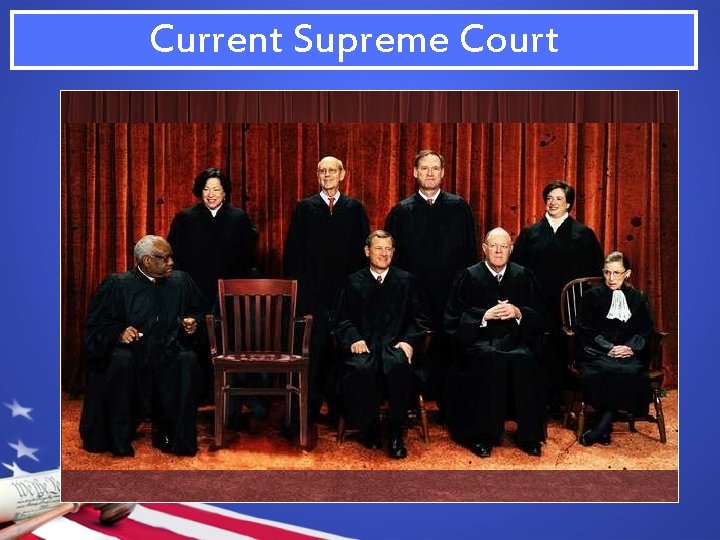
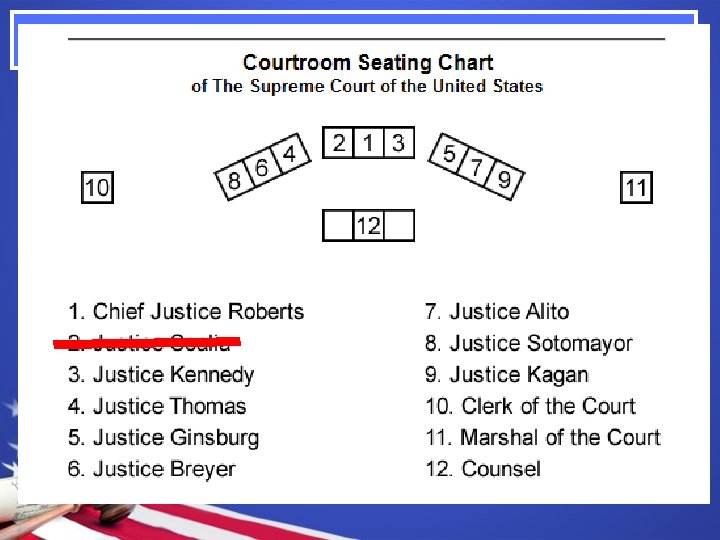
Current Supreme Court
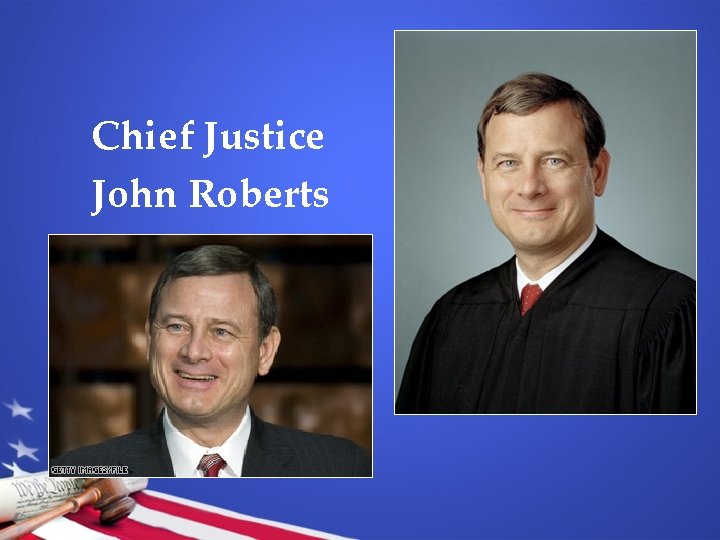
Chief Justice John Roberts
Composition of the Supreme Court • Number of Justices – 9 • 1 Chief Justice • 8 Associate justices • Term of Office – Life! • Term of Court – First Monday in October to June 30
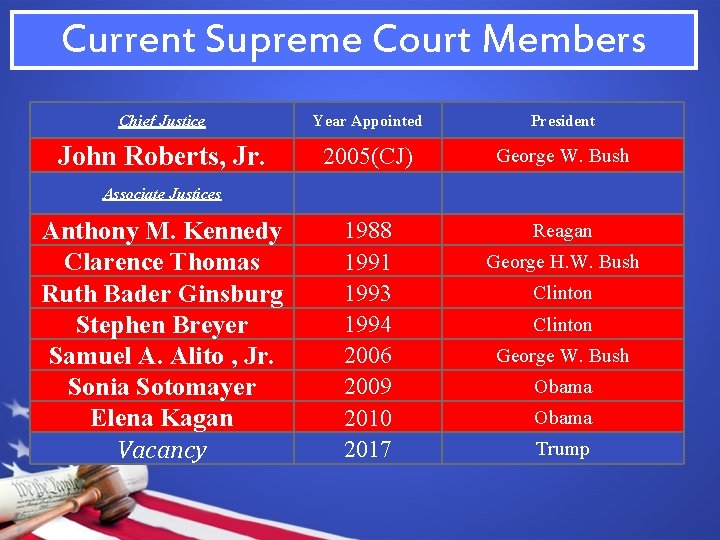
Current Supreme Court Members Chief Justice Year Appointed President John Roberts, Jr. 2005(CJ) George W. Bush 1988 1991 1993 1994 2006 2009 2010 2017 Reagan Associate Justices Anthony M. Kennedy Clarence Thomas Ruth Bader Ginsburg Stephen Breyer Samuel A. Alito , Jr. Sonia Sotomayer Elena Kagan Vacancy George H. W. Bush Clinton George W. Bush Obama Trump
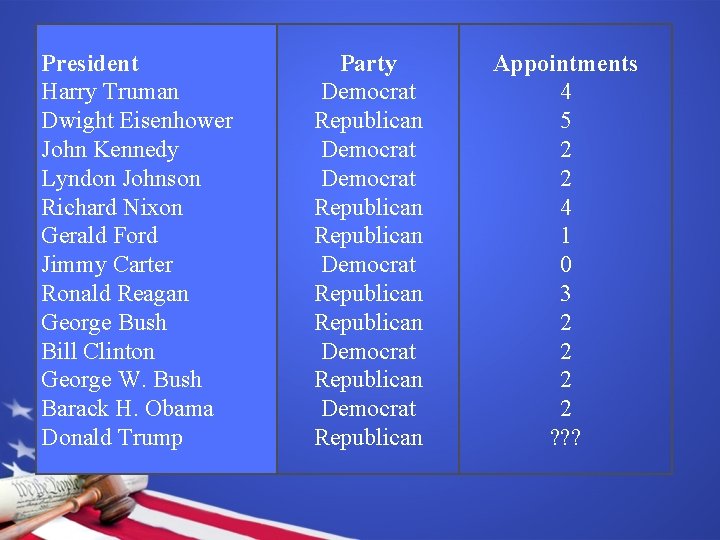
President Harry Truman Dwight Eisenhower John Kennedy Lyndon Johnson Richard Nixon Gerald Ford Jimmy Carter Ronald Reagan George Bush Bill Clinton George W. Bush Barack H. Obama Donald Trump Party Democrat Republican Republican Democrat Republican Appointments 4 5 2 2 4 1 0 3 2 2 ? ? ?
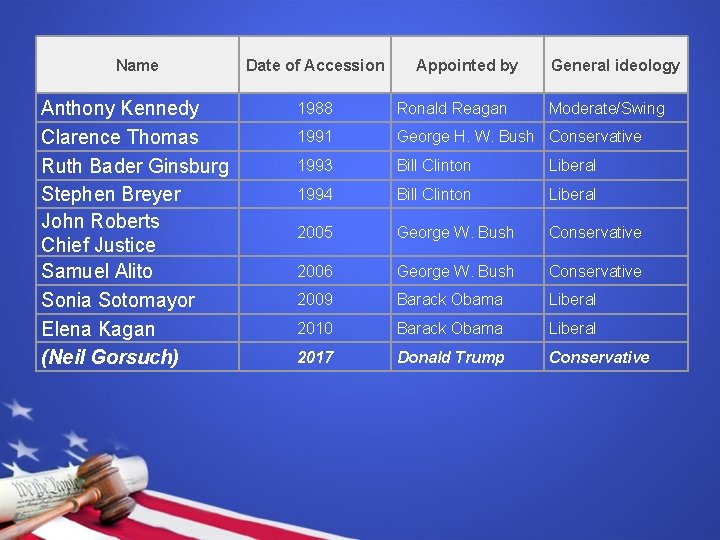
Name Date of Accession Appointed by General ideology Anthony Kennedy Clarence Thomas Ruth Bader Ginsburg Stephen Breyer John Roberts Chief Justice Samuel Alito Sonia Sotomayor Elena Kagan (Neil Gorsuch) 1988 Ronald Reagan 1991 George H. W. Bush Conservative 1993 Bill Clinton Liberal 1994 Bill Clinton Liberal 2005 George W. Bush Conservative 2006 George W. Bush Conservative 2009 Barack Obama Liberal 2010 Barack Obama Liberal 2017 Donald Trump Conservative Moderate/Swing
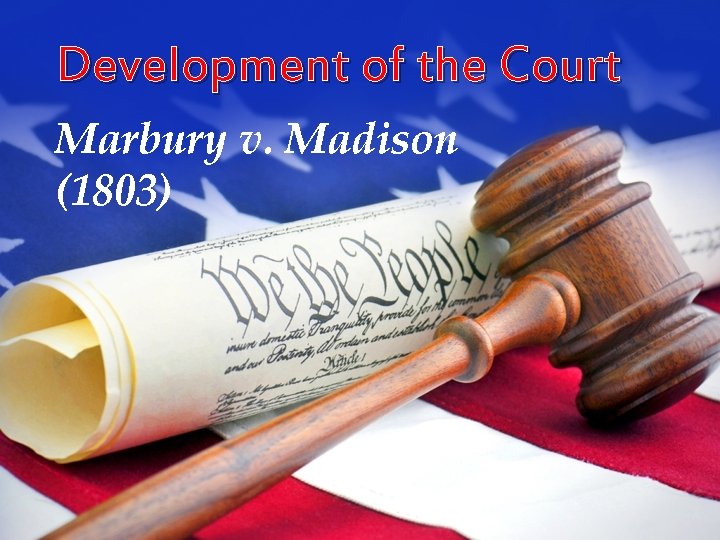
Development of the Court Marbury v. Madison (1803)
The Early Court • First session of the Supreme Court: – initially had to be adjourned when a quorum of the justices failed to show up – Later, the court decided only one major case. • Relatively low status – not equal to Leg or Exec branches – One associate judge left to become chief justice of a state supreme court.
Marbury v. Madison (1803) and Judicial Review • What Happened in this case: Marbury sued Sec. of State Madison to get his appointment as a federal judge – Midnight Appointments – Adams appoints his supporters to newly created judgeships as he leaves office to prevent Jefferson from making them – Marbury never receives his letter of appointment so he sues new Sec. of State James Madison for it directly to the Supreme Court
Marbury v. Madison (1803) and Judicial Review • What Happened in this case (cont): – John Marshall (Chief Justice) found that the Congressional statute (Judiciary Act of 1789) extending the Court’s original jurisdiction was unconstitutional • Note: He agreed that Marbury was due his appointment but Marshall (the Court) couldn’t give it to him because it has no jurisdiction to hear the case
Marbury v. Madison (1803) and Judicial Review • Importance: – Establishment of Judicial Review: • power of the Court to strike down laws as unconstitutional • Court can declare actions of Congress and/or president unconstitutional
How Cases Reach the Supreme Court
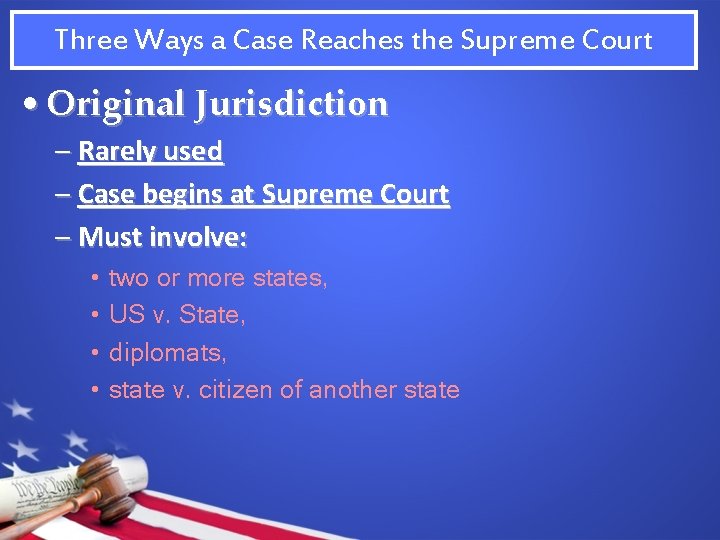
Three Ways a Case Reaches the Supreme Court • Original Jurisdiction – Rarely used – Case begins at Supreme Court – Must involve: • • two or more states, US v. State, diplomats, state v. citizen of another state
Three Ways a Case Reaches the Supreme Court • Appellate Jurisdiction – Come from lower federal courts OR highest state court – Involves federal law
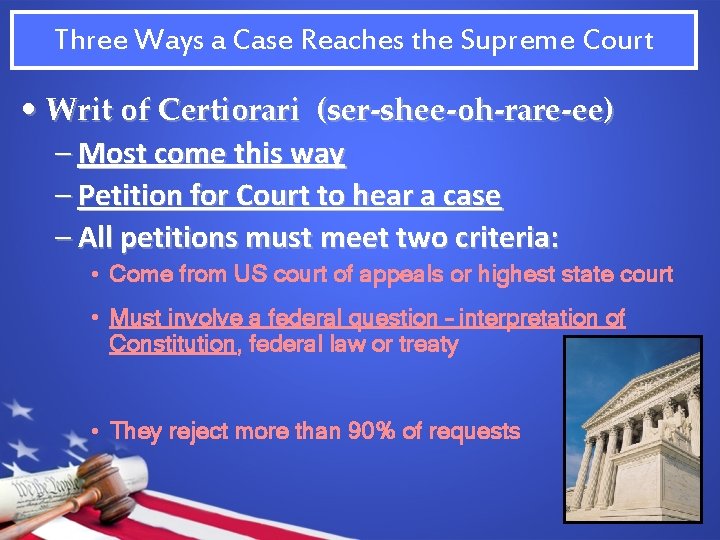
Three Ways a Case Reaches the Supreme Court • Writ of Certiorari (ser-shee-oh-rare-ee) – Most come this way – Petition for Court to hear a case – All petitions must meet two criteria: • Come from US court of appeals or highest state court • Must involve a federal question – interpretation of Constitution, federal law or treaty • They reject more than 90% of requests
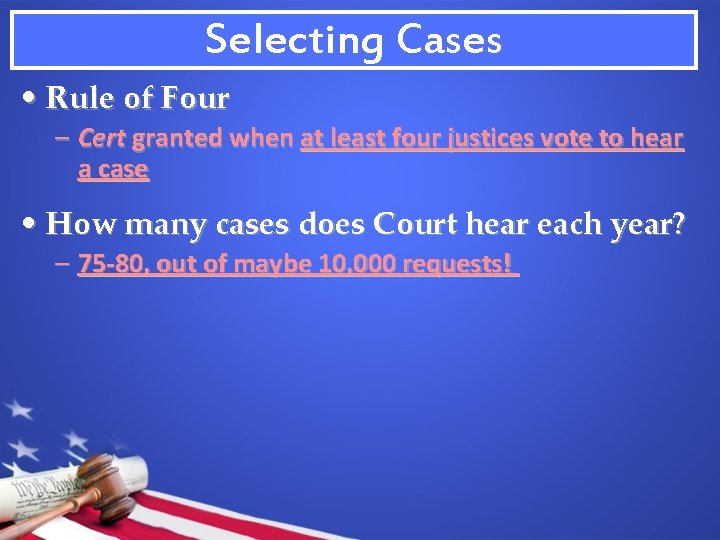
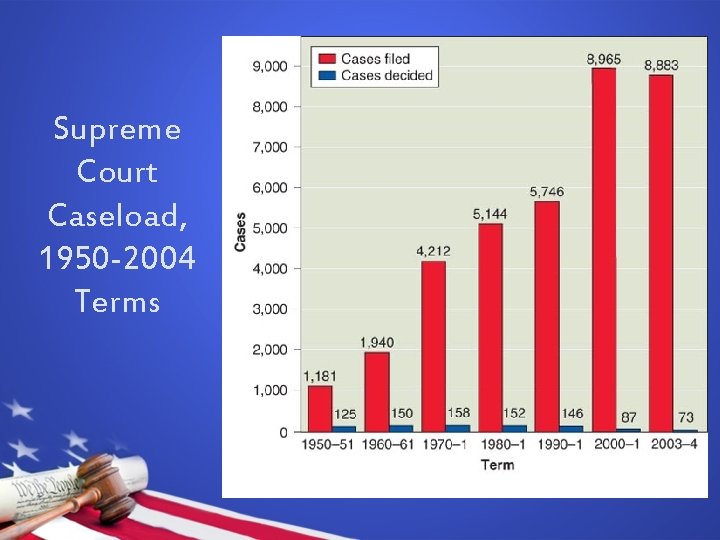
Selecting Cases • Rule of Four – Cert granted when at least four justices vote to hear a case • How many cases does Court hear each year? – 75 -80, out of maybe 10, 000 requests!
Supreme Court Caseload, 1950 -2004 Terms
The Supreme Court at Work Steps in Deciding Supreme Court Cases
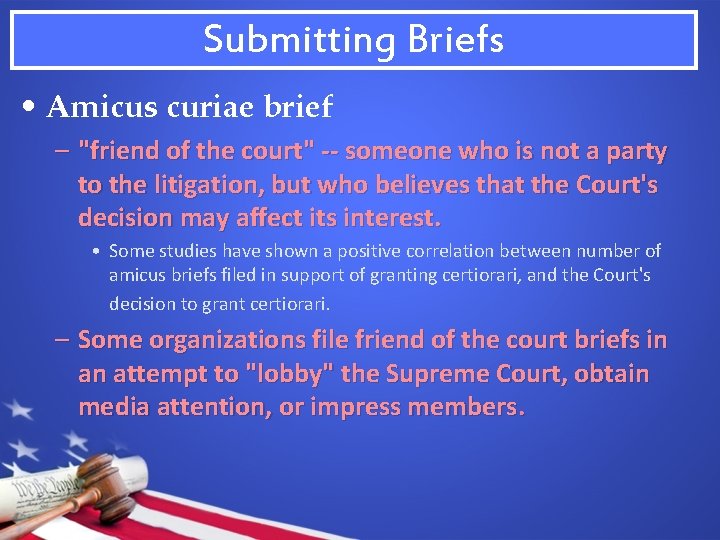
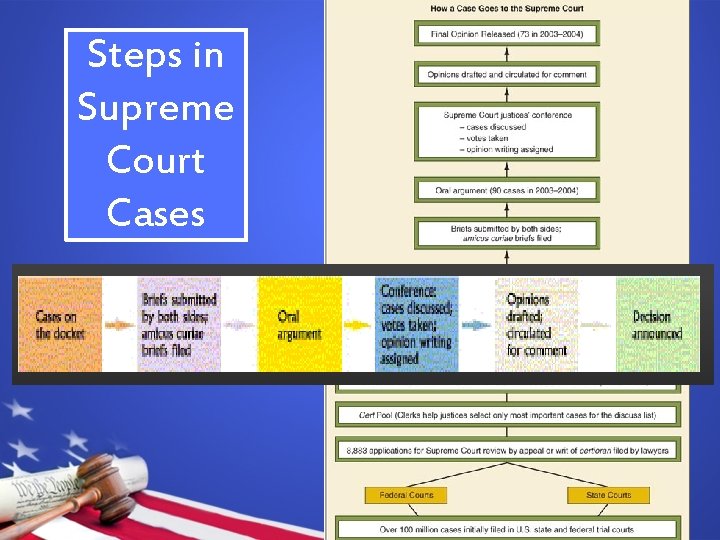
Submitting Briefs • What is a brief? – Written legal argument outlining each party’s points of law. • Who submits them? – Lawyers for each side
Submitting Briefs • Amicus curiae brief – "friend of the court" -- someone who is not a party to the litigation, but who believes that the Court's decision may affect its interest. • Some studies have shown a positive correlation between number of amicus briefs filed in support of granting certiorari, and the Court's decision to grant certiorari. – Some organizations file friend of the court briefs in an attempt to "lobby" the Supreme Court, obtain media attention, or impress members.
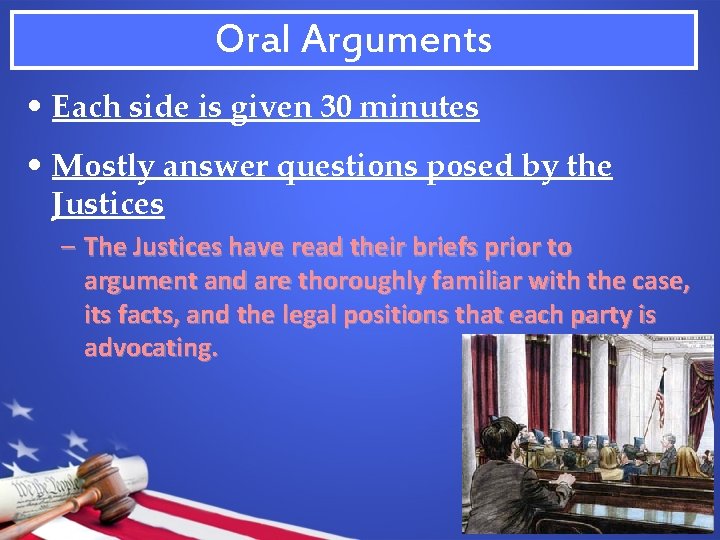
Oral Arguments • Each side is given 30 minutes • Mostly answer questions posed by the Justices – The Justices have read their briefs prior to argument and are thoroughly familiar with the case, its facts, and the legal positions that each party is advocating.
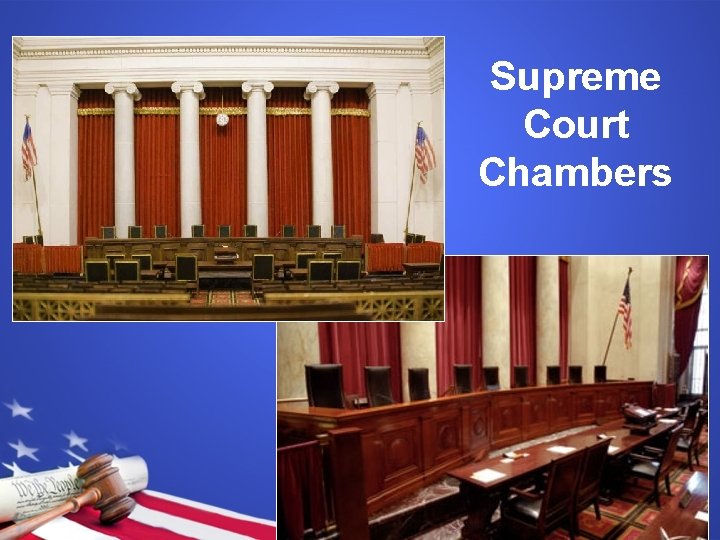
Supreme Court Chambers
Conference • Justices meet in private (closed even to staff) to discuss the cases • take a preliminary vote on each case
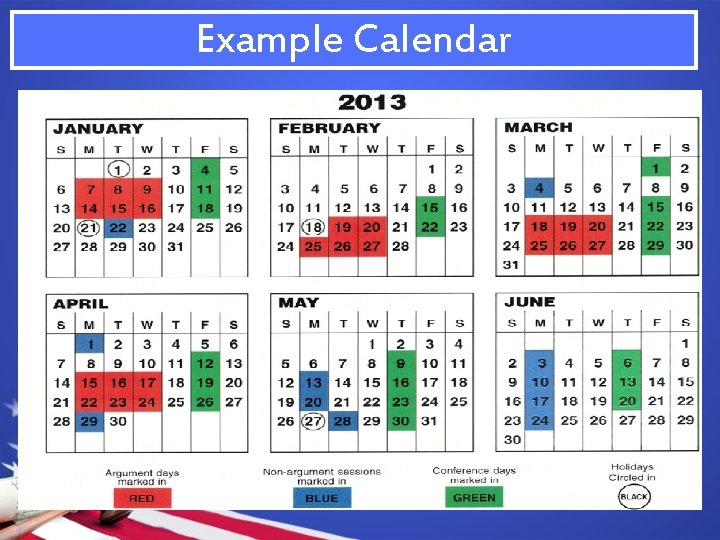
Example Calendar
Writing the Opinion of the Court • What does “opinion of the Court” mean? – Decision of the Court
Writing the Opinion of the Court • Types of Opinions – Majority: • decision of the Court (statement explaining the court’s decision) – Concurring: • Agrees with the majority but stress a different legal reason – Dissenting opinions • oppose the majority
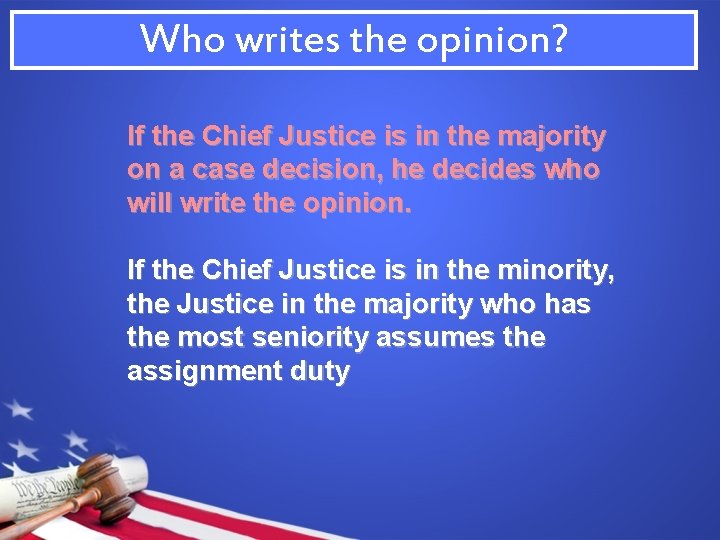
Who writes the opinion? If the Chief Justice is in the majority on a case decision, he decides who will write the opinion. If the Chief Justice is in the minority, the Justice in the majority who has the most seniority assumes the assignment duty
Steps in Supreme Court Cases
Judicial Philosophies Judicial Activism v. Judicial Restraint
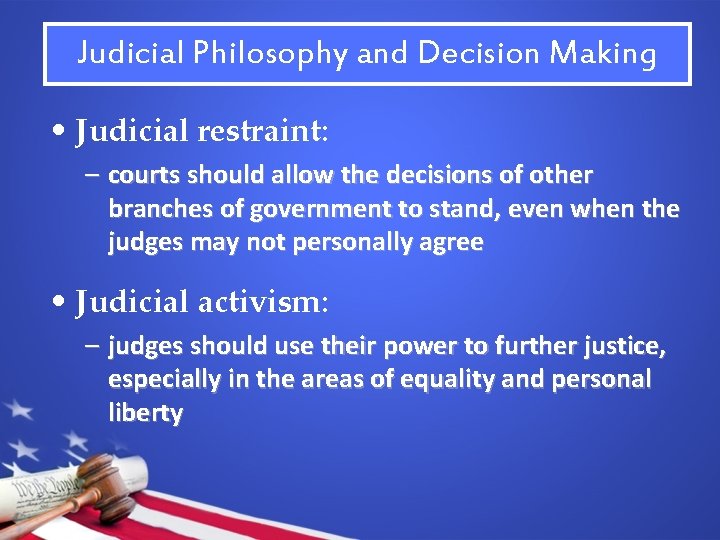
Judicial Philosophy and Decision Making • Judicial restraint: – courts should allow the decisions of other branches of government to stand, even when the judges may not personally agree • Judicial activism: – judges should use their power to further justice, especially in the areas of equality and personal liberty