
THE FEAR OF RECURRENCE Julie Larson LCSW www

- Slides: 15
THE FEAR OF RECURRENCE Julie Larson, LCSW www. julielarsonlcsw. com
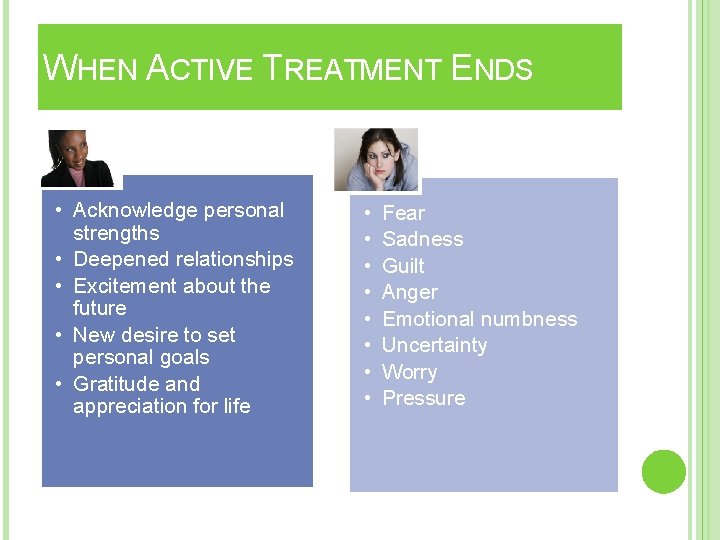
WHEN ACTIVE TREATMENT ENDS • Acknowledge personal strengths • Deepened relationships • Excitement about the future • New desire to set personal goals • Gratitude and appreciation for life • • Fear Sadness Guilt Anger Emotional numbness Uncertainty Worry Pressure
FEAR OF RECURRENCE Will cancer come back? Will I get a secondary cancer related to my treatments? Will I recognize symptoms? How will I understand what physical feelings to pay attention to and which to dismiss? Am I doing enough? Am I overdoing it?
WHY?
TAKING ACTION #1: WORRY = UNANSWERED QUESTIONS To begin, can you identify any questions lurking behind your worry and fear? Make a list. When is my cancer most likely to recur? What are the doctors looking at during follow up visits? When should I contact my medical team? Did treatment put me at risk for any future health issues? How will those be monitored?
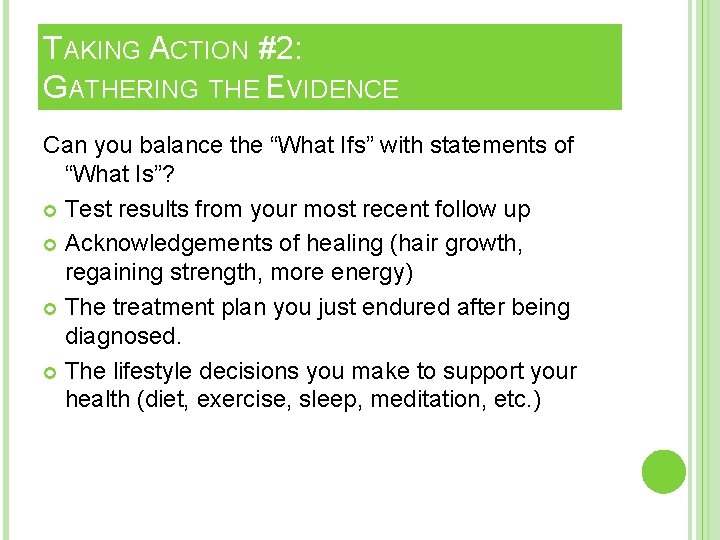
TAKING ACTION #2: GATHERING THE EVIDENCE Can you balance the “What Ifs” with statements of “What Is”? Test results from your most recent follow up Acknowledgements of healing (hair growth, regaining strength, more energy) The treatment plan you just endured after being diagnosed. The lifestyle decisions you make to support your health (diet, exercise, sleep, meditation, etc. )
DESPERATELY SEEKING CONTROL But what if you can’t control some of your worry or fear? You can’t “Take Action” and do something to calm yourself. Now what? !? ! www. thetherapyspacenyc. com Control is your best effort to get rid of or problem solve something that is distressing to you.
“WELL HELLO WORRY…” www. thetherapyspacenyc. com Greet your worry or fear. Resist judging your feelings or struggling to “fix” them. Allow them some space to just be with you. Struggling with the uncontrollable feelings makes it worse. Learn to live despite their presence?
TAKING ACTION #3: FEELINGS MASQUERADING AS FEAR. Are there other feelings alongside your fear? Sadness Loss Anger Irritation Guilt How do you tend to these feelings? What do you need?
SELF CARE: SADNESS. ANGER. What helps you feel safe enough to be really sad? � People? � Location? � Comforts? Pay very close attention to what makes you stop crying? Why? Anger is energy. What can you do with that energy? Do you know your triggers? Have you taken the time to really understand those trigger thoughts?
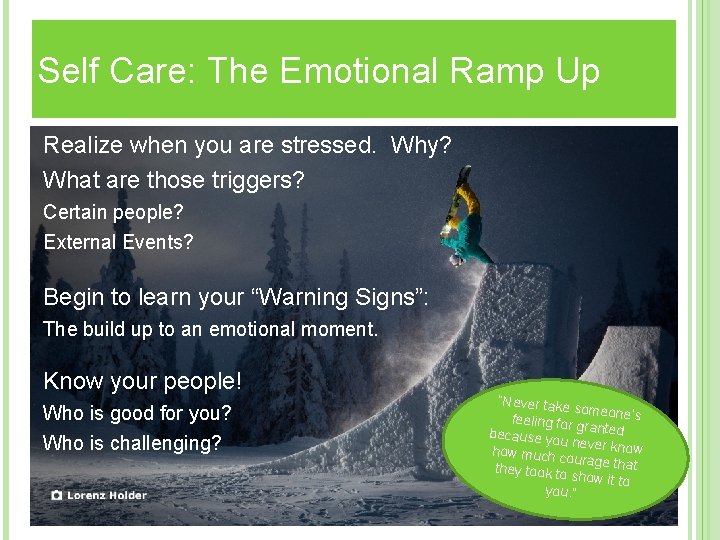
Self Care: The Emotional Ramp Up THE WORK OF BEING AT WORK: Realize when you are stressed. Why? What are those triggers? Certain people? External Events? Begin to learn your “Warning Signs”: The build up to an emotional moment. Know your people! Who is good for you? Who is challenging? “Never take someone’s feeling for g ranted because yo u never kno w how much courage tha t they took to show it to you. ”
STAY IN YOUR LANE Many emotions are influenced by the people around you. Hearing variances in treatment plans or follow up care can cause you to second guess your treatment. Learning about a celebrity recurrence or diagnosis can trigger complex emotions The set backs (or successes) of fellow survivor friends can trigger concerns about doing cancer “well”. MAKE YOUR CANCER PERSONAL. This is your diagnosis. Your survivorship. Your story.
BRING IT BACK TO YOUR BODY Worry and Fear can be very “head heavy” How can you reconnect with your body? Breathe Change location (sit/stand; inside/outside; lay down/get up) Feel your body – touch Ground yourself into the…ground. Change the pace with breath
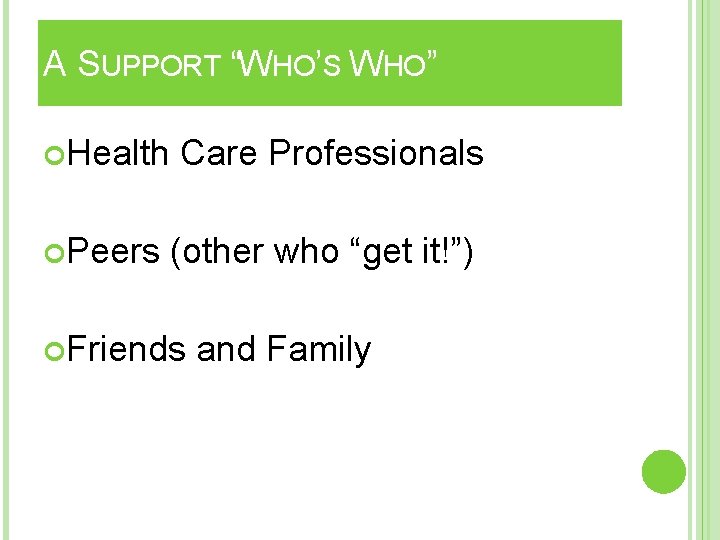
A SUPPORT “WHO’S WHO” Health Peers Care Professionals (other who “get it!”) Friends and Family
Remember your feelings about your cancer experience will likely change day to day. Learn how to care for yourself. Try not to ignore your need to share your worries, fears and questions. Often talking with others helps you work through concerns or uncertainties in a natural way. Listen to yourself. Come to understand what you are feeling, thinking and needing. Try not to put on a “happy face” if you are not feeling that way. Your true feelings are more helpful to everyone.