
The Family Development Matrix Pathway Project Project Contacts

- Slides: 21
The Family Development Matrix Pathway Project
Project Contacts and Trainers Jerry Endres, Endres M. S. W. Project Director FDM jendres@csumb. edu 530 -938 -3867 Zuleima Arevalo, M. S. W. Database Trainer zarevalo@csumb. edu
Project Goals • To build capacity to use an integrated outcomes tool for planning, assessment and evaluation • To partner with other agencies and community systems to develop shared outcomes • To conduct research and provide a framework of information for a pathway to prevent child abuse and to keep children in stable and nurturing homes
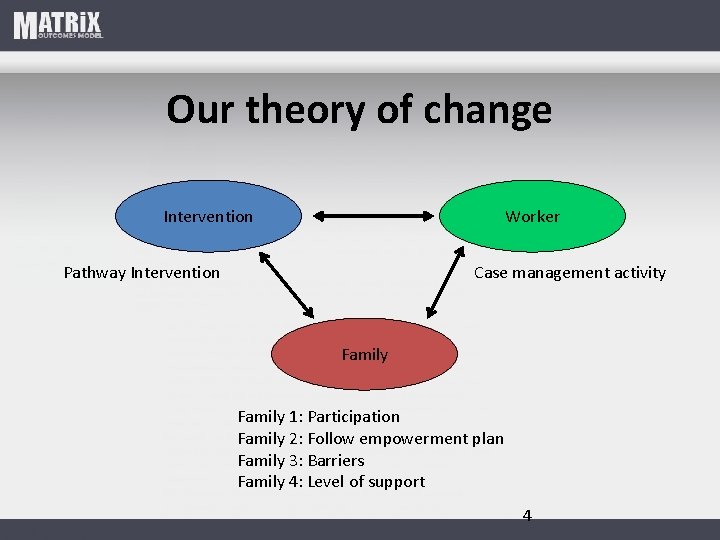
Our theory of change Intervention Worker Pathway Intervention Case management activity Family 1: Participation Family 2: Follow empowerment plan Family 3: Barriers Family 4: Level of support 4
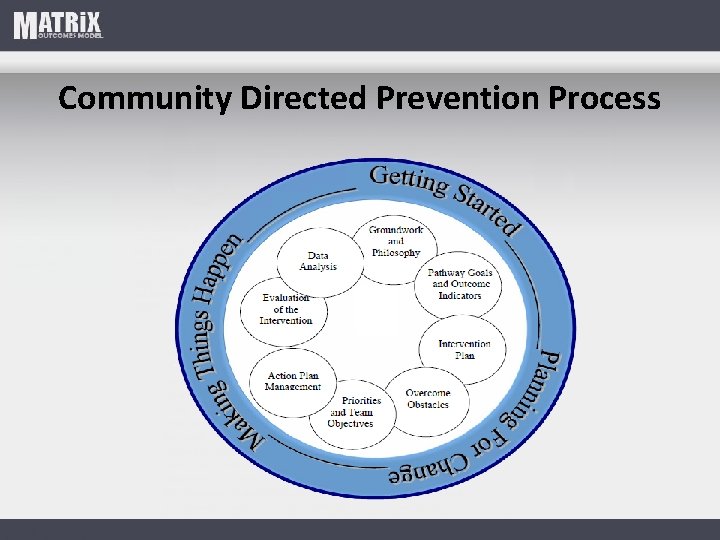
Community Directed Prevention Process
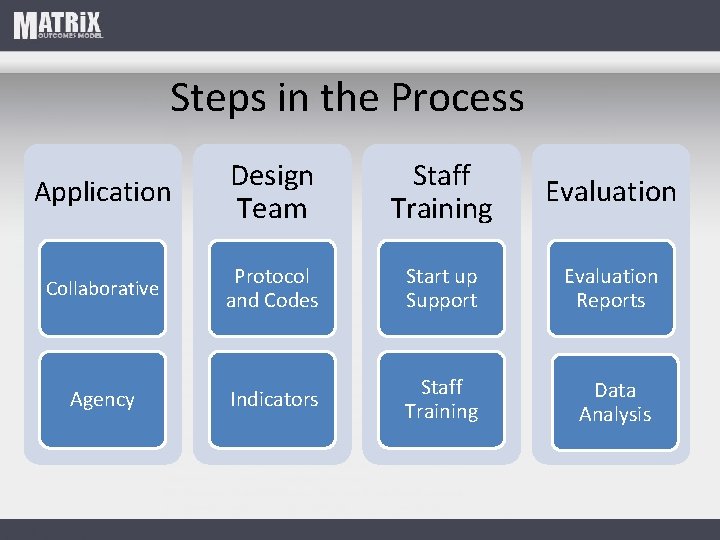
Steps in the Process Application Design Team Staff Training Evaluation Collaborative Protocol and Codes Start up Support Evaluation Reports Agency Indicators Staff Training Data Analysis
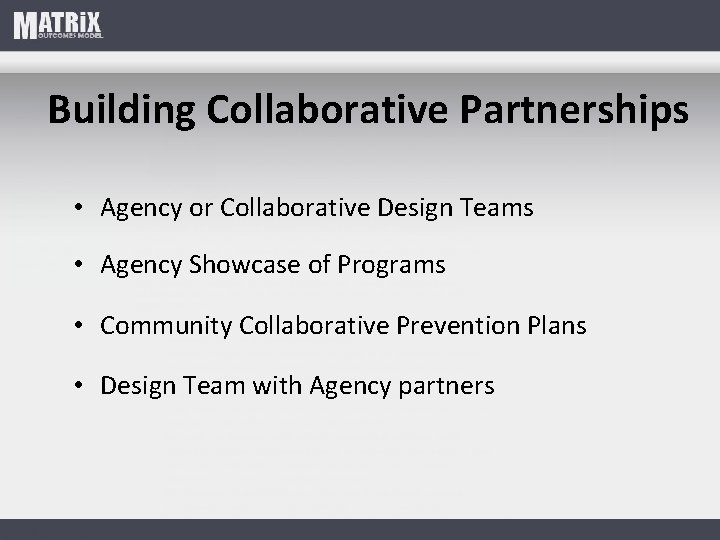
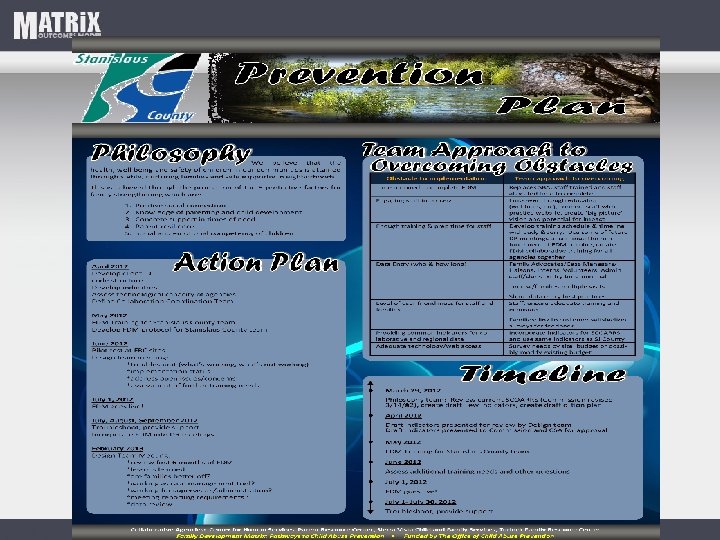
Building Collaborative Partnerships • Agency or Collaborative Design Teams • Agency Showcase of Programs • Community Collaborative Prevention Plans • Design Team with Agency partners
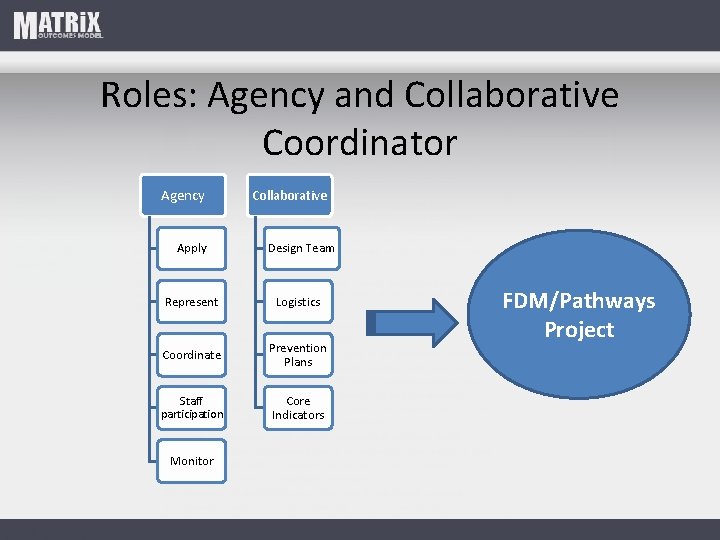
Roles: Agency and Collaborative Coordinator Agency Collaborative Apply Design Team Represent Logistics Coordinate Prevention Plans Staff participation Core Indicators Monitor FDM/Pathways Project
What is the Matrix Outcomes Model? • An evaluation tool for measuring change over time in a family’s situation • A means to design family outcome indicators, record ongoing assessments, guide and track case management activities, and manage data using the Matrix Creator • A method to support the family strengthbuilding relationship
Family Focused Model The Matrix is a tool built on the Principles of Family Support. The family has a central, active role in determining their goals and steps they can take toward achieving their goals.
Benefits of Using the Matrix • Strength-based model • Creates partnership with family • Over time, documents opportunities, obstacles, and progress • Facilitates family ownership of effort • Helps families develop life skills for problem solving, goal setting, decisions and actions
Matrix Structure ØOutcome Categories ØMeasurement indicators ØStatus level indicators ØMeasurements over time to demonstrate change
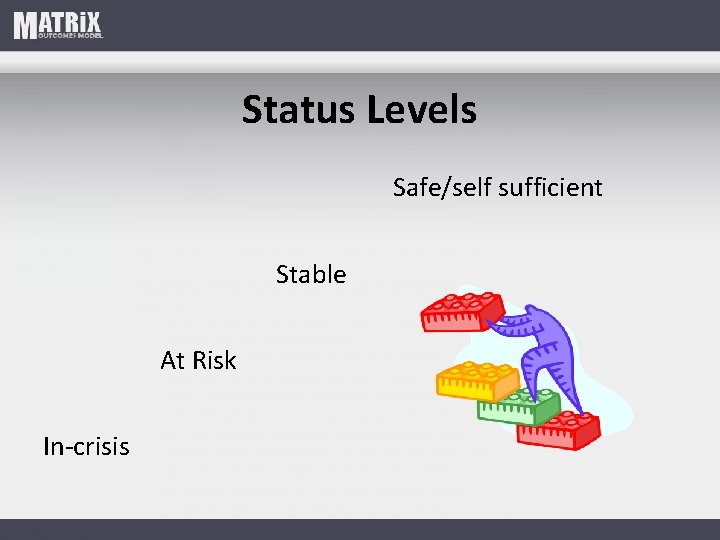
Status Levels Safe/self sufficient Stable At Risk In-crisis
Matrix Assessments Over Time FOUR STEP ASSESSMENT PROCESS 1. 2. 3. 4. Baseline or initial assessment Additional (based on protocol) Ongoing empowerment plan Case management activities
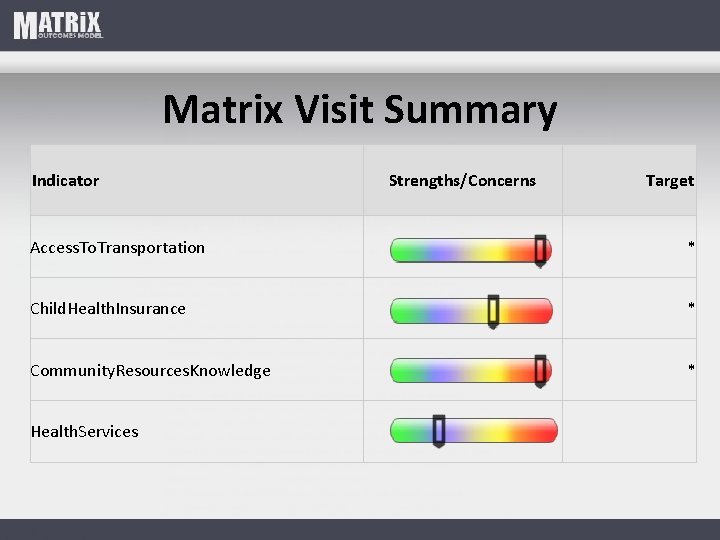
Matrix Visit Summary Indicator Strengths/Concerns Target Access. To. Transportation * Child. Health. Insurance * Community. Resources. Knowledge * Health. Services
Develop a Family Empowerment Plan • True empowerment is allowing the family to make these determinations themselves • The discovery process is where the worker and family members discuss what they hope to accomplish • The family is involved throughout by selecting areas to work on, setting goals and clarifying roles and responsibilities
Worker Protocol • Track Important Case Management Dates • Case Worker Checklist • Evaluate Interventions and Family Participation
Protocols and Codes • Protocols tell you when and how to conduct the assessments • Codes identify the participant in the system and are used to retrieve data for analysis
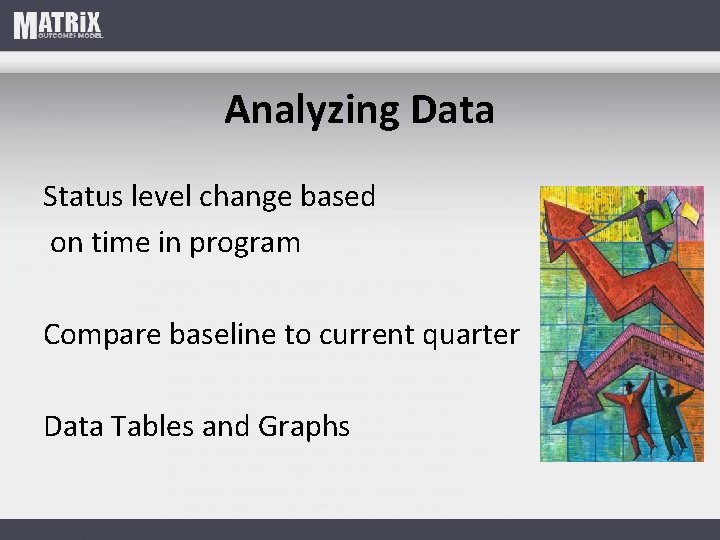
Analyzing Data Status level change based on time in program Compare baseline to current quarter Data Tables and Graphs
On-going Support • On-site agency or collaborative support through training and technical assistance • Conference calls with agency and collaborative coordinators on specific topics • Database Webinars