
The Fall of Troy Death of Achilles Rubens


The Fall of Troy
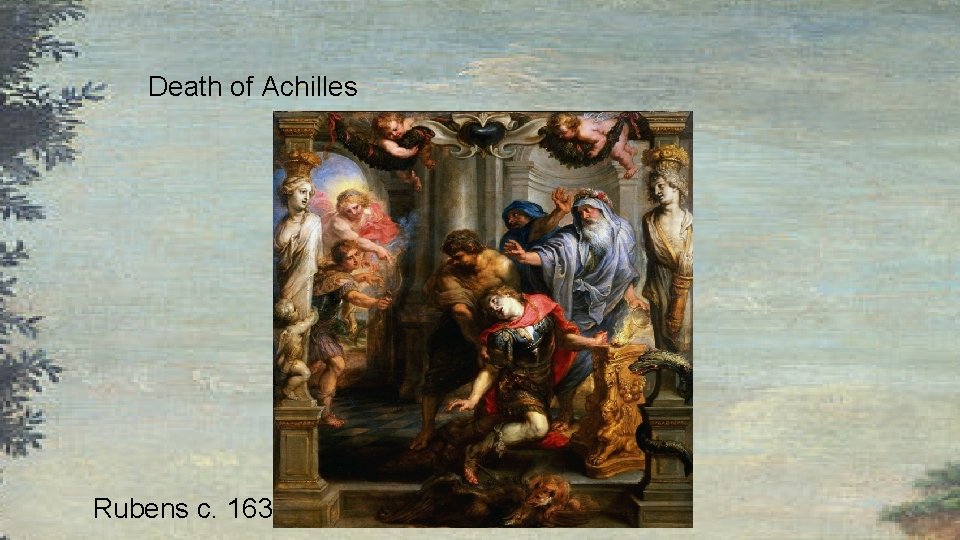
Death of Achilles Rubens c. 1630
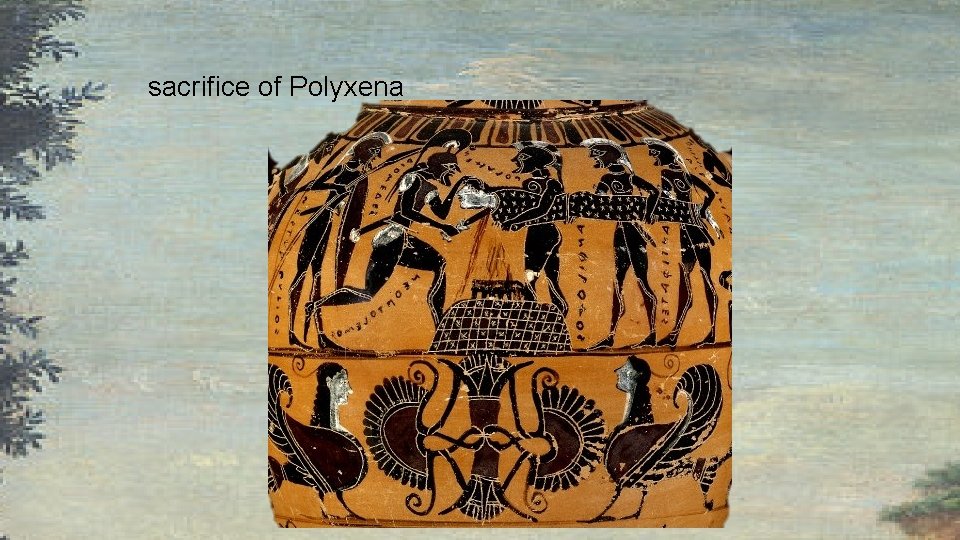
sacrifice of Polyxena
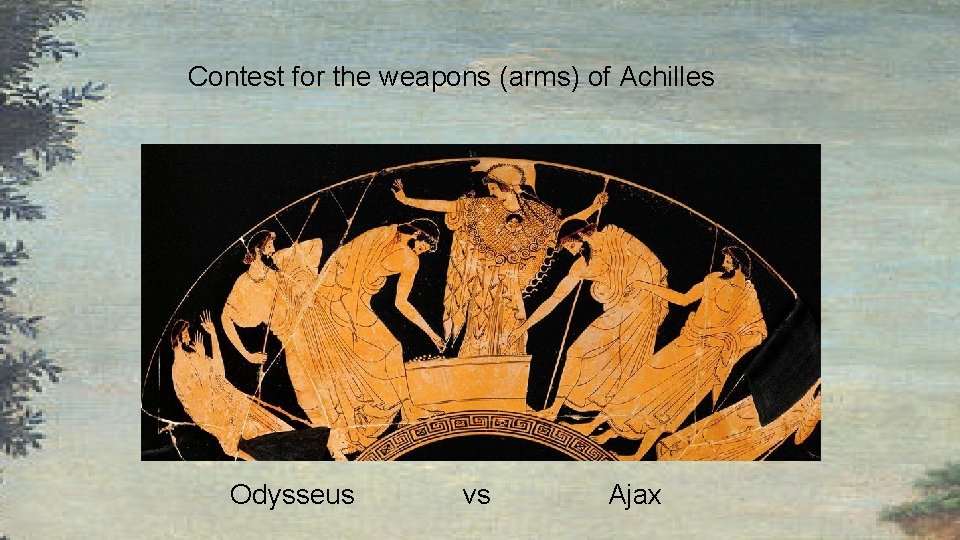
Contest for the weapons (arms) of Achilles Odysseus vs Ajax
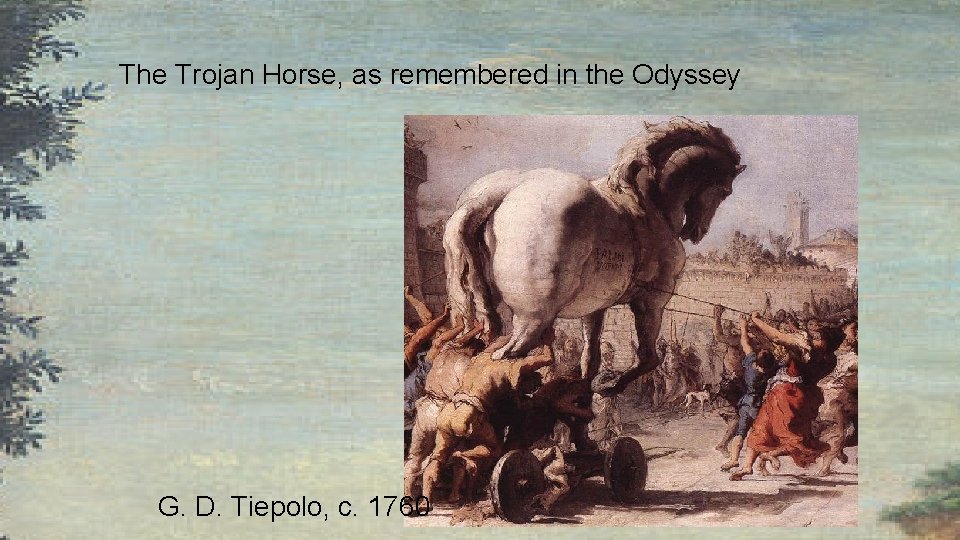
The Trojan Horse, as remembered in the Odyssey G. D. Tiepolo, c. 1760
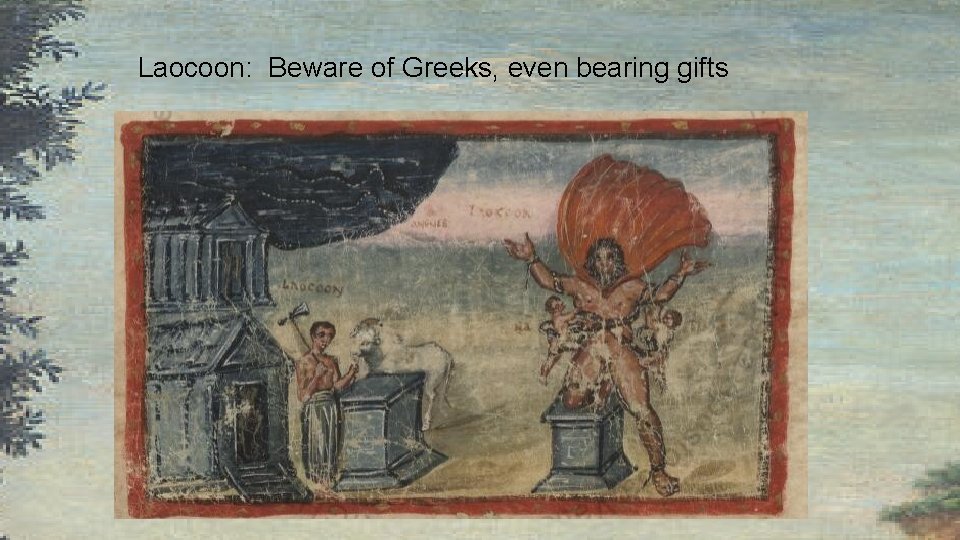
Laocoon: Beware of Greeks, even bearing gifts
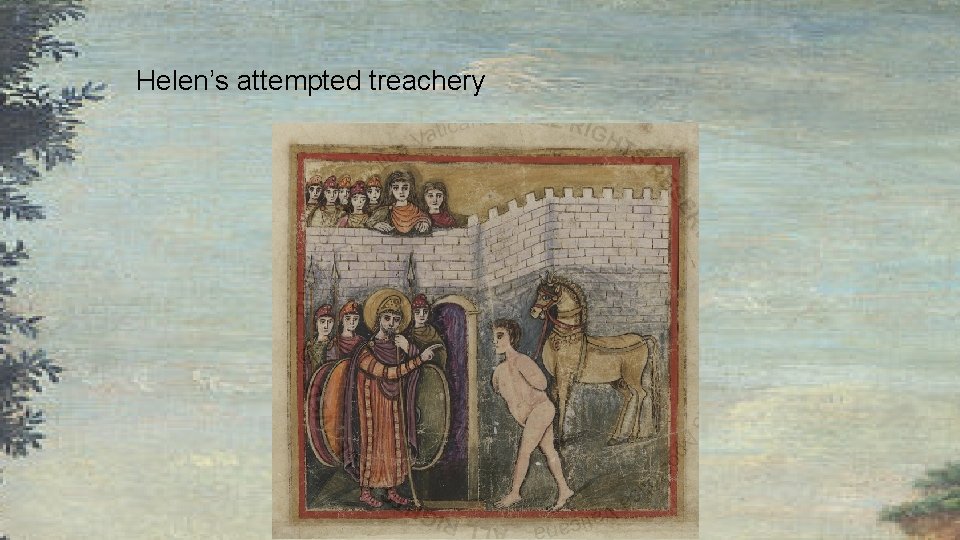
Helen’s attempted treachery
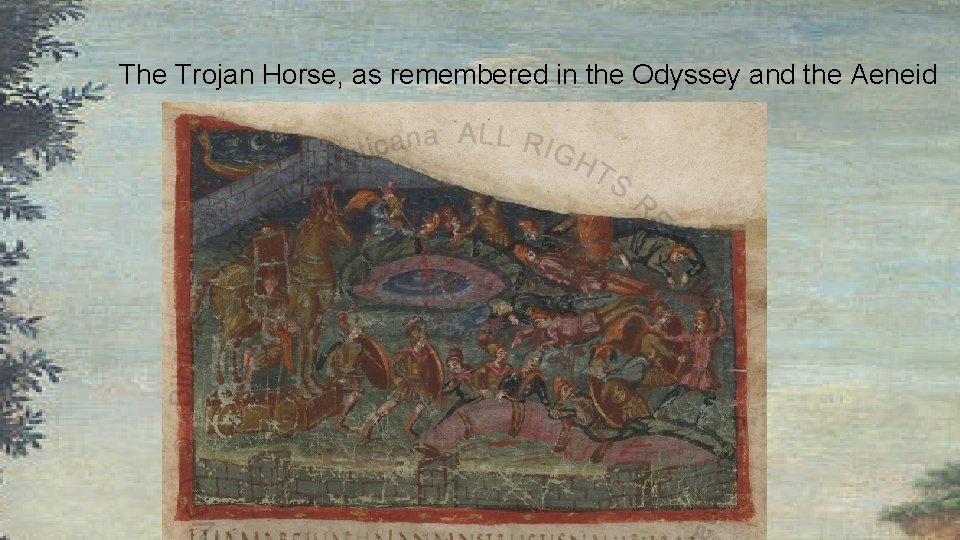
The Trojan Horse, as remembered in the Odyssey and the Aeneid
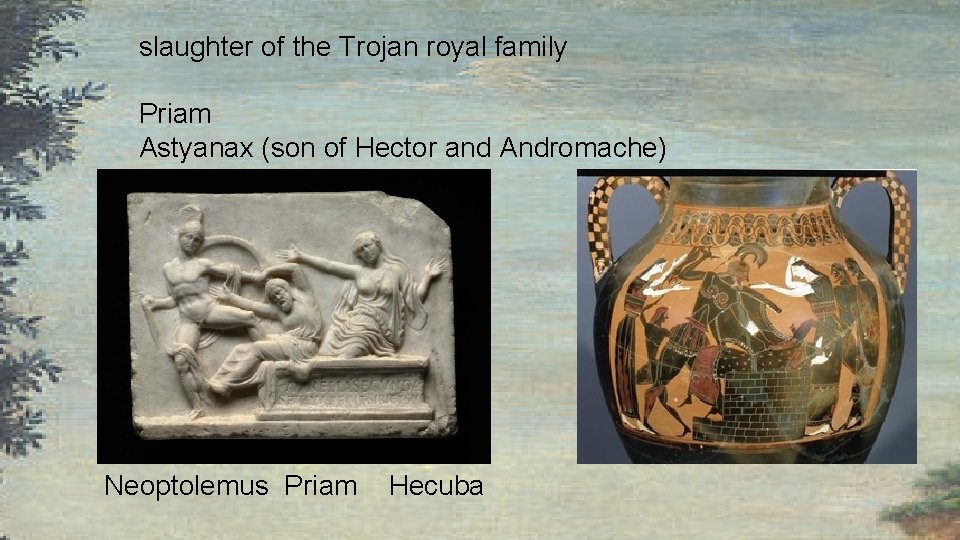
slaughter of the Trojan royal family Priam Astyanax (son of Hector and Andromache) Neoptolemus Priam Hecuba
Archaeological exploration of Troy Heinrich Schliemann location of Troy known since antiquity, celebrates as the site of the war told by Homer conflict zone because of its control of route to Black Sea and inland trade routes memories of conflict preserved in oral tradition
Homecomings of the Greeks from Troy nostos = homecoming (cf. nostalgia, an ache for homecoming)
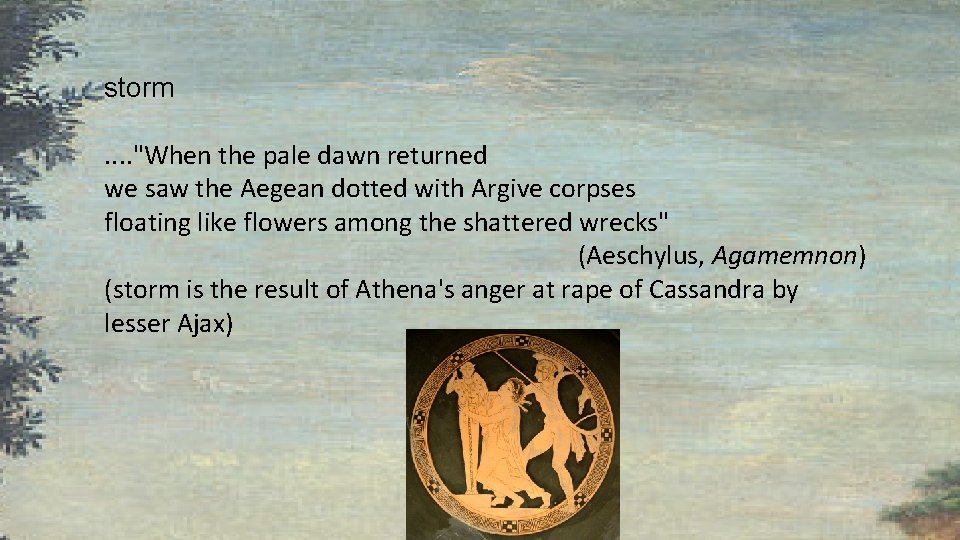
storm. . "When the pale dawn returned we saw the Aegean dotted with Argive corpses floating like flowers among the shattered wrecks" (Aeschylus, Agamemnon) (storm is the result of Athena's anger at rape of Cassandra by lesser Ajax)
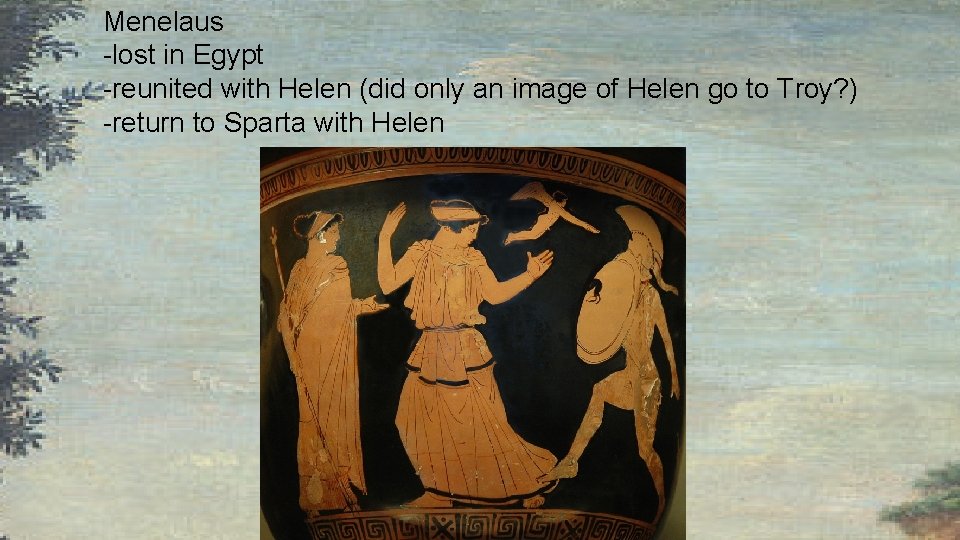
Menelaus -lost in Egypt -reunited with Helen (did only an image of Helen go to Troy? ) -return to Sparta with Helen
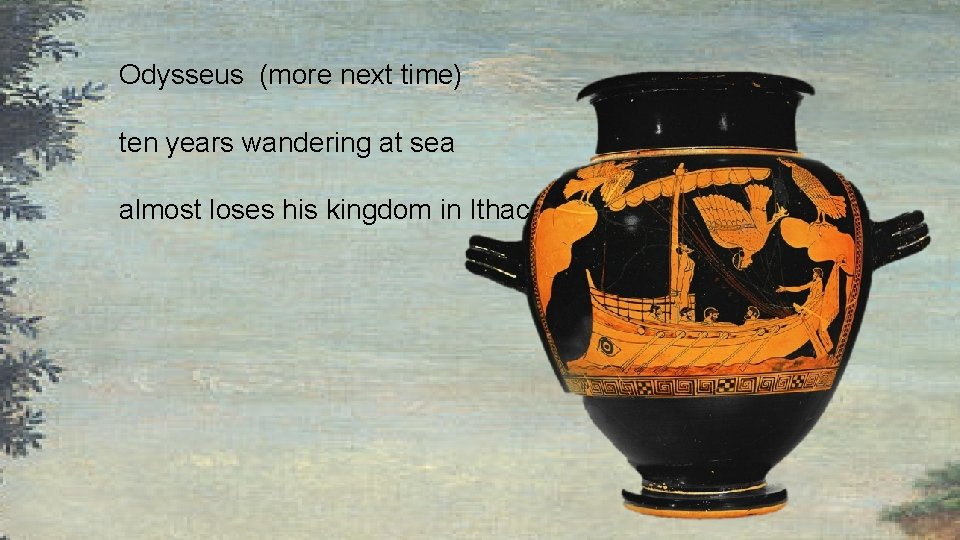
Odysseus (more next time) ten years wandering at sea almost loses his kingdom in Ithaca
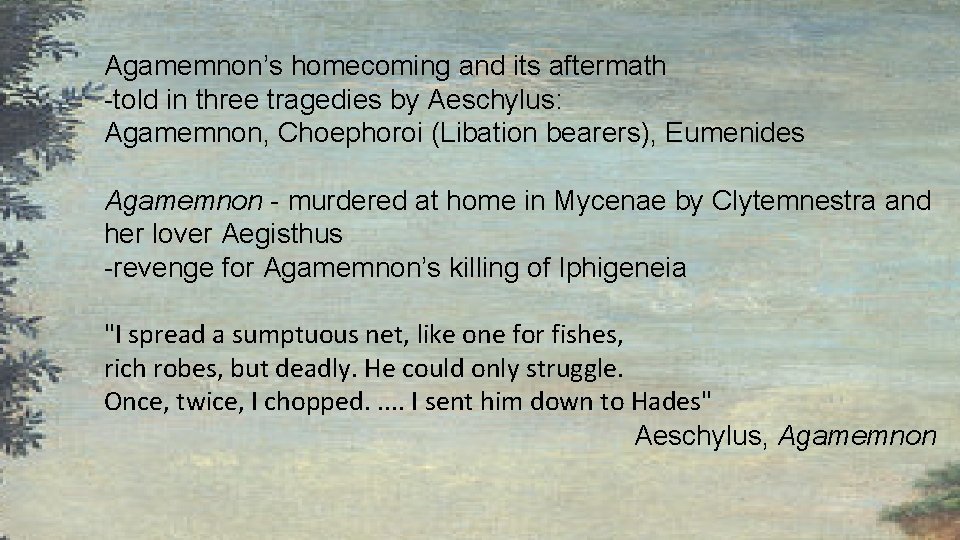
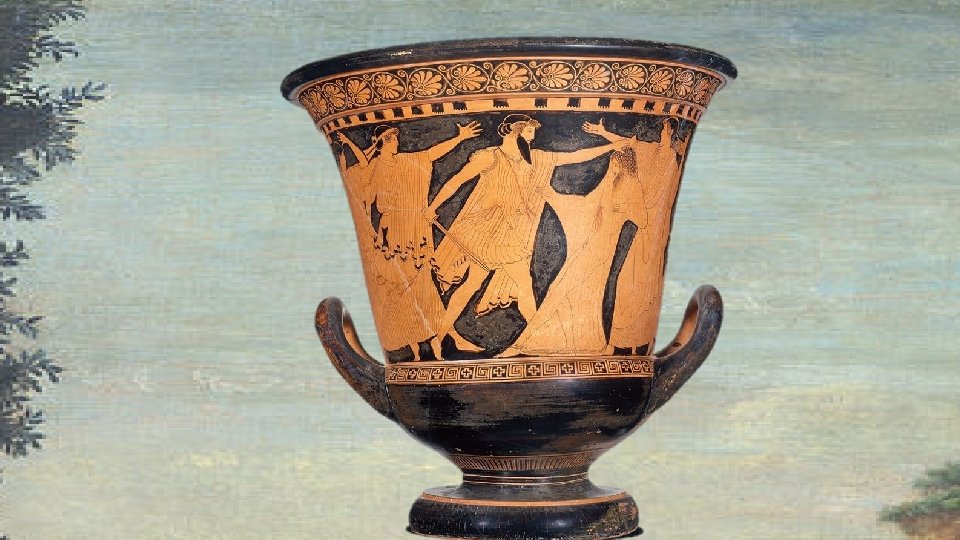
Agamemnon’s homecoming and its aftermath -told in three tragedies by Aeschylus: Agamemnon, Choephoroi (Libation bearers), Eumenides Agamemnon - murdered at home in Mycenae by Clytemnestra and her lover Aegisthus -revenge for Agamemnon’s killing of Iphigeneia "I spread a sumptuous net, like one for fishes, rich robes, but deadly. He could only struggle. Once, twice, I chopped. . . I sent him down to Hades" Aeschylus, Agamemnon
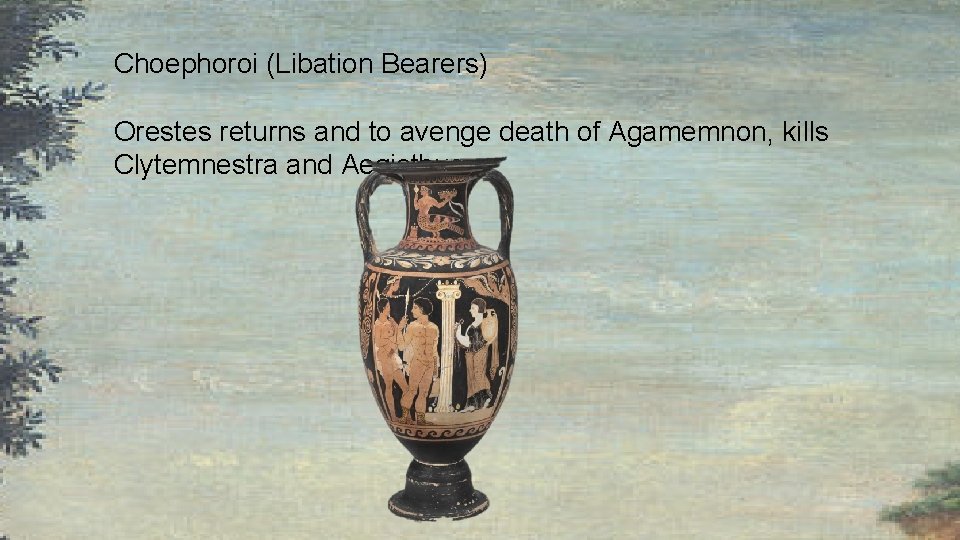
Choephoroi (Libation Bearers) Orestes returns and to avenge death of Agamemnon, kills Clytemnestra and Aegisthus
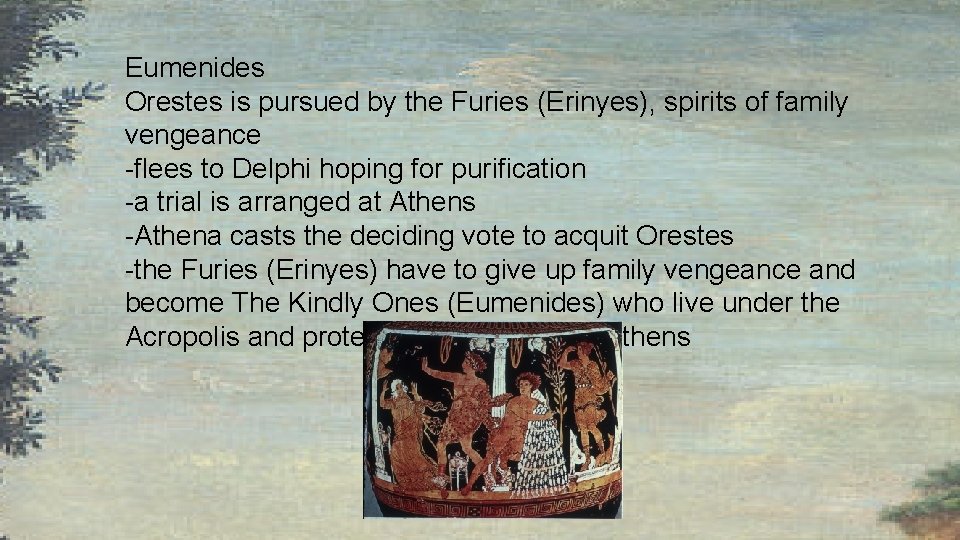
Eumenides Orestes is pursued by the Furies (Erinyes), spirits of family vengeance -flees to Delphi hoping for purification -a trial is arranged at Athens -Athena casts the deciding vote to acquit Orestes -the Furies (Erinyes) have to give up family vengeance and become The Kindly Ones (Eumenides) who live under the Acropolis and protect the whole city of Athens
Apollo defends Orestes' choice to kill Clytemnestra: p. 574 "she who gives birth to what we call 'her child' is not the parent of the new-sown growth; rather, she is its nurse. Its parent is the man who gives his seed to her, a stranger woman, to keep for him, a stranger, as it swells, if so the gods decree. Here is the proof: A male can father childen without the mother-as witness she who stands among you here, Athena, daughter of Olympian Zeus. " Athena casts the deciding vote to acquit Orestes: p. 574 "thus siding with the father, I cannot place an equal value on a woman's death, who killed her husband, guardian of the home"
430
- Slides: 21