
The Fall of the Roman Republic Standards 6
The Fall of the Roman Republic Standards: 6. 7. 3, 6. 7. 4, 6. 7. 7, and 7. 7. 1 Chapter 8: Sect. 3 and 4 Rachel Nolan- Group 3
Trouble in the Republic • Rich vs Poor • Particians- Rich people who owned large farms – Ran the Senate – Handled Rome’s finances and directed its wars – 100 s BC = farmers falling into debt and poverty – Farmers fought in wars and were unable to farm = debt.
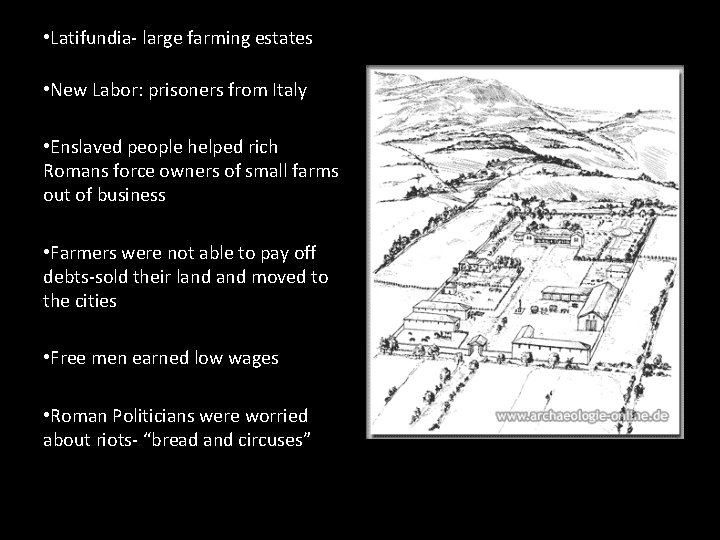
• Latifundia- large farming estates • New Labor: prisoners from Italy • Enslaved people helped rich Romans force owners of small farms out of business • Farmers were not able to pay off debts-sold their land moved to the cities • Free men earned low wages • Roman Politicians were worried about riots- “bread and circuses”
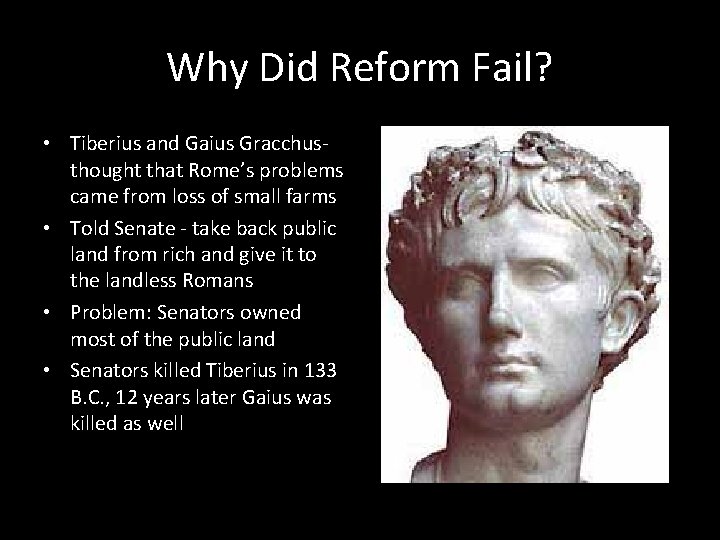
Why Did Reform Fail? • Tiberius and Gaius Gracchusthought that Rome’s problems came from loss of small farms • Told Senate - take back public land from rich and give it to the landless Romans • Problem: Senators owned most of the public land • Senators killed Tiberius in 133 B. C. , 12 years later Gaius was killed as well
The Army Enters Politics • Military leader, Marius, becomes consul in 107 B. C. • Recruited soldiers from the poor – Paid them wages – Promised them land • Changed the Roman army – No longer citizen volunteers, they were paid professional soldiers • General Sulla challenged Marius’ new army in 82 B. C.
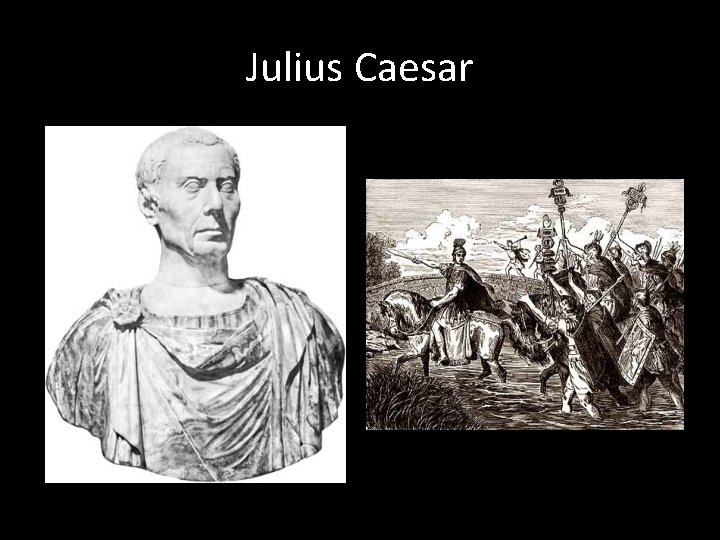
Julius Caesar
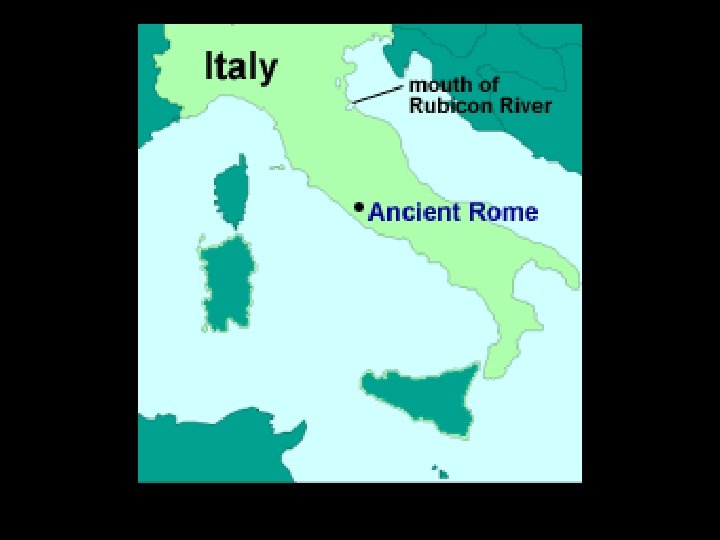
Julius Caesar • One of the three men on top in 60 BC – Pompey (Spain), Crassus (Syria), Caesar (Gaul) • Formed the First Triumvirate to rule Rome – Triumvirate: a political alliance of three people • 49 B. C. , Senate ordered Caesar to give up his army and come home • Led his men into Italy crossing Rubicon – “crossing the Rubicon”
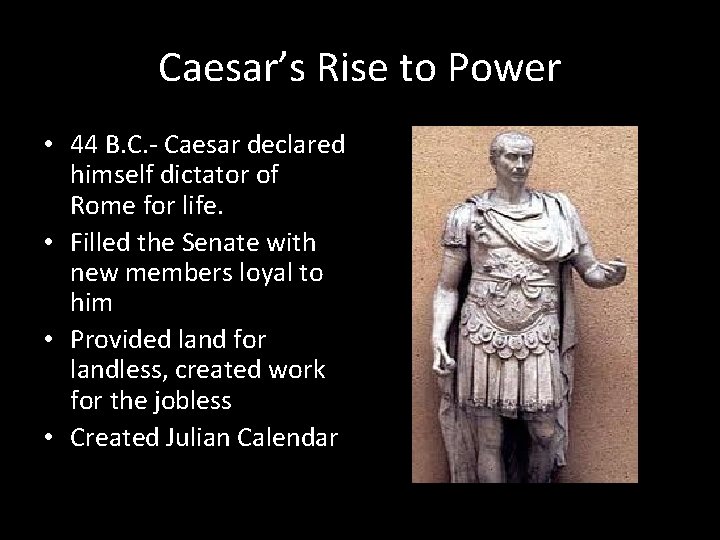
Caesar’s Rise to Power • 44 B. C. - Caesar declared himself dictator of Rome for life. • Filled the Senate with new members loyal to him • Provided land for landless, created work for the jobless • Created Julian Calendar
Rise to Power Cont’d…. • His enemies believed he wanted to be King • Opponents- Brutus and Cassius, plotted to kill him • “Beware the Ides of March” (March 15) • Caesar stabbed to death in 44 B. C.
Caesar: Reformer or Dictator? Reformer Dictator • Won support of soldiers • Ended rule of Roman nobles • Brought order and peace to Rome • Restored cities that had been destroyed • Strengthened and expanded the state of Rome • Created jobs for the poor • Granted citizenship to people from foreign countries/states • Refused to follow the Senate’s order • Started civil war-destroyed the republic • More senators for more supporter • Treated his enemies badly • Punished people who followed the old tradition • Sought glory for himself • Weakened the Senate for absolute power
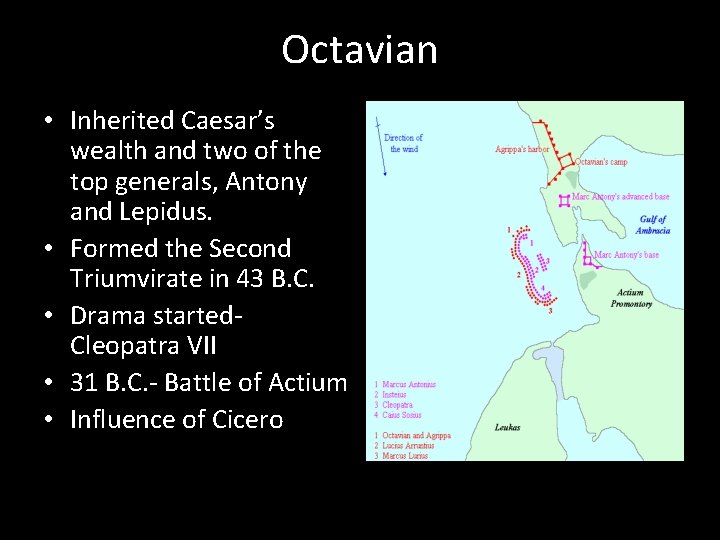
Octavian • Inherited Caesar’s wealth and two of the top generals, Antony and Lepidus. • Formed the Second Triumvirate in 43 B. C. • Drama started. Cleopatra VII • 31 B. C. - Battle of Actium • Influence of Cicero
Octavian becomes Augustus • 27 B. C. Octavian restored the Republic • Cicero- political leader, writer and public speaker • Imperator-”commander in chief” or “emperor” • Took the title, Augustus“the reverend or majestic one” • Pax Romana – “Roman Peace” Achievements • Provided security by having 150, 000 soldiers • Created the Praetorian Guard • Conquered Spain and Gaul • Built palaces, fountains, and public building • Appointed a governor • Reformed the Roman tax system and legal system
The Julio-Claudian Emperors • Tiberius (14 -37 A. D. ) – Military leader; regulated business to prevent fraud; kept Rome’s economy • Caligula (37 -41 A. D. ) – Abolished sales tax; allowed people in exile to return; increased court system’s power • Claudius (41 -54 A. D. ) – Built new harbor at Ostia and new aqueduct for Rome; conquered most of Britain • Nero (54 -68 B. C) – Constructed many new buildings; gave slaves the right to file complaints; assisted cities suffering from disasters
The “Good Emperors” • Nerva, Trajan, Hadrian, Antoninus Pius, and Marcus Aurelius (96 -180 A. D. ) • Agriculture flourished and trade increased • They did not abuse their power • Trajan- gave money to the poor parents to help them raise and educate their children • Antoninus- passed laws to help the orphans • Built arches and monuments, bridges and roads, and harbors and aqueducts
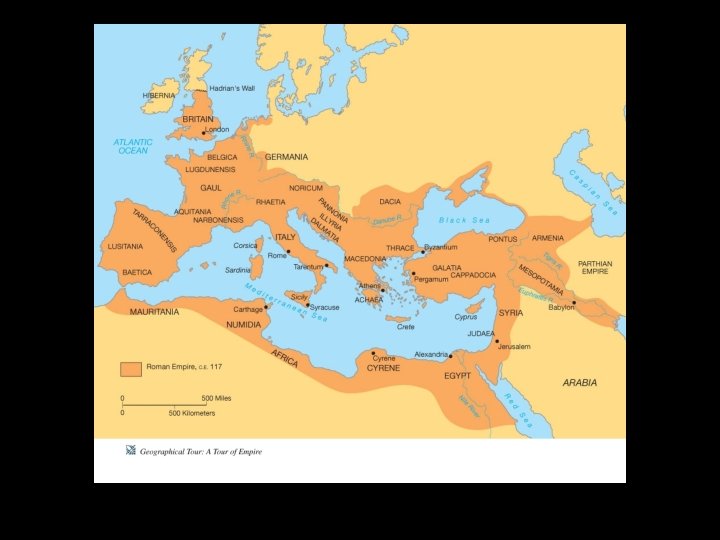
• Trajan made the empire reach it’s largest size under his rule • Hadrian set the empire’s northern boundaries at the Rhine River and Danube River • Hadrian built Hadrian’s Wall across northern Britain to keep out the Picts and the Scots • A. D. 100 s, Rome was one of the greatest empires, had 3. 5 million square miles of land. • A. D. 212, every free person was made a Roman citizen
Economy • Northern Italy- small farms • Central and Southern Italy- latifundias worked by enslaved people • Produced grapes and olives mainly • Agriculture and Industry- IMPORTANT • Potters, weavers, and jewelers—cities became centers for making glass, bronze, and brass
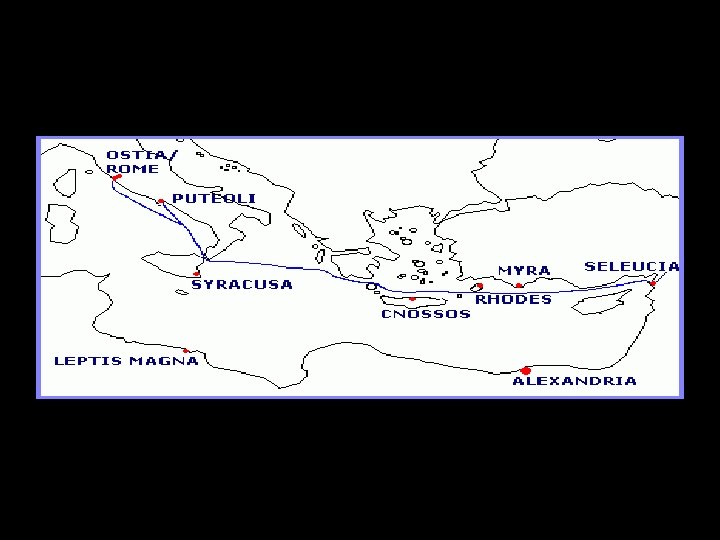
Economy • Two of the largest port cities- Puteoli and Ostia • Had luxury items: silk from China, spices from India, British tin, Spanish lead, and iron from Gaul • During Pax Romana, Rome’s roads reached a total length of 50, 000 miles

Study Central • http: //www. glencoe. com/apps/studycentral/ 0078688736/core_content. html • Quizzes, Notes, Review, and Links!
- Slides: 21