
The Eye Part 1 Structure and Function Anatomy
- Slides: 19
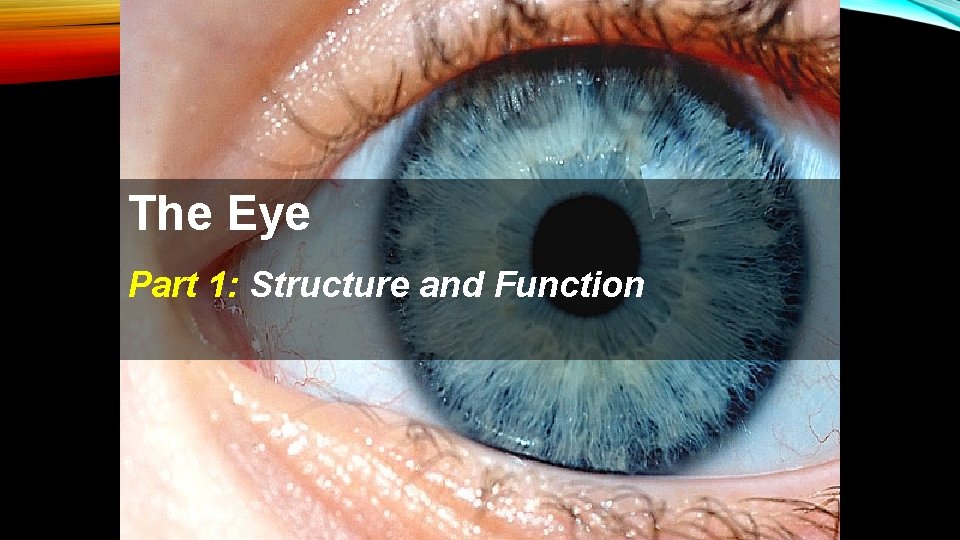
The Eye Part 1: Structure and Function
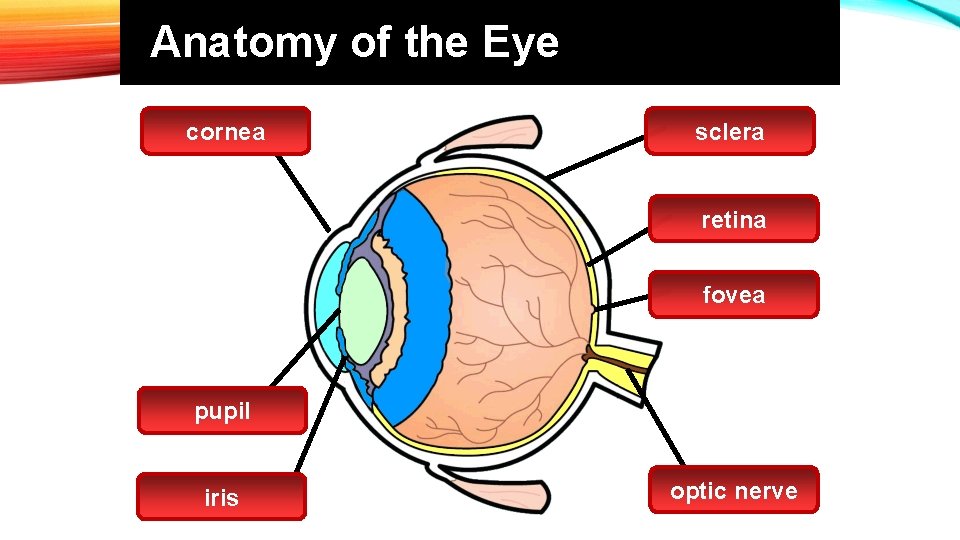
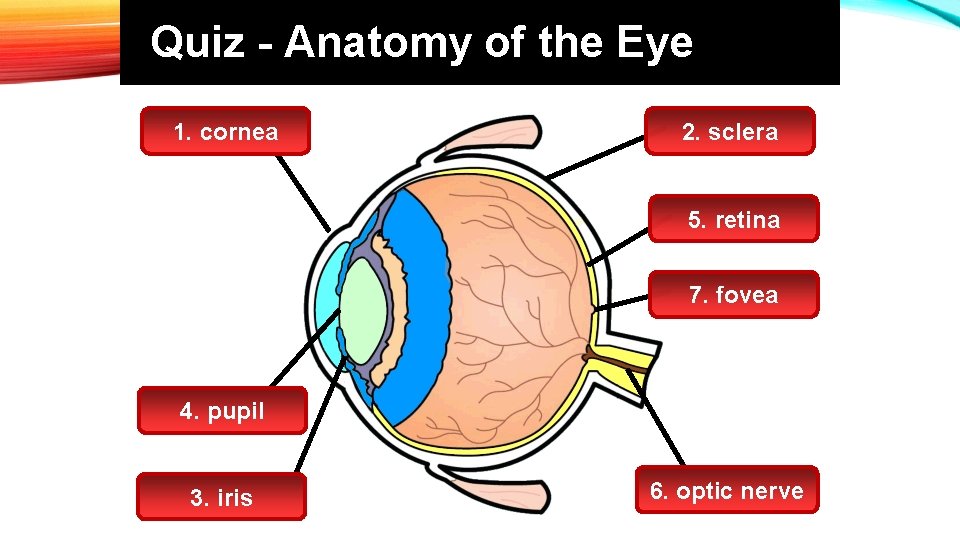
Anatomy of the Eye cornea sclera retina fovea pupil iris optic nerve
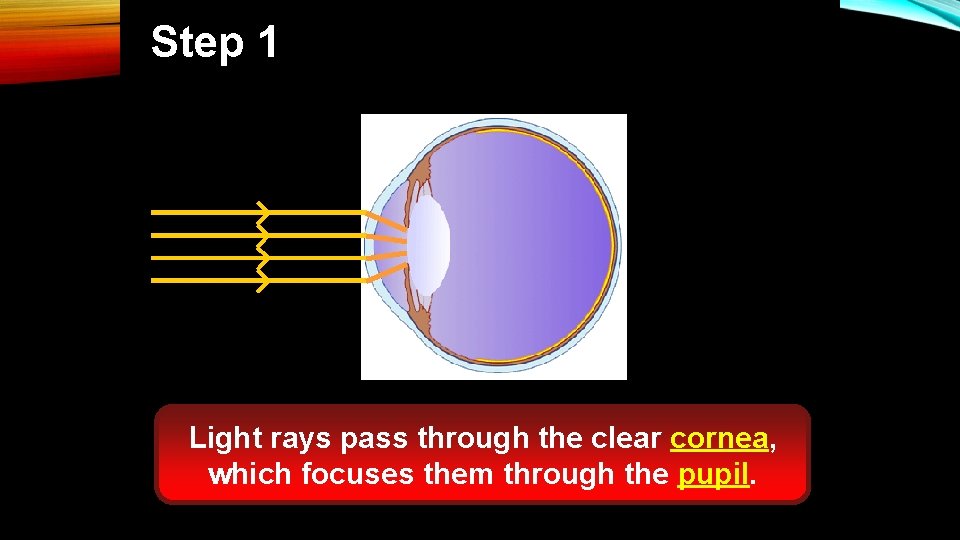
Step 1 Light rays pass through the clear cornea, which focuses them through the pupil.
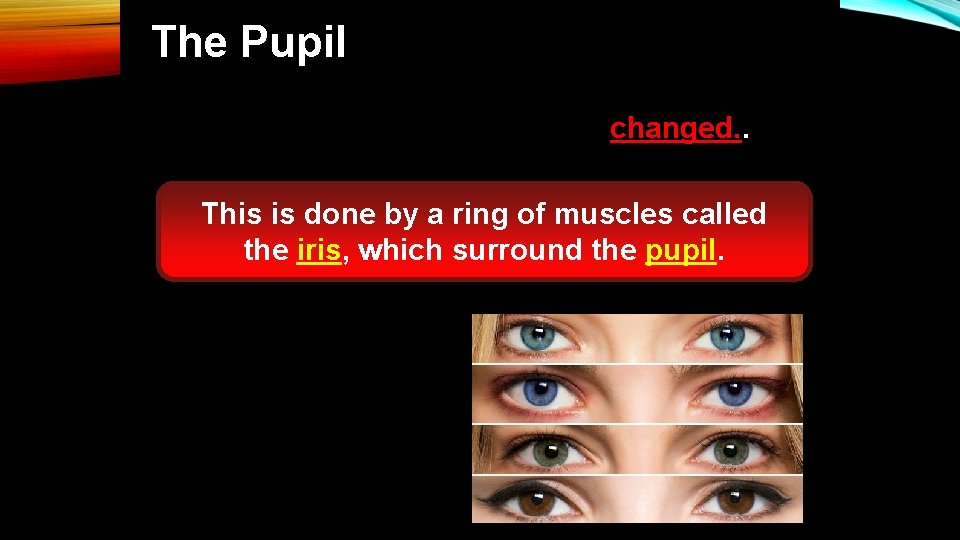
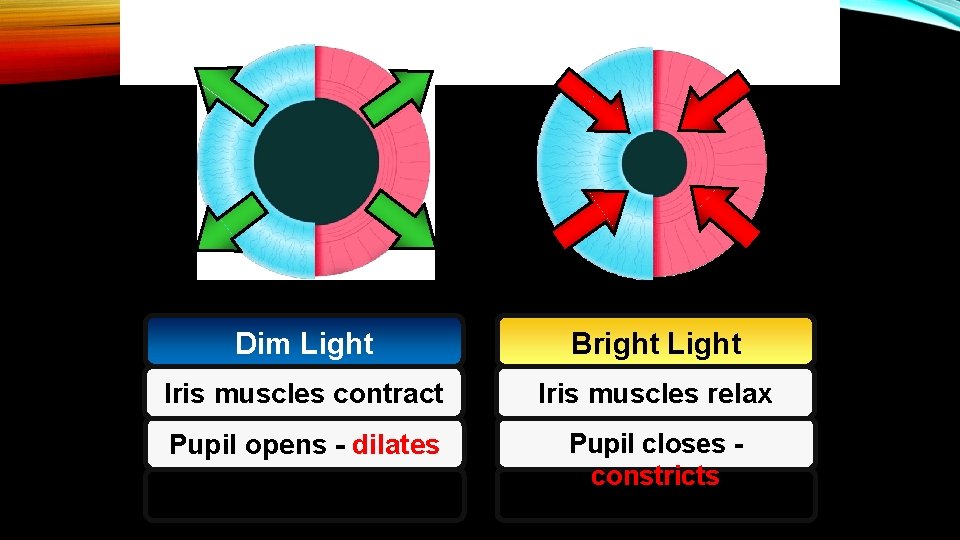
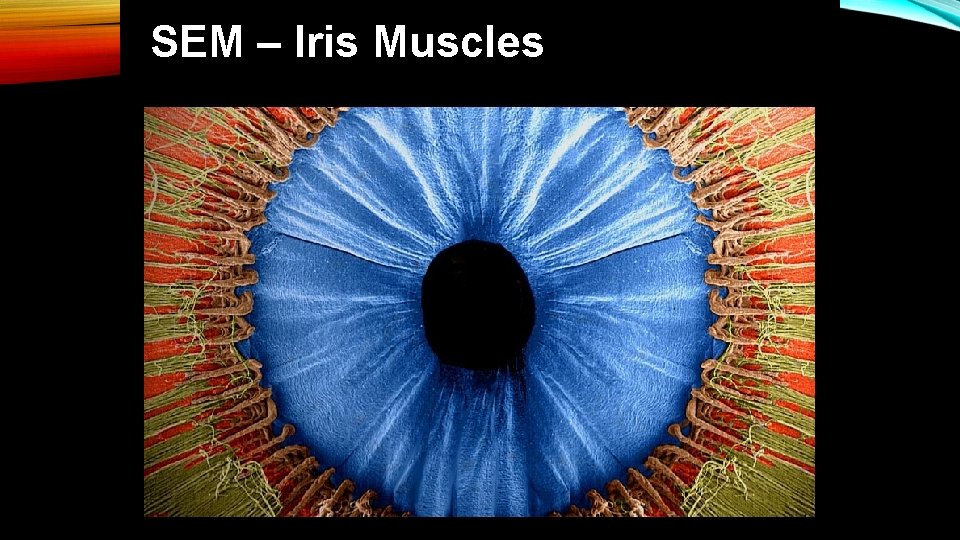
The Pupil The size of the pupil can be changed. . This is done by a ring of muscles called the iris, which surround the pupil. The color of the iris muscles vary, which gives people different eye colors.
Dim Light Bright Light Iris muscles contract Iris muscles relax Pupil opens - dilates Pupil closes constricts Lets in less light Lets in more light
SEM – Iris Muscles
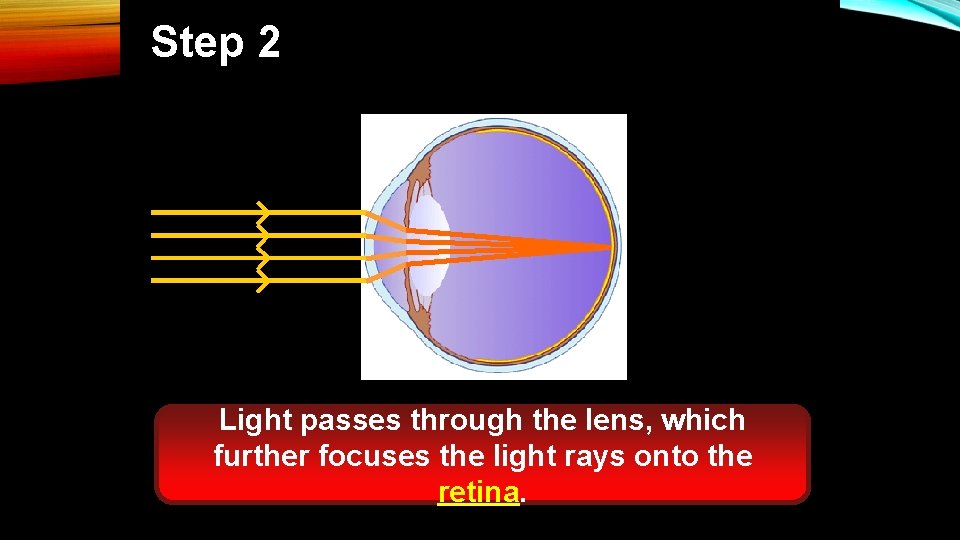
Step 2 Light passes through the lens, which further focuses the light rays onto the retina.
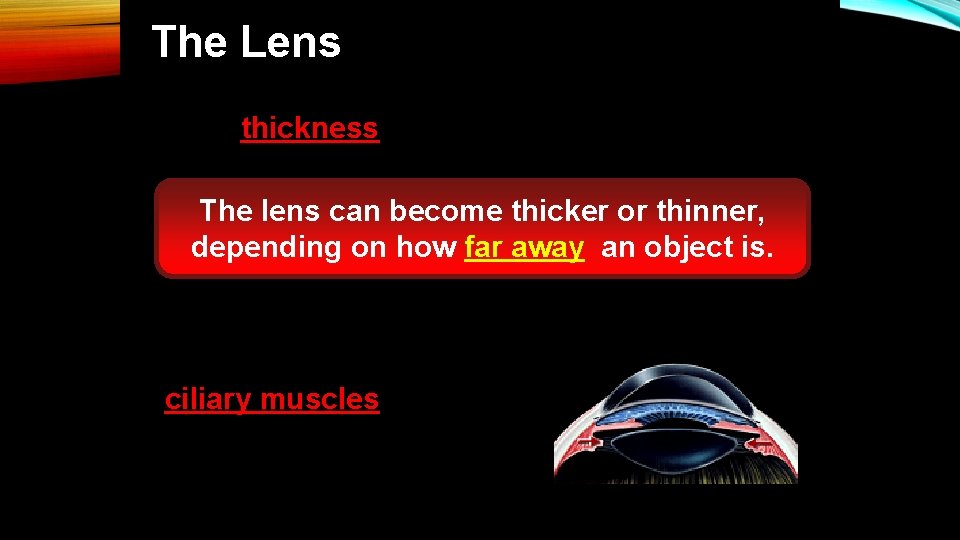
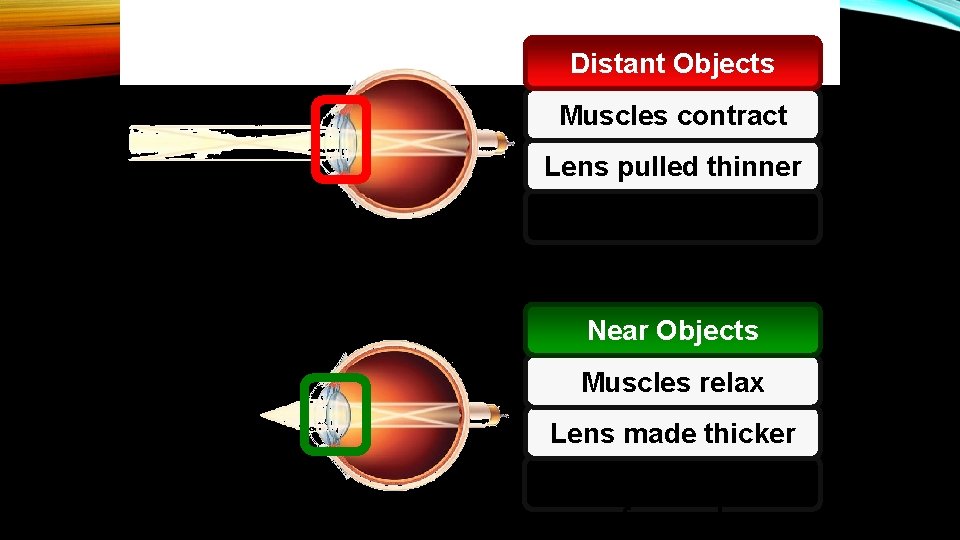
The Lens The thickness of the lens can be changed. The lens can become thicker or thinner, depending on how far away an object is. This is done by ciliary muscles that pull the lens from above and from below.
Distant Objects Muscles contract Lens pulled thinner Focus shifts back Near Objects Muscles relax Lens made thicker Focus shifts forward
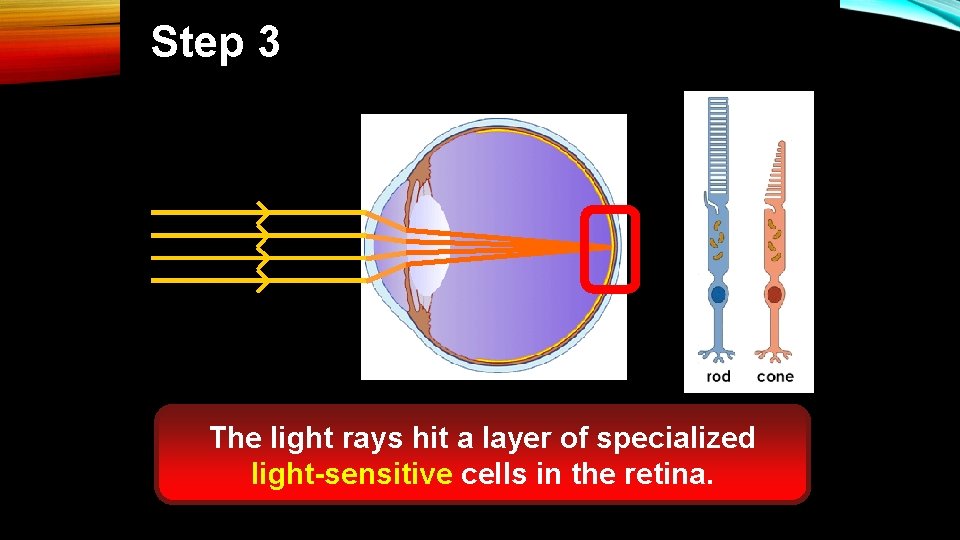
Step 3 The light rays hit a layer of specialized light-sensitive cells in the retina.
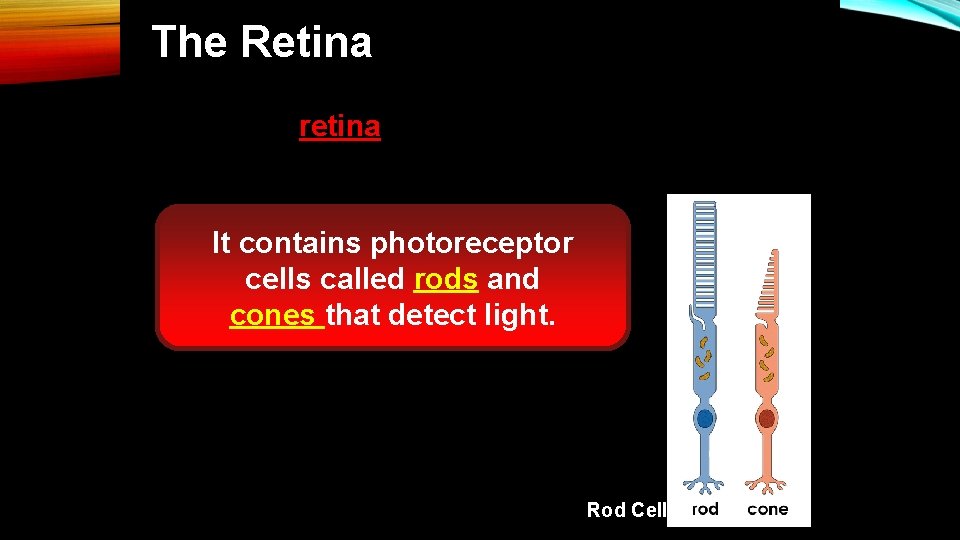
The Retina The retina is a layer of specialized cells at the back of the eye. It contains photoreceptor cells called rods and cones that detect light. Rods and cones detect different information about the light that hits them. . . Rod Cell Cone Cell
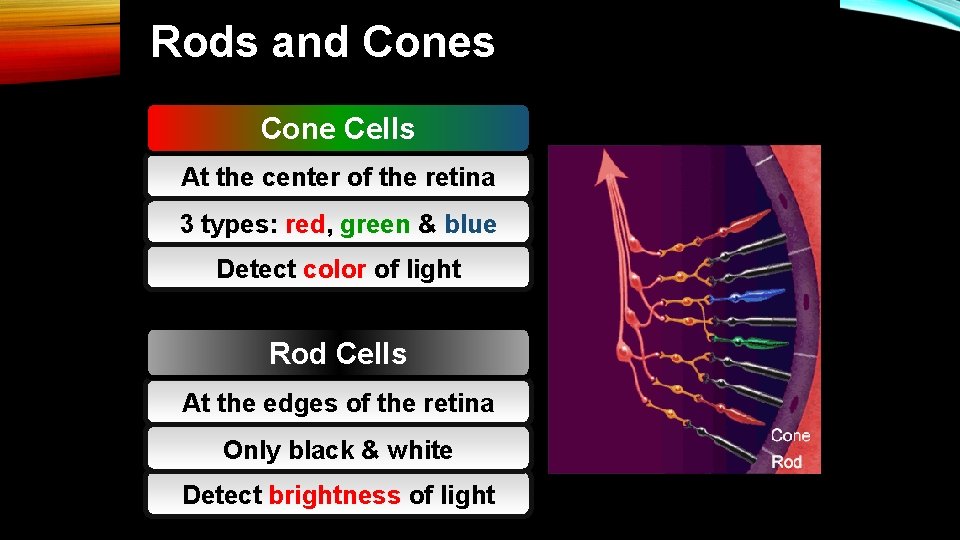
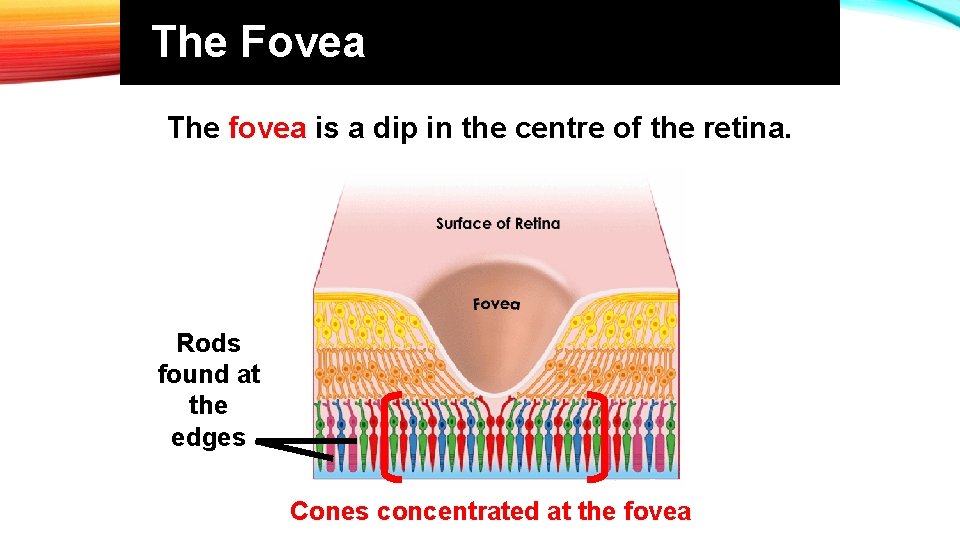
Rods and Cones Cone Cells At the center of the retina 3 types: red, green & blue Detect color of light Rod Cells At the edges of the retina Only black & white Detect brightness of light
The Fovea The fovea is a dip in the centre of the retina. Cones are concentrated in the fovea; most of our color vision occurs here.
The Fovea The fovea is a dip in the centre of the retina. Rods found at the edges Cones concentrated at the fovea
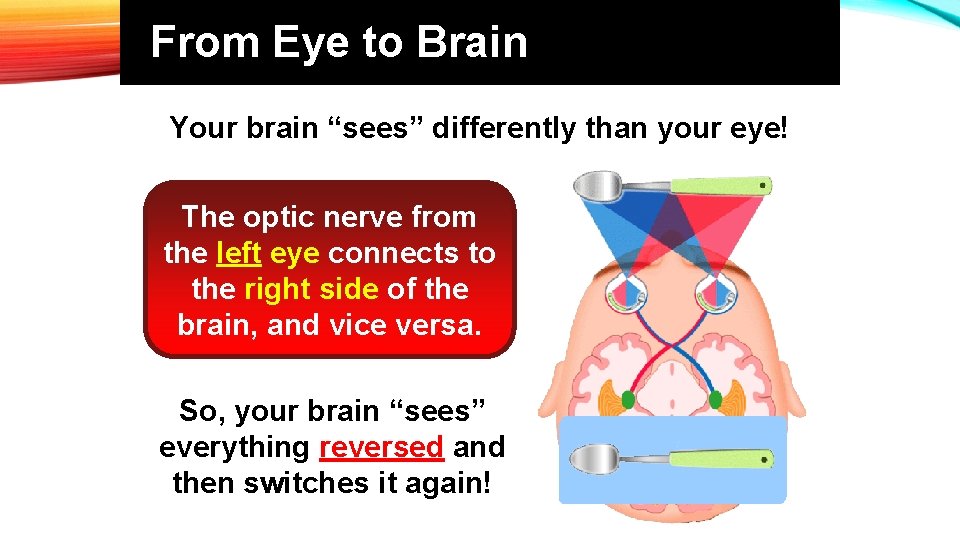
From Eye to Brain Your brain “sees” differently than your eye! The optic nerve from the left eye connects to the right side of the brain, and vice versa. So, your brain “sees” everything reversed and then switches it again!
Summary: How We See 1. Light rays enter the eye through the cornea, a convex lens that focuses the light slightly. 2. They pass through a hole in the eye, called the pupil, which is controlled by a ring of muscles called the iris. 3. The light passes through the lens, which further focuses the light rays onto the retina. 4. The retina is a layer of light-sensitive cells: cones for color and rods for brightness 5. The rods and cones send electrical impulses to the brain along the optic nerve. 6. The brain interprets the signals as visual
Any Questions?
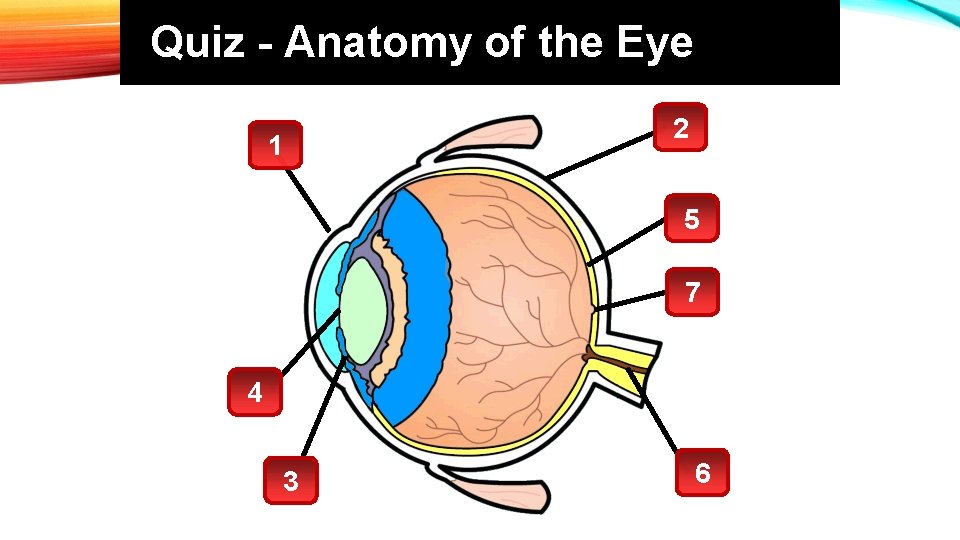
Quiz - Anatomy of the Eye 2 1 5 7 4 3 6
Quiz - Anatomy of the Eye 1. cornea 2. sclera 5. retina 7. fovea 4. pupil 3. iris 6. optic nerve