
The Eye and Sight Orbital Cavity Overview Structures
The Eye and Sight
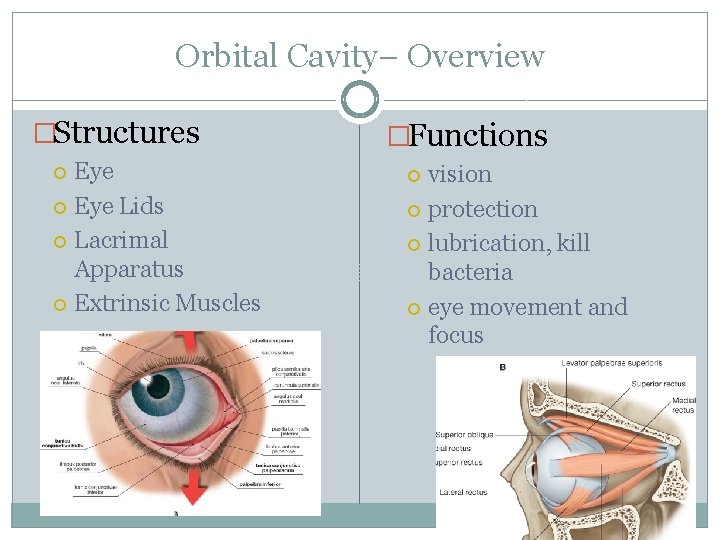
Orbital Cavity– Overview �Structures Eye Lids Lacrimal Apparatus Extrinsic Muscles �Functions vision protection lubrication, kill bacteria eye movement and focus
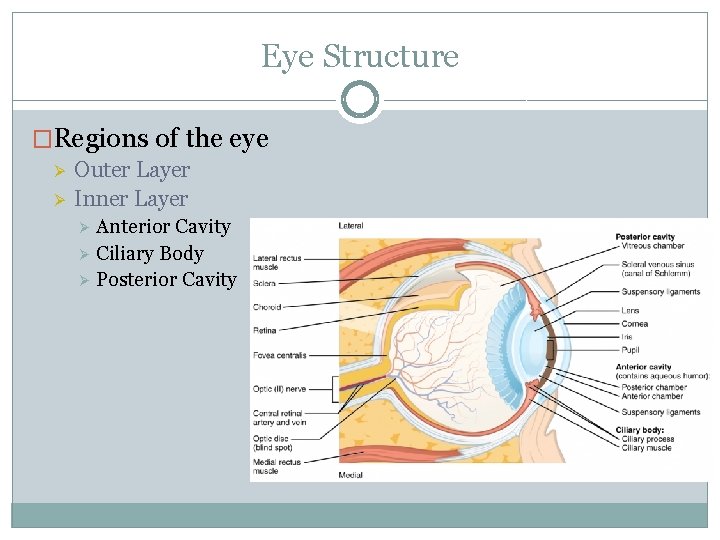
Eye Structure �Regions of the eye Ø Ø Outer Layer Inner Layer Anterior Cavity Ø Ciliary Body Ø Posterior Cavity Ø
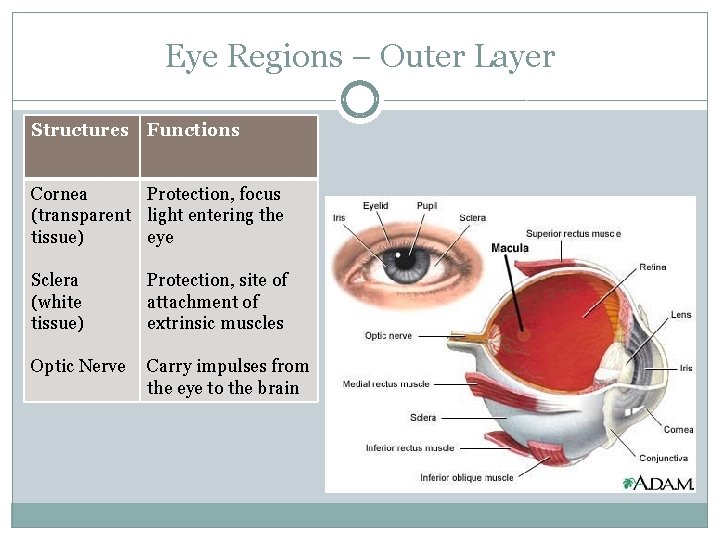
Eye Regions – Outer Layer Structures Functions Cornea Protection, focus (transparent light entering the tissue) eye Sclera (white tissue) Protection, site of attachment of extrinsic muscles Optic Nerve Carry impulses from the eye to the brain
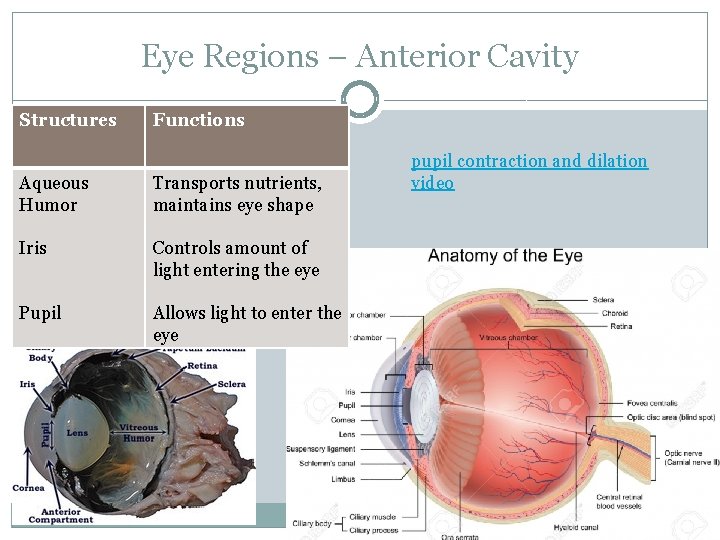
Eye Regions – Anterior Cavity Structures Functions Aqueous Humor Transports nutrients, maintains eye shape Iris Controls amount of light entering the eye Pupil Allows light to enter the eye pupil contraction and dilation video
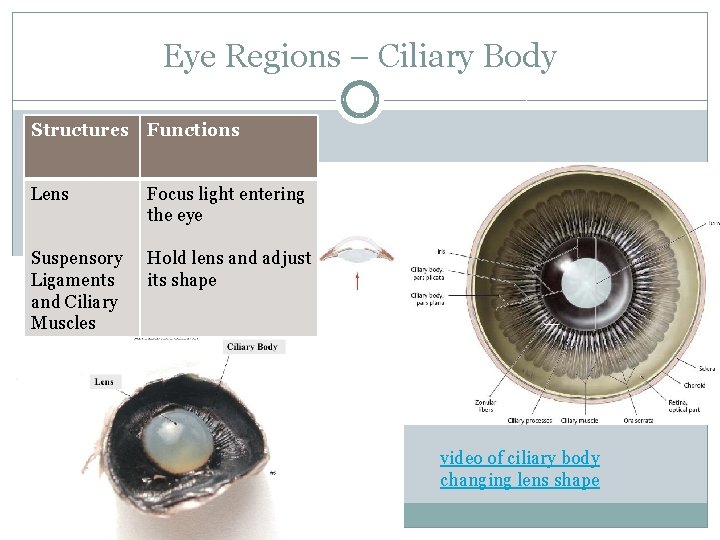
Eye Regions – Ciliary Body Structures Functions Lens Focus light entering the eye Suspensory Ligaments and Ciliary Muscles Hold lens and adjust its shape video of ciliary body changing lens shape
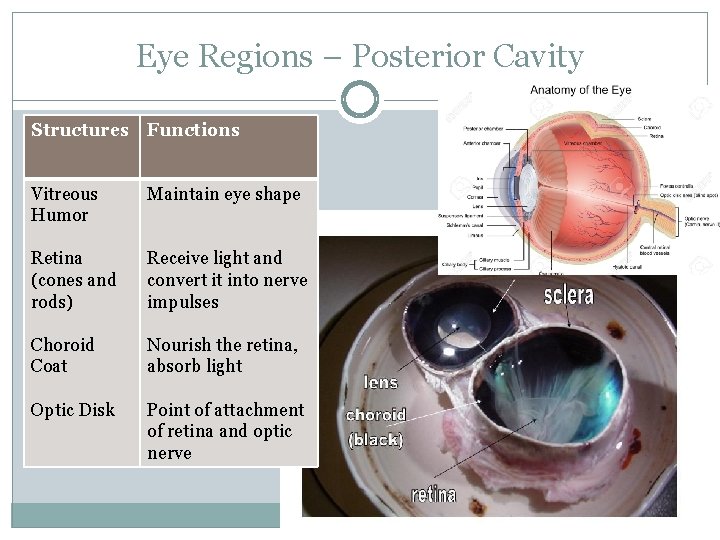
Eye Regions – Posterior Cavity Structures Functions Vitreous Humor Maintain eye shape Retina (cones and rods) Receive light and convert it into nerve impulses Choroid Coat Nourish the retina, absorb light Optic Disk Point of attachment of retina and optic nerve
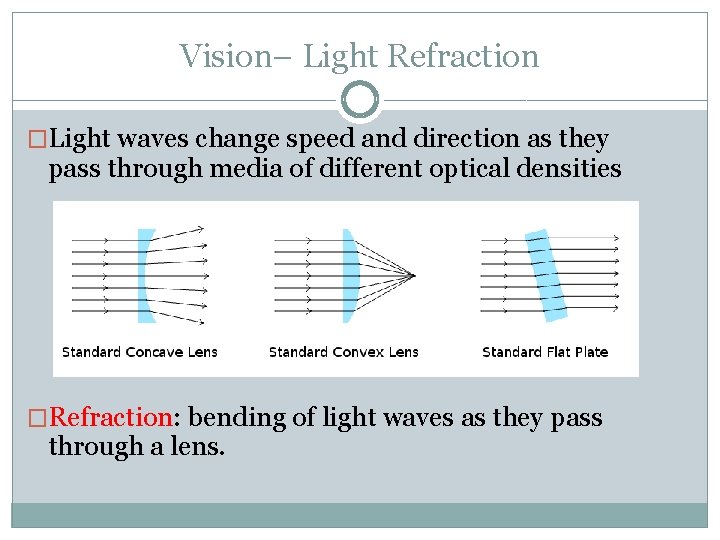
Vision– Light Refraction �Light waves change speed and direction as they pass through media of different optical densities �Refraction: bending of light waves as they pass through a lens.
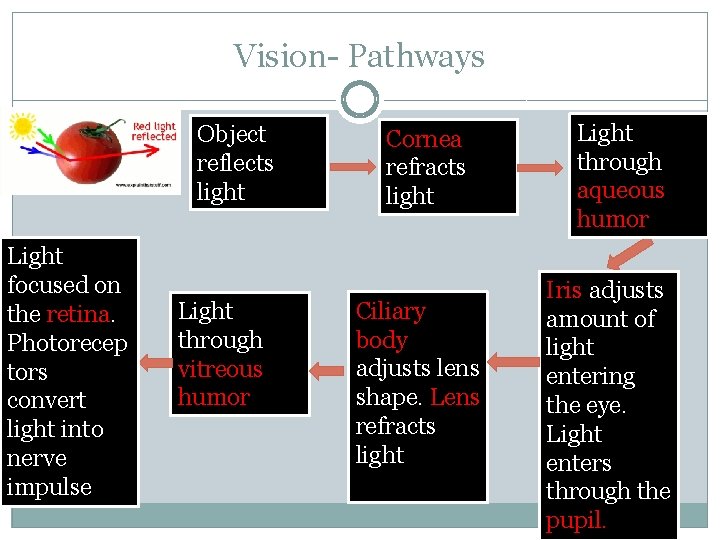
Vision- Pathways Object reflects light Light focused on the retina. Photorecep tors convert light into nerve impulse Light through vitreous humor Cornea refracts light Ciliary body adjusts lens shape. Lens refracts light Light through aqueous humor Iris adjusts amount of light entering the eye. Light enters through the pupil.
Visual Nerve Pathways Nerve impulses transmitted by the optic nerve Cross over at the optic chiasma Carried to the visual cortex in the occipital lobe visual cortex interprets impulse as image: sight!
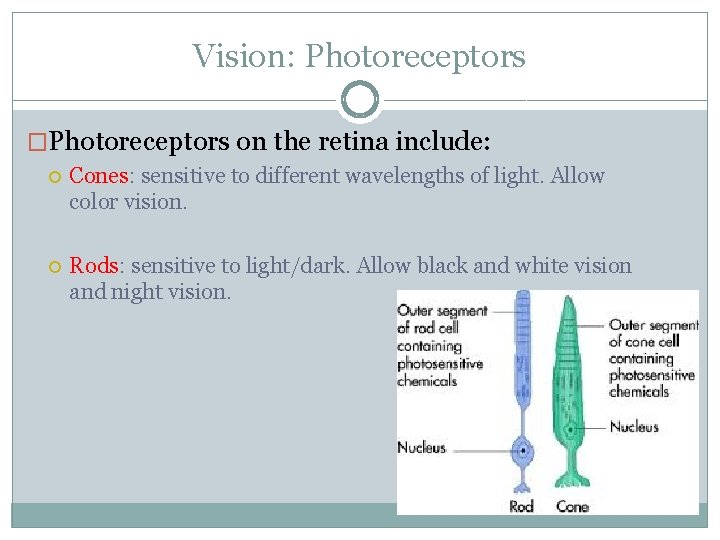
Vision: Photoreceptors �Photoreceptors on the retina include: Cones: sensitive to different wavelengths of light. Allow color vision. Rods: sensitive to light/dark. Allow black and white vision and night vision.
- Slides: 11