
The Eye and Common Eye Problems Anatomy of
The Eye and Common Eye Problems
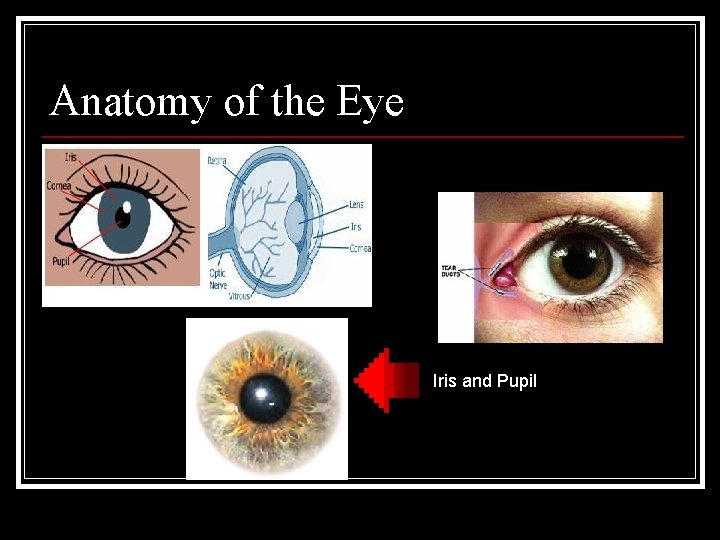
Anatomy of the Eye Iris and Pupil

How does the eye work? The human eye works like a living camera. Like a camera, the eye processes light and takes mental snapshots of images, which are then developed in the brain.

Refractive Error n n n Myopia: Nearsighted-ness n Objects appear blurry at a distance n Squinting Hyperopia: Farsighted-ness n Near Objects appear blurry n Squinting Presbypia: Farsighted-ness n Near Objects appear blurry n Squinting *Can be corrected with glasses or contact lenses
Color Blindness n n n Color blindness describes problems in recognizing various colors and shades of color. Red/green color deficiency is the most common form of colorblindness. Blue color blindness is the inability to distinguish both blue and yellow, which are seen as white or gray. One male in twenty suffers from some form of colorblindness, but only one in several hundred females are color blind.

Amblyopia “Lazy Eye” n Misaligned or crossed eyes Symptoms: -squinting -headaches -poor vision -eye strain/pain Treatments include: -eye surgery -eye exercises Normal Lazy eye -wearing an eye patch over the stronger eye
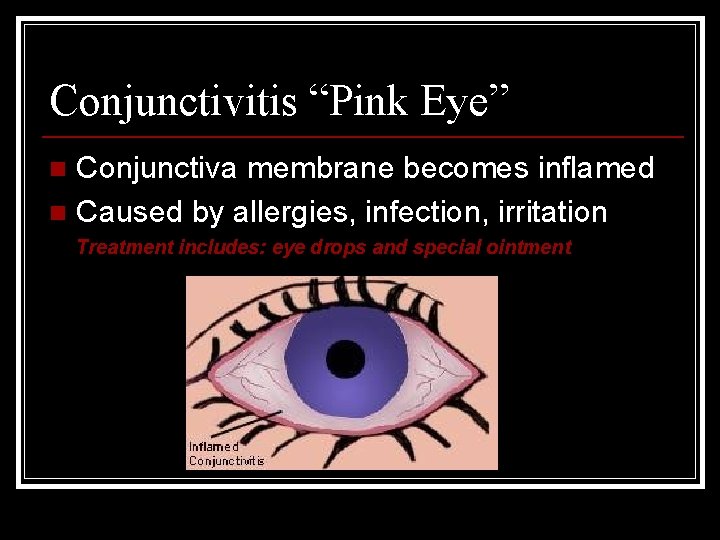
Conjunctivitis “Pink Eye” Conjunctiva membrane becomes inflamed n Caused by allergies, infection, irritation n Treatment includes: eye drops and special ointment
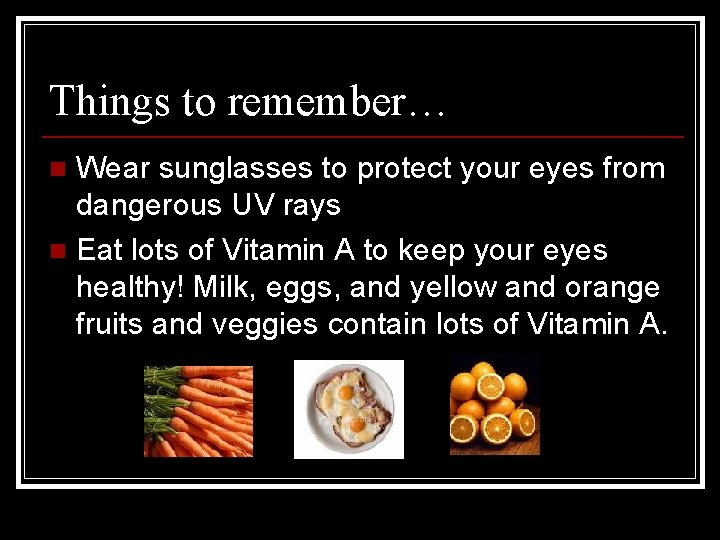
Things to remember… Wear sunglasses to protect your eyes from dangerous UV rays n Eat lots of Vitamin A to keep your eyes healthy! Milk, eggs, and yellow and orange fruits and veggies contain lots of Vitamin A. n
Don’t wait until it’s too late! 1. 2. Get routine eye check-ups to: Keep your eyes healthy Maintain good eyesight
- Slides: 9