
The Executive Branch Roles of the President Chief
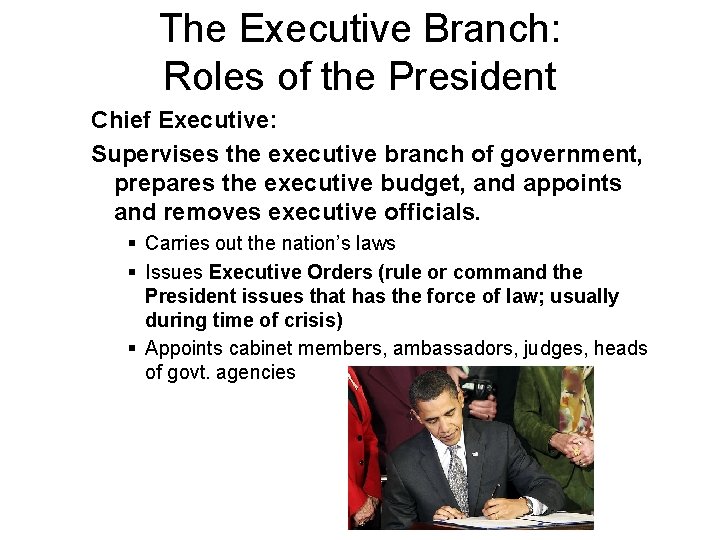
The Executive Branch: Roles of the President Chief Executive: Supervises the executive branch of government, prepares the executive budget, and appoints and removes executive officials. § Carries out the nation’s laws § Issues Executive Orders (rule or command the President issues that has the force of law; usually during time of crisis) § Appoints cabinet members, ambassadors, judges, heads of govt. agencies
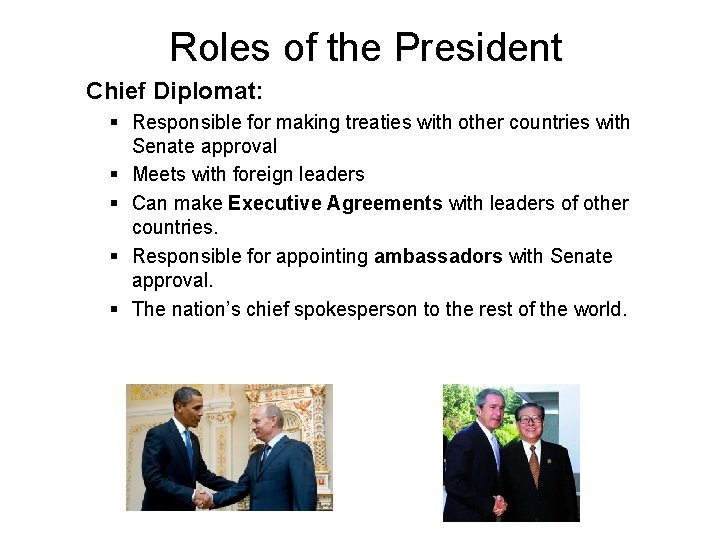
Roles of the President Chief Diplomat: § Responsible for making treaties with other countries with Senate approval § Meets with foreign leaders § Can make Executive Agreements with leaders of other countries. § Responsible for appointing ambassadors with Senate approval. § The nation’s chief spokesperson to the rest of the world.
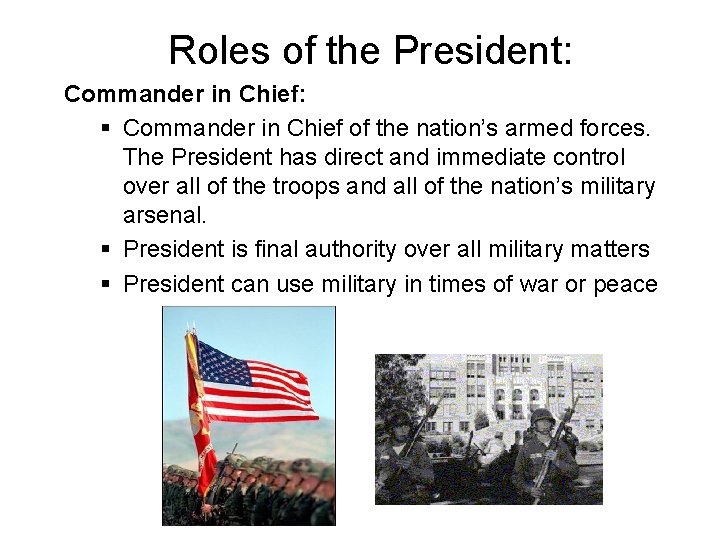
Roles of the President: Commander in Chief: § Commander in Chief of the nation’s armed forces. The President has direct and immediate control over all of the troops and all of the nation’s military arsenal. § President is final authority over all military matters § President can use military in times of war or peace
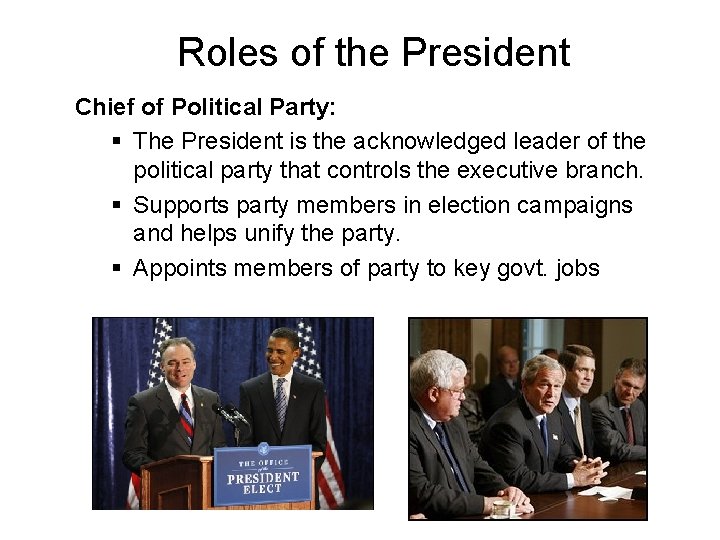
Roles of the President Chief of Political Party: § The President is the acknowledged leader of the political party that controls the executive branch. § Supports party members in election campaigns and helps unify the party. § Appoints members of party to key govt. jobs
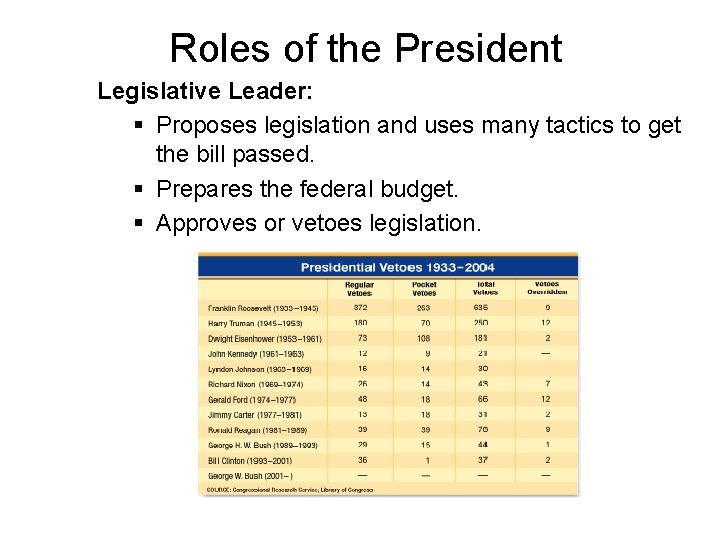
Roles of the President Legislative Leader: § Proposes legislation and uses many tactics to get the bill passed. § Prepares the federal budget. § Approves or vetoes legislation.

Roles of the President Chief Agenda Setter: § Schedules the agenda for the State of the Union address § Determines policy initiatives of the government, setting the budget, and deciding on priorities for legislation to be supported by the executive branch.
Roles of the President Chief of State: § Role is symbolic – President is representing people from all 50 states § Gives a human face to American govt. § Can be demonstrated in many ways ØGreeting heroes ØThrowing first pitches at baseball games ØInviting musicians to perform at White House ØAttending funeral of another country’s leader, or past Presidents of U. S. ØSpeeches and ceremonies
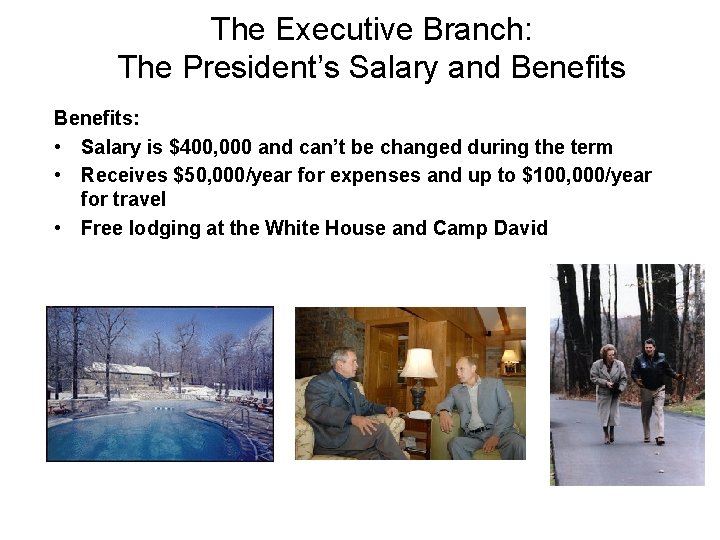
The Executive Branch: The President’s Salary and Benefits: • Salary is $400, 000 and can’t be changed during the term • Receives $50, 000/year for expenses and up to $100, 000/year for travel • Free lodging at the White House and Camp David
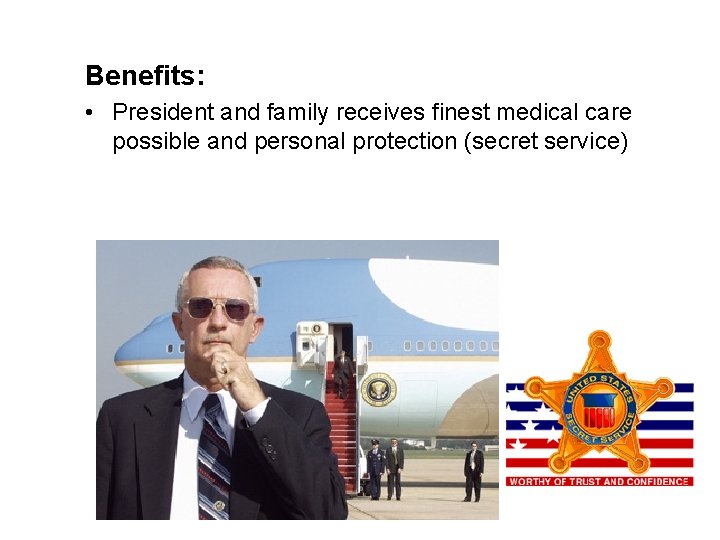
Benefits: • President and family receives finest medical care possible and personal protection (secret service)
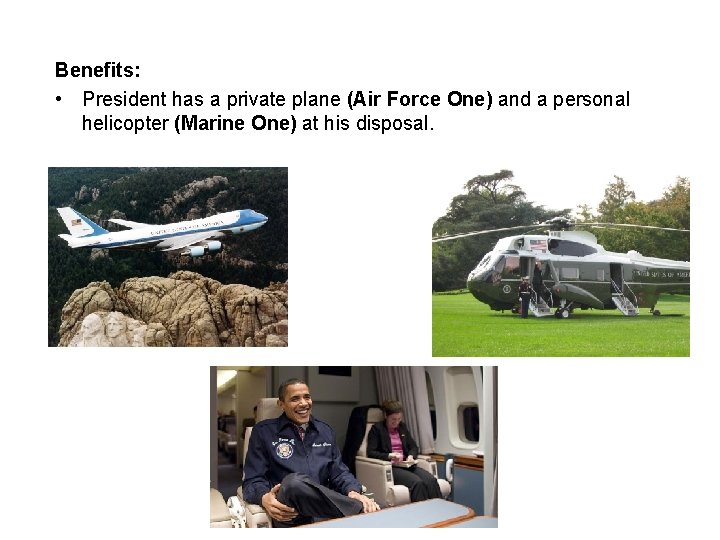
Benefits: • President has a private plane (Air Force One) and a personal helicopter (Marine One) at his disposal.
- Slides: 10