
The Evolution of Whales Jake GrahamFelsen Evidence of

- Slides: 16
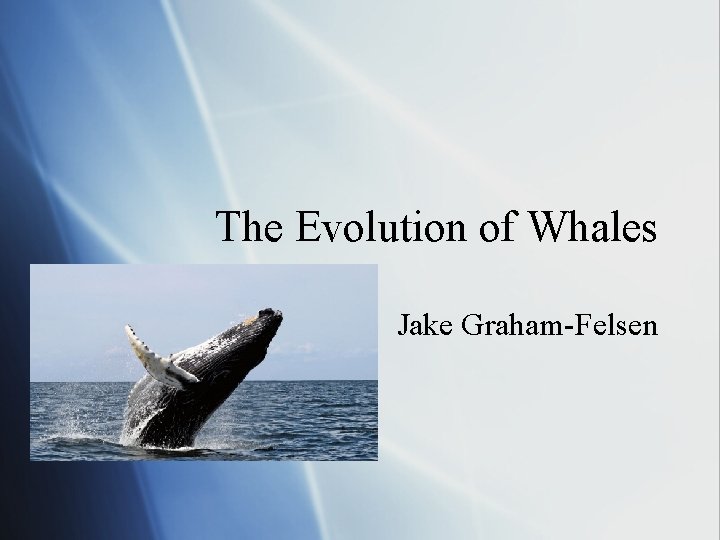
The Evolution of Whales Jake Graham-Felsen
Evidence of Evolution § § The Fossil record Anatomical and chemical similarities Geographic distribution of related species Genetic changes over generations
Early History of Whale Evolution Discovery § 1693 - John Ray, whales are mammals § 1859 - Darwin, in Origin of Species, whales arose from bears § 1883 - Sir William Henry Flower, solidifies theory of descendants were from terrestrial mammals based on vestigial organs
More Recent Researchers § Philip D. Gingerich, § Ph. D. , Professor Biology, Anthropology, Geological Science, University of Michigan § Hans Thewissen § Ph. D. , Professor of the Department of Anatomy at Northeastern Ohio Universities Colleges of Medicine and Pharmacy
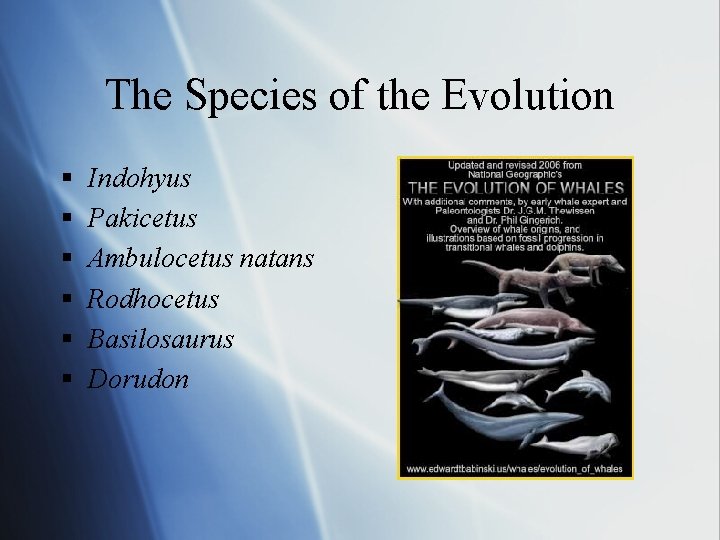
The Species of the Evolution § § § Indohyus Pakicetus Ambulocetus natans Rodhocetus Basilosaurus Dorudon
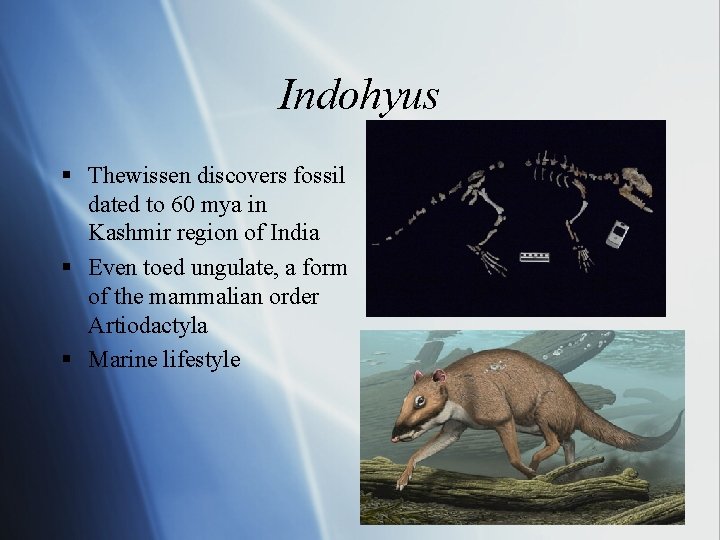
Indohyus § Thewissen discovers fossil dated to 60 mya in Kashmir region of India § Even toed ungulate, a form of the mammalian order Artiodactyla § Marine lifestyle
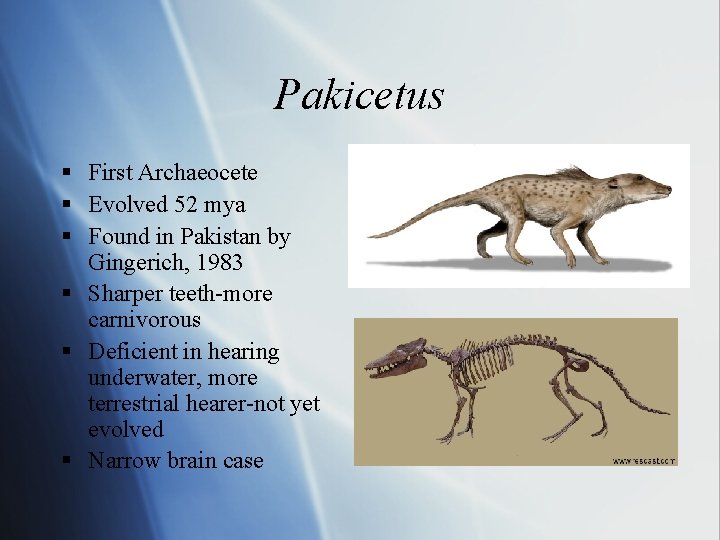
Pakicetus § First Archaeocete § Evolved 52 mya § Found in Pakistan by Gingerich, 1983 § Sharper teeth-more carnivorous § Deficient in hearing underwater, more terrestrial hearer-not yet evolved § Narrow brain case
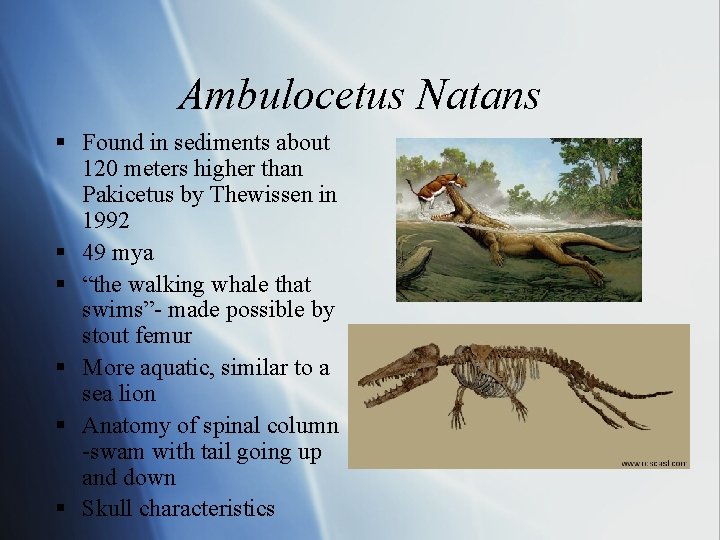
Ambulocetus Natans § Found in sediments about 120 meters higher than Pakicetus by Thewissen in 1992 § 49 mya § “the walking whale that swims”- made possible by stout femur § More aquatic, similar to a sea lion § Anatomy of spinal column -swam with tail going up and down § Skull characteristics
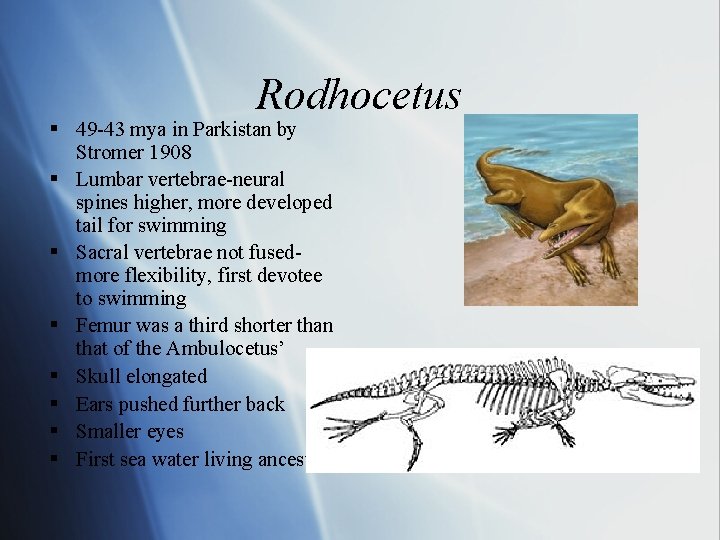
Rodhocetus § 49 -43 mya in Parkistan by Stromer 1908 § Lumbar vertebrae-neural spines higher, more developed tail for swimming § Sacral vertebrae not fusedmore flexibility, first devotee to swimming § Femur was a third shorter than that of the Ambulocetus’ § Skull elongated § Ears pushed further back § Smaller eyes § First sea water living ancestors
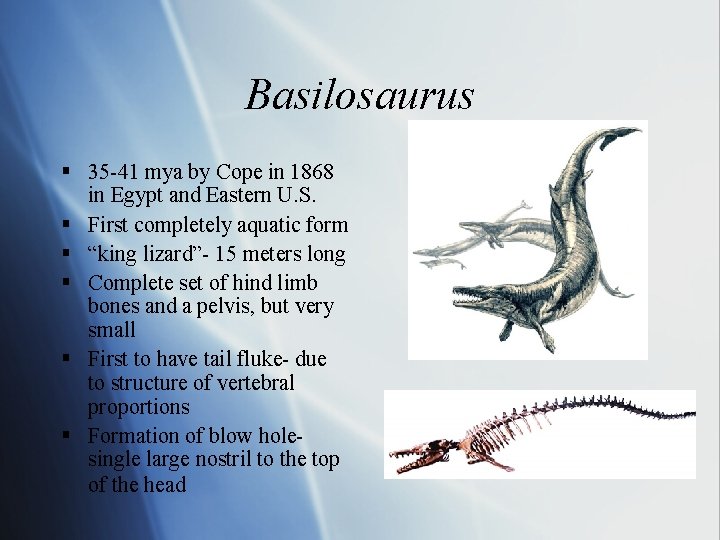
Basilosaurus § 35 -41 mya by Cope in 1868 in Egypt and Eastern U. S. § First completely aquatic form § “king lizard”- 15 meters long § Complete set of hind limb bones and a pelvis, but very small § First to have tail fluke- due to structure of vertebral proportions § Formation of blow holesingle large nostril to the top of the head
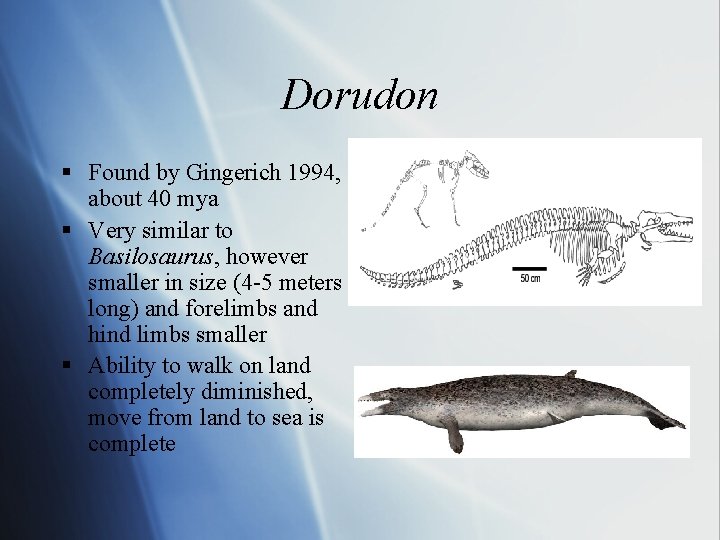
Dorudon § Found by Gingerich 1994, about 40 mya § Very similar to Basilosaurus, however smaller in size (4 -5 meters long) and forelimbs and hind limbs smaller § Ability to walk on land completely diminished, move from land to sea is complete
Animation of the Evolution § http: //www. youtube. com/watch? v=l. Uu. UEo 84 Yl. Y&feature=related § http: //www. youtube. com/watch? v=8 cn 0 kf 8 mh. S 4&feature=related
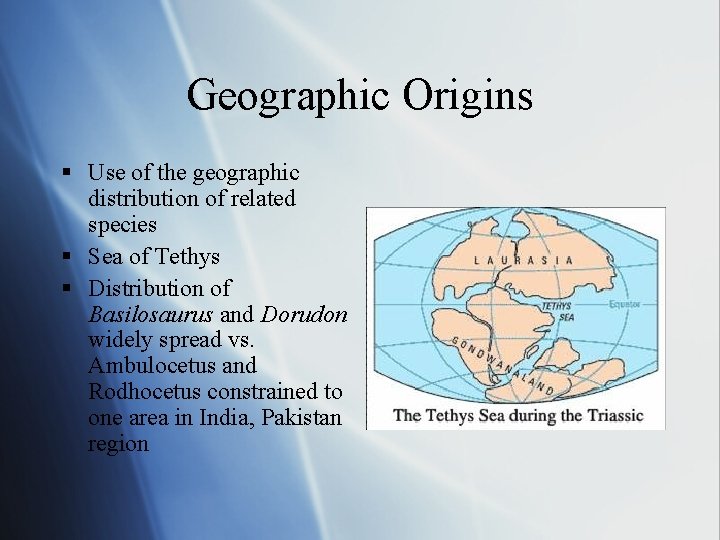
Geographic Origins § Use of the geographic distribution of related species § Sea of Tethys § Distribution of Basilosaurus and Dorudon widely spread vs. Ambulocetus and Rodhocetus constrained to one area in India, Pakistan region
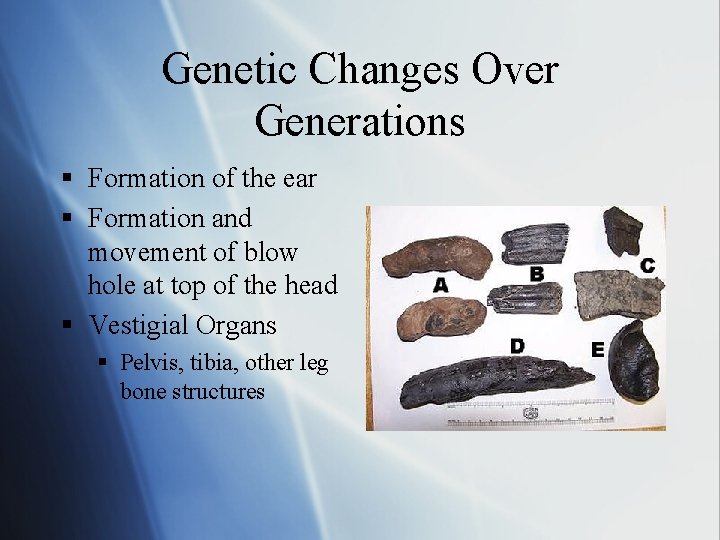
Genetic Changes Over Generations § Formation of the ear § Formation and movement of blow hole at top of the head § Vestigial Organs § Pelvis, tibia, other leg bone structures
There is still more to do… § “As the fossil record of early whales continues to grow, our knowledge of the evolution of advanced cetacean traits becomes clearer and more complete. Fossils contradict the notion that whales suddenly appeared full-blown, without intermediate forms. I am a skeptical soul, but I have seen a lot of Tethys and excavated a lot of whales in the past fifteen years. Intermediates, missing links, are everywhere. ”- Gingerich (1994)
Works Cited