
The Evolution of the US Presidency By Mike
The Evolution of the US Presidency By Mike Allen
The Evolution of the US Presidency* • The Constitution gave the President very limited powers and Congress dominated the executive branch until the 1930 s. • With only a few exceptions, Presidents played second fiddle to Congress for many years. However, those exceptions — Andrew Jackson, Abraham Lincoln, Theodore Roosevelt, and Woodrow Wilson — provided the basis for the turning point that came with the presidency of Franklin Roosevelt in the 1930 s. * http: //www. ushistory. org/gov/7 a. asp
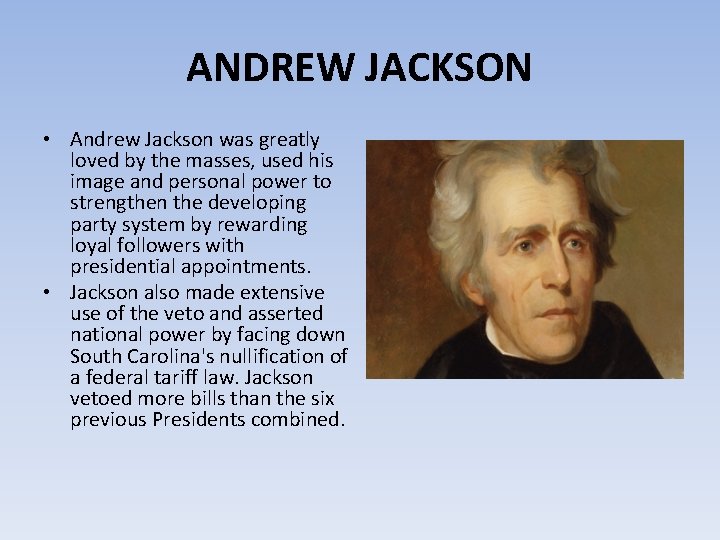
ANDREW JACKSON • Andrew Jackson was greatly loved by the masses, used his image and personal power to strengthen the developing party system by rewarding loyal followers with presidential appointments. • Jackson also made extensive use of the veto and asserted national power by facing down South Carolina's nullification of a federal tariff law. Jackson vetoed more bills than the six previous Presidents combined.
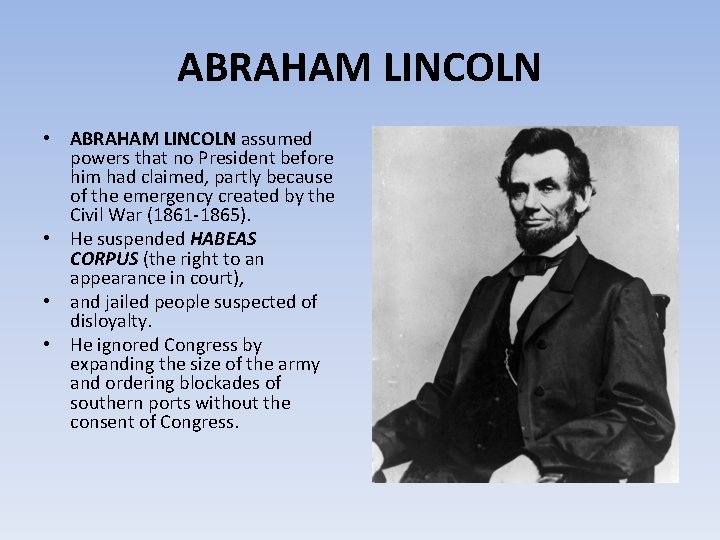
ABRAHAM LINCOLN • ABRAHAM LINCOLN assumed powers that no President before him had claimed, partly because of the emergency created by the Civil War (1861 -1865). • He suspended HABEAS CORPUS (the right to an appearance in court), • and jailed people suspected of disloyalty. • He ignored Congress by expanding the size of the army and ordering blockades of southern ports without the consent of Congress.
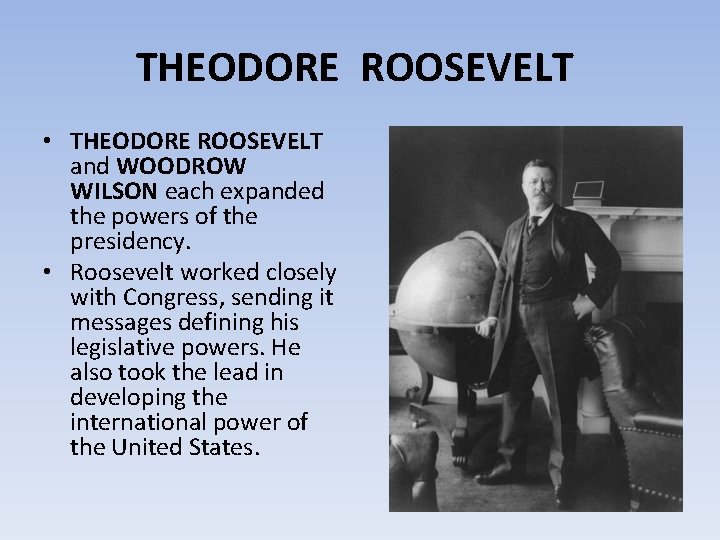
THEODORE ROOSEVELT • THEODORE ROOSEVELT and WOODROW WILSON each expanded the powers of the presidency. • Roosevelt worked closely with Congress, sending it messages defining his legislative powers. He also took the lead in developing the international power of the United States.
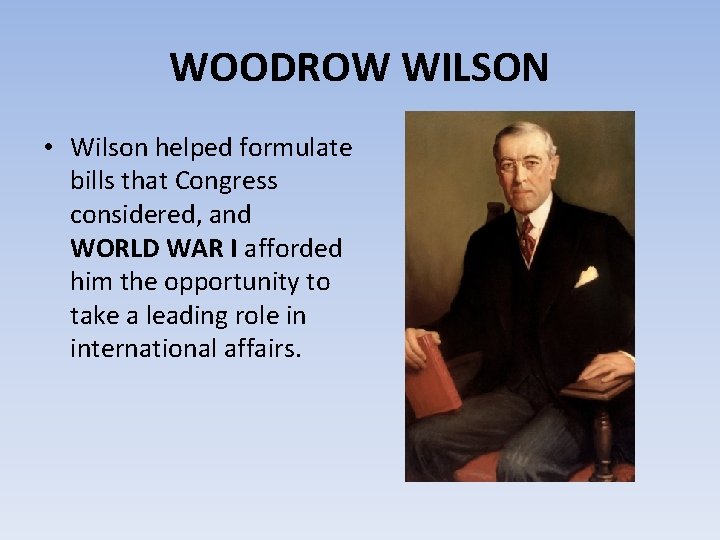
WOODROW WILSON • Wilson helped formulate bills that Congress considered, and WORLD WAR I afforded him the opportunity to take a leading role in international affairs.
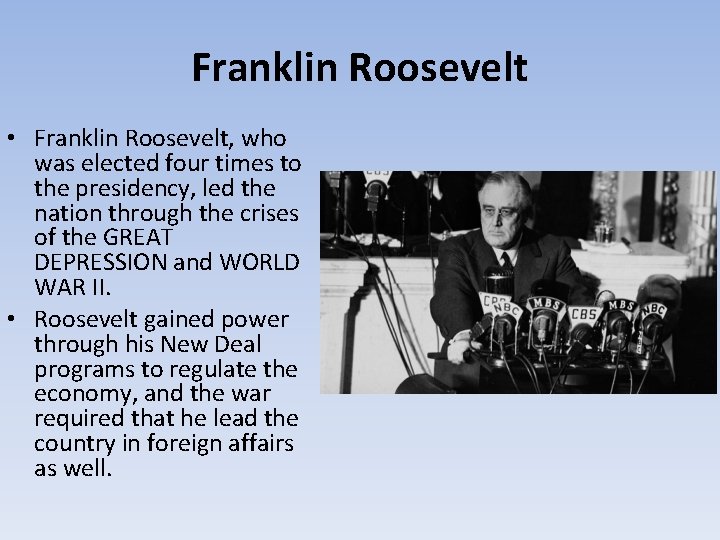
Franklin Roosevelt • Franklin Roosevelt, who was elected four times to the presidency, led the nation through the crises of the GREAT DEPRESSION and WORLD WAR II. • Roosevelt gained power through his New Deal programs to regulate the economy, and the war required that he lead the country in foreign affairs as well.
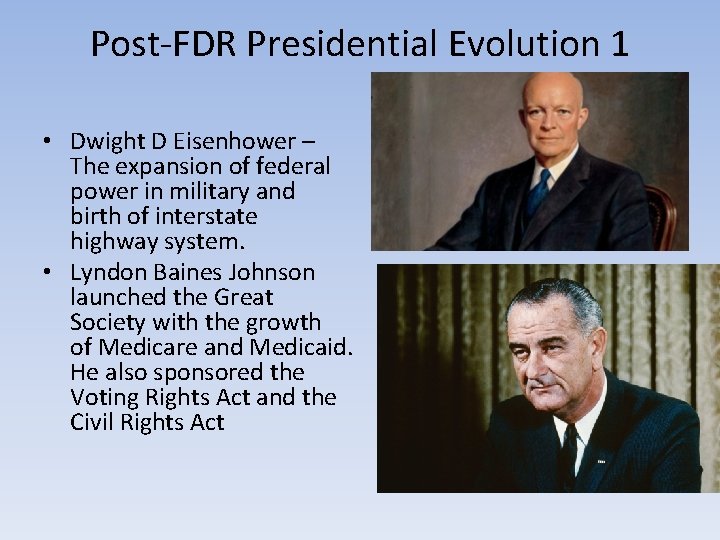
Post-FDR Presidential Evolution 1 • Dwight D Eisenhower – The expansion of federal power in military and birth of interstate highway system. • Lyndon Baines Johnson launched the Great Society with the growth of Medicare and Medicaid. He also sponsored the Voting Rights Act and the Civil Rights Act

Post-FDR Presidential Evolution 2 • Ronald Reagan. Despite rhetoric of devolution and states' right, Reagan leads the expansion of deficit spending and the growth of military. He authorizes the invasion of Grenada without Congressional approval. • Bill Clinton undertook actions in Somalia, and the bombing of Kosovo without Congress's approval.
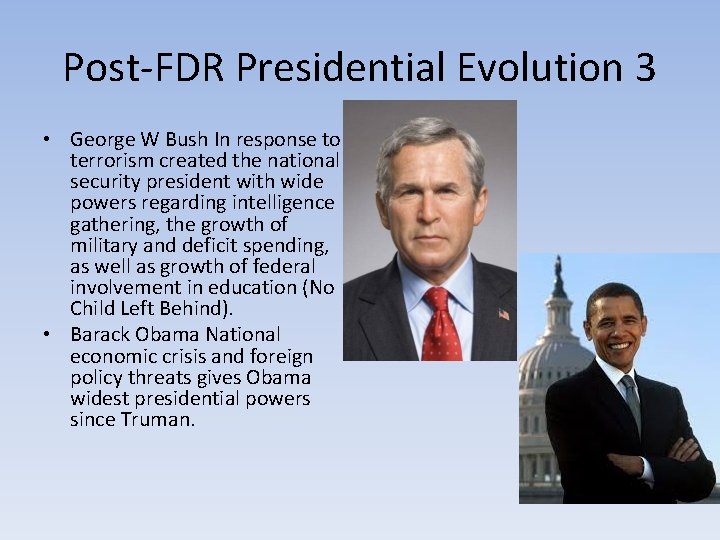
Post-FDR Presidential Evolution 3 • George W Bush In response to terrorism created the national security president with wide powers regarding intelligence gathering, the growth of military and deficit spending, as well as growth of federal involvement in education (No Child Left Behind). • Barack Obama National economic crisis and foreign policy threats gives Obama widest presidential powers since Truman.
- Slides: 10